From Surf Wiki (app.surf) — the open knowledge base
Respiratory tract antimicrobial defense system
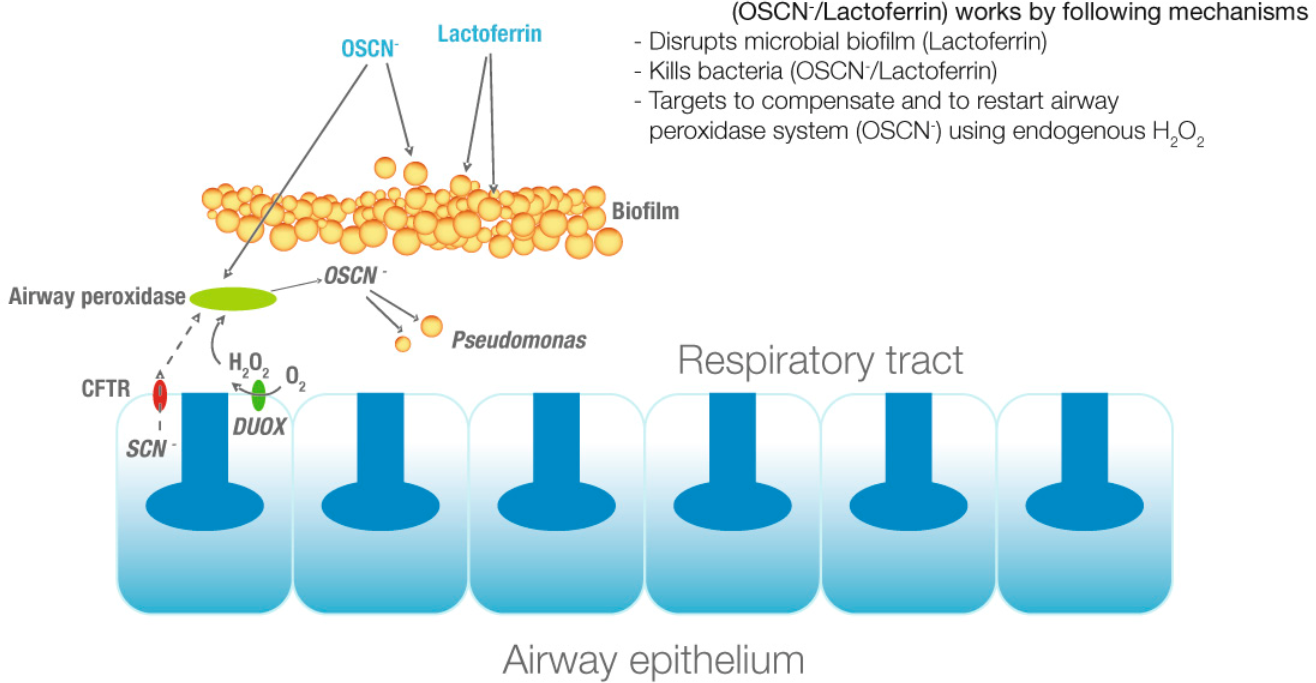
The respiratory tract antimicrobial defense system is a layered defense mechanism which relies on components of both the innate and adaptive immune systems to protect the lungs and the rest of the respiratory tract against inhaled microorganisms.
In the first line of defense, inhaled bacteria are trapped by mucus and are swept toward the pharynx and are swallowed. Bacteria which penetrate the mucous layer are dealt with a second line of defense which includes antimicrobial peptides that are secreted by the surface epithelium of the respiratory tract which kill many strains of bacteria. Those bacteria that are resistant to antimicrobial peptides are killed by a variety of reactive oxygen species produced by phagocytes. In a third line of defense and as a last resort, persistent bacterial infections which escape the innate immune system are eliminated by the adaptive immune system.
Lactoferrin
Main article: lactoferrin
Lactoferrin (LF) is a multifunctional protein which is an essential part of the respiratory tract antimicrobial defense system. LF proteolysis produces the small peptides lactoferricin and kaliocin-1 both with antimicrobial activity.
Reactive oxygen species, oxygenated compounds
Phagocytes possess a superoxide-producing NADPH oxidase enzyme complex. Other cells in the respiratory tract also produce superoxide and hydrogen peroxide through the activity of dual oxidase 2 proteins, also known as Duox2.
The superoxide generated by these enzymes complexes dismutates into hydrogen peroxide which in turn is used by myeloperoxidase to produce bactericidal hypochlorous acid. In addition, the submucosal glands of the respiratory tract secrete myeloperoxidase and lactoperoxidase (LPO) that catalyzes the oxidation of thiocyanate and detoxify hydrogen peroxide or ROS to the antimicrobial hypothiocyanite.
The oxygenated compounds produced by the lactoperoxidase system does not attack DNA and is not mutagenic and is known to be safe. Hypothiocyanite generated through this pathway displays broad spectrum bactericidal activity including potent antibacterial action on H. pylori.
Cystic fibrosis
Thiocyanate secretion in cystic fibrosis patients is decreased resulting in a reduced production of the antimicrobial hypothiocyanite and consequently contributes to the increased risk of airway infection.
Therapeutic applications
Lactoferrin with hypothiocyanite for the treatment of cystic fibrosis has been granted orphan drug status by the EMEA and the FDA.
References
References
- Boucher RC. (January 2003). "Regulation of airway surface liquid volume by human airway epithelia". Pflügers Arch..
- Ganz T. (March 2002). "Antimicrobial polypeptides in host defense of the respiratory tract". J. Clin. Invest..
- (May 1992). "Biological role of lactoferrin". Arch. Dis. Child..
- (October 1994). "A review: the active peptide of lactoferrin". Acta Paediatr Jpn.
- Nauseef WM. (October 2004). "Assembly of the phagocyte NADPH oxidase". Histochem. Cell Biol..
- (September 1980). "Hypothiocyanite ion: detection of the antimicrobial agent in human saliva". J. Dent. Res..
- (May 1978). "Lactoperoxidase, peroxide, thiocyanate antimicrobial system: correlation of sulfhydryl oxidation with antimicrobial action". Infect. Immun..
- Klebanoff SJ. (May 2005). "Myeloperoxidase: friend and foe". J. Leukoc. Biol..
- (August 2003). "Lactoperoxidase and human airway host defense". Am. J. Respir. Cell Mol. Biol..
- (December 2002). "Lactoperoxidase and hydrogen peroxide metabolism in the airway". Am. J. Respir. Crit. Care Med..
- (January 2007). "The Lactoperoxidase System Links Anion Transport To Host Defense in Cystic Fibrosis". FEBS Lett..
- (February 1983). "Peroxidase-Thiocyanate-Peroxide Antibacterial System Does Not Damage DNA". Antimicrob. Agents Chemother..
- (September 2004). "Sensitivity of Helicobacter pylori to an innate defence mechanism, the lactoperoxidase system, in buffer and in human whole saliva". J. Med. Microbiol..
- (December 2009). "The antioxidant role of thiocyanate in the pathogenesis of cystic fibrosis and other inflammation-related diseases". Proc. Natl. Acad. Sci. U.S.A..
- (January 2007). "A Novel Host Defense System of Airways Is Defective in Cystic Fibrosis". Am. J. Respir. Crit. Care Med..
- (2008). "Thiocyanate concentration in saliva of cystic fibrosis patients". Folia Histochem. Cytobiol..
- (2009-09-07). "Public summary of positive opinion for orphan designation of hypothiocyanite / lactoferrin for the treatment of cystic fibrosis". European Medicines Agency.
- (2009-11-05). "Meveol: orphan drug status granted by the FDA for the treatment of cystic fibrosis.". United States Food and Drug Administration.
This article was imported from Wikipedia and is available under the Creative Commons Attribution-ShareAlike 4.0 License. Content has been adapted to SurfDoc format. Original contributors can be found on the article history page.
Ask Mako anything about Respiratory tract antimicrobial defense system — get instant answers, deeper analysis, and related topics.
Research with MakoFree with your Surf account
Create a free account to save articles, ask Mako questions, and organize your research.
Sign up freeThis content may have been generated or modified by AI. CloudSurf Software LLC is not responsible for the accuracy, completeness, or reliability of AI-generated content. Always verify important information from primary sources.
Report