From Surf Wiki (app.surf) — the open knowledge base
Reeding
Surface treatment technique

Surface treatment technique
Reeding or milling is a technique wherein a number of narrow ridges called "reeds" are carved or milled into a surface with a Castaing machine.
Numismatics
In numismatics, reeded edges are often referred to as "ridged" or "grooved" (American usage), or "milled" (British usage). Some coins, such as United States quarters and dimes, 1 euro, Australian 5, 10, 20 cents, 1 and 2 dollars, as well many other current coins, have reeded edges.
One reason for having reeded edges was to prevent counterfeiting. Some gold and silver coins were reeded to discourage clipping, i.e. scraping off the precious metals from the edge of the coin, to maintain its stated value in precious metal. This practice was made more difficult through the implementation of reeding by Isaac Newton in 1698, during his time as warden of the Royal Mint.
Another benefit of certain coins having reeded edges is that it helps the visually impaired identify different coin denominations by sense of touch alone.
This dual purpose of reeding is sometimes made explicit on the milled edges of coins themselves. For example, many issuances of the British pound coin have historically had their edges inscribed with the Latin phrase '', an adaption from Vergilius' Aeneid meaning 'an ornament and a safeguard'.
Furniture
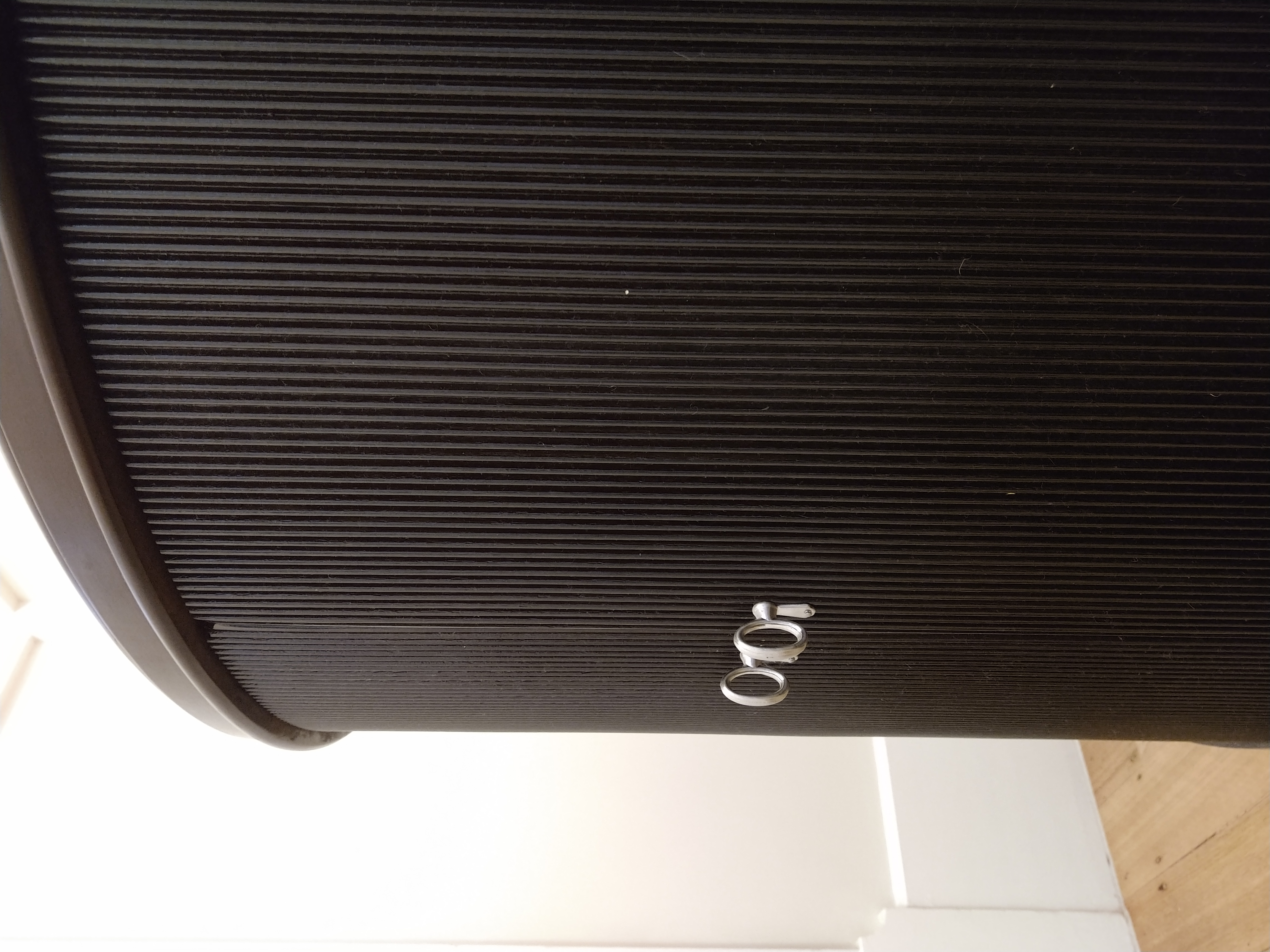
In furniture, reeding is sometimes used around bedposts, and the legs of tables and chairs. Its use in this fashion was inspired by Greek and Roman architectural styles, and is the opposite of fluting.
Architecture
In architecture, reeding is a form of molding usually found on columns, and is sometimes considered to be synonymous with gadrooning.
References
References
- [http://www.thefreedictionary.com/Reeding The Free Dictionary: "Reeding"]
- [http://dictionary.reference.com/browse/Reeding Dictionary.com: "Reeding"]
- Concise Oxford Dictionary (2006): '''mill''', produce regular ribbed markings on the edge of (a coin)
- Headley, Susan. (March 3, 2017). "Reeded Edge Defined – What is a Reeded Edge?".
- (September 29, 2015). "How Isaac Newton helped shape our coins".
- ""reeded leg"".
- [http://www.britannica.com/EBchecked/topic/211529/fluting-and-reeding Encyclopædia Britannica: "Fluting and Reeding"]
This article was imported from Wikipedia and is available under the Creative Commons Attribution-ShareAlike 4.0 License. Content has been adapted to SurfDoc format. Original contributors can be found on the article history page.
Ask Mako anything about Reeding — get instant answers, deeper analysis, and related topics.
Research with MakoFree with your Surf account
Create a free account to save articles, ask Mako questions, and organize your research.
Sign up freeThis content may have been generated or modified by AI. CloudSurf Software LLC is not responsible for the accuracy, completeness, or reliability of AI-generated content. Always verify important information from primary sources.
Report