From Surf Wiki (app.surf) — the open knowledge base
Ramsar Convention
International treaty for the conservation and sustainable utilization of wetlands
International treaty for the conservation and sustainable utilization of wetlands
| Field | Value |
|---|---|
| name | Ramsar Convention |
| long_name | Ramsar Convention on Wetlands of International Importance Especially as Waterfowl Habitat |
| image | Ramsar logo.svg |
| image_width | 160 |
| caption | Ramsar logo |
| date_signed | 2 February 1971 |
| named_for | Ramsar, Iran |
| date_effective | 21 December 1975 |
| condition_effective | Ratification by 7 states |
| signatories | 23 |
| parties | 172 |
| depositor | Director General of UNESCO |
| languages | English (prevailing in case of divergence), French, German, Russian and Spanish |
The Ramsar Convention on Wetlands of International Importance Especially as Waterfowl Habitat is an international treaty for the conservation and sustainable use of Ramsar sites (wetlands). It is also known as the Convention on Wetlands. It is named after the city of Ramsar in Iran, where the convention was signed in 1971.
Every three years, representatives of the contracting parties meet as the Conference of the Contracting Parties (COP), the policy-making organ of the convention which adopts decisions (site designations, resolutions and recommendations) to administer the work of the convention and improve the way in which the parties are able to implement its objectives. In 2022, COP15 was held in Montreal, Canada.
List of wetlands of international importance
Main article: List of Ramsar Wetlands of International Importance
The list of wetlands of international importance included 2,531 Ramsar sites in February 2025 covering over 2.6 e6km2. The countries with most sites are the United Kingdom with 175 and Mexico with 142. The country with the largest surface area of listed wetland is Brazil, with around 267,000 km2.
The Ramsar Sites Information Service (RSIS) is a searchable database which provides information on each Ramsar site.
International cooperation
Main article: List of parties to the Ramsar Convention
As of 2016 there are 18 transboundary Ramsar sites, and 15 Ramsar regional initiatives covering regions of the Mediterranean, Asia, Africa, and South America.
International organization partners
The Ramsar Convention works closely with six other organisations known as international organization partners (IOPs). These are:
- BirdLife International
- International Union for Conservation of Nature (IUCN)
- International Water Management Institute (IWMI)
- Wetlands International
- WWF International
- Wildfowl & Wetlands Trust (WWT) These organizations support the work of the convention by providing expert technical advice, helping implement field studies, and providing financial support. The IOPs also participate regularly as observers in all meetings of the conference of the parties and as full members of the Scientific and Technical Review Panel.
Other partners
The convention collaborates with a network of partners:
- Biodiversity-related conventions including the Convention on Biological Diversity (CBD), the Convention to Combat Desertification (UNCCD), Convention on Migratory Species (CMS), the World Heritage Convention (WHC), and the Convention on International Trade in Endangered Species (CITES);
- Project funding bodies including global environmental funds, multilateral development banks and bilateral donors;
- UN agencies such as UNEP, UNDP, UNESCO, and the UN Economic Commission for Europe, and specific programmes such as UNESCO's Man and the Biosphere Programme (MAB);
- Non-governmental organizations including the Nature Conservancy, Conservation International, the Society of Wetland Scientists, the International Association for Impact Assessment, and many others;
- Since 1998 the convention has also benefited from a strong partnership with Danone including the Évian brand, and since 2007 from the Biosphere Connections partnership with the Star Alliance airline network.
Bodies established by the convention
Conference of the Contracting Parties
This is the convention's governing body consisting of all governments that have ratified the treaty. This ultimate authority reviews progress under the convention, identifies new priorities, and sets work plans for members. The COP can also make amendments to the convention, create expert advisory bodies, review progress reports by member nations, and collaborate with other international organizations and agreements.
The Standing Committee
The Standing Committee is the intersessional executive body which represents the COP between its triennial meetings, within the framework of the decisions made by the COP. The contracting parties that are members of the Standing Committee are elected by each meeting of the COP to serve for the three years.

The Scientific and Technical Review Panel
The Scientific and Technical Review Panel (STRP) provides scientific and technical guidance to the Conference of Contracting Parties, the Standing Committee, and the Ramsar Secretariat. In 2025 the chair of the STRP presented the panels' report, Global Wetland Outlook 2025, to the UN.
The Secretariat
The Secretariat carries out the day-to-day coordination of the convention's activities. It is based at the headquarters of the International Union for Conservation of Nature (IUCN) in Gland, Switzerland.
The implementation of the Ramsar Convention is a continuing partnership between the Conference of Contracting Parties, the Standing Committee, and the Secretariat, with the advice of the subsidiary expert body, the Scientific and Technical Review Panel (STRP), and the support of the international organization partners (IOPs).
Musonda Mumba is the seventh secretary general of the Ramsar Convention on Wetlands.
World Wetlands Day
Main article: World Wetlands Day
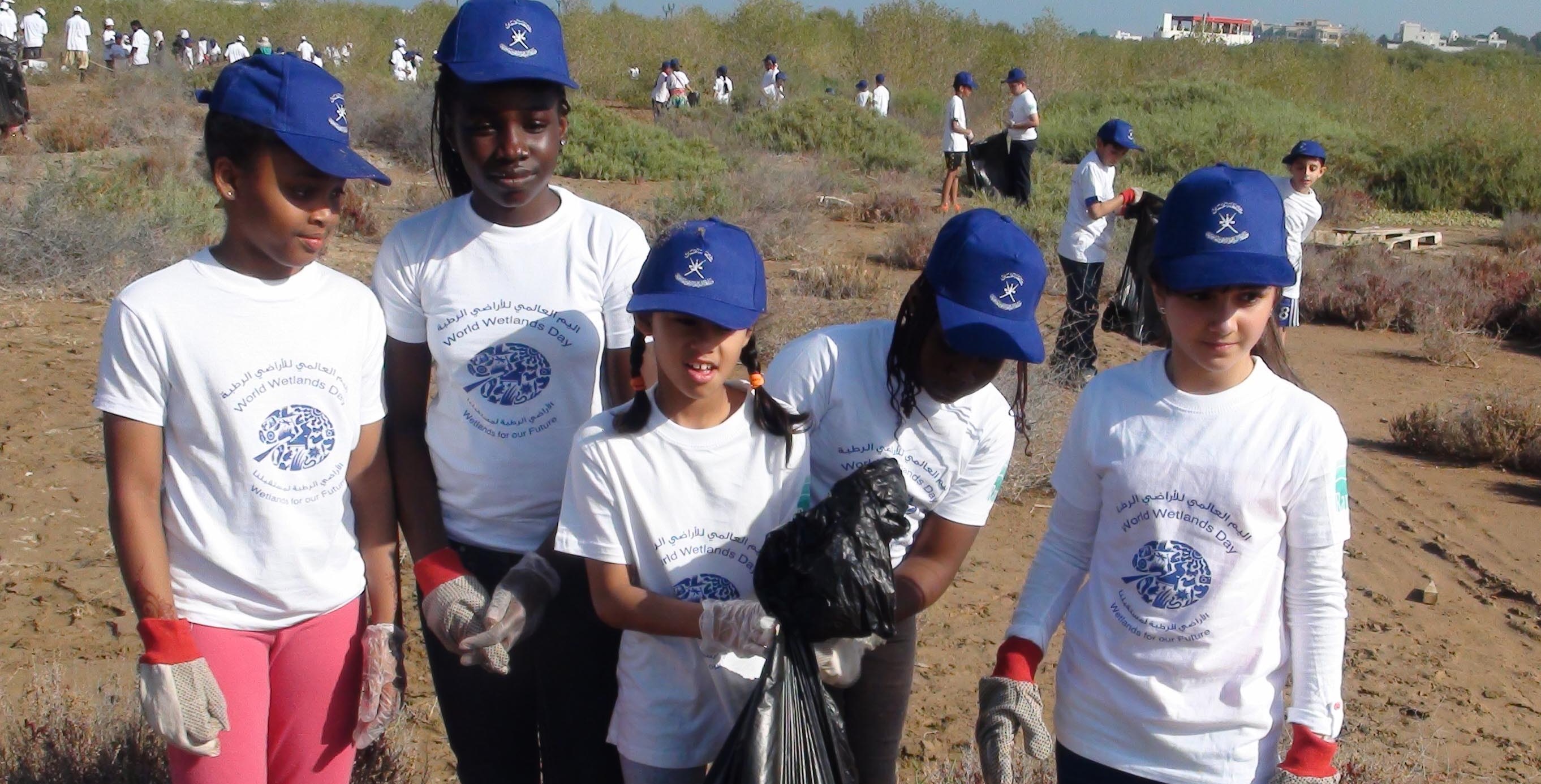
2 February is World Wetlands Day, marking the convention's adoption on 2 February 1971. Established to raise awareness about the value of wetlands for humanity and the planet, WWD was celebrated for the first time in 1997, and has grown since then. In 2015 World Wetlands Day was celebrated in 59 countries.
History
The convention was co-founded by Eskandar Firouz (former environment minister of Iran), Luc Hoffmann of Tour du Valat research station in the Camargue in France, and Geoffrey Matthews of the Wildfowl & Wetlands Trust at Slimbridge, England in the late 1960s. The conference, which adopted the terms of the agreement, was held in the Iranian Caspian Sea resort of Ramsar on 2 February 1971. The convention turned 50 in 2021.
Deficiencies in the treaty and its implementation
Despite its quasi-universal application, the domestic response to this treaty is often half-hearted and inadequate. By way of example, Germany joined the Convention in 1976 and has, "[as of 2022], failed to give effect to the Ramsar Convention in the manner set out by the constitution of Germany." As of 2025 Turkey does not always publish its wetland management plans, for example the Kızılırmak Delta has a plan but it is not published.
Notes
References
References
- "Convention on Wetlands of International Importance especially as Waterfowl Habitat.". [[UNESCO]].
- "The Ramsar Convention and its Mission".
- "The Conference of the Contracting Parties". Ramsar.
- "The Ramsar List".
- [https://www.ramsar.org/sites/default/files/documents/library/rsis_tutorial_e_1.pdf "Using the Ramsar Sites Information Service"]
- (2025). "World risks losing more of its wetlands, DOC scientist Hugh Robertson tells UN".
- (11 March 2020). "Sad news: death of Mr Eskandar Firouz – Call of the Curlew".
- (2021). "The Ramsar Convention on Wetlands at 50". Nature Ecology & Evolution.
- Bury, Zur Verknüpfung überkommener Vorstellungen völkerrechtlicher Normativität mit der unterlassenen Übernahme der Ramsar-Konvention von 1971 in den deutschen Rechtsraum (2022) 60(1) Archiv des Völkerrechts. [https://www.mohrsiebeck.com/en/article/zur-verknuepfung-ueberkommener-vorstellungen-voelkerrechtlicher-normativitaet-mit-der-unterlassenen-uebernahme-der-ramsar-konvention-von-1971-in-den-deutschen-rechtsraum-101628avr-2022-0005?no_cache=1 DOI: 10.1628/avr-2022-0005]
- "Kızılırmak Deltası Revize Sulak Alan Yönetim Planı (2025-2034)". [[Ministry of Agriculture and Forestry (Turkey)]], 11th Region, 19 Mayıs Mah. Ağabali Cad. No: 13/A İlkadım/SAMSUN.
- "Ulusal Sulak Alan Komi̇syonu 2024 yili Olağan Toplantisi yapildi".
- "Convention on Wetlands of International Importance especially as Waterfowl Habitat.".
This article was imported from Wikipedia and is available under the Creative Commons Attribution-ShareAlike 4.0 License. Content has been adapted to SurfDoc format. Original contributors can be found on the article history page.
Ask Mako anything about Ramsar Convention — get instant answers, deeper analysis, and related topics.
Research with MakoFree with your Surf account
Create a free account to save articles, ask Mako questions, and organize your research.
Sign up freeThis content may have been generated or modified by AI. CloudSurf Software LLC is not responsible for the accuracy, completeness, or reliability of AI-generated content. Always verify important information from primary sources.
Report