From Surf Wiki (app.surf) — the open knowledge base
Radar navigation
Method of marine and air navigation
Method of marine and air navigation
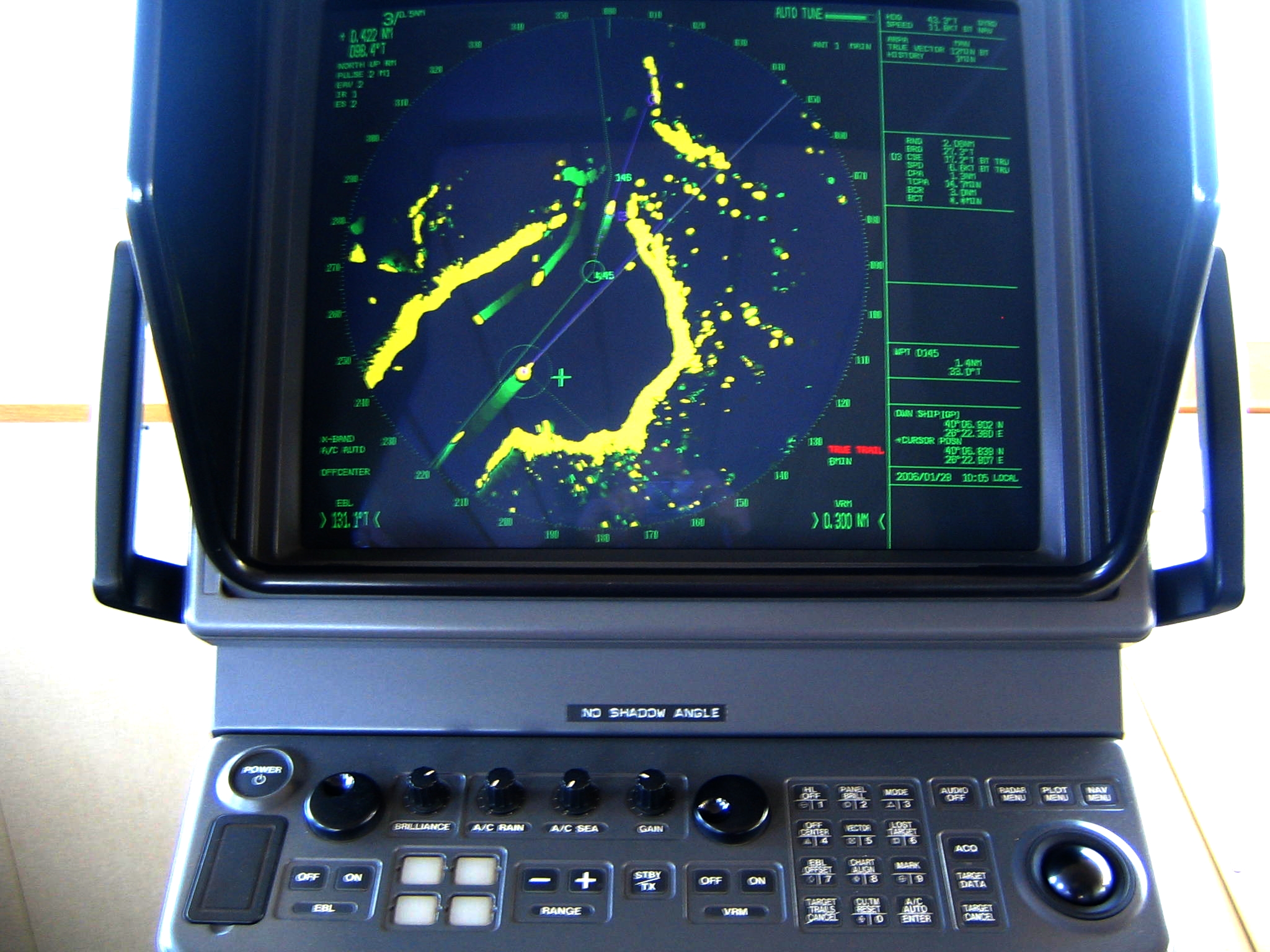
Radar navigation is the utilization of marine and aviation radar systems for vessel and aircraft navigation. When a craft is within radar range of land or special radar aids to navigation, the navigator can take distances and angular bearings to charted objects and use these to establish arcs of position and lines of position on a chart. A fix consisting of only radar information is called a radar fix.
Some types of radar fixes include the relatively self-explanatory methods of "range and bearing to a single object," "two or more bearings," "tangent bearings," and "two or more ranges."
Parallel indexing is a technique defined by William Burger in the 1957 book The Radar Observer's Handbook. This technique involves creating a line on the screen that is parallel to the ship's course, but offset to the left or right by some distance. This parallel line allows the navigator to maintain a given distance away from hazards.
Some techniques have been developed for special situations. One, known as the "contour method," involves marking a transparent plastic template on the radar screen and moving it to the chart to fix a position.
Another special technique, known as the Franklin Continuous Radar Plot Technique, involves drawing the path a radar object should follow on the radar display if the ship stays on its planned course. During the transit, the navigator can check that the ship is on track by checking that the pip lies on the drawn line.
After completing the plotting radar technique, the image from the radar can either be displayed, captured or recorded to a computer monitor using a frame grabber.
Notes
References
- {{cite book |author-link = Nathaniel Bowditch |url-status = dead
- {{cite book | author-link =
- {{cite book | author-link =
- {{cite book | author-link = | url-access = registration
References
- Maloney, 2003:744.
- Bowditch, 2002:816.
- National Imagery and Mapping Agency, 2001:163.
- National Imagery and Mapping Agency, 2001:169.
- National Imagery and Mapping Agency, 2001:164.
- National Imagery and Mapping Agency, 2001:182.
This article was imported from Wikipedia and is available under the Creative Commons Attribution-ShareAlike 4.0 License. Content has been adapted to SurfDoc format. Original contributors can be found on the article history page.
Ask Mako anything about Radar navigation — get instant answers, deeper analysis, and related topics.
Research with MakoFree with your Surf account
Create a free account to save articles, ask Mako questions, and organize your research.
Sign up freeThis content may have been generated or modified by AI. CloudSurf Software LLC is not responsible for the accuracy, completeness, or reliability of AI-generated content. Always verify important information from primary sources.
Report