From Surf Wiki (app.surf) — the open knowledge base
Quirino
Province in Cagayan Valley, Philippines
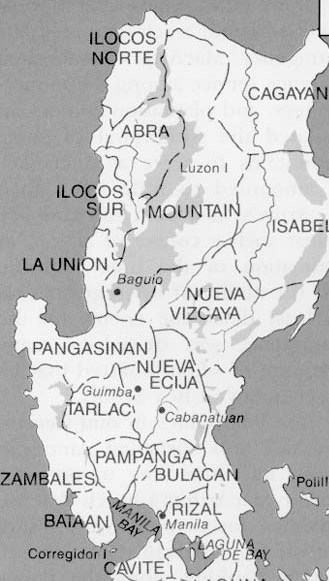
Province in Cagayan Valley, Philippines
| Field | Value |
|---|---|
| name | Quirino |
| settlement_type | |
| image_skyline | {{Photomontage |
| photo2a | FvfQuirinoOval5974_08.JPG |
| photo3a | Local Government Unit of Cabarroguis.jpg |
| size | 250 |
| spacing | 2 |
| color | transparent |
| border | 0 |
| image_caption | (from top: left to right) Part of Cagayan River in Quirino, Aerial view of Maddela, Quirino Provincial Capitol, Cordon-Diffun-Maddela-Aurora Road and Cabarroguis Town Hall |
| image_flag | |
| flag_size | 120x80px |
| image_seal | Seal of Quirino.svg |
| seal_size | 100x80px |
| nickname | Forest Heartland of Cagayan Valley |
| image_map | |
| mapframe | yes |
| mapframe-zoom | 9 |
| map_caption | Location within the Philippines |
| coordinates | |
| subdivision_type | Country |
| subdivision_name | Philippines |
| subdivision_type1 | Region |
| subdivision_name1 | |
| named_for | Elpidio Quirino |
| established_title | Founded |
| established_date | June 18, 1966 |
| seat_type | Capital |
| seat | |
| government_type | |
| leader_title | Governor |
| leader_name | Dakila Carlo E. Cua (PFP) |
| leader_title1 | Vice Governor |
| leader_name1 | Julius Caesar S. Vaquilar (PDP–Laban) |
| leader_title2 | Representative |
| leader_name2 | Midy Cua (Lakas–CMD) |
| leader_title3 | Legislature |
| leader_name3 | Quirino Provincial Board |
| area_footnotes | |
| area_total_km2 | 2319.66 |
| area_rank | 54th out of 82 |
| elevation_max_m | 1,808 |
| elevation_max_point | Mount Dialanese |
| population_footnotes | |
| population_total | |
| population_as_of | |
| population_rank | 73rd out of 82 |
| population_density_km2 | auto |
| population_density_rank | 72nd out of 82 |
| population_demonym | |
| demographics_type1 | Divisions |
| demographics1_title1 | Independent cities |
| demographics1_info1 | 0 |
| demographics1_title2 | Component cities |
| demographics1_info2 | 0 |
| demographics1_title3 | Municipalities |
| demographics1_info3 | {{Collapsible list |
| titlestyle | font-weight:normal;text-align:left;background-color:WhiteSmoke; |
| title | 6 |
| demographics1_title4 | Barangays |
| demographics1_info4 | 132 |
| demographics1_title5 | Districts |
| demographics1_info5 | Legislative district of Quirino |
| timezone | PHT |
| utc_offset | +8 |
| postal_code_type | ZIP code |
| postal_code | |
| area_code_type | |
| area_code | |
| iso_code | |
| blank_name_sec1 | Spoken languages |
| blank_info_sec1 | |
| website | |
| seat1 | Diffun |
| seat1_type | Largest Municipality |
the Philippine province
Quirino 1.jpg Maddela Quirino.JPG Cordon-Diffun-Maddela-Aurora Road (Quirino; 11-25-2022).jpg | mapframe-zoom = 9 |
Quirino, officially the Province of Quirino (; ), is a landlocked province in the Philippines located in the Cagayan Valley region in Luzon. Its capital is Cabarroguis while Diffun is the most populous in the province. It is named after Elpidio Quirino, the sixth President of the Philippines.
The province borders Aurora to the southeast, Nueva Vizcaya to the west, and Isabela to the north. Quirino used to be part of the province of Nueva Vizcaya, until it became a sub-province in 1966, then it was separated in 1972.
History
Early history
Long before its formal creation as an independent province, Quirino was the forest region of the province of Nueva Vizcaya, inhabited by tribal groups known as the Negritos. They roamed the hinterlands and built their huts at the heart of the jungle. Aside from the Negritos, the area was also inhabited by Ilongot people, who were feared for their headhunting raids against enemy tribes and Spanish-controlled settlements. Throughout the period of Spanish colonization, the province was one of the few remaining unconquered areas in the Philippines due to its remoteness, having only seen a Spanish military expedition in 1848 and the brief presence of Spanish missionaries in 1891.
Colonial era
During the American period, the territory of Quirino was administered by the province of Isabela before Congressman Leon Cabarroguis of Nueva Vizcaya pushed for its return to Nueva Vizcaya by authoring Republic Act No. 236, which was signed into law in 1948.
Establishment as a separate province
On June 18, 1966, Republic Act No. 4734 was enacted, constituting the municipalities of Diffun, Saguday, Aglipay, and Maddela, all from Nueva Vizcaya province, into a new sub-province to be known as "Quirino", named after the late Philippine President Elpidio Quirino. The reasons for naming it for Elpidio Quirino are the Ilocano settlers in the area and he created the neighboring province Aurora sub-province of Quezon in 1951 through Republic Act No. 648 under his presidency.
On June 21, 1969, Republic Act No. 5554 was enacted, amending RA 4734, and creating the municipality of Cabarroguis (now the provincial capital town), which was taken from portions of Diffun, Saguday, and Aglipay.
Republic Act No. 6394, authored by then-Congressman Leonardo B. Perez (Nueva Vizcaya–Lone), was passed on September 10, 1971, further amending RA 5554 and separating the sub-province of Quirino from its mother province, Nueva Vizcaya, constituting it into a regular province.
The province of Quirino was formally established on February 10, 1972, upon the assumption to office of the first elected provincial and municipal officials headed by Dionisio Sarandi as Provincial Governor.
On February 25, 1983, Batas Pambansa Blg. 345 was enacted, creating within Quirino the municipality of Nagtipunan, a division of the municipality of Maddela.
Marcos dictatorship era
Main article: Martial law under Ferdinand Marcos, Deforestation in the Philippines during the Marcos administration, Human rights abuses of the Marcos dictatorship
The beginning months of the 1970s marked a period of turmoil and change in the Philippines, as well as in the localities which would later become the Province of Quirino.
In February 1972, the efforts of Quirino's legislators finally managed to see its establishment as a separate province.
During his bid to be the first Philippine president to be re-elected for a second term, Ferdinand Marcos launched an unprecedented number of public works projects that caused the Philippine economy to take a sudden downwards turn known as the 1969 Philippine balance of payments crisis, which led to a period of economic difficulty and social unrest. With only a year left in his last constitutionally allowed term as president, Ferdinand Marcos placed the Philippines under martial law in September 1972 and thus retained the position for fourteen more years as a dictator.
In Quirino, one of the most significant events of this period were the logging concessions in the areas of the Sierra Madre region awarded to various Marcos cronies, which marked the beginning of widespread deforestation and other environmental problems in the province.
When the 1986 snap election came along, Quirino was noted as a site of political violence with the murder of UNIDO opposition party organizers Francisco Laurella and Fernando Pastor Sr., and Pastor's son Fernando Pastor Jr., later attributed to Marcos party-mate and Quirino province assemblyman Orlando Dulay, who was convicted of the three murders in 1990.
Geography
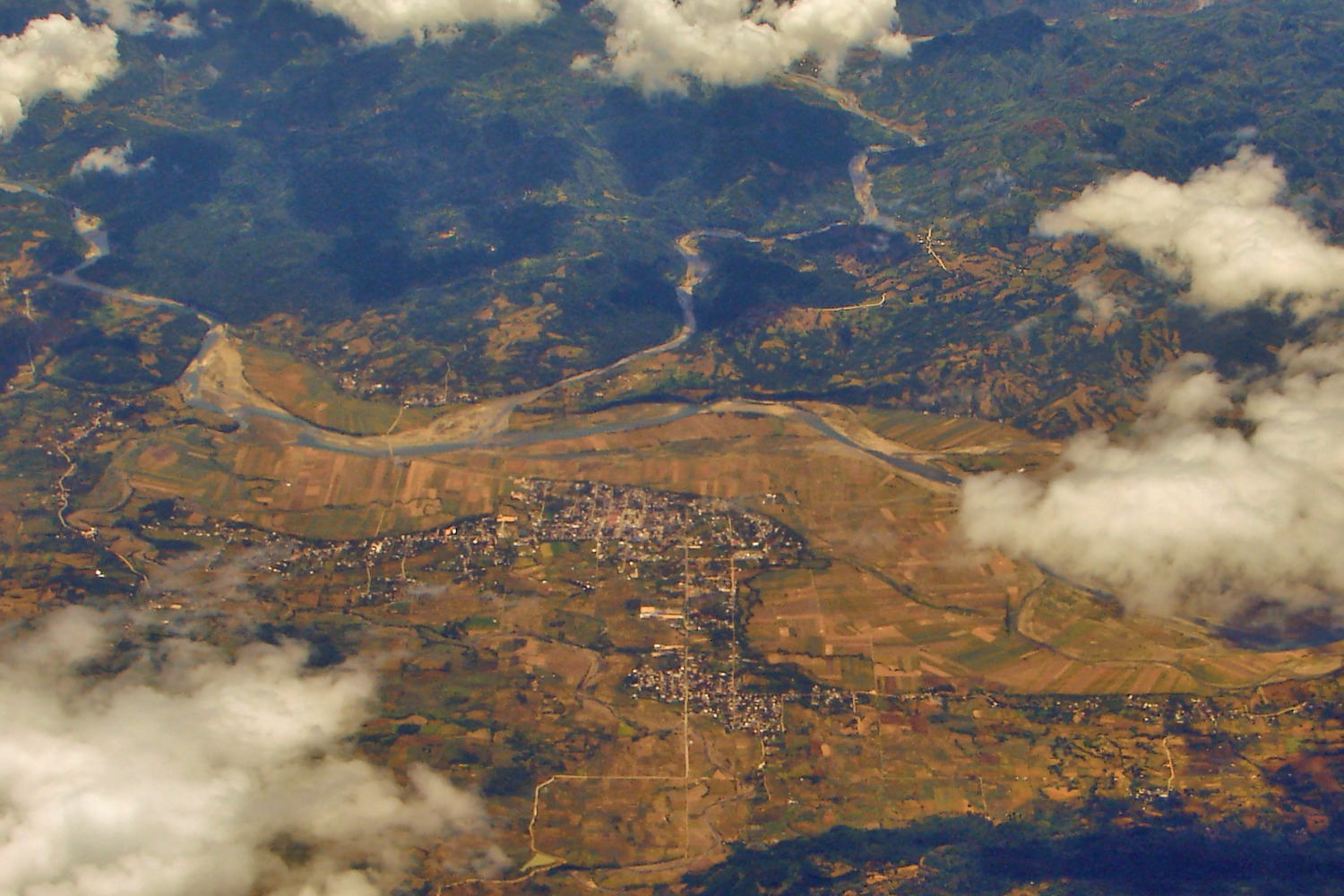
Quirino covers a total area of 3,323.47 km2 occupying the southeastern section of the Cagayan Valley region. A landlocked province, it is situated within the upper portion of the Cagayan River basin and bounded by Isabela on the north, Aurora on the east and southeast, and Nueva Vizcaya on the west and southwest.
The Sierra Madre mountain range provides a natural barrier on the eastern and southern border of the province and the Namamparang Range on the western part. The province is generally mountainous, with about 80 percent of the total land area covered by mountains and highlands. A large portion of the province lies within the Quirino Protected Landscape.
Climate
The province has a mean annual temperature of 33.6 C. June is generally the warmest month and the wettest months are March to August, with the rest of the year being neither too dry nor too wet. Heavy, sustained rainfall occurs from September to November.
Administrative divisions
Quirino comprises six municipalities, all encompassed by a single legislative district.

| Municipality | Population | Area | Density(2020) | Barangay | (2020) | (2015) | km2 | sqmi | /km2 | /sqmi | Total | 203,828 | 188,991 | 3,323.47 | 2,319.66 km2 | {{sigfig | 203,828/2,319.66 | 2}} PD/km2 | 132 |
|---|---|---|---|---|---|---|---|---|---|---|---|---|---|---|---|---|---|---|---|
| Aglipay | 27,787 | 161.70 km2 | {{sigfig | 30,714/161.70 | 2}} PD/km2 | 25 | |||||||||||||
| Cabarroguis | † | 30,582 | 260.20 km2 | {{sigfig | 33,533/260.20 | 2}} PD/km2 | 17 | ||||||||||||
| Diffun | 52,569 | 320.10 km2 | {{sigfig | 56,102/320.10 | 2}} PD/km2 | 33 | |||||||||||||
| Maddela | 38,499 | 918.57 km2 | {{sigfig | 40,943/918.57 | 2}} PD/km2 | 32 | |||||||||||||
| Nagtipunan | 23,484 | 1,607.40 km2 | {{sigfig | 25,399/607.40 | 2}} PD/km2 | 16 | |||||||||||||
| Saguday | 16,070 | 55.50 km2 | {{sigfig | 17,137/51.69 | 2}} PD/km2 | 9 | |||||||||||||
| Provincial capital | Municipality |
Barangays
The six municipalities of the province comprise a total of 132 barangays, with Gundaway (Poblacion) in Cabarroguis as the most populous in 2010, and Rang-ayan in Aglipay as the least.
Demographics
The population of Quirino in the 2024 census was 210,841 people, with a density of {{sigfig|210,841/3,323.47|2}} PD/km2.
Quirino has the largest Igorot population next to its mother province Nueva Vizcaya outside the Cordillera region.
Languages
The main languages are Ilocano and Ifugao. Other languages are Bugkalot, Pangasinan, Kankana-ey, Tagalog, and English. As Quirino was part of Provincia de Cagayan which is the predecessor of Cagayan Valley, a few residents speak Ibanag, which was the lingua franca of Provincia de Cagayan before it was replaced by Ilocano.
Religion
Quirino is predominantly Roman Catholic with 54 percent adherence while Evangelicals and United Methodist Church serve as significant minorities with up to 20% of the population. Some people still practice indigenous beliefs. Other religions such as the Iglesia ni Cristo (forming more than 9% of the province population), mainline Protestant and Aglipayan are also well represented. Other religious groups are also have some minor adherents such as Islam.
Economy
Agriculture is the main industry in the province, with rice and corn as major crops. These supply the demand of neighboring provinces and the metropolis. It is the leading producer of banana in the Cagayan Valley region. Banana as well as banana chips are major products sold in Metro Manila and Pampanga. Small scale industries like furniture making, basketry, rattan craft, and dried flower production are prevalent.
Government
| District representative | Provincial governor | Provincial vice governor | Provincial board | 1st District | 2nd District |
|---|---|---|---|---|---|
| Midy N. Cua | |||||
| Dakila Carlo E. Cua | |||||
| Julius Caesar S. Vaquilar | |||||
| Marlo S. Guillermo | Jovino F. Navalta | Marcelina M. Pagbilao | Babylyn G. Reyes | ||
| Linda G. Dacmay | Roy A. Saladino | Tomas L. Baccac Sr. | Alegre M. Ylanan | Celso J. Albano |
References
References
- "List of Provinces". National Statistical Coordination Board.
- Salgado, Pedro. "Cagayan Valley and Easter Cordillera: 1581-1898, Volume II". Rex Publishing.
- (June 18, 1966). "An Act Creating the Subprovince of Quirino in the Province of Nueva Vizcaya".
- "Brief History of Quirino".
- (June 21, 1969). "An Act Amending Republic Act Numbered Four Thousand Seven Hundred And Thirty-four, Entitled, "An Act Creating the Subprovince of Quirino in the Province of Nueva Vizcaya," and for Other Similar Purposes".
- (February 25, 1983). "An Act Creating the Municipality of Nagtipunan, in the Province of Quirino".
- Cororaton, Cesar B.. "Exchange Rate Movements in the Philippines". DPIDS Discussion Paper Series 97-05.
- Kessler, Richard J.. (1989). "Rebellion and repression in the Philippines". Yale University Press.
- Celoza, Albert F.. (1997). "Ferdinand Marcos and the Philippines: The Political Economy of Authoritarianism". Greenwood Publishing Group.
- Schirmer, Daniel B.. (1987). "The Philippines reader : a history of colonialism, neocolonialism, dictatorship, and resistance". South End Press.
- Balbosa, Joven Zamoras. (1992). "IMF Stabilization Program and Economic Growth: The Case of the Philippines". Journal of Philippine Development.
- (2003). "The Philippine Economy: Development, Policies, and Challenges". Oxford University Press.
- (1998). "Kasaysayan, The Story of the Filipino People Volume 9:A Nation Reborn.". Asia Publishing Company Limited.
- Robles, Raissa. (2016). "Marcos Martial Law: Never Again". Filipinos for a Better Philippines, Inc..
- Danguilan Vitug, Marites. (1993). "The Politics of Logging: Power from the Forest". Philippine Center for Investigative Journalism.
- Ricardo., Manapat. (1991). "Some are smarter than others : the history of Marcos' crony capitalism". Aletheia Publications.
- REYES, RACHEL A. G.. (2016-10-18). "Marcos cronies and the golden oriole of Isabela".
- (1990-01-12). "Marcos Follower Guilty of 3 Campaign Slayings". The L.A. Times.
- Pawilen, Reidan M.. (May 2021). "The Solid North myth: an Investigation on the status of dissent and human rights during the Marcos Regime in Regions 1 and 2, 1969-1986".
- (2015-11-15). "MARTYRS AND HEROES: LAURELLA, Francisco "Frank" C.".
- (2016-05-03). "MARTYRS AND HEROES: PASTOR Sr., Fernando T. – Bantayog ng mga Bayani". Bantayog ng mga Bayani.
- (August 2025). "Weather forecast for Quirino, Philippines". [[StormGeo.
- "MAP: Catholicism in the Philippines".
- "Archived copy".
- "MAP: Iglesia ni Cristo in the Philippines".
- "The Province of Quirino".
This article was imported from Wikipedia and is available under the Creative Commons Attribution-ShareAlike 4.0 License. Content has been adapted to SurfDoc format. Original contributors can be found on the article history page.
Ask Mako anything about Quirino — get instant answers, deeper analysis, and related topics.
Research with MakoFree with your Surf account
Create a free account to save articles, ask Mako questions, and organize your research.
Sign up freeThis content may have been generated or modified by AI. CloudSurf Software LLC is not responsible for the accuracy, completeness, or reliability of AI-generated content. Always verify important information from primary sources.
Report