From Surf Wiki (app.surf) — the open knowledge base
Qiemo County
| Field | Value |
|---|---|
| name | Qiemo County |
| native_name | ug-Arab |
| zh-hans | |
| other_name | |
| settlement_type | County |
| image_skyline | Main bazaar Cherchen.jpg |
| image_caption | Main entrance of a bazaar in the county seat of Qiemo |
| image_map | Location of Qiemo within Xinjiang (China).png |
| map_caption | Location of Qiemo County (pink) in Bayingolin Prefecture (yellow) and Xinjiang |
| pushpin_map | China Xinjiang Bayingolin#Xinjiang#China |
| pushpin_label | Qiemo |
| pushpin_relief | yes |
| pushpin_map_caption | Location of the county seat in Xinjiang |
| coor_pinpoint | Qiemo County government |
| coordinates | |
| subdivision_type | Country |
| subdivision_name | China |
| subdivision_type1 | Autonomous region |
| subdivision_name1 | Xinjiang |
| subdivision_type2 | Autonomous prefecture |
| subdivision_name2 | Bayingolin |
| demographics_type2 | Ethnic groups |
| demographics2_title1 | Major ethnic groups |
| demographics2_info1 | Uyghur, Han Chinese |
| seat_type | County seat |
| seat | Qiemo (Qarqan) |
| unit_pref | Metric |
| area_urban_footnotes | -- |
| area_rural_footnotes | -- |
| area_metro_footnotes | -- |
| area_magnitude | -- |
| area_total_km2 | 138680 |
| area_footnotes | |
| population_footnotes | |
| population_total | 69,236 |
| population_as_of | 2020 |
| population_density_km2 | auto |
| timezone1 | China Standard |
| utc_offset1 | +8 |
| postal_code_type | Postal code |
| postal_code | 841900 |
| website |
zh-hans tags -- |ibox-order=ug, zh Chü¹-mo⁴ Hsien⁴ Jūmò Xiàn Qiemo County () as the official romanized name, also transliterated from Uyghur as Qarqan County (Uyghur: چەرچەن ناھىيىسى; ), is a county under the administration of the Bayin'gholin Mongol Autonomous Prefecture in the Xinjiang Uyghur Autonomous Region of the People's Republic of China, bordering the Tibet Autonomous Region to the south. Its area is 138645 km² and, according to the 2002 census, it has a population of 60,000. The county seat is at Qiemo Town.
Name
"Qiemo (W-G: Ch'ieh-mo) 且末 = modern **Cherchen** () or Charchan (Uyghur: *Qarqan*). There has been uncertainty about this name as Chavannes (1907), p. 156, and then Stein (1921a), Vol. I, 296 ff., gave an incorrect romanization for the first character. Chavannes, using the French EFEO romanization system, gave *tsiu*, and Stein used the Wade-Giles equivalent, *chü*. In fact, the character is correctly rendered *k'ie* in EFEO, ch'ieh in Wade–Giles and qie in pinyin. Nevertheless, there has never been any serious dispute about its identification with modern Cherchen."
It has been suggested that the name "Cherchen" may have been derived from Shanshan, the kingdom that once ruled the area. A number of different names have been used for the town, Lionel Giles has recorded the following names for Ruoqiang Town (with his Wade-Giles forms of the Chinese names converted to pinyin): :Jumo Han :Zuomo (左末) Song Yun :Jumo Jun [Sui] :Zhemotuona (折摩馱那) Xuanzang :Boxian Zhen (播仙鎭) [Tang, after A.D. 674] :Jurjān [Mīrzā Haidar, sixteenth century] :Charchan [modern name]
It was called Calmadana in Kharosthi documents found in the region.
History
Several mummies were found in Cherchen including the Cherchen Man.
The modern county is based on the ancient kingdom of Qiemo (且末) mentioned in the Hanshu and the Hou Hanshu. According to the Hanshu, Qiemo/Cherchen had "230 households, 1,610 individuals and 320 persons able to bear arms."
The ancient Qiemo may have been located on the east of the Cherchen (Charchan / Qarqan) river, across from the modern Cherchen. Qiemo became part of Loulan Kingdom after it was under Chinese control during the Han dynasty and renamed Shanshan. Later in 442 CE, after an attack by Juqu Anzhou, King Bilong of Shanshan fled to Qiemo together with half of his countrymen so Shanshan came to be ruled by Qiemo.
The Buddhist pilgrim Xuanzang passed through this region in 644 on his return from India to China, visited a town called Nafubo (納縛波, thought to be Charklik) of Krořän (Loulan), and wrote of Ziemo (Qiemo), "A fortress exists, but not a trace of man".
Marco Polo who passed through Cherchen mentioned it as a province with a town of the same name as its chief city. Its inhabitants were described as Muslims.
In August 2014, local authorities in Cherchen County (Qiemo County) announced, "Incentive Measures Encouraging Uighur-Chinese Intermarriage," including a 10,000 CNY (1,450 USD) cash reward per annum for the first five years to such intermarried couples as well as preferential treatment in employment and housing plus free education for the couples, their parents and offspring. County CCP Secretary Zhu Xin remarked:
Geography
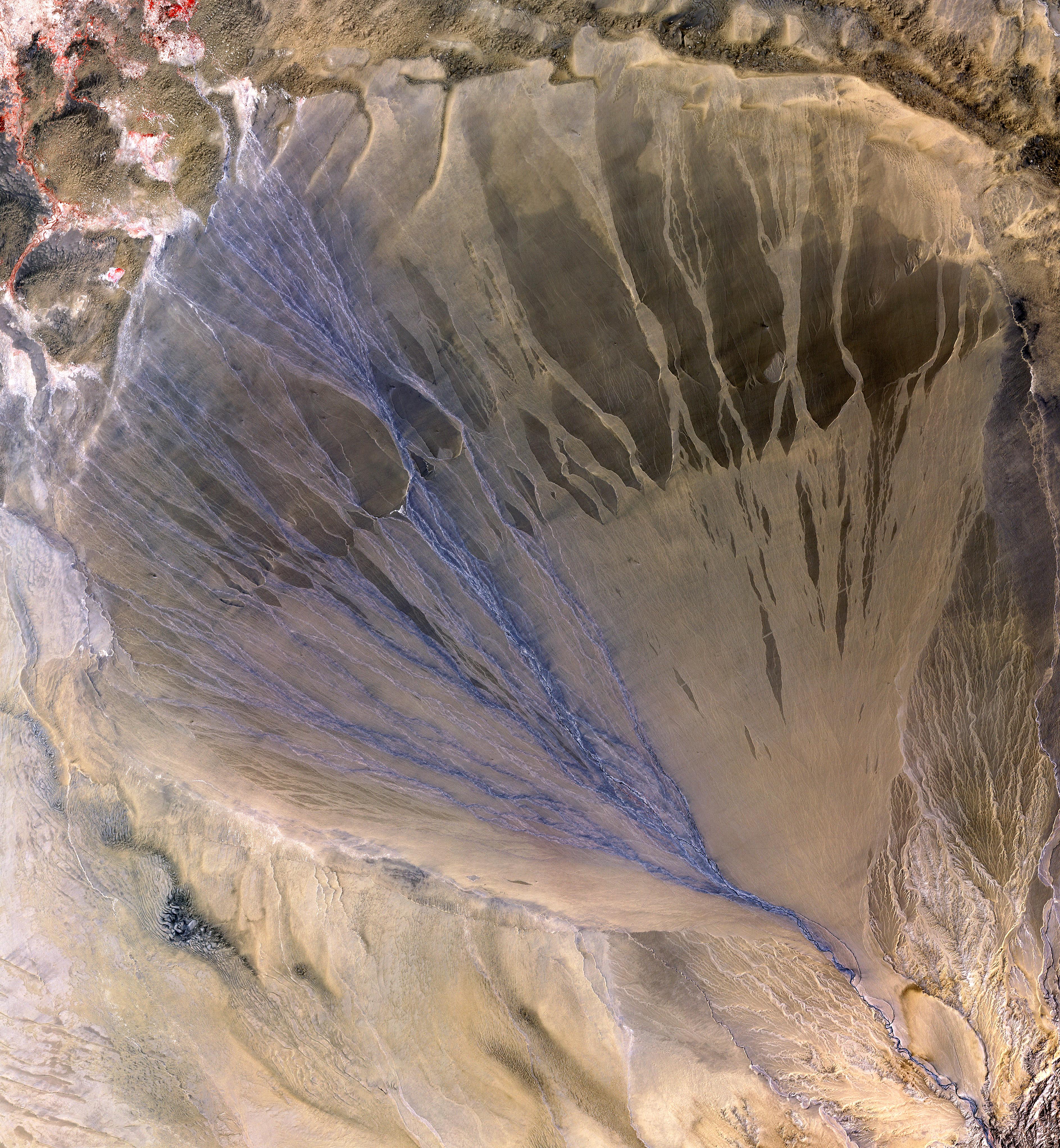
From the south to the north, the lands of the county run from the main range of the Kunlun Mountains (which forms the border with the Tibet Autonomous Region) to the middle of the Taklamakan Desert. The southernmost area of the county includes the northern side of part of the Ulugh Muztagh range (the main range of the Kunlun), and a section of the Altyn-Tagh range which runs roughly parallel to the main range of the Kunlun. Most of the county population lives in the northern foothills of the mountains, in the oases watered by snow-fed rivers.
The Qiemo River (Qarqan River) near the town of Ziemo (Qiemo) is frozen for two to three months in the winter. From the foot of the mountains to the oasis of Ziemo (Qiemo), it has a faIl of nearly 4000 feet.
Climate
Typically for Xinjiang, Qiemo has a harsh cool arid climate (Köppen BWk). It is one of the very driest places in this dry autonomous region, receiving an average of less than 25 mm of rainfall equivalent every year. Summer days are hot, although nights are fairly pleasant, whilst winters are chilly although less severe than in more northerly parts of Xinjiang, with average maxima above freezing except in January.
|Jan record high C = 17.5 |Feb record high C = 18.4 |Mar record high C = 31.1 |Apr record high C = 36.9 |May record high C = 38.2 |Jun record high C = 40.6 |Jul record high C = 41.6 |Aug record high C = 41.5 |Sep record high C = 36.6 |Oct record high C = 33.2 |Nov record high C = 24.4 |Dec record high C = 21.5 |Jan record low C = -27.3 |Feb record low C = -26.7 |Mar record low C = -12.7 |Apr record low C = -5.2 |May record low C = -0.1 |Jun record low C = 6.4 |Jul record low C = 10.9 |Aug record low C = 6.3 |Sep record low C = -0.1 |Oct record low C = -8.3 |Nov record low C = -16.3 |Dec record low C = -23.0
|Jan record high C = 16.3 |Jan record low C = -32.6 |Feb record high C = 17.2 |Feb record low C = -32.7 |Mar record high C = 32.7 |Mar record low C = -12.3 |Apr record high C = 37.0 |Apr record low C = -8.3 |May record high C = 38.2 |May record low C = 1.2 |Jun record high C = 41.6 |Jun record low C = 7.2 |Jul record high C = 45.6 |Jul record low C = 11.1 |Aug record high C = 42.7 |Aug record low C = 6.8 |Sep record high C = 39.5 |Sep record low C = 0.6 |Oct record high C = 31.9 |Oct record low C = -8.4 |Nov record high C = 24.7 |Nov record low C = -18.0 |Dec record high C = 16.7 |Dec record low C = -24.7
Administrative divisions
Qiemo (Qarqan) County includes 6 towns and 7 townships:
| Name | Simplified Chinese | Hanyu Pinyin | Uyghur (UEY) | Uyghur Latin (ULY) | Mongolian (traditional) | Mongolian (Cyrillic) | Administrative division code | Notes | ||||||||
|---|---|---|---|---|---|---|---|---|---|---|---|---|---|---|---|---|
| **Towns** | ||||||||||||||||
| Qiemo Town | ||||||||||||||||
| (Qarqan) | 且末镇 | zh | چەرچەن بازىرى | ug | 652825100 | |||||||||||
| Oyyaylak Town | 奥依亚依拉克镇 | zh | ئوييايلاق بازىرى | ug | 652825101 | formerly Oyyaylak Township (奥依亚依拉克乡) | ||||||||||
| Tatirang Town | 塔提让镇 | zh | تاتىراڭ بازىرى | ug | 652825102 | formerly Tatirang Township (塔提让乡) | ||||||||||
| Tazhong Town | ||||||||||||||||
| (Tarim Ottura Town) | 塔中镇 | zh | تارىم ئوتتۇرا بازىرى | ug | 652825103 | |||||||||||
| Aqqan Town | ||||||||||||||||
| (Aqiang, A-ch'iang) | 阿羌镇 | zh | ئاچچان بازىرى | ug | 652825104 | formerly Aqqan Township (阿羌乡) | ||||||||||
| Aral Town | 阿热勒镇 | zh | ئارال بازىرى | ug | 652825105 | formerly Aral Township (阿热勒乡) | ||||||||||
| **Townships** | ||||||||||||||||
| Qongkol Township | 琼库勒乡 | zh | چوڭكۆل يېزىسى | ug | 652825201 | |||||||||||
| Tograklik Township | 托格拉克勒克乡 | zh | توغراقلىق يېزىسى | ug | 652825202 | |||||||||||
| Bagerik Township | 巴格艾日克乡 | zh | باغئېرىق يېزىسى | ug | 652825203 | |||||||||||
| Yengiostang Township | 英吾斯塘乡 | zh | يېڭىئۆستەڭ يېزىسى | ug | 652825204 | |||||||||||
| Aktikandong Township | 阿克提坎墩乡 | zh | ئاق تېكەندۆڭ يېزىسى | ug | 652825205 | |||||||||||
| Koxsatma Township | 阔什萨特玛乡 | zh | قوشساتما يېزىسى | ug | 652825206 | |||||||||||
| url=https://archive.org/details/collinsworldatla00harp/page/82 | title=Collins World Atlas Illustrated Edition | publisher=HarperCollins | page=82 | edition=3rd | isbn=978-0-00-723168-3 | quote=Koramlik{...}Aqqan | date=2007 | via=Internet Archive}} | 库拉木勒克乡 | zh | قوراملىق يېزىسى | ug | 652825209 |
Economy
The economy of the county is primarily based on agriculture and animal husbandry. Agricultural products of the county include wheat, corn, cotton and rapeseed. Lynx and fox hunting in the county produces valuable animal skins. Mining in the county includes coal, jade and asbestos. Industries in the county include mining, leather making, and grain and oil processing.
Demographics
As of 2015, 50,754 (73.06%) of the 69,464 residents of the county were Uyghur, 18,365 (26.44%) were Han Chinese and 345 were from other ethnic groups.
As of 1999, 77.5% of the population of the county was Uyghur and 22.31% of the population was Han Chinese.
Transportation
- Qiemo Yudu Airport
- China National Highway 315
- Qiemo railway station on Hotan–Ruoqiang railway
Notable persons
- Mihrigul Tursun, Xinjiang re-education camp detainee
- Cherchen Man, one of the Tarim mummies
Historical maps
File:Txu-oclc-6654394-nj-45-3rd-ed.jpg|Map of Qiemo (labeled as Ch'ieh-mo) and surrounding area (1975) File:Operational Navigation Chart G-7, 6th edition.jpg|Map including Qiemo (labeled as QIEMO (CH'IEH-MO)) and surrounding region (DMA, 1980) File:Txu-oclc-6654394-nj-45-2nd-ed.jpg|Map including Qarqan (labeled as CH'IEH-MO (CHERCHEN) (CH'E-ERH-CH'ENG)) (USATC, 1971)
Notes
References
- Giles, Lionel (1930–1932). "A Chinese Geographical Text of the Ninth Century." BSOS VI, pp. 825–846.
- Hill, John E. (2015). Through the Jade Gate - China to Rome: A Study of the Silk Routes 1st to 2nd Centuries CE. Second Edition. Vols. I-II. CreateSpace. North Charleston, South Carolina.
References
- link. (10 December 2010). zh-hans. 面积14万平方千米,人口4.9万,有维吾尔、汉、回等民族,其中维吾尔族占82.3%,汉族占17.7%,
- [http://www.citypopulation.de/en/china/xinjiang/admin/ Xinjiang: Prefectures, Cities, Districts and Counties]
- link. Ministry of Housing and Urban-Rural Development. (2010). China Architecture & Building Press
- (21 January 2019). "Uyghur refugee tells of death and fear inside China's Xinjiang camps".
- (2003). Xie Yuzhong {{lang. zh-hans. 解玉忠. [[:zh:新疆人民出版社. 新疆人民出版社]]
- Hill (2015), Vol. I, p. 84.
- (2000). "The Tarim Mummies: Ancient China and the Mystery of the Earliest Peoples from the West". Thames & Hudson. London.
- Giles (1930–1932), p. 846.
- Hill (2015), Vol. I, p. 85.
- (2005). "Geographica: The complete illustrated Atlas of the world". Mynah.
- Miller (1959), p. 24, n. 44.
- Hill (2015)
- [http://zh.wikisource.org/wiki/%E9%AD%8F%E6%9B%B8/%E5%8D%B7102 Weishu] Original text: {{lang. zh-hant. 真君三年,鄯善王比龍避沮渠安周之難,率國人之半奔且末,後役屬鄯善。 Translation: In the third year of [[Emperor Taiwu of Northern Wei. Zhenjun]], the Loulan king Bilong, so as to avoid troubles from Juqu Anzhou, led half his countrymen and fled to Qiemo, which later controlled Shanshan.
- zh-hans. 从此东行六百余里至折摩驮那故国。即涅末地也。城郭岿然人烟断绝。复此东北行千余里至纳缚波故国。即楼兰地也。
- J.M. Dent. (1908). "The travels of Marco Polo the Venetian".
- Asim Kashgarian. (21 August 2020). "China Video Ad Calls for 100 Uighur Women to 'Urgently' Marry Han Men".
- link. [[China Meteorological Administration]]
- "Experience Template". [[China Meteorological Administration]].
- [http://www.weather.com.cn/cityintro/101130605.shtml? Weather China]
- link. (7 July 2019). 新疆且末县人民政府办公室
- link. [[National Bureau of Statistics of the People's Republic of China]]. (2018). zh-hans. 统计用区划代码 名称 652825100000 且末镇 652825101000 奥依亚依拉克镇 652825102000 塔提让镇 652825103000 塔中镇 652825104000 阿羌镇 652825105000 阿热勒镇 652825201000 琼库勒乡 652825202000 托格拉克勒克乡 652825203000 巴格艾日克乡 652825204000 英吾斯塘乡 652825205000 阿克提坎墩乡 652825206000 阔什萨特玛乡 652825209000 库拉木勒克乡 652825501000 兵团三十七团 652825502000 兵团三十八团
- link. XZQH.org. (30 January 2015). zh-hans. 2003年,且末县总面积138680平方千米,{...}2010年第六次人口普查,且末县常住总人口65572人,其中:且末镇18893人,阿热勒乡2304人,琼库勒乡5455人,托格拉克勒克乡8011人,巴格艾日克乡4235人,英吾斯塘乡6233人,阿克提坎墩乡4081人,阔什萨特玛乡2982人,塔提让乡4226人,阿羌乡2064人,库拉木勒克乡2008人,奥依亚依拉克乡1853人,兵团农二师且末工程支队1715人,兵团三十八团1512人。 2013年1月9日,自治区政府(新政函[2013]8号)批复同意撤销奥依亚依拉克乡,设立奥依亚依拉克镇。2014年10月20日,自治区政府(新政函[2014]178号)批复同意撤销塔提让乡,设立塔提让镇,并将县直辖的26848平方公里划归塔提让镇管辖。调整后,全县辖3个镇、9个乡:且末镇、奥依亚依拉克镇、塔提让镇、阿热勒乡、琼库勒乡、托格拉克勒克乡、巴格艾日克乡、英吾斯塘乡、阿克提坎墩乡、阔什萨特玛乡、阿羌乡、库拉木勒克乡。
- (2007). "Collins World Atlas Illustrated Edition". [[HarperCollins]].
- (2008). "World Atlas Trade & Logistics Edition". World Trade Press.
- (September 2009). 上海辞书出版社. [[Shanghai Lexicographical Publishing House]].. zh-hans. 且(jū){...}'''且末''' 县名。在新疆维吾尔自治区南部,{...}经济以农、牧业为主,农产有小麦、玉米、棉花、油菜籽。狩猎业亦盛,产猞猁、狐狸等珍贵毛皮。矿产有煤、玉石、石棉。工业有采矿、皮毛和粮油加工等。
- link. {{lang. ug. شىنجاڭ ئۇيغۇر ئاپتونوم رايونى {{lang. zh-hans. 新疆维吾尔自治区统计局 Statistic Bureau of Xinjiang Uygur Autonomous Region. (15 March 2017)
- (2004). "Governing China's Multiethnic Frontiers". [[University of Washington Press]].
- (2020-06-10). "". link. Statistical Bureau of Xinjiang Uyghur Autonomous Region

This article was imported from Wikipedia and is available under the Creative Commons Attribution-ShareAlike 4.0 License. Content has been adapted to SurfDoc format. Original contributors can be found on the article history page.
Ask Mako anything about Qiemo County — get instant answers, deeper analysis, and related topics.
Research with MakoFree with your Surf account
Create a free account to save articles, ask Mako questions, and organize your research.
Sign up freeThis content may have been generated or modified by AI. CloudSurf Software LLC is not responsible for the accuracy, completeness, or reliability of AI-generated content. Always verify important information from primary sources.
Report