From Surf Wiki (app.surf) — the open knowledge base
Prune
Dried plum
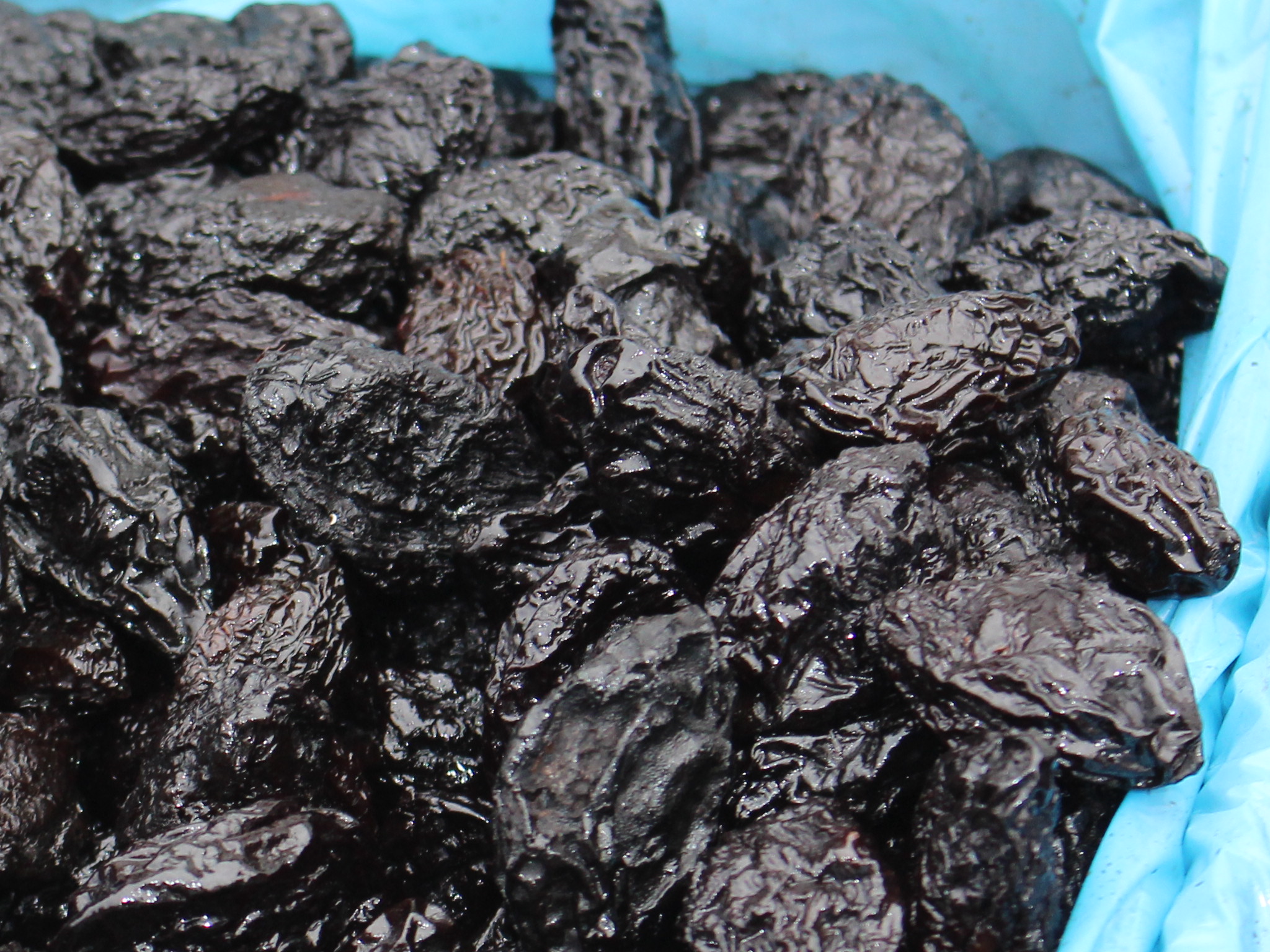
Dried plum
the dried fruit
A prune is a dried plum, most commonly from the European plum (Prunus domestica) tree. Not all plum species or varieties can be dried into prunes. Use of the term prune for fresh plums is obsolete except when applied to varieties of plum grown for drying. In this usage, a prune is the firm-fleshed plum fruit of P. domestica varieties that have a high soluble solids content and do not ferment during drying.
Most prunes are freestone cultivars (i.e., the pit is easy to remove), whereas most plums grown for fresh consumption are clingstone (the pit is more difficult to remove). The sorbitol content of dietary fiber likely provides the laxative effect associated with consuming prunes. Prunes are 64% carbohydrates, including dietary fiber, 2% protein, a rich source of vitamin K, and a moderate source of B vitamins and dietary minerals.
Production
More than 1,000 plum cultivars are grown for drying. The main cultivar grown in the United States is the 'Improved French' prune. Other varieties include 'Sutter', 'Tulare Giant', 'Moyer', 'Imperial', 'Italian', and greengages. Fresh prunes reach the market earlier than fresh plums and are usually smaller in size. The great majority of commercially grown prune varieties are self-fertile and do not need separate pollinator trees.
Name change
In 2001, plum growers in the United States were authorized by the Food and Drug Administration to call prunes "dried plums". Due to a perception that prunes relieve constipation (perceived as derogatory), some distributors stopped using the word "prune" on packaging labels in favor of "dried plums".
Health effects
Nutrition
Prunes are 31% water, 64% carbohydrates, 2% protein, and less than 1% fat (table). In a reference amount of 100 g, prunes supply 240 calories, 7 grams of dietary fiber, and are a rich source of vitamin K (50% of the Daily Value, DV), copper (31% DV), and potassium (24% DV), with several B vitamins (12-14% DV) and other dietary minerals in moderate content (10–13% DV) (table).
Phytochemicals
Prunes and prune juice contain phytochemicals, including phenolic compounds (mainly as neochlorogenic acids and chlorogenic acids) and sorbitol.
Uses
Prunes are used in preparing both sweet and savory dishes.
Contrary to the name, boiled plums or prunes are not used to make sugar plums, which instead may be nuts, seeds, or spices coated with hard sugar, also called comfits.
Gallery
File:Ortenauer.JPG|Raw plums that have not been dried into prunes File:Chocolate-coated Dried Plums.jpg|Prunes in chocolate with an almond in the middle File:Tajin aux pruneaux.JPG|Moroccan-style tagine of lamb with prunes and almonds
References
References
- (2007). "Growing Prunes (Dried Plums) in California: An Overview". UCANR Publications.
- (2017). "Dehydrated Prunes Grades and Standards". Agricultural Marketing Service, US Department of Agriculture.
- Richard P. Buchner. (16 May 2012). "Prune Production Manual". UCANR Publications.
- (2007). "Growing Prunes (Dried Plums) in California: An Overview". UCANR Publications.
- (2006-01-06). "FDA Approves Prune Name Change". ABC News.
- Janick, Jules and Robert E. Paull (2008). ''The Encyclopedia of Fruit and Nuts''. CABI. {{ISBN. 0-85199-638-8. p. 696.
- (2001). "Chemical Composition and Potential Health Effects of Prunes: A Functional Food?". Critical Reviews in Food Science and Nutrition.
- EFSA Panel on Dietetic Products, Nutrition and Allergies (NDA). (2012). "Scientific Opinion on the substantiation of health claims related to dried plums of 'prune' cultivars (''Prunus domestica'' L.) and maintenance of normal bowel function (ID 1164, further assessment) pursuant to Article 13(1) of Regulation (EC) No 1924/2006". EFSA Journal.
- Kawash, Samira. (22 December 2010). "Sugar Plums: They're Not What You Think They Are".
This article was imported from Wikipedia and is available under the Creative Commons Attribution-ShareAlike 4.0 License. Content has been adapted to SurfDoc format. Original contributors can be found on the article history page.
Ask Mako anything about Prune — get instant answers, deeper analysis, and related topics.
Research with MakoFree with your Surf account
Create a free account to save articles, ask Mako questions, and organize your research.
Sign up freeThis content may have been generated or modified by AI. CloudSurf Software LLC is not responsible for the accuracy, completeness, or reliability of AI-generated content. Always verify important information from primary sources.
Report