From Surf Wiki (app.surf) — the open knowledge base
Programmed Data Processor
Name used for several lines of minicomputers

Name used for several lines of minicomputers


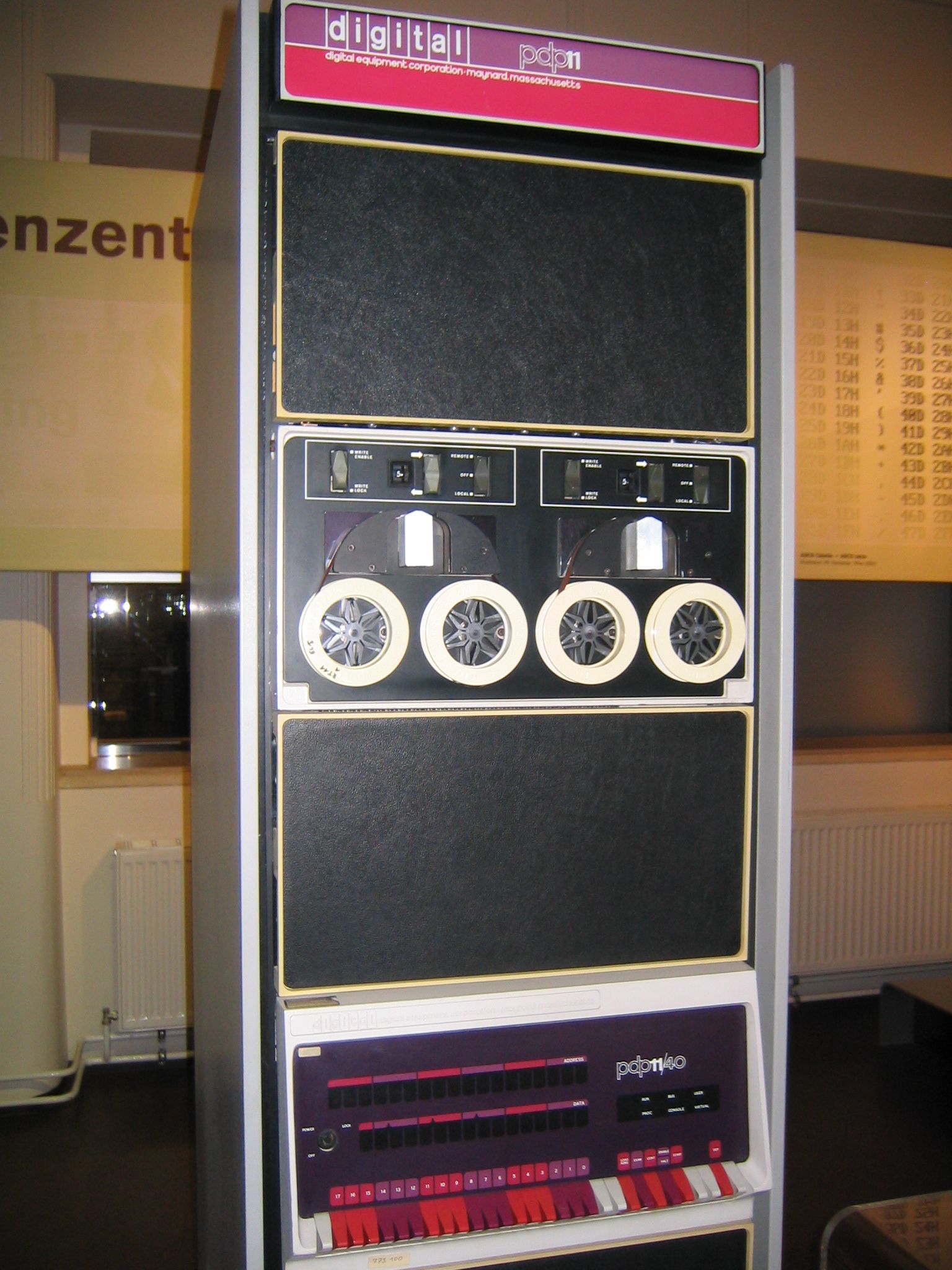

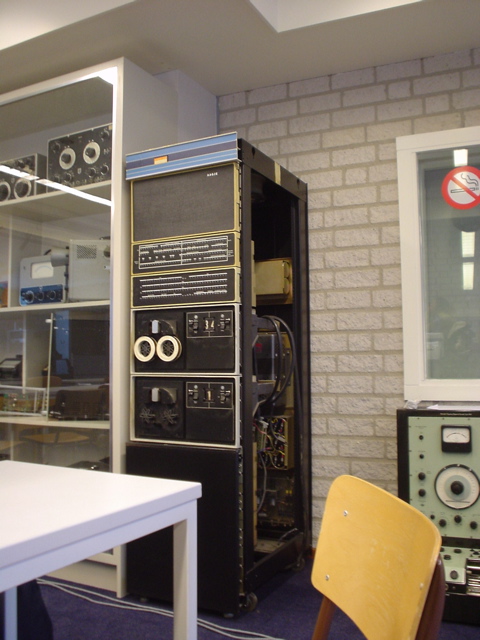
Programmed Data Processor (PDP), referred to by some customers, media and authors as "Programmable Data Processor,"{{cite web |url-status = dead |archive-url = https://web.archive.org/web/20170915114458/http://www.innovation.seas.harvard.edu/files/Disruptive_technology.ppt |archive-date = 2017-09-15 "The term PDP is an acronym for Programmable Data Processor ... the series was introduced by their manufacturer, Digital Equipment Corporation ..." is a term used by the Digital Equipment Corporation from 1957 to 1990 for several lines of minicomputers.{{cite web
The name "PDP" intentionally avoids the use of the term "computer". At the time of the first PDPs, computers had a reputation of being large, complicated, and expensive machines. The venture capitalists behind Digital (especially Georges Doriot) would not support Digital's attempting to build a "computer" and the term "minicomputer" had not yet been coined.{{cite book|editor-last1=Henderson|editor-first1=Rebecca M.|editor-last2=Newell|editor-first2=Richard G.|title=Accelerating energy innovation : insights from multiple sectors|date=2011
Familes
The various PDP machines can generally be grouped into families based on word length and backward compatibility. Families of PDP machines include:{{cite book
-
18-bit: PDP-1
-
18-bit: PDP-4 → PDP-7 → PDP-9 → PDP-15
-
12-bit: PDP-5 → PDP-8 → PDP-12
-
36-bit: PDP-6 → PDP-10 → DECsystem-10 → DECsystem-20
;PDP-1: The original PDP, an 18-bit four-rack machine used in early time-sharing operating system work, and prominent in MIT's early hacker culture, which led to the (Massachusetts) Route 128 hardware startup belt (DEC's second home, Prime Computer, etc.). What is believed to be the first video game, Spacewar!, was developed for this machine, along with the first known word processing program for a general-purpose computer, "Expensive Typewriter". It was based to some extent on the TX-0 which Ben Gurley had also contributed to. His engineering requirement was to build it from inventory (DEC's existing product, System Modules).
:The last of DEC's 53 PDP-1 computers was built in 1969, a decadethe first was in December 1959, but often is referred to as "1960." after the first, and nearly all of them were still in use as of 1975. "An average configuration cost $120,000" at a time "when most computer systems sold for a million dollars or more."
:Its successors as 18-bit machines were the PDP-4, PDP-7, PDP-9, and the PDP-15, although those machines were not compatible with the PDP-1.
;PDP-2: A number reserved for an unbuilt, undesigned 24-bit design. ;PDP-3: First DEC-designed (for US "black budget" outfits) 36-bit machine, though DEC did not offer it as a product. The only PDP-3 was built from DEC modules by the CIA's Scientific Engineering Institute (SEI) in Waltham, Massachusetts to process radar cross section data for the Lockheed A-12 reconnaissance aircraft in 1960.{{cite web |access-date=2008-11-24 |access-date=2008-11-24 ;PDP-4: This 18-bit machine, first shipped in 1962 of which "approximately 54 were sold" was a compromise: "with slower memory and different packaging" than the PDP-1, but priced at $65,000 - considerably less than its predecessor (about half the price). It was not compatible with the PDP-1. All later 18-bit PDP machines (7, 9 and 15) are based on a similar, but enlarged instruction set, more powerful, but based on the same concepts as the 12-bit PDP-5/PDP-8 series. One customer of these early PDP machines was Atomic Energy of Canada. The installation at Chalk River, Ontario included an early PDP-4 with a display system and a new PDP-5 as interface to the research reactor instrumentation and control. ;PDP-5: It was the world's first commercially produced minicomputer and DEC's first 12-bit machine (1963). The instruction set was later expanded in the PDP-8 to handle more bit rotations and to increase the maximum memory size from 4K words to 32K words. It was one of the first computer series with more than 1,000 built. ;PDP-6: This 36-bit machine, DEC's first large PDP computer, came in 1964 with the first DEC-supported timesharing system. 23 were installed. Although the PDP-6 was "disappointing to management," it introduced the instruction set and was the prototype for the far more successful PDP-10 and DEC System-20,{{cite book ;PDP-7: Replacement for the PDP-4; DEC's first wire-wrapped machine using the associated Flip-Chip module form-factor. It was introduced in 1964, and a second version, the 7A, was subsequently added. A total of 120 PDP-7 and PDP-7A systems were sold.
:The first version of Unix, and the first version of B, a predecessor of C, were written for the PDP-7 at Bell Labs, as was the first version (by DEC) of MUMPS. ;PDP-8: 12-bit machine (1965) with a tiny instruction set; DEC's first major commercial success and the start of the minicomputer revolution. Many were purchased (at discount prices, a DEC tradition, which also included free manuals for anyone who asked during the Ken Olsen years) by schools, university departments, and research laboratories.
:Over 50,000 units among various models of the family (A, E, F, I, S, L, M) were sold.{{cite web ;LINC-8: The system contained both a PDP-8 CPU and a LINC CPU; two instruction sets; 1966. Progenitor of the PDP-12. ;PDP-9: Successor to the PDP-7; DEC's first micro-programmed machine (1966). It features a speed increase of approximately twice that of the PDP-7. The PDP-9 is also one of the first small or medium scale computers to have a keyboard monitor system based on DIGITAL's own small magnetic tape units (DECtape). The PDP-9 established minicomputers as the leading edge of the computer industry. ;PDP-10: Also marketed as the DECsystem-10,whose CPU manual was named DECsystem-10/DECSYSTEM-20 Processor Reference Manual sometimes called a DEC-10 this 36-bit timesharing machine (1966) was quite successful over several different implementations (KA, KI, KL, KS) and models.1055, 1090, 2020, 2040, 2065 and others The instruction set is a slightly elaborated form of that of the PDP-6.
:The KL was also used for the DECSYSTEM-20. The KS was used for the 2020, DEC's entry in the distributed processing market, introduced as "the world's lowest cost mainframe computer system." ;PDP-11: The archetypal minicomputer (1970); a 16-bit machine and another commercial success for DEC. The LSI-11 is a four-chip PDP-11 used primarily for embedded systems. The 32-bit VAX series is descended from the PDP-11, and early VAX models have a PDP-11 compatibility mode. The 16-bit PDP-11 instruction set has been very influential, with processors ranging from the Motorola 68000 to the Renesas H8 and Texas Instruments MSP430, inspired by its highly orthogonal, general-register oriented instruction set and rich addressing modes. The PDP-11 family was extremely long-lived, spanning 20 years and many different implementations and technologies. ;PDP-12: 12-bit machine (1969), descendant of the LINC-8 and thus of the PDP-8. It had one CPU that could change modes and execute the instruction set of either system. See LINC and PDP-12 User Manual. With slight redesign, and different livery, officially followed by, and marketed as, the "Lab-8".examples of customer references to DEC-marketed LAB-8: *A package of LAB 8/E subroutines for DEC OS/8 FORTRAN II - https://link.springer.com/article/10.3758/BF03202095 by U Arend - ?Sep 1, 1981 - Gonzalez, G.FORTRAN (Extended). An improved and extended version of the OS/8 FORTRAN II compiler.
- DEC LAB-8/e (PDP-8/e) playing music - YouTube Video for DEC "lab-8" https://www.youtube.com/watch?v=akvSE5Z474c Apr 1, 2008 - Uploaded by Philipp Hachtmann This is a video of my 1971 DEC LAB-8/e minicomputer playing music. In this video it is revealed where ...
- DEC LAB-8/e (PDP-8/e) CRT display running kaleidoscope - YouTube Video for DEC "lab-8" https://www.youtube.com/watch?v=tBaTzbsgQYk Mar 1, 2008 - Uploaded by Philipp Hachtmann. This is my LAB-8/e running the Kaleidoscope program on VC8-E (vector display controller) and VR14
;PDP-13: Designation was not used. ;PDP-14: A machine with 12-bit instructions, intended as an industrial controller (PLC; 1969). It has no data memory or data registers; instructions can test Boolean input signals, set or clear Boolean output signals, jump conditional or unconditionally, or call a subroutine. Later versions (for example, the PDP-14/30) are based on PDP-8 physical packaging technology. I/O is line voltage. ;PDP-15: DEC's final 18-bit machine (1970). It is the only 18-bit machine constructed from TTL integrated circuits rather than discrete transistors, and, like every DEC 18-bit system (except mandatory on the PDP-1, absent on the PDP-4) has an optional integrated vector graphics terminal, DEC's first improvement on its early-designed 34n where n equalled the PDP's number. Later versions of the PDP-15 run a real-time multi-user OS called "XVM". The final model, the PDP-15/76 uses a small PDP-11 to allow Unichannel peripherals to be used. ;PDP-16: A "roll-your-own" digital system using Register Transfer Modules,{{cite web
Notes
References
- C. Gordon Bell, J. Craig Mudge, John E. McNamara, Computer Engineering: A DEC View of Hardware Systems Design (Digital, 1978)
- Bell, C.G., Grason, J., and Newell, A., Designing Computers and Digital Systems. Digital Press, Maynard, Mass., 1972.
- Conversations with David M. Razler (dmrazler@razler.net), owner/restorer of PDP-7s,8s,9s and 15s until the cost of hauling around 2 tons of DEC gear led him to sell off or give away everything he owned.
References
- Ed Thelen. "PDP-1".
- (October 1960). "Preliminary Specification - Programmed Data Processor Model Three (PDP-3)". Digital Equipment Corporation.
- Robert Slater. (1989). "Portraits in Silicon".
- Ed Thelen. "PDP-6".
- "PDP-9". Computer History Museum.
- "DECsystem-2020 - Gordon Bell".
- (May 12, 2014). "Computer Engineering: A DEC View of Hardware Systems Design". Digital Press.
This article was imported from Wikipedia and is available under the Creative Commons Attribution-ShareAlike 4.0 License. Content has been adapted to SurfDoc format. Original contributors can be found on the article history page.
Ask Mako anything about Programmed Data Processor — get instant answers, deeper analysis, and related topics.
Research with MakoFree with your Surf account
Create a free account to save articles, ask Mako questions, and organize your research.
Sign up freeThis content may have been generated or modified by AI. CloudSurf Software LLC is not responsible for the accuracy, completeness, or reliability of AI-generated content. Always verify important information from primary sources.
Report