From Surf Wiki (app.surf) — the open knowledge base
Procuring (prostitution)
Facilitation or provision of a prostitute
Facilitation or provision of a prostitute
Procuring, pimping, or pandering is the facilitation or provision of a prostitute or other sex worker in the arrangement of a sex act with a customer. A procurer, often called a pimp if male, or a madam if female, (though the term "pimp" is often used for female procurers as well) or a brothel keeper, is an agent for prostitutes who collects part of their earnings. The procurer may receive this money in return for advertising services, physical protection, or for providing and possibly monopolizing a location where the prostitute may solicit clients. Like prostitution, the legality of certain actions of a madam or a pimp vary from one region to the next.
Examples of procuring include:
- Helping to support trafficking a person into a country for the purpose of soliciting sex
- Operating a business where prostitution occurs
- Transporting a prostitute to the location of their arrangement
- Deriving financial gain from the prostitution of another
Etymology
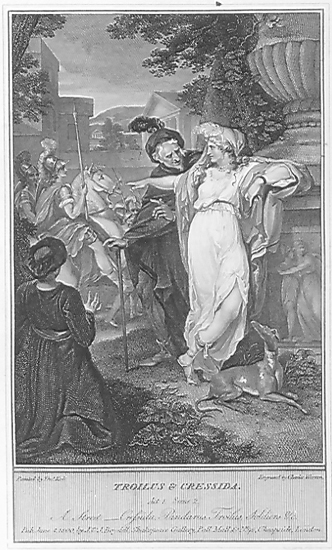
''Procurer''
The term procurer derives from the French procureur.
''Pimping''
The word pimp first appeared in English in 1600, in Ben Jonson’s play Every Man out of his Humor. It is of unknown origin, though there are several hypotheses about its etymology. Pimp used as a verb, meaning to act as a pimp, first appeared around 1640 in Philip Massinger's play, The Bashful Lover. In the 18th and 19th centuries, the term was commonly used to refer to informers. A pimp can also mean "a despicable person".
Rapper Nelly tried to redefine the word "pimp" by saying that it is an acronym for "positive, intellectual, motivated person". He created a college scholarship with the name "P.I.M.P. Juice Scholarship". Dawn Turner Trice of the Chicago Tribune argues that there is "something truly unsettling, to say the least, about attaching such a vile word to a scholarship" and expresses concern about the glamorization of the term.
In the first years of the 21st century, a new meaning of the word emerged in the form of a transitive verb pimp, which means "to decorate" or "to gussy up". Compare primp, especially in Scottish usage. This new definition was made popular by Pimp My Ride, an MTV television show. Although this new definition paid homage to hip-hop culture and its connection to street culture, it has now entered common, even mainstream commercial, use.
In medical contexts, the verb means "to ask (a student) a question for the purpose of testing her or his knowledge".
''Pandering''
The word "pander", meaning to "pimp", is derived from Pandarus, a licentious figure who facilitates the affair between the protagonists in Troilus and Criseyde, a poem by Geoffrey Chaucer. Pandarus appears with a similar role in Shakespeare's interpretation of the story, Troilus and Cressida.
In the United Kingdom the term "pander" allows but does not require prostitution to be involved. The Shorter Oxford Dictionary defines it as "A go-between in illicit love affairs; a person who provides another with a means of gratifying lust; a pimp; a procurer".A person who assists the baser passions or evil designs of others."
Overview
Pimps and madams are diverse and varied, depending on the strata in which they work, and they enter and leave the sex industry for a variety of internal and external reasons, such as family pressure, interactions with the police, and in some cases recruitment from peer sex workers.
Procuring can take abusive forms. Madams/pimps may punish clients for physical abuse or failure to pay, and enforce exclusive rights to "turf" where their prostitutes may advertise and operate with less competition. In the many places where prostitution is outlawed, sex workers have decreased incentive to report abuse for fear of self-incrimination, and increased motivation to seek any physical protection from clients and law enforcement that a madam/pimp might provide.
The madam/pimp–prostitute relationship is often understood to be abusive and possessive, with the pimp/madam using techniques such as psychological intimidation, manipulation, starvation, rape and/or gang rape, beating, tattooing to mark the woman as "theirs", confinement, threats of violence toward the victim's family, forced drug use and the shame from these acts. In some cases, a pimp will kidnap or abduct a minor and keep them in a confined space between acts of forced sexual intercourse.
In the US, madams/pimps can be arrested and charged with pandering and are legally known as procurers. A conviction under SORNA typically requires the procurer to be listed as a sex offender This, combined with the tendency to identify pimping with African-American masculinity, may provide some of the explanation for why approximately three-fifths of all "confirmed" human traffickers in the United States are African-American men. It has recently been argued that some of the extreme examples of violence cited in the article below come primarily from such stereotyping supported by Hollywood screenwriters, selective and decontextualized trial transcripts, and studies that have only interviewed parties to sex commerce in institutions of rescue, prosecution, and punishment, rather than engaging rigorous study in situ.
A 2018 study by researchers from the University of Montreal divided the concept of a pimp into three distinct categories: "low-profile" (primarily female), "hustlers" (predominantly male and violent, marking the common stereotype), and "abused" (even malefemale split, more likely to be subjected to violence than to commit it).
Legal status and debates about legality
Where prostitution is decriminalized or regulated, procuring may or may not be legal. Procuring regulations differ widely from place to place.
Procuring and brothels are legal in the Netherlands, Germany, Greece, New Zealand, and most of Australia and some counties in Nevada.
Canada
Main article: Prostitution in Canada
In Canada, there was a legal challenge to prostitution laws, which ended in the 2013 ruling of Bedford v. Canada. In 2010, Ontario Superior Court Judge Susan Himel overturned the national laws banning brothels and procuring, arguing that they violated the constitution guaranteeing "the right to life, liberty and security".
In 2012, the Court of Appeal for Ontario reaffirmed the unconstitutionality of the laws. The case was appealed by the Canadian government, and was under trial in the Supreme Court of Canada in June 2013. Since the passing of the Protection of Communities and Exploited Persons Act in 2014, Canada has followed the Nordic model of prostitution, which makes pimping and the purchasing of sexual services illegal.
United Nations
The United Nations 1949 Convention for the Suppression of the Traffic in Persons and of the Exploitation of the Prostitution of Others requires state signatories to ban pimping and brothels, and to abolish regulation of individual prostitutes. It states:
Whereas prostitution and the accompanying evil of the traffic in persons for the purpose of prostitution are incompatible with the dignity and worth of the human person and endanger the welfare of the individual, the family and the community
The convention reads:
Article 1 The Parties to the present Convention agree to punish any person who, to gratify the passions of another: (1) Procures, entices or leads away, for purposes of prostitution, another person, even with the consent of that person; (2) Exploits the prostitution of another person, even with the consent of that person. Article 2 The Parties to the present Convention further agree to punish any person who: (1) Keeps or manages, or knowingly finances or takes part in the financing of a brothel; (2) Knowingly lets or rents a building or other place or any part thereof for the purpose of the prostitution of others.
Various UN commissions however have differing positions on the issue. For example, in 2012, a UNAIDS commission convened by Ban Ki-moon and backed by UNDP and UNAIDS, recommended the decriminalization of brothels and procuring.
United States
Attempts have been made in the US to charge pornographic-film producers with pandering under state law. The case of California v. Freeman in 1989 is one of the most prominent examples where a producer/director of pornographic films was charged with pandering under the argument that paying porn actors to perform sex on camera was a form of prostitution covered by a state anti-pandering statute. The State Supreme Court rejected this argument, finding that the California pandering statute was not intended to cover the hiring of actors who would be engaging in sexually explicit but non-obscene performances. It also stated that only in cases where the producer paid the actors for the purpose of sexually gratifying themselves or other actors, could the producer be charged with pandering under state law. This case effectively legalized pornography in the State of California. In 2008, the New Hampshire Supreme Court issued a similar ruling (New Hampshire v. Theriault) which declared that producing pornography was not a form of prostitution under state law.
Business and methods
Pimping is typically operated like a business. In the US, a pimp may have a bottom girl who serves as office manager, keeping the pimp apprised of law-enforcement activity and collecting money from the prostitutes. Pimps recognize a hierarchy among themselves. In certain pimp strata, the least respected, or newer pimps, are the "popcorn pimps" and "wannabes". "Popcorn pimps" was a phenomenon which occurred among adolescent cocaine users of both sexes who utilized children younger than themselves to support their habits.
In the US, a pimp who uses violence and intimidation to control his prostitutes is called a "gorilla pimp". Those who use psychological trickery to deceive younger prostitutes into becoming hooked into the system are called "finesse pimps". In addition, a prostitute may "bounce" from pimp to pimp without paying the "pimp moving" tax.
Some pimps in the United States are also documented gang members, which causes concerns for police agencies in jurisdictions where prostitution is a significant problem. Pimping rivals narcotic sales as a major source of funding for many gangs. Gangs need money to survive, and money equates to power and respect. While selling drugs may be lucrative for a gang, this activity often carries significant risk as stiff legal penalties and harsh mandatory minimum sentencing laws exist. With pimping, gang members still make money while the prostitutes themselves bear the majority of the risk.
Pimping has several benefits to the gang that the pimp belongs to. These benefits include helping the gang recruit new members because the gang has women available for sex. The money brought in by prostitution allows gang members to buy cars, clothes and weapons, all of which help to recruit younger members into the gang by increasing the reputation of the gang in the local gang subculture.
Violence
Some pimp businesses have an internal structure – built around violence – for dealing with rule breakers. For example, some pimps have been known to employ a "pimp stick", which is two coat hangers wrapped together, in order to subdue unruly prostitutes. Although prostitutes can move between pimps, this movement sometimes leads to violence. For example, a prostitute could be punished for merely looking at another pimp; this is considered in some pimp milieus to be "reckless eyeballing". Violence can also be used on customers, for example if the customer attempts to evade payment or becomes unruly with a prostitute.
Romeo pimps and loverboys
Some pimps employ what is known as the "Loverboy" or "Romeo pimp" method to recruit new prostitutes. This involves entrapping potential victims (usually young or vulnerable women) by first forming what appears to the victim to be a romantic relationship. After an initial period of "love bombing", the treatment of the victim then becomes abusive, and the victim is then forced into sex work by the pimp.
Use of tattoos
Some pimps in America tattoo prostitutes as a mark of "ownership". The tattoo will often be the pimp's street name or even his likeness. The mark might be as discreet as ankle tattoo, or blatant as a neck or face tattoo or large scale font across the prostitute's lower back, thigh, chest, or buttocks.
Internet effect
Since the Internet became widely available, prostitutes increasingly use websites to solicit sexual encounters. This has bypassed the need for pimps in some contexts, while some pimps have used these sites to broker their sex workers.
Criticism of portrayals
Some scholars and sex workers' rights advocates dispute portrayals of third-party agents as violent and extremely committed to a pimp subculture, finding them inaccurate exaggerations used to foster harmful policies. For example, one study found that pimps tend to drift in and out of pimping, with some of their goals and identities classified as predominantly mainstream, some as predominantly outside of that mainstream, and some as a hybrid of conventional and non-conventional.
In popular culture
Notable pimps and madams===
- Elizabeth Adams
- Polly Adler
- Ah Toy
- Brenda Allen
- Sydney Biddle Barrows
- Scotty Bowers
- Sean Combs
- Belle Cora
- Mary Ann Conklin
- Kristin M. Davis
- Shirley Finn
- Heidi Fleiss
- Marguerite Gourdan
- Lou Graham
- Dennis Hof
- Xaviera Hollander
- Don "Magic" Juan
- Mary-Anne Kenworthy
- Gangubai Kothewali
- Isabel La Negra
- Ghislaine Maxwell
- Enriqueta Martí
- Elizabeth Needham
- Dora Noyce
- Deborah Jeane Palfrey
- Justine Paris
- Grace Peixotto
- Lovisa von Plat
- Jurjentje Aukes Rauwerda
- Lindi St Clair
- Fillmore Slim
- Iceberg Slim
- Sally Stanford
- Al Swearengen
- Anna Wilson
- A Pimp Named Slickback
- Anton Mussert
In art
File:Dirck van Baburen - The Procuress - Google Art Project.jpg|The Procuress by Dirck van Baburen, 1622 File:The contented cuckold (BM 1996,0608.1 1).jpg|An English engraving from 1673 titled "The Contented Cuckold". The final line reads "the disgrace is my wife's; the profit mine". File:Jan G. van Bronckhorst The procuress.jpg|The procuress by Jan G. van Bronckhorst, 1636–1638 File:Bijlert At the procuress.jpg|At the procuress, by Jan van Bijlert, second quarter of 17th century (Albi) Au Salon de la rue des Moulins - Henri de Toulouse-Lautrec 1894 MTL.inv180( small).jpg|In Salon of Rue des Moulins, (La Fleur blanche), by Henri de Toulouse-Lautrec, 1894 Pimp, Hoes and Hellboy - Halloween in Atlanta 2000.jpg|A man (far right) dressed as a pimp and women dressed as "hoes" at a Halloween party, 2000
Works
In 1999, the Hughes brothers released a documentary titled American Pimp consisting of first-person interviews with people involved in pimping in the United States.
References
References
- Garner, B. & Black, H. (2004). [[Black's Law Dictionary]]. Belmont: Thomson/West.
- Oxford English Dictionary, s.v. “pimp (n.1),” September 2024,
https://doi.org/10.1093/OED/3838950571 . - Oxford English Dictionary, s.v. “pimp (v.),” June 2024,
https://doi.org/10.1093/OED/2049536876 . - "Pennsylvania Gazette, Nov 7, 1765, transcription". Smithsonian Source.
- "Webster's College Dictionary", Random House, 2001
- Trice, Dawn Turner. [https://www.chicagotribune.com/news/ct-xpm-2005-04-27-0504270140-story.html "Scholarship is soured by unsavory name"], ''[[Chicago Tribune]]'', 27 April 2005.
- Sheidlower, Jesse. (2008-02-12). "A History of Pimping". Slate.
- (20 September 2007). "Feet pimping: Local biz has plans for your feet". [[The Hook (newspaper).
- Brancati, Frederick L.. (7 July 1989). "The Art of Pimping". JAMA.
- Classen, Albrecht. (2010). "Laughter in the Middle Ages and Early Modern Times: Epistemology of a Fundamental Human Behavior, Its Meaning, and Consequences". Walter de Gruyter.
- (2018). "Risky Business: Harlem Pimps' Work Decisions and Economic Returns". Deviant Behavior.
- Dank, Meredith. (2014). "Estimating the Size and Structure of the Underground Commercial Sex Economy in Eight Major US Cities". New York: Urban Institute.
- Stalans, Loretta and Mary A. Finn (2019). "Self-Narratives of Persistent Pimps and Those Anticipating Desistance: Emotions, Conventional Work, and Moral Profitability Calculus", ''Victims & Offenders, 14''(5): 647-669.
- Zahniser, David. (13 May 2008). "L.A. seeks to thwart sex trade on Figueroa". Los Angeles Times.
- (2004). "Violence in indoor and outdoor prostitution venues". [[Violence Against Women (journal).
- Skinner, E. Benjamin. (2008). "A Crime So Monstrous: Face-to-Face with Modern-Day Slavery". Free Press.
- "De-branding my body". [[BBC News]].
- "Cops: Alleged Pimp May Have Many Child Victims - CBS News".
- "Pandering". Dictionary.com.
- "Pimp sentenced to federal prison for sex trafficking {{!}} ICE".
- (2011). "Characteristics of suspected human trafficking incidents, 2008–2010". Bureau of Justice Statistics.
- (2017-01-03). "Third Party Sex Work and Pimps in the Age of Anti-trafficking". Springer.
- Marcus, Anthony. (2014). "Child Sex Trafficking: Toward an Agent Centered Approach". Open Society Institute.
- "Pimps: they're not all alike".
- Peter de Marneffe. (1 April 2012). "Liberalism and Prostitution". [[Oxford University Press]].
- [https://www.bbc.co.uk/news/world-us-canada-11432138 Canadian judge overturns brothel ban in Ontario], BBC News. 29 September 2010.
- [https://www.cbc.ca/news/canada/ontario-appeal-court-strikes-down-ban-on-brothels-1.1214460 Ontario Appeal Court strikes down ban on brothels], [[CBC News]]. 26 March 2012
- (2013-06-13). "Canada's top court to hear prostitution challenge today |". Ctvnews.ca.
- "Crimes related to the sex trade: Before and after legislative changes in Canada".
- "Convention for the Suppression of the Traffic in Persons and of the Exploitation of the Prostitution of Others".
- Michael Kirby & Michael Wong. (2012-12-08). "Decriminalisation integral to the fight against HIV". [[Australian Broadcasting Corporation]].
- Cheryl Wetzstein. (2012-08-02). "AIDS used as reason to legalize prostitutes". [[The Washington Times]].
- (July 2012). "Global Commission on HIV and the Law". [[UNDP]].
- (1989-02-01). "California v. Freeman". Caselaw.lp.findlaw.com.
- "First Amendment Lawyer - Creating Adult Content Outside California". Firstamendment.com.
- "faq: part 11: legal issues". rame.net.
- Timmins, Annmarie. (December 5, 2008). "Offer to tape sex nullifies conviction: 'It's not prostitution but speech, court says'". [[Concord Monitor]].
- "Really Really Pimpin' in Da South". Rotten Tomatoes.
- (2004). "U.S. v. Pipkins".
- Pagliaro, Ann Marie and Pagliaro, Louis A. (1996). Substance abuse among children and adolescents: its nature, extent, and effects from conception to adulthood. New York: Wiley, p. 19. {{ISBN. 978-0-471-58042-3.
- Eleventh Circuit. (2004). "378 F. 3d 1281 - United States v. Pipkins".
- (2010-11-13). "The Pimping Game". Western Michigan University.
- (2008). "Females and Gangs: Sexual Violence, Prostitution, and Exploitation". National Gang Crime Research Center.
- O'Deane, Matthew. (24 September 2010). "Prostitution & Gangs. Techniques for going after violent offenders". Law Officer.
- Veiligheid, Ministerie van Justitie en. (2019-05-06). "'Loverboys' - Human trafficking and people smuggling - Government.nl".
- Founder, Kim Westfall. (2020-11-18). "How Trafficking Happens: Exposing the Loverboy Method".
- Urbina, Ian. (27 October 2009). "Running in the Shadows (part 2 of 2): For Runaways on the Street, Sex Buys Survival". The New York Times.
- Rowe, Claudia. (June 26, 2008). "No way out: Teen girls sell bodies in Seattle". Seattle Post-Intelligencer.
- Poulsen, Kevin. (February 25, 2009). "Pimps Go Online to Lure Kids Into Prostitution". Wired.
- (2019). "Harlem Pimps' Accounts of their Economic Pathways and Feelings of Insiderness and Outsiderness". Journal of Qualitative Criminal Justice and Criminology.
- (July 2, 2020). "Ghislaine Maxwell's journey from socialite to accused procuress in Epstein case".
- (July 8, 2020). "Ghislaine Maxwell's journey from socialite to accused procuress in Epstein case".
This article was imported from Wikipedia and is available under the Creative Commons Attribution-ShareAlike 4.0 License. Content has been adapted to SurfDoc format. Original contributors can be found on the article history page.
Ask Mako anything about Procuring (prostitution) — get instant answers, deeper analysis, and related topics.
Research with MakoFree with your Surf account
Create a free account to save articles, ask Mako questions, and organize your research.
Sign up freeThis content may have been generated or modified by AI. CloudSurf Software LLC is not responsible for the accuracy, completeness, or reliability of AI-generated content. Always verify important information from primary sources.
Report