From Surf Wiki (app.surf) — the open knowledge base
Pounce (powder)
Powder used to dry writing ink
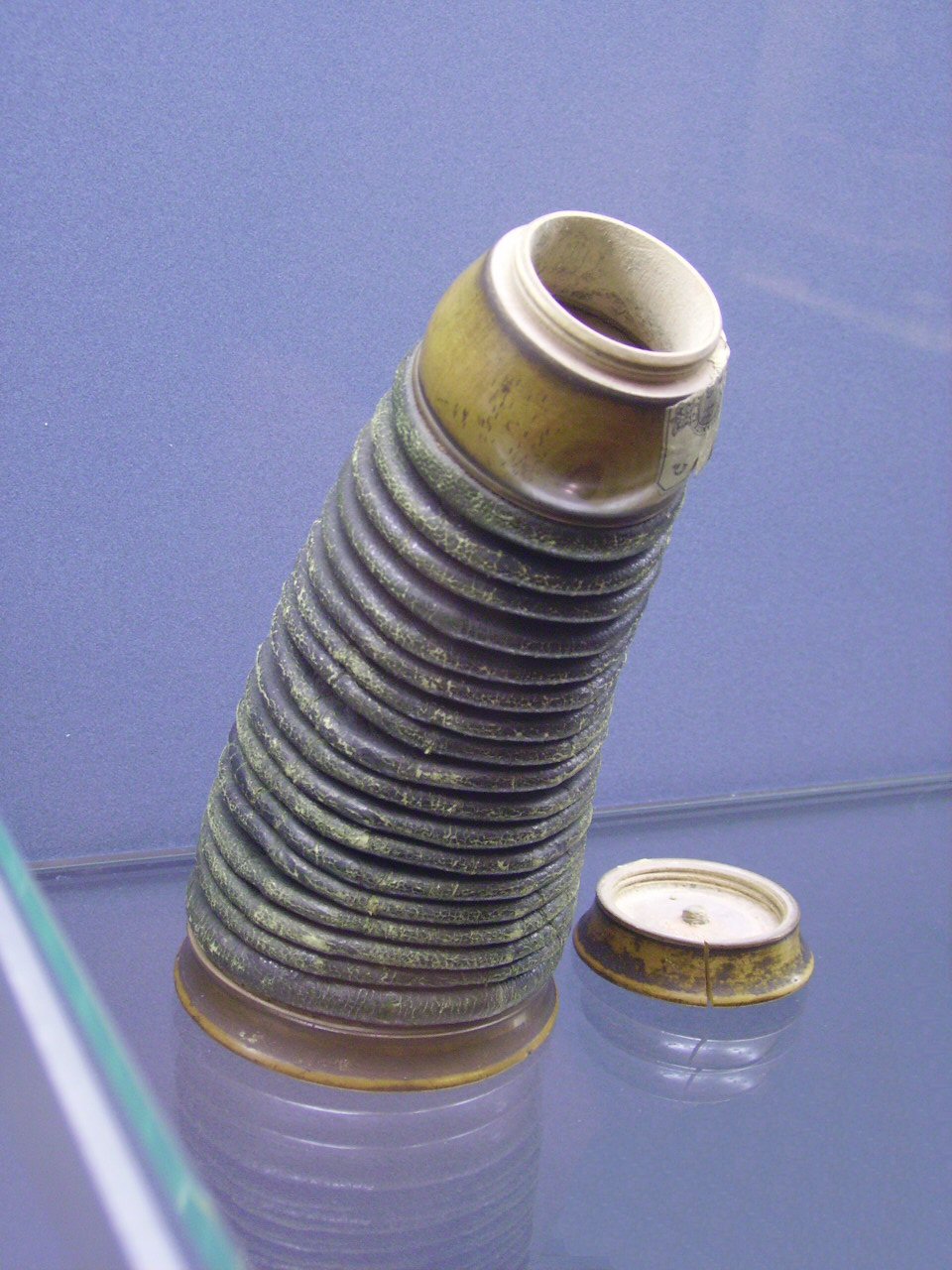
Powder used to dry writing ink
Pounce or sand is a fine powder, most often made from powdered cuttlefish bone or sandarac resin, that was used both to dry ink and to sprinkle on a rough writing surface to make it smooth enough for writing. This was especially needed if the paper came "unsized", that is, lacking the thin gelatinous material used to fill the surface of the paper and make it smooth enough for writing with a quill or a steel nib. It was also used to prepare the surface when drafting with Rapidograph pens on mylar, a common drafting medium in the late twentieth century.
History

In the 19th century, the pounce pots or sanders often had a shallow dish round the top so that pounce or sand could be returned to the pot and reused. The process is very effective for quickly drying ink, and although blotting paper has been available since the Tudor period, pounce or sand continued to be used throughout the nineteenth century because it was often cheaper.
Application
Handwriting and calligraphy
Pounce is gently sprinkled all over the writing on the paper. When using a quill or a steel nib, and with inks that are made up to match those typically in use during the 18th and 19th centuries, and provided the pen has been used with the fine strokes typical of handwriting of that period, the handwriting will be sufficiently dry within 10 seconds to allow the paper to be folded without blotting. Gently vibrating the paper whilst the pounce or sand is on it ensures that little or no pounce or sand sticks to the handwriting and excess sand or pounce is shaken off before folding the paper.
Art and embroidery
Main article: Pouncing
"Pricking and pouncing" is a transfer technique that uses a stencil with fine holes, often made by pricking a template using a pounce wheel, to which a fine powder that contrasts with the fabric. The pounce is dusted over, giving a temporary pattern through use of the stencil. Chambray would use charcoal on the light side, and chalk on the dark side of the fabric.
Notes
References
References
- (2017). "On the tracks of sandarac, review and chemical analysis". Environmental Science and Pollution Research.
- Searls-Punter, Natasha. (7 May 2019). "Pro Tips: Pounce Rubbing". London Embroidery School.
This article was imported from Wikipedia and is available under the Creative Commons Attribution-ShareAlike 4.0 License. Content has been adapted to SurfDoc format. Original contributors can be found on the article history page.
Ask Mako anything about Pounce (powder) — get instant answers, deeper analysis, and related topics.
Research with MakoFree with your Surf account
Create a free account to save articles, ask Mako questions, and organize your research.
Sign up freeThis content may have been generated or modified by AI. CloudSurf Software LLC is not responsible for the accuracy, completeness, or reliability of AI-generated content. Always verify important information from primary sources.
Report