From Surf Wiki (app.surf) — the open knowledge base
Pope Benedict XIII
Head of the Catholic Church from 1724 to 1730
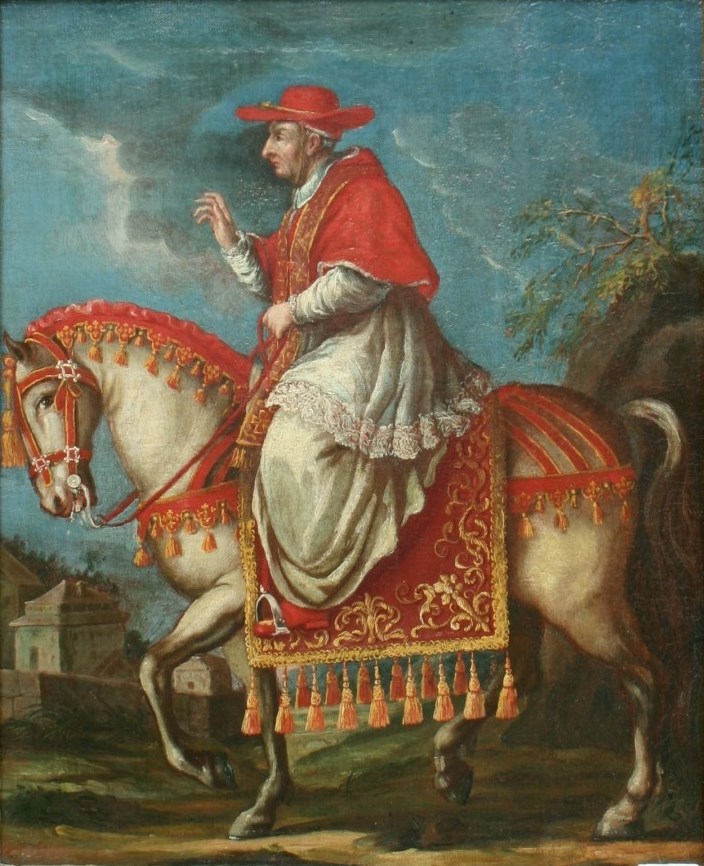
Head of the Catholic Church from 1724 to 1730
| Field | Value | |
|---|---|---|
| type | Pope | |
| honorific-prefix | Pope Servant of God | |
| name | Benedict XIII | |
| title | Bishop of Rome | |
| image | Benedetto XIII.jpg | |
| caption | Portrait in the mid 18th century | |
| birth_name | Pietro Francesco Orsini | |
| church | Catholic Church | |
| term_start | 29 May 1724 | |
| term_end | 21 February 1730 | |
| predecessor | Innocent XIII | |
| successor | Clement XII | |
| ordination | 24 February 1671 | |
| ordained_by | Clement X | |
| consecration | 3 February 1675 | |
| consecrated_by | Paluzzo Paluzzi Altieri Degli Albertoni | |
| cardinal | 22 February 1672 | |
| created_cardinal_by | Clement X | |
| birth_date | ||
| birth_place | Gravina in Puglia, Kingdom of Naples | |
| death_date | ||
| death_place | Rome, Papal States | |
| coat_of_arms | C o a Benedictus XIII.svg | |
| previous_post | {{Indented plainlist | |
| other | Benedict | |
| module | {{Ordination | embed=yes |
| ordained priest by | Clement X | |
| date of priestly ordination | 24 February 1671 | |
| consecrated by | Paluzzo Card. Paluzzi (Card. Nep.) | |
| co-consecrators | Stefano Brancaccio (Vit. & Tusc.) and Costanzo Zani (Imola) | |
| date of consecration | 3 February 1675 | |
| elevated by | Clement X | |
| date of elevation | 22 February 1672 | |
| bishop 1 | Tiberio Muscettola | |
| consecration date 1 | 19 May 1680 | |
| bishop 2 | Domenico Diez de Aux | |
| consecration date 2 | 13 November 1689 | |
| bishop 3 | Fabrizio Cianci | |
| consecration date 3 | 30 November 1689 | |
| bishop 4 | Marcello Cavalieri | |
| consecration date 4 | 15 January 1690 | |
| bishop 5 | ||
| consecration date 5 | 22 January 1690 | |
| bishop 6 | Giuseppe Ponzi | |
| consecration date 6 | 22 January 1690 | |
| bishop 7 | Pietro Vecchia | |
| consecration date 7 | 12 March 1690 | |
| bishop 8 | Benedict XIV | |
| consecration date 8 | 16 July 1724 |
| honorific-prefix = Pope Servant of God
- Cardinal-Priest of San Sisto (1672–1701)
- Bishop of Manfredonia (1675–1680)
- Bishop of Cesena (1680–1686)
- Archbishop of Benevento (1686–1730)
- Apostolic Administrator of Benevento (1686–1730)
- Cardinal-Bishop of Frascati (1701–1715)
- Cardinal-Bishop of Porto e Santa Rufina (1715–1724)
- Vice-Dean of the College of Cardinals (1715–1724) | date of diaconal ordination = | place of diaconal ordination = | date of priestly ordination = 24 February 1671 | place of priestly ordination = | co-consecrators = Stefano Brancaccio (Vit. & Tusc.) and Costanzo Zani (Imola) Pope Benedict XIII (; ; 2 February 1649 – 21 February 1730), born Pietro Francesco (or Pierfrancesco) Orsini and later called Vincenzo Maria Orsini, was head of the Catholic Church and ruler of the Papal States from 29 May 1724 to his death in February 1730.
A Dominican friar, Orsini focused on his religious responsibilities as bishop rather than on papal administration. Orsini's lack of political expertise led him to increasingly rely on an unscrupulous secretary (Cardinal Niccolò Coscia) whose financial abuses ruined the papal treasury, causing great damage to the Church in Rome.
In the process towards sainthood, his cause for canonization opened in 1755, but it was closed shortly afterwards. It was reopened on 21 February 1931, but it was closed once again in 1940. It was opened once more on 17 January 2004, with the official process commencing in 2012 and concluding later in 2017. He now has the posthumous title of Servant of God.
Early life
He was born in Gravina in Puglia, the eldest of six sons of Ferdinando III Orsini, 8th Duke of Gravina. A member of the Orsini of Rome, he was the third and last member of that family to become Pope after Pope Celestine III and Pope Nicholas III. At the age of eighteen he resigned his inheritance and entered the Dominican Order where he received the name of "Vincenzo Maria". He was ordained to the priesthood in February 1671.
Through the influence of his family, he was named, by Pope Clement X, Cardinal-Priest of San Sisto on 22 February 1672 (allegedly against his will). He also lectured in philosophy at Brescia. Later he was bishop of Manfredonia, bishop of Cesena and then archbishop of Benevento. After an earthquake in 1688 and another in 1702, he organized relief efforts for the victims. He remained a close friend of a local mystic, Serafina of God.
Rise to the papacy
Main article: 1724 papal conclave
Upon the death of Pope Innocent XIII in 1724, a conclave was convoked to elect a successor. There were four divisions in the College of Cardinals and there were no clear candidates. At the conclave, Orsini was considered one of the papabili. Orsini was then proposed to be elected because he led a modest, austere life, and was considered to be a pastor. His lack of political expertise suggested that he would be neutral and malleable.
Orsini refused to be elected prior to the final ballot, explaining that he was unworthy of it. Eventually he was persuaded to accept by Agustín Pipia, Master of the Order of Preachers and on 29 May 1724, Orsini was elected pontiff. He chose the regnal name of "Benedict XIII" in honour of Pope Benedict XI because he was also of the Dominican Order.
On 4 June 1724, he was crowned by Benedetto Pamphili, the cardinal protodeacon. On the following 24 September, he took possession of the Basilica of St. John Lateran.
Pontificate
|}}
Actions
Not a man of worldly matters, Benedict XIII made an effort to maintain his monastic lifestyle. He endeavoured to put a stop to the decadent lifestyles of the Italian priesthood and of the cardinalate. He also abolished the lottery in Rome and the Papal States, which only served to profit the neighboring states that maintained the public lottery. A man fond above all of asceticism and religious celebrations, he built several hospitals, but according to Cardinal Prospero Lambertini (later Pope Benedict XIV), "did not have any idea about how to rule".
In 1727, he inaugurated the famous Spanish Steps and founded the University of Camerino.
In 1728, Benedict's intervention settled a controversy regarding the relics of Augustine of Hippo which erupted in Pavia. He ultimately confirmed the authenticity of Augustine's bones, which had been discovered in 1695 in the Basilica San Pietro in Ciel d'Oro.
The government of the Papal States was effectively held in Benedict XIII's stead by Cardinal Niccolò Coscia, who had been the pope's secretary when he was archbishop of Benevento, and who committed a long series of financial abuses to his own advantage, causing the ruin of the Papal treasury. Coscia and his associates effectively isolated Benedict from other advisors.
In foreign relations, he struggled with both John V of Portugal and the Jansenists in France.
Beatifications and canonizations
Upon election, on 4 June 1724, Benedict XIII published the Bulls of Canonization for Saints previously celebrated:
- Isidore the Farmer (Gregory XV - 12 March 1621)
- Andrew Corsini, Carmelite (Urban VIII - 22 April 1629)
- Philip Benizi, Servites (Clement X - 12 April 1671)
- Francis Borgia, Jesuit (Clement X - 12 April 1671)
- Lawrence Giustiniani (Alexander VIII - 16 October 1690)
- John of Capistrano (Alexander VIII - 16 October 1690)
- Catherine of Bologna, Poor Clare Nun (Clement XI - 22 May 1712)
- Felix of Cantalice, Capuchin (Clement XI - 22 May 1712)
Benedict XIII beatified
- Bernardine of Feltre in 1728,
- Peter Fourier on 20 January 1730,
- Hyacintha of Mariscotti on 1 September 1726,
- Fidelis of Sigmaringen on 24 March 1729,
- Vincent de Paul on 13 August 1729, and
- Juan de Prado on 24 May 1728.
Through the process of equipollent canonization Benedict XIII canonized
- Pope Gregory VII on 24 May 1728. He conferred sainthood upon
- Agnes of Montepulciano in 1726,
- Aloysius Gonzaga and
- Stanislaus Kostka on 31 December 1726,
- brothers Boris and Gleb of Kiev in 1724,
- Francis Solano on 27 March 1726,
- James of the Marches and Turibius of Mogroveio on 10 December 1726,
- John of Nepomuk on 19 March 1729,
- John of the Cross and Peregrine Laziosi on 27 December 1726,
- Margaret of Cortona on 16 May 1728, and
- Serapion of Algiers on 14 April 1728.

Doctor of the Church
The Pope declared Peter Chrysologus a Doctor of the Church on 19 February 1729.
Other activities
Main article: Cardinals created by Benedict XIII
Benedict XIII elevated 29 new cardinals into the cardinalate in a total of 12 consistories; one such new cardinal was Prospero Lambertini, who later became Pope Benedict XIV.
Benedict XIII, whose orders were descended from Scipione Rebiba, personally consecrated at least 139 bishops for various important European sees, including German, French, English and New World bishops. These bishops in turn consecrated bishops for their respective countries, causing other episcopal lineages to die out. As a result, more than 90% of present-day bishops trace their episcopal lineage through him to Cardinal Rebiba.
With the papal bull Pretiosus, dated 26 May 1727, Benedict XIII granted to all Dominicans major houses of study and in particular to the Roman College of St. Thomas, the future Pontifical University of Saint Thomas Aquinas Angelicum the right of conferring academic degrees in theology to students outside the Order.
Death and burial
Benedict XIII was suddenly attacked by a catarrh, contracted while officiating at the funeral service of Cardinal Marco Antonio Ansidei, of which he died on 21 February 1730 at the age of 81. His death was made public to the people the next day.
The pope was of middling size; his countenance was mild, his nose aquiline and he had a broad forehead. At the autopsy, it was discovered that his heart was remarkably large. His funeral ceremonies were performed at the Vatican, whence he was removed to the Santa Maria sopra Minerva where he was buried in a tomb completed by Pietro Bracci and others.
After the 1730 papal conclave elevated Pope Clement XII to the pontificate, Clement promptly excommunicated Benedict XIII's corrupt deputy, Cardinal Coscia. Coscia fled Rome and his punishment, but was later restored and took part in the conclaves of 1730 and 1740.
Pope Benedict XIV would later say of Benedict XIII: "We respectfully love that pontiff who backed his carriage rather than dispute the passage with a cartman." On that occasion, Benedict XIII had exclaimed to his coachman: "Non ci far impicci""Do not involve us in a quarrel." On the other hand, this anonymous satirical comment on Benedict XIII's death was posted at the Pasquino: :"This tomb encloses :the bones of a little friar: :more than a saint's lover :a protector of brigands"
Cause of beatification
Papal tiara Dominican habit Archdiocese of Benevento
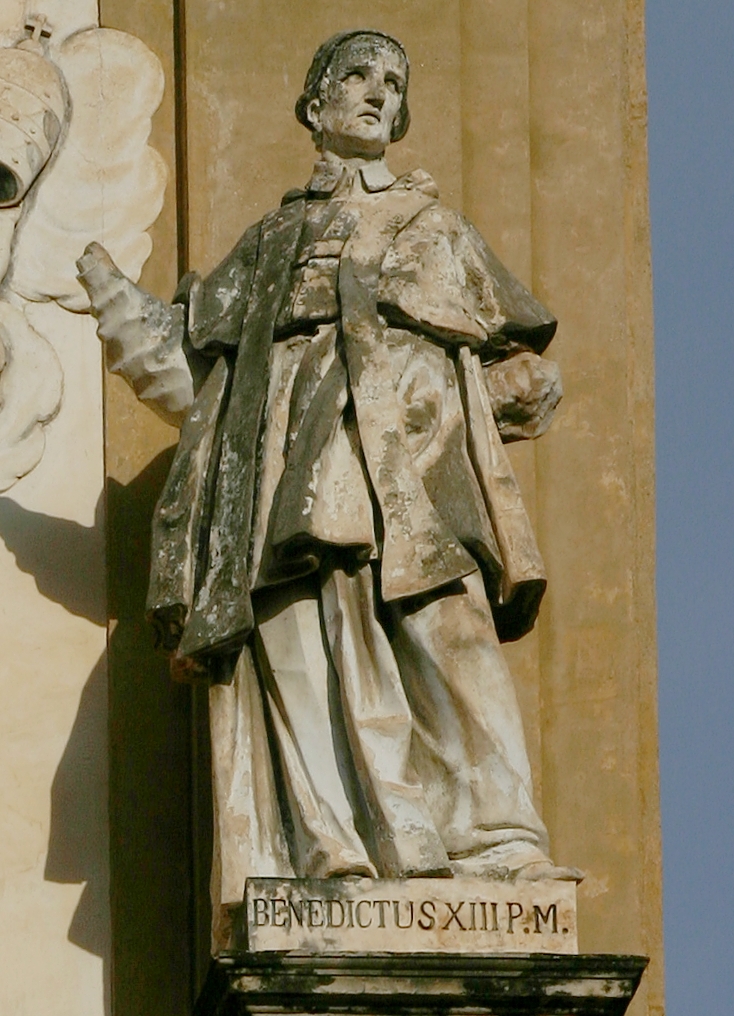
The process for his beatification was opened in Tortona in 1755 under Pope Benedict XIV but it did not at all advance and so was stalled. On 21 February 1931, also in Tortona, the process was revitalized but the presumed doubts about the morality of the late pontiff's Cardinal Secretary of State, Niccolò Coscia, caused its closing in 1940.
The process was reopened on 17 January 2004. The official diocesan process commenced in Rome in early 2012 and the official opening of that process was held in the Basilica of Saint John Lateran, presided by Agostino Vallini. The diocesan phase for the beatification process concluded on 24 February 2017 at the Basilica of Saint John Lateran with Vallini celebrating the conclusion of the inquest. He now has the posthumous title of Servant of God.
The current postulator of the cause is the Dominican priest Francesco Maria Ricci.
References
- Bullarium Romanum. Tomus XXII: Benedictus XIII (ab an 1724–1730). Ed. Taurinensis, 1871.
Footnotes
References
- [[Wikisource:Catholic Encyclopedia (1913)/Pope Benedict XIII]]
- Pope Benedict X is now considered an [[antipope]]. At the time, however, this status was not recognized; therefore, the man whom the Catholic Church officially considers to be the tenth true Pope Benedict took the official number XI, rather than X. This has advanced the numbering of all subsequent Popes Benedict by one. Popes Benedict XI–XVI are, from an official point of view, the tenth through fifteenth popes by that name.
- ""Inquiry for the Process of Canonisation of the Dominican Pope Benedict XIII", Order of Preachers, February 24, 2017".
- "Kunst, Richard. "Pope Benedict XIII", Papal Artifacts".
- Rendina, p. 590
- Stone, Harold Samuel (2002). "Augustine's Bones: A Microhistory." pp. 90–93
- According to [[Montesquieu]], "All the money of Rome goes to Benevento... as the Beneventani direct [Benedict's] weakness".Rendina, p. 592
- ''[https://archive.org/details/BR-Tomo-22]'', Bullarium Romanum. Vol 22. Benedict XIII (1724-1730). Taurini Ed, 1871. Respective Bulls on pages 1–44.
- J. Jauh. "Leto svetnikov IV ''Stanislav Kostka, vzornik mladine''".
- Bransom, Charles. "Apostolic Succession in the Roman Catholic Church". mysite.verizon.net.
- "Les colleges ecclesiastiques de Rome".
- (January 1953). "Index ac status causarum beatificationis servorum dei et canonizationis beatorum". Typis polyglottis vaticanis.
- (22 February 2017). "Papa Orsini verso gli altari. Chiusa la fase diocesana della causa di Benedetto XIII". Faro di Roma.
- "ORSINI, O.P., Vincenzo Maria".
This article was imported from Wikipedia and is available under the Creative Commons Attribution-ShareAlike 4.0 License. Content has been adapted to SurfDoc format. Original contributors can be found on the article history page.
Ask Mako anything about Pope Benedict XIII — get instant answers, deeper analysis, and related topics.
Research with MakoFree with your Surf account
Create a free account to save articles, ask Mako questions, and organize your research.
Sign up freeThis content may have been generated or modified by AI. CloudSurf Software LLC is not responsible for the accuracy, completeness, or reliability of AI-generated content. Always verify important information from primary sources.
Report