From Surf Wiki (app.surf) — the open knowledge base
Point source pollution
Single identifiable source

Single identifiable source
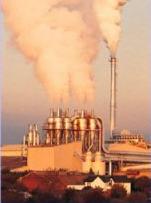
A point source of pollution is a single identifiable source of air, water, thermal, noise or light pollution. A point source has negligible extent, distinguishing it from other pollution source geometrics (such as nonpoint source or area source). The sources are called point sources because in mathematical modeling, they can be approximated as a mathematical point to simplify analysis. Pollution point sources are identical to other physics, engineering, optics, and chemistry point sources and include:
- Air pollution from an industrial source (rather than an airport or a road, considered a line source, or a forest fire, which is considered an area source, or volume source)
- Water pollution from factories, power plants, municipal sewage treatment plants and some farms (see concentrated animal feeding operation). The U.S. Clean Water Act also defines municipal separate storm sewer systems and industrial stormwater discharges (such as construction sites) as point sources.
- Man-made, natural, and groundwater reservoirs can all be contaminated by point source pollution which can threaten human health and safety.
- Noise pollution from a jet engine
- Disruptive seismic vibration from a localized seismic study
- Light pollution from an intrusive street light
- Radio emissions from an interference-producing electrical device
References
References
- van Leeuwen, C.J.. (2010). "Risk Assessment of Chemicals: An Introduction, 2nd Ed.". Springer.
- . (2016-06-08). ["Air Pollution Emissions Overview"](https://www3.epa.gov/airquality/emissns.html). *U.S. Environmental Protection Agency*.
- (2001). "Pollution: Causes, Effects and Control". Royal Society of Chemistry.
- United States. Clean Water Act. Section 402(p), {{usc. 33. 1342(p).
- "Choose your library affiliation".
- . ["Point sources"](http://blog.soton.ac.uk/soundwaves/wave-basics/point-sources-inverse-square-law/). *University of Southampton*.
- Brüel & Kjær, Nærum, Denmark. "Environmental Noise Propagation".
- (2014). "Estimating the uncertainty of seismic point source solutions".
- . ["Light Pollution Sources"](https://www.nps.gov/subjects/nightskies/sources.htm). *U.S. National Park Service*.
This article was imported from Wikipedia and is available under the Creative Commons Attribution-ShareAlike 4.0 License. Content has been adapted to SurfDoc format. Original contributors can be found on the article history page.
Ask Mako anything about Point source pollution — get instant answers, deeper analysis, and related topics.
Research with MakoFree with your Surf account
Create a free account to save articles, ask Mako questions, and organize your research.
Sign up freeThis content may have been generated or modified by AI. CloudSurf Software LLC is not responsible for the accuracy, completeness, or reliability of AI-generated content. Always verify important information from primary sources.
Report