From Surf Wiki (app.surf) — the open knowledge base
Plasminogen activator
Type of protein
Type of protein
Plasminogen activators are inhibited by plasminogen activator inhibitor-1, plasminogen activator inhibitor-2, and protein C inhibitor.
Function
Produced mainly in the liver, plasminogen is the inactive zymogen form of plasmin, and circulates in plasma in a closed conformation that cannot be activated. Binding clots or cell surfaces cause their conformation to change, allowing them to be activated by plasminogen activators. Plasminogen activators do so by cleaving the R561/V562 peptide bond, producing the active protein plasmin, which catalyzes the degradation of fibrin polymers that make up the structure of blood clots.

Inhibition
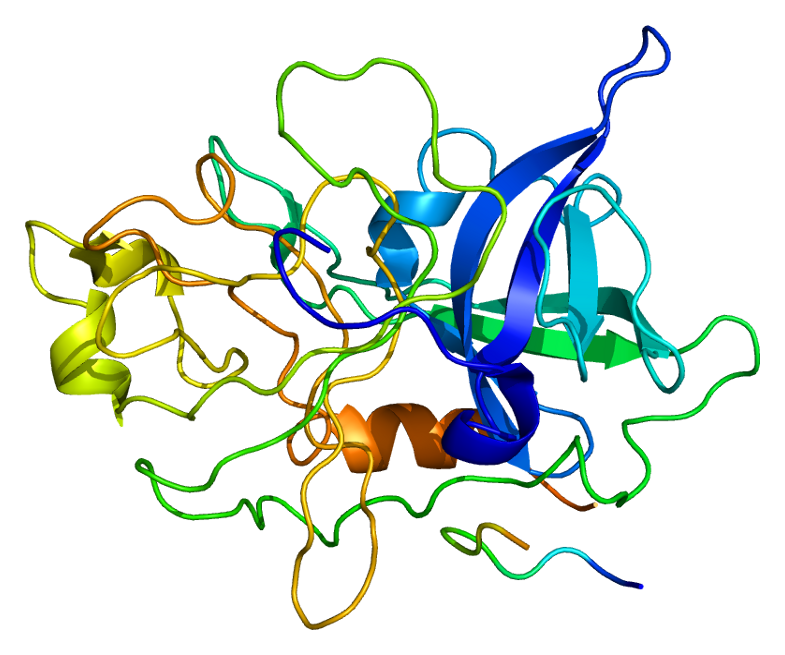
The main inhibitor of tissue plasminogen activator and urokinase is plasminogen activator inhibitor-1 (PAI-1). Plasminogen activator inhibitor-1 is a serine protease, synthesized by endothelial cells, that specifically inhibits tissue plasminogen activator (tPA) and urokinase (uPA). Tissue plasminogen activator and urokinase are the activators of plasminogen and result in the breakdown of blood clots (fibrinolysis).
PAI-1 levels have also been studied in patients and how they influence certain diseases. Elevated serum levels of PAI-1 have been found in obese individuals. Elevated levels of PAI-1 also seem to increase the risk of atherothrombotic events and may also promote vascular disease.
Plasminogen activator inhibitor-2 (PAI-2) is a serine protease that inactivates tPA and uPA. PAI-2 is produced by the placenta and only found in high quantities in the blood during pregnancy.
Factors
Factor XIa and XIIa are two main factors involved in the plasminogen activator. Factor XI (FXI) is a serine protase produced by the liver and circulates in its inactive form. Deficiency in factor XI is known to cause hemophilia C. Factor XIIa is another plasma protein that is involved in the activation of zymogen factor is activated into factor XIa. This activation is important to the coagulation cascade.
Applications
Due to its contribution to fibrinolysis, tissue plasminogen activator is used medically to treat blood clot-related disorders including thrombotic or embolic stroke, myocardial infarction, and pulmonary embolism. It is manufactured using recombinant techniques and is sold as alteplase, reteplase, and tenecteplase. Alteplase was the first of these versions to go on the market, and has the same structure as tPA. Reteplase and tenecteplase both received FDA approval after alteplase, and have nonidentical structures to tPA. These recombinant forms of tPA have been shown to have a longer half-life in the blood and greater resistance to inhibition, resulting in an increased capacity to treat thrombolytic diseases.
Urokinase is similarly used in the medical field, specifically for the treatment of pulmonary embolism.
Plasminogen Activator Role in Breast Cancer
Plasminogen activator inhibitor-1 not only functions as an inhibitor, but other roles of PAI-1 could suggest it could contribute to cancer. The other roles of PAI-1 include, cell de-adhesion, cell proliferation, apoptosis, and cell signaling. These roles could suggest that PAI-1 expression in the tumor microenvironment enhances tumor cell progression. Urokinase cleaves the zymogen plasminogen into serine protease plasmin. The elevated levels of uPA are an indicator of cancer which could be found in the carcinoma of the breast. Plasmin can activate matrix metalloproteases (MMP's) in the extracellular matrix (ECM). MMP activation contributes to tumor cell invasion and metastasis by degradation of ECM components.
References
References
- (March 2012). "The X-ray crystal structure of full-length human plasminogen". Cell Reports.
- (June 2013). "Three decades of research on plasminogen activator inhibitor-1: a multifaceted serpin". Seminars in Thrombosis and Hemostasis.
- (May 1991). "[Type 1 plasminogen activator inhibitor: its role in biological reactions]". [Rinsho Ketsueki] the Japanese Journal of Clinical Hematology.
- (2009-01-01). "Obesity and breast cancer: the roles of peroxisome proliferator-activated receptor-γ and plasminogen activator inhibitor-1". PPAR Research.
- (August 2005). "PAI-1 and atherothrombosis". Journal of Thrombosis and Haemostasis.
- (December 1993). "Plasminogen-activator inhibitor type 2 (PAI-2) is a spontaneously polymerising SERPIN. Biochemical characterisation of the recombinant intracellular and extracellular forms". European Journal of Biochemistry.
- (July 2008). "Factor XI homodimer structure is essential for normal proteolytic activation by factor XIIa, thrombin, and factor XIa". The Journal of Biological Chemistry.
- (June 1996). "Factor XI deficiency". Baillière's Clinical Haematology.
- (July 2001). "Roles of platelets and factor XI in the initiation of blood coagulation by thrombin". Thrombosis and Haemostasis.
- Rivera-Bou, Wanda L. (15 December 2016). "Thrombolytic Therapy".
- (March 2015). "Recombinant tissue plasminogen activators (rtPA): a review". Clinical Pharmacology and Therapeutics.
- (8 June 2007). "LABEL: KINLYTIC- urokinase injection, powder, lyophilized, for solution".
This article was imported from Wikipedia and is available under the Creative Commons Attribution-ShareAlike 4.0 License. Content has been adapted to SurfDoc format. Original contributors can be found on the article history page.
Ask Mako anything about Plasminogen activator — get instant answers, deeper analysis, and related topics.
Research with MakoFree with your Surf account
Create a free account to save articles, ask Mako questions, and organize your research.
Sign up freeThis content may have been generated or modified by AI. CloudSurf Software LLC is not responsible for the accuracy, completeness, or reliability of AI-generated content. Always verify important information from primary sources.
Report