From Surf Wiki (app.surf) — the open knowledge base
Pisanosaurus
Extinct genus of dinosauriforms

Extinct genus of dinosauriforms
~
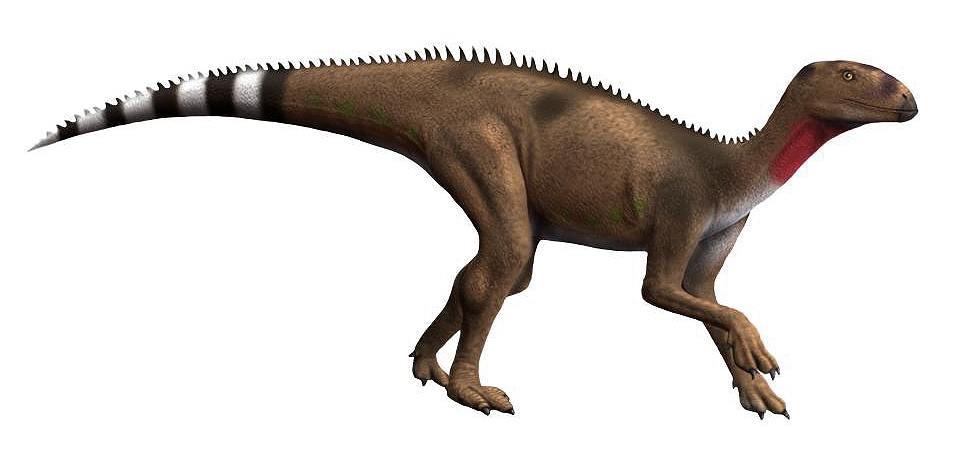
Pisanosaurus ( ) is an extinct genus of early dinosauriform, likely an ornithischian or silesaurid, from the Late Triassic of Argentina. It was a small, lightly built, ground-dwelling herbivore, that could grow up to an estimated 1 m long. Only one species, the type, Pisanosaurus mertii, is known, based on a single partial skeleton discovered in the Ischigualasto Formation of the Ischigualasto-Villa Unión Basin in northwestern Argentina. This part of the formation has been dated to the late Carnian, approximately 229 million years ago.
Discovery and naming
Pisanosaurus is known from a single fragmented skeleton discovered in 1962 by Galileo Juan Scaglia at the Hoyada del Cerro Las Lajas locality (also known as Agua de Las Catas) in the Ischigualasto Formation of La Rioja Province, Argentina.
The genus is based on a specimen given the designation PVL 2577, which consists of a partial skull including a fragmentary right maxilla with teeth, and incomplete right mandibular ramus (lower jaw), six incomplete cervical vertebrae, seven incomplete dorsal vertebrae, molds of five sacral vertebrae, a rib and several rib fragments, a fragmentary right scapula, a coracoid, molds of a fragmentary ilium, ischium and pubic bone, an impression of three metacarpals, the complete femora, the right tibia, the right fibula, with an articulated astragalus and calcaneum, a tarsal element with a metatarsal, metatarsals III and IV, three phalanges from the third toe and five phalanges (including the ungual) from the fourth toe, and an indeterminate long bone fragment.
The genus name Pisanosaurus means "Pisano's lizard" and combines "Pisano" in honor of Argentine paleontologist Juan Arnaldo Pisano of La Plata Museum, with a Latin "saurus" from the Greek (σαύρα) meaning "lizard". Pisanosaurus was described and named by Argentine paleontologist Rodolfo Casamiquela in 1967. The type and only valid species known today is Pisanosaurus mertii. The specific name honors the late Araucanian naturalist Carlos Merti.
Description
Based on the known fossil elements from a partial skeleton, Pisanosaurus was a small, lightly built dinosauriform, reaching 1 - in length and 2 kg in body mass. These estimates vary due to the incompleteness of the holotype specimen PVL 2577. The orientation of the pubis is uncertain, with some skeletal reconstructions having it projecting down and forward (the propubic condition) similar to that of the majority of saurischian dinosaurs.
According to a redescription by José Bonaparte in 1976, Pisanosaurus has some distinctive characteristics. The acetabulum (hip socket) is open. The peduncles of the ilium are short, resulting in a low and axially elongated acetabulum. The upper region of the ischium is wide, larger than that of the pubic bone. The metacarpals of the hand are apparently elongated, measuring about fifteen millimeters.
Classification
Pisanosaurus is the type genus of the Pisanosauridae, a family erected by Casamiquela in the same paper which named Pisanosaurus. The family Pisanosauridae has fallen into disuse; a 1976 study considered the group synonymous with the already named Heterodontosauridae, though this is not followed by more recent studies.
The exact classification of Pisanosaurus has been the topic of debate by scientists for over 40 years; until 2017, the consensus was that Pisanosaurus is the oldest known ornithischian, part of a diverse group of dinosaurs which lived during nearly the entire span of the Mesozoic Era. More recently, some authors have begun to consider it a non-dinosaurian silesaurid, though this hypothesis has not reached a consensus either.
Ornithischian hypothesis

Over the years, Pisanosaurus has been classified as a heterodontosaurid, a fabrosaurid, a hypsilophodont and has also been considered the earliest known ornithischian. A 2008 study placed Pisanosaurus outside of (and more basal than) Heterodontosauridae. In this study, Pisanosaurus is the earliest and most primitive ornithischian. This assignment is also supported by Norman et al. (2004), Langer et al. (2009) and the controversial Ornithoscelida hypothesis of Baron, Norman & Barrett (2017). Other primitive ornithischians include Eocursor, Trimucrodon, and possibly Fabrosaurus.
The hypothesis of ornithischian affinities for Pisanosaurus has not fallen out of favor despite competition from alternative hypothesis. Silesaurid-like traits, for example, may be dinosaurian plesiomorphies (ancestral conditions) rather than unique characteristics of silesaurids.
Silesaurid hypothesis
The placement of Pisanosaurus is reliant on the placement of silesaurids as a whole, a situation which has invited much debate. While Silesauridae is often considered a monophyletic sister group of dinosaurs, some studies consider it a paraphyletic grade ancestral to ornithischian dinosaurs in particular. One such study is Müller & Garcia (2020). Although they regarded Pisanosaurus as the basal-most ornithischian, taxa often considered members of Silesauridae form a step-wise arrangement up to Pisanosaurus. It acts a transitional form positioned on a rung between the "silesaurid" grade (Asilisaurus, Sacisaurus, Silesaurus, etc.) and traditional ornithischians (Eocursor, Scutellosaurus, Heterodontosaurus, etc.). This phylogenetic position may explain why some authors consider Pisanosaurus a silesaur and others consider it an ornithischian, as following Müller & Garcia, Pisanosaurus has traits of both groups.
Paleoecology
The fossils of Pisanosaurus were discovered in the "Agua de las Catas" locality at the Ischigualasto Formation in La Rioja, Argentina. Originally dated to the Middle Triassic, this formation is now believed to belong to the Late Triassic Carnian stage, deposited approximately 228 to 216.5 million years ago. This specimen was collected by José Fernando Bonaparte, Rafael Herbst and the preparators Martín Vince and Scaglia in 1962, and is housed in the collection of the Laboratorio de Paleontologia de Vertebrados, Instituto "Miguel Lillo", in San Miguel de Tucumán, Argentina.
The Ischigualasto Formation was a volcanically active floodplain covered by forests, with a warm and humid climate, though subject to seasonal variations including strong rainfalls. Vegetation consisted of ferns, horsetails, and giant conifers, which formed highland forests along the banks of rivers. Herrerasaurus remains appear to have been the most common among the carnivores of the Ischigualasto Formation. Sereno (1993) noted that Pisanosaurus was found in "close association" with therapsids, rauisuchians, archosaurs, Saurosuchus and the dinosaurs Herrerasaurus and Eoraptor, all of whom lived in its paleoenvironment. Bonaparte (1976) postulated that Pisanosaurus played a role in a fauna dominated by therapsids. The large carnivore Herrerasaurus may have fed upon Pisanosaurus. Herbivores were represented by rhynchosaurs such as Hyperodapedon (a beaked reptile); aetosaurs (spiny armored reptiles); kannemeyeriid dicynodonts (stocky, front-heavy beaked quadrupedal animals) such as Ischigualastia; and traversodontids (somewhat similar in overall form to dicynodonts, but lacking beaks) such as Exaeretodon. These non-dinosaurian herbivores were much more abundant than early dinosaurs.
References
References
- (2020-07-29). "The Late Triassic Ischigualasto Formation at Cerro Las Lajas (La Rioja, Argentina): fossil tetrapods, high-resolution chronostratigraphy, and faunal correlations". Scientific Reports.
- Butler, Richard J.. (2008). "The phylogeny of the ornithischian dinosaurs". Journal of Systematic Palaeontology.
- [[Henry George Liddell. (1980). "A Greek-English Lexicon". Oxford University Press.
- "Pisanosaurus".
- (2016). "The Princeton Field Guide to Dinosaurs". Princeton University Press.
- Holtz, Thomas R. Jr. (2008) ''Dinosaurs: The Most Complete, Up-to-Date Encyclopedia for Dinosaur Lovers of All Ages'' [https://www.geol.umd.edu/~tholtz/dinoappendix/DinoappendixSummer2008.pdf Supplementary Information]
- Holtz, Thomas R. Jr.. (2006). "The Dinosaur Family Tree: What is a dinosaur?". University of Maryland Department of Geology.
- Casamiquela, R.M.. (1967). "Un nuevo dinosaurio ornitisquio triásico (''Pisanosaurus mertii''; Ornithopoda) de la Formación Ischigualasto, Argentina". Ameghiniana.
- (2017). "Phylogenetic reassessment of ''Pisanosaurus mertii'' Casamiquela, 1967, a basal dinosauriform from the Late Triassic of Argentina". Journal of Systematic Palaeontology.
- (2017). "Baron et al. reply". Nature.
- Sereno, P.C.. (1991). "''Lesothosaurus'', "fabrosaurids", and the early evolution of Ornithischia". Journal of Vertebrate Paleontology.
- Irmis, R.B.. (2007). "Early ornithischian dinosaurs: the Triassic record". Historical Biology.
- D. B. Norman, L. M. Witmer, and D. B. Weishampel. 2004. Basal Ornithischia. In D. B. Weishampel, H. Osmolska, and P. Dodson (eds.), The Dinosauria (2nd edition). University of California Press, Berkeley 325-334
- (2009). "The origin and early evolution of dinosaurs". Biological Reviews.
- (2017). "A new hypothesis of dinosaur relationships and early dinosaur evolution". Nature.
- Federico L. Agnolin. (2015). "Nuevas observaciones sobre ''Pisanosaurus mertii'' Casamiquela, 1967 (Dinosauriformes) y sus implicancias taxonómicas". XXIX Jornadas Argentinas de Paleontología de Vertebrados. 27–29 de Mayo de 2015. Diamante, Entre Ríos. Libro de Resúmenes.
- (2017). "Phylogenetic reassessment of ''Pisanosaurus mertii'' Casamiquela, 1967, a basal dinosauriform from the Late Triassic of Argentina". Journal of Systematic Palaeontology.
- Matthew G. Baron. (2018). "''Pisanosaurus mertii'' and the Triassic ornithischian crisis: could phylogeny offer a solution?". Historical Biology: An International Journal of Paleobiology.
- (August 2020). "A paraphyletic 'Silesauridae' as an alternative hypothesis for the initial radiation of ornithischian dinosaurs". Biology Letters.
- (2021-10-01). "Review of the fossil record of early dinosaurs from South America, and its phylogenetic implications". Journal of South American Earth Sciences.
- Bonaparte, J.F.. (1976). "''Pisanosaurus mertii'' Casamiquela and the origin of the Ornithischia". Journal of Paleontology.
- Tucker, Maurice E.. (1982). "Triassic environments, climates, and reptile evolution". Palaeogeography, Palaeoclimatology, Palaeoecology.
- Columbi, Carina E.. (2008-10-05). "Stable isotope analysis of fossil plants from the Upper Triassic Ischigualasto Formation in the northwest of Argentina". The Geological Society of America.
- Sereno, P.C.. (1992). "The complete skull and skeleton of an early dinosaur". Science.
- Rogers, R. R.. (1993). "The Ischigualasto tetrapod assemblage (Late Triassic, Argentina) and 40Ar/39Ar dating of dinosaur origins". Science.
- Bonaparte, J.F.. (1970). "Annotated list of the South American Triassic tetrapods". Gondwana Symposium Proceedings and Papers.
This article was imported from Wikipedia and is available under the Creative Commons Attribution-ShareAlike 4.0 License. Content has been adapted to SurfDoc format. Original contributors can be found on the article history page.
Ask Mako anything about Pisanosaurus — get instant answers, deeper analysis, and related topics.
Research with MakoFree with your Surf account
Create a free account to save articles, ask Mako questions, and organize your research.
Sign up freeThis content may have been generated or modified by AI. CloudSurf Software LLC is not responsible for the accuracy, completeness, or reliability of AI-generated content. Always verify important information from primary sources.
Report