From Surf Wiki (app.surf) — the open knowledge base
Perilipin-1
Protein in humans

Protein in humans
Perilipin, also known as lipid droplet-associated protein, perilipin 1, or PLIN, is a protein that, in humans, is encoded by the PLIN gene. The perilipins are a family of proteins that associate with the surface of lipid droplets. Phosphorylation of perilipin is essential for the mobilization of fats in adipose tissue.
Perilipin family of proteins
Perilipin is part of a gene family with six currently-known members. In vertebrates, closely related genes include adipophilin (also known as adipose differentiation-related protein or Perilipin 2), TIP47 (Perilipin 3), Perilipin 4 and Perilipin 5 (also called MLDP, LSDP5, or OXPAT). Insects express related proteins, LSD1 and LSD2, in fat bodies. The yeast Saccharomyces cerevisiae expresses PLN1 (formerly PET10), that stabilizes lipid droplets and aids in their assembly.
Evolution
The perilipins are considered to have their origins in a common ancestral gene which, during the first and second vertebrate genome duplication, gave rise to six types of PLIN genes.
Composition and structure
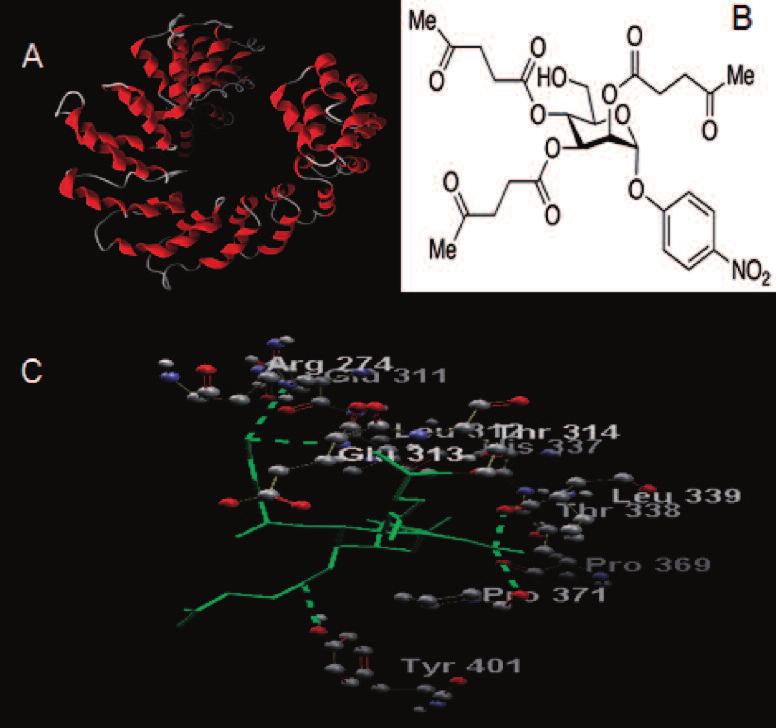
Human perilipin
Human perilipin-1 is composed by 522 amino acids, which add up to a molecular mass of 55.990 kDa. It presents an estimated number of 15 phosphorylation sites (residues 81, 85, 126, 130, 132, 137, 174, 299, 301, 382, 384, 408, 436, 497, 499 and 522) from which 3 -those in bold- have been suggested to be relevant for stimulated-lipolysis through PKA phosphorylation - they correspond respectively to PKA Phosphorylation sites 1, 5 and 6. A compositional bias of Glutamic acid can be found between residues 307 and 316. Its secondary structure has been suggested to be conformed exclusively by partially hydrophobic α-helixes, as well as the respective coils and bends.
Whereas perilipin-1 is coded by a single gene, alternative mRNA splicing processes can lead to three protein isoforms (Perilipin A, B and C). Both Perilipin A and B present common N-terminal regions, differing in the C-terminal ones. Concretely, beginning from the N-terminal of Perilipin-1, a PAT domain—characteristic of its protein family—can be found, followed by an also characteristic repeated sequence of 13 residues which form amphipathic helixes with an active role in linking membranes and a 4-helix bundle before the C-terminal carbon. In Perilipin A, lipophile nature is conferred by the slightly hydrophobic amino acids concentrated in the central 25% of the sequence, region that anchors the protein to the core of the lipid droplet.
Murine perilipin
Serines occupying positions 81, 222, 276, 433, 492 and 517 act as phosphorylation sites -numbered from 1 to 6- for PKA, as well as several other threonines and serines which add up to 27 phosphorylation sites.
Function
Perilipin is a protein that coats lipid droplets (LDs) in adipocytes, the fat-storing cells in adipose tissue. In fact, PLIN1 is greatly expressed in white adipocytes.
It controls adipocyte lipid metabolism. It handles essential functions in the regulation of basal and hormonally stimulated lipolysis and also rises the formation of large LDs which implies an increase in the synthesis of triglycerides.
In humans, Perilipin A is the most abundant protein associated with the adipocyte LDs and lower PLIN1 expression is related with higher rates of lipolysis.
Under basal conditions, Perilipin acts as a protective coating of LDs from the body's natural lipases, such as hormone-sensitive lipase (HSL) and adipose triglyceride lipase (ATGL), which break triglycerides into glycerol and free fatty acids for use in lipid metabolism.
In times of energy deficit, Perilipin is hyperphosphorylated by PKA following β-adrenergic receptor activation. Phosphorylated perilipin changes conformation, exposing the stored lipids to hormone-sensitive lipase-mediated lipolysis.
Modulator of adipocyte lipid metabolism
Specifically, in the basal state Perilipin A allows a low level of basal lipolysis by reducing the access of cytosolic lipases to stored triacylglycerol in LDs. It is found at their surface in a complex with CGI-58, the co-activator of ATGL. ATGL might also be in this complex but it is quiescent.
Under lipolytically stimulated conditions, PKA is activated and phosphorylates up to 6 Serine residues on Perilipin A (Ser81, 222, 276, 433, 492, and 517) and 2 on HSL (Ser659, and 660). Although PKA also phosphorylates HSL, which can increase its activity, the more than 50-fold increase in fat mobilization (triggered by epinephrine) is primarily due to Perilipin phosphorylation.
Then, Phosphorylated HSL translocates to the LD surface and associates with Perilipin A and Adipocyte fatty acid-binding protein (AFABP). Consequently, HSL gains access to triacylglycerol (TAG) and diacylglycerol (DAG), substrates in LDs. Also, CGI-58 separates from the LD outer layer which leads to a redistribution of ATGL. In particular, ATGL interacts with Perilipin A through phosphorylated Ser517.
As a result, PKA phosphorylation implies an enriched colocation of HLS and ATGL which facilitates maximal lipolysis by the two lipases.[[File:Lipolysis_in_lipid_droplets.png|thumb|1050x1050px|LIPOLYSIS IN LIPID DROPLETS: In basal condition lipolysis of TAG and DAG occurs at low levels thanks to Perilipin A, whereas in simulated condition phosphorylated Perilipin A allows maximal lipolysis of TAG and DAG.|center]]
Clinical significance
Perilipin is an important regulator of lipid storage. Both an overexpression or deficiency of the protein, caused by a mutation, lead to severe health issues.
Overexpression
Perilipin expression is elevated in obese animals and humans. Polymorphisms in the human perilipin (PLIN) gene have been associated with variance in body-weight regulation and may be a genetic influence on obesity risk in humans.
This protein can be modified by O-linked acetylglucosamine (O-GlNac) moieties and the enzyme that intervenes is O-GlcNAc transferase (OGT). An abundance of OGT obstructs lipolysis and benefits diet-induced obesity and whole-body insulin resistance. Studies also propose that an overexpression of adipose O-GlcNAc signaling is a molecular expression of obesity and diabetes in humans.
Deficiency
Perilipin-null mice eat more food than wild-type mice, but gain 1/3 less fat than wild-type mice on the same diet; perilipin-null mice are thinner, with more lean muscle mass. Perilipin-null mice also exhibit enhanced leptin production and a greater tendency to develop insulin resistance than wild-type mice. Even though perilipin-null mice present less fat mass and a higher insulin resistance, they do not show signs of a whole lipodystrophic phenotype.
In humans, studies suggest that a deficiency of PLIN1 causes lipodystrophic syndromes, which disables the optimal accumulation of triglycerides in adipocytes that derives in an abnormal deposition of lipids in tissues such as skeletal muscle and liver. The storage of lipids in the liver leads to insulin resistance and hypertriglyceridemia. Affected patients are characterized by a subcutaneous fat with smaller than normal adipocytes, macrophage infiltration and fibrosis.
These findings affirm a new primary form of inherited lipodystrophy and emphasize on the severe metabolic consequences of a defect in the formation of lipid droplets in adipose tissue.
In particular, variants 13041AG and 14995AT have been associated with increased risk of obesity in women and 11482GA has been associated with decreased perilipin expression and increased lipolysis in women.
References
References
- "Entrez Gene: PLIN perilipin".
- [http://pharmaxchange.info/press/2013/10/mobilization-and-cellular-uptake-of-stored-fats-triacylglycerols-with-animation/ Mobilization and Cellular Uptake of Stored Fats (with Animation)]
- (October 2017). "Pet10p is a yeast perilipin that stabilizes lipid droplets and promotes their assembly". The Journal of Cell Biology.
- (2020-11-03). "Perilipin-5". Wikipedia.
- (January 2014). "An enzyme assisted RP-RPLC approach for in-depth analysis of human liver phosphoproteome". Journal of Proteomics.
- (June 2003). "Perilipin A is essential for the translocation of hormone-sensitive lipase during lipolytic activation". The Journal of Cell Biology.
- "PLIN1 - Perilipin-1 - Homo sapiens (Human) - PLIN1 gene & protein".
- (2014). "In silico discovery of a perilipin 1 inhibitor to be used as a new treatment for obesity". European Review for Medical and Pharmacological Sciences.
- (February 1999). "Perilipins, ADRP, and other proteins that associate with intracellular neutral lipid droplets in animal cells". Seminars in Cell & Developmental Biology.
- (March 2016). "Conserved Amphipathic Helices Mediate Lipid Droplet Targeting of Perilipins 1-3". The Journal of Biological Chemistry.
- (April 2017). "Perilipins: a diversity of intracellular lipid droplet proteins". Lipids in Health and Disease.
- (January 2003). "The central domain is required to target and anchor perilipin A to lipid droplets". The Journal of Biological Chemistry.
- (December 2003). "Lipase-selective functional domains of perilipin A differentially regulate constitutive and protein kinase A-stimulated lipolysis". The Journal of Biological Chemistry.
- (June 2018). "OPA1-anchored PKA phosphorylates perilipin 1 on S522 and S497 in adipocytes differentiated from human adipose stem cells". Molecular Biology of the Cell.
- (June 1991). "Perilipin, a major hormonally regulated adipocyte-specific phosphoprotein associated with the periphery of lipid storage droplets". The Journal of Biological Chemistry.
- (May 2020). "Function and characterization of the promoter region of perilipin 1 (PLIN1): Roles of E2F1, PLAG1, C/EBPβ, and SMAD3 in bovine adipocytes". Genomics.
- "UniProtKB - O60240 (PLIN1_HUMAN)".
- (December 2007). "Thematic review series: adipocyte biology. The perilipin family of structural lipid droplet proteins: stabilization of lipid droplets and control of lipolysis". Journal of Lipid Research.
- (June 2009). "Perilipin A and the control of triacylglycerol metabolism". Molecular and Cellular Biochemistry.
- (March 2013). "FSP27 and PLIN1 interaction promotes the formation of large lipid droplets in human adipocytes". Biochemical and Biophysical Research Communications.
- Wong K. (2000-11-29). "Making Fat-proof Mice". Scientific American.
- (October 2017). "The perilipin family of lipid droplet proteins: Gatekeepers of intracellular lipolysis". Biochimica et Biophysica Acta (BBA) - Molecular and Cell Biology of Lipids.
- (June 2009). "PAT proteins, an ancient family of lipid droplet proteins that regulate cellular lipid stores". Biochimica et Biophysica Acta (BBA) - Molecular and Cell Biology of Lipids.
- (March 2009). "Relationship between perilipin gene polymorphisms and body weight and body composition during weight loss and weight maintenance". Physiology & Behavior.
- (January 2020). "O-GlcNAc transferase inhibits visceral fat lipolysis and promotes diet-induced obesity". Nature Communications.
- Highfield, Roger. (2000-11-29). "Couch potato mice discover the lazy way to stay slim". The Daily Telegraph.
- (May 2001). "Perilipin ablation results in a lean mouse with aberrant adipocyte lipolysis, enhanced leptin production, and resistance to diet-induced obesity". Proceedings of the National Academy of Sciences of the United States of America.
- (February 2011). "Perilipin deficiency and autosomal dominant partial lipodystrophy". The New England Journal of Medicine.
- (November 2004). "Gender-specific association of a perilipin gene haplotype with obesity risk in a white population". Obesity Research.
- (September 2005). "Obese subjects carrying the 11482G>A polymorphism at the perilipin locus are resistant to weight loss after dietary energy restriction". The Journal of Clinical Endocrinology and Metabolism.
This article was imported from Wikipedia and is available under the Creative Commons Attribution-ShareAlike 4.0 License. Content has been adapted to SurfDoc format. Original contributors can be found on the article history page.
Ask Mako anything about Perilipin-1 — get instant answers, deeper analysis, and related topics.
Research with MakoFree with your Surf account
Create a free account to save articles, ask Mako questions, and organize your research.
Sign up freeThis content may have been generated or modified by AI. CloudSurf Software LLC is not responsible for the accuracy, completeness, or reliability of AI-generated content. Always verify important information from primary sources.
Report