From Surf Wiki (app.surf) — the open knowledge base
Peel (fruit)
Outer layer of fruit or vegetable
Outer layer of fruit or vegetable
.jpg)
Peel, also known as rind or skin, is the outer protective layer of a fruit or vegetable which can be peeled off. The rind is usually the botanical exocarp, but the term exocarp also includes the hard cases of nuts, which are not named peels since they are not peeled off by hand or peeler, but rather shells because of their hardness.
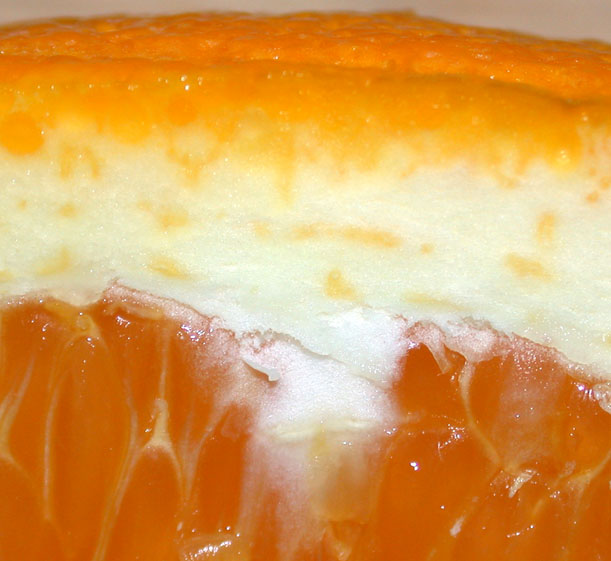
A fruit with a thick peel, such as a citrus fruit, is called a hesperidium. In hesperidia, the inner layer (also called albedo or, among non-botanists, pith) is peeled off together with the outer layer (called flavedo), and together they are called the peel. The flavedo and albedo, respectively, are the exocarp and the mesocarp. The juicy layer inside the peel (containing the seeds) is the endocarp.
Uses
Depending on the thickness and taste, fruit peel is sometimes eaten as part of the fruit, such as with apples. In some cases the peel is unpleasant or inedible, in which case it is removed and discarded, such as with bananas or grapefruits.
The peel of some fruits—for example, pomegranates—is high in tannins and other polyphenols, and is employed in the production of dyes.
The peel of citrus fruits is bitter and generally not eaten raw, but may be used in cooking. In gastronomy, the outermost colored part of the peel is called the zest, which can be scraped off and used for its tangy flavor. A large piece of citrus peel, called a "twist", is often used to garnish cocktails. The fleshy white part of the peel, bitter when raw in most species, is used as succade or is prepared with sugar to make marmalade or fruit soup. The peel can also be candied, or dried to produce a seasoning (e.g., chenpi).
Nutrition
Raw orange peel is 73% water, 25% carbohydrates, 2% protein, and contains negligible fat. In a reference amount of 100 g, raw orange peel supplies 97 calories and 11 grams of dietary fiber, with vitamin C in rich content (136 mg).
References
References
- "pith". Oxford English Dictionary.
- "Orange & Orange Juice". Brazilian Association of Citrus Exporters.
- (1 April 2019). "Raw orange peel per 100 g". FoodData Central, US Department of Agriculture.
This article was imported from Wikipedia and is available under the Creative Commons Attribution-ShareAlike 4.0 License. Content has been adapted to SurfDoc format. Original contributors can be found on the article history page.
Ask Mako anything about Peel (fruit) — get instant answers, deeper analysis, and related topics.
Research with MakoFree with your Surf account
Create a free account to save articles, ask Mako questions, and organize your research.
Sign up freeThis content may have been generated or modified by AI. CloudSurf Software LLC is not responsible for the accuracy, completeness, or reliability of AI-generated content. Always verify important information from primary sources.
Report