From Surf Wiki (app.surf) — the open knowledge base
Peat
Accumulation of partially decayed vegetation
.jpg)
Accumulation of partially decayed vegetation
Peat is an accumulation of partially decayed vegetation or organic matter. It is unique to natural areas called peatlands, bogs, mires, moors, or muskegs. Sphagnum moss, also called peat moss, is one of the most common components in peat, although many other plants can contribute. The biological features of sphagnum mosses act to create a habitat aiding peat formation, a phenomenon termed 'habitat manipulation'. Soils consisting primarily of peat are known as histosols. Peat forms in wetland conditions, where flooding or stagnant water obstructs the flow of oxygen from the atmosphere, slowing the rate of decomposition. Peat properties such as organic matter content and saturated hydraulic conductivity can exhibit high spatial heterogeneity.
Peatlands, particularly bogs, are the primary source of peat; although less common, other wetlands, including fens, pocosins and peat swamp forests, also deposit peat. Landscapes covered in peat are home to specific kinds of plants, including Sphagnum moss, ericaceous shrubs and sedges.See bog for more information on this aspect of peat. Because organic matter accumulates over thousands of years, peat deposits provide records of past vegetation and climate by preserving plant remains, such as pollen. This allows the reconstruction of past environments and the study of land-use changes.
Peat is used by gardeners and for horticulture in certain parts of the world, but this is being banned in some places. By volume, there are about 4 trillion cubic metres of peat in the world. Over time, the formation of peat is often the first step in the geological formation of fossil fuels such as coal, particularly low-grade coal such as lignite. The peatland ecosystem covers 3.7 e6km2 and is the most efficient carbon sink on the planet, because peatland plants capture carbon dioxide (CO2) naturally released from the peat, maintaining an equilibrium. In natural peatlands, the "annual rate of biomass production is greater than the rate of decomposition", but it takes "thousands of years for peatlands to develop the deposits of 1.5 to, which is the average depth of the boreal [northern] peatlands",
Peat is in principle a renewable source of energy. However, its extraction rate in industrialized countries far exceeds its slow regrowth rate of 1 mm per year, and is also reported that peat regrowth takes place only in 30–40% of peatlands. Centuries of burning and draining of peat by humans has released a significant amount of into the atmosphere, contributing to anthropogenic climate change.
Formation
Peat forms when plant material does not fully decay in acidic and anaerobic conditions. It is composed mainly of wetland vegetation: principally bog plants including mosses, sedges and shrubs. As it accumulates, the peat holds water. This slowly creates wetter conditions that allow the area of wetland to expand. Peatland features can include ponds, ridges and raised bogs. The characteristics of some bog plants actively promote bog formation. For example, sphagnum mosses actively secrete tannins, which preserve organic material. Sphagnum also have special water-retaining cells, known as hyaline cells, which can release water ensuring the bogland remains constantly wet which helps promote peat production.
Most modern peat bogs formed 12,000 years ago in high latitudes after the glaciers retreated at the end of the last ice age. Peat usually accumulates slowly at the rate of about a millimetre per year. The estimated carbon content is 415 Gt (northern peatlands), 50 Gt (tropical peatlands) and 15 Gt (South America).
Types of peat material
Peat material is either fibric, hemic, or sapric. Fibric peats are the least decomposed and consist of intact fibre. Hemic peats are partially decomposed and sapric are the most decomposed.
Phragmites peat are composed of reed grass, Phragmites australis, and other grasses. It is denser than many other types of peat.
Engineers may describe a soil as peat which has a relatively high percentage of organic material. This soil is problematic because it exhibits poor consolidation properties—it cannot be easily compacted to serve as a stable foundation to support loads, such as roads or buildings.
Peatlands distribution
In a widely cited article, Joosten and Clarke (2002) described peatlands or mires (which they say are the same)Supported by the "Dutch Ministry of Foreign Affairs (DGIS) under the Global Peatland Initiative , managed by Wetlands International in co-operation with the IUCN – Netherlands Committee, Alterra, the International Mire Conservation Group and the International Peatland Society." as:the most widespread of all wetland types in the world, representing 50 to 70% of global wetlands. They cover over 4 e6km2 or 3% of the land and freshwater surface of the planet. In these ecosystems are found one third of the world's soil carbon and 10% of global freshwater resources. These ecosystems are characterized by the unique ability to accumulate and store dead organic matter from Sphagnum and many other non-moss species, as peat, under conditions of almost permanent water saturation. Peatlands are adapted to the extreme conditions of high water and low oxygen content, of toxic elements and low availability of plant nutrients. Their water chemistry varies from alkaline to acidic. Peatlands occur on all continents, from the tropical to boreal and Arctic zones from sea level to high alpine conditions.

A more recent estimate from an improved global peatland map, PEATMAP, based on a meta-analysis of geospatial information at global, regional and national levels puts global coverage slightly higher than earlier peatland inventories at 4.23 e6km2 approximately 2.84% of the world land area. In Europe, peatlands extend to about 515000 km2. About 60% of the world's wetlands are made of peat.
Peat deposits are found in many places around the world, including northern Europe and North America. The North American peat deposits are principally found in Canada and the Northern United States. Some of the world's largest peatlands include the West Siberian Lowland, the Hudson Bay Lowlands and the Mackenzie River Valley. There is less peat in the Southern Hemisphere, in part because there is less land. The world's largest tropical peatland is located in Africa (the Democratic Republic of Congo). In addition, the vast Magellanic Moorland in South America (Southern Patagonia/Tierra del Fuego) is an extensive peat-dominated landscape. Peat can be found in New Zealand, Kerguelen, the Falkland Islands and Indonesia (Kalimantan [Sungai Putri, Danau Siawan, Sungai Tolak], Rasau Jaya (West Kalimantan) and Sumatra). Indonesia has more tropical peatlands and mangrove forests than any other nation on earth, but Indonesia is losing wetlands by 100000 ha per year. A catalog of the peat research collection at the University of Minnesota Duluth provides references to research on worldwide peat and peatlands.
About 7% of all peatlands have been exploited for agriculture and forestry. Under certain conditions, peat will turn into lignite coal over geologic periods of time.
General uses
Fuel

Agriculture
Peat has been discouraged as a soil amendment by the Royal Botanic Gardens, Kew, England, since 2003. While bark or coir-based peat-free potting soil mixes are on the rise, particularly in the UK, peat is still used as raw material for horticulture in some other European countries, Canada, as well as parts of the United States.
Drinking water
Peatland can also be an essential source of drinking water, providing nearly 4% of all potable water stored in reservoirs. In the UK, 43% of the population receives drinking water sourced from peatlands, with the number climbing to 68% in Ireland. Catchments containing peatlands are the main source of water for large cities, including Dublin.[[File:Shovel-Falklands.jpg|thumb|upright|[[Falkland Islanders]] shovelling peat in the 1950s]]
Metallurgy
Peat wetlands also used to have a degree of metallurgical importance in the Early Middle Ages, being the primary source of bog iron used to create swords and armour.
Flood mitigation
Many peat swamps along the coast of Malaysia serve as a natural means of flood mitigation, with any overflow being absorbed by the peat, provided forests are still present to prevent peat fires.
Freshwater aquaria
Peat is sometimes used in freshwater aquaria. It is seen most commonly in soft water or blackwater river systems such as those mimicking the Amazon River basin. In addition to being soft and therefore suitable for demersal (bottom-dwelling) species such as Corydoras catfish, peat is reported to have many other beneficial functions in freshwater aquaria. It softens water by acting as an ion exchanger; it also contains substances that are beneficial for plants and fishes' reproductive health. Peat can prevent algae growth and kill microorganisms. Peat often stains the water yellow or brown due to the leaching of tannins.
Balneotherapy
Peat is widely used in balneotherapy (the use of bathing to treat disease). Many traditional spa treatments include peat as part of peloids. Such health treatments have an enduring tradition in European countries, including Poland, the Czech Republic, Germany and Austria. Some of these old spas date back to the 18th century and are still active today. The most common types of peat application in balneotherapy are peat muds, poultices and suspension baths.
Peat archives
Authors Rydin and Jeglum in Biology of Habitats described the concept of peat archives, a phrase coined by influential peatland scientist Harry Godwin in 1981.
In Quaternary Palaeoecology, first published in 1980, Birks and Birks described how paleoecological studies "of peat can be used to reveal what plant communities were present (locally and regionally), what period each community occupied, how environmental conditions changed, and how the environment affected the ecosystem in that time and place."
Scientists continue to compare modern mercury (Hg) accumulation rates in bogs with historical natural archives records in peat bogs and lake sediments to estimate the potential human impacts on the biogeochemical cycle of mercury, for example. Over the years, different dating models and technologies for measuring date sediments and peat profiles accumulated over the last 100–150 years, have been used, including the widely used vertical distribution of 210Pb, the inductively coupled plasma mass spectrometry (ICP-SMS), and more recently the initial penetration (IP).
Bog bodies
Naturally mummified human bodies, often called "bog bodies" have been found in various places in Scotland, England, Ireland, and especially northern Germany and Denmark. They are almost perfectly preserved by the tanning properties of the acidic water, as well as by the antibiotic properties of the organic component sphagnan. A famous example is the Tollund Man in Denmark. Having been discovered in 1950 after being mistaken for a recent murder victim, he was exhumed for scientific purposes and dated to have lived during the 4th century BC. Before that, another bog body, the Elling Woman, had been discovered in 1938 in the same bog about 60 m from the Tollund Man. She is believed to have lived during the late 3rd century BC and was a ritual sacrifice. In the Bronze and Iron Ages, people used peat bogs for rituals to nature gods and spirits.
Environmental and ecological issues
The distinctive ecological conditions of peat wetlands provide a habitat for distinctive fauna and flora. For example, whooping cranes nest in North American peatlands, whilst Siberian cranes nest in the West Siberian peatland. Palsa mires have a rich bird life and are an EU-red listed habitat, and in Canada riparian peat banks are used as maternity sites for polar bears. Natural peatlands also have many species of wild orchids and carnivorous plants. For more on biological communities, see wetland, bog or fen.
Around half of the area of northern peatlands is permafrost-affected, and this area represents around a tenth of the total permafrost area, and also a tenth (185 ± 66 Gt) of all permafrost carbon, equivalent to around half of the carbon stored in the atmosphere. Dry peat is a good insulator (with a thermal conductivity of around 0.25 Wm−1K−1) and therefore plays an important role in protecting permafrost from thaw. The insulating effect of dry peat also makes it integral to unique permafrost landforms such as palsas and permafrost peat plateaus. Peatland permafrost thaw tends to result in an increase in methane emissions and a small increase in carbon dioxide uptake, meaning that it contributes to the permafrost carbon feedback. Under 2 °C global warming, 0.7 million km2 of peatland permafrost could thaw, and with warming of +1.5 to 6 °C a cumulative 0.7 to 3 PgC of methane could be released as a result of permafrost peatland thaw by 2100. The forcing from these potential emissions would be approximately equivalent to 1% of projected anthropogenic emissions.
One characteristic of peat is the bioaccumulation of metals concentrated in the peat. Accumulated mercury is of significant environmental concern.
Peat drainage
Large areas of organic wetland (peat) soils are currently drained for agriculture, forestry and peat extraction (i.e. through canals). This process is taking place all over the world. This not only destroys the habitat of many species but also heavily fuels climate change. As a result of peat drainage, the organic carbon—which built over thousands of years and is normally underwater—is suddenly exposed to the air. It decomposes and turns into carbon dioxide (), which is released into the atmosphere. The global emissions from drained peatlands have increased from 1,058 Mton in 1990 to 1,298 Mton in 2008 (a 20% increase). This increase has particularly taken place in developing countries, of which Indonesia, Malaysia and Papua New Guinea are the fastest-growing top emitters. This estimate excludes emissions from peat fires (conservative estimates amount to at least 4,000 Mton/-eq./yr for south-east Asia). With 174 Mton/-eq./yr, the EU is after Indonesia (500 Mton) and before Russia (161 Mton), the world's second-largest emitter of drainage-related peatland (excl. extracted peat and fires). Total emissions from the worldwide 500,000 km2 of degraded peatland may exceed 2.0 Gtons (including emissions from peat fires), which is almost 6% of all global carbon emissions.
{{anchor|Fires|Peat Fires}} Peat fires
Peat can be a major fire hazard and is not extinguished by light rain. Peat fires may burn for great lengths of time, or smoulder underground and reignite after winter if an oxygen source is present.
Peat has a high carbon content and can burn under low moisture conditions. Once ignited by the presence of a heat source (e.g., a wildfire penetrating the subsurface), it smoulders. These smouldering fires can burn undetected for very long periods of time (months, years, and even centuries) propagating in a creeping fashion through the underground peat layer.
Despite the damage that the burning of raw peat can cause, bogs are naturally subject to wildfires and depend on the wildfires to keep woody competition from lowering the water table and shading out many bog plants. Several families of plants including the carnivorous Sarracenia (trumpet pitcher), Dionaea (Venus flytrap), Utricularia (bladderworts) and non-carnivorous plants such as the sandhills lily, toothache grass and many species of orchid are now threatened and in some cases endangered from the combined forces of human drainage, negligence and absence of fire.
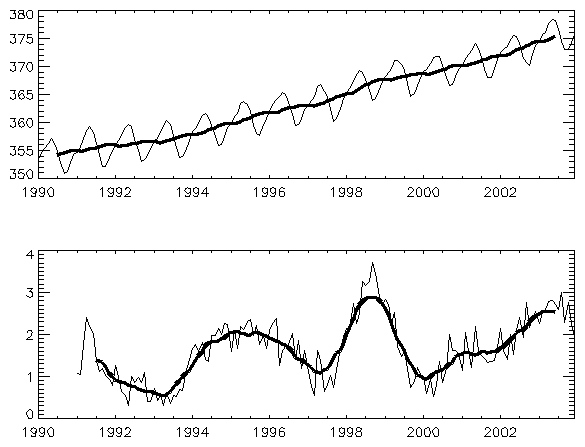
The recent burning of peat bogs in Indonesia, with their large and deep growths containing more than 50 e9t of carbon, has contributed to increases in world carbon dioxide levels. Peat deposits in Southeast Asia could be destroyed by 2040.
It is estimated that in 1997, peat and forest fires in Indonesia released between 0.81 and 2.57 Gt of carbon; equivalent to 13–40 percent of the amount released by global fossil fuel burning, and greater than the carbon uptake of the world's biosphere. These fires may be responsible for the acceleration in the increase in carbon dioxide levels since 1998. More than 100 peat fires in Kalimantan and East Sumatra have continued to burn since 1997; each year, these peat fires ignite new forest fires above the ground.
In North America, peat fires can occur during severe droughts throughout their occurrence, from boreal forests in Canada to swamps and fens in the subtropical southern Florida Everglades. Once a fire has burnt through the area, hollows in the peat are burnt out, and hummocks are desiccated but can contribute to Sphagnum recolonization.
In the summer of 2010, an unusually high heat wave of up to 40 C ignited large deposits of peat in Central Russia, burning thousands of houses and covering the capital of Moscow with a toxic smoke blanket. The situation remained critical until the end of August 2010.
In June 2019, despite some forest fire prevention methods being put in place, peat fires in the Arctic emitted 50 Mt of CO2, which is equal to Sweden's total annual emissions. The peat fires are linked to climate change, as they are much more likely to occur nowadays due to this effect.[[File:Peat haggs at start of Allt Lagan a' Bhainne tributary on Eilrig - geograph.org.uk - 1420692.jpg|thumb|Peat hags in the Scottish Highlands]]
Erosion: Peat hags
Peat "hags" are a form of erosion that occur at the sides of gullies that cut into the peat; they sometimes also occur in isolation. Hags may result when flowing water cuts downwards into the peat and when fire or overgrazing exposes the peat surface. Once the peat is exposed in these ways, it is prone to further erosion by wind, water and livestock. The result is overhanging vegetation and peat. Hags are too steep and unstable for vegetation to establish itself, so they continue to erode unless restorative action is taken.
Protection
In June 2002, the United Nations Development Programme launched the Wetlands Ecosystem and Tropical Peat Swamp Forest Rehabilitation Project. This project was targeted to last for five years, and brings together the efforts of various non-government organisations.
In November 2002, the International Peatland (formerly Peat) Society (IPS) and the International Mire Conservation Group (IMCG) published guidelines on the "Wise Use of Mires and Peatlands – Backgrounds and Principles including a framework for decision-making". This publication aims to develop mechanisms that can balance the conflicting demands on the global peatland heritage to ensure its wise use to meet the needs of humankind.
In June 2008, the IPS published the book Peatlands and Climate Change, summarising the currently available knowledge on the topic. In 2010, IPS presented a "Strategy for Responsible Peatland Management", which can be applied worldwide for decision-making.
Peat extraction is forbidden in Chile since April 2024.
Restoration
Characteristics and uses by nation
Latvia

Latvia has been the biggest exporter of peat in the world by volume, providing more than 19.9% of the world's volume, followed only by Canada with 13% in 2022. In 2020, Latvia exported 1.97 million tons of peat, followed by Germany with 1.5 and Canada with 1.42 million tons. Nevertheless, although first in the world by volume, in monetary terms, Latvian comes second in the world behind Canada. As an example, Latvia's income from exports was US$237 million.
Latvia's peat deposits have been estimated to equal 1.7 billion tons. Due to its climate, Latvia has several peat bogs, which account for 9.9% of the country's territory.
More than two thirds of the licensed areas for peat extraction are state-owned; 55% belong to the state whilst 23% belong to the municipalities
Bogs in Latvia are considered important habitats due to their ecological values, and up to 128,000 hectares, or 40% of the areas in the territory, are protected by environmental laws. The most famous national parks and reserves are the Ķemeri National Park, Cenas tīrelis and Teiči Nature Reserve.
Finland
In January 2021, Bord na Móna announced that it had ceased all peat harvesting and cutting operations and would move its business to a climate solutions company.
In 2022, selling peat for burning was prohibited, but some people are still allowed to cut and burn it.
Russia
.jpg)
The use of peat for energy production was prominent in the Soviet Union, especially in 1965. In 1929, over 40% of the Soviet Union's electric energy came from peat, which dropped to 1% by 1980.
In the 1960s, larger sections of swamps and bogs in Western Russia were drained for agricultural and mining purposes.
Netherlands
Peat harvesting could continue in suitable locations as the lower layers below the current sea level are exposed. This peat was deposited before the sea level rise in the Holocene. As a result, approximately 26% of the area and 21% of the population of the Netherlands are presently below sea level. The deepest point is in the Zuidplaspolder, 6.76 m below average sea level. [[File:The Netherlands compared to sealevel.png|thumb|right|The Netherlands compared to sea level]]
In 2020, the Netherlands imported 2,156 million kg of peat (5.39 million m3 [400 kg/m3 dry peat]): 44.5% from Germany (2020), 9.5% from Estonia (2018), 9.2% from Latvia (2020), 7.2% from Ireland (2018), 8.0% from Sweden (2019), 6.5% from Lithuania (2020), 5.1% from Belgium (2019) and 1.7% from Denmark (2019); 1.35 million kg was exported. Most is used in gardening and greenhouse horticulture.
Since the Netherlands did not have many trees to use as firewood or charcoal, one use the Dutch made of the available peat was to fire kilns to make pottery. During World War II, the Dutch Resistance came up with an unusual use for peat. Since peat was so available in the fields, resistance fighters sometimes stacked peat into human-sized piles and used the piles for target practice.
Estonia
After oil shale in Estonia, peat is the second-most-mined natural resource. The peat production sector has a yearly revenue of around €100 million and it is mostly export-oriented. Peat is extracted from around 14 ha.
India
Sikkim
The mountains of the Himalayas and Tibetan Plateau contain pockets of high-altitude wetlands. Khecheopalri is one of the Sikkim's most famous and diverse peatlands in the eastern Indian territory of Sikkim, which includes 682 species representing five kingdoms, 196 families and 453 genera.
United Kingdom
England
England has around 1 million acres of peatland. Peatlands in England store 584m tonnes of carbon in total but emit around 11 million tonnes of every year due to degradation and draining. In 2021 only 124 people owned 60% of England's peatland.
The extraction of peat from the Somerset Levels began during the Roman times and has been carried out since the Levels were first drained. On Dartmoor, there were several commercial distillation plants formed and run by the British Patent Naphtha Company in 1844. These produced naphtha on a commercial scale from the high-quality local peat.
Fenn's, Whixall and Bettisfield Mosses is an element of a post-Ice Age peat bog that straddles the England–Wales border and contains many rare plant and animal species due to the acidic environment created by the peat. Only lightly hand-dug, it is now a national nature reserve and is being restored to its natural condition.
The industrial extraction of peat occurred at the Thorne Moor site, outside Doncaster near the village of Hatfield. Government policy incentivised commercial removal to peat for agricultural use. This caused much destruction of the area during the 1980s. The removal of the peat resulted in later flooding further downstream at Goole due to the loss of water retaining peatlands. Recently regeneration of peatland has occurred as part of the Thorne Moors project, and at Fleet Moss, organised by Yorkshire Wildlife Trust.
Northern Ireland
In Northern Ireland, there is small-scale domestic turf cutting in rural areas, but areas of bogs have been diminished because of changes in agriculture. In response, afforestation has seen the establishment of tentative steps towards conservation such as Peatlands Park, County Armagh which is an Area of Special Scientific Interest.
Scotland
Some Scotch whisky distilleries, such as those on Islay, use peat fires to dry malted barley. The drying process takes about 30 hours. This gives the whiskies a distinctive smoky flavour, often called "peatiness". The peatiness, or degree of peat flavour, of a whisky is calculated in ppm of phenol. Normal Highland whiskies have a peat level of up to 30 ppm, and the whiskies on Islay usually have up to 50 ppm. In rare types like the Octomore, the whisky can have more than 100 ppm of phenol. Scotch Ales can also use peat-roasted malt, imparting a similar smoked flavor.
Because they are easily compressed under minimal weight, peat deposits pose significant difficulties for building structures, roads and railways. When the West Highland railway line was constructed across Rannoch Moor in western Scotland, its builders had to float the tracks on a multi-thousand-ton mattress of tree roots, brushwood, earth and ash.
Wales
Wales has over 70,000 hectares of peatlands. Most of it is blanket peat bog in the highlands, but there are a few hundred hectares of peatland in lowland areas. Some peatland areas in Wales are in poor condition. In 2020, the Welsh Government established a five-year peatland restoration initiative, which will be implemented by Natural Resources Wales (NRW).
Canada
There are 294 million acres of peatland in Canada, with approximately 43,500 acres in production and another 34,500 acres involved in past production. The current and past acreage in production amounts to 0.03 percent of Canada's peatland. Canada is the top exporter of peat by value. In 2021, top exporters of peat (including peat litter), whether or not agglomerated, were Canada ($580,591.39K, 1,643,950,000 kg), European Union ($445,304.42K, 2,362,280,000 kg), Latvia ($275,459.14K, 2,184,860,000 kg), Netherlands ($235,250.84K, 1,312,850,000 kg), Germany ($223,414.66K, 1,721,170,000 kg).
Notes
References
References
- (2002). "Wise Use of Mires and Peatlands: Background and Principles including a Framework for Decision-Making".
- (2013). "Tree plantations within the context of ecological restoration of peatlands: practical guide". Peatland Ecology Research Group (PERG).
- Walker, M.D. 2019. Sphagnum; the biology of a habitat manipulator. Sicklebrook publishing, Sheffield, U.K.
- Keddy, P.A. 2010. Wetland Ecology: Principles and Conservation (2nd edition). Cambridge University Press, Cambridge, UK. 497 p. Chapter 1.
- (25 February 2020). "Spatial heterogeneity of soil properties in relation to microtopography in a non-tidal rewetted coastal mire". Mires and Peat.
- (1957). "The development of peatlands". Quarterly Review of Biology.
- Keddy, P.A. 2010. Wetland Ecology: Principles and Conservation (2nd edition). Cambridge University Press, Cambridge. 497 pp. 323–25
- (2021-06-06). "A growing concern: peat is bad for the planet – and for plants".
- (19 May 2021). "Peat compost to be banned – luckily, green alternatives are just as good for your garden".
- World Energy Council. (2007). "Survey of Energy Resources 2007".
- (18 February 2013). "Is coal still being formed today?".
- McGrath, Matt. (2020-08-10). "Warming world 'devastating' for frozen peatlands". BBC News.
- (2017-11-06). "Peatlands and climate change".
- (January 25, 2018). "Climate change and deforestation threaten world's largest tropical peatland".
- "Aspects of treating peat as renewable or non-renewable natural resource".
- "The History of Domestic Peat Fuel Exploitation in Relation to Carbon & Climate Change".
- Vitt, D.H., L.A. Halsey and B.J. Nicholson. 2005. The Mackenzie River basin. pp. 166–202 in L.H. Fraser and P.A. Keddy (eds.). The World's Largest Wetlands: Ecology and Conservation. Cambridge University Press, Cambridge. 488 p.
- Keddy, P.A. 2010. Wetland Ecology: Principles and Conservation (2nd edition). Cambridge University Press, UK. Cambridge. 497 p. Chapter 7.
- (2010). "Global peatland dynamics since the Last Glacial Maximum". Geophysical Research Letters.
- "5. CLASSIFICATION".
- (2017). "PEATMAP: Refining estimates of global peatland distribution based on a meta-analysis.". University of Leeds.
- (2018). "PEATMAP: Refining estimates of global peatland distribution based on a meta-analysis". CATENA.
- [http://www.iucn-uk-peatlandprogramme.org/sites/all/files/IUCN%20UK%20Commission%20of%20Inquiry%20on%20Peatlands%20Full%20Report%20spv%20web.pdf IUCN UK Commission of Inquiry on Peatlands] {{webarchive. link. (2014-03-07 Full Report, IUCN UK Peatland Programme October 2011)
- Fraser, L.H. Fraser and P.A. Keddy (eds.). 2005. The World's Largest Wetlands: Ecology and Conservation. Cambridge University Press, Cambridge, UK. 488 p. and P.A. Keddy (eds.). 2005. The World's Largest Wetlands: Ecology and Conservation. Cambridge University Press, Cambridge, UK. 488 p.
- "CongoPeat - Past, Present & Future of the Peatlands of the Central Congo Basin".
- "Waspada Online".
- Sandy, John H.. (31 October 2022). "An Author Catalog of the Peat Research Collection at the University of Minnesota Duluth.".
- "World Energy Resources: Peat – World Energy Council 2013". World Energy Council.
- "Culture & history {{!}} IUCN UK Peatland Programme".
- (2011). "Peat-free compost at Kew". RBG Kew.
- (2018). "Hotspots of peatland-derived potable water use identified by global analysis". Nature Sustainability.
- (2008). "Assessment on peatlands, biodiversity and climate change: main report". Global Environment Centre.
- "Article 4: Ecosystem Biodiversity In Malaysia".
- Scheurmann, Ines. (1985). "Natural Aquarium Handbook, The". Gräfe & Unzer GmbH.
- (2020-01-20). "Effect of Peat Intervention on Pain and Gait in Patients with Knee Osteoarthritis: A Prospective, Double-Blind, Randomized, Controlled Study". Evidence-Based Complementary and Alternative Medicine.
- (March 2018)
- Godwin, Harry Sir. (1981). "The archives of the peat bogs". Cambridge University Press.
- (18 July 2013). "The Biology of Peatlands". University of Oxford Press.
- Keddy, P.A.. (2010). "Wetland Ecology: Principles and Conservation". Cambridge University Press.
- (2004). "Quaternary Palaeoecology". Blackburn Press.
- (2009). "Modelling Past Mercury Deposition from Peat Bogs – The Influence of Peat Structure and 210Pb Mobility".
- (2010). "The isotopic evolution of atmospheric Pb in central Ontario since AD 1800, and its impacts on the soils, waters, and sediments of a forested watershed, Kawagama Lake". Geochimica et Cosmochimica Acta.
- "Modeling the downward transport of 210Pb in mires and repercussions on the deriv".
- Painter, Terence J.. (1 January 1991). "Lindow man, tollund man and other peat-bog bodies: The preservative and antimicrobial action of Sphagnan, a reactive glycuronoglycan with tanning and sequestering properties". Carbohydrate Polymers.
- "NOVA | The Perfect Corpse".
- (2004). "Loss of palsa mires in Europe and biological consequences". Environmental Conservation.
- (2005). "Polar bear (Ursus maritimus) maternity denning habitat in western Hudson Bay: a bottom-up approach to resource selection functions". Canadian Journal of Zoology.
- (2020-08-25). "Large stocks of peatland carbon and nitrogen are vulnerable to permafrost thaw". Proceedings of the National Academy of Sciences.
- (2009). "Soil organic carbon pools in the northern circumpolar permafrost region". Global Biogeochemical Cycles.
- (2006-06-16). "Permafrost and the Global Carbon Budget". Science.
- (2008-05-01). "Physical properties of peat and palsa formation". Cold Regions Science and Technology.
- Seppälä, Matti. (1986). "The Origin of Palsas". Geografiska Annaler: Series A, Physical Geography.
- (2006). "Decadal vegetation changes in a northern peatland, greenhouse gas fluxes and net radiative forcing". Global Change Biology.
- (2010-01-11). "Annual carbon gas budget for a subarctic peatland, Northern Sweden". Biogeosciences.
- (2004). "Thawing sub-arctic permafrost: Effects on vegetation and methane emissions". Geophysical Research Letters.
- (2008). "Spatial Characteristics of Net Methylmercury Production Hot Spots in Peatlands". American Chemical Society.
- "Peatland drainage through canals".
- (2017-11-06). "Peatlands and climate change".
- [https://qualitywatertreatment.com/pages/saving-peatlands-their-carbon-nature Content from Wetlands.org], Wetlands International. Peatlands and CO2 Emissions
- [http://www.wetlands.org/peatco2 Wetlands.org]{{dead link. (December 2017)
- (2020-07-20). "Can rain suppress smoldering peat fire?". Science of the Total Environment.
- Rein, Guillermo. (2021-12-01). "Smouldering wildfires in peatlands, forests and the arctic: Challenges and perspectives". Current Opinion in Environmental Science & Health.
- Michael Kevin Smith. "Meadowview Biological Research Station – Preserving and Restoring Pitcher Plant Bogs".
- "New lily species found in eastern N.C. Sandhills".
- [http://www.dmr.state.ms.us/Coastal-Ecology/preserves/plants/grasses-sedges-rushes/toothache-grass/toothache-grass.htm toothache-grass] ''www.dmr.state.ms.us''{{dead link. (March 2018)
- Lim, XiaoZhi. "Vast Peat Fires Threaten Health and Boost Global Warming".
- (2005-09-03). "Asian peat fires add to warming". BBC News.
- Joel S. Levine. (1999). "Wildland fires and the environment: a global synthesis". UNEP/Earthprint.
- Cat Lazaroff, [http://www.ens-newswire.com/ens/nov2002/2002-11-08-06.asp Indonesian Wildfires Accelerated Global Warming] {{Webarchive. link. (2019-09-08 , Environment News Service)
- Fred Pearce [https://www.newscientist.com/article/dn6613-massive-peat-burn-is-speeding-climate-change/ Massive peat burn is speeding climate change], New Scientist, 6 November 2004
- (15 January 2013). "Florida Everglades". U.S. Geological Survey.
- (2005). "Paludification in black spruce (''Picea mariana'') forests of eastern Canada: Potential factors and management implications". Forest Ecology and Management.
- (26 July 2010). "Fog from peat fires blankets Moscow amid heat wave". BBC.
- (30 July 2010). "Russia begins to localize fires, others rage".
- Hines, Morgan. "Thanks to climate change, parts of the Arctic are on fire. Scientists are concerned".
- (July 26, 2019). "'Unprecedented': more than 100 Arctic wildfires burn in worst ever season".
- Cormier, Zoe. (27 August 2019). "Why the Arctic is smouldering".
- (2014-12-23). "Global vulnerability of peatlands to fire and carbon loss". Nature Geoscience.
- [http://www.yppartnership.org.uk/restoration/peat-hags/ ''Peat Hags''] {{Webarchive. link. (2016-07-12 at www.yppartnership.org.uk, website of the Yorkshire Peat Partnership. Accessed 9 July 2016.)
- (2024-04-10). "Ley 21660 Sobre protección ambiental de las turberas". [[Biblioteca del Congreso Nacional]].
- "What will be the future of peat?".
- "Latvia is the largest exporter of peat in the world".
- "What is peat and what is a peat deposit?".
- "Peat in Latvia".
- "Peat in Latvia".
- "Statistics Finland – Energy supply and consumption".
- [http://www.imcg.net/imcgnl/nl0702/kap05.htm The CO2 emission factor of peat fuel] {{webarchive. link. (2010-07-07. Imcg.net. accessed on 2011-05-09.)
- "VTT 2004: Wood in peat fuel – impact on the reporting of greenhouse gas emissions according to IPCC guidelines".
- (2018). "The case of conflicting Finnish peatland management – Skewed representation of nature, participation and policy instruments". [[Journal of Environmental Economics and Management]].
- "Peat".
- "Därför är våtmarker viktiga".
- O'Doherty, Caroline. (14 January 2021). "Bord na Móna confirms it has ended peat harvesting for good". Independent.
- Dublin, Barry Hartigan in. (7 August 2022). "A burning issue for Ireland as the sale of peat is outlawed".
- Serghey Stelmakovich. "Russia institutes peat fire prevention program".
- Joosten, Hans; Tanneberger, Franziska; Moen, Asbjørn. 2017. ''Mires and peatlands of Europe''. Schweizerbart Science Publishers, Stuttgart, Germany. 780 p. Chapter "Netherlands".{{ISBN?
- Reh, W., Steenbergen, C., Aten, D. 2007. ''Sea of Land, The polder as an experimental atlas of Dutch landscape architecture''. 344 pp, Uitgeverij Architectura & Natura. {{ISBN. 978-9071123962
- Schiermeier, Quirin. (2010). "Few fishy facts found in climate report". Nature.
- "Milieurekeningen 2008" (PDF). Centraal Bureau voor de Statistiek. Accessed 4 February 2010.
- "Common substances, materials, foods and gravels".
- CBS (opendata.cbs.nl), [https://opendata.cbs.nl/statline/#/CBS/nl/dataset/81268ned/table?dl=2378F Goederensoorten naar land; minerale brandstoffen en chemie] (''tr. "Goods by country; mineral fuels and chemistry")''
- Prins, Marcel & Steenhuis, Peter Henk, "Hidden," Arthur A. Levine Books, New York, 2011, p. 205.
- Ibid, p. 204.
- "Peat".
- [https://www.err.ee/1082339/ministeerium-seisvad-turbamaardlad-on-moistlik-taas-kasutusele-votta "Ministeerium: seisvad turbamaardlad on mõistlik taas kasutusele võtta"] ERR, 25 April 2020 (in Estonian)
- O'Neill, Alexander. (25 February 2020). "Establishing Ecological Baselines Around a Temperate Himalayan Peatland". Wetlands Ecology & Management.
- (2021-11-15). "Just 124 people own most of England's deep peat – its largest carbon store".
- (September 2009). "Somerset Peat Paper – Issues consultation for the Minerals Core Strategy". [[Somerset County Council]].
- [http://www.legendarydartmoor.co.uk/peat_moor.htm Dartmoor Peat] {{Webarchive. link. (2012-04-05 , Dartmoor history)
- "Mawndiroedd Fenn's, Whixall a Bettisfield".
- Walker, M. D. Sphagnum. Sicklebrook Press. {{ISBN. 978-0-359-41313-3
- (5 January 2021). "Giving peat a(nother) chance {{!}} Yorkshire Wildlife Trust".
- (May 2020). "Peatlands Park ASSI". NI Environment Agency}}{{Dead link.
- "Peat and Its Significance in Whisky".
- "Octomore 5 Years 03.1".
- "Welsh Peatland Sustainable Management Scheme (SMS) Project".
- "Natural Resources Wales / The National Peatland Action Programme".
- Altland, James. (March 2024). "Peat industry confusion: The blurring of two separate issues.". GPN Greenhouse Product News.
- "Peat; (including peat litter), whether or not agglomerated exports by country in 2021". World Bank.
This article was imported from Wikipedia and is available under the Creative Commons Attribution-ShareAlike 4.0 License. Content has been adapted to SurfDoc format. Original contributors can be found on the article history page.
Ask Mako anything about Peat — get instant answers, deeper analysis, and related topics.
Research with MakoFree with your Surf account
Create a free account to save articles, ask Mako questions, and organize your research.
Sign up freeThis content may have been generated or modified by AI. CloudSurf Software LLC is not responsible for the accuracy, completeness, or reliability of AI-generated content. Always verify important information from primary sources.
Report