From Surf Wiki (app.surf) — the open knowledge base
Pascal (unit)
SI derived unit of pressure
SI derived unit of pressure
| Field | Value |
|---|---|
| name | pascal |
| image | Psidial.jpg |
| caption | A pressure gauge reading in psi (red scale) and kPa (black scale) |
| standard | SI |
| quantity | pressure or stress |
| symbol | Pa |
| namedafter | Blaise Pascal |
| units1 | SI base units: |
| inunits1 | kg⋅m−1⋅s−2 |
| units2 | US customary units: |
| inunits2 | 1e0 Pa |
| units3 | atmosphere: |
| inunits3 | 1 Pa |
| units4 | bar: |
| inunits4 | 10−5 bar |
| units5 | barye (CGS unit) |
| inunits5 | 10 Ba |
The pascal (symbol: Pa) is the unit of pressure in the International System of Units (SI). It is also used to quantify internal pressure, stress, Young's modulus, and ultimate tensile strength. The unit, named after Blaise Pascal, is an SI coherent derived unit defined as one newton per square metre (N/m2). It is also equivalent to 10 barye (10 Ba) in the CGS system. Common multiple units of the pascal are the hectopascal (1 hPa = 100 Pa), which is equal to one millibar, and the kilopascal (1 kPa = 1,000 Pa), which is equal to one centibar.
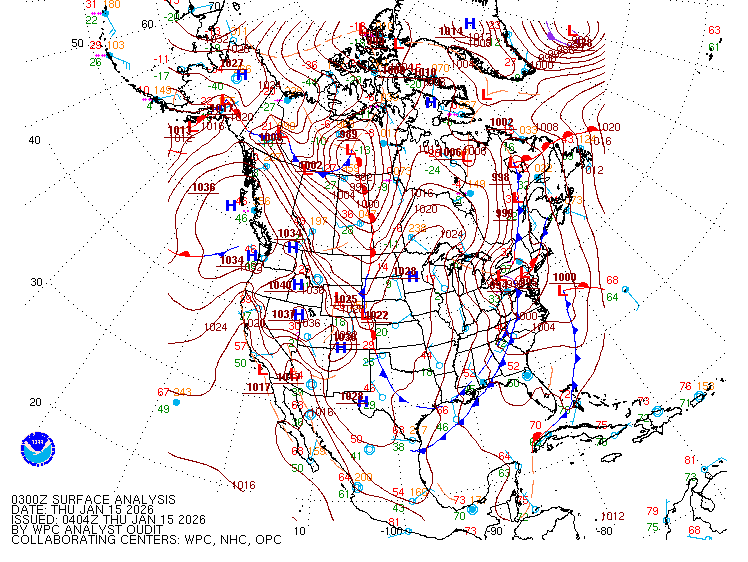
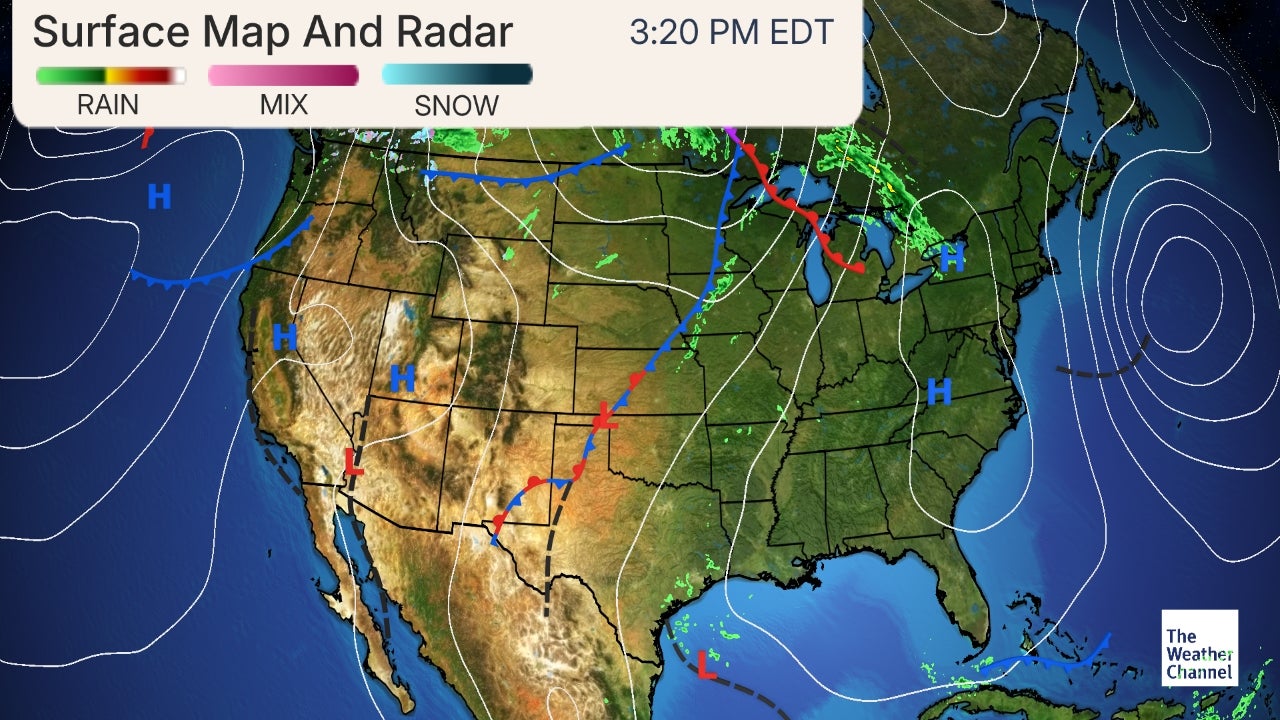
The unit of measurement called standard atmosphere (atm) is defined as . Meteorological observations typically report atmospheric pressure in hectopascals per the recommendation of the World Meteorological Organization, thus a standard atmosphere or typical sea-level air pressure is about 1,013 hPa. Reports in the United States typically use inches of mercury or millibars (hectopascals). In Canada, these reports are given in kilopascals.
Etymology
The unit is named after Blaise Pascal, noted for his contributions to hydrodynamics and hydrostatics, and experiments with a barometer. The name pascal was adopted for the SI unit newton per square metre (N/m2) by the 14th General Conference on Weights and Measures in 1971.
Definition
The pascal can be expressed using SI derived units, or alternatively solely SI base units, as: : {\rm 1~Pa = 1~N/m^2 = 1~kg/(m {\cdot} s^2) = 1~J/m^3 } where N is the newton, m is the metre, kg is the kilogram, s is the second, and J is the joule.
One pascal is the pressure exerted by a force of one newton perpendicularly upon an area of one square metre.
Standard units
The unit of measurement called an atmosphere or a standard atmosphere (atm) is 101325 Pa. This value is often used as a reference pressure and specified as such in some national and international standards, such as the International Organization for Standardization's ISO 2787 (pneumatic tools and compressors), ISO 2533 (aerospace) and ISO 5024 (petroleum). In contrast, International Union of Pure and Applied Chemistry (IUPAC) recommends the use of 100 kPa as a standard pressure when reporting the properties of substances.
Unicode has dedicated code-points and in the CJK Compatibility block, but these exist only for backward-compatibility with some older ideographic character-sets and are therefore deprecated.
Uses
The pascal (Pa) or kilopascal (kPa) as a unit of pressure measurement is widely used throughout the world and has largely replaced the pounds per square inch (psi) unit, except in some countries that still use the imperial measurement system or the US customary system, including the United States.
Geophysicists use the gigapascal (GPa) in measuring or calculating tectonic stresses and pressures within the Earth.
Medical elastography measures tissue stiffness non-invasively with ultrasound or magnetic resonance imaging, and often displays the Young's modulus or shear modulus of tissue in kilopascals.
In materials science and engineering, the pascal measures the stiffness, tensile strength and compressive strength of materials. In engineering the megapascal (MPa) is the preferred unit for these uses, because the pascal represents a very small quantity.
| Material | Young's modulus (GPa) |
|---|---|
| Nylon 6 | 2–4 |
| Hemp fibre | 35 |
| Aluminium | 69 |
| Tooth enamel | 83 |
| Copper | 117 |
| Structural steel | 200 |
| Diamond | 1220 |
The pascal is also equivalent to the SI unit of energy density, the joule per cubic metre. This applies not only to the thermodynamics of pressurised gases, but also to the energy density of electric, magnetic, and gravitational fields.
The pascal is used to measure sound pressure. Loudness is the subjective experience of sound pressure and is measured as a sound pressure level (SPL) on a logarithmic scale of the sound pressure relative to some reference pressure. For sound in air, a pressure of 20 μPa is considered to be at the threshold of hearing for humans and is a common reference pressure, so that its SPL is zero.
The airtightness of buildings is measured at 50 Pa. |access-date = 2011-03-03 |url-status = dead |archive-url = https://web.archive.org/web/20110726045004/http://www.resnet.us/hotnews/revised_chapter_seven_final_9-16-10.pdf |archive-date = 26 July 2011
In medicine, blood pressure is measured in millimeters of mercury (mmHg, very close to one Torr). The normal adult blood pressure is less than 120 mmHg systolic BP (SBP) and less than 80 mmHg diastolic BP (DBP). Convert mmHg to SI units as follows: . Hence the normal blood pressure in SI units is less than 16.0 kPa SBP and less than 10.7 kPa DBP. These values are similar to the pressure of water column of average human height; so pressure has to be measured on arm roughly at the level of the heart.
Hectopascal and millibar units
Main article: Bar (unit)
The units of atmospheric pressure commonly used in meteorology were formerly the bar (), which is close to the average air pressure on Earth, and the millibar. Since the introduction of SI units, meteorologists generally measure atmospheric pressure in hectopascals (hPa), equal to 100 pascals or 1 millibar. Exceptions include Canada, which uses kilopascals (kPa). In many other fields of science, prefixes that are a power of 1000 are preferred, which theoretically excludes hectopascal from use.
Many countries still use millibars to measure atmospheric pressure. In practically all other fields, the kilopascal is used instead.
Multiples and submultiples
Decimal multiples and submultiples are formed using standard metric prefixes.
| Multiples | Submultiples | Value | Name | Symbol | Value | Name | Symbol |
|---|---|---|---|---|---|---|---|
| 101 Pa | decapascal | daPa | 10−1 Pa | decipascal | dPa | ||
| 102 Pa | hectopascal | hPa | 10−2 Pa | centipascal | cPa | ||
| 103 Pa | kilopascal | kPa | 10−3 Pa | millipascal | mPa | ||
| 105 Pa | bar (non-SI unit) | bar | |||||
| 106 Pa | megapascal | MPa | 10−6 Pa | micropascal | μPa | ||
| 109 Pa | gigapascal | GPa | 10−9 Pa | nanopascal | nPa | ||
| 1012 Pa | terapascal | TPa | 10−12 Pa | picopascal | pPa | ||
| 1015 Pa | petapascal | PPa | 10−15 Pa | femtopascal | fPa | ||
| 1018 Pa | exapascal | EPa | 10−18 Pa | attopascal | aPa | ||
| 1021 Pa | zettapascal | ZPa | 10−21 Pa | zeptopascal | zPa | ||
| 1024 Pa | yottapascal | YPa | 10−24 Pa | yoctopascal | yPa | ||
| 1027 Pa | ronnapascal | RPa | 10−27Pa | rontopascal | rPa | ||
| 1030 Pa | quettapascal | QPa | 10−30 Pa | quectopascal | qPa |
References
References
- {{SIbrochure8th
- "Definition of the standard atmosphere". [[BIPM]].
- "National Weather Service glossary page on inches of mercury".
- "US government atmospheric pressure map".
- "The Weather Channel".
- Canada, Environment. (16 April 2013). "Canadian Weather – Environment Canada".
- [http://www.bipm.fr/en/convention/cgpm/14/pascal-siemens.html bipm.fr]. {{webarchive. link. (30 June 2007 .)
- [http://www.bipm.org/utils/common/pdf/CGPM/CGPM14.pdf#page=78 Minutes of the 14. General Conference on Weights and Measures], 1971, p. 78.
- [http://www.bipm.org/en/si/si_brochure/chapter2/2-2/table3.html Table 3 (Section 2.2.2)]. {{webarchive. link. (18 June 2007 . ''SI Brochure''. [[International Bureau of Weights and Measures]].)
- (1954). "Resolution 4 of the 10th meeting of the CGPM". [[General Conference on Weights and Measures.
- IUPAC.org, Gold Book, [http://goldbook.iupac.org/S05921.html ''Standard Pressure'']
- (2015). "CJK Compatibility".
- (2015). "The Unicode Standard, Version 8.0.0". The Unicode Consortium.
- "Tensile Modulus – Modulus of Elasticity or Young's Modulus – for some common Materials".
- "BP Guideline {{!}} Target:BP".
- "KNMI – Weer – Waarnemingen".
- "Comment convertir la pression? – IRM".
- "DWD".
- "Japan Meteorological Agency – Weather Maps".
- "MDD".
- [http://weather.noaa.gov/weather/current/KDCA.html NOAA]
- United Kingdom, Met Office. "Key to symbols and terms".
- "CTV News, weather; current conditions in Montreal".
- Canada, Environment. "Montréal, QC – 7 Day Forecast – Environment Canada".
- Ambler Thompson (Editor) {{google books. pTw-SCI7EkoC. Guide for the Use of the International System of Units (SI) (rev. ): The ...
This article was imported from Wikipedia and is available under the Creative Commons Attribution-ShareAlike 4.0 License. Content has been adapted to SurfDoc format. Original contributors can be found on the article history page.
Ask Mako anything about Pascal (unit) — get instant answers, deeper analysis, and related topics.
Research with MakoFree with your Surf account
Create a free account to save articles, ask Mako questions, and organize your research.
Sign up freeThis content may have been generated or modified by AI. CloudSurf Software LLC is not responsible for the accuracy, completeness, or reliability of AI-generated content. Always verify important information from primary sources.
Report