From Surf Wiki (app.surf) — the open knowledge base
PARC (company)
American company
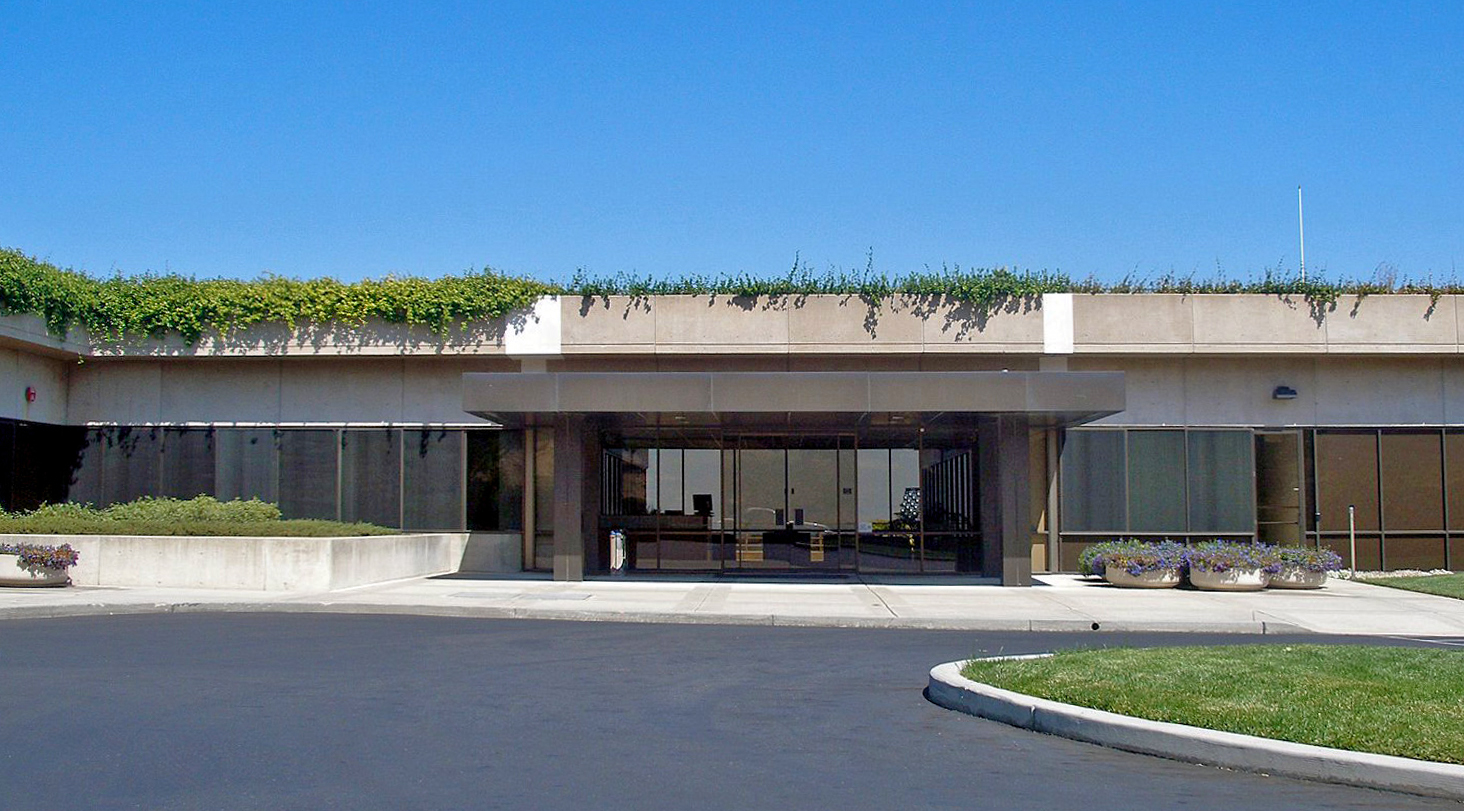
American company
| Field | Value | |
|---|---|---|
| name | PARC | |
| logo | PARC logo 2023.png | |
| image | Xerox PARC 02.jpg | |
| image_caption | Aerial view of Xerox PARC in 2020 | |
| type | {{plainlist | |
| foundation | ||
| founder | Jacob E. Goldman | |
| location_city | Palo Alto, California | |
| location_country | U.S. | |
| industry | R&D | |
| parent | ||
| homepage | (redirects to ) |
- Division (1970–2002, 2024–present)
- Subsidiary (2002–2024)
Xerox PARC has been foundational to numerous revolutionary computer developments, including laser printing, Ethernet, the modern personal computer, graphical user interface (GUI) and desktop metaphor–paradigm, object-oriented programming, ubiquitous computing, electronic paper, amorphous silicon (a-Si) applications, the computer mouse, and very-large-scale integration (VLSI) for semiconductors.
Unlike Xerox's existing research laboratory in Rochester, New York, which focused on refining and expanding the company's copier business, Goldman's "Advanced Scientific & Systems Laboratory", aimed to pioneer new technologies in advanced physics, materials science, and computer science applications.
In 2002, Xerox spun off Palo Alto Research Center Incorporated as a wholly owned subsidiary.{{cite news |newspaper=Computerworld
History


In 1969, Goldman talked with George Pake, a physicist specializing in nuclear magnetic resonance and provost of Washington University in St. Louis, about starting a second research center for Xerox.
On July 1, 1970, the Xerox Palo Alto Research Center opened. Its 3,000-mile distance from Xerox headquarters in Rochester, New York, afforded scientists at the new lab great freedom in their work, but it increased the difficulty of persuading management of the promise of some of their greatest achievements.
In its early years, PARC's West Coast location helped it hire many employees of the nearby SRI Augmentation Research Center (ARC) as that facility's funding from DARPA, NASA, and the U.S. Air Force began to be reduced. By leasing land at Stanford Research Park, it encouraged Stanford University graduate students to be involved in PARC research projects and PARC scientists to collaborate with academic seminars and projects.
Much of PARC's early success in the computer field was under the leadership of its Computer Science Laboratory manager Bob Taylor, who guided the lab as associate manager from 1970 to 1977, and as manager from 1977 to 1983.
Work at PARC since the early 1980s includes advances in ubiquitous computing, aspect-oriented programming, and IPv6.
After three decades as a division of Xerox, PARC was transformed in 2002 into an independent, wholly owned subsidiary company dedicated to developing and maturing advances in science and business concepts.
Xerox announced that it would donate the lab and its related assets to SRI International in April 2023. As part of the deal, Xerox would keep most of the patent rights inside PARC, and benefit from a preferred research agreement with SRI/PARC.
Developments


PARC's developments in information technology served for a long time as standards for much of the computing industry. Many advancements made at the center were not equaled or surpassed for two decades. Xerox PARC has been the inventor and incubator of many elements of modern computing, including:
- Laser printers
- Computer-generated bitmap graphics
- The graphical user interface, featuring skeuomorphic windows and icons, operated with a mouse
- Bravo, the WYSIWYG modal text editor{{cite web
- Interpress, a resolution-independent graphical page-description language and the precursor to PostScript
- Ethernet as a local-area computer network
- Fully formed object-oriented programming (OOP) (with class-based inheritance, the most popular OOP model) in the Smalltalk programming language and integrated development environment
- Prototype-based programming (the second most popular inheritance model in OOP) in the Self language
- Model–view–controller software architecture
- AspectJ, an aspect-oriented programming (AOP) extension for the Java language
Alto
Main article: Xerox Alto
Most of these developments were included in the Alto, which added the computer mouse. These developments unified into a single model most aspects of now-standard personal computers use. The integration of Ethernet into the computer prompted the development of the PARC Universal Packet architecture, which is structured much like the modern Internet's architecture.
PARCTab
The PARCTab is an experimental mobile computing device as an early experiment in ubiquitous computing (UbiComp). Its appearance resembles a personal digital assistant (PDA). Its functionality depends on the user's location, by receiving location-specific information via infrared sensors from gateway nodes installed in a particular location.
It has a touch screen, stylus, and handwriting recognition. Xerox designed the similar and larger PARCPad. Both devices were developed around the same time as the Apple Newton.
Distinguished researchers
Main article: List of people associated with PARC
PARC's distinguished researchers include four Turing Award winners: Butler Lampson (1992), Alan Kay (2003), Charles P. Thacker (2009), and Robert Metcalfe (2022). The Association for Computing Machinery (ACM) Software System Award recognized the Alto system in 1984, Smalltalk in 1987, InterLisp in 1992, and the remote procedure call in 1994. Lampson, Kay, Bob Taylor, and Thacker received the National Academy of Engineering's prestigious Charles Stark Draper Prize in 2004 for their work on the Alto. Lynn Conway was recognized by the National Inventors Hall of Fame for her work on very-large-scale integration (VLSI) in 2023.
Legacy
Xerox has been heavily criticized, particularly by business historians, for failing to properly commercialize and profitably exploit PARC's innovations.{{cite book
One notable example of this is the graphical user interface (GUI), initially developed at PARC for the Alto and then sold as the Xerox 8010 Information System workstation (with office software called Star) by the Xerox Systems Development Department. It heavily influenced future system design, but was deemed a failure because Xerox only sold about 25,000 units of the computer. A small group from PARC led by David Liddle and Charles Irby formed Metaphor Computer Systems. Metaphor Computer Systems extended the Star desktop concept into an animated graphic and communicating office-automation model and sold the company to IBM.
Several GUI engineers left to join Apple Computer to work on Lisa and Macintosh. Technologies pioneered by its materials scientists such as the liquid-crystal display (LCD), some major innovations in optical disc technology, and laser printing were actively and successfully introduced by Xerox to the business and consumer markets.
Microsoft co-founder Bill Gates has said that the Xerox graphical interface has notably influenced Microsoft and Apple. Apple Inc. co-founder Steve Jobs said that "Xerox could have owned the entire computer industry, could have been the IBM of the nineties, could have been the Microsoft of the nineties."
References
References
- "[http://www.parc.com/util/contact.html Contact] {{Webarchive. link. (2014-08-23 ." PARC. Retrieved on November 11, 2010. "PARC (Palo Alto Research Center) 3333 Coyote Hill Road Palo Alto, CA 94304 USA")
- "[http://www.parc.com/util/directions.html driving & public transportation directions] {{Webarchive. link. (2014-08-29 ." PARC. Retrieved on November 11, 2010.)
- "[http://www.parc.com/util/map.html map] {{Webarchive. link. (2014-08-08 ." PARC. Retrieved on November 11, 2010.)
- John Markoff. (December 21, 2011). "Jacob Goldman, Founder of Xerox Lab, Dies at 90". The New York Times.
- Viki, Tendayi. "As Xerox PARC Turns 47, The Lesson Learned Is That Business Models Matter".
- "Xerox PARC".
- Savitz, Eric J.. (April 24, 2023). "Xerox Gives Legendary PARC Lab to SRI International". [[Barron's (newspaper).
- McMillan, Robert. "Jack Goldman, Founder of Xerox PARC, Dies".
- (January 18, 2024). "SRI announces its new Future Concepts division — and a renewed focus for the PARC campus that draws on its heritage". SRI International.
- Viki, Tendayi. "As Xerox PARC Turns 47, The Lesson Learned Is That Business Models Matter".
- Xerox PARC became the first research group to widely adopt the mouse invented by [[Douglas Engelbart]]'s [[Augmentation Research Center]] at the [[Stanford Research Institute]] (now [[SRI International]]) in [[Menlo Park, California]].
- "PARCtab". Microsoft.
- "Xerox PARCTab Prototype - PDA".
- "History of HCI".
- (2024-06-17). "Lynn Conway".
- "Milestones, PARC, a Xerox company".
- (June 9, 2020). "How to avoid the 'competency trap'".
- (February 27, 2017). "Bill Gates credits Xerox, not Apple, for Windows".
This article was imported from Wikipedia and is available under the Creative Commons Attribution-ShareAlike 4.0 License. Content has been adapted to SurfDoc format. Original contributors can be found on the article history page.
Ask Mako anything about PARC (company) — get instant answers, deeper analysis, and related topics.
Research with MakoFree with your Surf account
Create a free account to save articles, ask Mako questions, and organize your research.
Sign up freeThis content may have been generated or modified by AI. CloudSurf Software LLC is not responsible for the accuracy, completeness, or reliability of AI-generated content. Always verify important information from primary sources.
Report