From Surf Wiki (app.surf) — the open knowledge base
Para-Methoxymethamphetamine
Stimulant and psychedelic designer drug
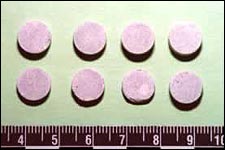
Stimulant and psychedelic designer drug
| Field | Value | |||
|---|---|---|---|---|
| verifiedrevid | 449584234 | |||
| drug_name | PMMA | |||
| IUPAC_name | 1-(4-Methoxyphenyl)-*N*-methylpropan-2-amine | |||
| image | 4-Methoxymethamphetamine.svg | |||
| image_class | skin-invert-image | |||
| width | 250px | |||
| class | Serotonin–norepinephrine releasing agent; Monoamine oxidase inhibitor | |||
| legal_AU | ||||
| legal_BR | F2 | |||
| legal_BR_comment | ||||
| legal_CA | Schedule I | |||
| legal_DE | Anlage I | |||
| legal_US | Schedule 1 | |||
| legal_UK | Class A | |||
| CAS_number_Ref | ||||
| CAS_number | 22331-70-0 | |||
| UNII_Ref | ||||
| UNII | 037U5SR9KL | |||
| KEGG_Ref | ||||
| KEGG | C22810 | |||
| PubChem | 90766 | |||
| ChemSpiderID | 81951 | |||
| synonyms | PMMA; *p*-Methoxymethamphetamine; *para*-Methoxy-*N*-methylamphetamine; 4-Methoxy-*N*-methylamphetamine; 4-MMA; Methyl-MA; 4-PMDA | |||
| C | 11 | H=17 | N=1 | O=1 |
| smiles2 | C1=CC(=CC=C1CC(C)NC)OC | |||
| smiles | CC(CC1=CC=C(C=C1)OC)NC | |||
| StdInChI | 1S/C11H17NO/c1-9(12-2)8-10-4-6-11(13-3)7-5-10/h4-7,9,12H,8H2,1-3H3 | |||
| StdInChIKey | UGFMBZYKVQSQFX-UHFFFAOYSA-N |
para-Methoxymethamphetamine (PMMA), also known as 4-methoxy-N-methylamphetamine (4-MMA), is a serotonergic drug of the amphetamine family related to para-methoxyamphetamine (PMA). It is the 4-methoxy analogue of methamphetamine. Little is known about the pharmacological properties, metabolism, and toxicity of PMMA; because of its structural similarity to PMA, which has known toxicity in humans, it is thought to have considerable potential to cause harmful side effects or death in overdose. In the early 2010s, a number of deaths in users of the drug MDMA were linked to misrepresented tablets and capsules of PMMA.
PMMA is a serotonin–norepinephrine releasing agent (SNRA) as well as potent monoamine oxidase inhibitor (MAOI). Its effects in humans are reputedly similar to those of PMA, but slightly more empathogenic in nature. It has a reduced tendency to produce severe hyperthermia at low dosages, but at higher dosages side effects and risk of death become similar to those of PMA.
The synthesis and effects of PMMA were described by American experimental chemist Alexander Shulgin in his book PiHKAL, where it is referred to by the name "methyl-MA", as the N-methylated form of 4-MA (PMA).
Use and effects
According to Alexander Shulgin in PiHKAL, the effects of PMMA at 110mg included tachycardia, compulsive yawning, and nystagmus, among others. It was said to have some of the physical side effects of the entactogen MDMA but none of its central effects. No psychedelic-like effects were mentioned. In rodents, PMMA produces hyperlocomotion, no changes in locomotor activity, and/or catatonia, and has effects that are said to differ from those of amphetamine-like stimulants. It has been said not to have amphetamine-like properties in rodents even at high doses. Similarly, PMMA did not substitute for the psychedelic DOM. On the other hand, in contrast to PMA, PMMA fully substituted for MDMA in drug discrimination tests in rodents, despite not having MDMA-like psychoactive effects in humans. In any case, PMMA is said to lack the amphetamine- or stimulant-like properties of MDMA.
Pharmacology
Pharmacodynamics
PMMA is a monoamine releasing agent (MRA). The drug's values for induction of monoamine release in rat brain synaptosomes have been reported for the individual enantiomers of PMMA. In the case of (S)-PMMA, they are 41nM for serotonin, 147nM for norepinephrine, and 1,000nM for dopamine, whereas for (R)-PMMA, they are 134nM for serotonin, 14,000nM for norepinephrine, and 1,600nM for dopamine. Hence, PMMA appears to be a serotonin–norepinephrine releasing agent (SNRA) with weak effects on dopamine. The drug has been found to strongly release serotonin and to weakly release dopamine in the brain in rodents in vivo.
In addition to its MRA activity, PMMA is a potent monoamine oxidase A (MAO-A) inhibitor. Its for MAO-A inhibition has been reported to be 1,700nM. This is several-fold less potent than the related agents para-methoxyamphetamine (PMA) and 4-methylthioamphetamine (4-MTA).
PMMA is said to lack affinity for the serotonin 5-HT2A receptor. In one study, its affinities were 20,000nM for the serotonin 5-HT1A receptor, 13,600nM for the serotonin 5-HT2A receptor, and 13,000nM for the serotonin 5-HT2C receptor. On the other hand, PMMA shows much higher affinities for the mouse and rat trace amine-associated receptor 1 (TAAR1).
| Compound | Ref |
|---|---|
| *d*-Amphetamine | 698–1,765 |
| *d*-Methamphetamine | 736–1,292 |
| [2-Methoxyamphetamine](2-methoxyamphetamine) | ND |
| [3-Methoxyamphetamine](3-methoxyamphetamine) | ND |
| *para*-Methoxyamphetamine (PMA) | ND |
| ND | |
| (*S*)-PMMA | 41 |
| (*R*)-PMMA | 134 |
| [4-Methylamphetamine](4-methylamphetamine) (4-MA) | 53.4 |
| [4-Methylmethamphetamine](4-methylmethamphetamine) (4-MMA) | 67.4 |
| *para*-Chloroamphetamine (PCA) | 28.3 |
| *para*-Chloromethamphetamine (PCMA) | 29.9 |
| Methedrone (4-MeO-MC) | 120–195 |
| Mephedrone (4-MMC) | 118.3–122 |
| **Notes:** The smaller the value, the more strongly the drug releases the neurotransmitter. The assays were done in rat brain synaptosomes and human potencies may be different. See also Monoamine releasing agent § Activity profiles for a larger table with more compounds. **Refs:** |
Chemistry
Detection
PMMA can be detected with reagent testing kits.
Society and culture
Recreational use
PMMA has been found in tablets and capsules of the MDMA sold as "ecstasy". A number of deaths have been attributed to tablets sold as ecstasy that contained other substances, such as PMMA's structural analog, PMA. Death can occur when an ecstasy user believes they are consuming recreational doses of MDMA, when they are in fact consuming a lethal dose of another substance with similar effects. PMA is of particular concern because it not only causes a release of serotonin but also acts as a monoamine oxidase inhibitor (MAOI); if it is used in combination with MDMA or another MDMA-like substance, serotonin syndrome can result.
Deaths
In January 2011, the Norwegian Broadcasting Corporation reported that Norway had seen 12 deaths related to PMMA over the course of six months. In March 2011, Dutch media reported that there had been four deaths in the province of Limburg since November 2010. In April 2011, Icelandic media reported the death of a young woman that may have been connected to PMMA.
In 2011, four deaths were recorded in Scotland as a result of ecstasy tablets which also contained PMMA.
In January 2012, a number of ecstasy-related deaths in Canada in the previous year were linked to PMMA overdoses. In the single year, approximately 45 exposures occurred, resulting in 21 deaths. Cases were centred primarily in Calgary and Vancouver.
In September 2012, the deaths of two men in County Cork, Ireland, have been linked to PMMA overdoses. In the same month, the death of a man in Queensland, Australia was attributed to PMMA.
In June 2013 a PMMA-related death occurred in the Dutch city of 's-Hertogenbosch. Two months later, In August 2013, another possibly PMMA-related death occurred in the nearby town of Sliedrecht.
In January 2015 in the UK four people died, suspected of taking ecstasy containing PMMA. In the same month, in Sweden, another man died from ecstasy laced with PMMA.
In May 2015 a young woman died in Dublin, Ireland, after taking what is suspected to be PMMA.
In April 2016 four young Argentines and one Uruguayan died during a massive rave called "Time Warp" in Buenos Aires and five more were hospitalized. PMMA was found in their bodies.
Legal status
United Kingdom
PMMA is controlled as a Schedule 1, Class A drug in the UK.
United States
On June 25, 2021, the DEA finalized a rule placing PMMA on the Controlled Substance Act federal Schedule as a Schedule I substance effective July 26, 2021.
References
References
- Anvisa. (2023-07-24). "RDC Nº 804 - Listas de Substâncias Entorpecentes, Psicotrópicas, Precursoras e Outras sob Controle Especial". [[Diário Oficial da União]].
- (March 2003). "A fatal paramethoxymethamphetamine intoxication". Legal Medicine.
- (10 January 2012). "Five B.C. deaths linked to lethal chemical PMMA". Vancouver Sun.
- (1997). "Initial characterization of PMMA as a discriminative stimulus". Pharmacology, Biochemistry, and Behavior.
- (2001). "PMMA-stimulus generalization to the optical isomers of MBDB and 3,4-DMA". Pharmacology, Biochemistry, and Behavior.
- (2003). "Three fatal cases of PMA and PMMA poisoning in Denmark". Journal of Analytical Toxicology.
- {{CitePiHKAL
- (2011). "The Shulgin Index, Volume One: Psychedelic Phenethylamines and Related Compounds". [[Transform Press]].
- (October 1999). "Arylalkylamine drugs of abuse: an overview of drug discrimination studies". Pharmacol Biochem Behav.
- (August 2014). "5-hydroxytryptamine- and dopamine-releasing effects of ring-substituted amphetamines on rat brain: a comparative study using in vivo microdialysis". Eur Neuropsychopharmacol.
- (April 2017). "The 2014 Philip S. Portoghese Medicinal Chemistry Lectureship: The "Phenylalkylaminome" with a Focus on Selected Drugs of Abuse". J Med Chem.
- (5 August 2011). "Drug Discrimination". Wiley.
- (2012). "Towards Understanding the Mechanism of Action of Abused Cathinones". Virginia Commonwealth University.
- (2019). "Amphetamine Derivatives as Monoamine Oxidase Inhibitors". Front Pharmacol.
- (April 2014). "Monoamine transporter and receptor interaction profiles of a new series of designer cathinones". Neuropharmacology.
- (January 2001). "Amphetamine-type central nervous system stimulants release norepinephrine more potently than they release dopamine and serotonin". Synapse.
- (2013). "Powerful cocaine-like actions of 3,4-methylenedioxypyrovalerone (MDPV), a principal constituent of psychoactive 'bath salts' products". Neuropsychopharmacology.
- (2012). "The designer methcathinone analogs, mephedrone and methylone, are substrates for monoamine transporters in brain tissue". Neuropsychopharmacology.
- (July 2008). "Dopamine Transporters: Chemistry, Biology and Pharmacology". Wiley.
- (May 2005). "Relationship between the serotonergic activity and reinforcing effects of a series of amphetamine analogs". The Journal of Pharmacology and Experimental Therapeutics.
- (22 May 2012). "Synthesis and Biological Evaluation of Rigid Analogues of Methamphetamines". University of New Orleans.
- (September 2017). "N-Alkylated Analogs of 4-Methylamphetamine (4-MA) Differentially Affect Monoamine Transporters and Abuse Liability". Neuropsychopharmacology.
- (11 December 2015). "Psychoactive synthetic cathinones (or 'bath salts'): Investigation of mechanisms of action". Virginia Commonwealth University.
- (March 2024). "Structure-activity relationships for locomotor stimulant effects and monoamine transporter interactions of substituted amphetamines and cathinones". Neuropharmacology.
- (2022). "In vivo Structure-Activity Relationships of Substituted Amphetamines and Substituted Cathinones". University of Arkansas for Medical Sciences.
- (2018). "Neuropharmacology of Synthetic Cathinones". Handb Exp Pharmacol.
- (March 2019). "The dopamine, serotonin and norepinephrine releasing activities of a series of methcathinone analogs in male rat brain synaptosomes". Psychopharmacology.
- (14 December 2017). "Structure-Activity Relationship Studies of Bupropion and Related 3-Substituted Methcathinone Analogues at Monoamine Transporters". Virginia Commonwealth University.
- (January 2019). "Systematic Structure-Activity Studies on Selected 2-, 3-, and 4-Monosubstituted Synthetic Methcathinone Analogs as Monoamine Transporter Releasing Agents". ACS Chem Neurosci.
- (May 2015). "Quantitative structure-activity relationship analysis of the pharmacology of para-substituted methcathinone analogues". Br J Pharmacol.
- (October 2003). "Monoamine transporters and psychostimulant drugs". Eur J Pharmacol.
- (2006). "Therapeutic potential of monoamine transporter substrates". Current Topics in Medicinal Chemistry.
- (November 2003). "Paramethoxyamphetamine (PMA) poisoning; a 'party drug' with lethal effects". Acta Anaesthesiologica Scandinavica.
- (April 2008). "Fatal paramethoxy-amphetamine (PMA) poisoning in the Australian Capital Territory". The Medical Journal of Australia.
- (April 1980). "p-Methoxyamphetamine, a potent reversible inhibitor of type-A monoamine oxidase in vitro and in vivo". The Journal of Pharmacy and Pharmacology.
- "PMMA deaths in Holland". nu.nl.
- (16 December 2011). "Warning over ecstasy pills that raise overdose risk". BBC News.
- (15 January 2012). "Rare chemical found in fatal ecstasy". The Province.
- (June 2025). "Overdose death investigated". Nanton News.
- "Seized substances sent for testing after suspected overdose". Calgary Herald.
- (12 January 2012). "Tainted ecstasy linked to five Calgary deaths could be from B.C.". Vancouver Sun.
- "Authorities renew warning about street drugs". The City of Calgary Newsroom.
- "Ecstasy laced with meth in overdose cases".
- (13 September 2012). "Dangerous drug linked to Kinsale deaths". Irish Independent.
- (9 September 2012). "Queensland Police investigate three deaths linked to 'poison pill' ecstasy overdoses". news.com.au.
- "Den Bosch issues a warning for dangerous XTC-pills". nu.nl.
- "Tiener overleden aan drugs".
- (26 August 2013). "Naomi (16): dood door roze xtc-pil".
- "Waarschuwing: dodelijke 'XTC' in omloop".
- (15 May 2018). "Man charged after ecstasy deaths". BBC News.
- (2 January 2015). "Varning för livsfarlig ecstasy".
- (17 May 2015). "Dublin student dies after taking PMMA tablets in nightclub".
- (17 April 2016). "Conmoción por la muerte de cinco jóvenes en una fiesta electrónica". La Nación.
- (June 25, 2021). "Schedules of Controlled Substances: Placement of para-Methoxymethamphetamine (PMMA) in Schedule I".
This article was imported from Wikipedia and is available under the Creative Commons Attribution-ShareAlike 4.0 License. Content has been adapted to SurfDoc format. Original contributors can be found on the article history page.
Ask Mako anything about Para-Methoxymethamphetamine — get instant answers, deeper analysis, and related topics.
Research with MakoFree with your Surf account
Create a free account to save articles, ask Mako questions, and organize your research.
Sign up freeThis content may have been generated or modified by AI. CloudSurf Software LLC is not responsible for the accuracy, completeness, or reliability of AI-generated content. Always verify important information from primary sources.
Report