From Surf Wiki (app.surf) — the open knowledge base
Panjshir Province
Province of Afghanistan
Province of Afghanistan
| Field | Value |
|---|---|
| name | Panjshir |
| native_name | |
| native_name_lang | Prs |
| settlement_type | Province |
| image_skyline | Panjshir collage.jpg |
| image_caption | Clockwise: the Panjshir valley, the Panjshir River, the tomb of Ahmad Shah Massoud, and a Panjshir wind farm |
| seal_alt | State emblem |
| image_map | Panjshir in Afghanistan.svg |
| map_caption | Map of Afghanistan with Panjshir highlighted |
| coordinates | |
| subdivision_type | Country |
| subdivision_name | Afghanistan |
| established_date | 2004 |
| seat_type | Capital |
| seat | Bazarak |
| leader_title | Governor |
| leader_name | Mohammad Agha Hakim |
| leader_title1 | Deputy Governor |
| leader_name1 | Qari Asrar |
| unit_pref | Metric |
| area_total_km2 | 3771 |
| population_footnotes | |
| population_total | 334,940 |
| population_as_of | 2021 |
| population_density_km2 | auto |
| blank_name_sec1 | Main languages |
| blank_info_sec1 | Dari |
| timezone1 | Afghanistan Time |
| utc_offset1 | +04:30 |
| postal_code_type | Postal code |
| postal_code | 15XX |
| iso_code | AF-PAN |
| blank_name_sec2 | Control |
Panjshir (Pashto: پنجشېر, Dari: پنجشیر, lit. 'five lions'), commonly known as Panjsher, is one of the 34 provinces of Afghanistan, located in the northeastern part of the country containing the Panjshir Valley. The province is divided into seven districts and contains 512 villages. The main inhabitants of the province are Shamali Tajiks, who speak Dari. As of 2021, the population of Panjshir province was about 334,940. Its current governor is Mohammad Agha Hakim.
Panjshir became an independent province from the neighboring Parwan Province in 2004. It is bordered by Baghlan and Takhar in the north, Badakhshan and Nuristan in the east, Laghman and Kapisa in the south, and Parwan in the west.
History
The territory fell to Babur in the early 16th century. It was later conquered by Ahmad Shah Durrani, and officially became part of the Durrani Empire. The rule of the Durranis was followed by that of the Barakzai dynasty. During the 19th century, the region was governed by the Emirate of Afghanistan. Florentia Sale crossed this river during her captivity under Wazir Akbar Khan in 1842 during the First Anglo-Afghan War. Like the rest of Afghanistan, Panjshir became part of the newly established Kingdom of Afghanistan in June 1926.
In July 1973, troops under the command of General Sardar Mohammed Daoud Khan overthrew the Afghan monarchy and established the Republic of Afghanistan. In this coup d'état, General Daoud seized power for himself, effectively proclaiming himself as the first President of Afghanistan. He began making claims over large swathes of Pashtun-dominant territory in Pakistan, causing great anxiety to the government of Pakistan. By 1975, the young Ahmad Shah Massoud and his followers initiated an uprising in Panjshir, but were forced to flee to Peshawar in Pakistan where they received support from Pakistani Prime Minister Zulfiqar Ali Bhutto. Bhutto is said to have paved the way for the April 1978 Saur Revolution in Kabul by making General Daoud spread the Afghan Armed Forces to the countryside.
Panjshir was attacked multiple times during the 1980s Soviet–Afghan War, against Ahmad Shah Massoud and his forces. The Panjshir region was in rebel control from August 17, 1979, after a regional uprising. Aided by its mountainous terrain, the region was well defended by mujahedeen commanders during the war against the PDPA government and the Soviet Union.
After the collapse of the Democratic Republic of Afghanistan in 1992, the area became part of the Islamic State of Afghanistan. By the late 1990s, Panjshir and neighboring Badakhshan province served as a staging ground for the Northern Alliance against the Taliban. On September 9, 2001, Defense Minister Ahmad Shah Massoud was assassinated by two al-Qaeda operatives. Two days later the September 2001 attacks occurred in the United States and this led to the start of a major U.S.-led war in Afghanistan.

Containing the Panjshir Valley, in April 2004 Panjshir District of Parwan Province was turned into a province under the Karzai administration. The Afghan National Security Forces (ANSF) established several bases in the province. In the meantime, the International Security Assistance Force (ISAF) also established bases, a US-led Provincial Reconstruction Team (PRT) began operating in Panjshir in the late 2000s.
Following the Fall of Kabul on 15 August 2021, anti-Taliban forces loyal to the Islamic Republic of Afghanistan fled to the Panjshir Province. They formed the National Resistance Front of Afghanistan and kept fighting the new Islamic Emirate of Afghanistan in an ongoing conflict. The new resistance forces flew the old flag of the Northern Alliance. The resistance has held the Panjshir Valley and captured districts in neighboring provinces. By early September 2021, Taliban forces managed to push into Panjshir and capture several districts from the National Resistance Front of Afghanistan, before gaining control of Bazarak on 6 September, pushing remaining resistance fighters into the mountains. However, clashes still remain ongoing between the Taliban and resistance fighters in Panjshir Province. A subsequent visit by Radio Télévision Suisse and Journeyman Pictures into Bazarak in October 2021 also revealed that despite claims of NRF inactivity by local Taliban officials, an armed confrontation between the NRF Taliban was in fact occurring in an undisclosed location in the mountains surrounding Bazarak, with resistance forces gaining the upper hand, thus confirming that the NRF remains still active near Bazarak and in Panjshir Province. Although the NRF continues to carry out attacks, it does not control any territory in the province.
Administrative divisions
| District | Capital | Population | Area | ||
|---|---|---|---|---|---|
| in km2 | Pop. | ||||
| density | Ethnicites and Number of villages | ||||
| Anaba | 43,429 | 186 | 109 | Predominantly Tajiks | |
| Bazarak | Bazarak | 45,038 | 394 | 54 | 100% Tajik. 29 villages. |
| Darah | 78,241 | 192 | 82 | Predominantly Tajik | |
| Khenj | 85,274 | 689 | 66 | 100% Tajik. 154 villages. | |
| Paryan | 25,743 | 1,428 | 12 | 100% Tajik. 67 villages. | |
| Rokha | 35,432 | 113 | 230 | Predominantly Tajik, few Pashai. 72 villages. | |
| Shotul | 21,783 | 225 | 55 | 100% Tajik. 23 villages. | |
| **Panjshir** | **334,940** | **3,772** | **45** | 97% Tajiks, 2.5% Hazaras, 0.4% Pashayi, 0.1% Ormuri. |
Demographics
Population
As of 2021, the total population of the province is about 334,640. The proportion of residents living below the national poverty line was 19.1%.
Ethnicity, languages and religion
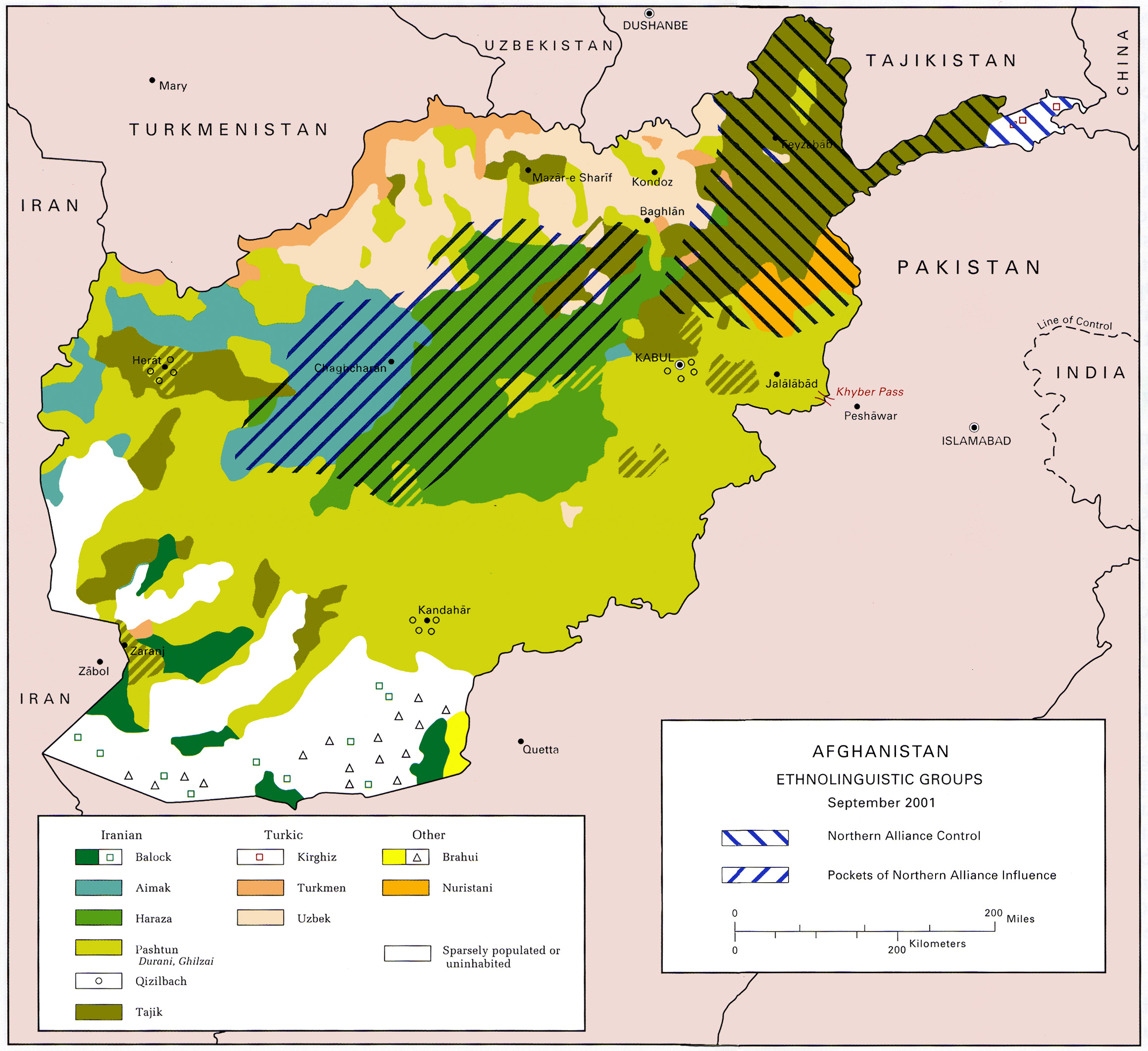
Ethnic Tajiks form the majority of the population. There is a Sunni Hazaras minority in the province, who form the majority in Darah district.
Dari is the dominant language in the province. Pashto is understood by a few as a second or third language. All inhabitants are followers of Islam, and exclusively Sunni.
Education
The overall literacy rate (6+ years of age) fell from 33% in 2005 to 32% in 2011. The overall net enrolment rate (6–13 years of age) fell from 42% in 2005 to 40% in 2011. Four Technical and Vocational Education and Training (TVET) schools service the agriculturally-oriented Panjshir Province, including the Ahmad Shah Massoud TVET. The school was established with the help from the Hilfe Paderborn and German Foreign Office and as of 2014 had about 250 students and 22 staff members.
Health
The percentage of households with clean drinking water increased from 16% in 2005, to 17% in 2011.
23% of births in 2011 were attended to by a skilled birth attendant.
Culture
Places of interest
- The tomb of Ahmad Shah Massoud, is located in Saricha, Bazarak, Panjshir.
- The Football Stadium in Panjshir Valley, next to the Panjshir River.
- Famous Mountains of Panjshir for Hiking Includes:Panjshir Mountains
- Kuh-e Mir Samir 5 768 m (prom: 1 204 m)
- Band-e Ghār 5 387 m (prom: 465 m)
- Kōh-e Maldaygmay 5 340 m (prom: 690 m)
- Mungashayr 5 222 m (prom: 254 m)
- Kōh-e Wār 5 141 m (prom: 131 m)
- Shāhāk 5 110 m (prom: 1 471 m)
- Nāw-e Kalān 5 064 m (prom: 130 m)
- Siyāh Khār Now 5 059 m (prom: 863 m)
- Ghowch 5 012 m (prom: 129 m)
- Kōtal-e Zard 4 996 m (prom: 260 m)
Notable people
- Ahmad Shah Massoud, Afghan national hero, military leader and former defense minister, known for leading armed resistances against Soviets and Taliban
- Ahmad Massoud, son of Ahmad Shah Massoud. He was appointed as the Massoud Foundation's CEO in November 2016.
- Yousuf Jan Nesar, Documentary maker
- Qahar Asi, Afghan legendary poet
- Muhammad Qasim Fahim, field marshal, former Vice President of Afghanistan
- Keramuddin Keram, former Governor of the province, chief executive of Afghanistan football
- Mohammad Alam Izdyar, First deputy house of elders
- Abdul Hafiz Mansoor, First director of radio and television in Afghanistan
- Ahmad Wali Massoud, Afghan politician
- Ahmad Zia Massoud, Afghan politician and former Vice President
- Dastagir Panjsheri, former minister of education
- Yunus Qanuni, Afghan politician, former Vice President of Afghanistan
- Amrullah Saleh, Afghan politician, former Vice President of Afghanistan
- Haidari Wujodi, Afghan Sufi poet and scholar
- Amrullah Saleh, Afghan politician
- Hasib Qoway Markaz, powerful military leader of National Resistance Front of Afghanistan
- Bismillah Khan Mohammadi, Afghan politician and former defense minister
- Abdul Hamid Khorasani, Taliban commander
- Nooruddin Azizi, Acting Minister of Commerce and Industry since 21 September 2021
- Ghulam Dastagir Panjsheri, Afghan politician, former minister of education
Notes
References
References
- (26 August 2023). "Panjshir's Governor Rejects Claims of Human Rights Violations". TOLOnews.
- "د پنجشير ولايت اړمنو خلکو او داخلي بې ځايه شويو سره د مرستو او ستونزو د حل په موخه د کډوالو او راستنېدونکو چارو وزارت په مشرۍ يو ګډ پلاوي دی ولايت ته سفر وکړ | د مهاجرینو او راستنېدونکو چارو وزارت".
- "AF - Afghanistan".
- (March 30, 2024). "2,000 police posts allocated to Panjshir youths this year: governor". Ariana News.
- Beveridge, Annette Susannah. (7 January 2014). "The Bābur-nāma in English, Memoirs of Bābur". Project Gutenberg.
- (7 June 2023). "‘Do You Not Bow before Heaven?’: The First Qing- Durrānī Encounter, the Tributary Non-relationship, and Disorder on a Shared Frontier". Brill Publishers.
- (2004). "The Gem Hunter: The Adventures of an American in Afghanistan". GeoVision, Inc..
- (February 2013). "AFGHANISTAN: History, Diplomacy and Journalism Volume 1". Xlibris Corporation.
- "Operations". Friends of the Northern Alliance.
- (January 17, 2011). "The Spy Who Quit". [[PBS]] - [[Frontline (U.S. TV series).
- (16 August 2021). "The Panjshir Valley: what is the main bastion of resistance against the Taliban advance in Afghanistan".
- (17 August 2021). "'Northern Alliance' flag hoisted in Panjshir in first resistance against Taliban".
- (21 August 2021). "Anti-Taliban fighters take back three districts as resistance builds up in Panjshir Valley, but experts cast doubts". www.firstpost.com.
- "Taliban on verge of crushing last stronghold of resistance in Panjshir Valley".
- (6 September 2021). "Taliban claims victory in Panjshir, but resistance forces say they still control strategic position in the valley". [[CNN]].
- (6 September 2021). "Panjshir Valley, last resistance holdout in Afghanistan, falls to the Taliban". [[The Washington Post]].
- (September 6, 2021). "Taliban says it has captured last Afghan region of resistance". [[Financial Times]].
- (6 October 2021). "Clashes between Taliban, resistance forces reported in Afghanistan's Panjshir Province". TASS.
- (4 December 2021). "Afghan security forces seize weapons from Panjshir province: State media". Business Standard.
- hazco.co.uk. (2021-10-25). "Afghanistan: Resisting the Taliban". www.journeyman.tv.
- (20 December 2022). "Frustrated with the Taliban, US Officials Meet Anti-Taliban Figures". [[Voice of America]].
- "mrrd-nabdp.org".
- "mrrd-nabdp.org".
- "mrrd-nabdp.org".
- "Khenj District (Re-elected)".
- "mrrd-nabdp.org".
- "mrrd-nabdp.org".
- "mrrd-nabdp.org".
- . (April 2021). ["Estimated Population of Afghanistan 2021-22"](https://www.nsia.gov.af:8080/wp-content/uploads/2021/06/Estimated-Population-of-Afghanistan1-1400.pdf). *National Statistic and Information Authority (NSIA)*.
- (August 2012). "Decoding the New Taliban: Insights from the Afghan Field". Hurst.
- "Panjshir Province". Understanding War.
- Dorronsoro, Gilles. (2005-03-02). "Revolution Unending: Afghanistan, 1979 to the Present". Columbia University Press.
- "PANJSHIR PROVINCE".
- (February 24, 2014). "گفت و گو با فرزند احمدشاه مسعود؛ "عملیات ما برای ادبیاتمان است"".
- (2020-02-23). "Election crisis: Abdullah appoints governors, Ghani prepares for oath". [[Kabul Now]].
This article was imported from Wikipedia and is available under the Creative Commons Attribution-ShareAlike 4.0 License. Content has been adapted to SurfDoc format. Original contributors can be found on the article history page.
Ask Mako anything about Panjshir Province — get instant answers, deeper analysis, and related topics.
Research with MakoFree with your Surf account
Create a free account to save articles, ask Mako questions, and organize your research.
Sign up freeThis content may have been generated or modified by AI. CloudSurf Software LLC is not responsible for the accuracy, completeness, or reliability of AI-generated content. Always verify important information from primary sources.
Report