From Surf Wiki (app.surf) — the open knowledge base
Palladium
2.jpg)
the chemical element
Palladium is a chemical element; it has the symbol Pd and atomic number 46. It is a rare and lustrous silvery-white metal discovered in 1802 by the English chemist William Hyde Wollaston. He named it after the asteroid Pallas (formally 2 Pallas), which was itself named after the epithet of the Greek goddess Athena, acquired by her when she slew Pallas. Palladium, platinum, rhodium, ruthenium, iridium and osmium form together a group of elements referred to as the platinum group metals. They have similar chemical properties, but palladium has the lowest melting point and is the least dense of them.
More than half the supply of palladium and its congener platinum is used in catalytic converters, which convert as much as 90% of the harmful gases in automobile exhaust (hydrocarbons, carbon monoxide, and nitrogen dioxide) into nontoxic substances (nitrogen, carbon dioxide and water vapor). Palladium is also used in electronics, dentistry, medicine, hydrogen purification, chemical applications, electrochemical sensors, electrosynthesis, groundwater treatment, and jewellery. Palladium is a key component of fuel cells, in which hydrogen and oxygen react to produce electricity, heat, and water.
Ore deposits of palladium and other platinum group metals are rare. The most extensive deposits have been found in the norite belt of the Bushveld Igneous Complex covering the Transvaal Basin in South Africa; the Stillwater Complex in Montana, United States; the Sudbury Basin and Thunder Bay District of Ontario, Canada; and the Norilsk Complex in Russia. Recycling is also a source, mostly from scrapped catalytic converters. The numerous applications and limited supply sources result in considerable investment interest.
Characteristics
Palladium belongs to group 10 in the periodic table, but the configuration in the outermost electrons is in accordance with Hund's rule. Electrons that by the Madelung rule would be expected to occupy the 5s instead fill the 4d orbitals, as it is more energetically favorable to have a completely filled 4d10 shell instead of the 5s2 4d8 configuration.
| Z | Element | No. of electrons/shell |
|---|---|---|
| 28 | nickel | 2, 8, 16, 2 (or 2, 8, 17, 1) |
| 46 | palladium | 2, 8, 18, 18, 0 |
| 78 | platinum | 2, 8, 18, 32, 17, 1 |
| 110 | darmstadtium | 2, 8, 18, 32, 32, 16, 2 (predicted) |
This 5s0 configuration, unique in period 5, makes palladium the heaviest element having only one incomplete electron shell, with all shells above it empty.
Palladium has the appearance of a soft silver-white metal that resembles platinum. It is the least dense and has the lowest melting point of the platinum group metals. It is soft and ductile when annealed and is greatly increased in strength and hardness when cold-worked. Palladium dissolves slowly in concentrated nitric acid, in hot, concentrated sulfuric acid, and when finely ground, in hydrochloric acid. It dissolves readily at room temperature in aqua regia.
Palladium does not react with oxygen at standard temperature (and thus does not tarnish in air). Palladium heated to 800 °C will produce a layer of palladium(II) oxide (PdO). It may slowly develop a slight brownish coloration over time, likely due to the formation of a surface layer of its monoxide.
Palladium films with defects produced by alpha particle bombardment at low temperature exhibit superconductivity having Tc = 3.2 K.
Isotopes
Main article: Isotopes of palladium
Naturally occurring palladium is composed of six stable isotopes. The most stable radioisotopes are 107Pd with a half-life of 6.5 million years (traces found in nature), 103Pd with a half-life of 16.99 days, and 100Pd with a half-life of 3.63 days. There are 25 other radioisotopes characterized ranging from 91Pd to 129Pd. These have half-lives of less than thirty minutes, except 101Pd (8.47 hours), 109Pd (13.6 hours), and 112Pd (21.0 hours).
For isotopes with atomic masses less than that of the most abundant stable isotope, 106Pd, the primary decay mode is electron capture with the primary decay product being rhodium. The primary mode of decay for those isotopes of Pd with atomic mass greater than 106 is beta decay with the primary product of this decay being silver.
Radiogenic 107Ag is a decay product of 107Pd and was first discovered in 1978 in the Santa Clara meteorite of 1976. The discoverers suggest that the coalescence and differentiation of iron-cored small planets may have occurred 10 million years after a nucleosynthetic event. 107Pd versus Ag correlations observed in Solar System bodies must reflect the presence of short-lived nuclides in the early Solar System.
is also produced as a fission product in spontaneous or induced fission of . As it is not very mobile in the environment and has a relatively low decay energy, is usually considered to be among the more benign of the long-lived fission products.
Compounds
Main article: Palladium compounds
Palladium compounds exist primarily in the 0 and +2 oxidation state. Other less common states are also recognized. Generally the compounds of palladium are more similar to those of platinum than those of any other element. File:Alpha-palladium(II)-chloride-xtal-3D-balls.png|Structure of α-PdCl2 File:Pd6Cl12-from-xtal-1996-CM-3D-ellipsoids.png|
Palladium(II)
Palladium(II) chloride is the principal starting material for other palladium compounds. It arises by the reaction of palladium with chlorine. It is used to prepare heterogeneous palladium catalysts such as palladium on barium sulfate, palladium on carbon, and palladium chloride on carbon. Solutions of in nitric acid react with acetic acid to give palladium(II) acetate, also a versatile reagent. reacts with ligands (L) to give square planar complexes of the type . One example of such complexes is the benzonitrile derivative . : (L = PhCN, PPh3, NH3, etc.)
The complex bis(triphenylphosphine)palladium(II) dichloride is a useful catalyst.

_Johns-Manville_Reef,_Stillwater_Complex.jpg)
Palladium(0)
Palladium forms a range of zerovalent complexes with the formula , and . For example, reduction of a mixture of and gives tetrakis(triphenylphosphine)palladium(0): :
Another major palladium(0) complex, tris(dibenzylideneacetone)dipalladium(0) (), is prepared by reducing sodium tetrachloropalladate in the presence of dibenzylideneacetone.
Palladium(0), as well as palladium(II), are catalysts in coupling reactions, as has been recognized by the 2010 Nobel Prize in Chemistry to Richard F. Heck, Ei-ichi Negishi, and Akira Suzuki. Such reactions are widely practiced for the synthesis of fine chemicals. Prominent coupling reactions include the Heck, Suzuki, Sonogashira coupling, Stille reactions, and the Kumada coupling. Palladium(II) acetate, tetrakis(triphenylphosphine)palladium(0) (), and tris(dibenzylideneacetone)dipalladium(0) () serve either as catalysts or precatalysts.
Other oxidation states
Although Pd(IV) compounds are comparatively rare, one example is sodium hexachloropalladate(IV), . Pd(II) and Pd(IV) can transform into each other under certain electrochemical conditions. A few compounds of palladium(III) are also known. Palladium(VI) was claimed to have been synthesized in 2002, but subsequently disproven.
Mixed valence palladium complexes exist, e.g. forms an infinite Pd chain structure, with alternatively interconnected and Pd(acac)2 units.
When alloyed with a more electropositive element, palladium can acquire a negative charge. Such compounds are known as palladides, such as gallium palladide. Palladides with the stoichiometry exist where R is scandium, yttrium, or any of the lanthanides.
Occurrence
.PNG)
As overall mine production of palladium reached 210,000 kilograms in 2022, Russia was the top producer with 88,000 kilograms, followed by South Africa, Canada, the U.S., and Zimbabwe. Russia's company Norilsk Nickel ranks first among the largest palladium producers globally, accounting for 39% of the world's production.
Palladium can be found as a free metal alloyed with gold and other platinum-group metals in placer deposits of the Ural Mountains, Australia, Ethiopia, North and South America. For the production of palladium, these deposits play only a minor role. The most important commercial sources are nickel-copper deposits found in the Sudbury Basin, Ontario, and the Norilsk–Talnakh deposits in Siberia. The other large deposit is the Merensky Reef platinum group metals deposit within the Bushveld Igneous Complex South Africa. The Stillwater igneous complex of Montana and the Roby zone ore body of the Lac des Îles igneous complex of Ontario are the two other sources of palladium in Canada and the United States. Palladium is found in the rare minerals cooperite and polarite. Many more Pd minerals are known, but all of them are very rare.
Palladium is also produced in nuclear fission reactors and can be extracted from spent nuclear fuel (see synthesis of precious metals), though this source for palladium is not used. None of the existing nuclear reprocessing facilities are equipped to extract palladium from the high-level radioactive waste. A complication for the recovery of palladium in spent fuel is the presence of , a slightly radioactive long-lived fission product. Depending on end use, the radioactivity contributed by the might make the recovered palladium unusable without a costly step of isotope separation.
Applications

The largest use of palladium today is in catalytic converters. Palladium is also used in jewellery, dentistry, watch making, blood sugar test strips, aircraft spark plugs, surgical instruments, and electrical contacts. Palladium is also used to make some professional transverse (concert or classical) flutes. As a commodity, palladium bullion has ISO currency codes of XPD and 964. Palladium is one of only four metals to have such codes, the others being gold, silver and platinum. Because it adsorbs hydrogen, palladium was a key component of the controversial cold fusion experiments of the late 1980s.
Catalysis
When it is finely divided, as with palladium on carbon, palladium forms a versatile catalyst; it speeds heterogeneous catalytic processes like hydrogenation, dehydrogenation, and petroleum cracking. Palladium is also essential to the Lindlar catalyst, also called Lindlar's Palladium. A large number of carbon–carbon bonding reactions in organic chemistry are facilitated by palladium compound catalysts. For example:
- Heck reaction
- Suzuki coupling
- Tsuji-Trost reactions
- Wacker process
- Negishi reaction
- Stille coupling
- Sonogashira coupling
When dispersed on conductive materials, palladium is an excellent electrocatalyst for oxidation of primary alcohols in alkaline media. Palladium is also a versatile metal for homogeneous catalysis, used in combination with a broad variety of ligands for highly selective chemical transformations.
In 2010 the Nobel Prize in Chemistry was awarded "for palladium-catalyzed cross couplings in organic synthesis" to Richard F. Heck, Ei-ichi Negishi and Akira Suzuki. A 2008 study showed that palladium is an effective catalyst for carbon–fluorine bonds.

Palladium catalysis is primarily employed in organic chemistry and industrial applications, although its use is growing as a tool for synthetic biology; in 2017, effective in vivo catalytic activity of palladium nanoparticles was demonstrated in mammals to treat disease.
Palladium is also used as a catalyst in the production of biofuels.
Electronics
The primary application of palladium in electronics is in multi-layer ceramic capacitors in which palladium (and palladium-silver alloy) is used for electrodes. Palladium (sometimes alloyed with nickel) is or can be used for component and connector plating in consumer electronics and in soldering materials. The electronic sector consumed 1.07 e6ozt of palladium in 2006, according to a Johnson Matthey report. Palladium is used in the production of printed circuit boards.
Technology
Hydrogen easily diffuses through heated palladium, and membrane reactors with Pd membranes are used in the production of high purity hydrogen. Palladium is used in palladium-hydrogen electrodes in electrochemical studies. Palladium(II) chloride readily catalyzes carbon monoxide gas to carbon dioxide and is useful in carbon monoxide detectors.
Palladium has been used to produce metallic glass by fast cooling alloys, avoiding their crystallisation, thus reducing brittleness and leading to stronger materials.
Hydrogen storage
Main article: Palladium hydride
Palladium readily adsorbs hydrogen at room temperatures, forming palladium hydride PdHx with x less than 1. While this property is common to many transition metals, palladium has a uniquely high absorption capacity and does not lose its ductility until x approaches 1. This property has been investigated in designing an efficient and safe hydrogen fuel storage medium, though palladium itself is currently prohibitively expensive for this purpose. The content of hydrogen in palladium can be linked to magnetic susceptibility, which decreases with the increase of hydrogen and becomes zero for PdH0.62. At any higher ratio, the solid solution becomes diamagnetic.
Palladium is used for purification of hydrogen on a laboratory but not industrial scale.
Medicine
Palladium is used in small amounts (about 0.5%) in some alloys of dental amalgam to decrease corrosion and increase the metallic lustre of the final restoration. Palladium is also used in the production of pacemakers.
Jewellery
Palladium has been used as a precious metal in jewellery since 1939 as an alternative to platinum in the alloys called "white gold", where the naturally white color of palladium does not require rhodium plating. Palladium, being much less dense than platinum, is similar to gold in that it can be beaten into leaf as thin as 100 nm ( in). Unlike platinum, palladium may discolor at temperatures above 400 C due to oxidation, making it more brittle and thus less suitable for use in jewellery; to prevent this, palladium intended for jewellery is heated under controlled conditions.
Prior to 2004, the principal use of palladium in jewellery was the manufacture of white gold. Palladium is one of the three most popular alloying metals in white gold (nickel and silver can also be used). Palladium-gold is more expensive than nickel-gold, but seldom causes allergic reactions (though certain cross-allergies with nickel may occur).
When platinum became a strategic resource during World War II, many jewellery bands were made out of palladium. Palladium was little used in jewellery because of the technical difficulty of casting. With the casting problem resolved the use of palladium in jewellery increased, originally because platinum increased in price whilst the price of palladium decreased. In early 2004, when gold and platinum prices rose steeply, China began fabricating volumes of palladium jewellery, consuming 37 tonnes in 2005. Subsequent changes in the relative price of platinum lowered demand for palladium to 17.4 tonnes in 2009. Demand for palladium as a catalyst has increased the price of palladium to about 50% higher than that of platinum in January 2019.
In January 2010, hallmarks for palladium were introduced by assay offices in the United Kingdom, and hallmarking became mandatory for all jewellery advertising pure or alloyed palladium. Articles can be marked as 500, 950, or 999 parts of palladium per thousand of the alloy.
Photography
In the platinotype printing process, photographers make fine-art black-and-white prints using platinum or palladium salts. Often used with platinum, palladium provides an alternative to silver. But palladium is more inert than the silver used in silver bromide prints, so such photographs are better archived than conventional prints and convey details more clearly. This is very minimal application and is not widely adopted
Art
Palladium leaf is one of several alternatives to silver leaf used in manuscript illumination. The use of silver leaf is problematic because it tarnishes quickly, dulling the appearance and requiring constant cleaning. Palladium is a suitable substitute owing to its resistance to tarnishing. Aluminium leaf is another inexpensive alternative, but aluminium is much more difficult to work than gold or silver and results in less-than-optimal results when employing traditional metal leafing techniques, so palladium leaf is considered the best substitute despite its considerable cost. Platinum leaf may be used to the same effect as silver leaf with similar working properties, but it is not as commercially available on demand in leaf form.
Research
Cold fusion
Main article: Cold fusion
Palladium plays an important role in the ongoing research into cold-fusion energy.
Super tough metallic glass
Research is being done to develop metallic glass as a microalloy featuring palladium, a metal with a high "bulk-to-shear" stiffness ratio that counteracts the intrinsic brittleness of glassy materials. The initial samples of the new metallic glass were microalloys of palladium with phosphorous, silicon and germanium that yielded glass rods approximately one millimeter in diameter. Adding silver to the mix enabled the Cal Tech researchers to expand the thickness of the glass rods to six millimeters.
Alternatives
Pseudo palladium (RhAg) is a binary alloy consisting of equal parts of rhodium (atomic number 45) and silver (atomic number 47). This alloy exhibits properties of palladium (atomic number 46).
Effects on health
Toxicity
| NFPA-H = 0 | NFPA-F = 0 | NFPA-R = 0 | NFPA-S = Palladium is a metal with low toxicity as conventionally measured (e.g. LD50). Recent research on the mechanism of palladium toxicity suggests high toxicity if measured on a longer timeframe and at the cellular level in the liver and kidney. Mitochondria appear to have a key role in palladium toxicity via mitochondrial membrane potential collapse and depletion of the cellular glutathione (GSH) level. Until that recent work, it had been thought that palladium was poorly absorbed by the human body when ingested. Plants such as the water hyacinth are killed by low levels of palladium salts, but most other plants tolerate it, although tests show that, at levels above 0.0003%, growth is affected. High doses of palladium could be poisonous; tests on rodents suggest it may be carcinogenic, though until the recent research cited above, no clear evidence indicated that the element harms humans.
Precautions
Like other platinum-group metals, bulk Pd is quite inert. Although contact dermatitis has been reported, data on the effects are limited. It has been shown that people with an allergic reaction to palladium also react to nickel, making it advisable to avoid the use of dental alloys containing palladium on those so allergic.
Some palladium is emitted with the exhaust gases of cars with catalytic converters. Between 4 and 108 ng/km of palladium particulate is released by such cars, while the total uptake from food is estimated to be less than 2 μg per person a day. The second possible source of palladium is dental restoration, from which the uptake of palladium is estimated to be less than 15 μg per person per day. People working with palladium or its compounds might have a considerably greater uptake. For soluble compounds such as palladium chloride, 99% is eliminated from the body within three days.
The median lethal dose (LD50) of soluble palladium compounds in mice is 200 mg/kg for oral and 5 mg/kg for intravenous administration.
History
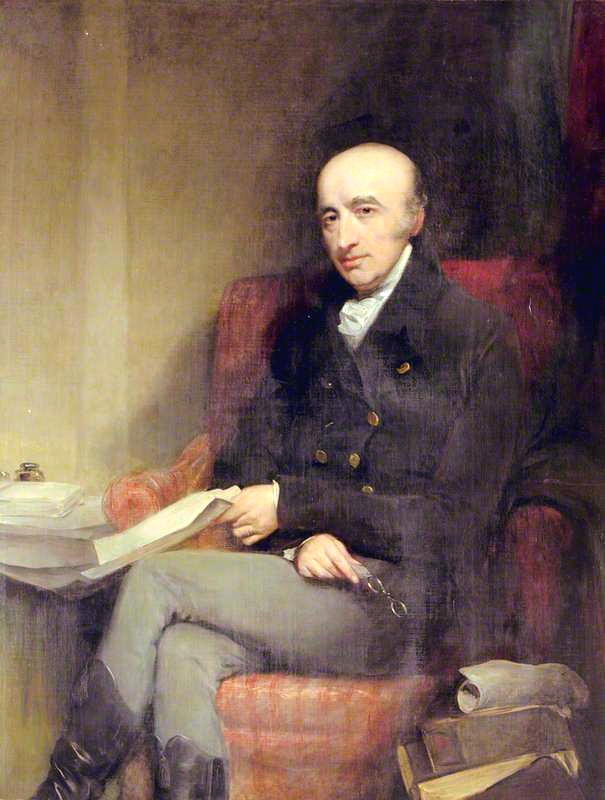
William Hyde Wollaston noted the discovery of a new noble metal in July 1802 in his lab book and named it palladium in August of the same year. He named the element after the asteroid 2 Pallas, which had been discovered two months earlier (and which was previously considered a planet). Wollaston purified a quantity of the material and offered it, without naming the discoverer, in a small shop in Soho in April 1803. After harsh criticism from Richard Chenevix, who claimed that palladium was an alloy of platinum and mercury, Wollaston anonymously offered a reward of £20 for 20 grains of synthetic palladium alloy. Chenevix received the Copley Medal in 1803 after he published his experiments on palladium. Wollaston published the discovery of rhodium in 1804 and mentions some of his work on palladium. He disclosed that he was the discoverer of palladium in a publication in 1805.
Wollaston found palladium in crude platinum ore from South America by dissolving the ore in aqua regia, neutralizing the solution with sodium hydroxide, and precipitating platinum as ammonium chloroplatinate with ammonium chloride. He added mercuric cyanide to form the compound palladium(II) cyanide, which was heated to extract palladium metal.
Palladium chloride was at one time prescribed as a tuberculosis treatment at the rate of 0.065 g per day (approximately one milligram per kilogram of body weight). This treatment had many negative side-effects, and was later replaced by more effective drugs.
Most palladium is used for catalytic converters in the automobile industry. Catalytic converters are targets for thieves because they contain palladium and other rare metals. In the run up to year 2000, the Russian supply of palladium to the global market was repeatedly delayed and disrupted; for political reasons, the export quota was not granted on time. The ensuing market panic drove the price to an all-time high of 1340 $/ozt in January 2001. Around that time, the Ford Motor Company, fearing that automobile production would be disrupted by a palladium shortage, stockpiled the metal. When prices fell in early 2001, Ford lost nearly US$1 billion.
World demand for palladium increased from 100 tons in 1990 to nearly 300 tons in 2000. The global production of palladium from mines was 222 tonnes in 2006 according to the United States Geological Survey. Many were concerned about a steady supply of palladium in the wake of Russia's annexation of Crimea, partly as sanctions could hamper Russian palladium exports; any restrictions on Russian palladium exports could have exacerbated what was already expected to be a large palladium deficit in 2014. Those concerns pushed palladium prices to their highest level since 2001. In September 2014 they soared above the $900 per ounce mark. In 2016 however palladium cost around $614 per ounce as Russia managed to maintain stable supplies. In January 2019 palladium futures climbed past $1,344 per ounce for the first time on record, mainly due to the strong demand from the automotive industry. Palladium reached 2024.64 $/ozt on 6 January 2020, passing $2,000 per troy ounce the first time. The price rose above $3,000 per troy ounce in May 2021 and March 2022.
Palladium as investment

Global palladium sales were 8.84 e6ozt in 2017, of which 86% was used in the manufacturing of automotive catalytic converters, followed by industrial, jewellery, and investment usages. More than 75% of global platinum and 40% of palladium are mined in South Africa. Russia's mining company, Norilsk Nickel, produces another 44% of palladium, with US and Canada-based mines producing most of the rest.
The price for palladium reached an all-time high of $2,981.40 per troy ounce on May 3, 2021, driven mainly on speculation of the catalytic converter demand from the automobile industry. Over the following few years the price fell by over two-thirds. Palladium is traded in the spot market with the code "XPD". When settled in USD, the code is "XPDUSD". A later surplus of the metal was caused by the Russian government selling stockpiles from the Soviet era, at a rate of about 1.6 to a year. The amount and status of this stockpile are a state secret.
Palladium producers
- Norilsk Nickel
- Sibanye-Stillwater
- Anglo American Platinum
- Impala Platinum
- Northam Platinum
Exchange-traded products
WisdomTree Physical Palladium () is backed by allocated palladium bullion and was the world's first palladium ETF. It is listed on the London Stock Exchange as PHPD, Xetra Trading System, Euronext and Milan. ETFS Physical Palladium Shares () is an ETF traded on the New York Stock Exchange.
Bullion coins and bars
A traditional way of investing in palladium is buying bullion coins and bars made of palladium. Available palladium coins include the Canadian Palladium Maple Leaf, the Chinese Panda, and the American Palladium Eagle. The liquidity of direct palladium bullion investment is poorer than that of gold, platinum, and silver because there is a lower circulation of palladium coins than the big three precious metals.
References
References
- (11 November 2024). "Palladium-assisted NOx storage and release on CexZr1-xO2 for passive NOx adsorber in diesel exhaust aftertreatment". Communications Engineering.
- (June 2025). "N-heterocyclic carbene-palladium complex immobilized on Co-MOF 74 microrods as a highly selective catalyst for Suzuki–Miyaura cross-coupling". Reaction Kinetics, Mechanisms and Catalysis.
- (June 2025). "Supported Pd–B alloy mesoporous nanospheres as efficient catalysts for nitrobenzene hydrogenation". Reaction Kinetics, Mechanisms and Catalysis.
- (January 2025). "Fabrication of electrodeposited palladium thin-film electrodes for electrochemical sensing of acetaminophen". Journal of Materials Science: Materials in Electronics.
- (19 June 2019). "Electrochemical synthesis of hydrogen peroxide from water and oxygen". Nature Reviews Chemistry.
- (May 2025). "Coupling of alloying and interface effects in dendritic Au-doped PtPd alloy/dumbbell-like bismuth telluride heterostructures for ethanol and methanol electrooxidation". Rare Metals.
- (2006). "The Chemistry of the Actinide and Transactinide Elements". [[Springer Science+Business Media]].
- Hammond, C. R.. (2004). "Handbook of Chemistry and Physics". CRC press.
- B. Strizker, Phys. Rev. Lett., 42, 1769 (1979).
- {{NUBASE2020
- (1978). "Evidence for the existence of 107Pd in the early solar system". Philosophical Transactions of the Royal Society of London, Series A.
- "Mexico's Meteorites". mexicogemstones.com.
- (1990). "The isotopic composition of Ag in meteorites and the presence of 107Pd in protoplanets". Geochimica et Cosmochimica Acta.
- Mozingo, Ralph. (1955). "Palladium Catalysts".
- (1990). "Inorganic Syntheses".
- (2008). "Palladium complexes based on optically active terpene derivatives of ethylenediamine". Russian Journal of Coordination Chemistry.
- (1993). "Palladium-catalyzed reaction of 1-alkenylboronates with vinylic halides: (1Z,3E)-1-Phenyl-1,3-octadiene".
- (1972). "Inorganic Syntheses".
- (1970). "A novel palladium(0) complex; bis(dibenzylideneacetone)palladium(0)". Journal of the Chemical Society D: Chemical Communications.
- Crabtree, Robert H.. (2009). "The Organometallic Chemistry of the Transition Metals". John Wiley and Sons.
- (2010-02-10). "Emergence of Palladium(IV) Chemistry in Synthesis and Catalysis". Chemical Reviews.
- (July 2018). "Controlling Pd(iv) reductive elimination pathways enables Pd(ii)-catalysed enantioselective C(sp3)−H fluorination". Nature Chemistry.
- (2011). "Higher Oxidation State Organopalladium and Platinum Chemistry".
- (2002). "Synthesis and Structure of Formally Hexavalent Palladium Complexes". Science.
- (2002). "CHEMISTRY: A New Oxidation State for Pd?". Science.
- (2002). "Hexakis(silyl)palladium(VI) or palladium(II with eta2-disilane ligands?". Angewandte Chemie International Edition in English.
- (2002). "Electronic structure and bonding in hexacoordinate silyl-palladium complexes". Angewandte Chemie International Edition in English.
- (2014). "A Motif for Infinite Metal Atom Wires". Angewandte Chemie International Edition.
- (31 January 2020). "Intermetallic compounds in catalysis – a versatile class of materials meets interesting challenges". Science and Technology of Advanced Materials.
- (2013). "Nuclear quadrupole interactions of 111In/Cd solute atoms in a series of rare-earth palladium alloys". Hyperfine Interactions.
- U. S. Geological Survey. (2023). "Mineral commodity summaries 2023".
- ""Norilsk Nickel" Group announces preliminary consolidated production results for 4 th quarter and full 2016, and production outl".
- "World mineral statistics British Geological Survey".
- (January 2007). "Platinum-Group Metals". [[United States Geological Survey]].
- (1994). "Compositional variation of cooperite, braggite, and vysotskite from the Bushveld Complex". Mineralogical Magazine.
- (1986). "Associations of platinum- group minerals of the Norilsk copper-nickel sulfide ores". Economic Geology.
- "Mindat.org - Mines, Minerals and More".
- (2003). "Recovery of Value Fission Platinoids from Spent Nuclear Fuel. Part I PART I: General Considerations and Basic Chemistry". Platinum Metals Review.
- Rushforth, Roy. (2004). "Palladium in Restorative Dentistry: Superior Physical Properties make Palladium an Ideal Dental Metal". Platinum Metals Review.
- Hesse, Rayner W.. (2007). "Jewelrymaking through history: an encyclopedia". Greenwood Publishing Group.
- Toff, Nancy. (1996). "The flute book: a complete guide for students and performers". Oxford University Press.
- Weithers, Timothy Martin. (2006). "Foreign exchange: a practical guide to the FX markets". Wiley.
- Fleischmann, M. (1989). "Electrochemically induced nuclear fusion of deuterium". [[J. Electroanal. Chem.]].
- (2009). "Organic chemistry". [[Cengage Learning]].
- Tsuji, Jiro. (2004). "Palladium reagents and catalysts: new perspectives for the 21st century". John Wiley and Sons.
- Drahl, Carmen. (2008). "Palladium's Hidden Talent". [[Chemical & Engineering News]].
- (2017). "Nano-palladium is a cellular catalyst for in vivo chemistry". [[Nature Communications]].
- (2017-08-29). "Biofuel production boost from catalyst made from palladium and bacteria".
- Zogbi, Dennis. (3 February 2003). "Shifting Supply and Demand for Palladium in MLCCs". TTI, Inc..
- Mroczkowski, Robert S.. (1998). "Electronic connector handbook: theory and applications". McGraw-Hill Professional.
- Harper, Charles A.. (1997). "Passive electronic component handbook". McGraw-Hill Professional.
- Jollie, David. (2007). "Platinum 2007". [[Johnson Matthey]].
- (2020). "A simple process for the recovery of palladium from wastes of printed circuit boards". Hydrometallurgy.
- (1991). "Catalytic palladium-based membrane reactors: A review". The Canadian Journal of Chemical Engineering.
- (1955). "An improved palladium chloride method for the determination of carbon monoxide in blood". The Journal of Biological Chemistry.
- "Glass that's Stronger than Steel".
- (1994). "The H-Pd (hydrogen-palladium) System". Journal of Phase Equilibria.
- {{Greenwood&Earnshaw
- (2004). "Thermal Decomposition of the Non-Interstitial Hydrides for the Storage and Production of Hydrogen". Chemical Reviews.
- Mott, N. F. and Jones, H. (1958) ''The Theory of Properties of metals and alloys''. Oxford University Press. {{ISBN. 0-486-60456-X. p. 200
- (2013). "Handbook of Membrane Reactors".
- (2011). "Ullmann's Encyclopedia of Industrial Chemistry".
- (2003). "Evaluation of the long-term corrosion behavior of dental amalgams: influence of palladium addition and particle morphology". Dental Materials.
- (2019). "Craig's Restorative Dental Materials".
- "Electrode connecting cable for cardiac pacemaker".
- (1987). "Emerging semiconductor technology: a symposium". ASTM International.
- Mann, Mark B.. (2007). "950 Palladium: Manufacturing Methods". Ganoksin.
- "Palladium". [[United Nations Conference on Trade and Development]].
- (2005). "Cross-reactivity between nickel and palladium demonstrated by systemic administration of nickel". Contact Dermatitis.
- (2006). "The Working Properties for Jewelry Fabrication Using New Hard 950 Palladium Alloys".
- Holmes, E.. (13 February 2007). "Palladium, Platinum's Cheaper Sister, Makes a Bid for Love". [[The Wall Street Journal]] (Eastern edition).
- (January 2007). "Platinum-Group Metals". [[United States Geological Survey]].
- (January 2007). "Platinum-Group Metals". [[United States Geological Survey]].
- (2019). "Johnson Matthey Base Prices".
- Ware, Mike. (2005). "Book Review of : Photography in Platinum and Palladium". Platinum Metals Review.
- McCabe, Constance. "Noble Metals for the Early Modern Era: Platinum, Silver- Platinum, and Palladium Prints".
- Ware, Mike. "The Technical History and Chemistry of Platinum and Palladium Printing".
- Morgan, Margaret. (2007). "The Bible of Illuminated Letters". Barron's Educational Series.
- "Palladium Leaf". [[Theodore Gray]].
- (2011-01-11). "New Glass Stronger than Any Known Material".
- (2010). "Hydrogen-Storage Properties of Solid-Solution Alloys of Immiscible Neighboring Elements with Pd". Journal of the American Chemical Society.
- {{Sigma-Aldrich. (12-10-2022)
- (2016). "New mechanistic approach of inorganic palladium toxicity: impairment in mitochondrial electron transfer". Metallomics.
- Emsley, John. (2011). "Nature's Building Blocks: An A-Z Guide to the Elements". Oxford University Press.
- (2002). "Palladium – A review of exposure and effects to human health". International Journal of Hygiene and Environmental Health.
- (2006). "Palladium emissions in the environment: analytical methods, environmental assessment and health effects". Springer Science & Business.
- (1996). "Biological effects of palladium and risk of using palladium in dental casting alloys". Journal of Oral Rehabilitation.
- (1993). "Palladium in dental alloys – the dermatologists' responsibility to warn?". Contact Dermatitis.
- (2010). "Palladium alloys for biomedical devices". Expert Review of Medical Devices.
- (1978). "The Wollaston/Chenevix controversy over the elemental nature of palladium: A curious episode in the history of chemistry". Annals of Science.
- Griffith, W. P.. (2003). "Rhodium and Palladium – Events Surrounding Its Discovery". Platinum Metals Review.
- Wollaston, W. H.. (1804). "On a New Metal, Found in Crude Platina". [[Philosophical Transactions of the Royal Society of London]].
- Wollaston, W. H.. (1805). "On the Discovery of Palladium; With Observations on Other Substances Found with Platina". [[Philosophical Transactions of the Royal Society of London]].
- Garrett, Christine E.. (2004). "The Art of Meeting Palladium Specifications in Active Pharmaceutical Ingredients Produced by Pd-Catalyzed Reactions". Advanced Synthesis & Catalysis.
- Williamson, Alan. "Russian PGM Stocks". The London Bullion Market Association.
- "Historical Palladium Prices and Price Chart". InvestmentMine.
- (16 January 2002). "Ford fears first loss in a decade". BBC News.
- (January 2007). "Platinum-Group Metals". [[United States Geological Survey]].
- Nat Rudarakanchana. (2014-03-27). "Palladium Fund Launches in South Africa, As Russian Supply Fears Warm Prices".
- Rosenfeld, Everett. (2014-08-20). "The other commodity that's leaping on Ukraine war". CNBC.
- (2017-08-30). "Palladium Rally Is About More Than Just Autos". Bloomberg.com.
- "Don't Expect Palladium Prices To Plunge {{!}} OilPrice.com".
- (6 January 2020). "Gold soars as Middle East tensions brew perfect storm". Reuters.
- Patel, Brijesh. (4 March 2022). "Palladium tops $3,000/oz as supply fears grow, gold jumps over 1%".
- "Total palladium supply worldwide 2017 {{!}} Statistic".
- "Global palladium demand distribution by application 2016 {{!}} Statistic".
- "Historical Palladium Charts and Data - London Fix".
- "CPI Inflation Calculator".
- "ETFS Metal PAL ETP price (PHPD)". London Stock Exchange.
- "Size of the Palladium Market {{!}} Sunshine Profits".
This article was imported from Wikipedia and is available under the Creative Commons Attribution-ShareAlike 4.0 License. Content has been adapted to SurfDoc format. Original contributors can be found on the article history page.
Ask Mako anything about Palladium — get instant answers, deeper analysis, and related topics.
Research with MakoFree with your Surf account
Create a free account to save articles, ask Mako questions, and organize your research.
Sign up freeThis content may have been generated or modified by AI. CloudSurf Software LLC is not responsible for the accuracy, completeness, or reliability of AI-generated content. Always verify important information from primary sources.
Report