From Surf Wiki (app.surf) — the open knowledge base
Palestinian political violence
none
none
political violence committed by Palestinians
As Palestinians have not had a fully recognized state with a regular army, much of Palestinian political violence in the context of the Israeli–Palestinian conflict has taken the form of insurgency. Common objectives of political violence by Palestinian groups include self-determination in or sovereignty over the region of Palestine, seeking a one-state solution, or the recognition of a Palestinian state. This includes the objective of ending the Israeli occupation. Goals also include the release of Palestinian prisoners held by Israel and recognition of the Palestinian right of return.
Palestinian groups that have been involved in politically motivated violence include the Palestine Liberation Organization (PLO), Fatah, the Popular Front for the Liberation of Palestine (PFLP), the Popular Front for the Liberation of Palestine – General Command (PFLP-GC), the Democratic Front for the Liberation of Palestine, the Abu Nidal Organization, the Palestinian Islamic Jihad, and Hamas. Several of these groups are considered terrorist organizations by the governments of the United States, Canada, the United Kingdom, Japan, New Zealand and the European Union.
Attacks have taken place both within Israel and Palestine as well as internationally. They have been directed at both military targets and civilians of many countries. Tactics have included hostage taking, plane hijacking, boat hijacking, stone throwing, improvised explosive device, knife attacks, shooting sprees, attacks with vehicles, car bombs and assassinations. In the 1990s, groups seeking to stop Israeli-Palestinian negotiations began adopting suicide bombings, predominantly targeting civilians, which later peaked during the Second Intifada. In recent decades, violence has also included rocket attacks on Israeli urban centers. The October 7 attacks resulted in massacres and hostage-taking.
Suicide bombings constituted 0.5% of Palestinian attacks against Israelis in the first two years of the Second Intifada, though this percentage accounted for half of the Israelis killed in that period. a majority of Palestinians, 59%, believe armed attacks against Israelis inside Israel are an effective measure to end the occupation, with 56% supporting them.
History
Overview and context


In protest against the 1917 Balfour Declaration, which proposed a national home for the Jewish people in Palestine, both Muslim and Christian Palestinians began to organize in opposition to Zionism. By the end of Ottoman rule, the Jewish population of Palestine was 56,000 or one-sixth of the total population. Hostility to Jewish immigration led to numerous incidents such as the 1920 Nebi Musa riots, the 1921 Jaffa riots, the 1929 Palestine riots and the 1936–39 Arab revolt in Palestine. The Arab revolt was suppressed by British security forces and led to the deaths of approximately 5,000 Palestinians. After the passing of the United Nations Partition Plan for Palestine in 1947 which called for the establishment of independent Arab and Jewish States, the 1947–48 Civil War in Mandatory Palestine broke out. Following the Israeli Declaration of Independence on May 15, 1948, the 1948 Arab–Israeli War began, involving intervention by neighboring Arab states. Casualties included 6,000 Israelis and, according to the 1958 survey by Arif al-Arif, 13,000 Palestinians. Additionally some 750,000 Palestinians were expelled or fled during the Nakba subsequently becoming refugees.
In the Six-Day War, a further 280,000–360,000 Palestinians became refugees, the West Bank including Jerusalem was captured and occupied from Jordan and Gaza was occupied from Egypt. These occupied Palestinian territories later began to be settled by Jewish and Israeli settlers, while the Palestinians were placed under Israeli military administration. Historically, Palestinian militancy was fragmented into several groups. The Palestine Liberation Organization led, and eventually united, most factions, while conducting military campaigns, varying from airplane hijackings, militant operations, and civil protest. In 1987, the First Intifada, a revolt of predominantly civil resistance, broke out. It led to the Madrid Conference of 1991, and subsequently to the Oslo I Accord. Oslo I produced an interim understanding allowing the new Palestinian National Authority to exercise limited autonomy in 3%, later 17%, of the West Bank, and parts of the Gaza Strip, which were not used or designated for Israeli settlement. Unsatisfied with concessions, Islamist organizations such as Hamas and Palestinian Islamic Jihad adopted the usage of suicide bombings,**** predominantly against Israeli civilians. Frustration over the perceived failure of the peace talks to yield a Palestinian state led to the outbreak of the Second Intifada from September 2000 until 2005, coincident with Israel's unilateral disengagement plan. The rise of Hamas, the use of Palestinian rocketry and Israel's control of Gaza's borders, has led to further chronic violence, culminating in a further two conflicts, the Gaza War of 2008–09 and Operation Pillar of Defense in 2012.
Since 1967, some reports estimate that some 40% of the male population of the West Bank and Gaza Strip have been arrested or detained in Israeli prisons for political or military reasons.
British Mandate for Palestine (1917–1947)
Following the Balfour Declaration in November 1917 which encouraged Jewish migrants to settle in Palestine, violence against the Jews increased in the region. At this time Arabs were the majority, both geographically and demographically compared to the Jewish population. The majority of Arab Palestinians were distributed throughout the highlands of Judea, Samaria and Galilee whereas the Jewish population was scattered in small towns and rural communities. Arabs hostile to the Jewish population adopted a "war of attrition" tactic which was advantageous to the more numerous Arab community.
Many of the deaths were inflicted during short time spans and in a few locations. On a day in April 1920, about 216 Jews were wounded or killed in Jerusalem. By May 1921, around 40 Jews were killed or wounded per day. In August 1929 that number had risen to 80 per day. During the 1929 riots, one percent of the Jewish population of Jerusalem were wounded or killed, in Safed 2 percent, and in Hebron 12 percent. During the 1920–1929 attacks on Jews were organized by local groups and encouraged by local religious leaders. As the Jewish community did not count on the British authorities to protect them, they formed the Haganah which were predominantly defensive in the 1920s. During the Arab Revolt in the 1936–1939 period, violence was coordinated and organized by the Grand Mufti of Jerusalem and was directed against both Jews and the British. Due to the rising level of Arab violence, the Haganah started to pursue an offensive strategy.
Independence of Israel to establishment of PLO (1949–1964)
Throughout the period 1949–56 the Egyptian government opposed the movement of refugees from the Gaza strip into Israel, but following the IDF's Gaza Raid on February 28, 1955, the Egyptian authorities facilitated militant infiltration but still continued to oppose civilian infiltration.
Around 400 Palestinian insurgents were killed by Israeli Security Forces each year in 1951, 1952 and 1953; a similar number and probably far more were killed in 1950. In 1949, 1,000 or more Palestinians were killed. At least 100 Palestinians were killed during 1954–1956. In total upward of 2,700 and possibly as many as 5,000 were killed by the IDF, police, and civilians along Israel's borders between 1949 and 1956. Most of the people in question were refugees attempting to return to their homes, take back possessions that had been left behind during the war and to gather crops from their former fields and orchards inside the new Israeli state. Meron Benivasti states that the fact that the "infiltrators" were for the most part former inhabitants of the land returning for personal, economic and sentimental reasons was suppressed in Israel as it was feared that this may lead to an understanding of their motives and to the justification of their actions.
After Israel's Operation Black Arrow in 1955, in response to massacres in the city of Rehovot, the Palestinian fedayeen were incorporated into an Egyptian unit. John Bagot Glubb, a British general who commanded the Arab Legion, claimed in his 1957 autobiography A Soldier with the Arabs that he convinced the Legion to arm and train the fedayeen for free. Between 1951 and 1956, 400 Israelis were killed and 900 wounded by fedayeen attacks.
The Palestine Liberation Organization was founded in 1964. At its first convention in Cairo, hundreds of Palestinians met to "call for the right of self-determination and the upholding of the rights of the Palestinian nation". To achieve these goals, a Palestinian army of liberation was thought to be essential; thus, the Palestinian Liberation Army was established with the support of the Arab states. Fatah, a Palestinian group founded in the late 1950s to organize the armed resistance against Israel, and headed by Yasser Arafat, soon rose to prominence within the PLO. The PLO charter called for "an end to the State of Israel, a return of Palestinians to their homeland, and the establishment of a single democratic state throughout Palestine".
Six-Day War and aftermath
Due to Israel's defeat of Arab armies in the Six-Day War, the Palestinian leadership came to the conclusion that the Arab world was unable to challenge Israel militarily in open warfare. Simultaneously, the Palestinians drew lessons from movements and uprisings in Latin America, North Africa and Southeast Asia which led them to move away from guerilla warfare in rural areas and towards terrorist attacks in urban environments with an international reach. This led to a series of aircraft hijackings, bombings and kidnappings which culminated in the killings of Israeli athletes during the 1972 Munich Olympic Games. The military superiority of Israel led Palestinian fighters to employ guerrilla tactics from bases in Jordan and Lebanon.

In the wake of the Six-Day War, confrontations between Palestinian guerrillas in Jordan and government forces became a major problem within the kingdom. By early 1970, at least seven Palestinian guerrilla organizations were active in Jordan, one of the most important being the Popular Front for the Liberation of Palestine (PFLP) led by George Habash. Based in the Jordanian refugee camps, the fedayeen developed a virtual state within a state, receiving funds and arms from both the Arab states and Eastern Europe and openly flouting the law of the country. The guerrillas initially focused on attacking Israel, but by late 1968, the main fedayeen activities in Jordan appeared to shift to attempts to overthrow the Jordanian monarchy.
Black September
Main article: Black September in Jordan
Various clashes between the fedayeen and the army occurred between the years 1968–1970. The situation climaxed in September 1970, when several attempts to assassinate King Hussein failed. On September 7, 1970, in the series of Dawson's Field hijackings, three planes were hijacked by PFLP: a SwissAir and a TWA that were landed in Azraq area and a Pan Am that was landed in Cairo. Then on September 9, a BOAC flight from Bahrain was also hijacked to Zarqa. The PFLP announced that the hijackings were intended "to pay special attention to the Palestinian problem". After all hostages were removed, the planes were dramatically blown up in front of TV cameras.
A bitterly fought 10-day civil war known as Black September ensued, drawing involvement by Syria and Iraq, and sparking troop movements by Israel and the United States Navy. The number of people killed on all sides were estimated as high as 3,500, other sources claiming it to be as high as 20,000.
Battles between Palestinian guerrilla forces and the Jordanian army continued during the closing months of 1970 and the first six months of 1971. In November 1971, members of the Palestinian Black September group, who took their name from the civil war, assassinated Jordanian Prime Minister Wasfi al-Tal in Cairo. In December the group made an unsuccessful attempt to assassinate the Jordanian ambassador in Britain.
Relocation to Lebanon and Lebanese Civil War
In the aftermath of Black September in Jordan, many Palestinians arrived in Lebanon, among them Yasser Arafat and the Palestinian Liberation Organization (PLO). In the early 1970s their presence exacerbated an already tense situation in Lebanon, and in 1975 the Lebanese Civil War broke out. Beginning with street fighting in Beirut between Christian Phalangists and Palestinian militiamen, the war quickly deteriorated into a conflict between two loosely defined factions: the side wishing to preserve the status quo, consisting primarily of Maronite militias, and the side seeking change, which included a variety of militias from leftist organizations and guerrillas from rejectionist Palestinian (nonmainstream PLO) organizations. The Lebanese civil war lasted until 1990 and resulted in an estimated 130,000 to 250,000 civilian fatalities and one million wounded.

After Black September, the PLO and its offshoots waged an international campaign against Israelis. Notable events were the Munich Olympics massacre (1972), the hijacking of several civilian airliners (some were thwarted, see for example: Entebbe Operation), the Savoy Hotel attack, the Zion Square explosive refrigerator and the Coastal Road massacre. During the 1970s and the early 1980s, Israel suffered attacks from PLO bases in Lebanon, such as the Avivim school bus massacre in 1970, the Maalot massacre in 1974 (where Palestinian militants massacred 21 school children) and the Nahariya attack led by Samir Kuntar in 1979, as well as a terrorist bombing by Ziad Abu Ein that killed two Israeli 16-year-olds and left 36 other youths wounded during the Lag BaOmer celebration in Tiberias. Following the 1982 Israeli invasion of Lebanon, called "Operation Peace for Galilee" by the IDF, and the exile of the PLO to Tunis, Israel had a relatively quiet decade.
First Intifada (1987–1993)
The First Intifada was characterized more by grassroots and non-violent political actions from among the population in the Israeli occupied Palestinian territories. A total of 160 Israelis and 2,162 Palestinians were killed, including 1,000 Palestinians killed by other Palestinians under the accusation of being collaborators. The Intifada lasted five years and ended with the signing of the Oslo Accords. The strategy of non-violence, though widespread among Palestinians, was not always adhered to, and there were youth who threw molotov cocktails and stones, with such violence generally directed against Israeli soldiers and settlers.
There were two attacks that represented new developments in terms of political violence inside Israel in this period. The first Palestinian suicide attack took place on July 6, 1989, when a member of the Palestinian Islamic Jihad boarded the Tel Aviv Jerusalem bus 405. He walked up to the driver and pulled the wheel to the right, driving the vehicle into a ravine, killing 16 people. The end of the intifada also saw the first use of suicide bombing as a tactic by Palestinian militants. On April 16, 1993, Hamas carried out the Mehola Junction bombing, in which operative Saher Tamam al-Nabulsi detonated his explosives-laden car between two buses. One person, a Palestinian, other than the attacker was killed, and 21 were wounded.
During this period, the Abu Nidal Organization became subsumed by infighting and mass executed hundreds of its members and their families during 1987–1988. The number of executed is estimated at 600 people, mostly Palestinians, across several separate locations in Syria, Lebanon and Libya.
Oslo Accords to Camp David Summit (1993–2000)
The years between the intifadas were marked by intense diplomatic activity between Israel and Palestinians, who were represented by the PLO. This led to the signing of the Oslo Accords and the creation of the Palestinian National Authority. In response, Islamist organizations such as Hamas and the Palestinian Islamic Jihad (PIJ) adopted the tactic of suicide bombings, influenced by Lebanese groups, to derail the peace process, weaken the PLO and polarize Israeli politics.****
In this period, suicide bombings of Israeli buses and crowded spaces became a regular tactic, particularly by Hamas and Islamic Jihad. Attacks during this period include the Beit Lid massacre, a double-suicide bombing at a crowded junction that killed 21 people and the Dizengoff Center massacre, a suicide bombing outside a Tel Aviv shopping mall that killed 13 people.
Second Intifada (2000–2005)
Main article: Second Intifada
Ramallah lynching
Main article: 2000 Ramallah lynching
In October 2000, a Palestinian mob lynched two non-combatant Israel Defense Forces reservists, Vadim Nurzhitz (sometimes spelled as Norzhich) and Yossi Avrahami (or Yosef Avrahami), who had accidentally entered the Palestinian Authority-controlled city of Ramallah in the West Bank. The brutality of the event, captured in a photo of a Palestinian rioter proudly waving his blood-stained hands to the crowd below, sparked international outrage and further intensified the ongoing conflict between Israeli and Palestinian forces.
Suicide bombings and attacks on civilians
A spate of suicide bombings and attacks, aimed mostly at civilians (such as the Dolphinarium discotheque suicide bombing), was launched against Israel and elicited a military response. A suicide bombing dubbed the Passover Massacre (30 Israeli civilians were killed at Park hotel, Netanya) climaxed a bloody month of March 2002, in which more than 130 Israelis, mostly civilians, were killed in attacks. Israel launched Operation Defensive Shield. The operation led to the apprehension of many members of militant groups, as well as their weaponry and equipment. 497 Palestinians and 30 Israelis were killed during Operation Defensive Shield. Main article: 2004 Sinai bombings
In 2004, 31 people were killed and 159 others were wounded in a simultaneous attack against multiple tourist destinations in Egypt. Of the dead, 15 were Egyptians, 12 were from Israel, two from Italy, one from Russia, and one was an Israeli-American. According to the Egyptian government, the bombers were Palestinians led by Iyad Saleh, who had tried to enter Israel to carry out attacks there but were unsuccessful.
2005–2013
In the mid-2000s, Hamas started putting greater emphasis on its political characteristics and strengthened its popularity amongst Palestinians. In 2006 Palestinian legislative elections Hamas won a majority in the Palestinian Legislative Council, prompting the United States and many European countries to cut off all funds to Hamas and the Palestinian Authority, insisting that Hamas must recognize Israel, renounce violence and accept previous peace pacts.
After the Israel's unilateral disengagement plan in 2005 and the 2006 Palestinian legislative elections, Hamas took control over all the Gaza Strip in June 2007 in a bloody coup. Palestinian militant groups in the Gaza strip increased the firing of Qassam rockets, mortars and Grad missiles on southern Israel. Attacks continued outside the Gaza Strip perimeter, including the attack that resulted in the Israeli soldier Gilad Shalit being captured and held in the Gaza Strip for over five years.
Hamas has made use of guerrilla tactics in the Gaza Strip and to a lesser degree the West Bank. Hamas has adapted these techniques over the years since its inception. According to a 2006 report by rival Fatah party, Hamas had smuggled "between several hundred and 1,300 tons" of advanced rockets, along with other weaponry, into Gaza. Some Israelis and some Gazans both noted similarities in Hamas's military buildup to that of Hezbollah in the 2006 Israel-Hezbollah war.
Hamas has used IEDs and anti-tank rockets against the IDF in Gaza. The latter include standard RPG-7 warheads and home-made rockets such as the Al-Bana, Al-Batar and Al-Yasin. The IDF has a difficult, if not impossible time trying to find hidden weapons caches in Palestinian areas – this is due to the high local support base Hamas enjoys.
During the Gaza War (2008–09), Palestinian militant groups fired rockets aimed at civilian targets which struck the cities of Ashdod, Beersheba and Gedera. The military wing of Hamas said that after a week from the start, it had managed to fire 302 rockets, at an average of 44 rockets daily. 102 rockets and 35 mortars were fired by Fatah at Israel. Over 750 rockets and mortars were fired from Gaza into Israel during the conflict wounded 182 civilians, killing 3 people, and causing minor suffering to another 584 people suffering from shock and anxiety. Several rockets landed in schools and one fell close to a kindergarten, all located in residential areas. The UN fact finding mission stated that this constituted a deliberate attack against the civilian population and was unjustifiable in international law.
In 2012, terror attacks against Israelis in the West Bank increased compared to 2011. The number of terror attacks in the West Bank increased from 320 in 2011 to 578 in 2012. The attacks mainly involved rock throwing, Molotov cocktails, firearms and explosives.
In 2013, Hamas stated that the "kidnapping of IDF soldiers to trade for Palestinian prisoners is at the heart of Palestinian culture".
Israel-Gaza war
Main article: Gaza war, October 7 attacks
On October 7, 2023, Hamas and other Palestinian factions launched an attack, breaching the Gaza–Israel barrier. For months prior to the attack, Hamas had been leading Israeli intelligence to believe that they were not seeking conflict. Hamas fighters proceeded to massacre hundreds of civilians at a music festival and in kibbutz Be'eri and take hostages in Southern Israel back to the Gaza Strip. In total, 1,139 civilians, IDF soldiers and foreign nationals were killed in Israel, making this the deadliest attack by Hamas militants since the foundation of Israel in 1948. The Hamas-led attack marked the beginning of the ongoing Gaza war.
Government involvement
In 2011, Israeli PM Benyamin Netanyahu stated that the incitement promulgated by the Palestinian Authority was destroying Israel's confidence, and he condemned what he regarded as the glorification of the murderers of the Fogel family in Itamar on PA television. The perpetrator of the murders had been described as a "hero" and a "legend" by members of his family, during a weekly program.
Isi Leibler wrote in the Jerusalem Post that Mahmoud Abbas and his chief negotiator Saeb Erekat deny Israel's right to exist and promote vicious hatred against Jews, in statements made in Arabic. He claimed that the state-controlled Palestinian media praised the murders committed by Palestinians. Abbas al-Sayed who perpetrated the Passover suicide attack at the Park Hotel in Netanya which killed 30 civilians was described by Abbas as a "hero" and "symbol of the Palestinian Authority".
Following the Itamar massacre and a bombing in Jerusalem, 27 US senators sent a letter requesting the US Secretary of State to identify the administration's steps to end Palestinian incitement to violence against Jews and Israel that they said was occurring within the "Palestinian media, mosques and schools, and even by individuals or institutions affiliated with the Palestinian Authority".
The United Nations body UNESCO stopped funding a children's magazine sponsored by the Palestinian Authority that commended Hitler's killing of Jews. It deplored this publication as contrary to its principles of building tolerance and respect for human rights and human dignity.
Palestinian Media Watch reported that the Palestinian Authority spent more than $5 million a month paying salaries to Palestinians and Israeli Arabs imprisoned in Israel for terror crimes. They also stated that groups in a summer camp for children sponsored by PA Prime Minister Salam Fayyad were named after militants: Dalal Mughrabi, who led the Coastal Road Massacre; Salah Khalaf, head of Black September that carried out the Munich massacre; and Abu Ali Mustafa, the general secretary of the Popular Front for the Liberation of Palestine who perpetrated many attacks. Saddam Hussein, the leader of Iraq, donated $25,000 to the families of suicide bombers, and $10,000 to the families of Palestinian civilians killed by the Israeli military.
After Israel agreed to hand over the bodies of dead Palestinian suicide bombers and other militants as part of what the Israeli Government described as 'a humanitarian gesture' to PA chairman Mahmoud Abbas to help the peace process, the Palestinian Authority planned a national rally to honour them and to provide full military funerals. The bodies included the suicide bombers that perpetrated the bus bombing in Jerusalem's Shmuel Hanavi neighborhood which killed twenty-three people, many of them children, and the attacker in the Cafe Hillel bombing. Israel will also return the remains of the bombers that committed the bombings on two buses in Beersheba in 2004 killing 16 people, the Stage night club bombing, the attack on the open-air Hadera market as well as the attackers of the Savoy Hotel in Tel Aviv who killed eight hostages. The Palestinian Authority and Hamas both planned official ceremonies and PA president Abbas attended a ceremony at his Muqataa compound. Prisoners Affairs Minister Qaraqi called on Palestinians for a day of celebration. The rally in honor of the dead will be attended by PA President Mahmoud Abbas, PLO leaders, and families of the dead militants. The dead are considered martyrs by Palestinians, but viewed as terrorists by Israelis.
Palestinian President Mahmoud Abbas has been accused of incitement to violence, on the basis of a statement he made concerning youths injured in defending the Haram al Sharif/Temple Mount from what Palestinians have seen as attempts to alter the status quo. He declared in September 2015: "Every drop of blood spilled in Jerusalem is pure, every shahid will reach paradise, and every injured person will be rewarded by God."
Involvement of women and children

In the 1930s, the emergence of organized youth cadres was rooted in the desire to form a youth paramilitary. It was believed that armed youth might bring an end to British hegemony in the Middle East. Youth were cajoled into violence by Palestinian political figures and newspapers that glorified violence and death. The Palestinian Arab Party sponsored the development of storm troops consisting solely of children and youth. A British report from the period stated that "the growing youth and scout movements must be regarded as the most probable factors for the disturbance of the peace".
As a youngster, Yasir Arafat led neighborhood children in marching and drills, beating those who did not obey. In the 1940s, Arafat's father organized a group of militants in Gaza which included Yasir Arafat and his brothers. The leader, Abu Khalid, a mathematics teacher in Gaza, gave Arafat the name Yasir in honor of the militant Yasir al-Bireh.
Child suicide bombers
Main article: Child suicide bombers in the Israeli–Palestinian conflict
As part of the Arab–Israeli conflict, especially during the Second Intifada from 2000 to 2005, Palestinian militant groups used children for suicide bombings. Minors were recruited to attack Israeli targets, both military and civilian. This deliberate involvement of children in armed conflict was condemned by international human rights organizations.
According to Amnesty International: "Palestinian armed groups have repeatedly shown total disregard for the most fundamental human rights, notably the right to life, by deliberately targeting Israeli civilians and by using Palestinian children in armed attacks. Children are susceptible to recruitment by manipulation or may be driven to join armed groups for a variety of reasons, including a desire to avenge relatives or friends killed by the Israeli army."
Human shields
Main article: Palestinian rocket attacks on Israel#United Nations, Human shield#Israeli–Palestinian conflict
According to the United Nations Secretary-General Ban Ki-moon in 2015, Hamas launched rockets from inside schools to use the retaliatory child deaths for propaganda and deter Israel from attacking Gaza. This tactic is called the human shield.
Involvement of women
Women in particular have increasingly associated political violence with expanded citizenship rights due to the perceived failure of nonmilitaristic tactics to achieve political goals, primary amongst these, the achievement of Palestinian autonomy.
The profile of the female Palestinian suicide bombers has been the subject of study by Katherine VanderKaay, who presented her profiling of the subjects at the American Psychological Association's annual meeting. While the first suicide bombing undertaken by a Palestinian took place in 1994, the first female suicide bomber from among Palestinian society did not emerge until January 2002. The bomber was Wafa Idris, a 28-year-old paramedic and a supporter of secularist parties.
Violence against civilians

According to B'Tselem, the Israeli Information Center for Human Rights in the Occupied Territories, 500 Israeli civilians were killed by Palestinians from September 29, 2000, to March 31, 2012, in Israel, and another 254 Israeli civilians were killed in the Gaza Strip and the West Bank. B'tselem reported that the main argument used to justify violence against civilians is that "all means are legitimate in fighting for independence against a foreign occupation". B'Tselem criticized this argument, saying it is completely baseless, and contradicts the fundamental principle of international humanitarian law. "According to this principle, civilians are to be protected from the consequences of warfare, and any attack must discriminate between civilians and military targets. This principle is part of international customary law; as such, it applies to every state, organization, and person, even those who are not party to any relevant convention."
B'Tselem further noted that Palestinian spokespersons distinguish between attacks inside Israel proper and attacks directed at settlers in the Occupied Territories, stating that since the settlements are illegal and many settlers belong to Israel's security forces, settlers are not entitled to the international law protections granted to civilians. Human rights group B'tselem rejected this argument, and stated: "The illegality of the settlements has no effect at all on the status of their civilian residents. The settlers constitute a distinctly civilian population, which is entitled to all the protections granted civilians by international law. The Israeli security forces' use of land in the settlements or the membership of some settlers in the Israeli security forces does not affect the status of the other residents living among them, and certainly does not make them proper targets of attack. B'Tselem strongly opposes the attempts to justify attacks against Israeli civilians by using distorted interpretations of international law. Furthermore, B'Tselem demands that the Palestinian Authority do everything within its power to prevent future attacks and to prosecute the individuals involved in past attacks."
Rocket attacks on Israel

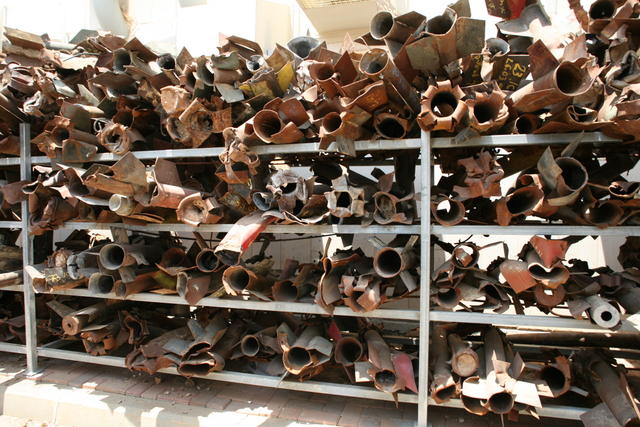
]] Palestinian rocket and mortar attacks on Israel from the Gaza Strip have occurred since 2001. Between 2001 and January 2009, over 8,600 rockets had been launched, leading to 28 deaths and several hundred injuries, as well as widespread psychological trauma and disruption of daily life.
The weapons, often generically referred to as Qassams, were initially crude and short-range, mainly affecting the Israeli city of Sderot and other communities bordering the Gaza Strip. In 2006, more sophisticated rockets began to be deployed, reaching the larger coastal city of Ashkelon, and by early 2009 major cities Ashdod and Beersheba had been hit by Katyusha and Grad rockets.
Attacks have been carried out by all Palestinian armed groups, and, prior to the 2008–2009 Gaza War, were consistently supported by most Palestinians, although the stated goals have been mixed. The attacks, widely condemned for targeting civilians, have been described as terrorism by United Nations, European Union and Israeli officials, and are defined as war crimes by human rights groups Amnesty International and Human Rights Watch.

Defenses constructed specifically to deal with the weapons include fortifications for schools and bus stops as well as an alarm system named Red Color. Iron Dome, a system to intercept short-range rockets, was developed by Israel and first deployed in the spring of 2011 to protect Beersheba and Ashkelon, but officials and experts warned that it would not be completely effective. Shortly thereafter, it intercepted a Palestinian Grad rocket for the first time.
The attacks were a stated cause of the Gaza blockade, the Gaza War (December 27, 2008 – January 21, 2009) and other Israeli military operations in the Gaza Strip, including Operation Rainbow (May 2004), Operation Days of Penitence (2004), the 2006 Israel-Gaza conflict, Operation Autumn Clouds (2006), and Operation Hot Winter (2008). Attacks began in 2001. Since then, nearly 4,800 rockets have hit southern Israel, just over 4,000 of them since Israel withdrew from the Gaza Strip in August 2005. The range of the rockets has increased over time. The original Qassam rocket has a range of about 10 km but more advanced rockets, including versions of the old Soviet Grad or Katyusha have hit Israeli targets 40 km from Gaza.
Some analysts see the attacks as a shift away from reliance on suicide bombing, which was previously Hamas's main method of attacking Israel, and an adoption of the rocket tactics used by Lebanese militant group Hezbollah.
Stone-throwing
Main article: Palestinian stone-throwing
Palestinian stone-throwing is a violent political statement which encompasses the practice of throwing stones by hand and using powerful slings variously aimed at Israel security personnel, Israeli civilians, and at both civilian and military vehicles.
Internal violence
Main article: Palestinian internal political violence
B'Tselem reports that from September 29, 2000, to March 31, 2012, there were 669 Palestinians killed by Palestinians. Of those, 134 were killed for suspected collaboration with Israel.
Concerning the killing of Palestinians by other Palestinians, a January 2003 Humanist magazine article reports:
For over a decade the PA has violated Palestinian human rights and civil liberties by routinely killing civilians—including collaborators, demonstrators, journalists, and others—without charge or fair trial. Of the total number of Palestinian civilians killed during this period by both Israeli and Palestinian security forces, 16 percent were the victims of Palestinian security forces. ... According to Freedom House's annual survey of political rights and civil liberties, *Freedom in the World 2001–2002*, the chaotic nature of the Intifada along with strong Israeli reprisals has resulted in a deterioration of living conditions for Palestinians in Israeli-administered areas. The survey states: "Civil liberties declined due to: shooting deaths of Palestinian civilians by Palestinian security personnel; the summary trial and executions of alleged collaborators by the Palestinian Authority (PA); extrajudicial killings of suspected collaborators by militias; and the apparent official encouragement of Palestinian youth to confront Israeli soldiers, thus placing them directly in harm's way."
Internal Palestinian violence has been called an Intrafada, a play on "intifada".
Palestinian attitudes
1980s
The PLO officially "declared its rejection and condemnation of terrorism in all its forms" in 1988.
1995–2000
A study conducted by Mkhaimer Abusada of Al-Azhar University explored attitudes towards the use of political violence. Four questions were posed on the subject of political violence to over a thousand respondents randomly selected from localities in the West Bank and Gaza Strip. The first question was: "Do you support the continuing resort of some Palestinian factions to armed operations against Israeli targets in Gaza and Jericho?" Overall, 56% of respondents responded negatively. Those affiliated with leftist groups showed the highest levels of support for armed attacks against Israelis (74%), while those affiliated with parties supporting the peace process showed the lowest levels (24%). The Islamic opposition was split, with slightly over half in favor, and slightly less than half opposed.
In September 1995, survey participants were asked whether they supported, opposed or had no opinion with regard to "armed attacks against Israeli army targets", "armed attacks against Israeli settlers", and "armed attacks against Israeli civilian targets". The majority supported the use of armed attacks against Israeli military targets and settlers in the West Bank and Gaza Strip. Support crossed all party lines and groups, and was highest among the Islamic opposition (91% and 84%) and the leftists (90% and 89%), though a significant majority of those who supported the peace process also supported armed attacks on military targets and settlers (69% and 73%). To explain the apparent paradox in the latter position, Abusada quotes Shikaki (1996) who "contends that Palestinian support for the use of armed attacks against Israeli military targets and settlers does not indicate 'opposition to the peace process but Palestinian insistence that the process entails an end to occupation and settlements.'" Palestinian support for armed attacks against Israeli civilian targets in Israel was 20% overall, with support being highest among those affiliated with the Islamic opposition (42%) and the leftists (32%), and lowest among supporters of the peace process (12%) and the National Independents (10%).
2000–04
A July 2001 poll conducted by the Palestinian Center for Policy & Survey Research (PSR) found that 58 percent of Palestinians supported armed attacks against Israeli civilians inside Israel and 92 percent supported armed confrontations against the Israeli army in the West Bank and the Gaza Strip. A May 2002 poll by the center found that support for bombings of civilians inside Israel dropped to 52%, but support for armed attacks against Israeli settlers remained "very high" at 89 percent. Support for armed attacks against soldiers stood at 92 percent. A poll after the 2003 Maxim restaurant suicide bombing, in which 20 Israelis were killed, concluded that 75 percent of Palestinians supported the attack, with support higher "in the Gaza Strip (82%) compared to the West Bank (70%), in refugee camps (84%) compared to towns and villages (69%), among women (79%) compared to men (71%), among the young (78%) compared to the old (66%), among students (81%) compared to professionals (33%), and among supporters of Hamas (92%) compared to supporters of Fateh (69%)".
The firing of rockets from Beit Hanoun into Israel was acceptable to about three-quarters of the Palestinian public in the occupied territories, and was higher in the West Bank (78%) compared to the Gaza Strip (71%), among students (83%) compared to merchants (63%), and among supporters of Hamas (86%) compared to supporters of Fatah (73%). While firing rockets from Beit Hanoun was supported by a majority of Palestinians (75%), 59% of the residents of Beit Hanoun rejected this practice. 83% of Palestinians favored a mutual cessation of violence.
A report by the Jerusalem Media and Communication Center, a Palestinian organization, showing trends based on polls conducted since 1997, indicated that Palestinian support for military operations against Israeli targets stood at 34–40 percent in 1997–1999, climbed to 65–85 percent in 2000–2004, and dropped back to 41 percent at the end of 2004. "Military operations" were defined as including shootings, car bombs and mortar rocket attacks, but not suicide bombings. A 2005 poll by the center indicated that 53 percent of Palestinians supported "the continuation of [the] Al-Aqsa Intifada, 50 percent supported "suicide bombings against Israeli civilians", and 36 percent supported "the resumption of military operations against Israeli targets".
A 2004 study by Victoroff et al. was conducted on a group of 52 boys, all 14 years old, from the al-Shati camp in Gaza. Forty-three percent of the boys reported that a family member had been wounded or killed by the IDF, and half lived in households where the father's employment was lost following the outbreak of the Second Intifada. "Sympathy for terrorism" was found to be correlated with depression and anxiety scores, as well as with the level of "perceived oppression", and "emotional distress". Of those who felt subject to unjust treatment, 77 percent expressed sympathy for political violence.
2005–2012
A March 2008 report by Palestinian Center for Policy & Survey Research (PSR) noted that the level of support for armed attack against Israeli civilians inside Israel increased significantly with 67% supporting and 31% opposed, compared to support by 40% in 2005 and 55% in 2006. A February 2008 suicide bombing that killed one Israeli woman in Dimona was supported by 77% and opposed by 19%. An overwhelming majority of 84 percent supported the March 2008 Mercaz HaRav massacre, in which a Palestinian gunman killed eight students and wounded eleven in a Jerusalem school. Support for the attack was 91 percent in the Gaza Strip compared to 79 percent in the West Bank. Similar suicide attacks in 2005 had been less widely supported, with 29% support for a suicide attack that took place in Tel Aviv, and 37% support for another one in Beersheba.
The 2009 Hamas political violence took place in the Gaza Strip during and after the 2009 Gaza War. A series of violent acts, ranging from physical assaults, torture, and executions of Palestinians suspected of collaboration with the Israel Defense Forces, as well as members of the Fatah political party, occurred. According to Human Rights Watch, at least 32 people were killed by these attacks: 18 during the conflict and 14 afterward, and several dozen more were maimed, many by shots to the legs.
In 2012, the number of militant attacks in the West Bank rose from 320 in 2011 to 578 in 2012, including 282 in Jerusalem alone compared to 191 in 2011. According to an annual Shin Bet report, the increase was due in part to a 68% rise of attacks using molotov cocktails. The number of attacks involving firearms and explosives grew by 42%, from 26 to 37.
Casualties
Palestinian deaths by other Palestinians since 1982.
| Conflict | Killed | |
|---|---|---|
| Operation Pillar of Defense | 8 | |
| Gaza War | 75 | |
| Internal violence 2007–present | url=https://web.archive.org/web/20110628191726/http://www.ynetnews.com/articles/0,7340,L-3409548,00.html | date=June 28, 2011 }}. Ynetnews.com (June 20, 1995). Retrieved on September 29, 2010. |
| Battle of Gaza (2007) | 130 | |
| Second Intifada | url=https://web.archive.org/web/20160304205200/https://www.jewishvirtuallibrary.org/jsource/arabs/intrafada.html | date=March 4, 2016 }}. Jewishvirtuallibrary.org. Retrieved on September 29, 2010. |
| First Intifada | 1,100 | |
| War of the Camps |
Groups
- Hamas
- Founded in 1987 by Ahmed Yassin and Mohammad Taha as an outgrowth of the Muslim Brotherhood, Hamas' goal is the establishment of a Palestinian state.
- Armed wing is the Izz ad-Din al-Qassam Brigades; the sole target of its suicide bombings and missile attacks is Israel.
- Took part in 2006 elections and won. After the 2007 Battle of Gaza the Hamas government was disbanded by Mahmoud Abbas but remained de facto rulers of the Gaza Strip.
- Currently led by Khaled Mashal
- Palestinian Islamic Jihad (PIJ) (founded 1970s)
- Formed by Fathi Shaqaqi as a branch of Egyptian Islamic Jihad
- Goal is the destruction of the state of Israel and replacement with an Islamist state
- Armed wing is the Al-Quds Brigades (Jerusalem brigades)
- Currently led by Ramadan Shallah, the Secretary General and Abd Al Aziz Awda
- The Popular Resistance Committees
- Islamist
- Founded in 2000 by Jamal Abu Samhadana who led the group until he was killed in 2006.
- Hamas linked group, based in the Gaza Strip
- Palestine Liberation Organization (PLO) (founded June 1964)
- Formed as the political representation of the Palestinian people
- Currently led by Mahmoud Abbas
PLO
- Popular Front for the Liberation of Palestine (PFLP) (founded 1967)
- Left-wing
- Joined the PLO in 1968 and became the second-largest PLO faction, after Arafat's al-Fatah, but withdrew in 1974, accusing the group of moving away from the goal of abolishing the State of Israel. It was led by Abu Ali Mustapha until his assassination in 2001.
- Armed wing is the Abu Ali Mustapha Brigades and Jihad Jibril Brigades
- Currently led by Ahmad Sa'adat
- Democratic Front for the Liberation of Palestine (DFLP) (founded 1969)
- Marxist-Leninist group that believes Palestinian national goals can be achieved only through revolution of the masses. Split into two factions in 1991; Nayif Hawatmah leads the majority and more hard-line faction, which continue to dominate the group. Joined with other rejectionist groups to form the Alliance of Palestinian Forces (APF) to oppose the Declaration of Principles signed in 1993. Broke from the APF – along with the PFLP – over ideological differences. Has made limited moves towards merging with the PFLP since the mid-1990s.
- Abu Nidal organization (ANO), also known as Fatah - the Revolutionary Council (FRC), (founded 1974)
- Split from PLO; part of the so-called rejectionist front, the ANO is a secular, nationalist group. Was led by Abu Nidal, widely regarded as the most ruthless of the Palestinian leaders, until his death in August 2002. According to Kameel Nasr, Arab and Israeli Terrorism, The group was infiltrated and influenced by Israeli security.
- Palestinian Liberation Front (PLF)
- Minor Left wing faction
- Founded in 196 by Ahmed Jibril and Shafiq al-Hout, re established in 1977 by Abu Abbas
- Arab Liberation Front (ALF)
- Minor faction tied to the Iraqi Ba'ath Party
- Founded in 1969, first leader was Zeid Heidar
- Currently led by Rakad Salem
- As-Sa'iqa (VPLW)
- Palestinian branch of the Syrian Ba'ath Party
- Founded in 1966 as alternative to Fatah, organisation boycotts Palestinian National Authority and is opposed to Oslo Accords
- Organisation was not active during the Second Intifada
- Currently led by Farhan Abu Al-Hayja.
- Palestinian Popular Struggle Front (PPSF)
- Minor Socialist faction formerly led by Samir Ghawshah
- Palestinian Arab Front (PAF)
- : * Minor Arab Nationalist faction
- Originally part of the ALF, split from the ALF in 1993
- Supports the Palestinian right of return and creation of Palestinian state within 1967 borders
- Currently led by Jameel Shihadeh.
- Fatah (founded early 1960s)
- Palestinian nationalist political party
- Reverse acronym for "Harekat at-Tahrir al-Wataniyyeh al-Falastiniyyeh" ("Palestinian National Liberation Movement" in Arabic)
- Also known as the Movement for the National Liberation of Palestine
- Founded by Yasser Arafat in 1959. Took control of the PLO in 1968, with Arafat as chairman.
- Currently led by Mahmoud Abbas
Fatah associates
- Tanzim (founded 1995)
- Means "organization" in Arabic
- Loosely organized Fatah militia
- Led by Marwan Barghouti until his arrest in 2002.
- Force 17 (early 1970s–2007)
- Elite unit of the PLO once under Yasser Arafat's direct guidance.
- Acts as a versatile unit for combat and intelligence-gathering.
- Dismantled in 2007 and incorporated into the Palestinian Presidential Guard.
- Fatah Special Operations Group (Fatah-SOG)
- Founded in the early 1970s by Col. Abdullah Abd al-Hamid Labib
- Also known as the Martyrs of Tel Al Za'atar, Hawari, and Amn Araissi.
- Recently inactive (as of 2004)
- Ahmed Abu Reish Brigade
- Extremist offshoot of Fatah.
- Was involved in the July 17, 2004, kidnappings in the Gaza Strip.
- Possibly linked to the Popular Resistance Committees
- Led by Ahmed Abu Reish
- Al Aqsa Martyrs Brigade
- Responsible for many suicide bombings and shootings of Israeli civilians
- Responsible for executing suspected conspirators and leaders of opposition against Arafat
- Funded by Fatah and the Palestinian Authority
- Offshoot of this group, Fatah Hawks, has carried out guerrilla attacks against Israeli military personnel in the Gaza Strip.
- Black September Organization (1970–1973)
- Began as a small cell of Fatah men determined to take revenge upon King Hussein and the Jordanian army for Black September in Jordan. Recruits from the PFLP, as-Sa'iqa, and other groups also joined.
- Carried out Munich massacre.
- Carried out Attack on the Saudi embassy in Khartoum
- In 1973 two members of the Black September attacked, with sub-machine guns and grenades, at the passenger lounge at Ellinikon International Airport in Athens, Greece. Three civilians have been killed and 55 have been wounded. After the attack the gunmen took hostages, for more than two hours, before surrendering to the Greek police. Most of the casualties and injured were Greeks and Americans.
Splinter
- Popular Front for the Liberation of Palestine - General Command (PFLP-GC) (founded 1968)
- Splinter group from the PFLP, founded by Ahmed Jibril. Declared its focus would be military, not political. Was a member of the PLO, but left in 1974 for the same reasons as PFLP.
Al-Qaeda associates
- Army of Islam (Jaysh al-Islam)
- Also known as the Tawhid and Jihad Brigades and al-Qaeda in Palestine
- The group are an armed Gaza clan named Doghmush who are affiliated with al-Qaeda and Abu Qatada
- Abdullah Azzam Brigades
- Jund Ansar Allah (2008–)
- al-Qaeda-affiliated group in the Gaza Strip, founded in November 2008 by Abdel Latif Moussa
- In August 2009, the group proclaimed the creation of an Islamic emirate in Gaza and led an armed rebellion against Hamas.
- The group's leader Abdel Latif Moussa was killed during that rebellion.
- Fatah al-Islam (2006–)
- al-Qaeda-affiliated group involved in a conflict with the Lebanese army in 2007 over control of Palestinian refugee camps, which caused the death of nearly 500 people.
- The group was established in 2006 by Shaker al-Abssi who led the group until killed by Lebanese forces in 2007.
- Abu Mohamad Awad succeeded al-Abbsi as the group's leader.
- Jund al-Sham (1999–2008)
- Radical Islamist group set up by Palestinians and Syrians which operated in different areas of the Middle East.
- The group's leader Abu Youssef Sharqieh was captured by Lebanese forces during the 2007 conflict in Palestinian refugee camps.
- The group was disbanded in 2008 as its members joined Lebanese al-Qaeda affiliated group Osbat al-Ansar.
- Jaljalat (2006–)
- A Hamas-splinter organisation founded in 2006 by Mahmoud Taleb, a former al-Qassam Brigades commander, after he opposed Hamas joining the 2006 elections
- The group is affiliated with both Jund Ansar Allah and al-Qaeda
- Jahafil Al-Tawhid Wal-Jihad fi Filastin (2008–)
- al-Qaeda-affiliated group in the Gaza Strip, founded in November 2008 by Abu al-Walid al-Maqdisi
Sabireen Movement
The Sabireen Movement's leadership converted to Shia Islam in 2014. It is at odds with Hamas and Palestinian Islamic Jihad, and supports Hezbollah, Iran and Syria.
Notable attacks
In Israel and Palestine
Main article: List of massacres in Israel
| Year | Main article | Location | Perpetrator | Fatalities |
|---|---|---|---|---|
| 1953 | Yehud attack | Yehud | 3 civilians | |
| 1954 | Ma'ale Akrabim massacre | Scorpions Pass, Route 227 | 11 civilians | |
| 1956 | Shafrir synagogue shooting | Kfar Chabad | 6 civilians | |
| 1956 | Ein Ofarim killings | near Hatzeva | 3 civilians | |
| 1956 | Negev desert road ambush | Highway 25, Southern District | 5 civilians | |
| 1970 | Avivim school bus bombing | Avivim | PFLP-GC | 12 civilians |
| 1971 | Murder of the Aroyo children | Gaza Strip | 2 civilians | |
| 1972 | Lod Airport massacre | Lod Airport | Japanese Red Army and PFLP-EO | 24 civilians |
| 1974 | Kiryat Shmona massacre | Kiryat Shmona | PFLP-GC | 18 civilians |
| 1974 | Ma'alot massacre | Ma'alot-Tarshiha | DFLP | 31 civilians |
| 1974 | [Nahariya attack](1974-nahariya-attack) | Nahariya | Fatah | 3 civilians, 1 soldier |
| 1974 | [Beit She'an attack](1974-beit-she-an-attack) | Beit She'an | DFLP | 4 civilians |
| 1975 | Savoy Hotel attack | Tel Aviv | PLO | 8 civilians, 3 soldiers |
| 1975 | Kfar Yuval hostage crisis | Kfar Yuval | Arab Liberation Front | 3 civilians |
| 1975 | Zion Square refrigerator bombing | Zion Square, Jerusalem | PLO | 15 civilians |
| 1978 | Coastal Road massacre | Coastal Highway, near Tel Aviv | Fatah and PLO | 38 civilians, 1 soldier |
| 1979 | [Nahariya attack](1979-nahariya-attack) | Nahariya | PLF | 4 civilians |
| 1980 | Misgav Am hostage crisis | Misgav Am | Arab Liberation Front | 3 civilians |
| 1983 | Murder of Danny Katz | Northern District | 1 civilian | |
| 1984 | Bus 300 affair | near Deir al-Balah, Gaza Strip | PFLP | 1 civilian |
| 1987 | Night of the Gliders | near Kiryat Shmona | PFLP-GC | 6 soldiers |
| 1988 | Mothers' bus attack | near Aroer | PLO | 3 civilians |
| 1989 | Killing of Binyamin Meisner | Nablus, West Bank | 1 soldier | |
| 1989 | Killing of Avi Sasportas and Ilan Saadon | Southern District | Hamas | 2 civilians |
| 1989 | [Tel Aviv–Jerusalem bus attack](1989-tel-aviv-jerusalem-bus-attack) | near Kiryat Yearim | 16 civilians | |
| 1992 | Night of the Pitchforks | IDF training base near Gal'ed | 3 soldiers | |
| 1992 | Murder of Helena Rapp | Bat Yam | 1 civilian | |
| 1993 | Mehola Junction bombing | Mehola, West Bank | Hamas | 1 civilian |
| 1993 | Abduction and killing of Yaron Chen | Ramallah, West Bank | Hamas | 1 soldier |
| 1994 | Afula bus suicide bombing | Afula | Hamas and PIJ | 8 civilians |
| 1994 | Hadera bus station suicide bombing | Hadera | Hamas | 5 civilians |
| 1994 | Dizengoff Street bus bombing | Tel Aviv | Hamas | 22 civilians |
| 1994 | Netzarim Junction bicycle bombing | Netzarim Junction, Gaza Strip | PIJ | 3 soldiers |
| 1994 | Afula axe attack | Afula | Hamas | 1 soldier |
| 1995 | Beit Lid suicide bombing | Beit Lid Junction | PIJ | 22 soldiers, 1 civilian |
| 1995 | Kfar Darom bus attack | near Kfar Darom, Gaza Strip | PIJ | 1 civilian, 7 soldiers |
| 1995 | Ramat Gan bus bombing | Tel Aviv | Hamas | 6 civilians |
| 1995 | Ramat Eshkol bus bombing | Jerusalem | Hamas | 5 civilians, 1 police officer |
| 1996 | Jaffa Road bus bombings | Jerusalem | Hamas | 17 civilians, 9 soldiers |
| 1996 | Dizengoff Center suicide bombing | Tel Aviv | Hamas | 12 civilians, 1 soldier |
| 1996 | Murder of Yaron and Efrat Ungar | Route 383 near Gefen | Al-Qassam Brigades | 2 civilians |
| 1997 | Café Apropo bombing | Tel Aviv | Hamas | 3 civilians |
| 1997 | [Mahane Yehuda Market bombings](1997-mahane-yehuda-market-bombings) | Jerusalem | Hamas | 16 civilians |
| 1997 | Ben Yehuda Street bombing | Jerusalem | Hamas | 5 civilians |
| 2000 | [Ramallah lynching](2000-ramallah-lynching) | Ramallah, West Bank | 2 soldiers | |
| 2001 | Murder of Ofir Rahum | Ramallah, West Bank | 1 civilian | |
| 2001 | [Azor attack](2001-azor-attack) | Azor | Hamas | 7 soldiers, 1 civilian |
| 2001 | [Netanya bombing](2001-netanya-bombing) | Netanya | Hamas | 3 civilians |
| 2001 | Murder of Shalhevet Pass | Hebron, West Bank | Tanzim | 1 civilian |
| 2001 | [HaSharon Mall suicide bombing](2001-hasharon-mall-suicide-bombing) | Netanya | Hamas | 6 civilians |
| 2001 | Dolphinarium discotheque massacre | Tel Aviv | Hamas | 21 civilians |
| 2001 | Sbarro restaurant suicide bombing | Jerusalem | Hamas | 16 civilians |
| 2001 | Binyamina train station suicide bombing | Binyamina-Giv'at Ada | PIJ | 2 soldiers |
| 2001 | Nahariya train station suicide bombing | Nahariya | Hamas | 3 civilians |
| 2001 | Assassination of Rehavam Ze'evi | Jerusalem | PFLP | 1 civilian |
| 2001 | Camp 80 junction bus 823 attack | near Pardes Hanna-Karkur | Fatah and PIJ | 3 civilians |
| 2001 | Ben Yehuda Street bombing | Jerusalem | Hamas | 11 civilians |
| 2001 | Haifa bus 16 suicide bombing | Haifa | Hamas | 15 civilians |
| 2002 | [Hadera attack](2002-hadera-attack) | Hadera | Al-Aqsa Martyrs' Brigades | 6 civilians |
| 2002 | Jaffa Street bombing | Jerusalem | Al-Aqsa Martyrs' Brigades | 1 civilian |
| 2002 | Karnei Shomron Mall suicide bombing | Karnei Shomron, West Bank | PFLP | 3 civilians |
| 2002 | Yeshivat Beit Yisrael bombing | Jerusalem | Al-Aqsa Martyrs' Brigades | 10 civilians |
| 2002 | Seafood Market attack | Tel Aviv | Al-Aqsa Martyrs' Brigades | 2 civilians, 1 police officer |
| 2002 | Atzmona attack | Atzmona, Gaza Strip | Hamas | 5 civilians |
| 2002 | Café Moment bombing | Jerusalem | Hamas | 11 civilians |
| 2002 | Matzuva attack | Matzuva | PIJ | 5 civilians, 1 soldier |
| 2002 | King George Street bombing | Jerusalem | Hamas | 3 civilians |
| 2002 | Passover massacre | Netanya | Hamas | 30 civilians |
| 2002 | Kiryat HaYovel supermarket bombing | Jerusalem | Hamas | 2 civilians |
| 2002 | Matza restaurant suicide bombing | Haifa | Hamas | 16 civilians |
| 2002 | Yagur Junction bombing | Highway 70, east of Haifa | Hamas | 6 soldiers, 2 civilians |
| 2002 | [Mahane Yehuda Market bombing](2002-mahane-yehuda-market-bombing) | Jerusalem | Al-Aqsa Martyrs' Brigades | 6 civilians |
| 2002 | [Rishon LeZion bombing](2002-rishon-lezion-bombing) | Rishon LeZion | Hamas | 16 civilians |
| 2002 | Netanya Market bombing | Netanya | Hamas and PFLP | 3 civilians |
| 2002 | Megiddo Junction bus bombing | Megiddo Junction | PIJ | 13 soldiers, 4 civilians |
| 2002 | [Herzliya bombing](2002-herzliya-bombing) | Herzliya | Al-Aqsa Martyrs' Brigades | 1 civilian |
| 2002 | Patt Junction bus bombing | Jerusalem | Hamas | 19 civilians |
| 2002 | [Itamar attack](2002-itamar-attack) | Itamar, West Bank | PFLP | 5 civilians |
| 2002 | [Immanuel bus attack](2002-immanuel-bus-attack) | Immanuel, West Bank | DFLP and Fatah | 9 civilians |
| 2002 | Neve Shaanan Street bombing | Tel Aviv | PIJ | 5 civilians |
| 2002 | Hebrew University bombing | Jerusalem | Hamas | 9 civilians |
| 2002 | Meron Junction Bus 361 attack | Meron Junction, near Safed | Hamas | 6 civilians, 3 soldiers |
| 2002 | Kissufim tank ambush | Kissufim | 2 soldiers | |
| 2002 | Allenby Street bus bombing | Tel Aviv | Hamas | 6 civilians |
| 2002 | Karkur junction suicide bombing | Karkur | PIJ | 7 civilians, 7 soldiers |
| 2002 | Sonol gas station bombing | Ariel, West Bank | Hamas | 3 soldiers |
| 2002 | [Metzer attack](2002-metzer-attack) | Metzer | Al-Aqsa Martyrs' Brigades | 5 civilians |
| 2002 | [Hebron ambush](2002-hebron-ambush) | Hebron, West Bank | PIJ | 12 soldiers |
| 2002 | Kiryat Menachem bus bombing | Jerusalem | Hamas | 11 civilians |
| 2002 | [Beit She'an attack](2002-beit-she-an-attack) | Beit She'an | Al-Aqsa Martyrs' Brigades | 6 civilians |
| 2002 | Yeshivat Otniel shooting | Otniel, West Bank | PIJ | 4 civilians |
| 2003 | Tel Aviv central bus station massacre | Tel Aviv | 23 civilians | |
| 2003 | Haifa bus 37 suicide bombing | Haifa | Hamas | 17 civilians |
| 2003 | Mike's Place suicide bombing | Tel Aviv | Hamas and Al-Aqsa Martyrs' Brigades | 3 civilians |
| 2003 | [French Hill suicide bombings](2003-french-hill-suicide-bombings) | East Jerusalem | Hamas | 7 civilians |
| 2003 | Afula mall bombing | Afula | PIJ and Al-Aqsa Martyrs' Brigades | 3 civilians |
| 2003 | Davidka Square bus bombing | Jerusalem | Hamas | 17 civilians |
| 2003 | Murder of Oleg Shaichat | near Kafr Kana | "Free People of the Galilee" | 1 soldier |
| 2003 | Shmuel HaNavi bus bombing | Jerusalem | Hamas | 23 civilians |
| 2003 | Tzrifin bus stop attack | Tzrifin | Hamas | 9 soldiers |
| 2003 | Café Hillel bombing | Jerusalem | 7 civilians | |
| 2003 | Maxim restaurant suicide bombing | Haifa | PIJ | 21 civilians |
| 2003 | Geha Interchange bus stop bombing | Geha Interchange | PFLP | 3 soldiers, 1 civilian |
| 2004 | [Erez Crossing bombing](2004-erez-crossing-bombing) | Erez Crossing | Hamas and Al-Aqsa Martyrs' Brigades | 4 civilians |
| 2004 | Gaza Street bus bombing | Jerusalem | Hamas and Al-Aqsa Martyrs' Brigades | 11 civilians |
| 2004 | Liberty Bell Park bus bombing | Jerusalem | Al-Aqsa Martyrs' Brigades | 8 civilians |
| 2004 | [Ashdod Port bombings](2004-ashdod-port-bombings) | Ashdod | Hamas and Fatah | 10 civilians |
| 2004 | Murder of the Hatuel family | Kissufim | 5 civilians | |
| 2004 | Beersheba bus bombings | Beersheba | Hamas | 16 civilians |
| 2004 | Carmel Market bombing | Tel Aviv | PFLP | 3 civilian |
| 2004 | IDF outpost bombing attac | IDF outpost near the Philadelphi Route | Hamas and Fatah | |
| 2005 | Karni border crossing attack | Karni Crossing | Hamas, al-Aqsa Martyrs' Brigades and the Popular Resistance Committees | 6 civilians |
| 2005 | Stage Club bombing | Tel Aviv | PIJ | 5 civilians |
| 2005 | HaSharon Mall suicide bombing | Netanya | PIJ | 5 civilians |
| 2005 | Hadera Market bombing | Hadera | PIJ | 7 civilians |
| 2005 | HaSharon Mall suicide bombing | Netanya | PIJ | 5 civilians |
| 2005 | [2nd Rosh Ha'ir restaurant bombing](2nd-rosh-ha-ir-restaurant-bombing) | Tel Aviv | PIJ | 11 civilians |
| 2005 | Kidnapping and murder of Sasson Nuriel | East Jerusalem | Hamas | 1 civilian |
| 2006 | Kedumim bombing | Kedumim, West Bank | Al-Aqsa Martyrs' Brigades | 4 civilians |
| 2006 | [Gaza cross-border raid](2006-gaza-cross-border-raid) | near Kerem Shalom | Izz ad-Din al-Qassam Brigades, Popular Resistance Committees and the Army of Islam | 2 soldiers |
| 2006 | Murder of Eliyahu Asheri | West Bank | Popular Resistance Committees | 1 civilian |
| 2007 | [Eilat bombing](2007-eilat-bombing) | Eilat | Al-Aqsa Martyrs' Brigades and PIJ | 3 civilians |
| 2007 | [Nahal Telem shooting](2007-nahal-telem-shooting) | Nahal Telem, West Bank | 2 soldiers | |
| 2008 | [Dimona suicide bombing](2008-dimona-suicide-bombing) | Dimona | Hamas | 1 civilian |
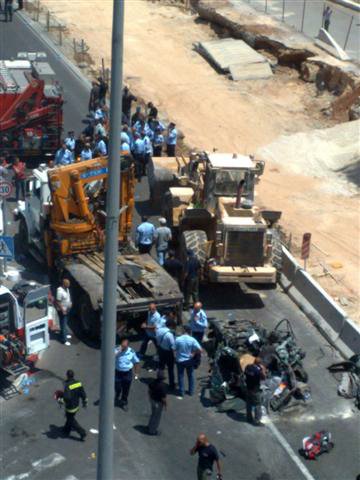
| 2008 | [Jerusalem yeshiva attack](2008-jerusalem-yeshiva-attack) | Jerusalem | 8 civilians | |
| 2008 | [Jerusalem bulldozer attack](2008-jerusalem-bulldozer-attack) | Jerusalem | 3 civilians | |
| 2009 | Bat Ayin axe attack | Bat Ayin, West Bank | 1 civilian | |
| 2009 | Killing of Rabbi Meir Hai | Highway 57, near Shavei Shomron, West Bank | Al-Aqsa Martyrs' Brigades | 1 civilian |
| 2010 | [Tapuah Junction stabbing](2010-tapuah-junction-stabbing) | Kfar Tapuach, West Bank | 1 soldier | |
| 2010 | West Bank shooting attack | near Kiryat Arba, West Bank | Hamas | 4 civilians |
| 2010 | Murders of Neta Sorek and Kristine Luken | Beit Jamal and Beit Shemesh | 2 civilians | |
| 2011 | [Itamar attack](2011-itamar-attack) | Itamar, West Bank | 5 civilians | |
| 2011 | Sha'ar HaNegev school bus attack | Negev | 1 civilian | |
| 2011 | [Jerusalem bus stop bombing](2011-jerusalem-bus-stop-bombing) | Jerusalem | Hamas | 2 civilians |
| 2011 | Murder of Asher and Yonatan Palmer | Kiryat Arba, West Bank | 2 civilians | |
| 2013 | [Tapuah Junction stabbing](2013-tapuah-junction-stabbing) | Kfar Tapuach, West Bank | 1 civilian | |
| 2014 | Murder of Shelly Dadon | Migdal HaEmek | 1 civilian | |
| 2014 | [Gush Etzion kidnapping and murder](2014-gush-etzion-kidnapping-and-murder) | Gush Etzion, West Bank | Hamas | 3 civilians |
| 2014 | [Jerusalem tractor attack](2014-jerusalem-tractor-attack) | Jerusalem | 1 civilian | |
| 2014 | October Jerusalem vehicular attack | East Jerusalem | 2 civilians | |
| 2014 | November Jerusalem vehicular attack | Jerusalem | 3 civilians | |
| 2014 | Killing of Sergeant Almog Shiloni | Tel Aviv | 1 civilian | |
| 2014 | Murder of Dalia Lemkus | Alon Shvut, West Bank | 1 civilian | |
| 2014 | [Jerusalem synagogue attack](2014-jerusalem-synagogue-attack) | Jerusalem | 6 civilians | |
| 2015 | [Shvut Rachel shooting](2015-shvut-rachel-shooting) | Allon Road, West Bank | 1 civilian | |
| 2015 | Murder of Eitam and Na'ama Henkin | near Beit Furik, West Bank | Hamas | 2 civilians |
| 2015 | Lions' Gate stabbings | Jerusalem | 2 civilians | |
| 2015 | [Beersheba bus station shooting](2015-beersheba-bus-station-shooting) | Beersheba | 1 civilian | |
| 2015 | [Gush Etzion Junction attack](2015-gush-etzion-junction-attack) | Gush Etzion Junction, West Bank | 3 civilians | |
| 2016 | January Tel Aviv shooting | Tel Aviv | 3 civilians | |
| 2016 | [Tel Aviv stabbings](2016-tel-aviv-stabbings) | Tel Aviv | 1 civilian | |
| 2016 | June Tel Aviv shooting | Tel Aviv | 4 civilians | |
| 2016 | Murder of Hallel Yaffa Ariel | Kiryat Arba, West Bank | 1 civilian | |
| 2016 | [Jerusalem shooting](2016-jerusalem-shooting) | East Jerusalem | 2 civilians | |
| 2017 | [Jerusalem truck attack](2017-jerusalem-truck-attack) | Jerusalem | 4 soldiers | |
| 2017 | [Jerusalem Light Rail stabbing](2017-jerusalem-light-rail-stabbing) | Jerusalem | 1 civilian | |
| 2017 | June Jerusalem attack | Jerusalem | 4 police officers | |
| 2017 | [Temple Mount shooting](2017-temple-mount-shooting) | Jerusalem | Islamic Movement in Israel | 2 police officers |
| 2017 | [Har Adar shooting](2017-har-adar-shooting) | Har Adar, West Bank | 3 security guards | |
| 2018 | Murder of Itamar Ben Gal | Ariel, West Bank | 1 civilian | |
| 2018 | [Barkan Industrial Park shooting](2018-barkan-industrial-park-shooting) | Barkan Industrial Park, West Bank | 2 civilians | |
| 2019 | [Samaria combined attack](2019-samaria-combined-attack) | Samaria, West Bank | 1 civilian, 1 soldier | |
| 2019 | Murder of Dvir Sorek | Migdal Oz, West Bank | 1 civilian | |
| 2022 | [Beersheba attack](2022-beersheba-attack) | Beersheba | 4 civilians | |
| 2022 | [Bnei Brak shootings](2022-bnei-brak-shootings) | Bnei Brak | 5 civilians | |
| 2023 | [Hamra junction shootings](2023-hamra-junction-shooting) | Highway 57, West Bank | Al-Qassam Brigades | 3 civilians |
| 2023 | [Tel Aviv car-ramming](2023-tel-aviv-car-ramming) | off Kaufmann Street in Tel Aviv, Israel | suspected | 1 civilian |
| 2023 | [2023 Hamas-led attack on Israel](2023-hamas-led-attack-on-israel) | Gaza Strip Envelope | Hamas | 797 civilians, 379 soldiers |
| 2024 | Lehi Street bombing | Lehi Street, Tel Aviv | Hamas, PIJ | |
| 2025 | [2025 al-Funduq shooting](2025-al-funduq-shooting) | West Bank | 3 Dead | |
| 2025 | [2025 Karkur junction ramming attack](2025-karkur-junction-ramming-attack) | Karkur Junction | 1 Civilian | |
| 2025 | [2025 Ramot Junction shooting](2025-ramot-junction-shooting) | Jerusalem | Hamas | 8 Dead |
| 2025 | [Gush Etzion Junction Attack](2025-gush-etzion-junction-attack) | Gush Etzion | Palestinian Islamic Jihad | 1 Civilian |
| 2025 | [2025 Harod Valley attack](2025-harod-valley-attack) | Harod Valley | 2 Civilians |
International attacks
| Year | Country | Events |
|---|---|---|
| 1968 | Greece | El Al Flight 253 attack |
| 1968 | USA | Assassination of Robert F. Kennedy |
| 1970 | Switzerland | Swissair Flight 330 |
| 1970 | Germany | [1970 Munich bus attack](1970-munich-bus-attack) |
| 1972 | Germany | Munich massacre |
| 1972 | Yemen | Lufthansa Flight 649 |
| 1972 | Thailand | Bangkok Israeli embassy hostage crisis |
| 1973 | Greece | [Hellinikon Airport attack](1973-athens-hellinikon-international-airport-attack) |
| 1973 | USA | [NYC bomb plot](1973-new-york-city-bomb-plot) |
| 1973 | Japan | Hijacking of Japan Air Lines Flight 404 |
| 1973 | Italy, Greece, Syria, Kuwait | [Rome airport attacks and Hijacking of Lufthansa Flight 303](1973-rome-airport-attacks-and-hijacking) |
| 1973 | Sudan | Attack on the Saudi Embassy in Khartoum |
| 1974 | Mediterranean Sea | TWA Flight 841 crashing |
| 1974 | Kuwait | [Japanese Embassy attack](1974-japanese-embassy-attack-in-kuwait) |
| 1975 | France | [1975 Orly Airport attacks](1975-orly-airport-attacks) |
| 1976 | Greece, Uganda | Hijacking of Air France Flight 139 |
| 1976 | Turkey | [Yeşilköy airport attack](1976-yesilkoy-airport-attack) |
| 1977 | France, Italy, Cyprus, Bahrain, UAE, Yemen, Somalia | Lufthansa Flight 181 |
| 1978 | France | [1978 Orly Airport attack](1978-orly-airport-attack) |
| 1978 | UK | [London bus attack](1978-london-bus-attack) |
| 1980 | France | [Paris synagogue bombing](1980-paris-synagogue-bombing) |
| 1981 | Belgium | [Antwerp bombing](1981-antwerp-bombing) |
| 1985 | Italy, Austria | Rome and Vienna airport attacks |
| 1985 | Egypt | Achille Lauro hijacking |
| 1985 | Cyprus | Larnaca yacht killings |
| 1985 | Malta | EgyptAir Flight 648 |
| 1990 | Egypt | [1990 Cairo bus attack](1990-cairo-bus-attack) |
| 1994 | Argentina | AMIA bombing |
| 2002 | Kenya | [2002 Mombasa attacks](2002-mombasa-attacks) |
| 2004 | Egypt | [2004 Sinai bombings](2004-sinai-bombings) |
References
Bibliography
References
- link. (April 5, 2023.)
- De Waal, Alexander. (2004). "Islamism and Its Enemies in the Horn of Africa". C. Hurst.
- (1968). "Palestine National Charter".
- Beauchamp, Zack. (2018-11-20). "What is the Palestinian Liberation Organization? How about Fatah and the Palestinian Authority?".
- مصطفى, رامي. (2018-10-29). "المجلس المركزي الفلسطيني يعلن تعليق الاعتراف بدولة إسرائيل".
- Hoffman, Bruce. (2023-10-10). "Understanding Hamas's Genocidal Ideology".
- (2002). "Palestinian Religious Terrorism: Hamas and Islamic Jihad". Brill.
- Holly Fletcher. (April 10, 2008). "Palestinian Islamic Jihad". [[Council on Foreign Relations]].
- "State Dept. List of Terrorist organizations". State.gov.
- (August 7, 2013). "Currently listed entities". Department of Public Safety and Emergency Preparedness.
- (2000). "[[Terrorism Act 2000]]".
- "MoFA Japan".
- (20 July 2014). "Lists associated with Resolution 1373". New Zealand Police.
- "Council decision of 21 December 2005".
- "List of organisations recognized as terrorist groups".
- [[Avishai Margalit]], [http://www.nybooks.com/articles/archives/2003/jan/16/the-suicide-bombers/%3Fpagination%3Dfalse&sa "The Suicide Bombers"], at [[New York Review of Books]], January 16, 2003.
- (2022-07-06). "Public Opinion Poll No (84)".
- Devorah Hakohen,''Immigrants in Turmoil: Mass Immigration to Israel and Its Repercussions in the 1950s and After'', Syracuse University Press, 2003 p. 252 {{ISBN. 0815629699
- Tal, David. (2004). "War in Palestine, 1948: Israeli and Arab Strategy and Diplomacy". [[Routledge]].
- [[Henry Laurens (scholar). Henry Laurens]], ''La Question de Palestine'', tome 3, Fayard, Paris 2007 p. 194.
- (January 14, 2004). "Benny Morris "For the record", January 3, 2004".
- {{harvnb. Siniver. 2023. Hoffman. 2017
- {{harvnb. Gupta. Mundra. 2005. Nanninga. 2019. Hoffman. 2017. Siniver. 2023
- {{harvnb. Moghadam. 2003. Pedahzur. Perliger. Weinberg. 2003. Kliot. Charney. 2006. Cohen. 2016
- [https://mgimo.ru/upload/iblock/814/hwnfdy5ayk3edinmrx1ne8nyhyur1gli/the-evolution-of-the-palestinian-israeli-conflict-settlement-process.pdf The evolution of the Palestinian-Israeli conflict settlement process]
- Nancy Hawker, ''Israeli–Palestinian Contact and Linguistic Practices'', Routledge, 2013 p. 38. {{ISBN?
- (August 1980). "Countering Palestinian Terrorism in Israel – Toward a Policy Analysis of Countermeasures (PDF download)".
- Morris, 1997, pp. 86–89.
- [[Meron Benvenisti. Benvenisti, Meron]] (2000): ''[http://www.ucpress.edu/books/pages/8205/8205.ch05.html Sacred Landscape: Buried History of the Holy Land Since 1948. Chapter 5: Uprooted and Planted] {{Webarchive. link. (September 4, 2006 ''. University of California Press. {{ISBN). 978-0-520-21154-4
- Haya Regev, Avigail Oren, The operations in the 1950s, University of Tel Aviv, 1995
- [[John Bagot Glubb. Glubb, John Bagot]]. ''A Soldier with the Arabs''. New York: Harper & Brothers Publishers, 1957. p. 289.
- [http://jafi.org/JewishAgency/English/Jewish+Education/Compelling+Content/Jewish+Time/Festivals+and+Memorial+Days/Remembrance+Day/Background.htm Remembrance Day Background] {{Webarchive. link. (October 24, 2014 . jafi.org (May 15, 2005). Retrieved on May 9, 2012.)
- [http://jafi.org/NR/exeres/86314008-E729-4282-AD78-8B0C0E24B36B Fedayeen Attacks 1951–1956] {{Webarchive. link. (July 15, 2015 . jafi.org (May 15, 2005). Retrieved on May 9, 2012.)
- link. (April 10, 2023 .)
- Kapitan, 1997, [https://books.google.com/books?id=_dMihgtEnaAC&pg=PA30 p. 30].
- [[Gilbert, Martin]], ''Israel: a history''. Doubleday. 1998. {{ISBN. 978-0-385-40401-3. (p. 418, 1970)
- Cnaan Liphshiz. (27 January 2008). "Tales of Black September". Haaretz.
- "Jordan Hussein – the Guerrilla Crisis".
- (December 10, 2014). "UN, EU urge swift probe into Palestinian official's death". The Times of Israel.
- (December 11, 2014). "Profile: Who was Ziad Abu Ein". The Jerusalem Post.
- link. (April 5, 2023 .)
- [http://www.phrmg.org/monitor2001/oct2001-collaborators.htm Collaborators, One Year Al-Aqsa Intifada] {{webarchive. link. (June 6, 2007 , The [[Palestinian Human Rights Monitoring Group]], October 2001. Retrieved May 15, 2007.)
- link. (April 5, 2023 .)
- link. (April 5, 2023 .)
- Moshe Elad, [http://www.ynetnews.com/articles/0,7340,L-3563322,00.html Why were we surprised?] {{Webarchive. link. (September 23, 2008 , Ynet News February 7, 2008)
- Katz, Samuel (2002). The Hunt for the Engineer. Lyons Press. {{ISBN. 978-1-58574-749-8, pp. 74–75
- Hirst, David. (20 August 2002). "Obituary: Abu Nidal".
- [http://old.btselem.org/statistics/english/Casualties.asp B'Tselem – Statistics – Fatalities] {{webarchive. link. (October 8, 2011 . Btselem.org. Retrieved on May 9, 2012.)
- [http://www.btselem.org/statistics/first_intifada_tables Fatalities in the first Intifada] {{Webarchive. link. (June 3, 2012 . Btselem.org. Retrieved on May 9, 2012.)
- (2006). "Bombers and Bystanders in Suicide Attacks in Israel, 2000 to 2003". Studies in Conflict and Terrorism.
- Vadim Nurzhitz, {{langx. ru. Вадим Нуржиц, {{langx. he. ואדים נורז'יץ; Yossi Avrahami, {{langx. he. יוסי אברהמי
- Philps, Alan. (October 13, 2000). "A day of rage, revenge and bloodshed". The Daily Telegraph.
- (October 13, 2000). "Lynch mob's brutal attack". BBC News.
- Whitaker, Raymond. (October 14, 2000). "A strange voice said: I just killed your husband". The Independent.
- (August 6, 2002). "Report of the Secretary-General on Jenin".
- [https://news.bbc.co.uk/2/hi/middle_east/3728436.stm Death toll rises in Egypt blasts] BBC News
- [http://www.ynetnews.com/articles/0,7340,L-3066976,00.html Sinai attackers failed to enter Israel] {{Webarchive. link. (March 18, 2017 Ynet)
- [https://www.pbs.org/newshour/bb/middle_east/jan-june06/hamas_2-28.html "Online NewsHour: Palestinian Authority Strapped for Cash."] {{Webarchive. link. (January 19, 2014 ''[[Public Broadcasting Service). PBS]]''. February 28, 2006. January 5, 2009.
- (December 11, 2006). "Internal Palestinian violence in Gaza threatens to torpedo Israeli peace efforts". [[WSVN]].
- (October 3, 2006). "Report: Hamas weighing large-scale conflict with Israel". [[Ynet News]].
- Issam Aburaiya. (October 3, 2006). "Hamas and Palestinian Nationalism".
- (January 3, 2009). "Palestinian groups continue firing rockets "in response to Israeli massacres"". BBC Monitoring International Reports.
- Yair Yanga,[https://www.haaretz.com/news/shin-bet-565-rockets-200-mortar-shells-fired-at-israel-since-start-of-gaza-op-1.268043 "Shin Bet: 565 rockets, 200 mortar shells fired at Israel since start of Gaza op"] {{Webarchive. link. (October 23, 2012 , Ha'aretz January 13, 2009)
- (January 14, 2009). "Terrorists fire 18 rockets at Israel".
- Shimoni, Rebecca. (January 24, 2013). "Terror attacks increased in 2013". Timesofisrael.com.
- Shimoni, Rebecca. (May 28, 2013). "Hamas Kidnapping". Timesofisrael.com.
- (October 9, 2023). "How Hamas duped Israel as it planned devastating attack". Reuters.
- (October 13, 2023). "Israel releases images of slain children to rally support". Reuters.
- (January 30, 2012). "PA TV glorifies murderers of Fogel family". JPost.
- Keinon, Herb. (November 18, 2011). "PA incitement is confidence destroying measure". The Jerusalem Post.
- ISI LEIBLER. (January 31, 2012). "Candidly Speaking: PA texts glorifying terror beg question of whether genuine peace process was ever intended?". JPost.
- link. (January 17, 2012 , Jerusalem Post, March 30, 2011)
- link. (August 9, 2012 , Jerusalem Post, December 25, 2011)
- (March 13, 2003). "Palestinians get Saddam funds". BBC News.
- (January 29, 2012). "US paying salaries for jailed Palestinian terrorists". JPost.
- (July 28, 2010). "PA to honor suicide bombers, terrorists". The Jerusalem Post.
- (May 31, 2012). "Israel returns the remains of Palestinian bodies". BBC.
- "Israel transfers bodies of Palestinian terrorists to West Bank, Gaza". Haaretz.
- [http://www.timesofisrael.com/abbas-blood-of-martyrs-spilled-on-temple-mount-is-pure/ 'Abbas: Blood of 'martyrs' spilled on Temple Mount is 'pure','] {{Webarchive. link. (October 20, 2015 [[The Times of Israel]] 17 September 201\5.)
- Jeffrey Goldberg. (October 16, 2015). "The Paranoid Supremacist Roots of the Stabbing Intifada". [[The Atlantic]].
- David M. Rosen, ''Armies of the Young: Child Soldiers in War and Terrorism'', Rutgers University Press, pp. 104–106.
- David M. Rosen, ''Armies of the Young: Child Soldiers in War and Terrorism'', Rutgers University Press, pp. 109.
- (November 2, 2004). "Occupied Territories: Stop Use of Children in Suicide Bombings". Human Rights Watch.
- (November 3, 2004). "Child suicide attacks 'must stop'". BBC News.
- (September 6, 2009). "Israel/Occupied Territories: Palestinian armed groups must not use children – Amnesty International".
- (November 8, 2007). "Ban Ki-moon condemns rocket attack from Gaza school run by UN agency".
- Max Fisher. (July 17, 2014). "Yes, Gaza militants hide rockets in schools, but Israel doesn't have to bomb them". Vox.
- Karla J. Cunningham. (2005). "Democratic development & political terrorism: the global perspective". UPNE.
- Gilmore, Inigo. (January 31, 2002). "Woman suicide bomber in quest for vengeance". The Daily Telegraph.
- "Wafa Idris ... injured by rubber bullets. ... powerful incentives for her to avenge her people.".
- "B'Tselem – Statistics – Fatalities". [[B'Tselem]].
- (2011-01-01). "Attacks on Israeli civilians by Palestinians". [[B'Tselem]].
- (2023). "Security, Terrorism, and Territorial Withdrawal: Critically Reassessing the Lessons of Israel's "Unilateral Disengagement" from the Gaza Strip". [[International Studies Perspectives]].
- (January 18, 2009). "Q&A: Gaza conflict". BBC News.
- (January 21, 2008). "Gaza's rocket threat to Israel". BBC.
- Patience, Martin. (February 28, 2008). "Playing cat and mouse with Gaza rockets". BBC News.
- [https://www.amnesty.org/en/documents/mde15/015/2009/en/ Israel/Gaza Operation 'Cast Lead': 22 Days of Death and Destruction] {{Webarchive. link. (January 12, 2012 , Amnesty International 2009)
- Ethan Bronner, [https://www.nytimes.com/2008/03/19/world/middleeast/19mideast.html Poll Shows Most Palestinians Favor Violence Over Talks] {{Webarchive. link. (January 29, 2017 , March 19, 2008)
- [http://www.pcpsr.org/survey/polls/2004/p13epressrelease.html Poll No. 13 – Press Release] {{webarchive. link. (March 7, 2012 , PSR – Survey Research Unit September 30, 2004)
- [http://www.pcpsr.org/survey/polls/2006/p21ejoint.html Palestinian – Israeli Joint Press Release] {{webarchive. link. (March 7, 2012 , PSR – Survey Research Unit September 26, 2006)
- [http://www.pcpsr.org/survey/polls/2008/p27ejoint.html Palestinian – Israeli Joint Press Release] {{webarchive. link. (March 7, 2012 , PSR – Survey Research Unit March 24, 2008)
- (April 7, 2011). "Iron Dome successfully intercepts Gaza rocket for first time". Haaretz.
- (December 31, 2008). "Hamas Adopting Rocket Tactics Used by Hezbollah". [[Fox News]].
- "Palestinians killed by Palestinians in the Occupied Territories, 29.9.2000 – 31.3.2012". [[B'Tselem]].
- [http://www.thehumanist.org/humanist/articles/waakjf03.htm "Violence among the Palestinians"] {{webarchive. link. (February 11, 2003 . By Erika Waak. ''Humanist.'' Jan–Feb 2003.)
- (April 2004). "The 'Intra'fada or 'the chaos of the weapons'. An Analysis of Internal Palestinian Violence.".
- "Why No Arab Spring in Palestine?".
- Lohr, Steve. (8 December 1988). "Arafat Says P.L.O. Accepted Israel". The New York Times.
- (June 22, 1998). "Palestinian party affiliation and political attitudes toward the peace process". Arab Studies Quarterly.
- [http://www.pcpsr.org/survey/polls/2001/p2a.html#intifada Public Opinion Poll # 2] {{webarchive. link. (May 10, 2011 , PSR – Survey Research Unit)
- [http://www.pcpsr.org/survey/polls/2002/p4a.html#armed Public Opinion Poll # 4] {{webarchive. link. (March 10, 2009 , PSR – Survey Research Unit)
- [http://www.pcpsr.org/survey/polls/2003/p9a.html#peace Survey Research Unit: Results of Poll # 9] {{webarchive. link. (March 29, 2009 , PSR – Survey Research Unit)
- [http://www.pcpsr.org/survey/polls/2004/p13a.html Results of Poll # 13] {{webarchive. link. (October 19, 2004 , PSR – Survey Research Unit)
- [http://jmcc.org/publicpoll/pop/04/dec/pop15.pdf Palestinian Opinion Pulse 5/15] {{webarchive. link. (October 4, 2009 , December 2004, p. 7)
- "Poll No. 54, May 2005 – On Palestinian Attitudes Towards The Palestinian Political Issues". [[Jerusalem Media & Communication Centre]].
- link. (April 10, 2023 .)
- [http://www.pcpsr.org/survey/polls/2008/p27e1.html#peace Palestinian Public Opinion Poll No (27)] {{webarchive. link. (January 3, 2013 , PSR – Survey Research Unit, March 24, 2008)
- Khaled Abu Toameh, [https://archive.today/20130706010638/http://fr.jpost.com/servlet/Satellite?cid=1239710740363&pagename=JPost/JPArticle/ShowFull Hamas killed 32 Gazans during, after op], ''Jerusalem Post'' April 20, 2009
- [https://www.hrw.org/en/news/2009/04/20/gaza-hamas-should-end-killings-torture Gaza: Hamas Should End Killings, Torture] {{Webarchive. link. (April 7, 2015 , [[Human Rights Watch). HRW]] April 20, 2009
- Shimoni, Rebecca. (January 24, 2013). "Shin Bet sees increase in Terror Attacks". Timesofisrael.com.
- (November 20, 2012). "Hamas executes six suspected informants for Israel on Gaza street". The Guardian.
- [http://www.ynetnews.com/articles/0,7340,L-3409548,00.html Over 600 Palestinians killed in internal clashes since 2006 – Israel News, Ynetnews] {{Webarchive. link. (June 28, 2011 . Ynetnews.com (June 20, 1995). Retrieved on September 29, 2010.)
- [https://www.jewishvirtuallibrary.org/jsource/arabs/intrafada.html The Intrafada: Palestinians Killed by Palestinians] {{Webarchive. link. (March 4, 2016 . Jewishvirtuallibrary.org. Retrieved on September 29, 2010.)
- (February 13, 2010). "Ultraconservative jihadists challenge Hamas rule in Gaza". Haaretz.
- (2002). "Palestinian Religious Terrorism: Hamas and Islamic Jihad". Brill.
- (August 27, 2001). "Israel kills key Palestinian leader". BBC News.
- Marmari, Hanoch. (June 6, 2002). "Digging beneath the surface in the Middle East conflict". Haaretz.
- Peter Cave. (August 28, 2001). "Israel assassinates Abu Ali Mustafa". Australian Broadcasting Corporation.
- "Violence on Gaza border continues | Maan News Agency". Maannews.net.
- "The Fatah Constitution".
- (May 3, 2021). "1973: Athens attack leaves three dead". bbc.
This article was imported from Wikipedia and is available under the Creative Commons Attribution-ShareAlike 4.0 License. Content has been adapted to SurfDoc format. Original contributors can be found on the article history page.
Ask Mako anything about Palestinian political violence — get instant answers, deeper analysis, and related topics.
Research with MakoFree with your Surf account
Create a free account to save articles, ask Mako questions, and organize your research.
Sign up freeThis content may have been generated or modified by AI. CloudSurf Software LLC is not responsible for the accuracy, completeness, or reliability of AI-generated content. Always verify important information from primary sources.
Report