From Surf Wiki (app.surf) — the open knowledge base
Pahlavi dynasty
Iranian royal dynasty (1925–1979)
Iranian royal dynasty (1925–1979)
| Field | Value |
|---|---|
| name | Pahlavi |
| type | Royal house |
| coat_of_arms | The Imperial Coat of Arms of Iran.svg |
| coat_of_arms_size | 200px |
| alt | Coat of arms of the Imperial State of Iran |
| coat_of_arms_caption | Arms of dominion of the Shahs, and therefore coat of arms, of Pahlavi Iran from 1932. The emblem of the dynasty is the mountain and sun in the blue circle in the middle. |
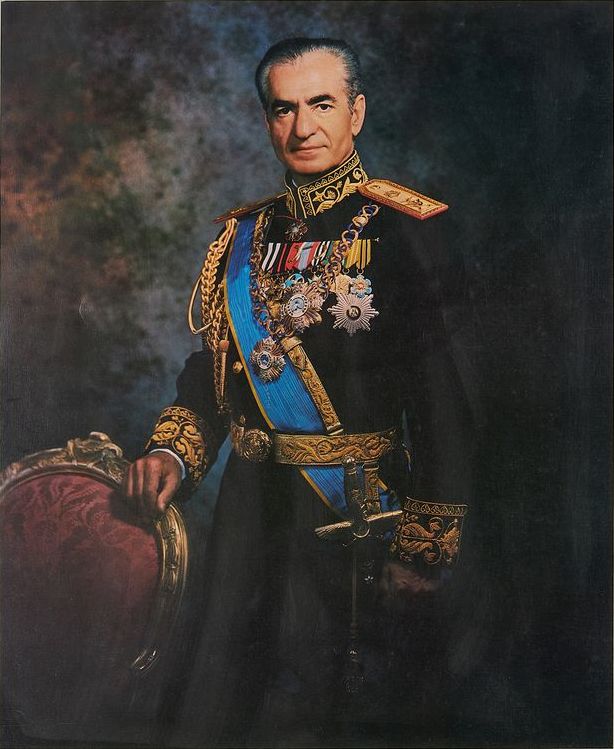
| image | Mohammad Reza Shah Pahlavi 1973 (3x4 cropped).jpg |
| image_caption | Mohammad Reza Pahlavi, the final ruler before being deposed |
| parent_family | |
| country | Imperial State of Iran |
| region | |
| etymology | |
| origin | Mazandaran, Iran |
| founded | |
| founder | Reza Shah Pahlavi |
| current_head | Reza Pahlavi |
| final_ruler | Mohammad Reza Pahlavi |
| final_head | |
| titles | |
| styles | |
| connected_members | |
| distinctions | |
| traditions | Twelver Shia Islam |
| motto | مرا داد فرمود و خود داور است |
| fa | |
| motto_lang | Persian |
| motto_trans | [God] ordered me justice, and he himself is the judge |
| heirlooms | |
| estate | |
| dissolution | |
| deposition | (Iranian Revolution) |
| cadet_branches | |
| website |
the Iranian royal dynasty
fa The Pahlavi dynasty () was an Iranian royal dynasty that was the last to rule Iran before the country's monarchy was overthrown by the Iranian Revolution in 1979. It was founded in 1925 by Reza Shah Pahlavi, born Reza Khan, a non-aristocratic Iranian soldier of Mazanderani origin, who took on the name of the Pahlavi scripts of the Middle Persian language from the Sasanian Empire of pre-Islamic Iran. The dynasty largely espoused this form of Iranian nationalism rooted in the pre-Islamic era (notably based on the Achaemenid Empire) during its time in power, especially under its last Shah Mohammad Reza Pahlavi.
The dynasty replaced the Qajar dynasty in 1925 after the 1921 coup d'état, beginning on 14 January 1921 when 42-year-old soldier Reza Khan was promoted by British General Edmund Ironside to lead the British-run Persian Cossack Brigade. About a month later, under British direction, Reza Khan's 3,000–4,000 strong detachment of the Cossack Brigade reached Tehran. The rest of the country was taken by 1923, and by October 1925 the Majlis agreed to depose and formally exile Ahmad Shah Qajar. The Majlis declared Reza Pahlavi as the Shah of Iran on 12 December 1925, pursuant to the Persian Constitution of 1906. Initially, Pahlavi had planned to declare the country a republic, as his contemporary Mustafa Kemal Atatürk had done in Turkey, but he abandoned the idea in the face of British and clerical opposition.
The dynasty ruled Iran as an autocratic monarchy, with a brief pluralistic period from 1941 to 1953, when Mohammed Mossadegh was overthrown, returning to authoritarianism, with a brief one party state period until the dynasty was removed from power in 1979.
Family background
In 1878, Reza Khan was born at the village of Alasht in Savadkuh County, Mazandaran Province. His parents were Abbas Ali Khan and Noushafarin Ayromlou. His mother was a Muslim immigrant from Georgia (then part of the Russian Empire) whose family had emigrated to mainland Qajar Iran after Iran was forced to cede all of its territories in the Caucasus following the Russo-Persian Wars several decades prior to Reza's birth. His father was a Mazandarani, commissioned in the 7th Savadkuh Regiment, and served in the Anglo-Persian War in 1856.
Pahlavi monarchs, regents, and heads of the house
| Number | Picture | Name | Title | Family relations | Lifespan | Reigned from/ Assumed title | Reigned until/ Relinquished title | Reign duration | I | II | — | III | |||
|---|---|---|---|---|---|---|---|---|---|---|---|---|---|---|---|
| [[File:Reza Shah portrait (3x4 cropped).jpg | 80px | Reza Shah]] | Shah | ||||||||||||
| **Reza Pahlavi** | Shah | — | 1878–1944 | ||||||||||||
| (aged ) | 15 December 1925 | 16 September 1941 | |||||||||||||
| (abdicated) | 15 years | ||||||||||||||
| [[File:Mohammad Reza Shah Pahlavi 1973 (3x4 cropped).jpg | 80px | Mohammad Reza Shah]] | Shah | ||||||||||||
| **Mohammad Reza Pahlavi** | Shah | Son of Reza Pahlavi | 1919–1980 | ||||||||||||
| (aged ) | 16 September 1941 | 11 February 1979 | |||||||||||||
| (*deposed*) | 37 years | ||||||||||||||
| 27 July 1980 | |||||||||||||||
| (*died*) | |||||||||||||||
| [[File:Shahbanu of Iran (3x4 cropped).jpg | 80px]] | Shahbanu | |||||||||||||
| **Farah Pahlavi** | |||||||||||||||
| () | Regent | Third wife and widow of Mohammad Reza Pahlavi | 1938–current | ||||||||||||
| (age ) | 27 July 1980 | ||||||||||||||
| 31 October 1980 | |||||||||||||||
| (*regency expired*) | — | ||||||||||||||
| [[File:Crown Prince of IRAN Reza PAHLAVI EP-146067A AR2 (cropped).jpg | 80px | Reza Pahlavi, Crown Prince of Iran]] | Crown Prince | ||||||||||||
| **Reza Pahlavi** | Head of the House of Pahlavi | Son of Mohammad Reza Pahlavi and Farah Pahlavi | 1960–current | ||||||||||||
| (age ) | 31 October 1980 | ||||||||||||||
| *Incumbent* | — | ||||||||||||||
| [[File:The Imperial Coat of Arms of Iran.svg | 80px]] | **Pahlavi dynasty** | 1878–current | ||||||||||||
| (aged ) | 15 December 1925 | 11 February 1979 | 53 years |
Reign of Pahlavi monarchs and tenure of later pretenders; and their lifespan
Source:
Define $width = 800 # 5 pixels per year ($end - $start) × 12 Define $warning = 1080 # $width - 120 Define $height = 180 # 3 × 10 + 150 Define $footnote = 800 # $width - 400
DateFormat = yyyy Define $start = 1870 Define $end =
ImageSize = width:$width height:$height PlotArea = right:150 left:15 bottom:80 top:0 Period = from:$start till:$end TimeAxis = orientation:horizontal Alignbars = justify Legend = orientation:vertical position:bottom columns:1
Colors = id:bg value:white id:lightline value:rgb(0.8, 0.8, 0.8) id:lighttext value:rgb(0.5, 0.5, 0.5) id:LIFESPAN value:rgb(0,1,0) Legend: Lifespan id:REIGN value:rgb(1, 0, 0) Legend: Reign id:PRETENDER value:rgb(0.5, 0, 0) Legend: Pretender id:POTENTIALP value:rgb(1, 0.75, 0.8) Legend: Potential_Pretender id:NAME value:rgb(0, 0, 1)
BackgroundColors = canvas:bg ScaleMinor = gridcolor:lightline unit:year increment:2 start:$start ScaleMajor = gridcolor:lighttext unit:year increment:10 start:1870
Define $dy = -5 # shift text to button side of bar
PlotData= bar:1 width:18 color:LIFESPAN align:left fontsize:M anchor:till from:1878 till:1944 shift:(10,$dy) textcolor:NAME text:Reza Shah width:10 color:REIGN from:1925 till:1941 bar:2 width:18 color:LIFESPAN align:left fontsize:M anchor:till from:1919 till:1980 shift:(10,$dy) textcolor:NAME text:Mohammad Reza Shah width:10 color:REIGN from:1941 till:1979 width:10 color:PRETENDER from:1979 till:1980 bar:3 width:18 color:LIFESPAN align:left fontsize:M anchor:till from:1960 till: shift:(10,$dy) textcolor:NAME text:Reza Pahlavi width:10 color:POTENTIALP from:1980 till:
Consorts
| Number | Picture | Name | Father | Lifespan | Marriage | Became consort | Ceased to be consort | Spouse | I | II | III | IV | V | VI | |
|---|---|---|---|---|---|---|---|---|---|---|---|---|---|---|---|
| [[File:Taj ol-Molouk - queen of Persia (3x4 cropped).jpg | 80px]] | **Tadj ol-Molouk** | Teymūr Khan Ayromlou | 1896–1982 | 1916 | 15 December 1925 | 16 September 1941 | Reza Pahlavi | |||||||
| [[File:Esmat Dowlatshahi (3x4 cropped).jpg | 80px]] | **Esmat Dowlatshahi** | Gholam Ali Mirza Dowlatshahi | 1905–1995 | 1923 | ||||||||||
| [[File:Princess Fawzia Fuad of Egypt by Armand (3x4 cropped).jpg | 80px]] | Princess **Fawzia of Egypt** | Fuad I of Egypt | 1921–2013 | 1939 | 16 September 1941 | 17 November 1948 | Mohammad Reza Pahlavi | |||||||
| [[File:Soraya Esfandiary-Bakhtiari-045 (3x4 cropped).jpg | 80px]] | **Soraya Esfandiary-Bakhtiary** | Khalil Esfandiary-Bakhtiary | 1932–2001 | 12 February 1951 | 15 March 1958 | |||||||||
| [[File:Shahbanu of Iran (3x4 cropped).jpg | 80px]] | **Farah Diba** | Sohrab Diba | 1938–current | 21 December 1959 | ||||||||||
| (*as queen consort*) | 11 February 1979 | ||||||||||||||
| (*[husband was deposed](1979-iranian-revolution)*) | |||||||||||||||
| 26 October 1967 | |||||||||||||||
| (*as empress consort*) | 27 July 1980 | ||||||||||||||
| (widowed) | |||||||||||||||
| *Office vacant from 27 July 1980 to 12 June 1986* | |||||||||||||||
| [[File:MG-1587 (3x4 cropped).jpg | 80px]] | **Yasmine Etemad-Amini** | Abdullah Etemad-Amini | 1968–current | 12 June 1986 | *Incumbent* | Reza Pahlavi |
Heirs
The 1906 constitution of Iran specifically provided that only a male who was not descended from the Qajar dynasty could become the heir apparent. This made all half-brothers of Mohammad Reza ineligible to become heirs to the throne. Until his death in 1954, the Shah's only full brother Ali Reza was his heir presumptive. The constitution also required the Shah to be of Iranian descent, meaning that his father and mother are Iranian.
Line of succession in February 1979
- [[File:Simple silver crown.svg|15px]] Reza Shah Pahlavi (1878–1944)
- [[File:Simple gold crown.svg|15px]] Mohammad Reza Shah Pahlavi (1919–1980)
- (1) Crown Prince Reza Pahlavi (b. 1960)
- (2) Prince Ali-Reza Pahlavi (1966-2011)
- Prince Ali-Reza Pahlavi (1922–1954)
- (3) Prince Patrick Ali Pahlavi (b. 1947) - (4) Prince Davoud Pahlavi (b. 1972) - (5) Prince Houd Pahlavi (b. 1973) - (6) Prince Mohammad Pahlavi (b. 1976)
- [[File:Simple gold crown.svg|15px]] Mohammad Reza Shah Pahlavi (1919–1980)
Current line of succession
- [[File:Simple silver crown.svg|15px]] Reza Shah Pahlavi (1878–1944)
- [[File:Simple gold crown.svg|15px]] Mohammad Reza Shah Pahlavi (1919–1980)
- Crown Prince Reza Pahlavi (b. 1960)
- Prince Ali-Reza Pahlavi (1966–2011)
- Prince Ali-Reza Pahlavi (1922–1954)
- (1) Prince Patrick Ali Pahlavi (b. 1947)
- (2) Prince Davoud Pahlavi (b. 1972)
- (3) Prince Houd Pahlavi (b. 1973)
- (4) Prince Rafaël Pahlavi (b. 2006) - (5) Prince Mohammad Pahlavi (b. 1976)
- [[File:Simple gold crown.svg|15px]] Mohammad Reza Shah Pahlavi (1919–1980)
List of crown princes
| Name | Portrait | Relationship to monarch | Became heir | Ceased to be heir; reason | 1 | 2 | ||||||||||
|---|---|---|---|---|---|---|---|---|---|---|---|---|---|---|---|---|
| *Office vacant from 15 December 1925 to 24 April 1926* | ||||||||||||||||
| Mohammad Reza Pahlavi | [[File:Crown Prince Mohammad Reza Pahlavi (3x4 cropped).jpg | 80px | Mohammad Reza Shah]] | Eldest son | last1 = Curtis | first1 = Glenn | url = https://archive.org/details/irancountrystudy00curt_2/page/195 | last2 = Hooglund | first2 = Eric | title = Iran, a country study | place = Washington, D.C., US | publisher = Library of Congress | date = April 2008 | page =186 | isbn = 978-0-8444-1187-3 }} | 16 September 1941 |
| *Office vacant from 16 September 1941 to 26 October 1967* | ||||||||||||||||
| Reza Pahlavi | [[File:Reza Pahlavi Crown Prince of Iran 1973 (3x4 close cropped).jpg | 80px | Reza Pahlavi, Crown Prince of Iran]] | Eldest son | 1 November 1960 (*proclaimed*) | 11 February 1979 |
Royal jewels
Main article: Pahlavi Crown, Empress's Crown, Iranian Crown Jewels
Monuments
Main article: Mausoleum of Reza Shah, Shahyad Tower
Use of titles
- Shâh: Emperor, followed by Shâhanshâh of Iran, with style His Imperial Majesty
- Shahbânu: Shahbânu or Empress, followed by first name, followed by "of Iran", with style Her Imperial Majesty
- Valiahd: Crown Prince of Iran, with style His Imperial Highness
- Younger sons: Prince (Shâhpūr, or Shah's Son), followed by first name and surname (Pahlavi), and style His Imperial Highness.
- Daughters: Princess (Shâhdokht, or Shah's Daughter), followed by first name and surname (Pahlavi), and style Her Imperial Highness.
- Children of the monarch's daughter/s use another version of Prince (Vâlâ Gohar, "of superior essence") or Princess (Vâlâ Gohari), which indicate descent in the second generation through the female line, and use the styles His Highness or Her Highness. This is then followed by first name and father's surname, whether he was royal or a commoner. However, the children by the last Shah's sister Fatemeh, who married an American businessman as her first husband, are surnamed Pahlavi Hillyer and do not use any titles.
References
References
- "پرتال جامع علوم انسانی".
- Aghaie, Kamran Scot. (1 December 2011). "The Martyrs of Karbala: Shi'i Symbols and Rituals in Modern Iran". University of Washington Press.
- (1388). "سندی نویافته از نیای رضاشاه". پیام بهارستان.
- (1387). "تاج های زنانه". نشر البرز.
- (1387). "رضاشاه از تولد تا سلطنت". حکایت قلم نوین.
- (1398). "رضاشاه". روزنه،لندن:اچ انداس.
- (6 January 2001). "Iran and the Rise of the Reza Shah: From Qajar Collapse to Pahlavi Power". I.B.Tauris.
- Brysac, Shareen Blair. "A Very British Coup: How Reza Shah Won and Lost His Throne." ''World Policy Journal'' 24, no. 2 (2007): 90–103. Accessed 8 August 2021. http://www.jstor.org/stable/40210096
- "Mashallah Ajudani". Ajoudani.
- "Iran: A Country Study: A Country Study". Government Printing Office.
- Gholam Reza Afkhami. (27 October 2008). "The Life and Times of the Shah". University of California Press.
- Zirinsky, Michael P.. (1992). "Imperial power and dictatorship: Britain and the rise of Reza Shah, 1921-1926". International Journal of Middle East Studies.
- (2009). "The Life and Times of the Shah". University of California Press.
- GholamAli Haddad Adel. (2012). "The Pahlavi Dynasty: An Entry from Encyclopaedia of the World of Islam". EWI Press.
- 978-1845112721 p 269
- Pahlavi, Reza. "About Reza Pahlavi".
- Kazemzadeh, Masoud. (2022). "The Iran National Front and the Struggle for Democracy". Walter de Gruyter GmbH.
- (1999). "The rise and fall of the Pahlavi dynasty". Motilal Banarsidass Publ..
- (1976). "The Shah: The Glittering Story of Iran and Its People". P. S. Eriksson.
- (April 2008). "Iran, a country study". Library of Congress.
This article was imported from Wikipedia and is available under the Creative Commons Attribution-ShareAlike 4.0 License. Content has been adapted to SurfDoc format. Original contributors can be found on the article history page.
Ask Mako anything about Pahlavi dynasty — get instant answers, deeper analysis, and related topics.
Research with MakoFree with your Surf account
Create a free account to save articles, ask Mako questions, and organize your research.
Sign up freeThis content may have been generated or modified by AI. CloudSurf Software LLC is not responsible for the accuracy, completeness, or reliability of AI-generated content. Always verify important information from primary sources.
Report