From Surf Wiki (app.surf) — the open knowledge base
Paektu Mountain
Mountain on the China–North Korea border

Mountain on the China–North Korea border
| Field | Value |
|---|---|
| name | Paektu Mountain |
| other_name | Baekdu Mountain (Korea) |
| Changbai Mountain (China) | |
| photo | Laika ac Mt. Paekdu (7998657081).jpg |
| photo_caption | The summit caldera of Paektu Mountain, with Heaven Lake |
| elevation_m | 2744 |
| elevation_ref | |
| prominence_m | 2593 |
| prominence_ref | |
| range | Changbai Mountains |
| listing | Country high point |
| Ultra | |
| location | * Samjiyon, Ryanggang, North Korea |
| coordinates | |
| type | Stratovolcano |
| last_eruption | March 1903 |
| module | {{Infobox Chinese |
| order | st |
| t | 長 |
| s | 长 |
| p | Chángbáishān |
| w | Ch'ang-pai-shan |
| l | ever-white mountain |
| mnc | |
| mnc_rom | Golmin Šanggiyan Alin |
| northkorea | yes |
| context | north |
| hangul | 백두산 |
| hanja | 白頭山 |
| mr | Paektusan |
| rr | Baekdusan |
| lk | white head mountain |
| cnhangul | 장백산 |
| cnhanja | 長白山 |
| cnrr | Jangbaeksan |
| cnmr | Changbaeksan |
| cnlk | ever-white mountain |
| child | yes |
Changbai Mountain (China) Ultra
- Fusong County and Antu County, Jilin, China Paektu Mountain or Baekdu Mountain () is an active stratovolcano on the Chinese–North Korean border. In China, it is known as Changbai Mountain (). At 2744 m, it is the tallest mountain in North Korea and Northeast China and the tallest mountain of the Baekdu-daegan and Changbai mountain ranges. The highest peak, called Janggun Peak, belongs to North Korea. The mountain notably has a caldera that contains a large crater lake called Heaven Lake, and is also the source of the Songhua, Tumen, and Yalu rivers. Korean and Manchu people assign a mythical quality to the mountain and its lake, and consider the mountain to be their ancestral homeland.
The mountain's caldera was formed by an eruption in 946 that released about 100 - of tephra. The eruption was among the largest and most powerful eruptions on Earth in the last 5,000 years. The volcano last erupted in 1903, and is expected to erupt around every hundred years. In the 2010s, concerns over an upcoming eruption prompted several countries to commission research into when the volcano might next erupt. The mountain is considered culturally important to multiple groups in the area, including Korean, Chinese, and Manchu people. The mountain is a major national symbol for both North and South Korea, and is mentioned in both national anthems and depicted on the national emblem of North Korea. The Manchu people also consider the mountain their ancestral homeland, and the Chinese Qing dynasty saw it as a symbol of imperial power and the mountain had been subject to territorial disputes over the past few centuries. In the late 20th century, the states of China and North Korea diplomatically agreed to joint custody.
Names
The mountain was first recorded in the Chinese Classic of Mountains and Seas under the name Bùxiánshān (). It is also called Shànshàndàlǐng () in the Book of the Later Han. In the Book of Wei and the Book of Sui it is also referred to as Dutàishān (徒太山), which is also mentioned as Cóngtàishān (從太山) in the History of the Northern Dynasties, likely as a misspelling of Dutàishān. In the New Book of Tang, it was called Tàibáishān (). The current Chinese name, Chángbáishān (), was first used in the Liao dynasty (916–1125) of the Khitans and then the Jin dynasty (1115–1234) of the Jurchens. The Liao Shi recorded that chiefs of 30 Jurchen tribes from Mount Changbai paid their tribute to the Liao in AD 985. According to the Song dynasty travelogue Songmo Jiwen, it was named as such because the mountain was "the abode of the white-robed Guanyin" and its birds and beasts were all white. The modern Manchu name of the mountain, which is golmin šanggiyan alin (ᡤᠣᠯᠮᡳᠨ ᡧᠠᠩᡤᡳᠶᠠᠨ ᠠᠯᡳᠨ), means 'long white mountain'.
The Korean name Baekdusan / Paektusan () first appears in literature in the 10th year of Seongjong of Goryeo (991) in the Goryeosa, compiled at the beginning of the Joseon period. It means 'white-head mountain'. In other records such as the Samguk yusa and the Jewang ungi it is also called Taebaeksan (), which means 'great-white mountain'. It was also occasionally called Changbaeksan (長白山) and Baeksan (白山) in the Veritable Records of the Joseon Dynasty. An alternative Chinese name, Báitóushān (), is the transliteration of Baekdusan.
The Mongolian name is Öndör Tsagaan Aula (Өндөр Цагаан Уул), which means 'lofty white mountain'. In English, various authors have used nonstandard transliterations.
Current geography and geology
Mount Paekdu is 2744 m tall, making it the highest mountain in North Korea and Northeast China and the highest mountain of the Baekdu-daegan and Changbai mountain ranges.
Mount Paekdu is a stratovolcano whose cone is truncated by a significant caldera. The central section of the mountain rises about 3 mm per year due to rising levels of magma below the central part of the mountain. Sixteen peaks exceeding 2500 m line the caldera rim surrounding Heaven Lake. The highest peak, called Janggun Peak, is covered in snow about eight months of the year. The slope is relatively gentle until about 1800 m. The caldera is about 5 km wide and 850 m deep, and is partially filled by the waters of Heaven Lake.
Heaven Lake has a circumference of 12 to, with an average depth of 213 m and maximum depth of 384 m. From mid-October to mid-June, the lake is typically covered with ice. Water flows north out of the lake, and near the outlet there is a 70 m waterfall. The mountain is the source of the Songhua, Tumen and Yalu rivers. The Tumen and the Yalu form the northern border between North Korea and Russia and China.
Climate
The weather on the mountain can be very erratic, sometimes severe. The annual average temperature at the peak is -4.9 C. During summer, temperatures of about 18 C or higher can be reached, and during winter temperatures can drop to -48 C. The lowest record temperature was -51 C on 2 January 1997. The average temperature is about -24 C in January, and 10 C in July, remaining below freezing for eight months of the year. The average wind speed is 42 km/h, peaking at 63 km/h. The relative humidity averages 74%.
Geological history
The geological origin of Mount Paekdu remains a mystery. Two leading theories are a hotspot, or an uncharted portion of the Pacific Plate sinking beneath Mount Paekdu.
Beginning about 5 million years ago, Paekdu Mountain erupted, releasing a series of basaltic lava flows that formed a lava plateau. The construction of the cone of the volcano began approximately 1 million years ago, as the eruptive materials transitioned into trachytic, pyroclastic, and lava flows. During the cone-construction stage, major Plinian-type eruptions occurred 448, 67.6, 85.8 and 24.5 thousand years ago (ka) and deposited ash in the Sea of Japan. The cone's growth was halted by two widely-recognized major explosive eruptions: Tianwenfeng and Millennium.
Tianwenfeng eruption
The Tianwenfeng eruption was the formation of a widespread thick layer of grey, yellow pumice preceding the Millennium eruption. The exact age of the eruption is uncertain, since different dating techniques have assigned 4, 51, 61, and 74 ka to this deposit. This eruption formed large areas covered in yellow pumice and ignimbrite. Proximal deposits of pumice fall of the Tianwenfeng are thicker than those of the Millennium eruption. This suggests that the eruption of the Tianwenfeng is significant and maybe of similar magnitude to the Millennium eruption, making the Tianwenfeng eruption also of VEI 6–7.
Millennium eruption
Main article: 946 eruption of Paektu Mountain
The mountain's caldera was created in 946 by the colossal (VEI 6) "Millennium" or "Tianchi" eruption, one of the most powerful eruptions in the last 5,000 years, comparable to the 230 CE eruption of Lake Taupō and the 1815 eruption of Mount Tambora. The eruption, whose tephra has been found in the southern part of Hokkaido, Japan, and as far away as Greenland, destroyed much of the volcano's summit, leaving a caldera that today is filled by Heaven Lake.
According to the Korean historical record Goryeosa, in 946 "thunders from heaven's drum" were heard in the city of Kaesong, then the capital of Goryeo, about 450 km south of the volcano. The event reportedly terrified King Jeongjong so much, that convicts were pardoned and set free. According to Kōfuku-ji Temple's historical records, on 3 November, "white ash rain" fell in Nara, Japan, about 1100 km southeast from the mountain Three months later, on 7 February 947, explosive noises were reported in the city of Kyoto (Japan), about 1000 km southeast of Paektu.
Later history

After these major eruptions, Mount Paektu had at least three smaller eruptions, which occurred in 1668, 1702, and 1903, likely forming the Baguamiao ignimbrite, the Wuhaojie fine pumice, and the Liuhaojie tuff ring.
Research on upcoming eruption
In 2011, experts in North and South Korea met to discuss the potential for a significant eruption in the near future, as the last eruption was in 1903 and the volcano is expected to erupt around every 100 years. The Government of North Korea invited several volcanologists, including James Hammond, Clive Oppenheimer, and Kayla Iacovino, to study the mountain for recent volcanic activity. This made Iacovino the first foreign female researcher to conduct research in North Korea. The researchers began publishing their research in 2016 and in February 2020 formed the Mt. Paektu Research Center.
Flora and fauna
There are five known species of plants in the lake on the peak, and some 168 have been counted along its shores. The forest on the Chinese side is ancient and almost unaltered by humans. Birch predominates near the tree line, and pine lower down, mixed with other species. There has been extensive deforestation on the lower slopes on the North Korean side of the mountain.
The area is a known habitat for Siberian tigers, bears, wolves, and wild boars. The Ussuri dholes may have been extirpated from the area. Deer in the mountain forests, which cover the mountain up to about 2000 m, are of the Paekdusan roe deer kind. Many wild birds such as black grouse, owls, and woodpecker are known to inhabit the area. The mountain has been identified by BirdLife International as an Important Bird Area (IBA) because it supports a population of scaly-sided mergansers.
Cultural history
The mountain has been worshipped by the surrounding peoples throughout history. A considerable percentage of the Koreans and Manchus consider it sacred, especially the Heaven Lake in its crater.
Korea
The mountain has been considered sacred by Koreans throughout history. According to Korean mythology, it was the birthplace of Dangun, the founder of Gojoseon (2333–108 BC), whose parents were said to be Hwanung, the Son of Heaven, and Ungnyeo, a bear who had been transformed into a woman. Many subsequent kingdoms of Korea, such as Buyeo, Goguryeo, Balhae, Goryeo and Joseon recognized this myth.
The Goryeo dynasty (936–1392) first called the mountain Baekdu, recording that the Jurchens across the Yalu River were made to live outside of Mount Baekdu. The Joseon dynasty (1392–1910) recorded volcanic eruptions in 1597, 1668, and 1702. In the 15th century, King Sejong strengthened the fortification along the Tumen and Yalu rivers, making the mountain a natural border with the northern peoples. Some Koreans claim that the entire region near Mount Paektu and the Tumen River belongs to Korea and parts of it were illegally given away by Japanese colonialists to China through the Gando Convention.
Mount Baekdu is mentioned in the national anthems of both North and South Korea and in the Korean folk song "Arirang".
Dense forest around the mountain provided bases for Korean armed resistance against the Japanese occupation, and later communist guerrillas during the Korean War. Kim Il Sung organized his resistance against the Japanese forces there, and North Korea claims that Kim Jong Il was born there, although records outside of North Korea suggest that he was born in the Soviet Union.
The peak has been featured on the state emblem of North Korea since 1993, as defined in Article 169 of the Constitution, which describes Mt. Paektu as "the sacred mountain of the revolution". The mountain is often referred to in slogans such as: "Let us accomplish the Korean revolution in the revolutionary spirit of Paektu, the spirit of the blizzards of Paektu!" North Korean media celebrates natural phenomena witnessed at the mountain as portentous, and weather forecasts aired by state broadcaster Korean Central Television list Paektusan Secret Camp, claimed birthplace of Kim Jong Il, behind only the capital of Pyongyang. The mountain's name is used for various products, such as the Paektusan rocket, the Paektusan computer, and the Mt Paektu handgun.
In the 2019 South Korean disaster film Ashfall, the mountain erupts and causes severe earthquakes in the Korean peninsula.
China

The Manchu clan Aisin Gioro, which founded the Qing dynasty of China, claimed their progenitor Bukūri Yongšon was conceived near Paektu Mountain. In 1682, 1698, 1733, 1754 and 1805, Qing emperors visited Jilin and paid homage to the mountain. The rites at Mount Changbai were heavily influenced by the ancient Feng Shan ceremonies, in which Chinese emperors offered sacrifices to heaven and earth at Mount Tai. The Kangxi Emperor claimed that Mount Tai and Changbai belong to the same mountain range, which runs from northeast to southwest but is partially submerged under the sea before reaching Shandong. The geography and feng shui of Mount Changbai thus provided legitimacy to the Aisin Gioro clan's rule over China.
Baishan Heishui, "white mountain and black river", referring to Mount Changbai and the Heilongjiang, has been a traditional name for Northeast China since the Jin dynasty.
Sovereignty disputes
Historical
According to Annals of the Joseon Dynasty, the Yalu and Tumen Rivers were set as the borders in the era of the founder of Joseon Dynasty, Taejo of Joseon (1335–1408). Because of the continuous entry of Korean people into Gando, a region in Manchuria that lay north of the Tumen, Manchu and Korean officials surveyed the area and negotiated a border agreement in 1712. To mark the agreement, they built a monument describing the boundary at a watershed, near the south of the crater lake at the mountain peak. Volume 8 of the Annals of King Taejo, 2nd article of Gyemyo, 14 December, 4th year of King Taejo, 1395, 28th year of Ming Hongwu Since the 19th century, interpretations of the inscription have been relevant in some territorial disputes.
The 1909 Gando Convention between China and Japan, when Korea was under Japanese rule, recognized the north and east of the mountain as Chinese territory.
Recent
In 1962 and 1964, China and North Korea negotiated two treaties in secret that outlined their modern borders. Both treaties especially focused on the sovereignty of Paektu and Heaven Lake. As a result of the treaties, North Korea received 280 km2 of land on and around Paektu, 9 out of 16 peaks, and 54.5% of Heaven Lake. Neither treaty is recognized by the governments of Taiwan or South Korea.
, South Korea formally claimed the caldera lake and the inside part of the ridge. However, some South Korean groups argue that recent activities conducted on the Chinese side of the border, such as economic development, cultural festivals, infrastructure development, promotion of the tourism industry, attempts at registration as a World Heritage Site, and bids for a Winter Olympic Games, constitute attempts to claim the mountain as Chinese territory. These groups object to China's use of the name Mount Changbai. Some groups also regard the entire mountain as Korean territory that was given away by North Korea in the Korean War.
During the 2007 Asian Winter Games, which were held in Changchun, China, a group of South Korean athletes held up signs during the award ceremony which stated "Mount Paektu is our territory". Chinese sports officials delivered a letter of protest on the grounds that political activities violated the spirit of the Olympics and were banned in the charter of the International Olympic Committee and the Olympic Council of Asia. Officials from the South Korean athletic team apologized to China.
Tourism
Most Chinese, Russian, South Korean and international visitors climb the mountain from the Chinese side. The North Korean side of the mountain is also popular among visitors to North Korea. The Chinese tourism area is classified as a AAAAA scenic area by the China National Tourism Administration.
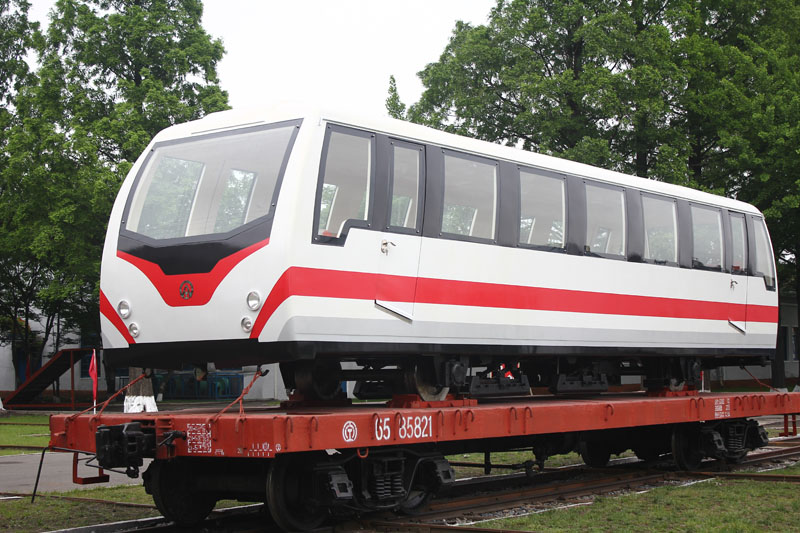
There are a number of monuments on the North Korean side of the mountain. Paektu Spa is a natural spring and is used for bottled water. Pegae Hill is a camp site of the Korean People's Revolutionary Army allegedly led by Kim Il Sung during their struggle against Japanese colonial rule. Secret camps are also now open to the public. There are several waterfalls, including the Hyongje Falls which splits into two about a third of the way from the top. In 1992, on the occasion of the 80th birthday of Kim Il Sung, a large sign with the words "Holy mountain of the revolution" written in metal letters was erected on the side of the mountain. North Koreans claim that there are 216 steps leading to the top of the mountain, symbolizing Kim Jong Il's 16 February birth date, but this claim is disputed. On the North Korean side of the mountain, there is a funicular system with two cars. This was updated with new funicular cars built by the Kim Chong-t'ae Electric Locomotive Works, with the new cars successfully running on the funicular from 30 October 2020.
File:Korea paektu-san locmap.png|Mount Paektu's location in Korea File:Changbai-2005.JPG|Cairns File:Changbai chute1.JPG|Waterfall File:Changbai hotspring.JPG|Hot springs File:River, Paektu Mountain.jpg|River File:Baekdu Mountain Winter.jpg|Heaven Lake in winter File:Changbai Shan 2008-06-14 IMG 1469.JPG|North slope
References
Examples:
- Paektu-san () (Korean 백두산 ())
- Ch'ang Pai ()
- Chang-pai Shan ()
- Chōhaku-san ()
- Hakutō ()
- Hakutō-san()
- Hakutō-zan ()
- Paik-to-san ()
- Mount Paitoushar ()
- Paitow Shan ()
- Pei-schan ()
References
- {{cite peakbagger
- {{cite gvp
- Coghlan, Andy. (15 April 2016). "Waking supervolcano makes North Korea and West join forces". New Scientist.
- Shen, Zhihua. (1 November 2018). "A Misunderstood friendship: Mao Zedong, Kim Il-sung, and Sino-North Korean relations, 1949–1976". Columbia University Press.
- Second Canonical Book of the Tang Dynasty. {{lang. zh-hant. 《[[:s:zh:新唐書/卷219. 新唐書.北狄渤海傳]]》:"契丹盡忠殺營州都督趙翽反,有舍利乞乞仲象者,與靺鞨酋乞四比羽及高麗餘種東走,度遼水,保太白山之東北,阻奧婁河,樹壁自固。" (English translation: [[Khitan people. Khitan]] general Li Jinzhong killed Zhao Hui, the commanding officer of [[Yin Zhou]]. Officer [[Dae Jung-sang]], with [[Mohe people. Mohe]] chieftain [[Qisi Piyu]] and [[Goguryeo]] remnants, escaped to the east, crossed Liao River, guarded the northeast part of the Grand Old White Mountain, blocked Oulou River, built walls to protect themselves.)
- "Records of [[Khitan Empire]]". 《[[:zh:契丹国志. 契丹國志]]》:"長白山在冷山東南千餘里......禽獸皆白。"(English translation: "Changbai Mountain is a thousand miles to the southeast of Cold Mountain...Birds and animals there are all white.")
- "Canonical History Records of the Jurchen Jin Dynasty". {{lang. zh-hant. 《[[:s:zh:金史/卷35. 金史.卷第三十五]]》:"長白山在興王之地,禮合尊崇,議封爵,建廟宇。""厥惟長白,載我金德,仰止其高,實惟我舊邦之鎮。" (English translation: "Changbai Mountain is in old Jurchen land, highly respectful, suitable for building temples. Only the Changbai Mountain can carry Jin Dynasty's spirit; It is so high; It is a part of our old land.")
- (25 July 2018). "Xún mài zhǎngbáishān sù wénhuà yuán qǐ". Changchun Daily.
- [http://hkuri.cneas.tohoku.ac.jp/p06/imageviewer/detail?dicId=6&imageFileName=311 hkuri Manchu Dictionaries]
- "압록강 바깥의 여진족을 '''백두산''' 너머로 쫓아내어, 그 곳에서 거주하게 하였다."(逐鴨綠江外女眞於'''白頭山'''外, 居之.) 출처: 《고려사》 성종 10년조 겨울 10월 무진일
- link
- (1999). "Zhōngguó dìtú jí". China Map Publishing House.
- (2004). "Quaternary Glaciations: South America, Asia, Africa, Australasia, Antarctica". Elsevier.
- "NERC – Science without borders".
- (2018). "The intraplate Changbaishan volcanic field (China/North Korea): A review on eruptive history, magma genesis, geodynamic significance, recent dynamics and potential hazards". Earth-Science Reviews.
- (2020). "Late Pleistocene to present day eruptive history of the Changbaishan-Tianchi Volcano, China/DPRK: New field, geochronological and chemical constraints". Journal of Volcanology and Geothermal Research.
- (2013). "Review of eruptive activity at Tianchi volcano, Changbaishan, northeast China: implications for possible future eruptions". Bulletin of Volcanology.
- (2017). "Tephrostratigraphy of Changbaishan volcano, northeast China, since the mid-Holocene". Quaternary Science Reviews.
- (1 June 2016). "Clarifying the distal to proximal tephrochronology of the Millennium (B–Tm) eruption, Changbaishan Volcano, northeast China". Quaternary Geochronology.
- Liu, Ruoxin. (1998). "Zhǎngbáishān tiānchí huǒshān jìndài pēnfā". Science Press.
- "Global Volcanism Program {{!}} Changbaishan".
- (2013). "Climatic impact of the Millennium eruption of Changbaishan volcano in China: New insights from high-precision radiocarbon wiggle-match dating". Geophysical Research Letters.
- (2015). "Timing and climate forcing of volcanic eruptions for the past 2,500 years". [[Macmillan Publishers]].
- (1998). "Nihonkai o hasande 10 seiki ni aitsuide okotta futatsu no dai funka no nengappi: Towadako to hakutōsan". Volcano.
- Stone, Richard. (2011). "Vigil at North Korea's Mount Doom". [[Science Magazine]].
- Sam Kim, Yonhap. (22 March 2011). "S. Korea agrees to talks on possible volcano in N. Korea".
- (16 September 2014). "Rumbling volcano sees N. Korea warm to the West". [[CBS News]].
- (9 February 2016). "Understanding Volcanoes in Isolated Locations". Science & Diplomacy.
- Fleur, Nicholas St. (9 December 2016). "Only a Rumbling Volcano Could Make North Korea and the West Play Nice". [[The New York Times]].
- "Dr. Kayla Iacovino: In the footsteps of a volcano scientist".
- (19 March 2018). "Publications".
- Gomà Pinilla, D. (2004). Border Disputes between China and North Korea. China Perspectives 2004(52): 1−9.
- (2013). "Mount Paekdu". BirdLife International.
- Fravel, M. Taylor. (2008). "Strong Borders, Secure Nation: Cooperation and Conflict in China's Territorial Disputes". Princeton University Press.
- Choe Sang-Hun. (26 September 2016). "For South Koreans, a Long Detour to Their Holy Mountain". [[The New York Times]].
- Cumings, Bruce. (2005). "Korea's Place in the Sun: A Modern History". [[W. W. Norton & Company]].
- "Korea Britannica". Enc.daum.net.
- Song, Yong-deok. (2007). "The recognition of mountain Baekdu in the Koryo dynasty and early times of the Joseon dynasty". History and Reality V.64.
- [[Goryeosa]] ([[Gwangjong of Goryeo. King Gwangjong]] reign, 959)
- "Yahoo Korea Encyclopedia". Yahoo!.
- "Moved". Korea-dpr.com.
- Sheets, Lawrence. (12 February 2004). "A Visit to Kim Jong Il's Russian Birthplace". NPR.
- (16 January 2009). "Profile: Kim Jong-il". [[BBC News]].
- (2014). "Socialist Constitution of the Democratic People's Republic of Korea". [[Foreign Languages Publishing House (North Korea).
- Gee, Alison. (13 February 2015). "Decoding North Korea's fish and mushroom slogans". [[BBC News]].
- (12 July 1997). "Wonders of nature". [[Korean Central News Agency]].
- Williams, Martyn. (29 April 2019). "KCTV refreshes its weather forecast presentation %".
- Cumings, Bruce. (2005). "Korea's Place in the Sun: A Modern History". [[W. W. Norton & Company]].
- Jager, Sheila Miyoshi. (2013). "Brothers at War – The Unending Conflict in Korea". Profile Books.
- Ha, Yuna. (2 October 2018). "Mt. Paektu handgun gifted by former Supreme Leader vanishes". [[Daily NK]].
- Kao, Anthony. (29 December 2019). "Review: "Ashfall" Is An Epic Disaster Film With Korean Flavor…And Tropes Galore".
- "清朝祭拜长白山的故事". Jilin Archives Information Network.
- "Báishānhēishuǐ".
- "Veritable Records of Taejo".
- (2013). "Contested Border: A Historical Investigation into the Sino-Korean Border Issue, 1950–1964". [[Johns Hopkins University Press]].
- Jeong, Jae-wal. (15 October 2000). "[bug·jung guggyeongjoyagseo naeyong yoyag]". [[JoongAng Ilbo]].
- Fravel, M. Taylor. (1 October 2005). "Regime Insecurity and International Cooperation: Explaining China's Compromises in Territorial Disputes". International Security.
- 역사비평 (Historical Criticism), Fall 1992
- Lee, Oe-moo. (29 December 1984). "baegdusancheonji". [[Kyunghyang Shinmun]].
- [http://english.chosun.com/w21data/html/news/200609/200609070022.html Chosun] {{webarchive. link. (17 October 2006)
- [http://english.donga.com/srv/service.php3?biid=2006073164698 Donga].
- "China Upset with 'Baekdu Mountain' Skaters". [[The Chosun Ilbo]].
- [http://times.hankooki.com/lpage/200702/kt2007020218122853460.htm The Korea Times, "Seoul Cautious Over Rift With China"] {{Webarchive. link. (5 February 2007 . Retrieved 2 February 2007)
- "Sports World Korea". Yahoo! News.
- (16 November 2008). "AAAAA Scenic Areas". [[China National Tourism Administration]].
- (2014). "Hirviöidenkin on kuoltava: Ryhmämatka Pohjois-Koreaan". Tammi.
- "Mount Paektu".
- Rodong, Sinmun. (30 October 2020). "New Achievement Made by Kim Jong Thae Electric Locomotive Complex".
- (10 November 2020). "Manufacturer of Rolling Stock".
This article was imported from Wikipedia and is available under the Creative Commons Attribution-ShareAlike 4.0 License. Content has been adapted to SurfDoc format. Original contributors can be found on the article history page.
Ask Mako anything about Paektu Mountain — get instant answers, deeper analysis, and related topics.
Research with MakoFree with your Surf account
Create a free account to save articles, ask Mako questions, and organize your research.
Sign up freeThis content may have been generated or modified by AI. CloudSurf Software LLC is not responsible for the accuracy, completeness, or reliability of AI-generated content. Always verify important information from primary sources.
Report