From Surf Wiki (app.surf) — the open knowledge base
P5+1
Group of countries that engaged with Iran over its nuclear program
Group of countries that engaged with Iran over its nuclear program
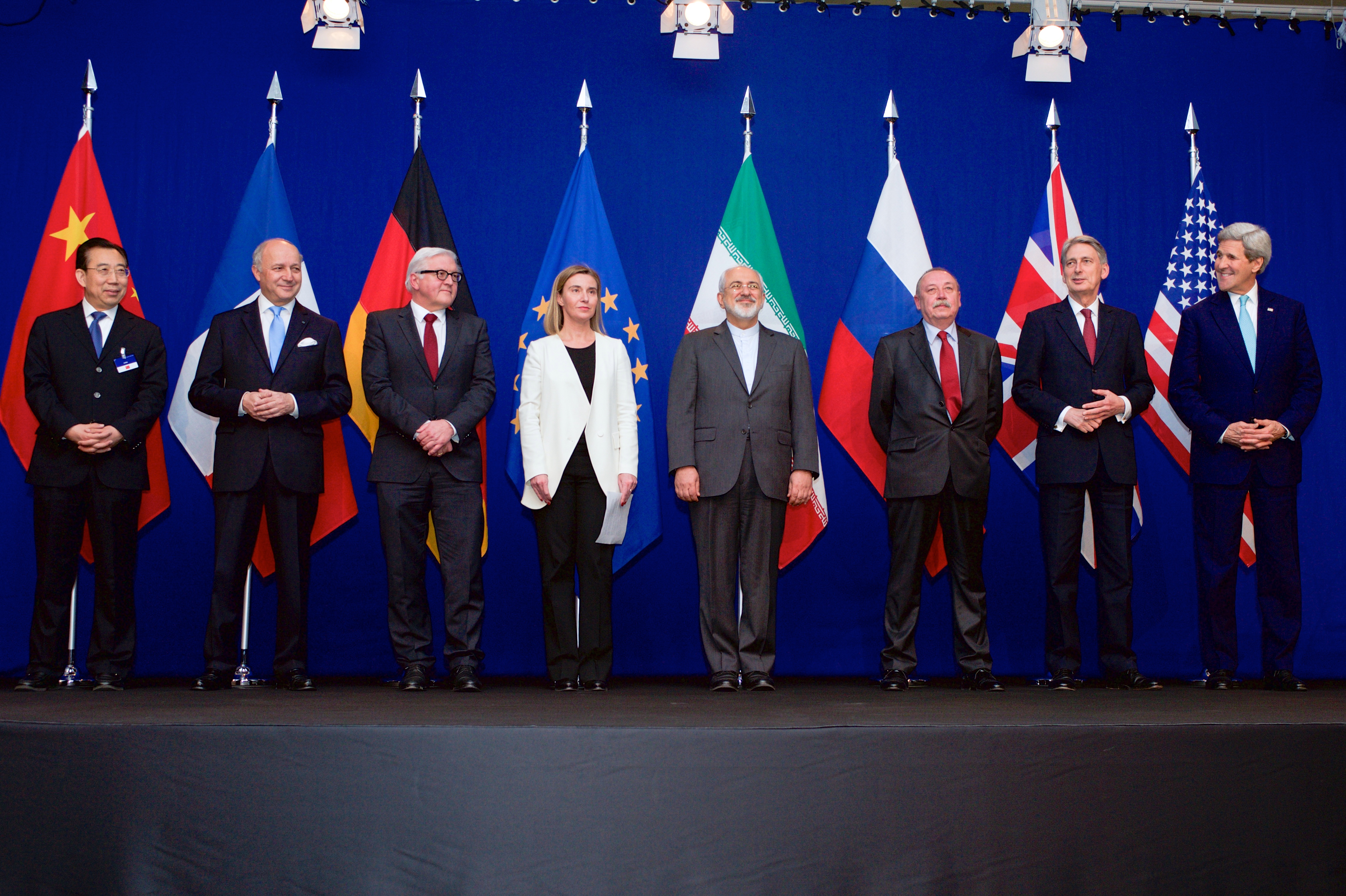
The P5+1 refers to the UN Security Council's five permanent members (the P5); namely China, France, Russia, the United Kingdom, and the United States; plus Germany. The P5+1 is often referred to as the E3+3 by European countries. It is a group of six world powers which, in 2006, joined in diplomatic efforts with Iran with regard to its nuclear program.
History
In June 2006, China, Russia, and the United States joined the three EU-3 countries, which had been negotiating with Iran since 2003, to offer another proposal for comprehensive negotiations with Iran.
Up to then, the UN Security Council has adopted six resolutions in response to the Iranian nuclear program. The first resolution, #1696, was adopted in July 2006 and demands that Iran halt its uranium enrichment-related and reprocessing activities.
The next three years saw the adoption of three more resolutions, #1737 in December 2006, #1747 in March 2007, and #1803 in March 2008, which have imposed gradual sanctions on Iranian individuals and entities believed to be involved in Iran's nuclear and missile programs.
UN Security Council Resolution #1835, adopted in September 2008, restated the Security Council's demands made in resolution #1696 of 2006, but without imposing additional sanctions.
The last Security Council resolution, #1929, adopted in June 2010, saw the expansion of more sanctions on Iran for its lack of cooperation and its continued uranium enrichment-related and reprocessing activities
2013 interim agreement
Main article: Geneva interim agreement on Iranian nuclear program
A round of the talks between Iran and the P5+1, chaired by EU High Representative Catherine Ashton, was held in the Kazakh city of Almaty on 26–27 February 2013. The two sides agreed to meet again in the city on 5–6 April to continue the talks after holding expert-level talks in the Turkish city of Istanbul on 17–18 March 2013.
In a further meeting of the P5+1 in Geneva on 16 October 2013, Iran stated that it may allow unannounced visits to its nuclear sites as a "last step" in a proposal to resolve differences with the West. Lowering uranium enrichment levels could also be part of a final deal, according to an Iranian official.
On 24 November 2013, an interim agreement was reached between the E3/EU+3 (P5+1 countries and the EU) and Iran in Geneva, Switzerland. It is expected to lead to a six-month freeze and partial rollback of portions of Iran's nuclear program in exchange for decreased economic sanctions on Iran, as the countries work towards a long-term agreement. It represents the first formal agreement between the United States and Iran in 34 years.
2014 negotiations on a comprehensive agreement
The U.S. Under Secretary of State for Political Affairs and the lead negotiator with Iran, Wendy Sherman, told a Senate hearing that Iran's ballistic missile program would be addressed as part of a comprehensive nuclear deal. On 10 February 2014, Iran's defense minister said they successfully test-fired two new domestically made missiles. The next day, Iran laid out "red lines" related to its ballistic missile program, atomic sites and uranium enrichment ahead of talks of the next step in nuclear talks, which resumed in Vienna on 18 February. Deputy Foreign Minister Abbas Araqchi, also a senior Iranian nuclear negotiator, said "defense-related issues are a red line for Iran" and that Tehran "will not allow such issues to be discussed in future talks."
Senior officials of the P5+1 and Iran met on 18–20 February 2014 in Vienna and agreed on a framework for future negotiations. The P5+1 and Iran planned to have monthly meetings to try and forge a final, comprehensive deal.
Former Israeli UN Ambassador Dore Gold claimed that the comprehensive agreement being negotiated between Iran and the P5+1 focused on increased transparency instead of a reduction in nuclear capability. Former U.S. State Department official and advisor on Iran's nuclear program Robert Einhorn said such an agreement would need to both increase transparency and lengthen Iran's timeline for nuclear breakout capability.
2015 negotiations on last solutions and final agreement
Main article: Iran nuclear deal framework, Joint Comprehensive Plan of Action

References
References
- Borger, Julian. (2015-04-03). "Iran nuclear deal: the winners and losers".
- (17 January 2014). "E3/EU +3 nuclear negotiations with Iran: Terms of the agreement on a Joint Plan of Action, including measures to be undertaken by the European Union". European Union.
- (October 16, 2013). "'Substantive' talks over Iran's nuclear program". CNN.
- (July 30, 2015). "History of Official Proposals on the Iranian Nuclear Issue | Arms Control Association". Armscontrol.org.
- Peter Crail, Maria Lorenzo Sobrado. (1 December 2004). "IAEA Board Welcomes EU-Iran Agreement: Is Iran Providing Assurances or Merely Providing Amusement?". NTI.
- Laurence Norman and Jay Solomon. (9 November 2013). "Iran Nuclear Talks End Without Deal". The Wall Street Journal.
- James Reynolds. (16 October 2013). "Iran nuclear checks most detailed ever – Ashton". BBC.
- [https://www.reuters.com/article/us-iran-missile-idUSBREA191R220140210 Iran test-fires long-range missile] {{Webarchive. link. (18 May 2021 , Reuters, 10 February 2014)
- [https://news.yahoo.com/iran-sets-39-red-lines-39-ahead-fresh-150313959.html Iran sets 'red lines' ahead of fresh nuclear talks] {{Webarchive. link. (2 March 2014 , AFP, 11 February 2014)
- "Next Round of Iran Nuclear Talks to be held in Vienna from March 17". news.biharprabha.com.
- link. (2 March 2014 , ''The Wall Street Journal''; 19 February 2014)
- "Inspections: The Weak Link in a Nuclear Agreement with Iran".
- (2 April 2014). "Experts Discuss Framework for a Final Iran Nuclear Agreement". Brookings Institution.
This article was imported from Wikipedia and is available under the Creative Commons Attribution-ShareAlike 4.0 License. Content has been adapted to SurfDoc format. Original contributors can be found on the article history page.
Ask Mako anything about P5+1 — get instant answers, deeper analysis, and related topics.
Research with MakoFree with your Surf account
Create a free account to save articles, ask Mako questions, and organize your research.
Sign up freeThis content may have been generated or modified by AI. CloudSurf Software LLC is not responsible for the accuracy, completeness, or reliability of AI-generated content. Always verify important information from primary sources.
Report