From Surf Wiki (app.surf) — the open knowledge base
Overseas Chinese
Ethnic Chinese residing outside of China
Ethnic Chinese residing outside of China
| Field | Value | |
|---|---|---|
| native_name | ||
| image | [[File:Map of the Chinese Diaspora in the World.svg | 300px]] |
| population | 60,000,000 | |
| 10,500,000 (born in mainland China, 2023) | ||
| region1 | Thailand | |
| pop1 | 9,392,792 (2012) | |
| ref1 | ||
| region2 | Malaysia | |
| pop2 | 7,527,793 (2020) | |
| ref2 | ||
| region3 | United States | |
| pop3 | 5,457,033 (2023) | |
| ref3 | ||
| region4 | Indonesia | |
| pop4 | 2,832,510 (2010) | |
| ref4 | ||
| region5 | Singapore | |
| pop5 | 2,675,521 (2020) | |
| ref5 | ||
| region6 | Myanmar | |
| pop6 | 1,725,794 (2011) | |
| ref6 | ||
| region7 | Canada | |
| pop7 | 1,715,770 (2021) | |
| ref7 | ||
| region8 | Australia | |
| pop8 | 1,390,637 (2021) | |
| ref8 | ||
| region9 | Philippines | |
| pop9 | 1,350,000 (2013) | |
| ref9 | ||
| region10 | South Korea | |
| pop10 | 1,070,566 (2018) | |
| ref10 | ||
| region11 | Japan | |
| pop11 | 1,000,000 (2024) | |
| ref11 | ||
| languages | Standard Chinese, Cantonese, other Varieties of Chinese, English language, other languages of countries of residence | |
| religions |
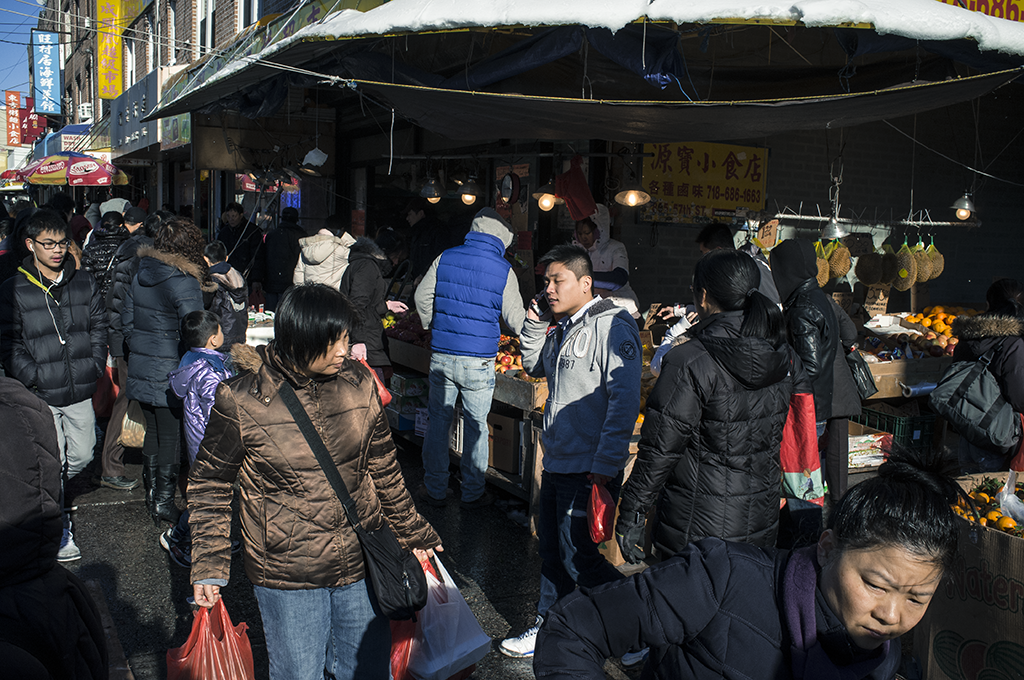
10,500,000 (born in mainland China, 2023) Overseas Chinese people or the Chinese diaspora are a diaspora people of Chinese origin who reside outside Greater China (mainland China, Hong Kong, Macau, and Taiwan). As of 2011, there were over 40.3 million overseas Chinese. As of 2023, there were 10.5 million people living outside mainland China who were born in mainland China, corresponding to 0.7 percent of China's population. Overall, China has a low percent of its population living overseas.
Terminology
**** () refers to people of Chinese citizenship residing outside of either the PRC or ROC (Taiwan). The government of China realized that the overseas Chinese could be an asset, a source of foreign investment and a bridge to overseas knowledge; thus, it began to recognize the use of the term Huaqiao.
Ching-Sue Kuik renders huáqiáo in English as "the Chinese sojourner" and writes that the term is "used to disseminate, reinforce, and perpetuate a monolithic and essentialist Chinese identity" by both the PRC and the ROC.
The modern informal internet term () refers to returned overseas Chinese and guīqiáo qiáojuàn () to their returning relatives.
() refers to people of Chinese descent or ancestry residing outside of China, regardless of citizenship. Another often-used term is or simply . It is often used by the Government of the People's Republic of China to refer to people of Chinese ethnicities who live outside the PRC, regardless of citizenship (they can become citizens of the country outside China by naturalization).
Overseas Chinese who are southerners, such as the Toisanese, Cantonese or Hokkiens refer to themselves as (Tángrén). Literally, it means Tang people, a reference to Tang dynasty China when it was ruling. This term is commonly used by the Cantonese as a colloquial reference to southern Han people and has little relevance to the ancient dynasty. For example, in the early 1850s when Chinese shops opened on Sacramento St. in San Francisco, California, United States, the Chinese emigrants, mainly from the Pearl River Delta west of Canton, called it Tang People Street () and the settlement became known as Tang People Town () or Chinatown.
The term **** () is added to the various terms for the overseas Chinese to indicate those who would be considered ethnic minorities in China. The terms **** and **** () are all in usage. The Overseas Chinese Affairs Office of the PRC does not distinguish between Han and ethnic minority populations for official policy purposes. For example, members of the Tibetan people may travel to China on passes granted to certain people of Chinese descent. Various estimates of the Chinese emigrant minority population include 3.1 million (1993), 3.4 million (2004), 5.7 million (2001, 2010), or approximately one tenth of all Chinese emigrants (2006, 2011). Cross-border ethnic groups () are not considered Chinese emigrant minorities unless they left China after the establishment of an independent state on China's border.
Some ethnic groups who have historic connections with China, such as the Hmong, may not or may identify themselves as Chinese.
History
Main article: Chinese emigration
The Chinese people have a long history of migrating overseas, as far back as the 10th century. One of the migrations dates back to the Ming dynasty when a Chinese of Iranian ancestry Zheng He (1371–1435) became the envoy of Ming empire. He sent people – many of them Cantonese and Hokkien – to explore and trade in the South China Sea and in the Indian Ocean.
Early emigration

In the mid-1800s, outbound migration from China increased as a result of the European colonial powers opening up treaty ports. The British colonization of Hong Kong further created the opportunity for Chinese labor to be exported to plantations and mines.
During the era of European colonialism, many overseas Chinese were coolie laborers. Chinese capitalists overseas often functioned as economic and political intermediaries between colonial rulers and colonial populations.
The area of Taishan, Guangdong Province was the source for many of economic migrants. In the provinces of Fujian and Guangdong in China, there was a surge in emigration as a result of the poverty and village ruin.
San Francisco and California was an early American destination in the mid-1800s because of the California Gold Rush. Many settled in San Francisco forming one of the earliest Chinatowns. For the countries in North America and Australia saw great numbers of Chinese gold diggers finding gold in the gold mining and railway construction. Widespread famine in Guangdong impelled many Cantonese to work in these countries to improve the living conditions of their relatives.
From 1853 until the end of the 19th century, about 18,000 Chinese were brought as indentured workers to the British West Indies, mainly to British Guiana (now Guyana), Trinidad and Jamaica. Their descendants today are found among the current populations of these countries, but also among the migrant communities with Anglo-Caribbean origins residing mainly in the United Kingdom, the United States and Canada.
Some overseas Chinese were sold to South America during the Punti–Hakka Clan Wars (1855–1867) in the Pearl River Delta in Guangdong.
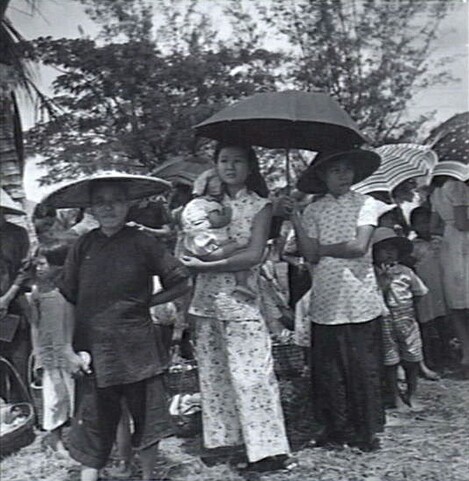
Research conducted in 2008 by German researchers who wanted to show the correlation between economic development and height, used a small dataset of 159 male labourers from Guangdong who were sent to the Dutch colony of Suriname to illustrate their point. They stated that the Chinese labourers were between 161 to 164 cm in height for males. Their study did not account for factors other than economic conditions and acknowledge the limitations of such a small sample.

The Lanfang Republic in West Kalimantan was established by overseas Chinese.
In 1909, the Qing dynasty established the first Nationality Law of China. It granted Chinese citizenship to anyone born to a Chinese parent. It permitted dual citizenship.
Republic of China (1912–1949)
In the first half of the 20th Century, war and revolution accelerated the pace of migration out of China. The Kuomintang and the Communist Party competed for political support from overseas Chinese.
The military conflicts and economic mayhem under the Beiyang and Nationalist rule pushed increasing numbers of people to migrate, mostly through the coastal regions via the ports of Fujian, Guangdong, Hainan and Shanghai. These migrations are considered to be among the largest in China's history. Many nationals of the Republic of China fled and settled down overseas mainly between 1911 and 1949 before the Nationalist government led by Kuomintang lost the mainland to Communist revolutionaries and relocated. Most of the nationalist and neutral refugees fled mainland China to North America while others fled to Southeast Asia (Singapore, Brunei, Thailand, Malaysia, Indonesia and Philippines).
After World War II
Those who fled during 1912–1949 and settled down in Singapore and Malaysia automatically gained citizenship in 1957 and 1963 as these countries gained independence. Kuomintang members who settled in Malaysia and Singapore played a major role in the establishment of the Malaysian Chinese Association and their meeting hall at Sun Yat Sen Villa. There was evidence that some intended to reclaim mainland China from the CCP by funding the Kuomintang.
After their defeat in the Chinese Civil War, parts of the Nationalist army retreated south and crossed the border into Burma as the People's Liberation Army entered Yunnan. The United States supported these Nationalist forces because the United States hoped they would harass the People's Republic of China from the southwest, thereby diverting Chinese resources from the Korean War. The Burmese government protested and international pressure increased. Beginning in 1953, several rounds of withdrawals of the Nationalist forces and their families were carried out. In 1960, joint military action by China and Burma expelled the remaining Nationalist forces from Burma, although some went on to settle in the Burma–Thailand borderlands.
During the 1950s and 1960s, the ROC tended to seek the support of overseas Chinese communities through branches of the Kuomintang based on Sun Yat-sen's use of expatriate Chinese communities to raise money for his revolution. During this period, the People's Republic of China tended to view overseas Chinese with suspicion as possible capitalist infiltrators and tended to value relationships with Southeast Asian nations as more important than gaining support of overseas Chinese, and in the Bandung declaration explicitly stated that overseas Chinese owed primary loyalty to their home nation.
From the mid-20th century onward, emigration has been directed primarily to Western countries such as the United States, Australia, Canada, Brazil, The United Kingdom, New Zealand, Argentina and the nations of Western Europe; as well as to Peru, Panama, and to a lesser extent to Mexico. Many of these emigrants who entered Western countries were themselves overseas Chinese, particularly from the 1950s to the 1980s, a period during which the PRC placed severe restrictions on the movement of its citizens.
Due to the political dynamics of the Cold War, there was relatively little migration from the People's Republic of China to southeast Asia from the 1950s until the mid-1970s.Statistics show that between 1949 and 1978, Qingtian, a county in Zhejiang known for its large diasporan communities abroad, only permitted 752 people to go abroad throughout this entire period.
In 1984, Britain agreed to transfer the sovereignty of Hong Kong to the PRC; this triggered another wave of migration to the United Kingdom (mainly England), Australia, Canada, US, South America, Europe and other parts of the world. The 1989 Tiananmen Square protests and massacre further accelerated the migration. The wave calmed after Hong Kong's transfer of sovereignty in 1997. In addition, many citizens of Hong Kong hold citizenships or have current visas in other countries so if the need arises, they can leave Hong Kong at short notice.
In recent years, the People's Republic of China has built increasingly stronger ties with African nations. In 2014, author Howard French estimated that over one million Chinese have moved in the past 20 years to Africa.
More recent Chinese presences have developed in Europe, where they number well over 1 million, and in Russia, they number over 200,000, concentrated in the Russian Far East. Russia's main Pacific port and naval base of Vladivostok, once closed to foreigners and belonged to China until the late 19th century, bristles with Chinese markets, restaurants and trade houses. A growing Chinese community in Germany consists of around 76,000 people . An estimated 15,000 to 30,000 Chinese live in Austria.
Experience
Commercial success
Main article: Bamboo network
Chinese emigrants are estimated to control US$2 trillion in liquid assets and have considerable amounts of wealth to stimulate economic power in China. The Chinese business community of Southeast Asia, known as the bamboo network, has a prominent role in the region's private sectors. In Europe, North America and Oceania, occupations are diverse and impossible to generalize; ranging from catering to significant ranks in medicine, the arts and academia.
Overseas Chinese often send remittances back home to family members to help better them financially and socioeconomically. China ranks second after India of top remittance-receiving countries in 2018 with over US$67 billion sent.
Assimilation
Overseas Chinese communities vary widely as to their degree of assimilation, their interactions with the surrounding communities (see Chinatown), and their relationship with China.
Thailand has the largest overseas Chinese community and is also the most successful case of assimilation, with many claiming Thai identity. For over 400 years, descendants of Thai Chinese have largely intermarried and assimilated with their compatriots. The present royal house of Thailand, the Chakri dynasty, was founded by King Rama I who himself was partly of Chinese ancestry. His predecessor, King Taksin of the Thonburi Kingdom, was the son of a Chinese immigrant from Guangdong Province and was born with a Chinese name. His mother, Lady Nok-iang (), was Thai (and was later awarded the noble title of Somdet Krom Phra Phithak Thephamat).
In the Philippines, the Chinese, known as the Sangley, from Fujian and Guangdong were already migrating to the islands as early as 9th century, where many have largely intermarried with both native Filipinos and Spanish Filipinos (Tornatrás). Early presence of Chinatowns in overseas communities start to appear in Spanish colonial Philippines around 16th century in the form of Parians in Manila, where Chinese merchants were allowed to reside and flourish as commercial centers, thus Binondo, a historical district of Manila, has become the world's oldest Chinatown. Under Spanish colonial policy of Christianization, assimilation and intermarriage, their colonial mixed descendants would eventually form the bulk of the middle class which would later rise to the Principalía and illustrado intelligentsia, which carried over and fueled the elite ruling classes of the American period and later independent Philippines. Chinese Filipinos play a considerable role in the economy of the Philippines and descendants of Sangley compose a considerable part of the Philippine population. Ferdinand Marcos, the former president of the Philippines was of Chinese descent, as were many others.
Myanmar shares a long border with China so ethnic minorities of both countries have cross-border settlements. These include the Kachin, Shan, Wa, and Ta'ang.
In Cambodia, between 1965 and 1993, people with Chinese names were prevented from finding governmental employment, leading to a large number of people changing their names to a local, Cambodian name. Ethnic Chinese were one of the minority groups targeted by Pol Pot's Khmer Rouge during the Cambodian genocide.
Indonesia forced Chinese people to adopt Indonesian names after the Indonesian mass killings of 1965–66.
In Vietnam, all Chinese names can be pronounced by Sino-Vietnamese readings. For example, the name of the previous paramount leader Hú Jǐntāo (胡錦濤) would be spelled as "Hồ Cẩm Đào" in Vietnamese. There are also great similarities between Vietnamese and Chinese traditions such as the use Lunar New Year, philosophy such as Confucianism, Taoism and ancestor worship; leads to some Hoa people adopt easily to Vietnamese culture, however many Hoa still prefer to maintain Chinese cultural background. The official census from 2009 accounted the Hoa population at some 823,000 individuals and ranked 6th in terms of its population size. 70% of the Hoa live in cities and towns, mostly in Ho Chi Minh city while the rests live in the southern provinces.
On the other hand, in Malaysia, Singapore, and Brunei, the ethnic Chinese have maintained a distinct communal identity.
In East Timor, a large fraction of Chinese are of Hakka descent.
In Western countries, the overseas Chinese generally use romanised versions of their Chinese names, and the use of local first names is also common.
Discrimination
Overseas Chinese have often experienced hostility and discrimination. In countries with small ethnic Chinese minorities, the economic disparity can be remarkable. For example, in 1998, ethnic Chinese made up just 1% of the population of the Philippines and 4% of the population in Indonesia, but have wide influence in the Philippine and Indonesian private economies. The book World on Fire, describing the Chinese as a "market-dominant minority", notes that "Chinese market dominance and intense resentment amongst the indigenous majority is characteristic of virtually every country in Southeast Asia except Thailand and Singapore".
This asymmetrical economic position has incited anti-Chinese sentiment among the poorer majorities. Sometimes the anti-Chinese attitudes turn violent, such as the 13 May Incident in Malaysia in 1969 and the Jakarta riots of May 1998 in Indonesia, in which more than 2,000 people died, mostly rioters burned to death in a shopping mall.
During the Indonesian killings of 1965–66, in which more than 500,000 people died, ethnic Chinese Hakkas were killed and their properties looted and burned as a result of anti-Chinese racism on the excuse that Dipa "Amat" Aidit had brought the PKI closer to China. The anti-Chinese legislation was in the Indonesian constitution until 1998.
The state of the Chinese Cambodians during the Khmer Rouge regime has been described as "the worst disaster ever to befall any ethnic Chinese community in Southeast Asia." At the beginning of the Khmer Rouge regime in 1975, there were 425,000 ethnic Chinese in Cambodia; by the end of 1979 there were just 200,000.
It is commonly held that a major point of friction is the apparent tendency of overseas Chinese to segregate themselves into a subculture. For example, the anti-Chinese Kuala Lumpur racial riots of 13 May 1969 and Jakarta riots of May 1998 were believed to have been motivated by these racially biased perceptions. This analysis has been questioned by some historians, notably Kua Kia Soong, who has put forward the controversial argument that the 13 May incident was a pre-meditated attempt by sections of the ruling Malay elite to incite racial hostility in preparation for a coup. In 2006, rioters damaged shops owned by Chinese-Tongans in Nukualofa. Chinese migrants were evacuated from the riot-torn Solomon Islands.
Ethnic politics can be found to motivate both sides of the debate. In Malaysia, many "Bumiputra" ("native sons") Malays oppose equal or meritocratic treatment towards Chinese and Indians, fearing they would dominate too many aspects of the country. The question of to what extent ethnic Malays, Chinese, or others are "native" to Malaysia is a sensitive political one. It is currently a taboo for Chinese politicians to raise the issue of Bumiputra protections in parliament, as this would be deemed ethnic incitement.
Many of the overseas Chinese emigrants who worked on railways in North America in the 19th century suffered from racial discrimination in Canada and the United States. Although discriminatory laws have been repealed or are no longer enforced today, both countries had at one time introduced statutes that barred Chinese from entering the country, for example the United States Chinese Exclusion Act of 1882 (repealed 1943) or the Canadian Chinese Immigration Act, 1923 (repealed 1947). In both the United States and Canada, further acts were required to fully remove immigration restrictions (namely United States' Immigration and Nationality Acts of 1952 and 1965, in addition to Canada's).
In Australia, Chinese were targeted by a system of discriminatory laws known as the "White Australia Policy" which was enshrined in the Immigration Restriction Act of 1901. The policy was formally abolished in 1973, and in recent years Australians of Chinese background have publicly called for an apology from the Australian Federal Government similar to that given to the 'stolen generations' of indigenous people in 2007 by the then Prime Minister Kevin Rudd.
In September 2004, the Spanish city of Elche experienced an anti-Chinese riot, where around 500 people demonstrated in the city's Carrus industrial zone chanting "Chinese out" and set fire to the warehouse of a Chinese shoe shop and a container causing losses of 800,000 euros (US$984,000). The locals reported that the Chinese caused resentment not because of their numbers (there are far more North African and Latin American immigrants), but because they felt that the Chinese economic practices threatened their age-old social customs, employment norms, and labor relations in Spain.
In South Korea, the relatively low social and economic statuses of ethnic Korean-Chinese have played a role in local hostility towards them. Such hatred had been formed since their early settlement years, where many Chinese–Koreans hailing from rural areas were accused of misbehaviour such as spitting on streets and littering. More recently, they have also been targets of hate speech for their association with violent crime, despite the Korean Justice Ministry recording a lower crime rate for Chinese in the country compared to native South Koreans in 2010.
Relationship with China

Both the People's Republic of China and the Republic of China (known more commonly as Taiwan) maintain high level relationships with the overseas Chinese populations. Both maintain cabinet level ministries to deal with overseas Chinese affairs, and many local governments within the PRC have overseas Chinese bureaus.
Before 2018, the PRC's Overseas Chinese Affairs Office (OCAO) under the State Council was responsible for liaising with overseas Chinese. In 2018, the office was merged into the United Front Work Department of the Central Committee of the Chinese Communist Party.
Throughout its existence but particularly during the general secretaryship of Xi Jinping, the Chinese Communist Party makes patriotic appeals to overseas Chinese to assist the country's political and economic needs. In a July 2022 meeting with the United Front Work Department, Xi encouraged overseas Chinese to support China's rejuvenation and stated that domestic and overseas Chinese should pool their strengths to realize the Chinese Dream. In the PRC's view, overseas Chinese are an asset to demonstrating a positive image of China internationally.
Citizenship status
The Nationality Law of the People's Republic of China, which does not recognise dual citizenship, provides for automatic loss of PRC citizenship when a former PRC citizen both settles in another country and acquires foreign citizenship. For children born overseas of a PRC citizen, whether the child receives PRC citizenship at birth depends on whether the PRC parent has settled overseas: "Any person born abroad whose parents are both Chinese nationals or one of whose parents is a Chinese national shall have Chinese nationality. But a person whose parents are both Chinese nationals and have both settled abroad, or one of whose parents is a Chinese national and has settled abroad, and who has acquired foreign nationality at birth shall not have Chinese nationality" (Article 5).
By contrast, the Nationality Law of the Republic of China, which both permits and recognises dual citizenship, considers such persons to be citizens of the ROC (if their parents have household registration in Taiwan).
Returning and re-emigration
Main article: Haigui, Qiao'xiang
In the case of Indonesia and Burma, political strife and ethnic tensions has caused a significant number of people of Chinese origins to re-emigrate back to China. In other Southeast Asian countries with large Chinese communities, such as Malaysia, the economic rise of People's Republic of China has made the PRC an attractive destination for many Malaysian Chinese to re-emigrate. As the Chinese economy opens up, Malaysian Chinese act as a bridge because many Malaysian Chinese are educated in the United States or Britain but can also understand the Chinese language and culture making it easier for potential entrepreneurial and business to be done between the people among the two countries.
Return migration often concentrated in traditional qiao'xiang (侨乡, 'overseas-Chinese hometowns'), in which counties in Guangdong, Fujian, Zhejiang, and Hainan that historically produced large numbers of emigrants. The communities of these provinces developed distinct transnational networks shaped by remittances, circular migration , and hometown associations.
After the Deng Xiaoping reforms, the attitude of the PRC toward the overseas Chinese changed dramatically. Rather than being seen with suspicion, they were seen as people who could aid PRC development via their skills and capital. During the 1980s, the PRC actively attempted to court the support of overseas Chinese by among other things, returning properties that had been confiscated after the 1949 revolution. More recently PRC policy has attempted to maintain the support of recently emigrated Chinese, who consist largely of Chinese students seeking undergraduate and graduate education in the West. Many of the Chinese diaspora are now investing in People's Republic of China providing financial resources, social and cultural networks, contacts and opportunities.
The Chinese government estimates that of the 1,200,000 Chinese people who have gone overseas to study in the thirty years since the reform and opening up beginning in 1978; three-quarters of those who left have not returned to China.
Beijing is attracting overseas-trained academics back home, in an attempt to internationalise its universities. However, some professors educated to the PhD level in the West have reported feeling "marginalised" when they return to China due in large part to the country's "lack of international academic peer review and tenure track mechanisms".
Language
Main article: Language and overseas Chinese communities
The usage of Chinese by the overseas Chinese has been determined by a large number of factors, including their ancestry, their ancestors' languages, assimilation through generational changes, and official policies of their country of residence. The general trend is that more established Chinese populations in the Western world and in many regions of Asia have Cantonese as either the dominant variety or as a common community vernacular, while Standard Chinese is much more prevalent among new arrivals, making it increasingly common in many Chinatowns.
Country statistics

| Country | Chinese country or region | Number | Percentage of the population of a country or region | Year | |||||||||
|---|---|---|---|---|---|---|---|---|---|---|---|---|---|
| **Africa** | |||||||||||||
| Algeria | Chinese people in Algeria | 3,500 | title=阿尔及利亚(2023年版) | language=zh | trans-title=Algeria (2023 edition) | url=https://casetf-pro-obs-4.obs.cn-north-4.myhuaweicloud.com/huaw/d9aedc33338e65f49001fee841b96fce.pdf | archive-url=https://web.archive.org/web/20250610062554/https://casetf-pro-obs-4.obs.cn-north-4.myhuaweicloud.com/huaw/d9aedc33338e65f49001fee841b96fce.pdf | archive-date=2025-06-10}} | |||||
| Angola | Chinese people in Angola | 30,000 | url=https://i.ifeng.com/c/8c62xIyR23T | title=安哥拉的华人安保:有公司配备安保超100人,24小时持枪值守,从未发生抢劫事件_凤凰网 }} | |||||||||
| Benin | Chinese people in Benin | 2,000 | title=贝 宁(2020年版) | language=zh | trans-title=Benin (2020 edition) | url=https://www.mofcom.gov.cn/dl/gbdqzn/upload/beining.pdf | archive-url=https://web.archive.org/web/20211117071450/http://www.mofcom.gov.cn/dl/gbdqzn/upload/beining.pdf | archive-date=2021-11-17}} | |||||
| Botswana | Chinese people in Botswana | 15,000 | url=https://www.melbourneasiareview.edu.au/chinese-employers-in-botswana-and-their-impact-on-local-workers/ | title=Chinese employers in Botswana and their impact on local workers | journal=Melbourne Asia Review | volume=2025 | issue=22 | last1=Chen | first1=Dr Liang | date=2 June 2025 }} | |||
| Burkina Faso | Chinese people in Burkina Faso | 500 | title=对外投资合作国别(地区)指南 - 布基纳法索(2021年版) | language=zh | trans-title=Country (Region) Guide for Outward Investment Cooperation - Burkina Faso (2021 Edition) | url=https://www.mofcom.gov.cn/dl/gbdqzn/upload/bujinafasuo.pdf | archive-url=https://web.archive.org/web/20220505101219/http://www.mofcom.gov.cn/dl/gbdqzn/upload/bujinafasuo.pdf | archive-date=2022-05-05}} | |||||
| Burundi | Chinese people in Burundi | 400 | title=对外投资合作国别(地区)指南 - 布隆迪(2020年版) | language=zh | trans-title=Country (Region) Guide for Outward Investment Cooperation - Burundi (2020 Edition) | url=https://www.mofcom.gov.cn/dl/gbdqzn/upload/bulongdi.pdf | archive-url=https://web.archive.org/web/20211117071932/http://www.mofcom.gov.cn/dl/gbdqzn/upload/bulongdi.pdf | archive-date=2021-11-17}} | |||||
| Cameroon | Chinese people in Cameroon | 6,000 | title=对外投资合作国别(地区)指南 - 喀麦隆 (2020年版) | language=zh | trans-title=Country (Region) Guide for Outward Investment Cooperation - Cameroon (2020 Edition) | url=https://www.mofcom.gov.cn/dl/gbdqzn/upload/kamailong.pdf | archive-url=https://web.archive.org/web/20211117071803/http://www.mofcom.gov.cn/dl/gbdqzn/upload/kamailong.pdf | archive-date=2021-11-17}} | |||||
| Cape Verde | Chinese people in Cape Verde | 3,000 | 2020 | ||||||||||
| Central African Republic | Chinese people in the Central African Republic | 300 | 2020 | ||||||||||
| Chad | Chinese people in Chad | 500 | 2024 | ||||||||||
| Comoros | Chinese people in Comoros | 150 | 2023 | ||||||||||
| Democratic Republic of Congo | Chinese people in the DRC | 21,000 | url=https://www.backchina.com/news/2021/12/12/775219.html | title=在刚果(金)的华人:有人被枪指头 有人月赚三万 }} | |||||||||
| Djibouti | Chinese people in Djibouti | 400 | 2021 | ||||||||||
| Egypt | Chinese people in Egypt | 20,000 | title=埃 及(2020年版) | language=zh | trans-title=Egypt (2020 edition) | url=https://www.mofcom.gov.cn/dl/gbdqzn/upload/aiji.pdf | archive-url=https://web.archive.org/web/20210505072711/http://www.mofcom.gov.cn/dl/gbdqzn/upload/aiji.pdf | archive-date=2021-05-05}} | |||||
| Equatorial Guinea | Chinese people in Equatorial Guinea | 5,000 | 2021 | ||||||||||
| Eritrea | Chinese people in Eritrea | 200 | 2020 | ||||||||||
| Eswatini | Chinese people in Eswatini | 500 | 2018 | ||||||||||
| Ethiopia | Chinese Ethiopians | 30,000 | url=https://theafricancriminologyjournal.wordpress.com/2022/01/24/china-sits-on-the-sidelines-of-peace-efforts-despite-high-stakes-in-ethiopia/ | title=China Sits on the Sidelines of Peace Efforts Despite High Stakes in Ethiopia | date=24 January 2022 }} | ||||||||
| Gabon | Chinese people in Gabon | 3,000 | 2021 | ||||||||||
| Gambia | Chinese people in the Gambia | 300 | 2019 | ||||||||||
| Ghana | Sino-Ghanéens | 30,000 – 50,000 | title=对外投资合作国别(地区)指南 - 加 纳 (2020年版) | language=zh | trans-title=Country (Region) Guide for Outward Investment Cooperation - Ghana (2020 Edition) | url=https://www.mofcom.gov.cn/dl/gbdqzn/upload/jiana.pdf | archive-url=https://web.archive.org/web/20211117071940/http://www.mofcom.gov.cn/dl/gbdqzn/upload/jiana.pdf | archive-date=2021-11-17}} | |||||
| Guinea | Chinese people in Guinea | 20,000 | url=https://www.mofcom.gov.cn/dl/gbdqzn/upload/jineiya.pdf | title=对外投资合作国别(地区)指南 几内亚(2024年版) | language=zh | trans-title=Outbound Investment Cooperation Country (Region) Guide Guinea (2024 Edition) | website=www.mofcom.gov.cn}} | ||||||
| Guinea-Bissau | Chinese people in Guinea-Bissau | 200 | 2020 | ||||||||||
| Ivory Coast | Chinese people in Ivory Coast | 4,500 | url=https://www.fmprc.gov.cn/web/gjhdq_676201/gj_676203/fz_677316/1206_677922/1206x2_677942/201704/t20170424_9313947.shtml | title=驻科特迪瓦大使唐卫斌接受科《南北日报》专访_中华人民共和国外交部 | website=www.fmprc.gov.cn}} | ||||||||
| Kenya | Chinese Kenyans | 50,000 | url=https://www.chinadaily.com.cn/a/202408/08/WS66b42551a3104e74fddb9034.html | title=Kenya, China to further strengthen cooperation }} | |||||||||
| Lesotho | Chinese people in Lesotho | 2,900 | 2016 | ||||||||||
| Liberia | Chinese people in Liberia | 1,000 | url=https://lr.mofcom.gov.cn/lblygk/art/2024/art_6545d24b0ec44d92b48cc3665f3b8577.html | title=2024年利比里亚概况 }} | |||||||||
| Libya | Chinese people in Libya | 300 | title=508 Chinese evacuated from Libya | url=http://news.xinhuanet.com/english/africa/2014-08/02/c_126824505.htm | archive-url=https://web.archive.org/web/20140802090026/http://news.xinhuanet.com/english/africa/2014-08/02/c_126824505.htm | url-status=dead | archive-date=2 August 2014 | agency=Xinhua News Agency | date=2 August 2014}} | ||||
| Madagascar | Chinese people in Madagascar | 50,000 | title=对外投资合作国别(地区)指南 - 马达加斯加(2020年版) | language=zh | trans-title=Country (Region) Guide for Outward Investment Cooperation - Madagascar (2020 Edition) | url=https://www.mofcom.gov.cn/dl/gbdqzn/upload/madajiasijia.pdf | archive-url=https://web.archive.org/web/20210129133228/http://www.mofcom.gov.cn/dl/gbdqzn/upload/madajiasijia.pdf | archive-date=2021-01-29}} | |||||
| Malawi | Chinese people in Malawi | 2,000 | 2018 | ||||||||||
| Mali | Chinese people in Mali | 3,000 | title=China–Mali relationship: Finding mutual benefit between unequal partners | journal=Centre for Chinese Studies Policy Briefing | date=January 2014 | url=http://www.ccs.org.za/wp-content/uploads/2014/02/CCS_Policy_Briefing_China_Mali_Relations_Kane_Esterhuyse_2013_HE_MC1.pdf | access-date=18 December 2014 | archive-url=https://web.archive.org/web/20140626022734/http://www.ccs.org.za/wp-content/uploads/2014/02/CCS_Policy_Briefing_China_Mali_Relations_Kane_Esterhuyse_2013_HE_MC1.pdf | archive-date=26 June 2014 | url-status=dead}} | |||
| Mauritania | Chinese people in Mauritania | 500 | 2021 | ||||||||||
| Mauritius | Sino-Mauritians | 20,000 | 2024 | ||||||||||
| Morocco | Chinese people in Morocco | 2,000 | title=摩洛哥(2020年版) | language=zh | trans-title=Morocco (2020 edition) | url=https://www.mofcom.gov.cn/dl/gbdqzn/upload/moluoge.pdf | archive-url=https://web.archive.org/web/20211117071432/http://www.mofcom.gov.cn/dl/gbdqzn/upload/moluoge.pdf | archive-date=2021-11-17}} | |||||
| Mozambique | Ethnic Chinese in Mozambique | 3,000 | url=https://fdi.mofcom.gov.cn/resource/pdf/2022/04/07/1ddac8146b7c4241b2498c80654b6ef0.pdf | title=莫桑比克 2022年版}} | |||||||||
| Namibia | Chinese people in Namibia | 3,000 | url=https://www.migrationpolicy.org/article/migration-trade-china-africa-traders-face-precarity | title=As Migration and Trade Increase between China and Africa, Traders at Both Ends Often Face Precarity | date=20 July 2021}} | ||||||||
| Niger | Chinese people in Niger | 500 | 2022 | ||||||||||
| Nigeria | Chinese people in Nigeria | 100,000 | url=https://www.mofcom.gov.cn/dl/gbdqzn/upload/niriliya.pdf | title=对外投资合作国别(地区)指南 尼日利亚 (2024年版) | language=zh | trans-title=Country (Region) Guide for Outward Investment Cooperation Nigeria (2024 Edition) | website=www.mofcom.gov.cn}} | ||||||
| Republic of Congo | Chinese Congolese | 4,500 | 2024 | ||||||||||
| Réunion | Chinois Réunionnais | 50,000 | 2023 | ||||||||||
| Rwanda | Chinese people in Rwanda | 3,000 | 2023 | ||||||||||
| São Tomé and Príncipe | Chinese people in São Tomé and Príncipe | 200 | 2021 | ||||||||||
| Senegal | Chinese Senegalese | 5,000 | 2024 | ||||||||||
| Seychelles | Sino-Seychellois | 1,000 | 2023 | ||||||||||
| Sierra Leone | Chinese people in Sierra Leone | 1,500 | url=https://www.mofcom.gov.cn/dl/gbdqzn/upload/sailaliang.pdf | title=塞拉利昂(2024年版) | language=zh | trans-title=Sierra Leone (2024 edition) | website=www.mofcom.gov.cn}} | ||||||
| Somalia | Chinese people in Somalia | 100 | 2020 | ||||||||||
| South Africa | Chinese South Africans | 300,000 – 400,000 | last1=Liao | first1=Wenhui | last2=He | first2=Qicai | title=Tenth World Conference of Overseas Chinese: Annual International Symposium on Regional Academic Activities Report (translated) | journal=The International Journal of Diasporic Chinese Studies | date=2015 | volume=7 | issue=2 | pages=85–89}} | |
| South Sudan | Chinese people in South Sudan | 2,000 | 2023 | ||||||||||
| Sudan | Chinese people in Sudan | 1,500 | url=https://www.arabnews.com/node/2293601/middle-east | title=China sends navy to evacuate citizens from Sudan: defense ministry | date=27 April 2023}} | ||||||||
| Tanzania | Chinese Tanzanians | 30,000 | url=https://www.mofcom.gov.cn/dl/gbdqzn/upload/tansangniya.pdf | title=对外投资合作国别(地区)指南:坦桑尼亚(2024年版)}} | |||||||||
| Togo | Chinese people in Togo | 850 | 2022 | ||||||||||
| Tunisia | Chinese people in Tunisia | 2,000 | 2024 | ||||||||||
| Uganda | Chinese Ugandans | 20,000 | title=乌干达(2020年版) | language=zh | trans-title=Uganda (2020 edition) | url=https://www.mofcom.gov.cn/dl/gbdqzn/upload/wuganda.pdf | archive-url=https://web.archive.org/web/20211117071647/http://www.mofcom.gov.cn/dl/gbdqzn/upload/wuganda.pdf | archive-date=2021-11-17}} | |||||
| Zambia | Chinese Zambians | 13,000 | title=Zambia has 13,000 Chinese | url=https://www.daily-mail.co.zm/?p=23914 | publisher=Zambia Daily Mail News | date=21 March 2015 | access-date=21 April 2015 | archive-date=23 September 2021 | archive-url=https://web.archive.org/web/20210923201345/https://www.daily-mail.co.zm/zambia-13000-chinese/ | url-status=dead}} | |||
| Zimbabwe | Chinese people in Zimbabwe | 10,000 | last1=Lo | first1=Kinling | title=How Chinese living in Zimbabwe reacted to Mugabe's downfall: 'it's the most hopeful moment in 20 years' | url=https://www.scmp.com/news/china/diplomacy-defence/article/2120442/how-chinese-living-zimbabwe-reacted-mugabes-downfall | work=South China Morning Post | date=17 November 2017 | access-date=22 November 2017 | archive-date=3 October 2021 | archive-url=https://web.archive.org/web/20211003090314/https://www.scmp.com/news/china/diplomacy-defence/article/2120442/how-chinese-living-in-zimbabwe-reacted-mugabes-downfall | url-status=live}} | |
| **Asia**/**Middle East** | **29,000,000** | ||||||||||||
| Thailand | Thai Chinese, Peranakan | 9,300,000 | 14% | first=Barbara A. | last= West | title = Encyclopedia of the Peoples of Asia and Oceania | publisher=Facts on File | year=2009 | page=794 | isbn=978-1438119137}} | |||
| Malaysia | Malaysian Chinese, Peranakan | 7,527,793 | 23.2% | date=Dec 2022 | title=Key Findings of Population and Housing Census of Malaysia 2020: Urban and Rural | journal=Department of Statistics Malaysia | pages=273–355 | isbn=978-967-253-683-3}} | |||||
| Indonesia | Chinese Indonesian (Chindo), Peranakan | 2,832,510 | 1.20% (Official) | publisher=Badan Pusat Statistik | title=Kewarganegaraan, Suku Bangsa, Agama dan Bahasa Sehari-hari Penduduk Indonesia Hasil Sensus Penduduk 2010 | year=2011 | isbn=9789790644175 | url = http://sp2010.bps.go.id/files/ebook/kewarganegaraan%20penduduk%20indonesia/index.html | access-date=6 December 2018 | archive-url = https://web.archive.org/web/20170710134114/http://sp2010.bps.go.id/files/ebook/kewarganegaraan%20penduduk%20indonesia/index.html | archive-date=10 July 2017 | url-status=dead}} | |
| Singapore | Chinese Singaporean, Peranakan | ||||||||||||
| Chinese nationals in Singapore | 2,675,521 (Chinese Singaporeans) | ||||||||||||
| 514,110 (Chinese nationals) | 76% (Official) | ||||||||||||
| No percentage available | url = http://www.nptd.gov.sg/Portals/0/Homepage/Highlights/population-in-brief-2015.pdf | title=Population in Brief 2015 | work=Singapore Government | date=September 2015 | access-date=14 February 2016 | url-status=dead | archive-url=https://web.archive.org/web/20160216110141/http://www.nptd.gov.sg/Portals/0/Homepage/Highlights/population-in-brief-2015.pdf | archive-date=16 February 2016}} | |||||
| 2020 | |||||||||||||
| Myanmar | Chinese people in Myanmar, Panthay | 1,725,794 | 3% | url=https://www.cia.gov/the-world-factbook/countries/burma/ | work=The World Factbook | publisher=Cia.gov | title=Burma | access-date=21 February 2021 | archive-date=10 February 2021 | archive-url=https://web.archive.org/web/20210210200835/https://www.cia.gov/the-world-factbook/countries/burma/ | url-status=live }} | ||
| Philippines | Chinese Filipino, Tornatras, Sangley | 1,146,250–1,400,000 | 2% | 2013 | |||||||||
| South Korea | Chinese in South Korea | 1,070,566 | 2% | url=https://www.yna.co.kr/view/AKR20190527147000371 | title=국내 체류 외국인 236만명…전년比 9% 증가 | work=Yonhap News | date=28 May 2019 | access-date=1 February 2020 | archive-date=27 September 2021 | archive-url=https://web.archive.org/web/20210927115241/https://www.yna.co.kr/view/AKR20190527147000371 | url-status=live | author1=김종량 }} | |
| Japan | Chinese in Japan | 1,000,000 | title=日本人の友だちがいなくても困らない 日本のなかの中国人社会 日経BOOKプラス | url=https://bookplus.nikkei.com/atcl/column/101000304/121800016/ | access-date=2025-08-05 | website=bookplus.nikkei.com | date=26 December 2024 }} | ||||||
| Vietnam | Hoa people | 749,466 | url=https://www.gso.gov.vn/wp-content/uploads/2019/12/Ket-qua-toan-bo-Tong-dieu-tra-dan-so-va-nha-o-2019.pdf | title=Completed results of the 2019 Viet Nam population and housing census | author=General Statistics Office of Vietnam | at=PDF frame 44/842 (within multipaged "43") Table 2 row "Hoa" | language=vi | access-date=8 April 2023 | archive-url=https://web.archive.org/web/20230326030528/https://www.gso.gov.vn/wp-content/uploads/2019/12/Ket-qua-toan-bo-Tong-dieu-tra-dan-so-va-nha-o-2019.pdf | archive-date=2023-03-26 | url-status=live }} (description page: [Completed results of the 2019 Viet Nam population and housing census](https://www.gso.gov.vn/en/data-and-statistics/2020/11/completed-results-of-the-2019-viet-nam-population-and-housing-census/) ) | ||
| Cambodia | Chinese Cambodian | 343,855 | 2% | url=https://www.phnompenhpost.com/post-plus/chinese-new-year-family-food-and-prosperity-year-ahead | title=Chinese New Year: family, food and prosperity for the year ahead | first=Moeun | last=Nhean | website=www.phnompenhpost.com | access-date=29 March 2020 | archive-date=4 October 2021 | archive-url=https://web.archive.org/web/20211004150508/https://www.phnompenhpost.com/post-plus/chinese-new-year-family-food-and-prosperity-year-ahead | url-status=live}} | |
| Laos | Laotian Chinese | 185,765 | 1% | title=The World Factbook | url=https://www.cia.gov/the-world-factbook/countries/laos/ | access-date=18 March 2015 | website=Cia.gov | archive-date=7 March 2021 | archive-url=https://web.archive.org/web/20210307193820/https://www.cia.gov/the-world-factbook/countries/laos/ | url-status=live}} | |||
| United Arab Emirates | Chinese people in the United Arab Emirates | 180,000 | 2% | url=http://www.timeoutdubai.com/community/features/3683-chinese-expats-in-dubai | title=Chinese expats in Dubai | newspaper=Time Out Dubai | date=3 August 2008 | access-date=18 March 2015 | archive-date=21 June 2017 | archive-url=https://web.archive.org/web/20170621163925/http://www.timeoutdubai.com/community/features/3683-chinese-expats-in-dubai | url-status=live}} | ||
| Saudi Arabia | 105,000 | url=https://joshuaproject.net/people_groups/12051/SA | title=Han Chinese, Mandarin in Saudi Arabia | access-date=19 June 2022 | archive-date=19 June 2022 | archive-url=https://web.archive.org/web/20220619163132/https://joshuaproject.net/people_groups/12051/SA | url-status=live }} | ||||||
| Pakistan | Chinese people in Pakistan | 60,000 | url=https://www.dawn.com/news/1384511 | title=Chinese influence outpaces influx | work=Dawn | access-date=18 February 2018 | date=22 January 2018 | archive-date=27 September 2021 | archive-url=https://web.archive.org/web/20210927115233/https://www.dawn.com/news/1384511 | url-status=live}} | |||
| Brunei | Ethnic Chinese in Brunei | 42,100 | 10% | url=http://depd.gov.bn/Theme/Home.aspx | title=Economic Planning And Development, Prime Minister's Office | publisher=Prime Minister's Office, Brunei Darussalam | year=2015 | access-date=18 June 2017 | archive-date=19 September 2017 | archive-url=https://web.archive.org/web/20170919234612/http://depd.gov.bn/Theme/Home.aspx | url-status=dead}} | ||
| Israel | Chinese people in Israel | 10,000 | title=Appeal to international organisations – Stop the China–Israel migrant worker scam! | publisher=Kav La'Oved | date=21 December 2001 | url=http://www.labournet.net/world/0112/israel6.html | access-date=3 September 2006 | archive-date=14 February 2021 | archive-url=https://web.archive.org/web/20210214021715/http://www.labournet.net/world/0112/israel6.html | url-status=live}} | |||
| North Korea | Chinese in North Korea | 10,000 | url=http://english.chosun.com/site/data/html_dir/2009/10/10/2009101000229.html | date=10 October 2009 | access-date=15 October 2009 | periodical=Chosun Ilbo | title=Chinese in N. Korea 'Face Repression' | archive-date=14 October 2009 | archive-url=https://web.archive.org/web/20091014130522/http://english.chosun.com/site/data/html_dir/2009/10/10/2009101000229.html | url-status=live}} | |||
| India | Chinese people in India | 9,000–*85,000 (including Tibetan)* | url=http://www.ocac.gov.tw/english/public/public.asp?selno=1163&no=1163&level=B | archive-url=https://web.archive.org/web/20110104195124/http://www.ocac.gov.tw/english/public/public.asp?selno=1163&no=1163&level=B | archive-date=4 January 2011 | title=僑委會全球資訊網}} | |||||||
| Mongolia | Ethnic Chinese in Mongolia | 8,688 | 2010 | ||||||||||
| Bangladesh | Chinese people in Bangladesh | 98,000 | |||||||||||
| Qatar | 6,000 | 2014 | |||||||||||
| East Timor | Chinese people in East Timor | 4,000–*20,000 (historically)* | 2021 | ||||||||||
| Turkmenistan | 3,700 | ||||||||||||
| Sri Lanka | Chinese people in Sri Lanka | 3,500 | |||||||||||
| Kazakhstan | Chinese in Kazakhstan | 3,424 | url=http://www.xj.xinhuanet.com/2009-04/01/content_16127856.htm | date=1 April 2009 | access-date=17 April 2009 | author=馬敏/Ma Min | title=新疆《哈薩克斯坦華僑報》通過哈方註冊 4月底創刊/Xinjiang 'Kazakhstan Overseas Chinese Newspaper' Passes Kazakhstan Registration; To Begin Publishing at Month's end | periodical=Xinhua News | url-status=dead | archive-url=https://web.archive.org/web/20110720032152/http://www.xj.xinhuanet.com/2009-04/01/content_16127856.htm | archive-date=20 July 2011}} | ||
| Iran | Chinese people in Iran | 3,000 | |||||||||||
| Kyrgyzstan | Chinese people in Kyrgyzstan | 1,813 | title=Population and Housing Census 2009. Chapter 3.1. Resident population by nationality | place=Bishkek | publisher=National Committee on Statistics | date=2010 | url=https://www.stat.gov.kg/media/files/9cd9d7ee-78f0-413e-885d-80f914049ebf.pdf | archive-url=https://web.archive.org/web/20161113180324/http://www.stat.kg/media/files/9cd9d7ee-78f0-413e-885d-80f914049ebf.pdf | archive-date=2016-11-13 | url-status=live | access-date=2021-12-14 | language=ru }} | |
| Uzbekistan | 1,400 | ||||||||||||
| Nepal | 1,344 | 2001 | |||||||||||
| **Europe** | **1,670,000** | ||||||||||||
| France | Chinese diaspora in France | 800,000-1,200,000 (by ancestry) (116,000 Chinese nationals) | 1% | 2025 | |||||||||
| United Kingdom | British Chinese | 488,847 | 2021 | ||||||||||
| Italy | Chinese people in Italy | 308,984 | 2024 | ||||||||||
| Spain | Chinese people in Spain | 223,999 | url=https://www.statista.com/statistics/445784/foreign-population-in-spain-by-nationality/ | title=Spain: foreign population by nationality 2022 | website=Statista | access-date=13 May 2021 | archive-date=20 October 2021 | archive-url=https://web.archive.org/web/20211020192930/https://www.statista.com/statistics/445784/foreign-population-in-spain-by-nationality/ | url-status=live}} | ||||
| Germany | Chinese people in Germany | 163,000 | date=2 May 2024 | title=Ausländische Bevölkerung nach Geschlecht und ausgewählten Staatsangehörigkeiten | url=https://www.destatis.de/DE/Themen/Gesellschaft-Umwelt/Bevoelkerung/Migration-Integration/Tabellen/auslaendische-bevoelkerung-geschlecht.html | access-date=22 February 2025 | website=Federal Statistical Office of Germany}} | ||||||
| Netherlands | Chinese people in the Netherlands | 84,453 | 2022 | ||||||||||
| Sweden | Chinese people in Sweden | 41,777 | url=https://www.statistikdatabasen.scb.se/pxweb/sv/ssd/START__BE__BE0101__BE0101E/FodelselandArK/table/tableViewLayout1/ | title=Utrikes födda efter födelseland – Hong Kong + China + Taiwan | publisher=SCB Statistikdatabasen | access-date=19 Apr 2025 | archive-date=19 Apr 2025 | archive-url=https://web.archive.org/web/20250419192849/https://www.statistikdatabasen.scb.se/pxweb/sv/ssd/START__BE__BE0101__BE0101E/FodelselandArK/ | url-status=live}} | ||||
| Portugal | Chinese people in Portugal | 27,873 | 2023 | ||||||||||
| Switzerland | 19,712 | url=https://www.sem.admin.ch/sem/de/home/publiservice/statistik/auslaenderstatistik/archiv/2019/06.html | title=Ausländerstatistik Juni 2019 | website=sem.admin.ch | access-date=14 August 2019 | archive-date=27 September 2021 | archive-url=https://web.archive.org/web/20210927145018/https://www.sem.admin.ch/sem/de/home/publiservice/statistik/auslaenderstatistik/archiv/2019/06.html | url-status=live}} | |||||
| Russia | Chinese people in Russia | 19,644 | 2021 | ||||||||||
| Ireland | Chinese people in Ireland | 19,447 | 2016 | ||||||||||
| Hungary | 18,851 | 2018 | |||||||||||
| Austria | 16,331 | 2015 | |||||||||||
| Turkey | Chinese people in Turkey, Uyghurs in Turkey | 15,107–*60,000 (including Uyghurs)* | 2024 | ||||||||||
| Denmark | Chinese people in Denmark | 15,103 | 2020 | ||||||||||
| Belgium | Chinese people in Belgium | 14,490 | 2024 | ||||||||||
| Norway | Chinese people in Norway | 13,350 | 2020 | ||||||||||
| Finland | 17,011 | 2023 | |||||||||||
| Poland | Chinese people in Poland | 8,656 | 2019 | ||||||||||
| Czech Republic | Chinese people in the Czech Republic | 7,485 | 2018 | ||||||||||
| Romania | Chinese of Romania | 5,000 | 2017 | ||||||||||
| Luxembourg | 4,000 | url=https://statistiques.public.lu/stat/TableViewer/tableViewHTML.aspx?ReportId=12859&IF_Language=eng&MainTheme=2&FldrName=1 | url-status=dead | title=Population by nationalities in detail 2011–2020 | access-date=14 April 2020 | archive-url=https://web.archive.org/web/20200425100607/https://statistiques.public.lu/stat/TableViewer/tableViewHTML.aspx?ReportId=12859&IF_Language=eng&MainTheme=2&FldrName=1 | archive-date=25 April 2020}} | ||||||
| Slovakia | 2,346 | 2016 | |||||||||||
| Ukraine | 2,213 | 2001 | |||||||||||
| Greece | Chinese people in Greece | 20,000-25,000 | 2024 | ||||||||||
| Serbia | Chinese people in Serbia | 14,500 | 2023 | ||||||||||
| Cyprus | 1,300 | ||||||||||||
| Slovenia | 1,285 | ||||||||||||
| Bulgaria | Chinese people in Bulgaria | 1,236 | 2015 | ||||||||||
| Malta | 1,090 | 2017 | |||||||||||
| Iceland | 686 | 2019 | |||||||||||
| Croatia | 500 | ||||||||||||
| Albania | 200 | ||||||||||||
| Latvia | 128 | 2019 | |||||||||||
| Estonia | 104 | author= Statistikaamet | date= 31 December 2011 | title= Population by Ethnic Nationality, Sex and Place of Residence | url= http://pub.stat.ee/px-web.2001/Dialog/varval.asp?ma=PC0428&ti=POPULATION+BY+ETHNIC+NATIONALITY%2C+SEX+AND+PLACE+OF+RESIDENCE%2C+31+DECEMBER+2011&path=..%2FI_Databas%2FPopulation_census%2FPHC2011%2F01Demographic_and_ethno_cultural_characteristics%2F04Ethnic_nationality_Languages_Dialects%2F&lang=1 | publisher= Statistikaamet | access-date= 18 June 2017 | archive-date= 18 October 2017 | archive-url= https://web.archive.org/web/20171018013030/http://pub.stat.ee/px-web.2001/Dialog/varval.asp?ma=PC0428&ti=POPULATION+BY+ETHNIC+NATIONALITY%2C+SEX+AND+PLACE+OF+RESIDENCE%2C+31+DECEMBER+2011&path=..%2FI_Databas%2FPopulation_census%2FPHC2011%2F01Demographic_and_ethno_cultural_characteristics%2F04Ethnic_nationality_Languages_Dialects%2F&lang=1 | url-status= live }} | |||
| Lithuania | 97 | 2021 | |||||||||||
| **Americas** | **8,215,000** | ||||||||||||
| United States | Chinese American, American-born Chinese | 5,457,033 | 1–2% | title=US Census Data | url=https://data.census.gov/table/ACSDT1Y2023.B02018 | access-date=2024-09-21 | publisher=U.S. Census Bureau}} | ||||||
| Canada | Chinese Canadian, Canadian-born Chinese | 1,715,770 | 4–5% | 2021 | |||||||||
| Brazil | Chinese Brazilian | 250,000 | 2017 | ||||||||||
| Argentina | Chinese people in Argentina | 120,000–200,000 | url=https://www.clarin.com/sociedad/comunidad-china-duplico-ultimos-anos_0_Syfgy52TDQe.html | title=La comunidad china en el país se duplicó en los últimos 5 años | date=27 September 2010 | website=Clarin | access-date=26 April 2021 | archive-date=3 August 2018 | archive-url=https://web.archive.org/web/20180803014649/https://www.clarin.com/sociedad/comunidad-china-duplico-ultimos-anos_0_Syfgy52TDQe.html | url-status=live}} | |||
| Panama | Chinese people in Panama | 80,000 | 2% | url=https://minorityrights.org/minorities/chinese-panamanians/ | title=Chinese Panamanians | website=Minority Rights Group | access-date=29 July 2020 | archive-date=1 October 2021 | archive-url=https://web.archive.org/web/20211001173513/https://minorityrights.org/minorities/chinese-panamanians/ | url-status=live}} | |||
| Mexico | Chinese immigration to Mexico | 24,489 | 2019 | ||||||||||
| Peru | Chinese-Peruvian | **14,223** | 3–10% | 2015 | |||||||||
| Chile | Chinese people in Chile | 17,021 | 2017 | ||||||||||
| Venezuela | Chinese Venezuelans | 15,358 | 2011 | ||||||||||
| Dominican Republic | Ethnic Chinese in the Dominican Republic | 15,000 | 2017 | ||||||||||
| Nicaragua | Chinese people in Nicaragua | 15,000 | |||||||||||
| French Guiana | Chinese people in French Guiana | 10,000 | |||||||||||
| Costa Rica | Chinese people in Costa Rica | 9,170 | 2011 | ||||||||||
| Suriname | Chinese-Surinamese | 7,885 | 1–2% | 2012 | |||||||||
| Jamaica | Chinese Jamaicans | 50,228 | 2011 | ||||||||||
| Trinidad and Tobago | Chinese Trinidadian and Tobagonian | 3,984 | 2011 | ||||||||||
| Guyana | Chinese Guyanese | 2,377 | 2012 | ||||||||||
| Colombia | 2,176 | 2017 | |||||||||||
| Belize | Ethnic Chinese in Belize | 1,716 | 2000 | ||||||||||
| Cuba | Chinese Cuban | 1,300 | 2008 | ||||||||||
| Bahamas | 800 | ||||||||||||
| Haiti | Chinese Haitians | 230 | 2010 | ||||||||||
| Barbados | 100 | ||||||||||||
| Saint Lucia | 100 | ||||||||||||
| **Oceania** | **1,500,000** | ||||||||||||
| Australia | Chinese Australian | 1,390,639 | 6% | url=https://www.abs.gov.au/census/find-census-data/quickstats/2021/AUS | title=2021 Australian Census – Quickstats – Australia | publisher=Australian Bureau of Statistics | access-date=28 June 2022 | archive-date=29 March 2023 | archive-url=https://web.archive.org/web/20230329231159/https://www.abs.gov.au/census/find-census-data/quickstats/2021/AUS | url-status=live }} | |||
| New Zealand | Chinese New Zealander | 279,039 | 5% | 2023 | |||||||||
| Papua New Guinea | Chinese people in Papua New Guinea | 20,000 | 2008 | ||||||||||
| Fiji | Chinese in Fiji | 8,000 | 2012 | ||||||||||
| Tonga | Chinese in Tonga | 3,000 | 2001 | ||||||||||
| Palau | Chinese in Palau | 1,030 | 2012 | ||||||||||
| Samoa | Chinese in Samoa | 620 | 2015 | ||||||||||
| Micronesia | 500 | ||||||||||||
| Nauru | Chinese in Nauru | 151 | 1–2% | 2011 | |||||||||
| Marshall Islands | 100 |
Notes
--
References
Bibliography
References
- Zhuang, Guotu. (2021). "The Overseas Chinese: A Long History". UNESDOC.
- Suryadinata, Leo. (2017). "Blurring the Distinction between Huaqiao and Huaren: China's Changing Policy towards the Chinese Overseas". [[ISEAS–Yusof Ishak Institute]].
- "Chinese Diaspora".
- (Dec 2022). "Key Findings of Population and Housing Census of Malaysia 2020: Urban and Rural". [[Department of Statistics Malaysia]].
- "US Census Data". U.S. Census Bureau.
- "Census 2020".
- (2022-12-15). "Profile table, Census Profile, 2021 Census of Population – Canada –Visible minority".
- "2021 Australia, Census All persons QuickStats {{!}} Australian Bureau of Statistics".
- (January 21, 2013). "Senate declares Chinese New Year as special working holiday". PRIB, Office of the Senate Secretary, Senate of the Philippines.
- (2018). "Chinese Minorities at Home and Abroad".
- "The Chinese Diaspora: Historical Legacies and Contemporary Trends". U.S. Census Bureau.
- (2016). "The Chinese diaspora: The current distribution of the overseas Chinese population". Chinese Journal of Sociology.
- "Living outside China has become more like living inside China". [[The Economist]].
- "Yearbook of Immigration Statistics: 2012 Supplemental Table 2". U.S. Department of Homeland Security.
- "Yearbook of Immigration Statistics: 2011 Supplemental Table 2". U.S. Department of Homeland Security.
- "Yearbook of Immigration Statistics: 2010 Supplemental Table 2". U.S. Department of Homeland Security.
- John Marzulli. (9 May 2011). "Malaysian man smuggled illegal Chinese immigrants into Brooklyn using Queen Mary 2: authorities". NY Daily News.com.
- (25 January 2012). "Chinese New Year 2012 in Flushing". QueensBuzz.com.
- "Selected Population Profile in the United States 2017 American Community Survey 1-Year Estimates New York–Newark, NY-NJ-CT-PA CSA Chinese alone". [[United States Census Bureau]].
- Wang, Gungwu. (1994). "Chinese America: History and Perspectives 1996". Chinese Historical Society of America.
- Kuik, Ching-Sue (Gossamer). (2013). "Un/Becoming Chinese: Huaqiao, The Non-perishable Sojourner Reinvented, and Alterity of Chineseness". [[University of Washington]].
- Barabantseva, Elena. (2012). "Who Are 'Overseas Chinese Ethnic Minorities'? China's Search for Transnational Ethnic Unity". Modern China.
- {{cite encyclopedia. [[Harvard University Press]]. (1999). link
- (1943). "Chinatown derives its own street names". California Folklore Quarterly.
- (2006). "San Francisco's Chinatown". Arcadia Publishing.
- (2008). "Authenticating Tibet: Answers to China's 100 Questions". [[University of California Press]].
- Xiang, Biao. (2003). "Emigration from China: a sending country perspective". International Migration.
- Zhao, Heman. (2004). "少數民族華僑華人研究". 華僑出版社.
- Li. Anshan. (2001). 華僑華人歷史研究
- (2010). 甘肅社會科學
- Ding. Hong. 中央民族學院出版社. (1999)
- link. (10 March 2011). 人民網
- "A study of Southeast Asian youth in Philadelphia: A final report".
- ''The Story of California From the Earliest Days to the Present'', by Henry K. Norton. 7th ed. Chicago: A.C. McClurg & Co., 1924. Chapter XXIV, pp. 283–296.
- (2005). "Displacements and Diaspora". Rutgers University Press.
- (November 2008). "Anthropometric Trends in Southern China, 1830–1864". Australian Economic History Review.
- Yong, Ching Fatt. "The Kuomintang Movement in British Malaya, 1912–1949". University of Hawaii Press.
- Tan, Kah Kee. (2013). "The Making of an Overseas Chinese Legend". World Scientific Publishing Company.
- Jan Voon, Cham. (March 2018). "Sarawak Chinese political thinking : 1911–1963". University of Malaysia Sarawak (UNIMAS).
- Wong, Coleen. (10 July 2013). "The KMT Soldiers Who Stayed Behind In China".
- Han, Enze. (2024). "The Ripple Effect: China's Complex Presence in Southeast Asia". [[Oxford University Press]].
- "当代浙南跨国移民活动的变迁".
- (November 2014). "China's Second Continent: How a Million Migrants Are Building a New Empire in Africa".
- "Deutsch-Chinesisches Kulturnetz".
- "Heimat süßsauer".
- Bartlett, David. (1997). "The Political Economy of Dual Transformations: Market Reform and Democratization in Hungary". University of Michigan Press.
- Fukuda, Kazuo John. (1998). "Japan and China: The Meeting of Asia's Economic Giants". Routledge.
- Murray L Weidenbaum. (1996). "The Bamboo Network: How Expatriate Chinese Entrepreneurs are Creating a New Economic Superpower in Asia". Martin Kessler Books, Free Press.
- "The world's successful diasporas".
- (8 December 2018). "India to retain top position in remittances with $80 billion: World Bank". [[The Economic Times]].
- See, Stanley Baldwin O.. (17 November 2014). "Binondo: New discoveries in the world's oldest Chinatown". GMA News Online.
- Chua, Amy. (2003). "World On Fire". Knopf Doubleday Publishing.
- Gambe, Annabelle. (2000). "Overseas Chinese Entrepreneurship and Capitalist Development in Southeast Asia". Palgrave Macmillan.
- Folk, Brian. (2003). "Ethnic Business: Chinese Capitalism in Southeast Asia". Routledge.
- (1997). "Essential Outsiders: Chinese and Jews in the Modern Transformation of Southeast Asia and Central Europe". University of Washington Press.
- (April 13, 2005). "Genographic Project – Reference Populations – Geno 2.0 Next Generation".
- Tan, Antonio S.. (1986). "The Chinese Mestizos and the Formation of the Filipino Nationality". Archipel.
- (2023-03-14). "Ethnic Chinese in Southeast Asia's Borderland: Assessing Chinese Nationalism in Upper Shan State".
- (2024-03-11). "Khmer Rouge {{!}} Facts, Leadership, Genocide, & Death Toll {{!}} Britannica".
- "More Chinese-Indonesians using online services to find their Chinese names – Community".
- [[General Statistics Office of Vietnam]]. (15 June 2021). "Kết quả toàn bộ Tổng điều tra Dân số và Nhà ở Việt Nam năm 2009–Phần I: Biểu Tổng hợp".
- Amy Chua, "World on Fire", 2003, Doubleday, pp. 3, 43.
- Amy Chua, ''World on Fire'', 2003, Doubleday, p. 61. {{ISBN. 0385503024
- link. (10 April 2016 . The Economist Newspaper Limited (25 August 2005). Requires login.)
- [https://www.smh.com.au/news/world/indonesian-academics-fight-burning-of-books-on-1965-coup/2007/08/08/1186530448353.html Indonesian academics fight burning of books on 1965 coup] {{Webarchive. link. (10 January 2018 , ''The Sydney Morning Herald'')
- Vickers (2005), p. 158
- "Analysis – Indonesia: Why ethnic Chinese are afraid". [[BBC]].
- (2003). "The Specter of Genocide: Mass Murder in Historical Perspective". [[Cambridge University Press]].
- Palona, Iryna. (2010). "Asian Megatrends and Management Education of Overseas Chinese". International Education Studies.
- Michael Shari. (2000-10-09). "Wages of Hatred".
- Baradan Kuppusamy. (2007-05-14). "Politicians linked to Malaysia's May 13 riots".
- "May 13 by Kua Kia Soong". Littlespeck.com.
- (23 November 2001). "Editorial: Racist moves will rebound on Tonga". [[The New Zealand Herald]].
- Spiller, Penny: "[https://news.bbc.co.uk/2/hi/asia-pacific/4930994.stm Riots highlight Chinese tensions] ", [[BBC]], 21 April 2006
- Chin, James. (2015-08-27). "Opinion {{!}} The Costs of Malay Supremacy". The New York Times.
- Ian Buruma. (2009-05-11). "Eastern Promises".
- Vijay Joshi. (31 August 2007). "Race clouds Malaysian birthday festivities". Independent Online.
- The World Today Barbara Miller. (30 June 2011). "Chinese Australians want apology for discrimination". Australian Broadcasting Corporation.
- "China urges Spain to punish arsonists".
- "Chinese work ethic tires Spanish". Christian Science Monitor.
- Hyun-ju, Ock. (2017-09-24). "[Feature] Ethnic Korean-Chinese fight 'criminal' stigma in Korea".
- (April 25, 2012). "Anti Chinese–Korean Sentiment on Rise in Wake of Fresh Attack".
- (January 2018). "Hate Speech against Immigrants in Korea: A Text Mining Analysis of Comments on News about Foreign Migrant Workers and Korean Chinese Residents".
- Ramstad, Evan. (2011-08-23). "Foreigner Crime in South Korea: The Data". [[Wall Street Journal]].
- Joske, Alex. (May 9, 2019). "Reorganizing the United Front Work Department: New Structures for a New Era of Diaspora and Religious Affairs Work".
- "Nationality Law of the People's Republic of China". china.org.cn.
- (30 December 2011). "Will China's rise shape Malaysian Chinese community?". [[BBC]].
- Jieh-Yung Lo. (6 March 2018). "Beijing's welcome mat for overseas Chinese".
- Richard D. Lewis. (2003). "The Cultural Imperative". Intercultural Press.
- (17 December 2008). "China goes on the road to lure 'sea turtles' home". Reuters.
- (21 August 2020). "Returning Chinese scholars 'marginalised' at home and abroad". [[Times Higher Education]].
- West (2010), pp. 289–290
- Pierson, David. (31 March 2006). "Dragon Roars in San Gabriel". Los Angeles Times.
- "阿尔及利亚(2023年版)".
- "安哥拉的华人安保:有公司配备安保超100人,24小时持枪值守,从未发生抢劫事件_凤凰网".
- "贝 宁(2020年版)".
- (2 June 2025). "Chinese employers in Botswana and their impact on local workers". Melbourne Asia Review.
- "对外投资合作国别(地区)指南 - 布基纳法索(2021年版)".
- "对外投资合作国别(地区)指南 - 布隆迪(2020年版)".
- "对外投资合作国别(地区)指南 - 喀麦隆 (2020年版)".
- "在刚果(金)的华人:有人被枪指头 有人月赚三万".
- "埃 及(2020年版)".
- (24 January 2022). "China Sits on the Sidelines of Peace Efforts Despite High Stakes in Ethiopia".
- "对外投资合作国别(地区)指南 - 加 纳 (2020年版)".
- "对外投资合作国别(地区)指南 几内亚(2024年版)".
- "驻科特迪瓦大使唐卫斌接受科《南北日报》专访_中华人民共和国外交部".
- "Kenya, China to further strengthen cooperation".
- "2024年利比里亚概况".
- (2 August 2014). "508 Chinese evacuated from Libya".
- "对外投资合作国别(地区)指南 - 马达加斯加(2020年版)".
- (January 2014). "China–Mali relationship: Finding mutual benefit between unequal partners". Centre for Chinese Studies Policy Briefing.
- "摩洛哥(2020年版)".
- "莫桑比克 2022年版".
- (20 July 2021). "As Migration and Trade Increase between China and Africa, Traders at Both Ends Often Face Precarity".
- "对外投资合作国别(地区)指南 尼日利亚 (2024年版)".
- "刚果共和国(2024年版)".
- (19 September 2023). "Spécial Outre-mer : Les Chinois de la Réunion".
- (2023-09-03). "In China's shadow, U.S. rushes back to neglected Indian Ocean island". [[The Washington Post]].
- "塞拉利昂(2024年版)".
- (2015). "Tenth World Conference of Overseas Chinese: Annual International Symposium on Regional Academic Activities Report (translated)". The International Journal of Diasporic Chinese Studies.
- (27 April 2023). "China sends navy to evacuate citizens from Sudan: defense ministry".
- "对外投资合作国别(地区)指南:坦桑尼亚(2024年版)".
- "乌干达(2020年版)".
- (21 March 2015). "Zambia has 13,000 Chinese". Zambia Daily Mail News.
- (17 November 2017). "How Chinese living in Zimbabwe reacted to Mugabe's downfall: 'it's the most hopeful moment in 20 years'". South China Morning Post.
- West, Barbara A.. (2009). "Encyclopedia of the Peoples of Asia and Oceania". Facts on File.
- (2011). "Kewarganegaraan, Suku Bangsa, Agama dan Bahasa Sehari-hari Penduduk Indonesia Hasil Sensus Penduduk 2010". Badan Pusat Statistik.
- (September 2015). "Population in Brief 2015". Singapore Government.
- "International Migrant Stock 2020". United Nations.
- "Burma". Cia.gov.
- (3 August 2011). "Burma". State.gov.
- (21 January 2013). "PRIB: Senate declares Chinese New Year as special working holiday". Senate.gov.ph.
- (28 May 2019). "국내 체류 외국인 236만명…전년比 9% 증가". Yonhap News.
- (26 December 2024). "日本人の友だちがいなくても困らない 日本のなかの中国人社会 {{!}} 日経BOOKプラス".
- [[General Statistics Office of Vietnam]]. (21 April 2021). "Completed results of the 2019 Viet Nam population and housing census".
- Nhean, Moeun. "Chinese New Year: family, food and prosperity for the year ahead".
- "The World Factbook".
- (3 August 2008). "Chinese expats in Dubai". Time Out Dubai.
- "Han Chinese, Mandarin in Saudi Arabia".
- (22 January 2018). "Chinese influence outpaces influx". Dawn.
- (2015). "Economic Planning And Development, Prime Minister's Office". Prime Minister's Office, Brunei Darussalam.
- (21 December 2001). "Appeal to international organisations – Stop the China–Israel migrant worker scam!". Kav La'Oved.
- (10 October 2009). "Chinese in N. Korea 'Face Repression'".
- "僑委會全球資訊網".
- [http://www.toollogo2010.mn/doc/Main%20results_20110615_to%20EZBH_for%20print.pdf Mongolia National Census 2010 Provision Results. National Statistical Office of Mongolia] {{webarchive. link. (September 15, 2011 (in Mongolian.))
- (12 July 2014). "Qatar's population by nationality".
- Huber, Juliette. (2021-09-01). "Chapter 2 At the Periphery of Nanyang: The Hakka Community of Timor-Leste". Chinese Overseas.
- "Chinese, general in Turkmenistan".
- "Chinese population statistics – Countries compared". NationMaster.
- 馬敏/Ma Min. (1 April 2009). "新疆《哈薩克斯坦華僑報》通過哈方註冊 4月底創刊/Xinjiang 'Kazakhstan Overseas Chinese Newspaper' Passes Kazakhstan Registration; To Begin Publishing at Month's end".
- (2010). "Population and Housing Census 2009. Chapter 3.1. Resident population by nationality". National Committee on Statistics.
- "Han Chinese, Mandarin in Uzbekistan".
- (27 January 2025). "Qui sont les 800.000 à 1.200.000 Chinois de France ?".
- "Italy: foreign residents by country of origin".
- "Spain: foreign population by nationality 2022".
- (2 May 2024). "Ausländische Bevölkerung nach Geschlecht und ausgewählten Staatsangehörigkeiten".
- "CBS Statline".
- "Utrikes födda efter födelseland – Hong Kong + China + Taiwan". SCB Statistikdatabasen.
- (2023). "Relatório de Imigração, Fronteiras e Asilo".
- "Ausländerstatistik Juni 2019".
- "Russian Census 2021: Population by ethnicity".
- "Census of Population 2016 – Profile 8 Irish Travellers, Ethnicity and Religion".
- "Overseas Chinese Associations in Austria".
- "TURKSTAT Corporate".
- "Bevolking naar nationaliteit en geslacht per gemeente".
- Tilastokeskus. "Tilastokeskus".
- "Population by nationalities in detail 2011–2020".
- 中希信息网. (2024-11-28). "【特稿】希腊华侨华人历史与2024年最新现状".
- (31 August 2023). "Exploring Serbia's Growing Chinese Community: A Window into East-Meets-West Dynamics".
- "Chinese, general in Cyprus".
- "Podatkovna baza SiStat".
- "Libyans top list of non-EU nationals in Malta".
- "Updated: Filipinos, Serbs top list of third country nationals working in Malta - the Malta Independent".
- "Croatia people groups, languages and religions | Joshua Project".
- "Albania people groups, languages and religions | Joshua Project".
- "Ar PUA uz 31.12.2019. visu valstu pilsoņi".
- Statistikaamet. (31 December 2011). "Population by Ethnic Nationality, Sex and Place of Residence". Statistikaamet.
- "Gyventojų ir būstų surašymai - Oficialiosios statistikos portalas".
- "US Census Data". U.S. Census Bureau.
- Government of Canada, Statistics Canada. (2022-02-09). "Profile table, Census Profile, 2021 Census of Population – Canada [Country]".
- (27 September 2010). "La comunidad china en el país se duplicó en los últimos 5 años".
- "Chinese Panamanians".
- (Nov 23, 2012). "Chinese-Mexicans celebrate repatriation to Mexico". The San Diego Union-Tribune.
- (August 2018). "Perú: Perfil Sociodemográfico". Instituto Nacional de Estadística e Informática.
- "El poder blando de China en Perú".
- Chang-Rodríguez, Eugenio. (2015). "Diásporas chinas a las Américas". Fondo Editorial de la PUCP.
- S.A.P, El Mercurio. (9 April 2018). "Extranjeros en Chile superan el millón 110 mil y el 72% se concentra en dos regiones: Antofagasta y Metropolitana | Emol.com".
- "The Chinese Community and Santo Domingo's Barrio Chino".
- "Nicaragua: People groups". Joshua Project.
- "Spécial Outre-mer : Chinois en Guyane". Joshua Project.
- [[Demographics of Costa Rica#Ethnic groups]]
- "Censusstatistieken 2012". Algemeen Bureau voor de Statistiek in Suriname (General Statistics Bureau of Suriname).
- "Presencia de chinos en Colombia se ha duplicado en ocho años". UNIMEDIOS.
- "Redatam: CEPAL/CELADE". Celade.cepal.org.
- [https://www.cia.gov/the-world-factbook/countries/cuba/ CIA World Factbook. Cuba.] {{Webarchive. link. (12 August 2021 15 May 2008.)
- "Chinese, general in Bahamas".
- "Chinese in Haiti may be evacuated - eBeijing.gov.cn".
- "Barbados people groups, languages and religions | Joshua Project".
- "Saint Lucia people groups, languages and religions | Joshua Project".
- "2021 Australian Census – Quickstats – Australia". Australian Bureau of Statistics.
- "National ethnic population projections, by age and sex, 2018 (base) – 2043".
- [https://www.cia.gov/the-world-factbook/countries/fiji/ Fiji] {{Webarchive. link. (27 August 2021 , ''The World Factbook''. Retrieved 23 March 2012)
- [http://www.wsws.org/articles/2001/dec2001/tong-d18.shtml "Tonga announces the expulsion of hundreds of Chinese immigrants"] {{Webarchive. link. (16 March 2008, John Braddock, wsws.org, 18 December 2001)
- Paul Raffaele and Mathew Dearnaley. (22 November 2001). "Tonga to expel race-hate victims". [[The New Zealand Herald]].
- [https://www.cia.gov/the-world-factbook/countries/palau/ Palau] {{Webarchive. link. (3 February 2021 , ''The World Factbook''. Retrieved 23 March 2012)
- [[Chinese in Samoa]]
- "Han Chinese, Mandarin people group in all countries | Joshua Project".
- "Micronesia, Federated States people groups, languages and religions | Joshua Project".
- "Home | Statistics for Development Division".
- "Chinese, general people group in all countries | Joshua Project".
- "Marshall Islands people groups, languages and religions | Joshua Project".
This article was imported from Wikipedia and is available under the Creative Commons Attribution-ShareAlike 4.0 License. Content has been adapted to SurfDoc format. Original contributors can be found on the article history page.
Ask Mako anything about Overseas Chinese — get instant answers, deeper analysis, and related topics.
Research with MakoFree with your Surf account
Create a free account to save articles, ask Mako questions, and organize your research.
Sign up freeThis content may have been generated or modified by AI. CloudSurf Software LLC is not responsible for the accuracy, completeness, or reliability of AI-generated content. Always verify important information from primary sources.
Report