From Surf Wiki (app.surf) — the open knowledge base
Osaka Metro
Japanese transit company from Keihanshin
Japanese transit company from Keihanshin
| Field | Value | ||
|---|---|---|---|
| name | Osaka Metro | ||
| image | Osaka Metro logo 2.svg | ||
| imagesize | 90px | ||
| image2 | Osaka-Metro Series400-409-01.jpg | ||
| imagesize2 | 300px | ||
| caption2 | A 400 series train on the Chuo Line. | ||
| native_name | 大阪メトロ | ||
| owner | Osaka Metro Co., Ltd. | ||
| locale | Keihanshin region, Japan | ||
| transit_type | Tram | ||
| </ref> and rail{{efn | The Osaka Metro Company de jure operates transit that is subject to both the Tram Act and Railway Business Act. | name | tram}} (*de jure*) |
| Metro; AGT (*de facto*) | |||
| lines | 8 (+ 1 People Mover) | ||
| stations | 124 | ||
| 134 (incl. People Mover) | |||
| ridership | 2,464,000 (FY2013) | ||
| operator | Osaka Municipal Transportation Bureau (1933–2018) | ||
| Osaka Metro Co. (2018–present) | |||
| began_operation | |||
| system_length | 133.1 km | ||
| 141 km (incl. | |||
| People Mover) | |||
| track_gauge | |||
| top_speed | 70 km/h | ||
| el | |||
| overhead catenary | |||
| 600 V 3-phase AC 60 Hz third rail | |||
| map | [[File:Wide-Area Map of Osaka City Subway.png | 300px]] | |
| map_state | collapsed |
and rail (de jure) Metro; AGT (de facto) 134 (incl. People Mover) Osaka Metro Co. (2018–present) 141 km (incl. People Mover) overhead catenary 600 V 3-phase AC 60 Hz third rail
The Osaka Metro is a major rapid transit system in the Osaka metropolitan area of Japan, operated by Osaka Metro Co., Ltd., and originally opened in 1933 as the Osaka Municipal Subway.
Osaka Metro forms an integral part of the extensive mass transit system of Greater Osaka (part of the Kansai region), having 123 out of the 1,108 rail stations in the Osaka-Kobe-Kyoto region. As of 2025, the network transports approximately 2.5 million passengers daily, functioning as the primary urban transport backbone for Osaka City and surrounding municipalities including Higashiosaka, Kadoma, Moriguchi, Sakai, Suita, and Yao.
Osaka Metro is the only subway system in Japan to be partially legally classified as a tram system (Transport in Keihanshin) , whereas all other subway systems in Japan are legally classified as railways. Despite this, it has all the characteristics typical of a full-fledged metro system. Major routes within the network include the Midosuji Line, which runs north–south beneath the Midosuji Boulevard and is the busiest subway line in the system, carrying approximately 1.3 million passengers per day as of 2015. Other key corridors include the east–west Chūō Line, as well as the Tanimachi and Yotsubashi lines, which provide important links across Osaka’s central commercial and residential areas.
The subway system is closely integrated with regional rail networks operated by JR West and private railway companies such as Hankyu and Keihan. Major interchange stations, including Umeda, Namba, and Tennōji, enable convenient transfers and support Osaka’s function as a major economic center, offering direct and indirect access to Kansai International Airport and neighboring cities such as Kyoto and Kobe.
Following lessons learned from the 1995 Great Hanshin earthquake, the network has undergone extensive safety upgrades. These include the introduction of enhanced earthquake-resistant structures and the implementation of flood and tsunami countermeasures from 2014 onward. In addition, accessibility improvements, such as the installation of elevators at all stations and platform screen doors on selected lines, reflect an emphasis on passenger safety and universal access.
History
In 1903, the Osaka Municipal Transportation Bureau began operating its municipal tram system between Hanazonobashi and Chikkō-Sambashi. As the city expanded, the streetcar network grew to provide service across most of Osaka, eventually reaching a total length of 118 km, making it one of Japan’s largest tram systems, second only to the Tokyo Metropolitan Tram.
thumb|Midosuji Line [[Yodoyabashi Station]] in 1933 The First World War prompted rapid growth in Osaka’s commerce and industry. However, existing transportation systems primarily streetcars and the municipal bus network proved insufficient to meet rising demand. In response, Osaka City formulated a plan in 1925 for a subway network consisting of four lines totaling 54.5 km. Because construction commenced during the Great Depression, the city government deliberately adopted labor-intensive policies as an economic countermeasure, prioritizing the employment of large numbers of unemployed workers in order to alleviate joblessness and stimulate the economy. As part of this plan, Japan’s first publicly operated subway line, Line 1 (now the Midosuji Line), opened in May 1933, initially operating between Umeda and Shinsaibashi.
As a north–south trunk route, it is the oldest and busiest line in the whole network. Both it and the main east–west route, the Chūō Line, were later extended to the north and east, respectively. These extensions are owned by other railway companies, but both Osaka Metro and these private operators run their own set of trains through between the two sections.
Subway construction was temporarily halted during World War II but resumed vigorously in the postwar period. During the 1950s, transportation demand increased alongside intensified socio-economic activity, particularly as motorization accelerated. Under these circumstances, subway development was strongly promoted, resulting in the completion of a 64.2 km network of six lines forming a grid pattern across the city center by 1970, the year of the World Expo. Subsequent extensions to the outskirts of the city and into the surrounding prefecture continued, and by 1987 the network had expanded to a total length of 99.1 km.
In 1990, in conjunction with the International Garden and Greenery Exposition, Japan’s first linear motor subway line, Line 7 (the Nagahori Tsurumi-ryokuchi Line), opened between Kyobashi and Tsurumi-ryokuchi, and was later extended into the city center.
In July 2005, the Osaka Port Transport System became the unified operator of the Cosmosquare–Osaka Port section of the Osaka Port Transport System.
In December 2006, the second linear motor subway line, Line 8 (the Imazatosuji Line), opened between Itakano and Imazato. This line connects with four existing subway lines, the Keihan Main Line, and the JR Gakkentoshi Line, significantly improving network connectivity. As a result, the Osaka Municipal Subway expanded to eight lines, with 129.9 km of track and 123 stations.
On April 1, 2018, the system was privatized as Osaka Municipal Subway Co., Ltd., commonly known as Osaka Metro Co., Ltd.
In January 2025, in preparation for the 2025 Osaka–Kansai Expo, the Osaka Port Transport System is scheduled to open the Hokko Technoport Line, a 3.2 km section between Cosmosquare and Yumeshima, and will operate passenger services as a Class II railway operator.
Today
All but one of the remaining lines of the network, including the Yotsubashi Line, Tanimachi Line, and Sennichimae Line, are completely independent lines with no through services. The lone exception is the Sakaisuji Line, which operates through trains to existing Hankyu Railway lines and is the only line to operate through services to existing railway lines that are not isolated from the national rail network (which is the case with the Midōsuji and Chūō Lines). As such, it is not compatible with the rest of the lines.
Nearly all stations have a letter number combination, the letter identifying the line served by the station and the number indicating the relative location of the station on the line. For example, Higobashi Station on the Yotsubashi Line is also known as Y12. This combination is heard in bilingual Japanese-English automated next-station announcements on board all trains, which also provide information on local businesses near the station. Only Hankyu stations served by the Sakaisuji Line do not follow this convention.
Lines
Currently, there are eight lines, operating on 133.1 km of track and serving 124 stations; there is also a 7.9 km-long, 10-station automated guideway transit line known as the "New Tram".
A notable operational characteristic of the system is the provision of through-services with private railway operators. For example, Kintetsu Railway trains operate via the Chūō Line and continue beyond the subway network toward destinations in Nara and Kyoto, allowing passengers to travel across networks without the need for transfers. The network is structured around several major interchange stations, including Umeda served by the Midosuji, Tanimachi, and Yotsubashi lines and Namba, where the Midosuji, Sennichimae, Sakaisuji, and Yotsubashi lines intersect. These hubs facilitate smooth transfers between subway routes as well as connections to external rail services.
To accommodate heavy demand, high-traffic routes such as the Midosuji Line operate at short headways of approximately 2 to 5 minutes during peak periods. As a result, the system handled an average daily ridership of around 2.4 million passengers by late 2024, rising to approximately 2.52 million during the April–October 2025 Expo period.
| Name | Line color | Line icon | Line number | Japanese | First Opened | Last Extension | Length | Stations | Train Length | Rapid transit | Automated guideway transit | ||||
|---|---|---|---|---|---|---|---|---|---|---|---|---|---|---|---|
| *Kitakyū Namboku Line* | Osaka Metro | M}}; color:white;" | Red | [[File:Osaka Metro Midosuji line symbol.svg | align="center" | 22px]] | *Via trackage rights* | 北大阪急行電鉄 | *1970* | *2024* | 8.4 km | *6*Including Esaka Station | 10 cars | ||
| Midōsuji Line | Line 1 | 御堂筋線 | 1933 | 1987 | 24.5 km | 20 | |||||||||
| Tanimachi Line | Osaka Metro | T}}; color:white;" | Purple | [[File:Osaka Metro Tanimachi line symbol.svg | align="center" | 22px]] | Line 2 | 谷町線 | 1967 | 1983 | 28.1 km | 26 | 6 cars | ||
| Yotsubashi Line | Osaka Metro | Y}}; color:white;" | Blue | [[File:Osaka Metro Yotsubashi line symbol.svg | align="center" | 22px]] | Line 3 | 四つ橋線 | 1942 | 1972 | 11.4 km | 11 | 6 cars | ||
| Chūō Line (*Yumehanna*) | Osaka Metro | C}};" | [[File:Osaka Metro Chuo line symbol.svg | align="center" | 22px]] | Line 4 | 中央線 | 1997Owned by Osaka Port Transport System between Yumeshima Station and Ōsakakō Station | 2025 | 5.6 km | 3Including Ōsakakō Station | 6 cars | |||
| Nagata Station]] | 1985 | 15.5 km | 13 | ||||||||||||
| *Keihanna Line (*Yumehanna*)* | *Via trackage rights* | 近鉄けいはんな線 | *1986* | *2006* | *18.8 km* | Nagata Station]] | |||||||||
| Sennichimae Line | Osaka Metro | S}}; color:white;" | Pink | [[File:Osaka Metro Sennichimae line symbol.svg | align="center" | 22px]] | Line 5 | 千日前線 | 1969 | 1981 | 12.6 km | 14 | 4 cars | ||
| *Hankyu Senri Line* | Osaka Metro | K}}; color:white;" | Brown | [[File:Number prefix Hankyu Kyōto line.svg | align="center" | 22px]] | *Via trackage rights* | 阪急千里線 | *1969* | *13.6 km* | Tenjimbashisuji Rokuchōme Station]] | 8 carsAll through trains onto the Sakaisuji Line are 8 car trains. Trains on the Hankyu lines terminating at Hankyu Umeda can be 7 or 8 cars. | |||
| *Hankyu Kyoto Main Line* | 阪急京都本線 | Kawaramachi Station]] | *41.1 km* | *22*Including Awaji Station | |||||||||||
| Sakaisuji Line | [[File:Osaka Metro Sakaisuji line symbol.svg | align="center" | 22px]] | Line 6 | 堺筋線 | 1969 | 1993 | 8.5 km | 10 | 8 cars | |||||
| Nagahori Tsurumi-ryokuchi Line | Osaka Metro | N}};" | [[File:Osaka Metro Nagahori Tsurumi-ryokuchi line symbol.svg | align="center" | 22px]] | Line 7 | 長堀鶴見緑地線 | 1990 | 1997 | 15.0 km | 17 | 4 cars | |||
| Imazatosuji Line | Osaka Metro | I}};" | [[File:Osaka Metro Imazatosuji line symbol.svg | align="center" | 22px]] | Line 8 | 今里筋線 | 2006 | 11.9 km | 11 | 4 cars | ||||
| **Total (Subway only – not incl. *trackage rights* portions):** | **133.1 km** | **124** | |||||||||||||
| Subway incl. Kitakyu and Keihanna *trackage rights* portions: | *157.8 km* | *136* | |||||||||||||
| Nankō Port Town Line | Osaka Metro | P}};" | [[File:Osaka Metro Nanko Port Town line symbol.svg | 22px]] | New Tram | 南港ポートタウン線 | 1997Owned by Osaka Port Transport System between Cosmosquare Station and Trade Center-mae Station | 0.7 km | 1Including Trade Center-mae Station | 4 cars | |||||
| 1981Between Trade Center-mae Station and Suminoekoen Station | 2005 | 7.2 km | 9 | ||||||||||||
| **Total (Subway, incl. AGT):** | **141 km** | **134** |
;Table notes
Planned line and extensions
In addition, there are five line extensions and one entirely new line that are planned. However, on August 28, 2014, the Osaka Municipal Transportation Bureau met about creating the extensions of the later five of the six lines listed below, and have stated considering the current cost of the new extensions (and the possibly of privatization at the time), the government has also considered using light rail transit or bus rapid transit instead. Osaka Metro is now experimenting with bus rapid transit on the route of the Imazatosuji Line extension, with "Imazato Liner" service between Imazato and Yuzato-Rokuchōme slated to begin in April 2019.
With Osaka being the host of Expo 2025, a northwest extension to Yumeshima (the event's planned site) opened on 19 January 2025, with long-term plans envisioning a further extension to Sakurajima north of Universal Studios Japan via Maishima Sports Island. Provisions were put in place for such an extension when the Yumesaki Tunnel between Cosmosquare and Yumeshima was built in the late-2000s, but the then-state of the artificial island at the time of the bid (with only industrial facilities and a single convenience store for the workers) meant it would have been unlikely to proceed had Osaka not won said bid.
| Line color | Line icon | Line number | Name | Start | Terminus | Length | ||||
|---|---|---|---|---|---|---|---|---|---|---|
| Osaka Metro | Y}};" | [[File:Osaka Metro Yotsubashi line symbol.svg | align="center" | 22px]] | Line 3 | Yotsubashi Line | Nishi-Umeda | Jūsō, later towards Shin-Ōsaka | 2.9 km (to Jūsō) | |
| Osaka Metro | C}};" | [[File:Osaka Metro Chuo line symbol.svg | align="center" | 22px]] | Line 4 | Chūō Line | Yumeshima | Sakurajima | *(TBD)* | |
| Morinomiya | Morinomiya Depot | 0.8 km | ||||||||
| Osaka Metro | S}};" | [[File:Osaka Metro Sennichimae line symbol.svg | align="center" | 22px]] | Line 5 | Sennichimae Line | Minami-Tatsumi | towards Mito | *(TBD)* | |
| Osaka Metro | N}};" | [[File:Osaka Metro Nagahori Tsurumi-ryokuchi line symbol.svg | align="center" | 22px]] | Line 7 | Nagahori Tsurumi-ryokuchi Line | Taishō | Tsurumachi Yonchōme (vicinity) | 5.5 km | |
| Osaka Metro | I}};" | [[File:Osaka Metro Imazatosuji line symbol.svg | align="center" | 22px]] | Line 8 | Imazatosuji Line | Imazato | Yuzato Rokuchōme | 6.7 km | |
| *(TBD)* | - | Line 9 | Shikitsu–Nagayoshi Line *(provisional)* | Suminoekōen | Kire-Uriwari | 6.9 km |
Stations
Main article: List of Osaka Metro stations
Osaka Metro stations are designed to integrate efficiently into a dense urban environment, emphasizing compact yet highly functional layouts capable of handling heavy passenger volumes. Station designs typically feature wide island or side platforms, multiple escalators, and vertically layered concourses to optimize circulation and facilitate direct connections with adjacent commercial facilities and other transport modes. Major interchange stations exemplify this approach; Umeda Station, for instance, functions as an expansive multi-level underground complex seamlessly linked to shopping arcades and multiple railway operators. Its design enables the handling of exceptionally high passenger volumes exceeding two million daily users across the wider Umeda area while minimizing disruption at street level.
Universal accessibility forms a central component of Osaka Metro’s station infrastructure. The operator achieved full compliance with Japan’s Act on Promotion of Smooth Transportation without Causing Inconvenience to Persons with Disabilities by 2010, ensuring barrier-free access at all 134 stations. Each station provides at least one continuous wheelchair-accessible route (“one-route” access) from platform level to street level, supported by elevators and escalators. Additional accessibility features include tactile paving (braille blocks) for visually impaired passengers, Braille-equipped signage and route maps, wide automatic ticket gates suitable for wheelchairs and strollers, and multipurpose restrooms designed for users with mobility needs. Priority seating areas, nursing rooms, and rest facilities further enhance usability for elderly passengers and families with children.

Ongoing modernization initiatives place strong emphasis on passenger comfort, information accessibility, and environmental sustainability. Energy-efficient LED lighting has been progressively installed throughout stations and tunnels, including on newer infrastructure such as the Chūō Line extension to Yumeshima Station, which opened in 2025. Passenger information systems have been upgraded with large-scale digital displays offering real-time train data and wayfinding support; notable examples include one of Japan’s largest underground LED screens at Umeda Station and multi-screen platform installations at Hommachi Station. Platform screen doors have been introduced at more than 90 percent of stations, improving passenger safety while contributing to smoother crowd distribution. Additional crowd management measures include extensive CCTV monitoring and advanced ticket gate systems. Contactless entry technologies, including facial recognition systems first trialed in 2023, were deployed at approximately 130 stations by March 2025 to improve throughput during peak periods and reduce physical contact.
Rolling stock
Osaka Municipal Subway rolling stock use two types of propulsion systems. The vast majority of lines use trains with conventional electric motors, but the two newest lines, the Nagahori Tsurumi-ryokuchi Line and Imazatosuji Line, use linear motor-powered trains, which allow them to use smaller trains and tunnels, reducing construction costs. These two lines have half-height automatic platform gates installed at all station platforms, as does the Sennichimae Line, the Midosuji Line, and the Sakaisuji Line.
Also, unlike most other rapid transit networks in Japan (but like the preceding Tokyo Metro Ginza Line [the only rapid transit line in Asia at the time], and the subsequent Marunouchi line, the early lines in Nagoya and the Blue line in Yokohama), most Osaka subway lines use a third rail electrification system for trains. Only three lines use overhead catenary: the Sakaisuji Line, to accommodate through services on Hankyu trackage; and the linear-motor Nagahori Tsurumi-ryokuchi and Imazatosuji Lines. Also unusually, all lines use standard gauge; there are no narrow gauge sections of track due to the network being almost entirely self-enclosed (although Kyoto and Kobe also have entirely standard gauge metros with through services to private railways).
Osaka Metro’s conventional rolling stock consists mainly of electric multiple units (EMUs) powered by rotary traction motors, which are used on most lines other than those equipped with linear induction motor systems. These trains operate on 1,435 mm standard gauge track. Electrification varies by route: the majority of lines are supplied with 750 V DC via a third rail, while the Sakaisuji, Nagahori Tsurumi-ryokuchi, and Imazatosuji lines use 1,500 V DC overhead catenary, enabling through-running with interconnected railway networks. Depending on the train series, maximum operating speeds typically fall between 70 and 80 km/h, with per-car passenger capacities generally ranging from approximately 130 to 150.
| Series | Image | Note | |
|---|---|---|---|
| New 20 series | [[File:Shin20.jpg | 160x160px]] | 21 series – Midosuji Line |
| 66 series | [[File:大阪市営66系電車.jpg | 160x160px]] | Operated on the Sakaisuji Line; overhead line system |
| 70 series | [[File:Osaka_subway_New70.jpg | 160x160px]] | Operated on the Nagahori Tsurumi-ryokuchi Line; overhead line, linear motor system |
| 80 series | [[File:OM80_Imazatosuji8101.jpg | 160x160px]] | Operated on the Imazatosuji Line and Nagahori Tsurumi-ryokuchi Line; overhead line, linear motor system (image shows Imazatosuji Line) |
| 30000 series | [[File:Osaka_Subway_31901F_20110913.jpg | 160x160px]] | 31 series: Midosuji Line |
| 30000A series | [[File:Osaka_Metro_30000系32651F.jpg | 160x160px]] | Operated on the Chuo Line and Tanimachi Line (image shows Chuo Line); third rail system |
| 200 series | [[File:Newtram201-14F-2018-11-25.jpg | 160x160px]] | AGT rolling stock used on the Nanko Port Town Line |
| 400 series | [[File:Osaka_Metro_400.jpg | 160x160px]] | Operated on the Chuo Line; third rail system |
Technology
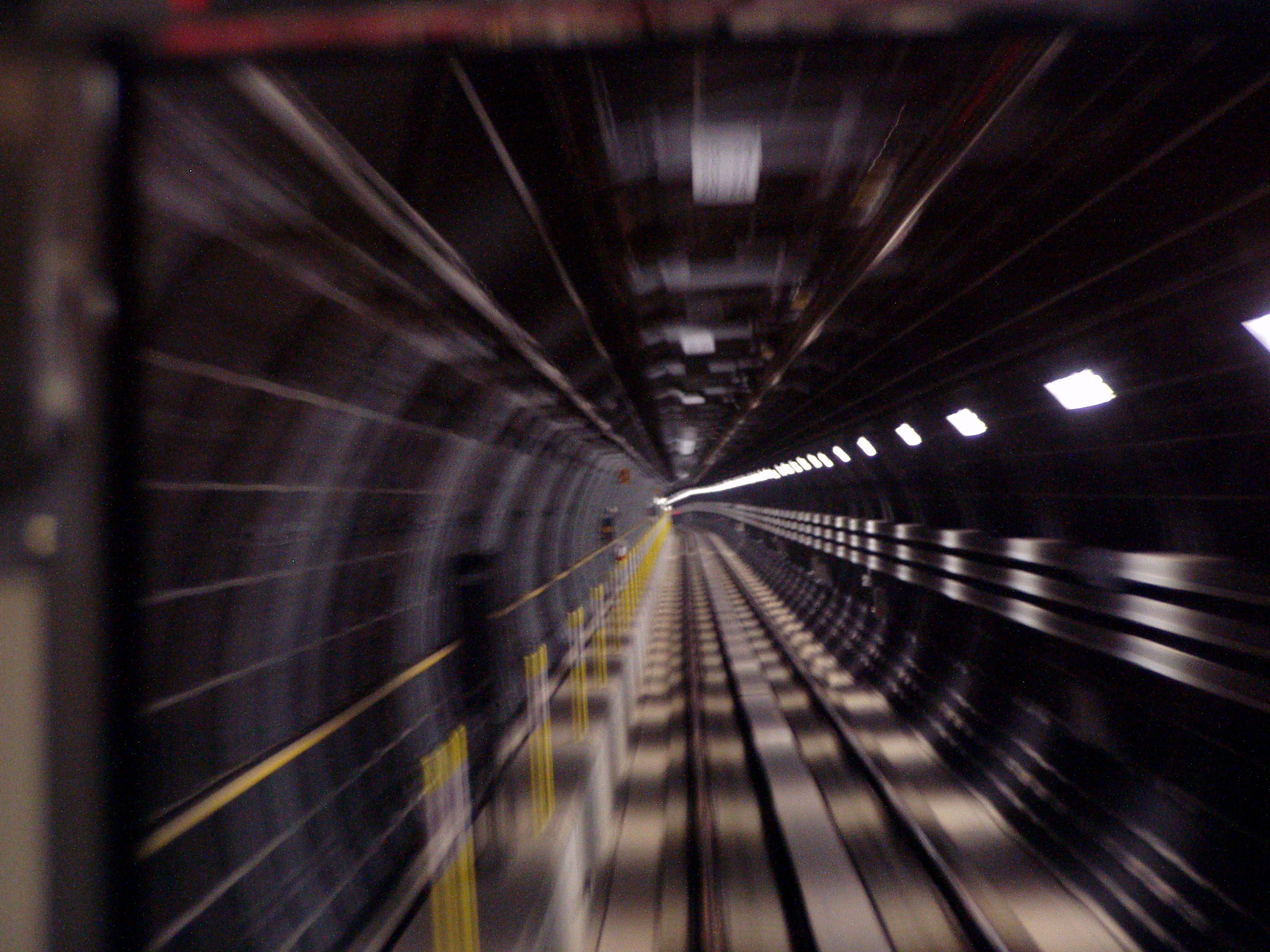
Osaka Metro employs linear induction motor (LIM) propulsion on two of its subway lines, a system that offers advantages such as smooth acceleration, precise speed control, and the ability to operate on steep gradients without the use of conventional mechanical transmissions.
The Nagahori Tsurumi-ryokuchi Line was Japan’s first revenue-service subway line to adopt LIM technology. It is operated using 70 series rolling stock, which entered service in 1990. Trains run in four-car formations powered by a 1,500 V DC overhead catenary and are designed for a maximum operating speed of 70 km/h. Compared with traditional rotary-motor systems, the LIM configuration reduces noise and vibration, improving ride quality and environmental performance within urban tunnels.
LIM technology was later introduced on the Imazatosuji Line, which opened in 2006. This line uses 100 series trainsets, also formed as four-car units and supplied by a 1,500 V DC overhead system. The trains share similar performance characteristics with those on the Nagahori Tsurumi-ryokuchi Line, including a top speed of 70 km/h, along with the operational benefits of energy efficiency and enhanced traction control suited to dense urban alignments.
Beyond its use of linear induction motor technology, Osaka Metro also operates a fully automated transit system on the Nankō Port Town Line, commonly branded as the New Tram. The line has been driverless since opening in 1981, making it one of Japan’s earliest automated guideway transit systems.The New Tram runs on a 7.9-kilometre elevated alignment and is equipped with rubber-tyred rolling stock. Services are operated using four-car trainsets of the 200 series, which draw power via a three-phase AC side-contact electrification system and are designed for a maximum operating speed of 60 km/h. As of recent years, the fleet comprises 20 trainsets, or 80 vehicles in total, optimized for dependable operation and reduced maintenance requirements under fully automated conditions. While the New Tram demonstrates the feasibility of unattended train operation within the Osaka Metro network, similar automation has not been implemented on the system’s conventional subway lines as of 2025, which continue to rely on staffed operations.
Fares
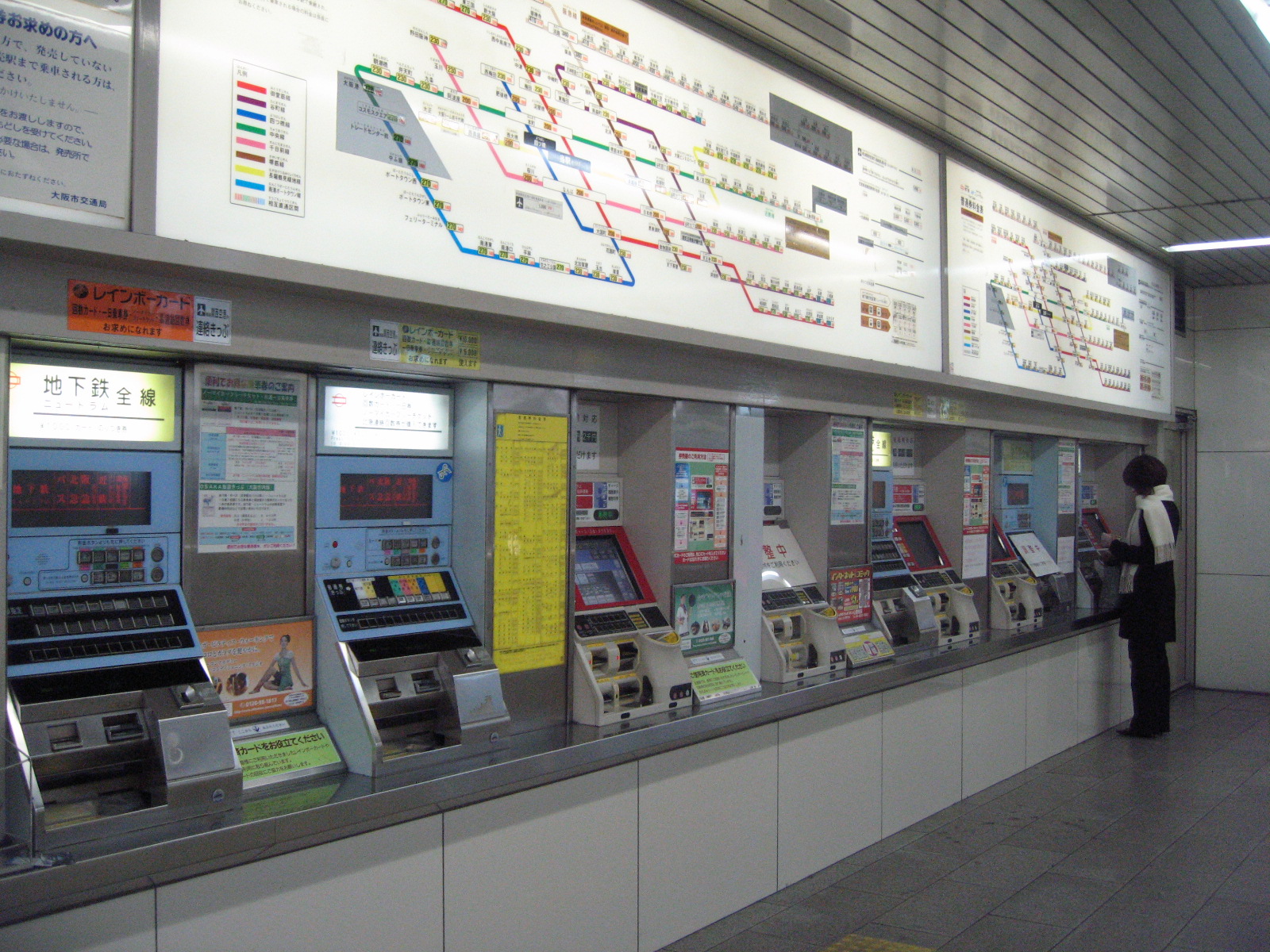
Osaka Metro charges five types of fares for single rides, based on the distance traveled in each journey. Some discount fares exist.
Fare payment on the Osaka Metro is designed to prioritize ease of use and compatibility with Japan’s wider public transport network. While single-journey paper tickets remain available from automated ticket machines at all stations, most passengers use contactless IC cards for their convenience. The ICOCA card, introduced in the early 2000s, offers tap-and-go access and can be recharged as needed; it requires a refundable ¥500 deposit.
ICOCA is fully interoperable with other major IC card systems, including Suica and PASMO, enabling seamless travel across JR lines, private railways, and metro systems nationwide. In addition to IC cards, Osaka Metro supports direct contactless payment at all ticket gates using credit, debit, or prepaid cards, as well as mobile wallets such as Apple Pay and Google Pay, eliminating the need for a dedicated transit card.
| Distance | ||||||||
|---|---|---|---|---|---|---|---|---|
| travelled | Rates (in yen) | Adult | Child | 1–3 km | 4–7 km | 8–13 km | 14–19 km | 20–25 km |
| ¥190 | ¥100 | |||||||
| ¥240 | ¥120 | |||||||
| ¥290 | ¥150 | |||||||
| ¥340 | ¥170 | |||||||
| ¥390 | ¥200 |
Incidents
On April 8, 1970, a gas explosion occurred during an expansion of the Tanimachi Line at Tenjimbashisuji Rokuchōme Station, killing 79 people and injuring 420. The gas leaked out from a detached joint and filled the tunnel and exploded when a service vehicle's engine sparked over leaking gas, creating a fire column over 10 m tall that burned around 30 buildings and damaged or destroyed a total of 495 buildings.
Safety
Since the 1990s, Osaka Metro has implemented automatic train control (ATC) systems throughout its network, providing continuous speed monitoring and automated braking to reduce the risk of collisions and overspeed incidents. The system enforces compliance with signal aspects and safe train separation, contributing to stable and reliable operations. In parallel, platform screen doors have been progressively installed at stations, creating a physical barrier between platforms and tracks to enhance passenger safety and improve boarding efficiency.
Safety management is further supported by comprehensive staff training programs. Employees participate in regular emergency preparedness exercises, including evacuation drills and simulated incident responses, often conducted in cooperation with municipal agencies. Osaka Metro also promotes passenger awareness through digital platforms, onboard and station announcements, and multilingual signage, encouraging safe behavior such as remaining behind platform markings and promptly alerting staff to irregular situations. Osaka Metro’s safety framework places strong emphasis on preventive measures. Operating policies include strict controls on passenger density, with peak-period load factors maintained below 150 percent to limit discomfort and reduce stress on both passengers and infrastructure. In response to operational challenges that emerged in 2020, including those associated with the COVID-19 pandemic, the company also introduced dedicated mental health support initiatives for train operators, such as access to counseling services, stress-reduction training, and adjustments to work schedules aimed at reducing fatigue-related risks.
The effectiveness of these policies is reflected in Osaka Metro’s comparatively low accident rate. Compliance with national railway safety requirements is regularly assessed through inspections and audits conducted by the Ministry of Land, Infrastructure, Transport and Tourism (MLIT), with findings used to inform continual updates to safety procedures and technical systems.
Network map
| frame-lat = 34.68 | frame-long = 135.5 | frame-width = 750 | frame-height = 470
References
Endnotes
Footnotes
Citations
References
- "交通局の予算・決算について". 大阪市営交通局 [Osaka Municipal Transportation Bureau].
- "Osaka Municipal Subway|Japanese subway|JAPAN SUBWAY ASSOCIATION".
- [http://www.misol.ne.jp/information/option_datalist.htm MiSoL ASP会員サービス・アプリケーション概要] {{webarchive. link. (2007-10-27)
- "Archived copy".
- (2024-12-17). "SkyDrive and Osaka Metro Unveil Plans for a Future eVTOL Network in Osaka Introducing Plans for the “Osaka Diamond Routes” - SkyDrive Inc.".
- GRRR.nl. "Urban Benchmark".
- "路線別駅別乗降人員|Osaka Metro".
- "1903 (明治36)年 築港大道路(現みなと通)開通。築港大桟橋完成。大阪市電開通".
- ドゥイツ・キエルト. (2008-06-06). "1930年代の大阪 • 御堂筋の地下鉄建設".
- "御堂筋の歴史".
- "大阪市営地下鉄|日本の地下鉄|日本地下鉄協会".
- (April 2009). "公営地下鉄在籍車数ビッグ3 大阪市交通局 (One of the big three public subway operators: Osaka Municipal Subway)".
- Rogers, Krista. "The most crowded train lines during rush hour in Tokyo, Osaka, and Nagoya are...". Rocket News 24.
- (September 9, 2014). link
- link. 大阪市営交通局 [Osaka Municipal Transportation Bureau]
- (2019-05-29). "Osaka Metro Subway First & Last Train Time {{!}} Osaka Metro NiNE".
- McNabb, Miriam. (2024-12-18). "SkyDrive and Osaka Metro Announce eVTOL Plans for Osaka".
- "Osaka Metro Posts Record Interim Profit on Expo Boom".
- link. [[Yomiuri Online]]. (August 29, 2014)
- (2023-11-30). "Osaka Umeda Twin Towers South / Takenaka Corporation".
- "Umeda|Osaka Metro".
- "Subway accessibility (station facilities)|Osaka Metro".
- "Information on accessibility (creating an accessible city)|Osaka Metro".
- Guinness World Records. "Largest underground LED screen display".
- "Osaka Metro Hommachi Station Signage Launches Digital OOH Advertising Based on Impressions (VAC) {{!}} News".
- "Osaka Metro to deploy biometric ticketing, Japan - Global Mass Transit Report -".
- (February 13, 2014). "Osaka subway's Sennichimae Line to have platform screen doors installed in every station Chinese translation to follow". Asian Public Transport.
- (2022-08-14). "【堺筋線】日本橋駅にホームドア設置開始 {{!}} Osaka-Subway.com".
- Mochinaga, Yoshifumi. "Railway Electric Power Feeding System".
- "中央線に27年ぶりの新造車両「30000A系」が7月22日にデビュー!万博開催期間中の輸送力増強を目的に順次導入します|Osaka Metro".
- "中央線新型車両400系が2023年6月25日(日曜日)から運行を開始します!|Osaka Metro".
- "Nagahori Tsurumi-ryokuchi Line (Osaka Metro)|Linear Metro|JAPAN SUBWAY ASSOCIATION".
- "Linear Metro Promotion|Linear Metro|JAPAN SUBWAY ASSOCIATION".
- "Imazatosuji Line (Osaka Metro)|Linear Metro|JAPAN SUBWAY ASSOCIATION".
- "New Tram {{!}} Osaka Metro NiNE".
- "Tickets". Osaka Metro.
- "ICOCA|Osaka Metro".
- "タッチ決済|Osaka Metro".
- link
- Pulvers, Roger. (November 4, 2012). "Beware the parallels between boom-time Japan and present-day China". [[The Japan Times]].
- "Gas Explosion at a Subway Construction Site". Failure Knowledge Center.
- "Japanese subway|JAPAN SUBWAY ASSOCIATION".
- "Train Station to Install Latest Type of Sliding Platform Screen Doors {{!}} February 2022 {{!}} Highlighting Japan".
- Osaka Metro Co., Ltd.. "Safety Guide".
This article was imported from Wikipedia and is available under the Creative Commons Attribution-ShareAlike 4.0 License. Content has been adapted to SurfDoc format. Original contributors can be found on the article history page.
Ask Mako anything about Osaka Metro — get instant answers, deeper analysis, and related topics.
Research with MakoFree with your Surf account
Create a free account to save articles, ask Mako questions, and organize your research.
Sign up freeThis content may have been generated or modified by AI. CloudSurf Software LLC is not responsible for the accuracy, completeness, or reliability of AI-generated content. Always verify important information from primary sources.
Report