From Surf Wiki (app.surf) — the open knowledge base
Osaka
Designated city in Kansai, Japan
Designated city in Kansai, Japan
| Field | Value | |
|---|---|---|
| <!-- See Template:Infobox settlement for additional fields and descriptions --> | name | Osaka |
| native_name | 大阪市 | |
| official_name | Osaka City | |
| settlement_type | Prefecture capital and Designated city | |
| <!-- images, nickname, motto ---> | image_skyline | {{multiple image |
| border | infobox | |
| total_width | 290 | |
| perrow | 1/2/3/2 | |
| image1 | Osaka Castle 03bs3200.jpg | |
| alt1 | Osaka Castle and Osaka Business Park | |
| image2 | Shin-Sekai:新世界 - panoramio.jpg | |
| alt2 | Shinsekai | |
| image3 | Osaka Dotonbori Ebisu Bridge.jpg | |
| alt3 | Dotonbori at night | |
| image4 | Sumiyoshi-taisha, hongu-2 honden.jpg | |
| alt4 | Sumiyoshi-taisha Hongu | |
| image5 | Sumiyoshi-taisha, Sorihashi.jpg | |
| alt5 | Sumiyoshi-taisha Sorihashi | |
| image6 | Shitennoji & Abeno Harukas.jpg | |
| alt6 | Shitennoji and Abeno Harukas | |
| image7 | Autumn in Mido-suji Osaka02n.jpg | |
| alt7 | Midōsuji | |
| image8 | Nakanoshima Skyscrapers in 201407 001.jpg | |
| alt8 | Nakanoshima | |
| image_caption | From top, left to right: Osaka Castle and Osaka Business Park, Tsūtenkaku tower in Shinsekai, Dōtonbori, The Dainihongu (second sanctuary) and Sorihashi bridge of Sumiyoshi Taisha shrine, Shitennō-ji within Abeno Harukas, Midōsuji Avenue and Nakanoshima island | |
| image_flag | Flag of Osaka, Osaka.svg | |
| image_seal | Emblem of Osaka, Osaka.svg | |
| seal_type | Emblem | |
| motto | ||
| image_map | ||
| image_map1 | Osaka in Osaka Prefecture Ja.svg | |
| map_caption1 | Location of Osaka in Osaka Prefecture | |
| pushpin_map | Japan Osaka Prefecture#Japan Kansai#Japan#Asia | |
| pushpin_label_position | ||
| pushpin_map_caption | Location in the Kansai region | |
| coordinates | ||
| coor_pinpoint | ||
| coordinates_footnotes | tags -- | |
| <!-- location ------------------> | subdivision_type | Country |
| subdivision_name | Japan | |
| subdivision_type1 | Region | |
| subdivision_name1 | Kansai | |
| subdivision_type2 | Prefecture | |
| subdivision_name2 | Osaka Prefecture | |
| subdivision_type3 | Island | |
| subdivision_name3 | Honshu | |
| <!-- established ---------------> | established_title | |
| named_for | ||
| seat_type | ||
| seat | ||
| government_footnotes | tags -- | |
| governing_body | Osaka City Council | |
| leader_title | Mayor | |
| leader_name | Hideyuki Yokoyama (ORA) | |
| leader_name1 | ||
| <!-- display settings ---------> | total_type | |
| unit_pref | Metric | |
| <!-- area ----------------------> | area_magnitude | |
| area_footnotes | tags -- | |
| area_total_km2 | 225.21 | |
| <!-- elevation -----------------> | elevation_footnotes | tags -- |
| elevation_m | ||
| population_footnotes | tags -- | |
| population_total | 2,816,247 | |
| population_rank | 3rd in Japan | |
| population_as_of | *Estimated population as of October 1, 2025* | |
| population_density_km2 | 12,505 | |
| population_metro_footnotes | (2015) | |
| population_metro | 19,302,746 (2nd) | |
| population_demonym | ||
| population_note | ||
| timezone1 | Japan Standard Time | |
| utc_offset1 | +9 | |
| area_code_type | ||
| area_code | ||
| blank_name_sec1 | City Symbols | |
| blank1_name_sec1 | Flower | |
| blank1_info_sec1 | Cherry blossom and Pansy | |
| blank7_info_sec1 | ||
| blank_name_sec2 | Address | |
| blank_info_sec2 | Osaka City Hall: 1-3-20 Nakanoshima, Kita-ku, Osaka-shi, Osaka-fu | |
| 530-8201 | ||
| blank1_name_sec2 | Phone number | |
| blank1_info_sec2 | 06-6208-8181 | |
| <!-- website, footnotes --------> | website |
the city in Japan
530-8201
Osaka is a designated city in the Kansai region of Honshu in Japan. It is the capital of and most populous city in Osaka Prefecture, and the third-most populous city in Japan, following the special wards of Tokyo and Yokohama. With an estimated population of 2,816,247 as of October 1, 2025 and a population density of about 12,505 people per square kilometer, it is the largest component of the Keihanshin Metropolitan Area, the second-largest metropolitan area in Japan and the 10th-largest urban area in the world with more than 19 million inhabitants.
Osaka was traditionally considered Japan's economic hub. By the Kofun period (300–538) it had developed into an important regional port, and in the 7th and 8th centuries, it served briefly as the imperial capital. Osaka continued to flourish during the Edo period (1603–1867) and became known as a center of Japanese culture. Following the Meiji Restoration, Osaka greatly expanded in size and underwent rapid industrialization. The construction boom accelerated population growth throughout the following decades, and by the 1900s, Osaka was the industrial hub in the Meiji and Taishō eras. Osaka made noted contributions to redevelopment, urban planning and zoning standards in the postwar period, and the city developed rapidly as one of the major financial centers in the Keihanshin Metropolitan Area.
Osaka is a major financial center of Japan, and it is recognized as one of the most multicultural and cosmopolitan cities in Japan. The city is home to the Osaka Exchange as well as the headquarters of multinational electronics corporations such as Panasonic and Sharp. Osaka is an international center of research and development and is represented by several major universities, notably Osaka University, Osaka Metropolitan University, and Kansai University. Famous landmarks in the city include Osaka Castle, Osaka Aquarium Kaiyukan, Dōtonbori, Tsūtenkaku in Shinsekai, Tennōji Park, Abeno Harukas, Sumiyoshi Taisha Grand Shrine, and Shitennō-ji, one of the oldest Buddhist temples in Japan. ss:IOsaka
Etymology
Ōsaka means "large hill" or "large slope". It is unclear when this name gained prominence over Naniwa, but the oldest written evidence for the name dates back to 1496.
By the Edo period, (Ōsaka) and (Ōsaka) were mixed use, and the writer , in his book Setsuyo Ochiboshu published in 1808, states that the kanji was abhorred because it means "returns to the earth," and thus was used. The kanji (earth) is also similar to the word (knight), and means against, so can be understood as "samurai rebellion." became the official name in 1868 after the Meiji Restoration. The older kanji (坂) is still in very limited use, usually only in historical contexts. When used as an abbreviation, the modern kanji ja refers to Osaka City or Osaka Prefecture.
History
Origins: Jōmon and Yayoi period
During the Jōmon period (7,000 BCE), present-day Osaka was mostly submerged, and the Uemachi Plateau formed a 12 km long and 2.5 km wide peninsula separating Kawachi Bay from the Seto Inland Sea. It is considered one of the first places where inhabitants of Japan settled, both for the favorable geological conditions, rich in fresh water and lush vegetation, and because its position was defensible against military attack.
The earliest evidence of settlements in the Osaka area are the which is located in the central Chuo-ku district. Buried human skeletons and a kaizuka (a mound containing remains) were found, as well as shell mounds, oysters, and other interesting archeological discoveries from the Jomon period. In addition to the remains of consumed food, there were arrow heads, stone tools, fishing hooks and crockery with remains from rice processing. It is estimated that the ruins contain 2,000-year-old debris between the Jomon and Yayoi period. The findings of the archeological sites are exhibited in an adjacent building.
In the years between the end of the Jōmon period and the beginning of the Yayoi period, the sediments that were deposited north of the Uemachi peninsula / plateau transformed Kawachi Bay into a lagoon. During the Yayoi period (300 BCE-250 CE), permanent habitation on the plains grew as rice farming became popular.
At the beginning of the third century CE the grand shrine of Sumiyoshi-taisha was inaugurated near the harbor, commissioned by consort Empress Jingū. This Shinto shrine structure survived historical events, which inaugurated a new style in the construction of Shinto shrines, called Sumiyoshi-zukuri. The maritime panorama enjoyed from the shrine gardens inspired several artists, and nowadays the representations of that type of landscape are called Sumiyoshi drawings.
Towards the end of the Yayoi period the Uemachi plateau-peninsula expanded further, transforming the Kawachi Lagoon into a lake (河内湖) connected to the mouth of the Yodo River, which had widened to the south.
Kofun period
By the Kofun period, Osaka developed into a hub port connecting the region to the western part of Japan. The port of Naniwa-tsu was established and became the most important in Japan. Trade with other areas of the country and the Asian continent intensified. The large numbers of increasingly larger keyhole-shaped Kofun mounds found in the plains of Osaka are evidence of political-power concentration, leading to the formation of a state. The findings in the neighboring plains, including the mausoleum of Emperor Nintoku was discovered nearby in Sakai testify to the status of imperial city that Osaka had reached. Four of these mounds can be seen in Osaka, in which important members of the nobility are buried. They are located in the southern districts of the city and date back to the 5th century. A group of megalithic tombs called Mozu Tombs are located in Sakai, Osaka Prefecture.
Important works of the Kofun period is the excavation that diverted the course of the Yamato River, whose floods caused extensive damage, and the construction of important roads in the direction of Sakai and Nara. Maritime traffic connected to the port of Naniwa-tsu increased in such a way that huge warehouses were built to stow material arriving and departing.
Asuka and Nara period
The Kojiki records that during 390–430 CE, there was an imperial palace located at Osumi, in what is present day Higashiyodogawa ward, but it may have been a secondary imperial residence rather than a capital.
In 645, Emperor Kōtoku built his Naniwa Nagara-Toyosaki Palace in what is now Osaka, making it the capital of Japan. The city now known as Osaka was at this time referred to as Naniwa (written as or ) and this name and derivations of it are still in use for districts in central Osaka such as Naniwa () and Namba (). Although the capital was moved to Asuka (in Nara Prefecture today) in 655, Naniwa remained a vital connection, by land and sea, between Yamato (modern day Nara Prefecture), Korea, and China.
Naniwa was declared the capital again in 744 by order of Emperor Shōmu, and remained so until 745, when the Imperial Court moved back to Heijō-kyō (now Nara). By the end of the Nara period, Naniwa's seaport roles had been gradually taken over by neighboring areas, but it remained a lively center of river, channel, and land transportation between Heian-kyō (Kyoto today) and other destinations. Sumiyoshi Taisha Grand Shrine was founded by Tamomi no Sukune in 211 CE. Shitennō-ji was first built in 593 CE and is the oldest Buddhist temple in Japan.
File:Sumiyoshi-taisha,_keidai-2.jpg|Sumiyoshi Taisha Grand Shrine File:Shitennoji07s3200.jpg|Shitennō-ji File:Naniwa-no-miya-ato,_zenkei-2.jpg|Remains of Naniwa-no-Miya Palace (2017)
Heian to Edo period
In 1496, Jōdo Shinshū Buddhists established their headquarters in the heavily fortified Ishiyama Hongan-ji, located directly on the site of the old Naniwa Imperial Palace. Oda Nobunaga began a decade-long siege campaign on the temple in 1570 which ultimately resulted in the surrender of the monks and subsequent razing of the temple. Toyotomi Hideyoshi constructed Osaka Castle in its place in 1583. Osaka Castle played a pivotal role in the Siege of Osaka (1614–1615).
Osaka was long considered Japan's primary economic center, with a large percentage of the population belonging to the merchant class (see Four divisions of society). Over the course of the Edo period (1603–1867), Osaka grew into one of Japan's major cities and returned to its ancient role as a lively and important port. Daimyōs (feudal lords) received most of their income in the form of rice. Merchants in Osaka thus began to organize storehouses where they would store a daimyōs rice in exchange for a fee, trading it for either coin or a form of receipt; essentially a precursor to paper money. Many if not all of these rice brokers also made loans, and would actually become quite wealthy and powerful. Osaka merchants coalesced their shops around Dōjima, where the Rice Exchange was established in 1697 and where the world's first futures market would come to exist to sell rice that was not yet harvested.
The popular culture of Osaka was closely related to ukiyo-e depictions of life in Edo. By 1780, Osaka had cultivated a vibrant arts culture, as typified by its famous Kabuki and Bunraku theaters. In 1837, Ōshio Heihachirō, a low-ranking samurai, led a peasant insurrection in response to the city's unwillingness to support the many poor and suffering families in the area. Approximately one-quarter of the city was razed before shogunal officials put down the rebellion, after which Ōshio killed himself. Osaka was opened to foreign trade by the government of the Bakufu at the same time as Hyogo Town (modern Kobe) on January 1, 1868, just before the advent of the Boshin War and the Meiji Restoration. The Kawaguchi foreign settlement, now the Kawaguchi subdistrict, is a legacy of the foreign presence in Osaka.
Osaka residents were stereotyped in Edo literature from at least the 18th century. Jippensha Ikku in 1802 depicted Osakans as stingy almost beyond belief. In 1809, the derogatory term "Kamigata zeeroku" was used by Edo residents to characterize inhabitants of the Osaka region in terms of calculation, shrewdness, lack of civic spirit, and the vulgarity of Osaka dialect. Edo writers aspired to samurai culture, and saw themselves as poor but generous, chaste, and public spirited. Edo writers by contrast saw "zeeroku" as obsequious apprentices, stingy, greedy, gluttonous, and lewd. To some degree, Osaka residents are still stigmatized by Tokyo observers in the same way today, especially in terms of gluttony, evidenced in the phrase, .
File:Osaka Castle 02bs3200.jpg|Osaka Castle, first built in 1583 File:Osaka-zu byobu.jpg|The Sumiyoshi-matsuri in the 16th century File:The Siege of Osaka Castle.jpg|Japanese painting of the Siege of Osaka, 1615 File:Newly compiled and enlarged plan of Ōsaka (14042582876).jpg|A 1686 map of Osaka File:Dojima-Rice-Exchange-Osaka-by-Yoshimitsu-Sasaki.png|Dōjima Rice Exchange ukiyo-e by Yoshimitsu Sasaki
Meiji to Heisei period
With the enormous changes that characterized the country after the Meiji Restoration (1868), and the relocation of the capital from Kyoto to Tokyo, Osaka entered a period of decline. From being the capital of the economy and finance, it became a predominantly industrial center. The modern municipality was established in 1889 by government ordinance, with an initial area of 15 km2, overlapping today's Chuo and Nishi wards. Later, the city went through three major expansions to reach its current size of 223 km2. Osaka was the industrial center most clearly defined in the development of capitalism in Japan. It became known as the "Manchester and Melbourne of the Orient". In 1925, it was the largest and most populous city in Japan and the sixth largest in the world.
The rapid industrialization attracted many Asian immigrants (Indians, Chinese, and Koreans), who set up a life apart for themselves. The political system was pluralistic, with a strong emphasis on promoting industrialization and modernization. Literacy was high and the educational system expanded rapidly, producing a middle class with a taste for literature and a willingness to support the arts. In 1927, General Motors operated a factory called Osaka Assembly until 1941, manufacturing Chevrolet, Cadillac, Pontiac, Oldsmobile, and Buick vehicles, operated and staffed by Japanese workers and managers. In the nearby city of Ikeda in Osaka Prefecture is the headquarters of Daihatsu, one of Japan's oldest automobile manufacturers.
Like its European and American counterparts, Osaka displayed slums, unemployment, and poverty. In Japan it was here that municipal government first introduced a comprehensive system of poverty relief, copied in part from British models. Osaka policymakers stressed the importance of family formation and mutual assistance as the best way to combat poverty. This minimized the cost of welfare programs.
During World War II, Osaka came under air raids in 1945 by the United States Army Air Forces as part of the air raids on Japan. On March 13, 1945, a total of 329 Boeing B-29 Superfortress heavy bombers took part in the raid against Osaka. According to an American prisoner of war who was held in the city, the air raid took almost the entire night and destroyed 25 sqmi of the city. The U.S. bombed the city again twice in June 1945 and again on August 14, a day before Japan's surrender.
In the decades following World War II, Osaka's reconstruction efforts and the industriousness of its residents brought the city even greater prosperity than before the war. Its population surpassed three million in the 1960s, initiating large-scale suburbanization within the prefecture, and eventually doubled to six million by the 1990s. With factories rebuilt and trade revived, Osaka rapidly developed into a major multicultural and financial center from the 1950s through the 1980s. Osaka Prefecture was chosen as the venue for the prestigious Expo '70, the first world's fair ever held in an Asian country. Since then, numerous international events have been held in Osaka, including the 1995 APEC Summit.
The modern municipality, which when it was established in 1889 occupied an area of just 15 km2 including the districts of Chūō and Nishi, following three successive expansions has reached an area of 222 km2. It was one of the first cities in Japan to obtain designated city status in 1956.
21st century to present
The plan to reorganize Osaka and its province into a metropolis like Tokyo met with stiff opposition in some municipalities, particularly the highly populated Sakai. He then fell back on a project that included the suppression of the 24 wards of Osaka, thus dividing the city into 5 new special districts with a status similar to that of the 23 Special wards of Tokyo. It was introduced by former mayor Tōru Hashimoto, leader of the reform party Osaka Restoration Association which he founded. The May 2015 referendum for the approval of this project saw the narrow victory of no, and consequently Hashimoto announced his withdrawal from politics. A second referendum for a merger into 4 semi-autonomous wards was narrowly voted down by 692,996 (50.6%).
According to the Forbes list of The World's Most Expensive Places To Live 2009, Osaka was the second most expensive in the world after Tokyo. By 2020 it slipped to 5th rank of most expensive cities.
In March 2014, the 300-metre tall Abeno Harukas opened, which became the tallest building in Japan (surpassing the Yokohama Landmark Tower in Yokohama), until it was in turn surpassed by the 330-metre tall Azabudai Hills Main Tower in Tokyo following its completion in 2022.
Expo 2025 is being held at Yumeshima Island, Konohana-ku. Osaka is the third city to host the World Expo twice, previously hosting Expo '70. It is also the fourth World’s Fair held in Japan following Expo '90 and Expo 2005 in Aichi Prefecture. The event will return to its traditional 5-year scheduling cycle after the Expo 2020 in Dubai was delayed to 2021 due to the COVID-19 pandemic. The projected visitor count is approximately 28 million.
MGM Resorts began construction on MGM Osaka in April 2025. MGM Osaka will be the first integrated resort in Japan. It will include 2,300 hotel rooms, a casino, shopping and dining options, convention space and a 3,500-seat theatre.
File:Osaka Umeda Sky Building Panoramablick 05.jpg|Skyscrapers in the Umeda district File:Sennichimae Osaka ca1916.JPG|The Sennichimae area in 1916 File:Osaka after the 1945 air raid.JPG|Osaka after the bombing in 1945 File:Abeno Harukas 20140507-002.jpg|Abeno Harukas, the second-tallest building in Japan
Geography

Osaka's west side is open to Osaka Bay, and is otherwise completely surrounded by more than ten satellite cities, all of them in Osaka Prefecture, with one exception: the city of Amagasaki, belonging to Hyōgo Prefecture, in the northwest. The city occupies a larger area (about 13%) than any other city or village within Osaka Prefecture.
When Osaka was established in 1889, it occupied roughly the area known today as the Chuo and Nishi wards, 15.27 km2 that grew into today's 222.30 km2 via incremental expansions. The largest was a single 126.01 km2 expansion in 1925. Osaka's highest point, located in Tsurumi-ku, is 37.5 m above Tokyo Peil. The lowest point, in Nishiyodogawa-ku, is -2.2 m below Tokyo Peil. Osaka is situated at a latitude of 34.67°, near the 35th parallel north, a latitude farther south than Rome (41.90°), Madrid (40.41°), San Francisco (37.77°) and Seoul (37.53°).
Climate
Osaka is located in the humid subtropical climate zone (Köppen Cfa), with four distinct seasons. Its winters are generally mild. January is the coldest month, with an average high of 9.7 °C. Osaka rarely sees snowfall during the winter. Spring in Osaka starts off mild, but ends up being hot and humid. Spring tends to be Osaka's wettest season, with the —the rainy season—occurring between early June and late July. The average starting and ending dates of the rainy season are June 7 and July 21 respectively.
Summers are very hot and humid. In August, the hottest month, the average daily high temperature reaches 33.7 °C. Average nighttime low temperatures typically hover around 25.8 °C. Fall in Osaka sees a cooling trend, with the early part of the season resembling summer, while the latter part of fall resembles winter.
Precipitation is abundant. Winter is the driest season. Monthly rainfall peaks in June with the "tsuyu" rainy season, which typically ends in mid to late July. From late July to the end of August, summer's heat and humidity peak, and rainfall decreases somewhat. Osaka has a second rainy period in September and early October, when tropical weather systems, including typhoons, coming from the south or southwest are possible.
|Jan record high C = 19.1 |Feb record high C = 23.7 |Mar record high C = 26.1 |Apr record high C = 30.7 |May record high C = 32.7 |Jun record high C = 36.1 |Jul record high C = 38.4 |Aug record high C = 39.1 |Sep record high C = 36.4 |Oct record high C = 33.1 |Nov record high C = 27.9 |Dec record high C = 24.5 |Jan record low C = -7.5 |Feb record low C = -6.5 |Mar record low C = -5.2 |Apr record low C = -2.6 |May record low C = 3.5 |Jun record low C = 8.9 |Jul record low C = 14.8 |Aug record low C = 13.6 |Sep record low C = 10.4 |Oct record low C = 3.0 |Nov record low C = -2.2 |Dec record low C = -4.5 |script-title=ja:気象庁 / 平年値(年・月ごとの値) | access-date = May 19, 2021}} and Weather Atlas
Cityscape
Osaka's sprawling cityscape has been described as "only surpassed by Tokyo as a showcase of the Japanese urban phenomenon". File:Central Osaka.jpg|Central Osaka looking north from the Abeno Harukas observation deck (2014) File:Ufoto-wiki-01 Osaka-Skyline May2014.jpg|Osaka skyline towards Umeda (2014)
Neighborhoods
Central Osaka is roughly divided into downtown and uptown areas known as and .
Kita is home to the Umeda district and its immediate surrounding neighborhoods, a major business and retail hub that plays host to Osaka Station City and a large subterranean network of shopping arcades. Kita and nearby Nakanoshima contain a prominent portion of the city's skyscrapers and are often featured in photographs of Osaka's skyline.
Minami, though meaning "south", is essentially in and geographically central within the city. Well known districts here include Namba and Shinsaibashi shopping areas, the Dōtonbori canal entertainment area, Nipponbashi Den Den Town, as well as arts and fashion culture-oriented areas such as Amerikamura and Horie. The 300-meter tall Abeno Harukas was the tallest skyscraper in the country from 2014 until 2023.
The business districts between Kita and Minami such as and , called , house the regional headquarters of many large-scale banks and corporations. The Midōsuji boulevard runs through Semba and connects Kita and Minami.
Further south of Minami are neighborhoods such as Shinsekai (with its Tsūtenkaku tower), Tennoji and Abeno (with Tennoji Zoo, Shitennō-ji and Abeno Harukas), and the Kamagasaki slums, the largest slum in Japan.
The city's west side is a prominent bay area which serves as its main port as well as a tourist destination with attractions such as Kyocera Dome, Universal Studios Japan and the Tempozan Harbor Village. Higashiosaka is zoned as a separate city, although the east side of Osaka city proper contains numerous residential neighborhoods including Tsuruhashi KoreaTown, as well as the Osaka Castle Park, Osaka Business Park and the hub Kyōbashi Station.
Osaka contains numerous urban canals and bridges, many of which serve as the namesake for their surrounding neighborhoods. The phrase "808 bridges of Naniwa" was an expression in old Japan used to indicate impressiveness and the "uncountable". Osaka numbered roughly 200 bridges by the Edo period and 1,629 bridges by 1925. As many of the city's canals were gradually filled in, the number dropped to 872, of which 760 are currently managed by Osaka City.
File:Nakanoshima, Osaka in 201504.JPG|Nakanoshima, a boundary of Kita (right) and Semba (left) File:Aerial photo of Umeda 14-Aug-2019.jpg|Umeda district (2019) File:Osaka Dotonbori Ebisu Bridge.jpg|Dōtonbori bridge File:Namba 20150531.JPG|Namba (2015)
List of wards
There are currently 24 wards in Osaka:
| Name | Kanji | Population | *Land area in km2* | Pop. density | Map of Osaka |
|---|---|---|---|---|---|
| 1 | Abeno-ku | 113,200 | 5.99 | 18,890 | |
| 2 | Asahi-ku | 91,284 | 6.32 | 14,446 | |
| 3 | Chūō-ku | 119,445 | 8.87 | 13,466 | |
| 4 | Fukushima-ku | 82,384 | 4.67 | 17,633 | |
| 5 | Higashinari-ku | 88,250 | 4.54 | 19,441 | |
| 6 | Higashisumiyoshi-ku | 134,834 | 9.75 | 13,831 | |
| 7 | Higashiyodogawa-ku | 177,809 | 13.27 | 13,339 | |
| 8 | Hirano-ku | 187,248 | 15.28 | 12,250 | |
| 9 | Ikuno-ku | 127,792 | 8.37 | 15,263 | |
| 10 | Jōtō-ku | 171,005 | 8.38 | 20,399 | |
| 11 | Kita-ku (administrative center) | 143,809 | 10.34 | 13,908 | |
| 12 | Konohana-ku | 64,037 | 19.25 | 3,327 | |
| 13 | Minato-ku | 80,647 | 7.86 | 10,259 | |
| 14 | Miyakojima-ku | 107,774 | 6.08 | 17,723 | |
| 15 | Naniwa-ku | 80,070 | 4.39 | 18,246 | |
| 16 | Nishi-ku | 112,706 | 5.21 | 21,636 | |
| 17 | Nishinari-ku | 105,351 | 7.37 | 14,293 | |
| 18 | Nishiyodogawa-ku | 98,641 | 14.22 | 6,937 | |
| 19 | Suminoe-ku | 117,417 | 20.61 | 5,699 | |
| 20 | Sumiyoshi-ku | 152,986 | 9.40 | 16,279 | |
| 21 | Taishō-ku | 61,891 | 9.43 | 6,563 | |
| 22 | Tennōji-ku | 85,711 | 4.84 | 17,709 | |
| 23 | Tsurumi-ku | 111,570 | 8.17 | 13,652 | |
| 24 | Yodogawa-ku | 187,245 | 12.64 | 14,812 |
Demographics
|1870|271992 |1880|292636 |1890|483609 |1900|881344 |1910|1239373 |1920|1798295 |1925|2135248 |1930|2477959 |1935|3022425 |1940|3300714 |1945|1614632 |1950|2015350 |1955|2547316 |1960|3011563 |1965|3156222 |1970|2980487 |1975|2778987 |1980|2648180 |1985|2636249 |1990|2623801 |1995|2602421 |2000|2598774 |2005|2628811 |2010|2666371 |2015|2691185 |2020|2752024
Population numbers have been recorded in Osaka since as early as 1873, in the early Meiji era. According to the census in 2005, there were 2,628,811 residents in Osaka, an increase of 30,037 or 1.2% from 2000. There were 1,280,325 households with approximately 2.1 persons per household. The population density was 11,836 persons per km2. The Great Kantō earthquake caused a mass migration to Osaka between 1920 and 1930, and the city became Japan's largest city in 1930 with 2,453,573 people, outnumbering even Tokyo, which had a population of 2,070,913. The population peaked at 3,252,340 in 1940, and had a post-war peak of 3,156,222 in 1965, but has declined since, as the residents moved out to the suburbs.
There were 144,123 registered foreigners, the two largest groups being Korean (60,110) and Chinese (39,551). Ikuno, with its Tsuruhashi district, is the home to one of the largest population of Korean residents in Japan, with 20,397 registered Zainichi Koreans.
Dialect
The commonly spoken dialect of this area is Osaka-ben, a typical sub-dialect of Kansai-ben. Of the many other particularities that characterize Osaka-ben, examples include using the copula ya instead of da, and the suffix -hen instead of -nai in negative verb forms.
Government
Shin Asakawa,
Tsuyoshi Yamamoto Liberal Democratic Party and Citizen's Club (20), Komei Party (19), Japanese Communist Party (9), Go OSAKA (1) Osaka Abe (1) The Osaka City Council is the city's local government formed under the Local Autonomy Law. The council has eighty-nine seats, allocated to the twenty-four wards proportional to their population and re-elected by the citizens every four years. The council elects its president and Vice President. Toshifumi Tagaya (LDP) is the current and 104th president since May 2008.
The mayor of Osaka is directly elected by the citizens every four years, in accordance with the Local Autonomy Law. Tōru Hashimoto, former governor of Osaka Prefecture is the 19th mayor of Osaka since 2011. The mayor is supported by two vice mayors, currently Akira Morishita and Takashi Kashiwagi.
Osaka also houses several agencies of the Japanese government. Below is a list of governmental offices housed in Osaka.
- Japan Coast Guard, Fifth Regional Headquarters
- Japan Fair Trade Commission; Kinki, Chugoku, Shikoku Office
- Kinki Regional Finance Bureau
- Kinki Regional Economy, Trade and Industry Bureau
- Kinki Regional Transportation Bureau
- Kinki Communications Bureau
- Kinki Regional Development Bureau
- Kinki Regional Police Bureau
- Ministry of Foreign Affairs, Osaka Office
- Osaka Customs
- Osaka District Court
- Osaka Family Court
- Osaka High Court
- Osaka Immigration
- Osaka Labour Bureau
- Osaka Meteorological Observatory
- Osaka Public Prosecutors Office
- Osaka Regional Aerospace Bureau
- Osaka Regional Law Bureau
- Osaka Regional Taxation Bureau
- Osaka Summary Court
Developments
In July 2012, a joint multi-party bill was submitted to the Diet that would allow for implementation of the Osaka Metropolis plan as pursued by the mayor of Osaka city, the governor of Osaka and their party. If implemented, Osaka City, neighboring Sakai City and possibly other surrounding municipalities would dissolve and be reorganized as four special wards of Osaka prefecture – similar to former Tokyo City's successor wards within Tokyo prefecture. Special wards are municipal-level administrative units that leave some otherwise municipal administrative responsibilities and revenues to the prefectural administration.
In October 2018, the city of Osaka officially ended its sister city relationship with San Francisco in the United States after the latter permitted a monument memorializing "comfort women" to remain on a city-owned property, circulating in the process a 10-page, 3,800-word letter in English addressed to San Francisco mayor London Breed.
In November 2020, a second referendum to merge Osaka's 24 wards into 4 semi-autonomous wards was narrowly voted down. There were 692,996 (50.6%) votes against and 675,829 (49.4%) votes supported it. Osaka mayor and Osaka Ishin co-leader Ichiro Matsui said he would resign when his term ended in 2023.
Energy policies
Nuclear power
In February 2012, three Kansai cities, Kyoto, Osaka, and Kobe, jointly asked Kansai Electric Power Company to break its dependence on nuclear power. In a letter to KEPCO they also requested to disclose information on the demand and supply of electricity, and for lower and stable prices. The three cities were stockholders of the plant: Osaka owned 9% of the shares, Kobe had 3% and Kyoto 0.45%. In June 2012, Toru Hashimoto, the mayor of Osaka, announced a proposal to minimize the dependence on nuclear power for the shareholders meeting.
In March 2012, the city of Osaka decided that as the largest shareholder of Kansai Electric Power Co, that at the next shareholders-meeting in June 2012 it would demand a series of changes:
- that Kansai Electric would be split into two companies, separating power generation from power transmission.
- a reduction of the number of the utility's executives and employees.
- the implementation of absolutely secure measurements to ensuring the safety of the nuclear facilities.
- the disposing of spent fuel.
- the installation of new kind of thermal power generation to secure non-nuclear supply of energy.
- selling all unnecessary assets including the stock holdings of KEPCO.
In this action, Osaka secured the support of two other cities and shareholders: Kyoto and Kobe. With their combined voting-rights of 12.5 percent, they were not certain of the ultimate outcome. Two-thirds of the shareholders would be needed to agree to revise the corporate charter.{{cite web |url= http://mdn.mainichi.jp/mdnnews/news/20120319p2g00m0dm011000c.html |title= Osaka aims to end Kansai Electric's nuclear power ops as shareholder |archive-url= https://web.archive.org/web/20120319172039/http://mdn.mainichi.jp/mdnnews/news/20120319p2g00m0dm011000c.html |archive-date=March 19, 2012 }}
At a meeting held on April 10, 2012, by the "energy strategy council", formed by the city of Osaka and the governments of the prefectures, it became clear that at the end of the fiscal year 2011 some 69 employees of Kansai Electric Power Company were former public servants. "Amakudari" is the Japanese name for this practice of rewarding, by hiring officials that formerly controlled and supervised the firm. Such people included the following:
- 13 ex-officials of the: Ministry of Land, Infrastructure, Transport and Tourism
- 3 ex-officials of the Ministry of Economy, Trade and Industry,
- 2 ex-officials of the Ministry of the Environment,
- 16 former policemen,
- 10 former fire-fighters,
- 13 former civil engineers.
Besides this, it became known that Kansai Electric had made about 600 external financial donations, to a total sum of about 1.695 billion yen:
- 70 donations were paid to local governments: to a total of 699 million yen
- 100 donations to public-service organizations: 443 million yen,
- 430 donations to various organizations and foundations: a total of 553 million yen
During this meeting ,some 8 conditions were compiled, that needed to be fulfilled before a restart of the No.3 and No.4 reactors Oi Nuclear Power Plant:
- the consent of the local people and government within 100 kilometer from the plant
- the installation of a new independent regulatory agency
- a nuclear safety agreement
- the establishment of new nuclear safety standards
- stress tests and evaluations based on these new safety rules
Economy
Main article: Hanshin Industrial Region, Keihanshin industrial region
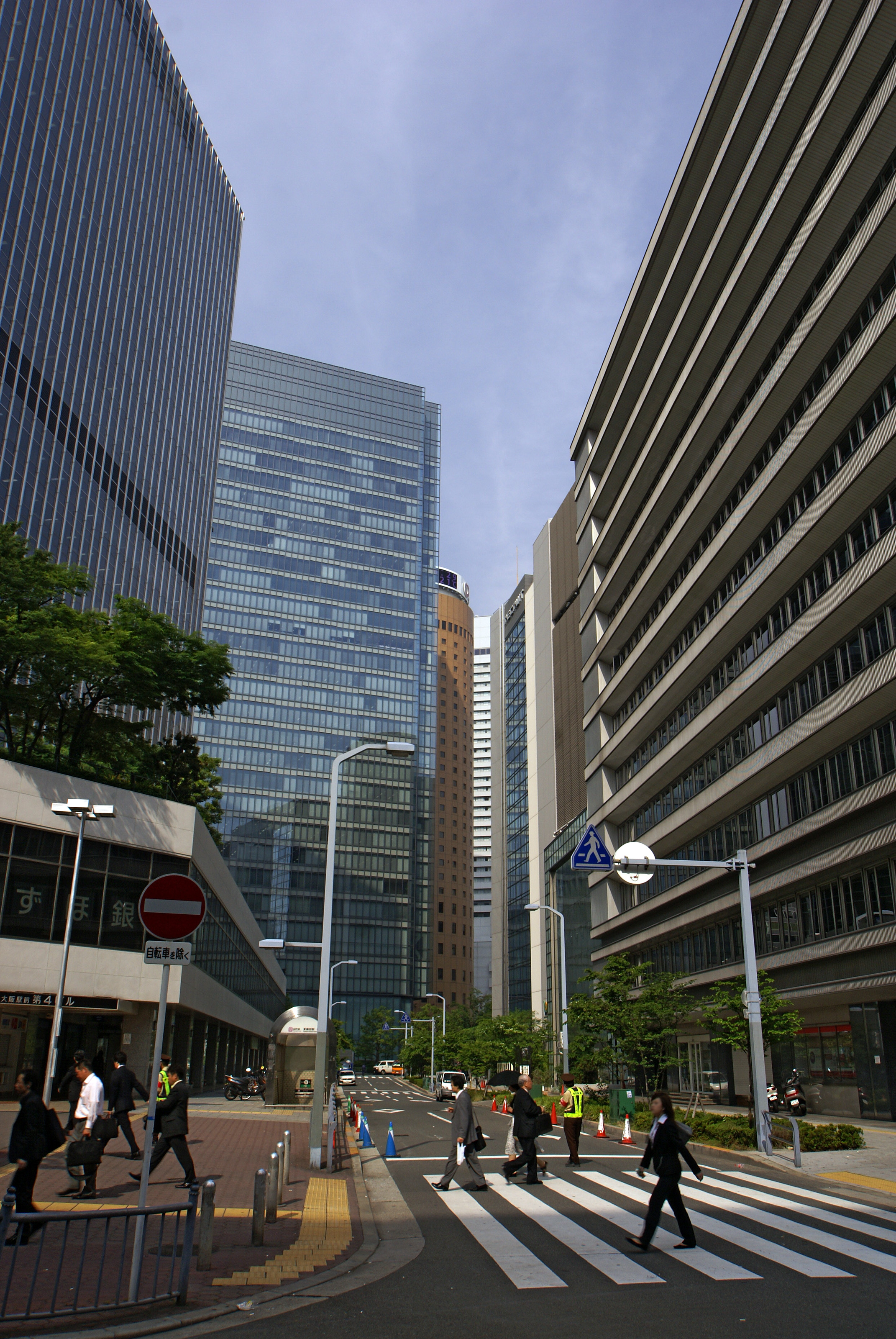
The gross city product of Osaka in fiscal year 2004 was ¥21.3 trillion, an increase of 1.2% over the previous year. The figure accounts for about 55% of the total output in the Osaka Prefecture and 26.5% in the Kinki region. In 2004, commerce, services, and manufacturing have been the three major industries, accounting for 30%, 26%, and 11% of the total, respectively. The per capita income in the city was about ¥3.3 million, 10% higher than that of the Osaka Prefecture. MasterCard Worldwide reported that Osaka ranks 19th among the world's leading cities and plays an important role in the global economy. Osaka's GDP per capita (Nominal) was $59,958.($1=\120.13) However, by 2020, Osaka ranked as the 5th most expensive city due to flatlining consumer prices and government subsidies of public transportation.
Historically, Osaka was the center of commerce in Japan, especially in the middle and pre-modern ages. Nomura Securities, the first brokerage firm in Japan, was founded in the city in 1925, and Osaka still houses a leading futures exchange. Many major companies have since moved their main offices to Tokyo. However, several major companies, such as Panasonic, Sharp, and Sanyo, are still headquartered in Osaka. In the 2017 Global Financial Centres Index, Osaka was ranked as having the 15th most competitive financial center in the world and fifth most competitive in Asia (after Singapore, Hong Kong, Tokyo, and Shanghai).
The Osaka Securities Exchange, specializing in derivatives such as Nikkei 225 futures, is based in Osaka. The merger with JASDAQ will help the Osaka Securities Exchange become the largest exchange in Japan for start-up companies.
According to global consulting firm Mercer, Osaka was the second most expensive city for expatriate employees in the world in 2009. It jumped up nine places from 11th place in 2008 and was the eighth most expensive city in 2007. However, it was not ranked in the top ten places of the list in 2013. The Economist Intelligence Unit (EIU) ranked Osaka as the second most expensive city in the world in its 2013 Cost of Living study.
Keihanshin region
Osaka is part of the metropolitan region called Keihanshin (also known as Greater Osaka) in the Kansai region. The Keihanshin region includes the prefectures of Osaka, Kyoto, Hyōgo (Kobe), Nara, Shiga, Wakayama, and Sakai. The Keihanshin region has a population () of 19,303,000 (15% of Japan's population) which covers 13,228 km2. It is ranked the second most urban region in Japan after the Greater Tokyo area and 10th largest urban area in the world. Keihanshin has a GDP of approximately $953.9 billion in 2012 (16th largest in the world). Osaka-Kobe has a GDP of $681 billion (2015), which is a bit more than Paris or Greater London. File:Osaka Metropolitan Employment Area 2015.png|Greater Osaka (without Kyoto) Metropolitan Employment Area File:Keihanshin MEAs 2015.png|Keihanshin with Osaka (red), Kobe (green), and Kyoto (blue)
Transportation
Main article: Transport in Keihanshin}}{{Easy CSS image crop, [Umeda Station, [Umeda]], 梅田}}, {{Nihongo4, [Namba Station, [Namba]], 難波}}, {{Nihongo4, [Shinsaibashi Station, [Shinsaibashi]], 心斎橋}}, {{Nihongo4, [Tennōji Station, [Tennōji]], 天王寺}}, {{Nihongo4, [Kyōbashi Station (Osaka), [Kyōbashi]], 京橋}}, and {{Nihongo4, [Yodoyabashi Station, [Yodoyabashi]], 淀屋橋
Osaka connects to its surrounding cities and suburbs via the JR West Urban Network as well as numerous private lines such as Keihan Electric Railway, Hankyu Railway, Hanshin Electric Railway, Kintetsu Railway, and Nankai Electric Railway.
The Osaka Metro system alone ranks 8th in the world by annual passenger ridership, serving over 912 million people annually (a quarter of Greater Osaka Rail System's 4 billion annual riders), despite being only 8 of more than 70 lines in the metro area.
All Shinkansen trains including Nozomi stop at Shin-Osaka Station and provide access to other major cities in Japan, such as Kobe, Kyoto, Nagoya, Yokohama, and Tokyo.
Regular bus services are provided by Osaka City Bus, as well Hankyu, Hanshin and Kintetsu, providing a dense network covering most parts of the city.
Osaka is served by two airports situated just outside of the city, Kansai International Airport (IATA: KIX) which handles primarily international passenger flights and international cargo flights and the nearby Osaka International Airport (IATA: ITM) which handles mostly domestic services.
Due to its geographical position, Osaka's international ferry connections are far greater than that of Tokyo, with international service to Shanghai, Tianjin, and Busan along with domestic routes to Kitakyushu, Kagoshima, Miyazaki and Okinawa.
Culture and lifestyle


Shopping and food
Osaka has a large number of wholesalers and retail shops: 25,228 and 34,707 respectively in 2004. Many of them are concentrated in the wards of Chuō (10,468 shops) and Kita (6,335 shops). Types of shops vary from malls to conventional shōtengai shopping arcades, built both above- and underground. Shōtengai are seen across Japan, and Osaka has the longest one in the country. The Tenjinbashi-suji arcade stretches from the road approaching the Tenmangū shrine and continues for 2.6 km going north to south. The stores along the arcade include commodities, clothing, and catering outlets.
Other shopping areas include Den Den Town, the electronic and manga/anime district, which is comparable to Akihabara in Tokyo, the Umeda district, which has the Hankyu Sanbangai shopping mall and Yodobashi Camera, a huge electrical appliance store that offers a vast range of fashion stores, restaurants, and a Shonen Jump store. Osaka is known for its food, in Japan and abroad. Author Michael Booth and food critic François Simon of Le Figaro have suggested that Osaka is the food capital of the world.
Osakans' love for the culinary is made apparent in the old saying "Kyotoites are financially ruined by overspending on clothing, Osakans are ruined by spending on food." Regional cuisine includes , , , as well as the traditional , particularly . Osaka is known for its fine sake, which is made with fresh water from the prefecture's mountains.
Osaka's culinary prevalence is the result of regional access to high-quality ingredients, a high population of merchants, and proximity to the ocean and waterway trade. In recent years, Osaka has started to garner more attention from foreigners with the increased popularity of cooking and dining in popular culture.
Other shopping districts include:
- American Village (Amerika-mura or "Ame-mura") – fashion for young people
- Dōtonbori – part of Namba district and considered heart of the city
- Namba – main shopping, sightseeing, and restaurant area
- Shinsaibashi – luxury goods and department stores
- [[File:Osaka market.jpg|thumb|Osaka market]] Umeda – theaters, boutiques, and department stores near the train station
Entertainment and performing arts
- Osaka is home to the National Bunraku Theater, where traditional puppet plays, bunraku, are performed.
- At Osaka Shochiku-za, close to Namba station, kabuki can be enjoyed as well as manzai.
- At Shin Kabuki-za, formerly near Namba and now near Uehommachi area, enka concerts and Japanese dramas are performed.
- Yoshimoto Kogyo, a Japanese entertainment conglomerate operates a hall in the city for manzai and other comedy shows: the Namba Grand Kagetsu hall.
- The Hanjō-tei opened in 2006, dedicated to rakugo. The theater is in the Ōsaka Tenman-gū area.
- Umeda Arts Theater opened in 2005 after relocating from its former 46-year-old Umeda Koma Theater. The theater has a main hall with 1,905 seats and a smaller theater-drama hall with 898 seats. Umeda Arts Theater stages various type of performances including musicals, music concerts, dramas, rakugo, and others.
- The Symphony Hall, built in 1982, is the first hall in Japan designed specially for classical music concerts. The Hall was opened with a concert by the Osaka Philharmonic Orchestra, which is based in the city. Orchestras such as the Berlin Philharmonic and Vienna Philharmonic have played here during their world tours as well.
- Osaka-jō Hall is a multi-purpose arena in Osaka-jō park with a capacity for up to 16,000 people. The hall has hosted numerous events and concerts including both Japanese and international artists.
- Nearby City Hall in Nakanoshima Park, is Osaka Central Public Hall, a Neo-Renaissance-style building first opened in 1918. Re-opened in 2002 after major renovation, it serves as a multi-purpose rental facility for citizen events.
- The Osaka Shiki Theater is one of the nine private halls operated nationwide by the Shiki Theater, staging straight plays and musicals.
- Festival Hall was a hall hosting various performances including noh, kyōgen, kabuki, ballets as well as classic concerts. The Bolshoi Ballet and the Philharmonia are among the many that were welcomed on stage in the past. The hall has closed at the end of 2008, planned to re-open in 2013 in a new facility.
Annual festivals

One of the most famous festivals held in Osaka, the Tenjin Matsuri, is held on July 24 and 25 (Osaka Tenmangū). Other festivals in Osaka include the Aizen Matsuri (June 30–July 2, Shōman-in Temple), the Sumiyoshi Matsuri (July 30–August 1, Sumiyoshi Taisha), Shōryō-e (April 22, Shitennō-ji) and Tōka-Ebisu (January 9–10, Imamiya Ebisu Jinja). The annual Osaka Asian Film Festival takes place in Osaka every March while the Midosuji Parade takes place in October.
Museums and galleries
The National Museum of Art (NMAO) is a subterranean Japanese and international art museum, housing mainly collections from the post-war era and regularly welcoming temporary exhibitions. Osaka Science Museum is in a five storied building next to the National Museum of Art, with a planetarium and an OMNIMAX theater. The Museum of Oriental Ceramics holds more than 2,000 pieces of ceramics, from China, Korea, Japan and Vietnam, featuring displays of some of their Korean celadon under natural light. Osaka Municipal Museum of Art is inside Tennōji park, housing over 8,000 pieces of Japanese and Chinese paintings and sculptures. The Osaka Museum of History, opened in 2001, is located in a 13-story modern building providing a view of Osaka Castle. Its exhibits cover the history of Osaka from pre-history to the present day. Osaka Museum of Natural History houses a collection related to natural history and life.
Sports
Osaka hosts four professional sport teams: one of them is the Orix Buffaloes, a Nippon Professional Baseball team, playing its home games at Kyocera Dome Osaka. Another baseball team, the Hanshin Tigers, although based in Nishinomiya, Hyōgo, plays a part of its home games in Kyocera Dome Osaka as well, when their homeground Koshien Stadium is occupied with the annual National High School Baseball Championship games during summer season.
There are two J.League clubs, Gamba Osaka, plays its home games at Suita City Football Stadium. Another club Cerezo Osaka, plays its home games at Yanmar Stadium Nagai. The city is home to Osaka Evessa, a basketball team that plays in the B.League. Evessa has won the first three championships of the league since its establishment. Kintetsu Liners, a rugby union team, play in the Top League. After winning promotion in 2008–09, they will again remain in the competition for the 2009–10 season. Their base is the Hanazono Rugby Stadium.
The , one of the six regular tournaments of professional sumo, is held annually in Osaka at Osaka Prefectural Gymnasium.
Another major annual sporting event that takes place in Osaka is Osaka International Ladies Marathon. Held usually at the end of January every year, the 42.195 km race starts from Nagai Stadium, runs through Nakanoshima, Midōsuji and Osaka castle park, and returns to the stadium. Another yearly event held at Nagai Stadium is the Osaka Gran Prix Athletics games operated by the International Association of Athletics Federations (IAAF) in May. The Osaka GP is the only IAAF games annually held in Japan.
Osaka made the bid for the 2008 Summer Olympics and the 2008 Summer Paralympics but was eliminated in the first round of the vote on July 13, 2001, which awarded the game to Beijing.
Osaka was one of the host cities of the official Women's Volleyball World Championship for its 1998, 2006 and 2010 editions.
Osaka is the home of the 2011 created Japan Bandy Federation and the introduction of bandy, in the form of rink bandy, was made in the city. In July 2012 the first Japan Bandy Festival was organized.
Media
Osaka serves as one of the media hubs for Japan, housing headquarters of many media-related companies. Abundant television production takes place in the city and every nationwide TV network (with the exception of TXN network) registers its secondary-key station in Osaka. All five nationwide newspaper majors also house their regional headquarters, and most local newspapers nationwide have branches in Osaka. However major film productions are uncommon in the city. Most major films are produced in nearby Kyoto or in Tokyo. The Ad Council Japan was founded in 1971 is based in Osaka, now it is the Osaka branch.
Newspapers
All five major national newspapers of Japan, The Asahi Shimbun, Mainichi Shimbun, Nihon Keizai Shimbun, Sankei Shimbun and Yomiuri Shimbun, have their regional headquarters in Osaka and issue their regional editions. Furthermore, Osaka houses Osaka Nichi-nichi Shimbun, its newspaper press. Other newspaper-related companies located in Osaka include the regional headquarters of FujiSankei Business i.;Houchi Shimbunsha; Nikkan Sports; Sports Nippon, and offices of Kyodo News Jiji Press; Reuters; Bloomberg L.P.
Broadcasting
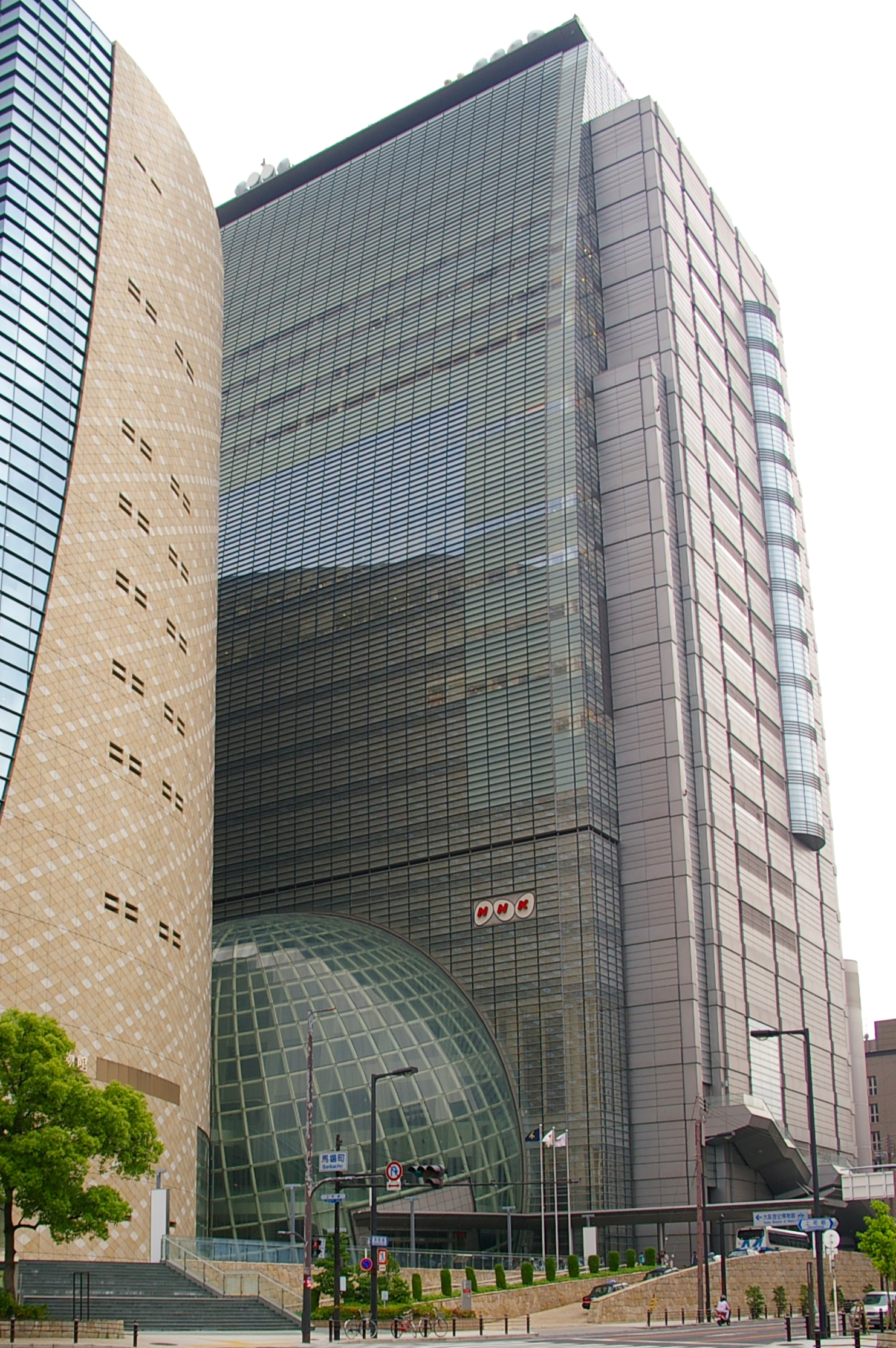
The five TV networks are represented by Asahi Broadcasting Corporation (ANN), Kansai Telecasting Corporation (FNN), Mainichi Broadcasting System, Inc. (JNN), Television Osaka, Inc. (TXN) and Yomiuri Telecasting Corporation (NNN), headquartered in Osaka. NHK has also its regional station based in the city. AM Radio services are provided by NHK as well as the ABC Radio (Asahi Broadcasting Corporation), MBS Radio (Mainichi Broadcasting System, Inc.) and Radio Osaka (Osaka Broadcasting Corporation) and headquartered in the city. FM services are available from NHK, FM OSAKA, FM802 and FM Cocolo, the last providing programs in multiple languages including English.
Publishing companies
Osaka is home to many publishing companies, including Examina, Izumi Shoin, Kaihou Shuppansha, Keihanshin Elmagazine, Seibundo Shuppan, Sougensha, and Toho Shuppan.
Education


Public elementary and junior high schools in Osaka are operated by the city of Osaka. Its supervisory organization on educational matters is Osaka City Board of Education. Likewise, public high schools are operated by the Osaka Prefectural Board of Education.
Osaka once had a large number of universities and high schools, but because of growing campuses and the need for larger area, many chose to move to the suburbs, including Osaka University.
Historically foreign expatriates in the Kansai region preferred to live in Kobe rather than Osaka. As a result, until 1991 the Osaka area had no schools catering to expatriate children. Osaka International School of Kwansei Gakuin, founded in 1991, is located in nearby Minoh, and it was the first international school in the Osaka area. In 2001 the city of Osaka and YMCA established the Osaka YMCA International School.
Colleges and universities include:
- Kansai University
- Morinomiya University of Medical Sciences
- Osaka Metropolitan University
- Osaka University of Economics
- Osaka Institute of Technology
- Osaka Jogakuin College
- Osaka Seikei University
- Osaka University of Arts, Minamikawachi District, Osaka
- Osaka University of Comprehensive Children education
- Osaka University of Education
- Soai University
- Tokiwakai Gakuen University
- University of Osaka
Libraries
- International Institute for Children's Literature, Osaka
- Osaka Municipal Central Library
- Osaka Prefectural Nakanoshima Library
Learned society
- The Japanese Academy of Family Medicine
Facilities
"Important cultural property" (重要文化財) after the name of a facility indicates an important cultural property designated by the country.
Leisure facilities and high-rise buildings

- Abeno Harukas
- Festivalgate
- Intex Osaka
- Namba Parks
- OAP Tower
- Osaka Business Park
- Osaka Prefectural Government Sakishima Building
- Tsūtenkaku (Registered Tangible Cultural Property)
- Umeda Sky Building
- Universal Studios Japan
Historical site
- Kawaguchi foreign settlement
- Osaka Castle
- Tekijuku (important cultural property)
Parks and gardens
- Nagai Park
- Nakanoshima Park
- Osaka Castle Park
- Sumiyoshi Park
- Tennoji Park
- Utsubo Park
File:UtsuboPark-RoseGarden02.jpg|Utsubo Park File:Osaka Castle Park 20071230.jpg|Osaka Castle Park File:Sakuranomiya-Park_02.jpg| File:Yodogawa Kasen Park Juso area IMG 5195-2 20190114.jpg|Yodogawa Riverside Park
Ancient architecture
- Sumiyoshi Taisha main shrine (national treasure)
Modern architecture
- Around Umeda
- – –
- Nakanoshima
- Osaka City Central Public Hall (Important Cultural Property) – Osaka Prefectural Nakanoshima Library (Important Cultural Property) – Bank of Japan Osaka Branch Old Building
- Around Osaka Castle
- (Former Youth Art Gallery) (Important Cultural Property) – Senpukan (Important Cultural Property) – Osaka Castle (registered tangible cultural property) – former Osaka City Museum –
- Kitasenba, Minamisenba
- (Registered Tangible Cultural Property) – Osaka Securities Exchange – Sumitomo Mitsui Banking Osaka (Sumitomo Building) – (Registration Tangible Cultural Property) – (Important Cultural Property) – Nippon Life Insurance Head Office Building – (registered tangible cultural property) – Sumitomo Mitsui Bank Osaka Central Branch – – – (Registered Tangible Cultural property) – (registered tangible cultural property) – (important cultural property) – (registered tangible cultural property) – (registered tangible cultural property) – (Important Cultural Property) – Meidi-Ya building – (Registered Tangible Cultural Properties) –
- Shimojoba (Nishisenba)
- (registered tangible cultural property) – Yamauchi Building (registered tangible cultural property) – Edobori Kodama Building (registered tangible cultural property)
- Shinsaibashi/Namba
- Daimaru Shinsaibashi – Takashimaya Osaka (Nankai Namba) – Takashimaya East Annex – (registered tangible cultural property)
- Osaka Port/Kawaguchi
- – – MOL Mitsui Tsuki Port Building () – Japan Anglican Church Kawaguchi Christian Church (Registered Tangible Cultural Property) – – Osaka Municipal Transportation Bureau (Osaka City Electricity Bureau)
Theaters and halls
- Umeda Arts Theater
- NHK Osaka Hall
- Osaka International Convention Center
- Osaka-jō Hall
- Orix Theater
- National Bunraku Theatre
- Zepp Osaka
- Festival Hall, Osaka
File:Izumi_Hall_Osaka01n3200.jpg| File:Osaka-jo_Hall_in_201408.JPG|Osaka-jō Hall File:National_Bunraku_Theatre_in_201408.JPG|National Bunraku Theater File:Temma-Tenjin_Hanjo-tei_in_201407.JPG|
Sport venues
- Osaka Municipal Central Gymnasium
- Osaka Prefectural Gymnasium
- Maruzen Intec Osaka Pool
- Kyocera Dome Osaka
- Nagai Park
- Yanmar Stadium Nagai
- Yanmar Field Nagai
- Yodoko Sakura Stadium
- Maishima Sports Island
Religious facilities
; Shrines
- Sumiyoshi Taisha
- Osaka Tenmangu
- Zama Shrine
- Ikukunitama Shrine
- Tamatsukuri Inari Shrine
- Kōzu-gū
- Tsunashiki Tenjin Shrine
; Temples
- Shitennō-ji
- Dainenbutsu-ji
- Isshin-ji
- Taiyū-ji
; Churches
- Japan Anglican Church
- Japan Christian Church Osaka Fukushima Church
- Japan Evangelical Lutheran Osaka Church ;
International relations
Sister cities
Osaka is twinned with:
-
FRA Lyon, Auvergne-Rhône-Alpes, France (since May 1984)
-
UK Birmingham, West Midlands, England, United Kingdom (since March 1990)
-
CAN Toronto, ON Canada (since June 1994)
-
POL Warsaw, Masovian Voivodeship, Poland (since March 1996)
-
UK Manchester, North West England, England, United Kingdom (since August 2008) Please do not add any of them to this list. --
-
TUR Aksaray, Turkey
-
USA Chicago, Illinois, United States (since November 1973)
-
DEU Hamburg, Germany (since May 1989)
-
FRA Lyon, Auvergne-Rhône-Alpes, France (since May 1984)
-
AUS Melbourne, Victoria, Australia (since April 1978)
-
ITA Milan, Lombardy, Italy (since June 1981)
-
RUS Saint Petersburg, Russia (since August 1979)
-
USA San Francisco, California, United States (former partnership, October 1957–October 2018)
-
BRA São Paulo, Brazil (since October 1969)
-
CHN Shanghai, China (since April 1974)
-
CAN Toronto, Ontario, Canada (since June 1994)
Friendship cooperation cities
Osaka also cooperates with:
- HUN Budapest, Hungary (1998)
- KOR Busan, South Korea (2008)
- ARG Buenos Aires, Argentina (1998)
- UKR Dnipro, Ukraine (2022)
- USA Seattle, United States
Business partner cities
Osaka's business partner cities, mostly in the Asia-Pacific region, are:
- NZL Auckland, New Zealand
- THA Bangkok, Thailand
- AUS Brisbane, Queensland, Australia
- DEU Hamburg, Germany
- VNM Ho Chi Minh City, Vietnam
- HKG Hong Kong, China
- INA Jakarta, Indonesia
- MYS Kuala Lumpur, Malaysia
- USA Los Angeles, California, United States
- PHL Manila, Philippines
- AUS Melbourne, Victoria, Australia
- IND Mumbai, Maharashtra, India
- KOR Seoul, South Korea
- CHN Shanghai, China
- SGP Singapore
- CHN Tianjin, China
Sister ports
Osaka's sister ports are:
- KOR Port of Busan, South Korea
- FRA Port of Le Havre, France
- AUS Port of Melbourne, Australia
- VNM Saigon Port, Vietnam
- USA Port of San Francisco, United States
- CHN Port of Shanghai (friendship port treaty)
- ESP Port of Valencia, Spain
- CHL Port of Valparaiso, Chile
References
References
- Johnston, Eric. (April 8, 2019). "Osaka leaders win in elections to swap roles, but merger prospects unclear".
- "大阪市 推計人口(毎月1日現在)・人口異動". City of Osaka.
- "市の花". City of Osaka.
- "大阪市 推計人口(毎月1日現在)・人口異動". City of Osaka.
- Gyūichi, Ōta. (2011). "The Chronicle of Lord Nobunaga". Brill Publishers.
- (1996). "Asia & Oceania: International Dictionary of Historic Places". Routledge.
- (May 1, 2007). "Uemachidaichi - A journey to ancient osaka".
- (1972). "The Developmental History of the Osaka Plain". 地質学論集.
- (February 26, 2009). "Historical Overview, the City of Osaka official homepage".
- [http://www.treccani.it/vocabolario/tempio/ templi] www.treccani.it
- (April 21, 2011). "Sumiyoshi Ward".
- (2003). "Tsuneko S. Sadao, Stephanie Wada, Discovering the Arts of Japan: A Historical Overview". Kodansha International.
- (April 15, 2014). "Tezukayama Ancient Burial Mound".
- "Enjoying Sakai - Kofun Tombs (Tumuli)". [[Sakai, Osaka.
- Stephanie Wada. (2003). "Discovering the Arts of Japan: A Historical Overview". Kodansha International.
- {{Nihongo2. 大石慎三郎「日本の遷都の系譜」、『學習院大學經濟論集』第28巻第3号、学習院大学、1991年10月、 31–41頁、 NAID 110007523974。P.31
- link
- Peter G. Stone and Philippe G. Planel. (1999). "The constructed past: experimental archaeology, education, and the public". Routledge in association with English Heritage.
- "歴史年表 (History of Sumiyoshi-taisha)". sumiyoshitaisha.net.
- Scheid, Bernhard. "Religion in Japan". University of Vienna.
- (January 29, 2018). "HISTORICAL OVERVIEW – DISCOVER – OSAKA INFO -Osaka Visitors' Guide".
- "-Osaka City-".
- (2009-01-30). "The Dojima Rice Market and the Origins of Futures Trading".
- "A Guide to the Ukiyo-e Sites of the Internet".
- C. Andrew Gerstle, ''Kabuki Heroes on the Osaka Stage 1780–1830'' (2005)
- Ebrey, Patricia Buckley. (2006). "East Asia: A Cultural, Social, and Political History". Houghton Mifflin Company.
- (1988). "The Cambridge History of Japan". Cambridge University Press.
- Richard Torrance, "Literacy and Literature in Osaka, 1890–1940", ''The Journal of Japanese Studies'' 31#1 (Winter 2005), pp. 27–60
- "Osaka city". Osaka-info.jp.
- Chisato Hotta, "The Construction of the Korean Community in Osaka between 1920 and 1945: A Cross-Cultural Perspective." PhD dissertation U. of Chicago 2005. 498 pp. DAI 2005 65(12): 4680-A. DA3158708 Fulltext: [[ProQuest]] Dissertations & Theses
- Blair A. Ruble, ''Second Metropolis: Pragmatic Pluralism in Gilded Age Chicago, Silver Age Moscow, and Meiji Osaka.'' (2001)
- Richard Torrance, "Literacy and Literature in Osaka, 1890–1940," ''Journal of Japanese Studies'' 31#1 (Winter 2005), p.27-60 in [[Project MUSE]]
- (August 25, 2008). "GM had early start in Japan but was hobbled by nationalism". Automotive News.
- Kingo Tamai, "Images of the Poor in an Official Survey of Osaka, 1923–1926." ''Continuity and Change'' 2000 15(1): 99–116. {{ISSN. 0268-4160 Fulltext: [[Cambridge UP]]
- Andy Raskin, "The Ramen King and I: How the Inventor of Instant Noodles Fixed My Love Life".
- Jacobs, A.J.. (2011). ""Japan's Evolving Nested Municipal Hierarchy: The Race for Local Power in the 2000s"". Hindawi, Urban Studies Research, Vol. 2011 (2011), [[doi:10.1155/2011/692764]].
- (May 19, 2017). "Hashimoto announces exit from politics after Osaka rejects merger plan in referendum".
- (July 7, 2009). "In Depth: World's Most Expensive Cities To Live".
- (October 23, 2013). "Tallest high-rise nears completion". [[The Japan Times]].
- (23 November 2018). "Osaka Is World Expo 2025 Host {{!}} JAPAN Forward". Japan Forward.
- "Overview". Osaka Kansai Expo 2025.
- O'Connor, Devin. (December 26, 2024). "MGM Osaka To Begin Construction on Resort in April 2025".
- [https://www.casino.org/news/mgm-osaka-breaks-ground-9-billion-resort-japan/ MGM Osaka Breaks Ground on $8.9 Billion Resort, Japan’s First Casino]
- (2008-03-13). "2. 土地及び気象".
- (April 2022). "Osaka, Japan Geographic Information".
- link
- "Osaka, Japan - Detailed climate information and monthly weather forecast". Yu Media Group.
- (2010). "Discover Japan". Lonely Planet.
- "Kita (Umeda)".
- "Minami (Namba)".
- (April 8, 2014). "Kamagasaki: Japan's biggest slum".
- "Osaka Bay Area".
- Eiichi Watanabe. (2004). "Bridge Maintenance, Safety, Management and Cost: Proceedings of the 2nd International Conference on Bridge Maintenance, Safety and Management". Taylor & Francis.
- "More About Osaka, Osaka City Government".
- "大阪市 各区の人口・世帯数(推計)". City of Osaka.
- Japanese Imperial Commission. (1878). "Le Japon à l'exposition universelle de 1878. Géographie et histoire du Japon".
- "2005 Population Census". Statistics Bureau, Director-General for Policy Planning (Statistical Standards) and Statistical Research and Training Institute, Japan.
- Prasad Karan, Pradyumna. (1997). "The Japanese City". University Press of Kentucky.
- "大阪市外国人住民国籍別区別人員数".
- "住民基本台帳人口・外国人人口(令和3年3月末日現在)".
- JOHNSTON, ERIC. (June 29, 2002). "Tsuruhashi, home of 'exotic' Korea in Osaka". [[The Japan Times]].
- Karan, Pradyumna Prasad. (1997). "The Japanese City". University Press of Kentucky.
- "Osaka City Council homepage". City.osaka.lg.jp.
- [[The Japan Times]], July 31, 2012: [https://web.archive.org/web/20120730221419/http://www.japantimes.co.jp/text/nn20120731a2.html Bill to transform Osaka government jointly submitted to Diet]
- (October 6, 2018). "Osaka cuts sister city ties with San Francisco over "comfort women" statue · Global Voices". Global Voices.
- Yoshimura, Hirofumi. (October 2, 2018). "Termination of Sister City Relationship". City of Osaka.
- Eric Johnston. (November 2, 2020). "Osaka referendum defeat raises questions about future of city's politics".
- The Mainichi Shimbun (February 27, 2012)[http://mdn.mainichi.jp/mdnnews/news/20120227p2g00m0dm044000c.html 3 major Kansai cities aim to break dependence on nuclear power] {{Webarchive. link. (July 10, 2012)
- The Mainichi Shimbun (April 10, 2012) [http://mainichi.jp/english/english/newsselect/news/20120410p2a00m0na014000c.html Kansai Electric, affiliates had 69 ex-bureaucrats employed as execs as of end of fiscal 2011] {{webarchive. link. (April 14, 2012)
- link
- "Mastercard - Global Leading Company in Payment Solutions Offering Credit, Debit, Prepaid Cards & More".
- "Osaka GDP".
- "平成27年国勢調査<人口等基本集計結果(大阪市)>".
- (November 18, 2020). "The World's 10 Most Expensive Cities To Live In". Forbes.
- (March 2017). "The Global Financial Centres Index 21". Long Finance.
- 経営に資する統合的内部監査. link. J-cast.com. (June 11, 2008)
- (July 7, 2009). "Worldwide Cost of Living survey 2009". Mercer.com.
- (2013). "2013 Cost of Living Rankings". Mercer LLC.
- George Arnett. (February 14, 2014). "The world's most expensive cities". The Guardian.
- "2015 Census Final Data". Statistics Bureau of Japan.
- "Table 2.10 Population of Three Major Metropolitan Areas". Statistics Bureau of Japan.
- "Countries Compared by Economy > GDP. International Statistics at NationMaster.com".
- [https://www.brookings.edu/research/redefining-global-cities/ Brookings Institution report 2015], retrieved August 23, 2015
- "大阪市データネット 1 主要指標".
- Reiber, Beth. (2008). "Frommer's Japan". Frommer's.
- [http://www.kansai.gr.jp/KansaiWindowhtml/Collection/English/000232.html] {{webarchive. link. (December 22, 2008)
- Booth, Michael. (July 13, 2009). "Osaka - the world's greatest food city". The Guardian.
- (1979). "Japan Quarterly, ''Asahi Shinbunsha'' 1954".
- "Superior brand sake: Food Library - Kuidaore Osaka".
- "The Roots: Food Library - Kuidaore Osaka".
- [http://thecitylane.com/osaka-food-guide/ Osaka Food Guide] {{Webarchive. link. (October 20, 2014, The City Lane)
- "National Theatre of Japan". Ntj.jac.go.jp.
- link. Shiki.gr.jp
- (September 4, 1994). "Osaka's grandeur on parade". The Straits Times.
- "Bandy came to Japan!".
- "BANDY Festival 2012 in OSAKA".
- Mooney, Sean. (2000). "5,110 Days in Tokyo and Everything's Hunky-dory". Greenwood Publishing Group.
- "大阪市教育委員会 Osaka City Boad of Education (JA)".
- link
- Stewart, Alex. "[https://web.archive.org/web/20040921130423/http://www.accj.or.jp/document_library/Journal/1070851088.pdf educating kansai]" ([http://web.archive.org/web/20040921130423/http://www.accj.or.jp/document_library/Journal/1070851088.pdf Archive]). ''The Journal of the American Chamber of Commerce in Japan'' (''Jānaru''), Volume 40, Issues 7–12. [[The American Chamber of Commerce in Japan]] (ACCJ), 2003. p. 43.
- "[http://yayoi.senri.ed.jp/downloads/1409_School%20profile%202014-2015.pdf School Profile 2014–2015]" ({{webarchive. link. (March 6, 2016 ). [[Osaka International School of Kwansei Gakuin]]. Retrieved on November 1, 2015.)
- The [[Great Hanshin earthquake. Great Hanshin-Awaji earthquake]] of 1995 caused a decline in demand for international schools, as there were about 2,500 U.S. nationals resident in Osaka after the earthquake while the pre-earthquake number was about 5,000. [[American Chamber of Commerce in Japan]] (ACCJ) Kansai chapter president Norman Solberg stated that since 2002 the numbers of expatriates in Kansai were recovering "but the fact is there is still a persistent exodus to Tokyo."Stewart, Alex. "[https://web.archive.org/web/20040921130423/http://www.accj.or.jp/document_library/Journal/1070851088.pdf education kansai]" ([https://web.archive.org/web/20040921130423/http://www.accj.or.jp/document_library/Journal/1070851088.pdf Archive]). ''The Journal of the American Chamber of Commerce in Japan'' (''Jānaru''), Volume 40, Issues 7–12. [[The American Chamber of Commerce in Japan]] (ACCJ), 2003. p. 41.
- "IICLO / INTERNATIONAL INSTITUTE FOR CHILDREN'S LITERATURE,OSAKA".
- "The City of Osaka's International Network". Osaka.
This article was imported from Wikipedia and is available under the Creative Commons Attribution-ShareAlike 4.0 License. Content has been adapted to SurfDoc format. Original contributors can be found on the article history page.
Ask Mako anything about Osaka — get instant answers, deeper analysis, and related topics.
Research with MakoFree with your Surf account
Create a free account to save articles, ask Mako questions, and organize your research.
Sign up freeThis content may have been generated or modified by AI. CloudSurf Software LLC is not responsible for the accuracy, completeness, or reliability of AI-generated content. Always verify important information from primary sources.
Report