From Surf Wiki (app.surf) — the open knowledge base
Operation Enduring Freedom
Official name for the US's war on terror
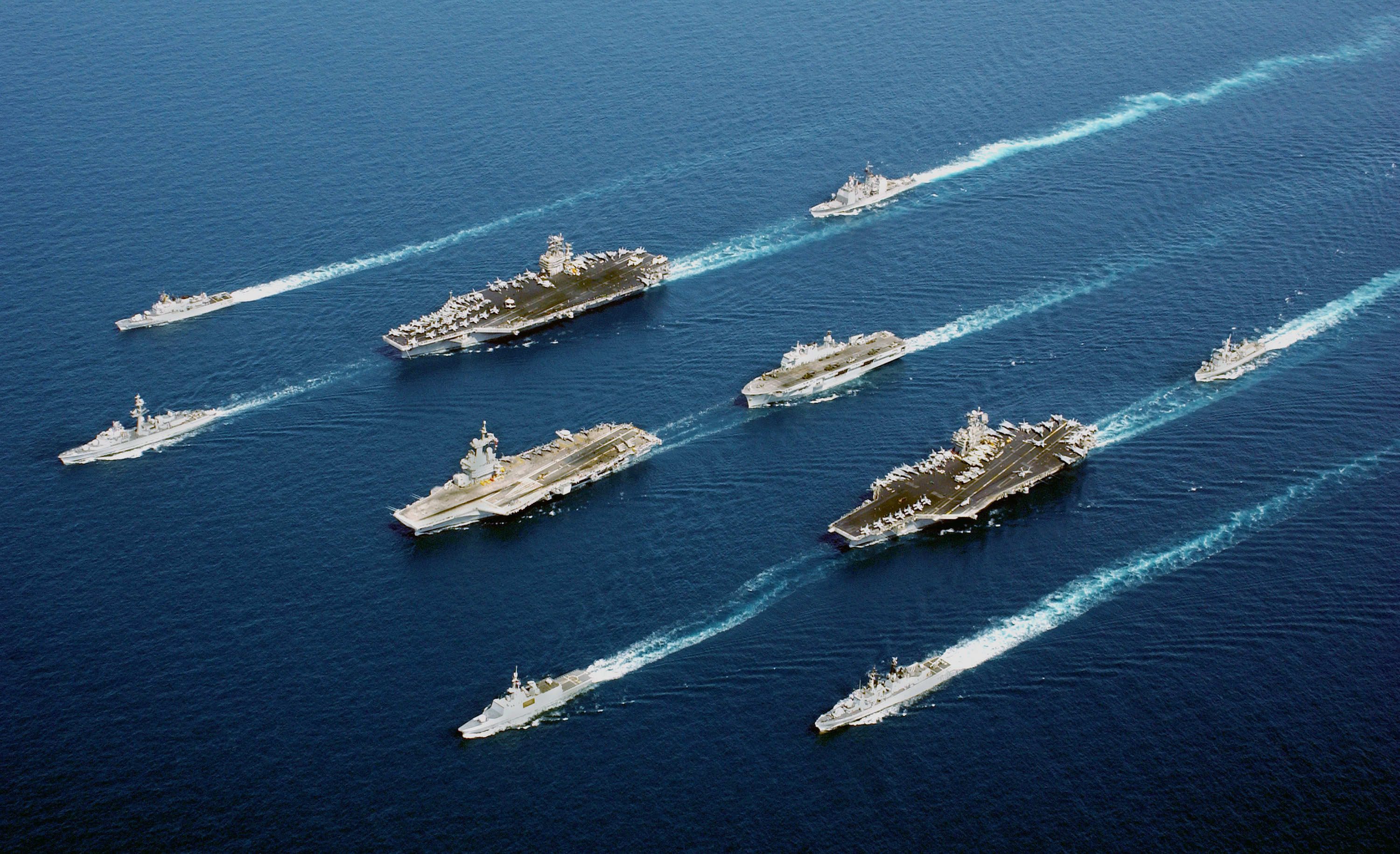
Official name for the US's war on terror
| Field | Value | ||||||||
|---|---|---|---|---|---|---|---|---|---|
| conflict | Operation Enduring Freedom | ||||||||
| partof | the war on terror and War in Afghanistan | ||||||||
| image | U.S. Soldiers of the 10th Mountain Division during Operation Enduring Freedom.jpg | ||||||||
| caption | U.S. soldiers of the Army's 10th Mountain Division deployed during Operation Enduring Freedom 2009 | ||||||||
| date | 7 October 2001 – 28 December 2014 (in Afghanistan) | ||||||||
| () | |||||||||
| place | Afghanistan, Philippines, Somalia, Georgia, Kyrgyzstan, Sahara Desert | ||||||||
| combatant1 | In Afghanistan: (completed) | ||||||||
| * Albania<ref>{{Cite web | url | http://www.mod.gov.al/arkiv/eng/index.php?option=com_content&view=article&id=899:afganistan&catid=103&Itemid=667 | title=Afghanistan, ISAF Operations led by NATO | archive-url=https://web.archive.org/web/20180620002228/http://www.mod.gov.al/arkiv/eng/index.php?option=com_content&view=article&id=899:afganistan&catid=103&Itemid=667 | archive-date=20 June 2018 | url-status=live}} | |||
| * <ref>{{Citation | url | http://www.philippines.embassy.gov.au/mnla/medrel110506.html | title=Philippines | publisher=Embassy | place=Australia | access-date=7 October 2013 | archive-url=https://web.archive.org/web/20131102175048/http://www.philippines.embassy.gov.au/mnla/medrel110506.html | archive-date=2 November 2013 | url-status=live }}. |
| * {{flag | Georgia | size | 23px}} | ||||||
| * {{flag | United States | 1960 | size | 23px}} | |||||
| * {{flag | United States | 1960 | size | 23px}} | |||||
| combatant2 | Islamic Republic of Afghanistan In Afghanistan: | ||||||||
| commander1 | United States CIC George W Bush (2001–2009) | ||||||||
| {{Flagicon | United States | 1960 | size | 23px}} CIC Barack Obama (2009–2014) | |||||
| United States GEN Tommy Franks (2001–2003) | |||||||||
| United States GEN John Abizaid (2003–2007) | |||||||||
| United States ADM William J. Fallon (2007–2008) | |||||||||
| United States GEN Martin Dempsey (2008–2015) | |||||||||
| United Kingdom MRAF Sir Graham Stirrup (2003–2011) | |||||||||
| United States GEN David Petraeus (2008–2010) | |||||||||
| commander2 | Afghanistan Mohammad Omar # | ||||||||
| Flag of al-Qaeda.svg Osama bin Laden | |||||||||
| Flag of al-Qaeda.svg Ayman al-Zawahiri | |||||||||
| Flag of Jihad.svg Khadaffy Janjalani | |||||||||
| Flag of Jihad.svg Riduan Isamuddin | |||||||||
| casualties1 | Flag of Afghanistan (2013–2021).svg 66,000+ killed | ||||||||
| 2,380 killed by January 2016<ref name | iCasualties | ||||||||
| United Kingdom 456 killed | |||||||||
| Canada 158 killed | |||||||||
| 54 killed<ref name | iCasualties/ | ||||||||
| Italy 53 killed | |||||||||
| Others 200+ killed | |||||||||
| casualties2 | Afghanistan In Afghanistan: | ||||||||
| * 72,000+ killed<ref name | "the Washington post" | ||||||||
| * 328+<ref>300 killed (2002–2007)[http://mikeinmanila.wordpress.com/2007/01/20/abu-sayyaf-leader-janjalani-dead-us-military-releases-dna-test-on-corpse/] {{Webarchive | url | https://web.archive.org/web/20160307044243/https://mikeinmanila.wordpress.com/2007/01/20/abu-sayyaf-leader-janjalani-dead-us-military-releases-dna-test-on-corpse/ | date=7 March 2016 }} 15 killed (February 2012)[http://www.atimes.com/atimes/Southeast_Asia/NB29Ae01.html](http://www.atimes.com/atimes/Southeast_Asia/NB29Ae01.html) | ||||||
| * 260 to 365 killed<ref>[https://www.thebureauinvestigates.com/category/projects/drones/drones-graphs/ "The Bureau of Investigative Journalism"] {{Webarchive | url | https://web.archive.org/web/20150608135616/https://www.thebureauinvestigates.com/category/projects/drones/drones-graphs/ | date=8 June 2015 }}, Somalia Datasheet. Retrieved 4 February 2016. |
()
- NATO
- Flag of the International Security Assistance Force.svg ISAF
- Albania Albania
- Finland
- Denmark
- United States
- United Kingdom
- France
- Australia
- Canada
- Germany
- Belgium
- Norway
- Italy
- Georgia
- Spain
- Portugal
- Poland
- Armenia
- Azerbaijan
- Sweden
- Czech Republic
- New Zealand
- Netherlands
- Romania
- Ukraine
- Turkey
- Uzbekistan
- United Arab Emirates
- Former:
- Afghanistan Northern Alliance In the Philippines: (completed)
- Philippines
- United States
- Australia
- Indonesia In Somalia/Horn of Africa: Ongoing
- NATO
- European Union
- SADC
- Australia
- Azerbaijan
- Belarus
- Canada
- Djibouti
- Ethiopia
- France
- Georgia
- Germany
- Greece
- India
- Indonesia
- Italy
- Japan
- Kazakhstan
- Kenya
- South Korea
- Kyrgyzstan
- Malaysia
- New Zealand
- Norway
- Pakistan
- Russia
- Seychelles
- Singapore
- South Africa
- Somalia
- Spain
- Tajikistan
- Thailand
- Turkey
- Turkmenistan
- Uganda
- Ukraine
- Uzbekistan
- United Kingdom
- United States In Georgia: (completed)
- Georgia
- United States In Kyrgyzstan: (completed)
- South Korea
- Kyrgyzstan
- Russia
- United States Other nations
- Taliban
- al-Qaeda Philippines In the Philippines:
- Flag of Jihad.svg Abu Sayyaf (from 2001)
- Flag of Jihad.svg Jemaah Islamiyah (until 2024)
- Flag of the Moro Islamic Liberation Front.svg Moro Islamic Liberation Front (until 2012) Somalia In Somalia:
- ShababFlag.svg Al-Shabaab (from 2006)
- Flag of Jihad.svg Hizbul Islam (until 2014) In Sahara:
- AQMI Flag.svg Al-Qaeda Organization in the Islamic Maghreb
- AQMI Flag.svg Jama'at Nasr al-Islam wal-Muslimin
United States CIC Barack Obama (2009–2014) United States GEN Tommy Franks (2001–2003) United States GEN John Abizaid (2003–2007) United States ADM William J. Fallon (2007–2008) United States GEN Martin Dempsey (2008–2015) United Kingdom MRAF Sir Graham Stirrup (2003–2011) United States GEN David Petraeus (2008–2010) Flag of al-Qaeda.svg Osama bin Laden Flag of al-Qaeda.svg Ayman al-Zawahiri Flag of Jihad.svg Khadaffy Janjalani Flag of Jihad.svg Riduan Isamuddin
Flag of the International Security Assistance Force.svg 12,000+ killed
United States 2,380 killed by January 2016 United Kingdom 456 killed Canada 158 killed
Germany 54 killed Others 200+ killed
- 72,000+ killed Philippines In the Philippines:
- 328+ Somalia In Somalia:
- 260 to 365 killed
Operation Enduring Freedom (OEF) was the official name used by the U.S. government for both the first stage (2001–2014) of the war in Afghanistan (2001–2021) and related military operations during broader-scale global war on terrorism. On 7 October 2001, in response to the September 11 attacks, President George W. Bush announced that airstrikes against al-Qaeda and the Taliban had begun in Afghanistan. Beyond the military actions in Afghanistan, U.S military command structures operating under the Operation Enduring Freedom banner were also affiliated with several counterterrorism missions in other countries, such as OEF-Philippines and OEF-Trans Sahara.
After 13 years, on 28 December 2014, President Barack Obama announced the end of Operation Enduring Freedom in Afghanistan. Subsequent operations in Afghanistan by the United States' military forces, both non-combat and combat, occurred under the name Operation Freedom's Sentinel.
Subordinate operations
Operation Enduring Freedom referred to the U.S.-led combat mission in Afghanistan. The codename was also used for counter-terrorism operations in other countries targeting Al Qaeda and remnants of the Taliban, such as OEF-Philippines, OEF-Trans Sahara, and possibly in Georgia's Pankisi Gorge, primarily through government funding vehicles.
- Operation Enduring Freedom (OEF), 7 October 2001–31 December 2014. Succeeded by Operation Freedom's Sentinel.
- Operation Enduring Freedom – Philippines (OEF-P, formerly Operation Freedom Eagle), 15 January 2002 – 24 February 2015
- Operation Enduring Freedom – Horn of Africa (OEF-HOA)
- Operation Juniper Shield, formerly known as Operation Enduring Freedom – Trans Sahara (OEF-TS; see also Insurgency in the Maghreb)
- Operation Enduring Freedom – Caribbean and Central America (OEF-CCA)
- Operation Enduring Freedom – Kyrgyzstan, 18 December 2001 – 3 June 2014
Etymology
The U.S. government used the term "Operation Enduring Freedom" to officially describe the War in Afghanistan, from the period between 7 October 2001 and 31 December 2014. Subsequent operations in Afghanistan by the United States' military forces, both non-combat and combat, occurred under the name Operation Freedom's Sentinel.
The operation was originally called "Operation Infinite Justice", but as similar phrases have been used by adherents of several religions as an exclusive description of God, it is believed to have been changed to avoid offense to Muslims who are the majority religion in Afghanistan. In September 2001, U.S. President George W. Bush's remark that "this crusade, this war on terrorism, is going to take a while," which prompted widespread criticism from the Islamic world, may also have contributed to the renaming of the operation.
The term "OEF" typically refers to the phase of the War in Afghanistan from 2001 to 2014. Other operations, such as the Georgia Train and Equip Program, are only loosely or nominally connected, such as through government funding vehicles. All the operations, however, have a focus on counterterrorism activities.
Operation Enduring Freedom, which was a joint U.S., U.K., and Afghan operation, was separate from the International Security Assistance Force (ISAF), which was an operation of North Atlantic Treaty Organization nations including the U.S. and the U.K. The two operations ran in parallel, although it had been suggested that they merge.
Overview
On September 11th, 2001, Al Qaeda carried out terrorist attacks in New York City and Washington D.C. Shortly after President George W. Bush declared a war on terror. In response to the September 11 attacks, the early combat operations that took place on 7 October 2001 to include a mix of strikes from land-based B-1 Lancer, B-2 Spirit and B-52 Stratofortress bombers, carrier-based F-14 Tomcat and F/A-18 Hornet fighters, and Tomahawk cruise missiles launched from both U.S. and British ships and submarines signaled the start of Operation Enduring Freedom.
The initial military objectives of OEF, as articulated by President George W. Bush in his 20 September address to a Joint Session of Congress and his 7 October address to the country, included the destruction of terrorist training camps and infrastructure within Afghanistan, the capture of al-Qaeda leaders, and the cessation of terrorist activities in Afghanistan.
In January 2002, over 1,200 soldiers from the United States Special Operations Command Pacific (SOCPAC) deployed to the Philippines to support the Armed Forces of the Philippines (AFP) in their push to uproot terrorist forces on the island of Basilan. Of those groups included are Abu Sayyaf Group (ASG), al-Qaeda and Jemaah Islamiyah. The operation consisted of training the AFP in counter-terrorist operations as well as supporting the local people with humanitarian aid in Operation Smiles.
In October 2002, the Combined Task Force 150 and United States military Special Forces established themselves in Djibouti at Camp Lemonnier. The stated goals of the operation were to provide humanitarian aid and patrol the Horn of Africa to reduce the abilities of terrorist organizations in the region. Similar to OEF-P, the goal of humanitarian aid was emphasized, ostensibly to prevent militant organizations from being able to take hold amongst the population as well as reemerge after being removed.
The military aspect involves coalition forces searching and boarding ships entering the region for illegal cargo as well as providing training and equipment to the armed forces in the region. The humanitarian aspect involves building schools, clinics and water wells to enforce the confidence of the local people.
Since 2001, the cumulative expenditure by the U.S. government on Operation Enduring Freedom has exceeded $150 billion.
Operation Enduring Freedom (OEF) in Afghanistan
Taliban
Seizing upon a power vacuum after the Soviets withdrew from Afghanistan after their invasion, the Taliban governed Afghanistan from 1996 to 2001. Their extreme interpretation of Islamic law prompted them to ban music, television, sports, and dancing, and enforce harsh judicial penalties (See Human rights in Afghanistan). Amputation was an accepted form of punishment for stealing, and public executions could often be seen at the Kabul football stadium. Women's rights groups around the world were frequently critical as the Taliban banned women from appearing in public or holding many jobs outside the home. They drew further criticism when they destroyed the Buddhas of Bamyan, historical statues nearly 1,500 years old, because the Buddhas were considered idols.
In 1996, Saudi dissident Osama bin Laden moved to Afghanistan. When the Taliban came to power, bin Laden was able to forge an alliance between the Taliban and his al-Qaeda organization. It is understood that al-Qaeda-trained fighters known as the 055 Brigade were integrated with the Taliban army between 1997 and 2001. It has been suggested that the Taliban and bin Laden had very close connections.
U.S.-led coalition action
Main article: War in Afghanistan (2001–2021)
On 20 September 2001, the U.S. stated that Osama bin Laden was behind the 11 September attacks in 2001. The U.S. made a five-point ultimatum to the Taliban: :* Deliver to the U.S. all of the leaders of al-Qaeda :* Release all imprisoned foreign nationals :* Close immediately every terrorist training camp :* Hand over every terrorist and their supporters to appropriate authorities :* Give the United States full access to terrorist training camps for inspection
On 21 September 2001, the Taliban rejected this ultimatum, stating there was no evidence in their possession linking bin Laden to the 11 September attacks.
On 22 September 2001, the United Arab Emirates and later Saudi Arabia withdrew their recognition of the Taliban as the legal government of Afghanistan, leaving neighboring Pakistan as the only remaining country with diplomatic ties.
On 4 October 2001, it was reported that the Taliban covertly offered to turn bin Laden over to Pakistan for trial in an international tribunal that operated according to Islamic shar'ia law. On 7 October 2001, the Taliban proposed to try bin Laden in Afghanistan in an Islamic court. This proposition was immediately rejected by the US.
On 14 October 2001, the Taliban proposed to hand bin Laden over to a third country for trial, but only if they were given evidence of bin Laden's involvement in the events of 11 September 2001.
The UN Security Council, on 16 January 2002, unanimously established an arms embargo and the freezing of identifiable assets belonging to bin Laden, al-Qaeda, and the remaining Taliban.
Combat operations start
On Sunday 7 October 2001, American and British warplanes began fighting Taliban forces and al-Qaeda. Cruise missiles were fired from warships.
The Northern Alliance, aided by Joint Special Operations teams consisting of Green Berets from the 5th Special Forces Group, aircrew members from the 160th Special Operations Aviation Regiment (SOAR), and Air Force Combat Controllers, fought against the Taliban. Aided by U.S. bombing and massive defections, they captured Mazar-i-Sharif on 9 November. They then rapidly gained control of most of northern Afghanistan, and took control of Kabul on 13 November after the Taliban unexpectedly fled the city. The Taliban were restricted to a smaller and smaller region, with Kunduz, the last Taliban-held city in the north, captured on 26 November. Most of the Taliban fled to Pakistan.
The war continued in the south of the country, where the Taliban retreated to Kandahar. Whilst in Kandahar the Taliban agreed to surrender but the deal was rejected by Secretary of Defense Donald Rumsfeld as it would have provided amnesty to Taliban leader Mullah Mohammed Omar. After Kandahar fell in December, remnants of the Taliban and al-Qaeda continued to mount resistance. Meanwhile, in November 2001 the U.S. military and its allied forces established their first ground base in Afghanistan to the south west of Kandahar, known as FOB Rhino.
The Battle of Tora Bora, involving U.S., German, British and Northern Alliance forces took place in December 2001 to further destroy the Taliban and suspected al-Qaeda in Afghanistan. In early March 2002 the United States military, along with allied Afghan military forces, conducted a large operation to destroy al-Qaeda in an operation code-named Operation Anaconda.
The operation was carried out by elements of the United States 10th Mountain Division, 101st Airborne Division, the U.S. special forces groups TF 11, TF Bowie, TF Dagger, TF K-Bar, British Royal Marines, the Norwegian Forsvarets Spesialkommando, Hærens Jegerkommando and Marinejegerkommandoen, Canada's 3rd Battalion Princess Patricia's Canadian Light Infantry, Canada's Joint Task Force 2, the German KSK, and elements of the Australian Special Air Service Regiment and of the New Zealand Special Air Service and the Afghan National Army.
After managing to evade U.S. forces throughout the summer of 2002, the remnants of the Taliban gradually began to regain their confidence. A U.S. and Canadian led operation (supported by British and Dutch forces), Operation Mountain Thrust was launched in May 2006 to counter renewed Taliban insurgency.
Since January 2006, the NATO International Security Assistance Force undertook combat duties from Operation Enduring Freedom in southern Afghanistan, the NATO force chiefly made up of British, Canadian and Dutch forces (and some smaller contributions from Denmark, Romania and Estonia and air support from Norway as well as air and artillery support from the U.S.) (see the article Coalition combat operations in Afghanistan in 2006). The United States military also conducts military operations separate from NATO as part of Operation Enduring Freedom in other parts of Afghanistan, in areas such as Kandahar, Bagram, and Kabul (including Camp Eggers and Camp Phoenix.)
International support
Main article: Participants in Operation Enduring Freedom
The United States was supported by several nations during Operation Enduring Freedom (OEF) in Afghanistan in 2001–2003 and in subsequent coalition operations directly or indirectly in support of OEF. See the article Afghanistan War order of battle for the disposition of coalition forces in Afghanistan as of 2012.
Result
The U.S.-led coalition initially removed the Taliban from power and seriously crippled al-Qaeda and associated militants in Afghanistan. However, success in quelling the Taliban insurgency since the 2001 invasion has faltered. As the war dragged on, the Taliban demonstrated they could not be defeated also thanks to sanctuary in neighboring Pakistan.
On 9 October 2004, Afghanistan elected Hamid Karzai president in its first direct elections. The following year, Afghans conducted the 2005 Afghan parliamentary election on 18 September. Since the invasion, hundreds of schools and mosques have been constructed, millions of dollars in aid have been distributed, and the occurrence of violence has been reduced.
While military forces interdicted insurgents and assured some form of security, Provincial reconstruction teams were tasked with infrastructure building, such as constructing roads and bridges, assisting during floods, and providing food and water to refugees. Many warlords have participated in an allegiance program, formally recognizing the legitimacy of the government of Afghanistan, and formally surrendering their soldiers and weapons. Subsequent actions have led to questions about their true loyalties.
The Afghan National Army, Afghan National Police, and Afghan Border Police were being trained to assume the task of securing their nation.
On 31 December 2014, Operation Enduring Freedom concluded, and was succeeded by Operation Freedom's Sentinel on 1 January 2015.
In 2020, the US left Afghanistan to the Taliban under an agreement ensuring a safe passage for American forces out of the country by mid 2021. On 15 August 2021, all of Afghanistan, besides Kabul, was back in the hands of Taliban. By August 31, all US and allied forces departed the Hamid Karzai International Airport, thus ending any official operations within Afghanistan.
Criticism
Main article: Criticism of the war on terror
Hardliner newspapers in Iran and religious scholars in Lebanon suggested "Infinite Imperialism", "Infinite Arrogance", or "Infinite Injustice" might have been more appropriate name for the operation.
AFP, reporting on a news story in the Sunday, 3 April 2004, issue of The New Yorker, wrote that retired Army Colonel Hy Rothstein, "who served in the Army Special Forces for more than 20 years [and was] commissioned by the Pentagon to examine the war in Afghanistan, concluded the conflict created conditions that have given 'warlordism, banditry and opium production a new lease on life.' "
The conduct of U.S. forces was criticised in a report entitled Enduring Freedom – Abuses by U.S. Forces in Afghanistan by U.S.-based human rights group Human Rights Watch in 2004. Some Pakistani scholars, such as Masood Ashraf Raja, editor of Pakistaniaat, have also provided a more specific form of criticism that relates to the consequences of the Global War on Terrorism on the region.
Operation Enduring Freedom – Philippines (OEF-P)
Main article: Operation Enduring Freedom – Philippines
Abu Sayyaf Group
Main article: Abu Sayyaf
The Abu Sayyaf Group (ASG) Al Harakat Al Islamiyya, is deemed a "foreign terrorist organization" by the United States government. Specifically, it is an Islamist separatist group based in and around the southern islands of the Republic of the Philippines, primarily Jolo, Basilan, and Mindanao.
Since inception in the early 1990s, the group has carried out bombings, assassinations, kidnappings, and extortion in their fight for an independent Islamic state in western Mindanao and the Sulu Archipelago. Its claimed overarching goal is to create a Pan-Islamic superstate across the Malay portions of Southeast Asia, spanning, from east to west, the large island of Mindanao, the Sulu Archipelago (Basilan and Jolo islands), the large island of Borneo (Malaysia and Indonesia), the South China Sea, and the Malay Peninsula (Peninsular Malaysia, Thailand and Myanmar).
Jemaah Islamiyah
Main article: Jemaah Islamiyah
Jemaah Islamiyah is a militant Islamic terrorist organization dedicated to the establishment of a fundamentalist Islamic theocracy in Southeast Asia, in particular Indonesia, Singapore, Brunei, Malaysia, the south of Thailand and the Philippines. Jemaah Islamiyah originally used peaceful means to achieve its goals, but later resorted to terrorism because of its connections with al-Qaeda.
Financial links between Jemaah Islamiyah and other terrorist groups, such as Abu Sayyaf and al-Qaeda, have been found to exist. Jemaah Islamiyah means "Islamic Group" or "Islamic Community" and is often abbreviated JI.
Jemaah Islamiyah is thought to have killed hundreds of civilians. Also, it is suspected of carrying out the Bali car bombing on 12 October 2002, in which suicide bombers attacked a nightclub killing 202 people and wounding many more. Most of the casualties were Australian tourists. After this attack, the U.S. State Department designated Jemaah Islamiyah as a Foreign Terrorist Organization. Jemaah Islamiyah is also suspected of carrying out the Zamboanga bombings, the Metro Manila bombings, the 2004 Australian embassy bombing and the 2005 Bali terrorist bombing.
U.S. actions
In January 2002, 1,200 Members of United States Special Operations Command, Pacific (SOCPAC) were deployed to the Philippines to assist the Armed Forces of the Philippines (AFP) in uprooting al-Qaeda, Jemaah Islamiyah and Abu Sayyaf. The members of SOCPAC were assigned to assist in military operations against the terrorist forces as well as humanitarian operations for the island of Basilan, where most of the conflict was expected to take place.
The United States Special Forces (SF) Unit trained and equipped special forces and scout rangers of the AFP, creating the Light Reaction Company (LRC). The LRC and elements of SOCPAC deployed to Basilan on completion of their training. The stated goals of the deployment were denying the ASG sanctuary, surveiling, controlling, and denying ASG routes, surveiling supporting villages and key personnel, conducting local training to overcome AFP weaknesses and sustain AFP strengths, supporting operations by the AFP "strike force" (LRC) in the area of responsibility (AOR), conducting and supporting civil affairs operations in the AOR.
Result
The desired result was for the AFP to gain sufficient capability to locate and destroy the ASG, to recover hostages and to enhance the legitimacy of the Philippine government. Much of the operation was a success: the ASG was driven from Basilan and one U.S. hostage was recovered. The Abu Sayyaf Group's ranks, which once counted more than 800 members, was reduced to less than 100. The humanitarian portion of the operation, Operation Smiles, created 14 schools, 7 clinics, 3 hospitals and provided medical care to over 18,000 residents of Basilan. Humanitarian groups were able to continue their work without fear of further kidnappings and terrorists attacks by the Abu Sayyaf Group.
Operation Enduring Freedom – Horn of Africa (OEF-HOA)
Main article: Operation Enduring Freedom – Horn of Africa
Unlike other operations contained in Operation Enduring Freedom, OEF-HOA does not have a specific terrorist organization as a target. OEF-HOA instead focuses its efforts to disrupt and detect terrorist activities in the region and to work with host nations to deny the reemergence of terrorist cells and activities. Operations began in mid-2002 at Camp Lemonnier by a Combined Joint Special Operations Task Force (CJSOTF) augmented by support forces from Fort Stewart, Fort Hood, and Fort Story. In October 2002, the Combined Joint Task Force, Horn of Africa (CJTF-HOA) was established at Djibouti at Camp Lemonnier, taking over responsibilities from the CJSOTF. CJTF-HOA comprised approximately 2,000 personnel including U.S. military and Special Operations Forces (SOF), and coalition force members, Combined Task Force 150 (CTF-150). The coalition force consists of ships from Australia, Canada, France, Germany, Netherlands, India, Italy, Pakistan, New Zealand, Spain, Turkey and the United Kingdom. The primary goal of the coalition forces is to monitor, inspect, board and stop suspected shipments from entering the Horn of Africa region. Since 2003, the U.S. Military also conducts operations targeting Al-Qaeda-linked fighters in Somalia, these operations had reportedly killed between 113 and 136 militants by early 2016. On 7 March 2016, a further 150 were killed in U.S. airstrikes on an al Shabaab training camp north of Mogadishu.
CJTF-HOA has devoted the majority of its efforts to train selected armed forces units of the countries of Djibouti, Kenya and Ethiopia in counterterrorism and counterinsurgency tactics. Humanitarian efforts conducted by CJTF-HOA include the rebuilding of schools and medical clinics, as well as providing medical services to those countries whose forces are being trained. The program expands as part of the Trans-Saharan Counter Terrorism Initiative as CJTF personnel also assist in training the forces of Chad, Niger, Mauritania and Mali.
U.S. action
"Operation Enduring Freedom"

- 7 October 2001 – 28 December 2014
- Casualties U.S. Coalition: 3,486 Dead
- Taliban/Al-Qaeda:25,500–40,500 Dead
Anti-piracy operations were undertaken by the coalition throughout 2006 with a battle fought in March when US vessels were attacked by pirates. In January 2007, during the war in Somalia, an AC-130 airstrike was conducted against al-Qaeda members embedded with forces of the Islamic Courts Union (ICU) operating in southern Somalia near Ras Kamboni. US naval forces, including the aircraft carrier USS Dwight D. Eisenhower, were positioned off the coast of Somalia to provide support and to prevent any al-Qaeda forces escaping by sea. Actions against pirates also occurred in June and October 2007 with varying amounts of success.
"Operation Resolute Support/Freedom's Sentinel"
- 1 January 2015 – Present
- Casualties U.S. Coalition: 1 January 2015 – Present | 70 Dead* – Subject to change
- Taliban/Al-Qaeda:
Effective 1 January 2015, Secretary of Defense Hagel announced that the new U.S. mission in Afghanistan will focus on training, advising, and assisting Afghan security forces and designated as Operation Freedom's Sentinel. 19 About 13,500 U.S. troops are expected in Afghanistan through 2015 and will be assisted by troops from NATO allies.
Military decorations
Since 2002, the United States military has created military awards and decorations related to Operation Enduring Freedom
- Afghanistan Campaign Medal
NATO also created a military decoration related to Operation Enduring Freedom:
- Non-Article 5 ISAF NATO Medal
References
References
- Torreon, Barbara Salazar. (2017). "U.S. Periods of War and Dates of Recent Conflicts". Congressional Research Service.
- "Operation Enduring Freedom".
- "Afghanistan, ISAF Operations led by NATO".
- "Philippines". Embassy.
- "Operation Enduring Freedom, Afghanistan". [[ICasualties.org]].
- (20 January 2015). "France Weighs Pullout After 4 of Its Soldiers Are Killed, 301 Killed In Total Since War". New York Times.
- (7 December 2015). "How many terrorists has President Obama actually 'taken out'? Probably over 30,000.". the Washington post.
- 300 killed (2002–2007)[http://mikeinmanila.wordpress.com/2007/01/20/abu-sayyaf-leader-janjalani-dead-us-military-releases-dna-test-on-corpse/] {{Webarchive. link. (7 March 2016 15 killed (February 2012)[http://www.atimes.com/atimes/Southeast_Asia/NB29Ae01.html] {{Webarchive). link. (29 February 2012)
- [https://www.thebureauinvestigates.com/category/projects/drones/drones-graphs/ "The Bureau of Investigative Journalism"] {{Webarchive. link. (8 June 2015 , Somalia Datasheet. Retrieved 4 February 2016.)
- link. (17 February 2017)
- "Operation Enduring Freedom Fast Facts". CNN.
- (March–April 2002). "Helping Georgia?". Boston University Institute for the Study of Conflict, Ideology and Policy.
- (29 December 2014). "Meet Operation Freedom's Sentinel, the Pentagon's new mission in Afghanistan". The Washington Post.
- (29 December 2014). "Operation Enduring Freedom comes to an end". U.S. Army.
- Tilghman, Andrew. (19 February 2015). "Despite war's end, Pentagon extends Afghanistan campaign medal". MilitaryTimes.
- (31 December 2014). "Mission Ends in Afghanistan, but Sacrifices Are Not Over for U.S. Soldiers". [[The New York Times]].
- (20 July 2005). "NATO to add to Afghanistan troops". [[The New York Times]].
- Spencer C. Tucker. (8 October 2010). "The Encyclopedia of Middle East Wars: The United States in the Persian Gulf, Afghanistan, and Iraq Conflicts [5 volumes]: The United States in the Persian Gulf, Afghanistan, and Iraq Conflicts". ABC-CLIO.
- United States Department of Defense. (December 2014). "Obama, Hagel Mark End of Operation Enduring Freedom". United States Department of Defense.
- (6 April 2016). "U.S. Special Operations Forces in the Philippines, 2001–2014". RAND Corporation.
- (20 January 2015). "US Special Operations Forces Are in More Countries Than You Can Imagine". The Nation.
- (5 March 2008). "Statement of Admiral James G. Stavridis, United States Navy Commander, United States Southern Command Before the House Committee on Appropriations Subcommittee on Defense".
- (2014). "Why We Lost: A General's Inside Account of the Iraq and Afghanistan Wars". Houghton Mifflin Harcourt.
- . (29 December 2014). ["Operation Enduring Freedom comes to an end"](https://www.army.mil/article/140565/Operation_Enduring_Freedom_comes_to_an_end/). *United States Army*.
- (25 September 2001). "Infinite Justice, out – Enduring Freedom". BBC News.
- Great Britain: Parliament: House of Commons: Defence Committee. (2006). "The UK Deployment to Afghanistan: Fifth Report of Session 2005–06; Report, Together with Formal Minutes, Oral and Written Evidence". The Stationery Office.
- David T. Zabecki PhD. (28 October 2014). "Germany at War: 400 Years of Military History [4 volumes]". ABC-CLIO.
- Department Of State. The Office of Electronic Information, Bureau of Public Affairs. "The Global War on Terrorism: The First 100 Days".
- Fargo, Tom. (10 February 2003). "PASOC 2003 Conference". U.S. Pacific Command.
- "Operation Smiles". U.S. Pacific Command.
- "FAS".
- (14 August 1998). "Taliban publicly execute murderer, amputate two robbers". Rawa.
- "The Afghan Taliban: Like It or Not, It Occupies Two-Thirds of Afghanistan and Shows No Sign of Weakening". Washington report.
- "Filmed by RAWA: Taliban publicly execute an Afghan woman". Rawa.
- "Asia". BBC.
- "U.N. Confirms Destruction of Afghan Buddhas".
- "Report". 9/11 commission.
- (21 September 2001). "Transcript of President Bush's address". CNN.
- (21 September 2001). "Taliban Won't Turn Over Bin Laden". CBS News.
- (8 October 2001). "Briefing 05: The Smoking Gun". J-n-v.org.
- (7 October 2001). "U.S. rejects Taliban offer to try bin Laden". CNN.
- (7 October 2001). "Bush to Taliban: 'Time is running out'". CNN.
- (14 October 2001). "Bush rejects Taliban offer to hand Bin Laden over". The Guardian.
- "Bush announces opening of attacks – October 7, 2001". CNN.
- Knowlton, Brian. (December 7, 2001). "Rumsfeld Rejects PlanTo Allow Mullah Omar 'To Live in Dignity' : Taliban Fighters Agree to Surrender Kandahar". The New York Times.
- (6 December 2001). "Taliban leader to surrender Kandahar".
- Kellner, Douglas. (2003). "From 9/11 to terror war : the dangers of the Bush legacy". Rowman & Littlefield.
- "MEU(SOC)s in OEF-A – Special Operations Forces and Operation Enduring Freedom {{!}} Defense Media Network". Defense Media Network.
- Brigitte L Nacos, 'Terrorism and Counterterrorism': Chapter 11, p.188
- United States Department of Defense. (19 February 2015). "Operation Freedom's Sentinel Qualifies for Campaign Medal". United States Department of Defense.
- (18 August 2021). "Trump Calls Biden's Afghanistan Exit the 'Greatest Embarrassment'". Bloomberg.com.
- (29 February 2020). "Taliban and U.S. Strike Deal to Withdraw American Troops from Afghanistan". The New York Times.
- (17 August 2021). "Historian: Trump's deal with Taliban created a 'roadmap toward a surrender' - CNN Video".
- (16 August 2021). "Chaos Ensues at Kabul Airport as Americans Abandon Afghanistan". The New York Times.
- (17 August 2021). "Chaos, desperation at Kabul airport as Biden defends withdrawal from Afghanistan". Reuters.
- (2001-09-24). "Analysis: Straw's visit divides Iran".
- Williams, Paul L.. (2004). "Osama's revenge : the next 9-11 : what the media and the government haven't told you". Prometheus Books.
- Dower, John W.. (2010). "Cultures of War: Pearl Harbor / Hiroshima / 9-11 / Iraq". W. W. Norton & Company.
- Moaveni, Azadeh. (27 September – 3 October 2001). "As the British Foreign Secretary courts Iran to aid a US-led coalition against terrorism, Tehran struggles for consensus and considers the incentives for cooperation". Al-Ahram Weekly.
- "South Asia". Channel NewsAsia.
- (2009). "The Rhetoric of Democracy and War on Terror: The Case of Pakistan". Pakistaniaat: A Journal of Pakistan Studies.
- "Abu Sayyaf Group (Philippines, Islamist separatists)". Council on Foreign Relations.
- (2012-02-02). "Profile: Jemaah Islamiah". BBC News.
- "Funding Terrorism in Southeast Asia: The Financial Network of Al Qaeda and Jemaah Islamiyah". Nbr.org.
- Maxwell, Colonel David S. "The U.S. Army Professional Writing Collection". Army.
- "Organisations". ICT.
- (8 March 2016). "US strike kills at least 150 al Shebab fighters in Somalia". Yahoo news.
- "Terrorism". Senate.
- "iCasualties: Operation Iraqi Freedom and Operation Enduring Freedom Casualties".
This article was imported from Wikipedia and is available under the Creative Commons Attribution-ShareAlike 4.0 License. Content has been adapted to SurfDoc format. Original contributors can be found on the article history page.
Ask Mako anything about Operation Enduring Freedom — get instant answers, deeper analysis, and related topics.
Research with MakoFree with your Surf account
Create a free account to save articles, ask Mako questions, and organize your research.
Sign up freeThis content may have been generated or modified by AI. CloudSurf Software LLC is not responsible for the accuracy, completeness, or reliability of AI-generated content. Always verify important information from primary sources.
Report