From Surf Wiki (app.surf) — the open knowledge base
Opening of the North Atlantic Ocean
Breakup of Pangea
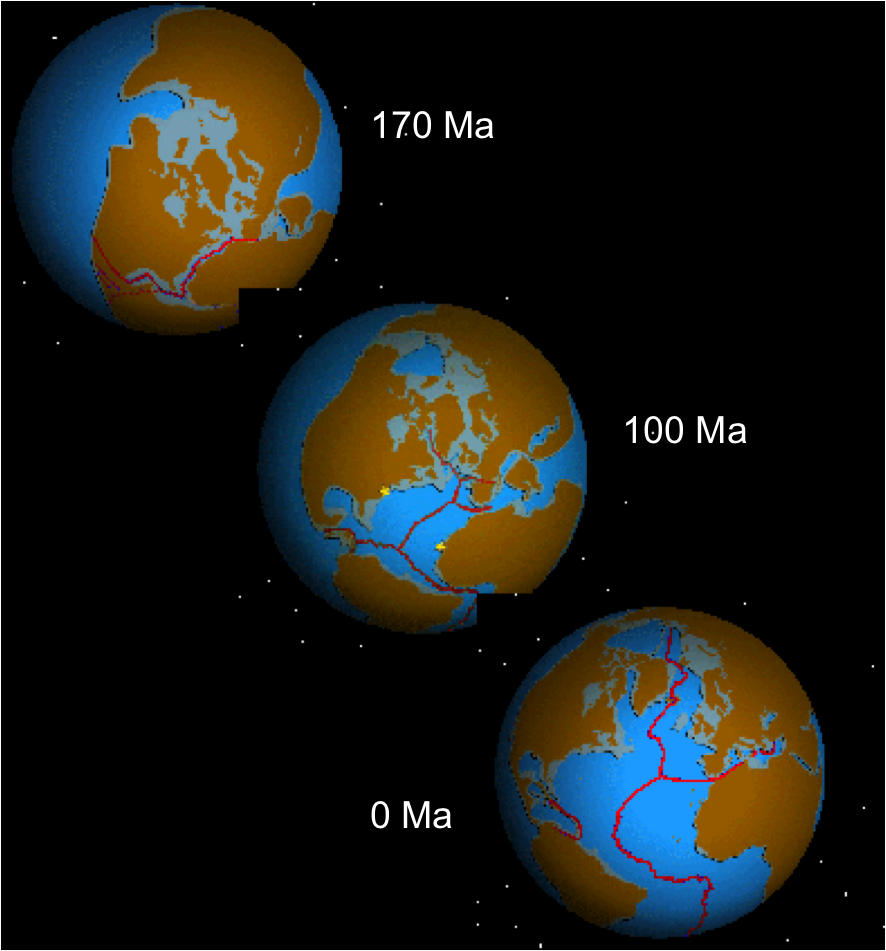
Breakup of Pangea
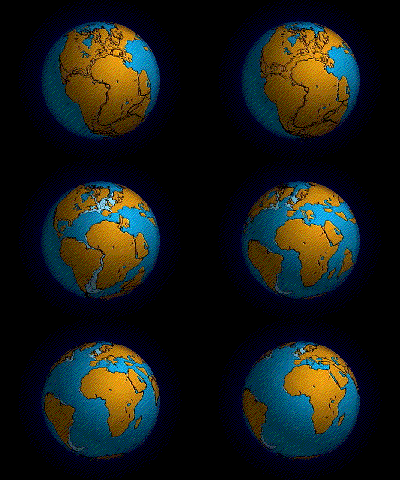
The opening of the North Atlantic Ocean is a geological event that has occurred over millions of years, during which the supercontinent Pangea broke up. As modern-day Europe (Eurasian Plate) and North America (North American Plate) separated during the final breakup of Pangea in the early Cenozoic Era, they formed the North Atlantic Ocean. Geologists believe the breakup occurred either due to primary processes of the Iceland plume or secondary processes of lithospheric extension from plate tectonics.
Description
Rocks from the North Atlantic Igneous Province have been found in Greenland, the Irminger Basin, Faroe Islands, Vøring Plateau (off Norway), Faroe-Shetland Basin, Hebrides, Outer Moray Firth and Denmark.{{Cite book | editor1-last = Jolley | editor1-first = D. W. | editor2-last = Bell | editor2-first = B. R.
- The first major phase began in the Early-Middle Jurassic, taking place between North America and Africa.{{Cite book
- The second major phase of breakup began in the Early Cretaceous. The South Atlantic Ocean opened around 140 million years ago as Africa separated from South America, and about the same time, India separated from Antarctica and Australia, forming the central Indian Ocean.
- The final major phase of breakup occurred in the early Cenozoic, as Laurentia separated from Eurasia. As the two plates broke free from each other, the Atlantic Ocean continued to expand.
Iceland plume theory
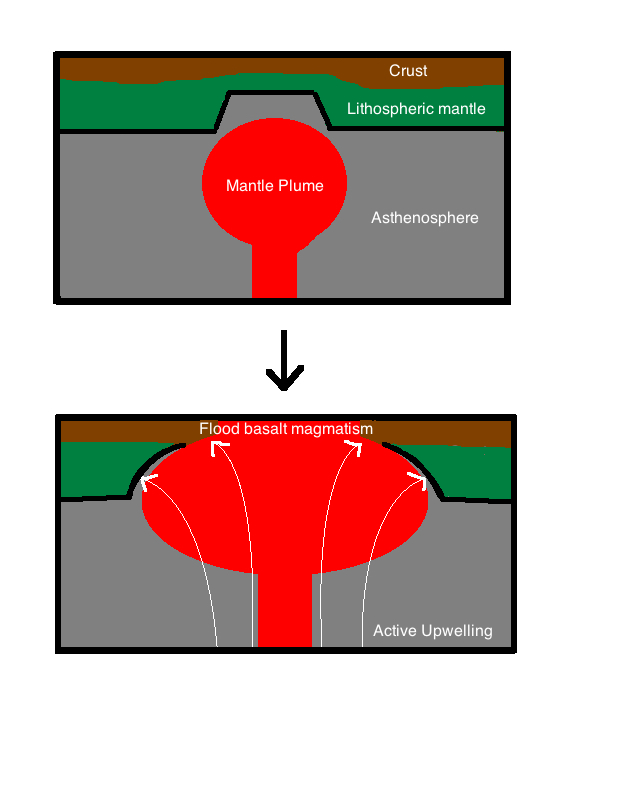
The Iceland plume is a mantle plume under Iceland that carries hot material from deep within the Earth's mantle upwards to the crust. The rising hot material weakens the lithosphere, making the separation of plates easier.{{Cite book
Plate tectonics
This theory views volcanism as the resultant of lithospheric processes rather than heat from the mantle rising up. Instead of heat coming up from deep in the mantle, volcanic anomalies come from a shallow source.{{Cite web
Active vs. passive plates
Active rifting, such as is formed by the Iceland plume, is driven by hotspot or mantle plume activity. From deep within the Earth, hot mantle rises to force doming of the crust.{{Cite book This causes thinning of the crust and lithosphere, then melting and underplating occur. Finally, there is rifting at the crest of the domed crust and volcanism occurs. In passive rifting, driven by plate tectonics, the crust and lithosphere extend as a result of plate boundary forces such as slab pull. Far field stresses thin the crust and lithospheric mantle, and hot asthenospheric mantle passively enters the thinned area. The upwelling of asthenosphere is not involved in the actual rifting process. The upward flow of the asthenosphere results in decompression melting, magmatic underplating and some volcanism that may occur in the rift area.
References
References
- (7 Nov 2012). "Pangea". [[Encyclopædia Britannica Inc.]].
This article was imported from Wikipedia and is available under the Creative Commons Attribution-ShareAlike 4.0 License. Content has been adapted to SurfDoc format. Original contributors can be found on the article history page.
Ask Mako anything about Opening of the North Atlantic Ocean — get instant answers, deeper analysis, and related topics.
Research with MakoFree with your Surf account
Create a free account to save articles, ask Mako questions, and organize your research.
Sign up freeThis content may have been generated or modified by AI. CloudSurf Software LLC is not responsible for the accuracy, completeness, or reliability of AI-generated content. Always verify important information from primary sources.
Report