From Surf Wiki (app.surf) — the open knowledge base
Old World
Synonym of Afro-Eurasia
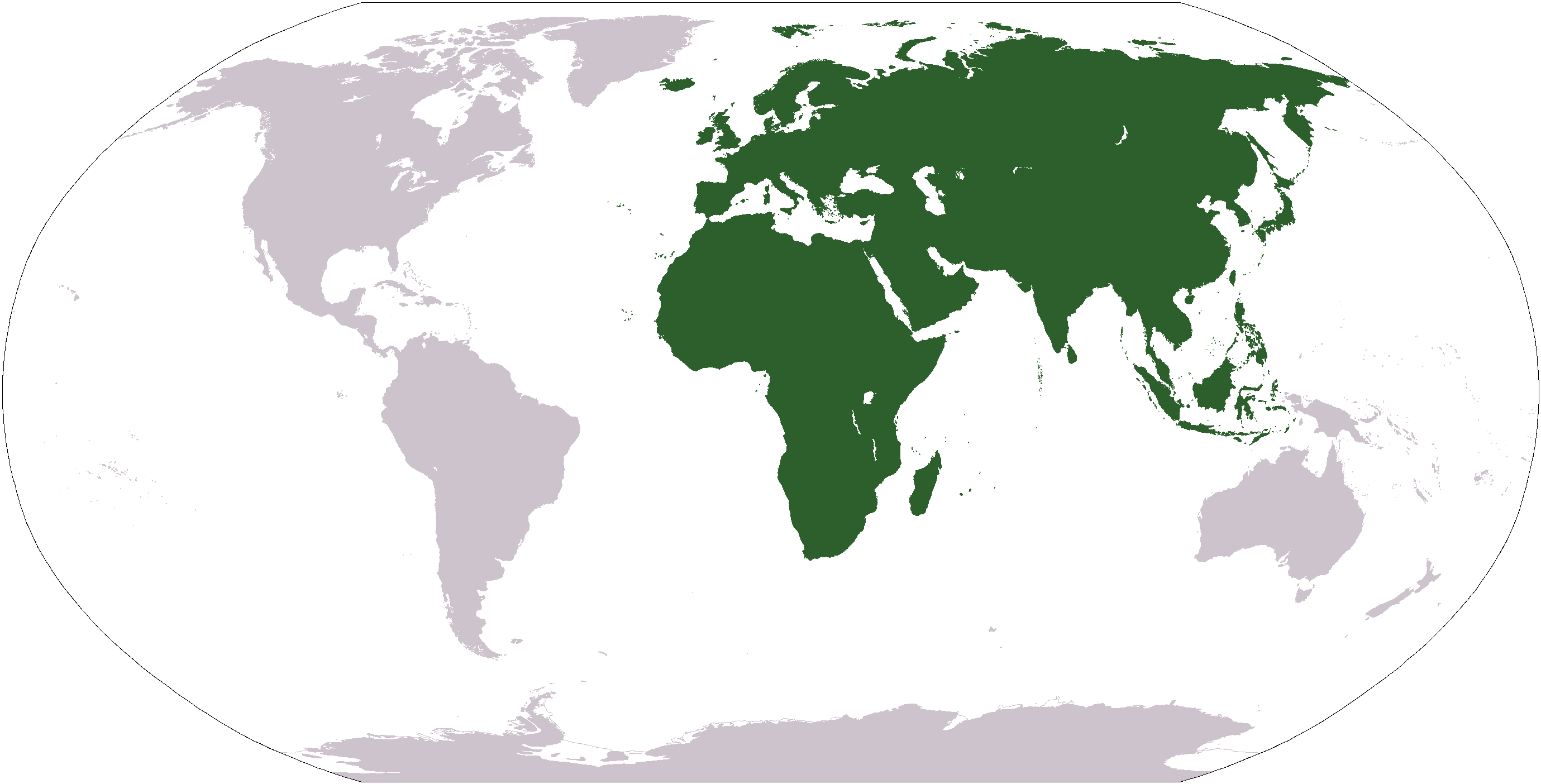
Synonym of Afro-Eurasia
The "Old World" () is a term for Afro-Eurasia coined by Europeans after 1493, when they became aware of the existence of the Americas. It is used to contrast the continents of Africa, Europe, and Asia in the Eastern Hemisphere, previously thought of by the Europeans as comprising the entire world, with the "New World", a term for the newly encountered lands of the Western Hemisphere, particularly the Americas.
History
In the context of archaeology and world history, the term "Old World" includes those parts of the world which were in (indirect) cultural contact from the Bronze Age onwards, resulting in the parallel development of the early civilizations, mostly in the temperate zone between roughly the 45th and 25th parallels north, in the area of the Mediterranean, including North Africa. It also included Mesopotamia, the Persian plateau, the Indian subcontinent, China, and parts of Sub-Saharan Africa.
These regions were connected via the Silk Road trade route, and they had a pronounced Iron Age period following the Bronze Age. In cultural terms, the Iron Age was accompanied by the so-called Axial Age, referring to cultural, philosophical and religious developments eventually leading to the emergence of the historical Western (Hellenism, "classical"), Near Eastern (Zoroastrian and Abrahamic) and Far Eastern (Hinduism, Buddhism, Jainism, Sikhism, Confucianism, Taoism) cultural spheres.
Other names
The mainland of Afro-Eurasia (excluding islands or island groups such as the British Isles, Japan, Sri Lanka, Madagascar and the Malay Archipelago) has been referred to as the World Island. The term may have been coined by Sir Halford John Mackinder in The Geographical Pivot of History.
References
References
- "Old World". [[Merriam-Webster]].
- "New world". Merriam-Webster Dictionary.
- See Francis P. Sempa, [http://www.unc.edu/depts/diplomat/AD_Issues/amdipl_14/sempa_mac2.html "Mackinder's World"] {{Webarchive. link. (3 March 2016 . ''American Diplomacy'' (UNC.edu). Retrieved 8 September 2018.)
This article was imported from Wikipedia and is available under the Creative Commons Attribution-ShareAlike 4.0 License. Content has been adapted to SurfDoc format. Original contributors can be found on the article history page.
Ask Mako anything about Old World — get instant answers, deeper analysis, and related topics.
Research with MakoFree with your Surf account
Create a free account to save articles, ask Mako questions, and organize your research.
Sign up freeThis content may have been generated or modified by AI. CloudSurf Software LLC is not responsible for the accuracy, completeness, or reliability of AI-generated content. Always verify important information from primary sources.
Report