From Surf Wiki (app.surf) — the open knowledge base
Occluded front
Meteorological interaction of warm and cool air masses
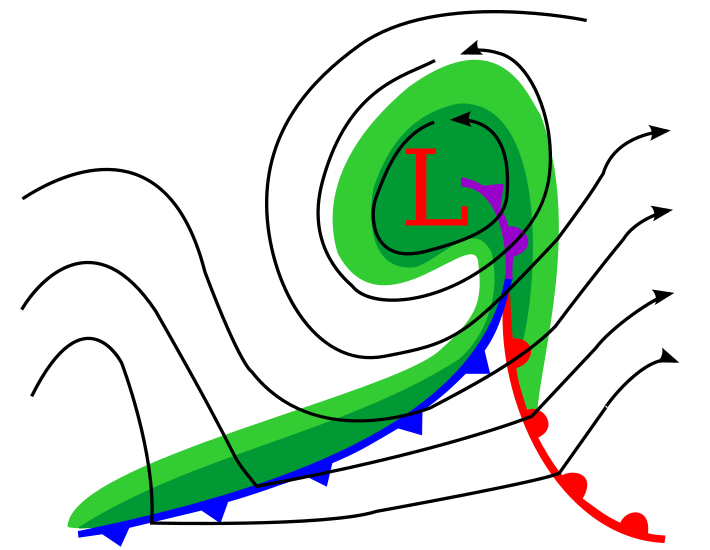
Meteorological interaction of warm and cool air masses
In meteorology, an occluded front is a type of weather front formed during cyclogenesis. The classical and usual view of an occluded front is that it starts when a cold front overtakes a warm front near a cyclone, such that the warm air is separated (occluded) from the cyclone center at the surface. The point where the warm front becomes the occluded front is the triple point; a new area of low-pressure that develops at this point is called a triple-point low. A more modern view of the formation process suggests that occluded fronts form directly without the influence of other fronts during the wrap-up of the baroclinic zone during cyclogenesis, and then lengthen due to flow deformation and rotation around the cyclone as the cyclone forms.[[File:Front occlus trowal en.png|thumb|upright=1.5|Occlusion principle with positions of warm/cold occlusion fronts and the trowal]]
Features and variants
Occluded fronts usually form around mature low pressure areas. There are two types of front occlusions, warm and cold, depending on the temperature contrast:
- In a cold occlusion, the cold air mass that overtakes the warm air mass ahead is colder than the cool air at the very front and plows under both air masses, and often has the characteristics of a cold front.
- In a warm occlusion, the cool air mass overtaking the warm front is warmer than the cold air ahead of the warm air mass and rides over the colder air mass while lifting the warm air, and often has the characteristics of a warm front. The occluded front symbol should show where the cold air intersects the surface. It thus varies between warm and cold occlusions. The TROWAL (short for TROugh of Warm air ALoft), is the estimated projection of the wedge of warm air above the surface, and is at the same position in both cases. Consequently, the location of the occluded front appearing in the surface weather analysis is often offset from the range of the associated weather which occurs at the TROWAL. The TROWAL, is primarily found with a connection to the warm occlusion, and are rarely seen in cold occlusion.
References
Schultz, D. M., and G. Vaughan, 2011: Occluded fronts and the occlusion process: A fresh look at conventional wisdom. Bull. Amer. Meteor. Soc., 92, 443–466, ES19–ES20.
This article was imported from Wikipedia and is available under the Creative Commons Attribution-ShareAlike 4.0 License. Content has been adapted to SurfDoc format. Original contributors can be found on the article history page.
Ask Mako anything about Occluded front — get instant answers, deeper analysis, and related topics.
Research with MakoFree with your Surf account
Create a free account to save articles, ask Mako questions, and organize your research.
Sign up freeThis content may have been generated or modified by AI. CloudSurf Software LLC is not responsible for the accuracy, completeness, or reliability of AI-generated content. Always verify important information from primary sources.
Report