From Surf Wiki (app.surf) — the open knowledge base
North America
Continent
.jpg)
Continent
| Field | Value |
|---|---|
| title | North America |
| image | Location North America.svg |
| area | 24.709 e6km2 (3rd) |
| population | 592,296,233 (2021; 4th) |
| density | (2021) |
| GDP_PPP | US$36.6 trillion (2025 est.; 2nd) |
| GDP_nominal | US$34.61 trillion (2025 est.; 2nd) |
| GDP_per_capita | US$67,000 (2025 est.; 2nd) |
| religions | {{unbulleted list |
| Christianity (74.6%)<ref name | "Survey" |
| No religion (19.2%)<ref name | "pew-relig"/ |
| Judaism<!--intentional link to DAB page--> (1.6%)<ref name | "pew-relig"/ |
| Islam (1.3%)<ref name | "pew-relig"/ |
| Hinduism (0.9%)<ref name | "pew-relig"/ |
| Buddhism (0.9%)<ref name | "pew-relig"/ |
| Other (1.3%)<ref name | "pew-relig"/ |
| demonym | North American |
| countries | 23 sovereign states |
| list_countries | List of sovereign states and dependent territories in North America |
| dependencies | 23 non-sovereign territories |
| languages | English, Spanish, French, Dutch, Danish, indigenous languages, and many others |
| time | UTC−10:00 to UTC+00:00 |
| cities | List of urban areas: |
| m49 | `003` – North America |
| `019` – Americas | |
| `001` – World |
| Christianity (74.6%) | No religion (19.2%) | Judaism (1.6%) | Islam (1.3%) | Hinduism (0.9%) | Buddhism (0.9%) | Other (1.3%)
019 – Americas
001 – World
North America is a continent in the Northern and Western hemispheres. North America is bordered to the north by the Arctic Ocean, to the east by the Atlantic Ocean, to the southeast by South America and the Caribbean Sea, and to the south and west by the Pacific Ocean. The region includes Middle America comprising the Caribbean, Central America, and Northern America.
North America covers an area of around 24709000 km2, representing approximately 16.5% of Earth's land area and 4.8% of its total surface area. It is the third-largest continent by size after Asia and Africa, and the fourth-largest continent by population after Asia, Africa, and Europe. , North America's population was estimated as over 592 million people in 23 independent states and territories, or about 7.5% of the world's population. In human geography, the terms "North America" and "North American" refers to Canada, Greenland, Mexico, Saint Pierre and Miquelon, and the United States.
It is unknown with certainty how and when first human populations first reached North America. People were known to live in the Americas at least 20,000 years ago, but various evidence points to possibly earlier dates. The Paleo-Indian period in North America followed the Last Glacial Period, and lasted until about 10,000 years ago when the Archaic period began. The classic stage followed the Archaic period, and lasted from approximately the 6th to 13th centuries. Beginning in 1000 AD, the Norse were the first Europeans to begin exploring and ultimately colonizing areas of North America.
In 1492, the exploratory voyages of Christopher Columbus led to a transatlantic exchange, including migrations of European settlers during the Age of Discovery and the early modern period. Present-day cultural and ethnic patterns reflect interactions between European colonists, indigenous peoples, enslaved Africans, immigrants from Europe, Asia, and descendants of these respective groups.
Europe's colonization in North America led to most North Americans speaking European languages, such as English, Spanish, and French, and the cultures of the region commonly reflect Western traditions. However, relatively small parts of North America in Canada, the United States, Mexico, and Central America have indigenous populations that continue adhering to their respective pre-European colonial cultural and linguistic traditions.
Name
Etymology
.jpg)
.jpg)
The Americas were named after the Italian explorer Amerigo Vespucci by German cartographers Martin Waldseemüller and Matthias Ringmann. Vespucci explored South America between 1497 and 1502, and was the first European to suggest that the Americas represented a landmass then unknown to the Europeans. In 1507, Waldseemüller published a world map, and placed the word "America" on the continent of present-day South America. The continent north of present-day Mexico was then referred to as Parias. On a 1553 world map published by Petrus Apianus, North America was called "Baccalearum", meaning "realm of the Cod fish", in reference to the abundance of cod on the East Coast.
Waldseemüller used the Latinized version of Vespucci's name, Americus Vespucius, in its feminine form of "America", following the examples of "Europa", "Asia", and "Africa". Americus originated from Medieval Latin Emericus (see Saint Emeric of Hungary), coming from the Old High German name Emmerich. Map makers later extended the name America to North America.
In 1538, Gerardus Mercator used the term America on his world map of the entire Western Hemisphere. On his subsequent 1569 map, Mercator called North America "America or New India" (America sive India Nova).
The Spanish Empire called its territories in North and South America "Las Indias", and the name given to the state body that oversaw the region was called the Council of the Indies.
Definition
The United Nations and its statistics division recognize North America as including three subregions: Northern America, Central America, and the Caribbean. "Northern America" is a term distinct from "North America", excluding the Caribbean and Central America, which also includes Mexico. In the limited context of regional trade agreements, the term is used to reference three countries: Canada, Mexico, and the United States.
France, Greece, Italy, Portugal, Romania, Spain, and the countries of Latin America use a six-continent model, with the Americas viewed as a single continent and North America designating a subregion comprising Canada, Mexico, and Saint Pierre and Miquelon (politically a part of France), the United States, and often Bermuda, Clipperton Island, and Greenland.
North America has historically been known by other names, including Spanish North America, New Spain, New France, British North America and América Septentrional, the first official name given to Mexico.
Regions===
North America includes several regions and subregions, each of which have their own respective cultural, economic, and geographic regions. Economic regions include several regions formalized in 20th- and 21st-century trade agreements, including NAFTA between Canada, Mexico, and the United States, and CAFTA between Central America, the Dominican Republic, and the United States.
North America is divided linguistically and culturally into two primary regions, Anglo-America and Latin America. Anglo-America includes most of North America, Belize, and Caribbean islands with English-speaking populations. There are also regions, including Louisiana and Quebec, with large Francophone populations; in Quebec and Saint Pierre and Miquelon, French is the official language..
The southern portion of North America includes Central America and non-English-speaking Caribbean nations. The north of the continent maintains recognized regions as well. In contrast to the common definition of North America, which encompasses the whole North American continent, the term "North America" is sometimes used more narrowly to refer only to four nations, Canada, Greenland, Mexico, and the U.S. The U.S. Census Bureau includes Saint Pierre and Miquelon, but excludes Mexico from its definition.
The term Northern America refers to the northernmost countries and territories of North America: the U.S., Bermuda, Canada, Greenland, and St. Pierre and Miquelon. Although the term does not refer to a unified region, Middle America includes Mexico, Central America, and the Caribbean.
North America's largest countries by land area are Canada and the U.S., both of which have well-defined and recognized subregions. In Canada, these include (from east to west) Atlantic Canada, Central Canada, the Canadian Prairies, the British Columbia Coast, Western Canada, and Northern Canada. In the U.S., they include New England, the Mid-Atlantic, and the South Atlantic, East North Central, West North Central, East South Central, West South Central, Mountain, and Pacific states. The Great Lakes region and the Pacific Northwest include areas in both the U.S. and Canada.
History
Main article: History of North America
Pre-Columbian era
Main article: Pre-Columbian era
]] The indigenous peoples of the Americas have many creation myths, some of which assert that they have been present on the land since its creation, but there is no evidence that humans evolved there. The specifics of the initial settlement of the Americas by ancient Asians are subject to ongoing research and discussion. The traditional theory has been that hunters entered the Bering Land Bridge between eastern Siberia and present-day Alaska from 27,000 to 14,000 years ago. A growing viewpoint is that the first American inhabitants sailed from Beringia some 13,000 years ago, with widespread habitation of the Americas during the end of the Last Glacial Period, in what is known as the Late Glacial Maximum, around 12,500 years ago. The oldest petroglyphs in North America date from 15,000 to 10,000 years before present. Genetic research and anthropology indicate additional waves of migration from Asia via the Bering Strait during the Early-Middle Holocene.
Prior to the arrival of European explorers and colonists in North America, the natives of North America were divided into many different polities, ranging from small bands of a few families to large empires. They lived in several culture areas, which roughly correspond to geographic and biological zones that defined the representative cultures and lifestyles of the indigenous people who lived there, including the bison hunters of the Great Plains and the farmers of Mesoamerica. Native groups also are classified by their language families, which included Athabaskan and Uto-Aztecan languages. Indigenous peoples with similar languages did not always share the same material culture, however, and were not necessarily always allies. Anthropologists speculate that the Inuit of the high Arctic arrived in North America much later than other native groups, evidenced by the disappearance of Dorset culture artifacts from the archaeological record and their replacement by the Thule people.
During the thousands of years of native habitation on the continent, cultures changed and shifted. One of the oldest yet discovered is the Clovis culture (c. 9550–9050 BCE) in modern New Mexico. Later groups include the Mississippian culture and related Mound building cultures, found in the Mississippi River valley and the Pueblo culture of what is now the Four Corners. The more southern cultural groups of North America were responsible for the domestication of many common crops now used around the world, such as tomatoes, squash, and maize. As a result of the development of agriculture in the south, many other cultural advances were made there. The Mayans developed a writing system, built huge pyramids and temples, had a complex calendar, and developed the concept of zero around 400 CE.
The first recorded European references to North America are in Norse sagas where it is referred to as Vinland. The earliest verifiable instance of pre-Columbian trans-oceanic contact by any European culture with the North America mainland has been dated to around 1000 CE. The site, situated at the northernmost extent of the island named Newfoundland, has provided unmistakable evidence of Norse settlement. Norse explorer Leif Erikson (c. 970–1020 CE) is thought to have visited the area. Erikson was the first European to make landfall on the continent (excluding Greenland).
The Mayan culture was still present in southern Mexico and Guatemala when the Spanish conquistadors arrived, but political dominance in the area had shifted to the Aztec Empire, whose capital city Tenochtitlan was located further north in the Valley of Mexico. The Aztecs were conquered in 1521 by Hernán Cortés.
Post-contact, 1492–1910
Main article: European colonization of the Americas

During the so-called Age of Discovery, Europeans explored overseas and staked claims to various parts of North America, much of which was already settled by indigenous peoples. Upon Europeans' arrival in the "New World", indigenous peoples had a variety of reactions, including curiosity, trading, cooperation, resignation, and resistance. The indigenous population declined substantially following European arrival, primarily due to the introduction of Eurasian diseases, such as smallpox, to which the indigenous peoples lacked immunity, and because of violent conflicts with Europeans. Indigenous culture changed significantly and their affiliation with political and cultural groups also changed. Several linguistic groups died out, and others changed quite quickly.
On North America's southeastern coast, Spanish explorer Juan Ponce de León, who had accompanied Columbus's second voyage, visited and named in 1513 La Florida. As the colonial period unfolded, Spain, England, and France appropriated and claimed extensive territories on North America's eastern and southern coastlines. Spain established permanent settlements on the Caribbean islands of Hispaniola and Cuba in the 1490s, building cities, putting the resident indigenous populations to work, raising crops for Spanish settlers and panning gold to enrich the Spaniards. Much of the indigenous population died due to disease and overwork, spurring the Spaniards on to claim new lands and peoples. An expedition under the command of Spanish settler, Hernán Cortés, sailed westward in 1519 to what turned out to be the mainland in Mexico. With local indigenous allies, the Spanish conquered the Aztec empire in central Mexico in 1521. Spain then established permanent cities in Mexico, Central America, and Spanish South America in the sixteenth century. Once Spaniards conquered the high civilization of the Aztecs and Incas, the Caribbean was a backwater of the Spanish empire.
Other European powers began to intrude on areas claimed by Spain, including the Caribbean islands. France took the western half of Hispaniola and developed Saint-Domingue as a cane sugar producing colony worked by black slave labor. Britain took Barbados and Jamaica, and the Dutch and Danes took islands previously claimed by Spain. Britain did not begin settling on the North American mainland until a hundred years after the first Spanish settlements, since it sought first to control nearby Ireland.
English settlements
Main article: British America
The first permanent English settlement was in Jamestown, Virginia in 1607, followed by additional colonial establishments on the east coast from present-day Georgia in the south to Massachusetts in the north, forming the Thirteen Colonies of British America. The English did not establish settlements north or east of the St. Lawrence Valley in present-day Canada until after the conclusion of the American Revolutionary War. Britain's early settlements in present-day Canada included St. John's, Newfoundland in 1630 and Halifax, Nova Scotia in 1749. The first permanent French settlement was in Quebec City, Quebec, established in 1608.
Seven Years' War
Main article: Seven Years' War
With the British victory in the Seven Years' War, France in 1763 ceded to Britain its claims of North American territories east of the Mississippi River. Spain, in turn, gained rights to the territories west of Mississippi, which then served as a border between Spain and Britain's territorial claims. French colonists settled Illinois Country after several generations of experience on North America, migrating over the Mississippi River to regions where Spain was not present and where they were able to leverage their earlier Louisiana French settlements around the Gulf of Mexico. These early French settlers partnered with midwest indigenous tribes, and their mixed ancestry descendants later followed a westward expansion all the way to the Pacific Ocean on the present-day U.S. West Coast.
American Revolution
Main article: American Revolution, American Revolutionary War
In 1776, after various attempts to reconcile differences with the British, the Thirteen Colonies in British America sent delegates to the Second Continental Congress in Philadelphia, who unanimously adopted the Declaration of Independence on 4 July 1776, written primarily by Thomas Jefferson, a member of the Committee of Five charged by the Second Continental Congress with authoring it. In the Declaration, the thirteen colonies declared their independence from the British monarchy, then governed by King George III, and detailed the factors that contributed to their decision. With the signing and issuance of the Declaration of Independence, the thirteen colonies formalized and escalated the American Revolutionary War, which had begun the year before at the Battles of Lexington and Concord on 19 April 1775. Gathered in Philadelphia following the war's outbreak, delegates from the thirteen colonies established the Continental Army from various patriot militias then engaged in resisting the British, and appointed George Washington as the Continental Army's military commander.
As the American Revolutionary War progressed, France and Spain, both then enemies of Britain, began to ultimately see the promise of a potential American victory in the war and began supporting Washington and the American Revolutionary cause. The British Army, in turn, was supported by Hessian military units from present-day Germany.
In 1783, after an eight-year attempt to defeat the American rebellion, King George III acknowledged Britain's defeat in the war, leading to the signing of the Treaty of Paris on 3 September 1783, which solidified the sovereign establishment of the United States.
Westward expansion
Main article: Westward Expansion Trails
.jpg)
By the late 18th century, Russia was established on the Pacific Northwest northern coastline, where it was engaged in maritime fur trade and was supported by various indigenous settlements in the region. As a result, the Spanish were showing more interest in controlling the trade on the Pacific coast and mapped most of its coastline. The first Spanish settlements were attempted in Alta California during that period. Numerous overland explorations associated with voyageurs, fur trade, and U.S. led expeditions, including the Lewis and Clark, Frémont and Wilkes expeditions, reached the Pacific.
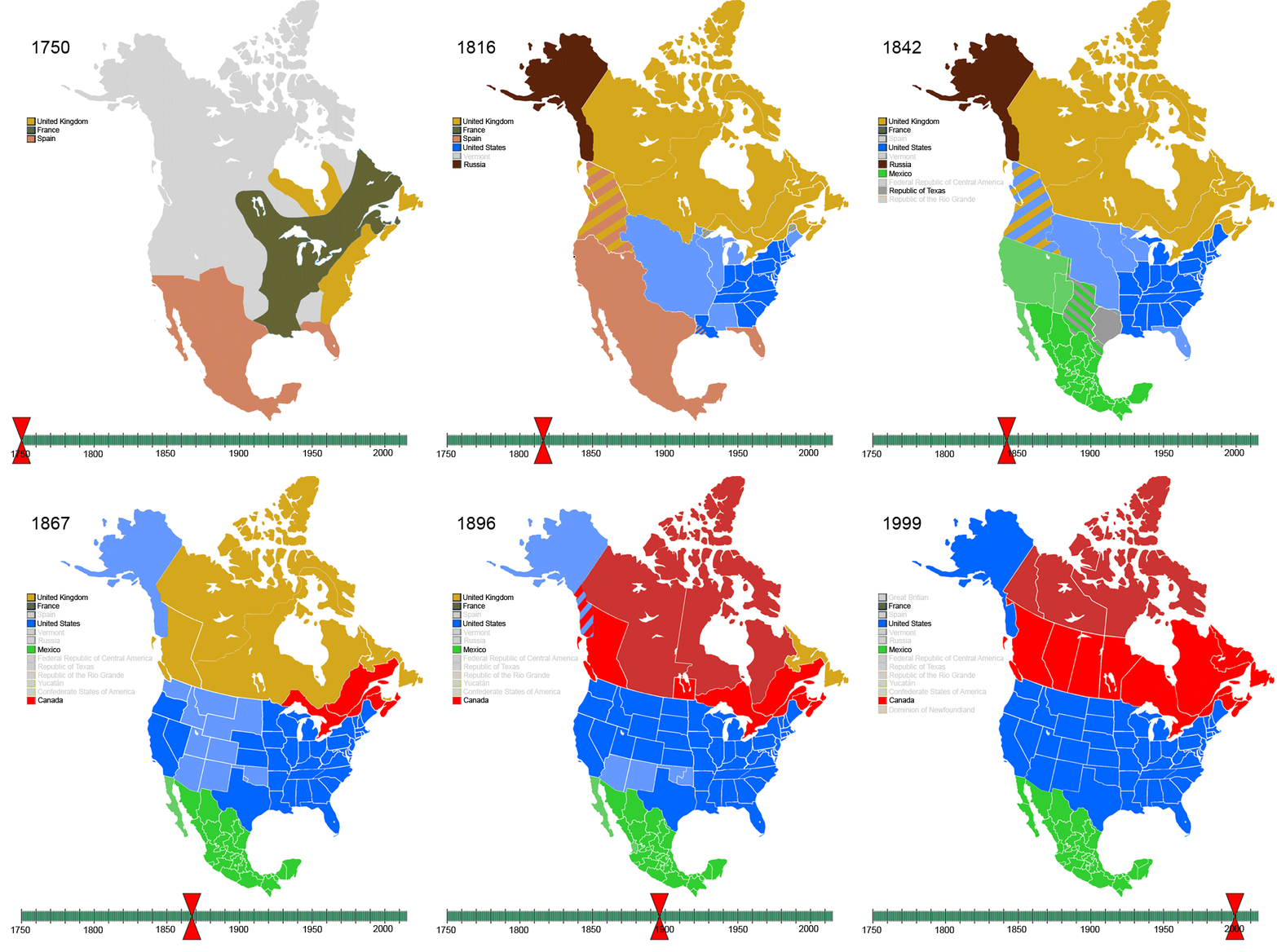
In 1803, during the presidency of Thomas Jefferson, the third U.S. president, Napoleon Bonaparte sold France's remaining North American territorial claims, which included regions west of the Mississippi River, to the U.S., in the Louisiana Purchase. Spain and the U.S. settled their western boundary dispute in 1819 in the Adams–Onís Treaty. Mexico fought a lengthy war for independence from Spain, winning it for Mexico (which included Central America at the time) in 1821. The U.S. sought further westward expansion and fought the Mexican–American War, gaining a vast territory that first Spain and then Mexico claimed but which they did not effectively control. Much of the area was in fact dominated by indigenous peoples, which did not recognize the claims of Spain, France, or the U.S. Russia sold its North American claims, which included the present-day U.S. state of Alaska, to the U.S. in 1867.
Canada and Panama Canal
Main article: Canada, Panama Canal
In 1867, colonial settlers north of the United States, unified as the dominion of Canada. The U.S. sought to dig a canal across the Isthmus of Panama in present-day Panama in Central America, then a part of present-day Colombia. The U.S. aided Panamanians in a war that resulted in its separation from Colombia. The U.S. subsequently carved out the Panama Canal Zone, and claimed sovereignty over it. After decades of work, the Panama Canal was completed, which connected the Atlantic and Pacific oceans in 1913 and greatly facilitated global shipping navigation.
Geography
Main article: Geography of North America

North America occupies the northern portion of the landmass generally referred to as the New World, the Western Hemisphere, the Americas, or simply America, which, in many countries, is considered a single continent with North America a subcontinent. North America is the third-largest continent by area after Asia and Africa.
North America's only land connection to South America is in present-day Panama at the Darien Gap on the Colombia–Panama border, placing almost all of Panama within North America. Alternatively, some geologists physiographically locate its southern limit at the Isthmus of Tehuantepec, Mexico, with Central America extending southeastward to South America from this point. The Caribbean islands, or West Indies, are considered part of North America. The continental coastline is long and irregular. The Gulf of Mexico is the largest body of water indenting the continent, followed by Hudson Bay. Others include the Gulf of Saint Lawrence and the Gulf of California.
Before the Central American isthmus formed, the region had been underwater. The islands of the West Indies delineate a submerged former land bridge, which had connected North and South America via what are now Florida and Venezuela.
There are several islands off the continent's coasts; principally, the Arctic Archipelago, the Bahamas, Turks and Caicos, the Greater and Lesser Antilles, the Aleutian Islands (some of which are in the Eastern Hemisphere proper), the Alexander Archipelago, the many thousand islands of the British Columbia Coast, and Newfoundland. Greenland, a self-governing Danish island, and the world's largest, is on the same tectonic plate (the North American Plate) and is part of North America geographically. In a geologic sense, Bermuda is not part of the Americas, but an oceanic island that was formed on the fissure of the Mid-Atlantic Ridge over 100 million years ago (mya). The nearest landmass to it is Cape Hatteras, North Carolina. However, Bermuda is often thought of as part of North America, especially given its historical, political and cultural ties to Virginia and other parts of the continent.
The vast majority of North America is on the North American Plate. Parts of western Mexico, including Baja California, and of California, including the cities of San Diego, Los Angeles, and Santa Cruz, lie on the eastern edge of the Pacific Plate, with the two plates meeting along the San Andreas Fault. The southernmost portion of the continent and much of the West Indies lie on the Caribbean Plate, whereas the Juan de Fuca Plate and Cocos Plate border the North American Plate on its western frontier.
The continent can be divided into four great regions (each of which contains many subregions): the Great Plains stretching from the Gulf of Mexico to the Canadian Arctic; the geologically young, mountainous west, including the Rocky Mountains, the Great Basin, California, and Alaska; the raised but relatively flat plateau of the Canadian Shield in the northeast; and the varied eastern region, which includes the Appalachian Mountains, the coastal plain along the Atlantic seaboard, and the Florida peninsula. Mexico, with its long plateaus and cordilleras, falls largely in the western region, although the eastern coastal plain does extend south along the Gulf.
The western mountains are split in the middle into the main range of the Rockies and the coast ranges in California, Oregon, Washington, and British Columbia, with the Great Basin—a lower area containing smaller ranges and low-lying deserts—in between. The highest peak is Denali (also called Mount McKinley) in Alaska.
The U.S. Geographical Survey (USGS) states that the geographic center of North America is "6 miles [10 km] west of Balta, Pierce County, North Dakota" at about , about 15 mi from Rugby, North Dakota. The USGS further states that "No marked or monumented point has been established by any government agency as the geographic center of either the 50 states, the conterminous United States, or the North American continent." Nonetheless, there is a 15 ft field stone obelisk in Rugby claiming to mark the center. The North American continental pole of inaccessibility is located 1650 km from the nearest coastline, between Allen and Kyle, South Dakota at .
Canada
Main article: Geography of Canada
Canada can be divided into roughly seven physiographic divisions:
- The Canadian Shield
- The Interior Plains
- The Great Lakes-St. Lawrence Lowlands
- The Appalachian region
- The Western Cordillera
- Hudson Bay Lowlands
- Arctic Archipelago
United States
Main article: Geography of the United States, Physiographic regions of the United States
The lower 48 U.S. states can be divided into roughly eight physiographic divisions:
- The Intermontane Plateaus
- The Laurentian Upland, part of the Canadian Shield Northern portion of the upper midwestern U.S.
- The Interior Plains
- The Atlantic Plain
- The Appalachian highlands
- The Interior highlands
- The Rocky Mountain system
- The Pacific Mountain system
Mexico
Main article: Geography of Mexico
Mexico can be divided into roughly fifteen physiographic divisions:
- The Baja California Peninsula
- The Sonoran Basin and Range
- The Western Sierra Madre
- The Northern Mountains and Plains
- The Eastern Sierra Madre
- The Great Plain
- The Pacific Coastal Plain
- The Northern Gulf Coast Plain
- The Central Plateau
- The Volcanic Axis
- The Southern Sierra Madre
- The Southern Gulf Coast Plain
- The Chiapas Sierra Madre
- The Chiapas Highlands
- The Yucatán Peninsula
Climate

North America is a very large continent that extends from north of the Arctic Circle to south of the Tropic of Cancer. Greenland, along with the Canadian Shield, is tundra with average temperatures ranging from 10 to, but central Greenland is composed of a very large ice sheet. This tundra radiates throughout Canada, but its border ends near the Rocky Mountains (but still contains Alaska) and at the end of the Canadian Shield, near the Great Lakes. Climate west of the Cascade Range is described as being temperate weather with average precipitation 20 in. Climate in coastal California is described to be Mediterranean, with average temperatures in cities like San Francisco ranging from 57 to over the course of the year.
Stretching from the East Coast to eastern North Dakota, and stretching down to Kansas, is the humid continental climate featuring intense seasons, with a large amount of annual precipitation, with places like New York City averaging 50 in. Starting at the southern border of the humid continental climate and stretching to the Gulf of Mexico (while encompassing the eastern half of Texas) is the humid subtropical climate. This area has the wettest cities in the contiguous U.S., with annual precipitation reaching 67 in in Mobile, Alabama. Stretching from the borders of the humid continental and subtropical climates, and going west to the Sierra Nevada, south to the southern tip of Durango, north to the border with tundra climate, the steppe/desert climates are the driest in the U.S. Highland climates cut from north to south of the continent, where subtropical or temperate climates occur just below the tropics, as in central Mexico and Guatemala. Tropical climates appear in the island regions and in the subcontinent's bottleneck, found in countries and states bathed by the Caribbean Sea or to the south of the Gulf of Mexico and the Pacific Ocean. Precipitation patterns vary across the region, and as such rainforest, monsoon, and savanna types can be found, with rains and high temperatures throughout the year.
Ecology
Notable North American fauna include the bison, black bear, jaguar, cougar, prairie dog, turkey, pronghorn, raccoon, coyote, and monarch butterfly. Notable plants that were domesticated in North America include tobacco, maize, squash, tomato, sunflower, blueberry, avocado, cotton, chile pepper, and vanilla.
Geology
Main article: Geology of North America
Geologic history
Laurentia is an ancient craton which forms the geologic core of North America; it formed between 1.5 and 1.0 billion years ago during the Proterozoic eon. The Canadian Shield is the largest exposure of this craton. From the Late Paleozoic to Early Mesozoic eras, North America was joined with the other modern-day continents as part of the supercontinent Pangaea, with Eurasia to its east. One of the results of the formation of Pangaea was the Appalachian Mountains, which formed some 480 mya, making it among the oldest mountain ranges in the world. When Pangaea began to rift around 200 mya, North America became part of Laurasia, before it separated from Eurasia as its own continent during the mid-Cretaceous period. The Rockies and other western mountain ranges began forming around this time from a period of mountain building called the Laramide orogeny, between 80 and 55 mya. The formation of the Isthmus of Panama that connected the continent to South America arguably occurred approximately 12 to 15 mya, and the Great Lakes (as well as many other northern freshwater lakes and rivers) were carved by receding glaciers about 10,000 years ago.
North America is the source of much of what humanity knows about geologic time periods. The geographic area that would later become the United States has been the source of more varieties of dinosaurs than any other modern country. According to paleontologist Peter Dodson, this is primarily due to stratigraphy, climate and geography, human resources, and history. Much of the Mesozoic Era is represented by exposed outcrops in the many arid regions of the continent. The most significant Late Jurassic dinosaur-bearing fossil deposit in North America is the Morrison Formation of the western U.S.
Canada
Main article: Geology of Canada

Canada is geologically one of the oldest regions in the world, with more than half of the region consisting of Precambrian rocks that have been above sea level since the beginning of the Palaeozoic era. Canada's mineral resources are diverse and extensive. Across the Canadian Shield and in the north there are large iron, nickel, zinc, copper, gold, lead, molybdenum, and uranium reserves. Large diamond concentrations have been recently developed in the Arctic, making Canada one of the world's largest producers. Throughout the Shield, there are many mining towns extracting these minerals. The largest, and best known, is Sudbury, Ontario. Sudbury is an exception to the normal process of forming minerals in the Shield since there is significant evidence that the Sudbury Basin is an ancient meteorite impact crater. The nearby, but less-known Temagami Magnetic Anomaly has striking similarities to the Sudbury Basin. Its magnetic anomalies are very similar to the Sudbury Basin, and so it could be a second metal-rich impact crater. The Shield is also covered by vast boreal forests that support an important logging industry.
United States
Main article: Geology of the United States
The United States can be divided into twelve main geological provinces:
- Pacific
- Columbia Plateau
- Basin and Range
- Colorado Plateau
- Rocky Mountains
- Laurentian Upland
- Interior Plains
- Interior Highlands
- Appalachian Highlands
- Atlantic Plain
- Alaskan
- Hawaiian
Each province has its own geologic history and unique features. The geology of Alaska is typical of that of the cordillera, while the major islands of Hawaii consist of Neogene volcanics erupted over a hot spot.
Central America
Main article: Geology of Central America
Central America is geologically active with volcanic eruptions and earthquakes occurring from time to time. In 1976 Guatemala was hit by a major earthquake, killing 23,000 people; Managua, the capital of Nicaragua, was devastated by earthquakes in 1931 and 1972, the last one killing about 5,000 people; three earthquakes devastated El Salvador, one in 1986 and two in 2001; one earthquake devastated northern and central Costa Rica in 2009, killing at least 34 people; in Honduras a powerful earthquake killed seven people in 2009.
Volcanic eruptions are common in the region. In 1968, the Arenal Volcano, in Costa Rica, erupted and killed 87 people. Fertile soils from weathered volcanic lavas have made it possible to sustain dense populations in agriculturally productive highland areas.
Central America has many mountain ranges; the longest are the Sierra Madre de Chiapas, the Cordillera Isabelia, and the Cordillera de Talamanca. Between the mountain ranges lie fertile valleys that are suitable for the people; in fact, most of the population of Honduras, Costa Rica, and Guatemala live in valleys. Valleys are also suitable for the production of coffee, beans, and other crops.
List of states and territories
Main article: List of sovereign states and dependent territories in North America
| Arms | Flag | Country / Territory | Area | Population | |||||||||||||
|---|---|---|---|---|---|---|---|---|---|---|---|---|---|---|---|---|---|
| () | Population | ||||||||||||||||
| density | Capital | Name(s) in official language(s) | ISO 3166-1 | Total | 24500995 km2 | {{#expr:(541720440/24500995) round 1}} /km2 | |||||||||||
| pxx | Anguilla | ||||||||||||||||
| (United Kingdom) | 91 km2 | 164.8 /km2 | The Valley | Anguilla | AIA | ||||||||||||
| pxx | Antigua and Barbuda | 442 km2 | 199.1 /km2 | St. John's | Antigua and Barbuda | ATG | |||||||||||
| pxx | Aruba | ||||||||||||||||
| (Kingdom of the Netherlands) | 180 km2 | 594.4 /km2 | Oranjestad | Aruba | ABW | ||||||||||||
| pxx | The Bahamas | 13943 km2 | 24.5 /km2 | Nassau | Bahamas | BHS | |||||||||||
| pxx | Barbados | 430 km2 | 595.3 /km2 | Bridgetown | Barbados | BRB | |||||||||||
| pxx | Belize | 22966 km2 | 13.4 /km2 | Belmopan | Belize | BLZ | |||||||||||
| pxx | Bermuda | ||||||||||||||||
| (United Kingdom) | 54 km2 | 1203.7 /km2 | Hamilton | Bermuda | BMU | ||||||||||||
| pxx | Bonaire | ||||||||||||||||
| (Kingdom of the Netherlands) | 294 km2 | 12,093 | 41.1 /km2 | Kralendijk | Boneiru | BES | |||||||||||
| pxx | British Virgin Islands | ||||||||||||||||
| (United Kingdom) | 151 km2 | 152.3 /km2 | Road Town | British Virgin Islands | VGB | ||||||||||||
| pxx | Canada | 9984670 km2 | 3.7 /km2 | Ottawa | Canada | CAN | |||||||||||
| pxx | Cayman Islands | ||||||||||||||||
| (United Kingdom) | 264 km2 | 212.1 /km2 | George Town | Cayman Islands | CYM | ||||||||||||
| pxx | Clipperton Island (France) | 6 km2 | 0 | 0 /km2 | — | Île de Clipperton | CPT | ||||||||||
| pxx | Costa Rica | 51180 km2 | 89.6 /km2 | San José | Costa Rica | CRI | |||||||||||
| pxx | Cuba | 109886 km2 | 102.0 /km2 | Havana | Cuba | CUB | |||||||||||
| pxx | Curaçao | ||||||||||||||||
| (Kingdom of the Netherlands) | 444 km2 | 317.1 /km2 | Willemstad | Curaçao (Dutch); Kòrsou (Papiamento) | CUW | ||||||||||||
| pxx | Dominica | 751 km2 | 89.2 /km2 | Roseau | Dominica | DMA | |||||||||||
| pxx | Dominican Republic | 48671 km2 | 207.3 /km2 | Santo Domingo | República Dominicana | DOM | |||||||||||
| pxx | El Salvador | 21041 km2 | 293.0 /km2 | San Salvador | El Salvador | SLV | |||||||||||
| pxx | Federal Dependencies of Venezuela | ||||||||||||||||
| (Venezuela) | 342 km2 | 2,155 | 6.3 /km2 | Gran Roque | Dependencias Federales de Venezuela | VEN-W | |||||||||||
| pxx | Greenland | ||||||||||||||||
| (Kingdom of Denmark) | 2166086 km2 | 0.026 /km2 | Nuuk | Kalaallit Nunaat (Greenlandic); Grønland (Danish) | GRL | ||||||||||||
| pxx | Grenada | 344 km2 | 302.3 /km2 | St. George's | Gwenad | GRD | |||||||||||
| [[File:Coat of arms of Guadeloupe.svg | 30px]] | pxx | Guadeloupe | ||||||||||||||
| (France) | 1628 km2 | 246.7 /km2 | Basse-Terre | Gwadloup | GLP | ||||||||||||
| [[File:Coat of arms of Guatemala.svg | 30px]] | pxx | Guatemala | 108889 km2 | 128.8 /km2 | Guatemala City | Guatemala | GTM | |||||||||
| [[File:Coat of arms of Haiti.svg | 30px]] | pxx | Haiti | 27750 km2 | 361.5 /km2 | Port-au-Prince | Ayiti/Haïti | HTI | |||||||||
| pxx | Honduras | 112492 km2 | 66.4 /km2 | Tegucigalpa | Honduras | HND | |||||||||||
| pxx | Jamaica | 10991 km2 | 247.4 /km2 | Kingston | Jumieka | JAM | |||||||||||
| [[File:BlasonMartinique.svg | 30px]] | pxx | Martinique | ||||||||||||||
| (France) | 1128 km2 | 352.6 /km2 | Fort-de-France | Martinique (French); Matinik (Martinican Creole) | MTQ | ||||||||||||
| [[File:Coat of arms of Mexico.svg | 30px]] | pxx | Mexico | 1964375 km2 | 57.1 /km2 | Mexico City | México | MEX | |||||||||
| pxx | Montserrat | ||||||||||||||||
| (United Kingdom) | 102 km2 | 58.8 /km2 | Plymouth, | ||||||||||||||
| Brades | Montserrat | MSR | |||||||||||||||
| pxx | Nicaragua | 130373 km2 | 44.1 /km2 | Managua | Nicaragua | NIC | |||||||||||
| [[File:Coat of arms of Nueva Esparta State.svg | 30px]] | pxx | Nueva Esparta | ||||||||||||||
| (Venezuela) | 1151 km2 | 491,610 | 427.1 /km2 | La Asunción | Nueva Esparta | VEN-O | |||||||||||
| pxx | Panama | 75417 km2 | 45.8 /km2 | Panama City | Panamá | PAN | |||||||||||
| pxx | Puerto Rico | ||||||||||||||||
| (United States) | 8870 km2 | 448.9 /km2 | San Juan | Puerto Rico | PRI | ||||||||||||
| pxx | Saba | ||||||||||||||||
| (Kingdom of the Netherlands) | 13 km2 | 1,537 | 118.2 /km2 | The Bottom | Saba | BES | |||||||||||
| [[File:Escudo de San Andrés y Providencia.svg | 30px]] | pxx | San Andrés and Providencia | ||||||||||||||
| (Colombia) | 53 km2 | 77,701 | 1468.59 /km2 | San Andrés | San Andrés | COL-SAP | |||||||||||
| pxx | title=The World Factbook: 2010 edition | url=https://www.cia.gov/library/publications/the-world-factbook/fields/2119.html | publisher=Government of the United States, Central Intelligence Agency | access-date=14 October 2010 | archive-date=26 November 2015 | archive-url=https://web.archive.org/web/20151126112445/https://www.cia.gov/library/publications/the-world-factbook/fields/2119.html | url-status=dead}} | 21 km2 | 7,448 | 354.7 /km2 | Gustavia | Saint-Barthélemy | BLM | ||||
| pxx | Saint Kitts and Nevis | 261 km2 | 199.2 /km2 | Basseterre | Saint Kitts and Nevis | KNA | |||||||||||
| pxx | Saint Lucia | 539 km2 | 319.1 /km2 | Castries | Sainte-Lucie | LCA | |||||||||||
| pxx | Saint Martin | ||||||||||||||||
| (France) | 54 km2 | 29,820 | 552.2 /km2 | Marigot | Saint-Martin | MAF | |||||||||||
| pxx | Saint Pierre and Miquelon | ||||||||||||||||
| (France) | 242 km2 | 24.8 /km2 | Saint-Pierre | Saint-Pierre-et-Miquelon | SPM | ||||||||||||
| pxx | Saint Vincent and the Grenadines | 389 km2 | 280.2 /km2 | Kingstown | Saint Vincent and the Grenadines | VCT | |||||||||||
| pxx | Sint Eustatius | ||||||||||||||||
| (Kingdom of the Netherlands) | 21 km2 | 2,739 | 130.4 /km2 | Oranjestad | Sint Eustatius | BES | |||||||||||
| pxx | Sint Maarten | ||||||||||||||||
| (Kingdom of the Netherlands) | 34 km2 | 1176.7 /km2 | Philipsburg | Sint Maarten | SXM | ||||||||||||
| pxx | Trinidad and Tobago | 5130 km2 | 261.0 /km2 | Port of Spain | Trinidad and Tobago | TTO | |||||||||||
| [[File:Shield of the Turks and Caicos Islands.svg | 30px]] | pxx | Turks and Caicos Islands | ||||||||||||||
| (United Kingdom) | 948 km2 | 34.8 /km2 | Grand Turk (Cockburn Town) | Turks and Caicos Islands | TCA | ||||||||||||
| pxx | United States | 9629091 km2 | 32.7 /km2 | Washington, D.C. | United States of America | USA | |||||||||||
| [[File:Seal of the United States Virgin Islands.svg | 30px]] | pxx | United States Virgin Islands | ||||||||||||||
| (United States) | 347 km2 | 317.0 /km2 | Charlotte Amalie | US Virgin Islands | VIR |
Economy
Main article: Economy of North America
| Rank | Country or territory | GDP (nominal, peak year) | |
|---|---|---|---|
| millions of USD | GDP (PPP, peak year) | ||
| millions of USD | |||
| 1 | United States | 30,615,743 | 30,615,743 |
| 2 | Mexico | 1,862,740 | 3,436,930 |
| 3 | Canada | 2,283,599 | 2,722,795 |
| 4 | Cuba (2021, 2015) | 545,218 | 254,865 |
| 5 | Dominican Republic | 129,748 | 332,415 |
| 6 | Guatemala | 120,850 | 281,690 |
| 7 | Panama | 90,408 | 199,293 |
North America's GDP per capita was evaluated in October 2016 by the International Monetary Fund (IMF) to be $41,830, making it the richest continent in the world, followed by Oceania.
Canada, Mexico, and the U.S. have significant and multifaceted economic systems. The U.S. has the largest economy in the world. In 2016, the U.S. had an estimated per capita gross domestic product (PPP) of $57,466 according to the World Bank, and is the most technologically developed economy of the three. The U.S.'s services sector comprises 77% of the country's GDP (estimated in 2010), industry comprises 22% and agriculture comprises 1.2%. The U.S. economy is also the fastest-growing economy in North America and the Americas as a whole, with the highest GDP per capita in the Americas as well.
Canada shows significant growth in the sectors of services, mining and manufacturing. Canada's per capita GDP (PPP) was estimated at $44,656 and it had the 11th-largest GDP (nominal) in 2014. Canada's services sector comprises 78% of the country's GDP (estimated in 2010), industry comprises 20% and agriculture comprises 2%. Mexico has a per capita GDP (PPP) of $16,111 and as of 2014 is the 15th-largest GDP (nominal) in the world. Being a newly industrialized country, Mexico maintains both modern and outdated industrial and agricultural facilities and operations. Its main sources of income are oil, industrial exports, manufactured goods, electronics, heavy industry, automobiles, construction, food, banking and financial services.
The North American economy is well defined and structured in three main economic areas. These areas are those under the North American Free Trade Agreement (NAFTA), the Caribbean Community and Common Market (CARICOM), and the Central American Common Market (CACM). Of these trade blocs, the U.S. takes part in two. In addition to the larger trade blocs there is the Canada-Costa Rica Free Trade Agreement among numerous other free-trade relations, often between the larger, more developed countries and Central American and Caribbean countries.
NAFTA formed one of the four largest trade blocs in the world. Its implementation in 1994 was designed for economic homogenization with hopes of eliminating barriers of trade and foreign investment between Canada, the U.S. and Mexico. While Canada and the U.S. already conducted the largest bilateral trade relationship—and to present day still do—in the world and Canada–U.S. trade relations already allowed trade without national taxes and tariffs, NAFTA allowed Mexico to experience a similar duty-free trade. The free-trade agreement allowed for the elimination of tariffs that had previously been in place on U.S.–Mexico trade. Trade volume has steadily increased annually and in 2010, surface trade between the three NAFTA nations reached an all-time historical increase of 24.3% or US$791 billion. The NAFTA trade bloc GDP (PPP) is the world's largest with US$17.617 trillion. This is in part attributed to the fact that the economy of the U.S. is the world's largest national economy; the country had a nominal GDP of approximately $14.7 trillion in 2010. The countries of NAFTA are also some of each other's largest trade partners. The U.S. is the largest trade partner of Canada and Mexico, while Canada and Mexico are each other's third-largest trade partners. In 2018, the NAFTA was replaced by the U.S.–Mexico–Canada Agreement (USMCA).
The Caribbean trade bloc (CARICOM) came into agreement in 1973 when it was signed by 15 Caribbean nations. As of 2000, CARICOM trade volume was US$96 billion. CARICOM also allowed for the creation of a common passport for associated nations. In the past decade the trade bloc focused largely on free-trade agreements and under the CARICOM Office of Trade Negotiations free-trade agreements have been signed into effect.
Integration of Central American economies occurred under the signing of the Central American Common Market agreement in 1961; this was the first attempt to engage the nations of this area into stronger financial cooperation. The 2006 implementation of the Central American Free Trade Agreement (CAFTA) left the future of the CACM unclear. The Central American Free Trade Agreement was signed by five Central American countries, the Dominican Republic, and the U.S. The focal point of CAFTA is to create a free trade area similar to that of NAFTA. In addition to the U.S., Canada also has relations in Central American trade blocs.
These nations also take part in inter-continental trade blocs. Mexico takes a part in the G3 Free Trade Agreement with Colombia and Venezuela and has a trade agreement with the EU. The U.S. has proposed and maintained trade agreements under the Transatlantic Free Trade Area between itself and the European Union; the U.S.–Middle East Free Trade Area between numerous Middle Eastern nations and itself; and the Trans-Pacific Strategic Economic Partnership between Southeast Asian nations, Australia, and New Zealand.
Transport
Main article: Transportation in North America
The Pan-American Highway route in the Americas is the portion of a network of roads nearly 48000 km in length which travels through the mainland nations. No definitive length of the Pan-American Highway exists because the U.S. and Canadian governments have never officially defined any specific routes as being part of the Pan-American Highway, and Mexico officially has many branches connecting to the U.S. border. However, the total length of the portion from Mexico to the northern extremity of the highway is roughly 16000 mi.
The first transcontinental railroad in the U.S. was built in the 1860s, linking the railroad network of the eastern U.S. with California on the Pacific coast. Finished on 10 May 1869 at the famous golden spike event at Promontory Summit, Utah, it created a nationwide mechanized transportation network that revolutionized the population and economy of the American West, catalyzing the transition from the wagon trains of previous decades to a modern transportation system. Although an accomplishment, it achieved the status of first transcontinental railroad by connecting myriad eastern U.S. railroads to the Pacific and was not the largest single railroad system in the world. The Canadian Grand Trunk Railway had, by 1867, already accumulated more than 2055 km of track by connecting Ontario with the Canadian Atlantic provinces west as far as Port Huron, Michigan, through Sarnia, Ontario.
Communications
A shared telephone system known as the North American Numbering Plan is an integrated telephone numbering plan of 24 countries and territories: the U.S. and its territories, Canada, Bermuda, and 17 Caribbean nations.
Demographics==
Canada and the United States are the wealthiest and most developed nations on the continent followed by Mexico, a newly industrialized country. The countries of Central America and the Caribbean are at various levels of economic and human development. For example, small Caribbean island-nations, such as Barbados, Trinidad and Tobago, and Antigua and Barbuda, have a higher GDP (PPP) per capita than Mexico due to their smaller populations. Panama and Costa Rica have a significantly higher Human Development Index and GDP than the rest of the Central American nations. Additionally, despite Greenland's vast resources in oil and minerals, much of them remain untapped, and the island is economically dependent on fishing, tourism, and subsidies from Denmark. Nevertheless, the island is highly developed.
Demographically, North America is ethnically diverse. Its three largest groups are Whites, Mestizos, and Blacks. There is a significant minority of Indigenous Americans and Asians among other less numerous groups.
Languages
Main article: Languages of North America
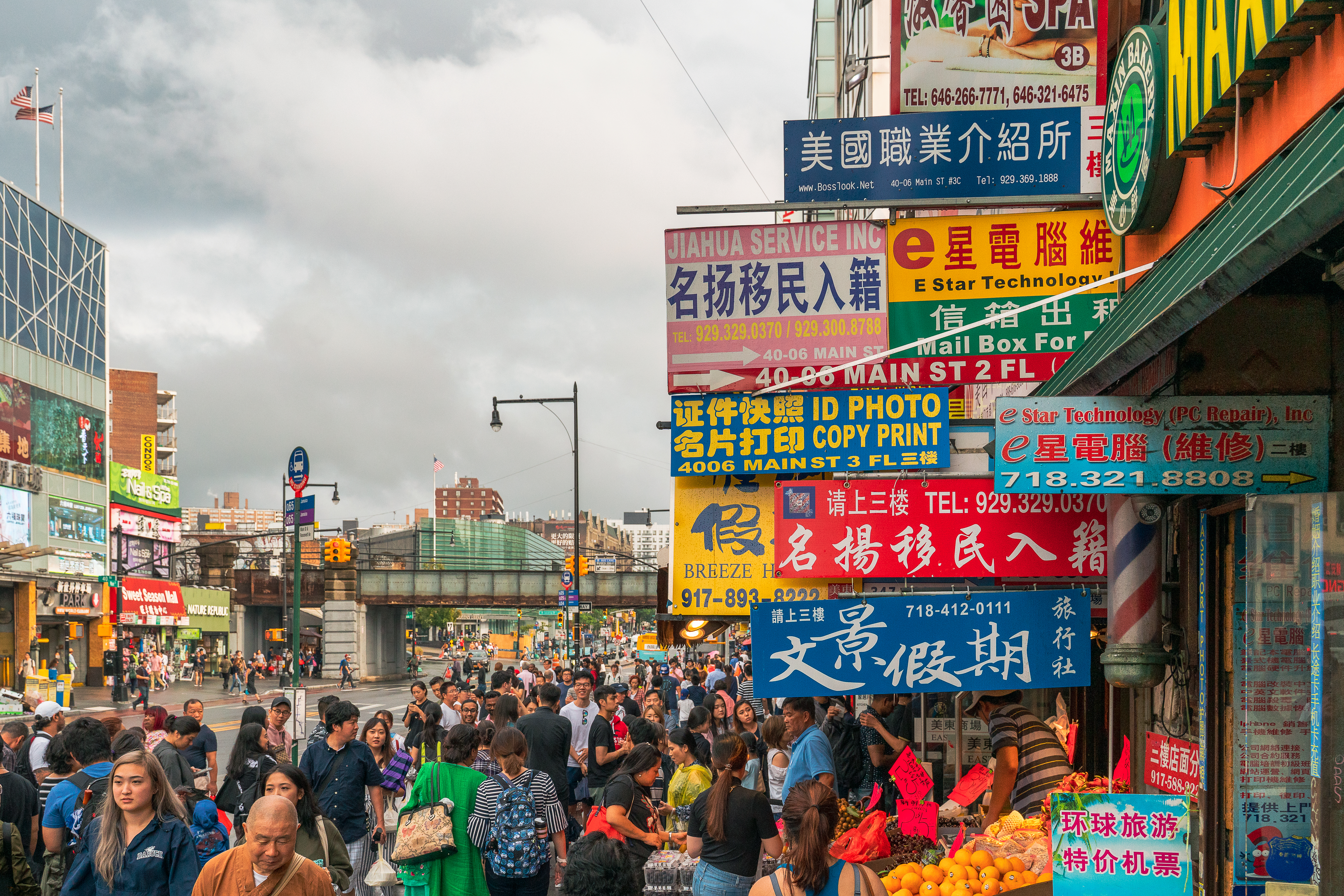
The dominant languages in North America are English, Spanish, and French. Danish is prevalent in Greenland alongside Greenlandic, and Dutch is spoken side by side local languages in the Dutch Caribbean. The term Anglo-America is used to refer to the anglophone countries of the Americas: namely Canada (where English and French are co-official) and the U.S., but also sometimes Belize and parts of the tropics, especially the Commonwealth Caribbean. Latin America refers to the other areas of the Americas (generally south of the U.S.) where the Romance languages, derived from Latin, of Spanish and Portuguese, (but French-speaking countries are not usually included) predominate: the other republics of Central America (but not always Belize), part of the Caribbean (not the Dutch-, English-, or French-speaking areas), Mexico, and most of South America (except Guyana, Suriname, French Guiana [France], and the Falkland Islands [UK]).
The U.S. has an ethnically diverse population, and 37 ancestry groups have more than one million members. The French language has historically played a significant role in North America and now retains a distinctive presence in some regions. Canada is officially bilingual. French is the official language of the province of Quebec, where 95% of the people speak it as either their first or second language, and it is co-official with English in the province of New Brunswick. Other French-speaking locales include the province of Ontario (the official language is English, but there are an estimated 600,000 Franco-Ontarians), the province of Manitoba (co-official as de jure with English), the French West Indies and Saint-Pierre et Miquelon, as well as the U.S. state of Louisiana, where French is also an official language. Haiti is included with this group based on historical association but Haitians speak both Creole and French. Similarly, French and French Antillean Creole is spoken in Saint Lucia and the Commonwealth of Dominica alongside English.
Indigenous languages
A significant number of indigenous languages are spoken in North America, with roughly 6 million in Mexico speaking an indigenous language at home, 372,000 people in the U.S., and about 225,000 in Canada. In the U.S. and Canada, there are approximately 150 surviving indigenous languages of the 300 spoken prior to European contact.
Religions
Main article: Religion in North America

Christianity is the largest religion in the United States, Canada, and Mexico. According to a 2012 Pew Research Center survey, 77% of the population considered themselves Christians. Christianity also is the predominant religion in the 23 dependent territories in North America. The U.S. has the largest Christian population in the world, with nearly 247 million Christians (70%), although other countries have higher percentages of Christians among their populations. Mexico has the world's second-largest number of Catholics, surpassed only by Brazil.
According to the same study, the religiously unaffiliated (including agnostics and atheists) make up about 17% of the population of Canada and the U.S. Those with no religious affiliation make up about 24% of Canada's total population.
Canada, the U.S., and Mexico host communities of Jews (6 million or about 1.8%), Buddhists (3.8 million or 1.1%) and Muslims (3.4 million or 1.0%). The largest number of Jews can be found in the U.S. (5.4 million), Canada (375,000) and Mexico (67,476). The U.S. hosts the largest Muslim population in North America with 2.7 million or 0.9%, while Canada hosts about one million Muslims or 3.2% of the population. In Mexico there were 3,700 Muslims in 2010. In 2012, U-T San Diego estimated U.S. practitioners of Buddhism at 1.2 million people, of whom 40% are living in Southern California.
The predominant religion in Mexico and Central America is Christianity (96%). Beginning with the Spanish colonization of Mexico in the 16th century, Roman Catholicism was the only religion permitted by Spanish crown and Catholic church. A vast campaign of religious conversion, the so-called "spiritual conquest", was launched to bring the indigenous peoples into the Christian fold. The Inquisition was established to assure orthodox belief and practice. The Catholic Church remained an important institution, so that even after political independence, Roman Catholicism remained the dominant religion. Since the 1960s, there has been an increase in other Christian groups, particularly Protestantism, as well as other religious organizations, and individuals identifying themselves as having no religion. Christianity is also the predominant religion in the Caribbean (85%). Other religious groups in the region are Hinduism, Islam, Rastafari (in Jamaica), and Afro-American religions such as Santería and Vodou.
Population
North America is the fourth most populous continent after Asia, Africa, and Europe. Its most populous country is the U.S. with 342.9 million persons. The second-largest country is Mexico with a population of 126 million. Canada is the third-most-populous country with 41.5 million. The majority of Caribbean island-nations have national populations under a million, though Cuba, Dominican Republic, Haiti, Puerto Rico (a territory of the U.S.), Jamaica, and Trinidad and Tobago each have populations higher than a million. Greenland has a small population of 55,984 for its massive size (2.166 million km2 or 836,300 mi2), and therefore, it has the world's lowest population density at 0.026 pop./km2 (0.067 pop./mi2).
While the U.S., Canada, and Mexico maintain the largest populations, large city populations are not restricted to those nations. There are also large cities in the Caribbean. The largest cities in North America, by far, are Mexico City and New York City. These cities are the only cities on the continent to exceed eight million, and two of three in the Americas. Next in size are Los Angeles, Toronto, Chicago, Havana, Santo Domingo, and Montreal. Cities in the Sun Belt regions of the U.S., such as those in Southern California and Houston, Phoenix, Miami, Atlanta, and Las Vegas, are experiencing rapid growth. These causes included warm temperatures, retirement of Baby Boomers, large industry, and the influx of immigrants. Cities near the U.S. border, particularly in Mexico, are also experiencing large amounts of growth. Most notable is Tijuana, a city bordering San Diego that receives immigrants from all over Latin America and parts of Europe and Asia. Yet as cities grow in these warmer regions of North America, they are increasingly forced to deal with the major issue of water shortages.
Eight of the top ten metropolitan areas are located in the U.S. These metropolitan areas all have a population of above 5.5 million and include the New York City metropolitan area, Los Angeles metropolitan area, Chicago metropolitan area, and the Dallas–Fort Worth metroplex. While the majority of the largest metropolitan areas are within the U.S., Mexico is host to the largest metropolitan area by population in North America: Greater Mexico City. Canada also breaks into the top ten largest metropolitan areas with the Toronto metropolitan area having six million people. The proximity of cities to each other on the Canada–United States border and the Mexico–U.S. border has led to the rise of international metropolitan areas. These urban agglomerations are observed at their largest and most productive in Detroit–Windsor and San Diego–Tijuana and experience large commercial, economic, and cultural activity. The metropolitan areas are responsible for millions of dollars of trade dependent on international freight. In Detroit-Windsor the Border Transportation Partnership study in 2004 concluded US$13 billion was dependent on the Detroit–Windsor international border crossing while in San Diego–Tijuana freight at the Otay Mesa Port of Entry was valued at US$20 billion.
North America has also been witness to the growth of megapolitan areas. The United States includes eleven megaregions.
| Miami | 5,828,191 | 15896 km2 | United States |
|---|
†2011 Census figures
Culture
Main article: Culture of North America

The cultures of North America are diverse. The United States and English Canada have many cultural similarities, while French Canada has a distinct culture from Anglophone Canada, which is protected by law. Since the United States was formed from portions previously part of the Spanish Empire and then independent Mexico, and there has been considerable and continuing immigration of Spanish speakers from south of the U.S.–Mexico border. In the southwest of the U.S. there are many Hispanic cultural traditions and considerable bilingualism. Mexico and Central America are part of Latin America and are culturally distinct from anglophone and francophone North America. However, they share with the United States the establishment of post-independence governments that are federated representative republics with written constitutions dating from their founding as nations. Canada is a federated parliamentary democracy under a constitutional monarchy.
Canada's constitution dates to 1867, with confederation, in the British North America Act, but not until 1982 did Canada have the power to amend its own constitution. Canada's Francophone heritage has been enshrined in law since the British parliament passed the Quebec Act of 1774. In contrast to largely Protestant Anglo settlers in North America, French-speaking Canadians were Catholic and with the Quebec Act were guaranteed freedom to practice their religion, restored the right of the Catholic Church to impose tithes for its support, and established French civil law in most circumstances.
The distinctiveness of French language and culture has been codified in Canadian law, so that both English and French are designated official languages. The U.S. has no official language, but its national language is English.
The Canadian government took action to protect Canadian culture by limiting non-Canadian content in broadcasting, creating the Canadian Radio and Telecommunications Commission to monitor Canadian content. In Quebec, the provincial government established the Quebec Office of the French Language, often called the "language police" by Anglophones, which mandates the use of French terminology and signage in French. Since 1968 the unicameral legislature has been called the Quebec National Assembly. Saint-Jean-Baptiste Day, 24 June, is the national holiday of Quebec and celebrated by francophone Canadians throughout Canada. In Quebec, the school system was divided into Catholic and Protestant, so-called confessional schools. Anglophone education in Quebec has been increasingly undermined.
Latino culture is strong in the southwestern United States, as well as in the New York metropolitan area and Florida, which draw Latin Americans from many countries in the Western hemisphere. Northern Mexico, particularly in the cities of Monterrey, Tijuana, Ciudad Juárez, and Mexicali, is strongly influenced by the culture and way of life of the U.S. Monterrey, a modern city with a significant industrial group, has been regarded as the most Americanized city in Mexico.
The Anglophone Caribbean states have witnessed and participated in the decline of the British Empire and its influence on the region, and its replacement by the economic influence of Northern America in the Anglophone Caribbean. This is partly due to the relatively small populations of the English-speaking Caribbean countries, and also because many of them now have more people living abroad than those remaining at home.
Greenland has experienced many immigration waves from Northern Canada, e.g. by the Thule people. Therefore, Greenland shares some cultural ties with the indigenous peoples of Canada. Greenland is also considered Nordic and has strong Danish ties due to centuries of colonization by Denmark.
Sport
Main article: Sport in North America
The United States and Canada have major sports teams that compete against each other, including baseball, basketball, hockey, and soccer/football. Canada, Mexico, and the United States will host the 2026 FIFA World Cup.
The Native American game of lacrosse is considered a national sport in Canada. Curling is an important winter sport in Canada, and the Winter Olympics includes it in the roster. The English sport of cricket is popular in parts of anglophone Canada and very popular in parts of the former British empire, but in Canada is considered a minor sport. Boxing is also a major sport in some countries, such as Mexico, Panama and Puerto Rico, and it is considered one of the main individual sports in the United States. Canada has a separate Canadian Football League from the U.S. teams.
The following table shows the most prominent sports leagues in North America, in order of average revenue.
| League | Sport | Primary | ||||
|---|---|---|---|---|---|---|
| country | Founded | Teams | Revenue | |||
| US$ (bn) | Average | |||||
| attendance | ||||||
| National Football League (NFL) | ||||||
| Major League Baseball (MLB) | ||||||
| National Basketball Association (NBA) | ||||||
| National Hockey League (NHL) | ||||||
| Liga MX | ||||||
| Major League Soccer (MLS) | ||||||
| Canadian Football League (CFL) |
References
Footnotes
Citations
References
- (2021). "GDP PPP, current prices". International Monetary Fund.
- (2021). "GDP Nominal, current prices". International Monetary Fund.
- (2021). "Nominal GDP per capita". International Monetary Fund.
- "The Global Religious Landscape". Pewforum.org.
- "Religious Composition by Country, 2010–2050".
- "Demographia.com".
- (2005). "Geography: Realms, Regions, and Concepts". Wiley.
- (1997). "The Myth of Continents". University of California Press.
- Burchfield, R. W., ed. 2004. "America." ''[[Fowler's Modern English Usage]]'' ({{ISBN. 0-19-861021-1) New York: Oxford University Press, p. 48
- McArthur, Tom. 1992."North American." ''The Oxford Companion to the English Language'' ({{ISBN. 0-19-214183-X) New York: Oxford University Press, p. 707.
- (16 May 2016). "Common Errors in English Usage". Paul Brians, Washington State University.
- (6 October 2023). "Independent age estimates resolve the controversy of ancient human footprints at White Sands". Science.
- (22 May 2018). "The Pre-Clovis Occupation of the Topper Site, Allendale County, South Carolina". University Press of Florida.
- (22 July 2020). "Evidence of human occupation in Mexico around the Last Glacial Maximum". Nature.
- "Amerigo Vespucci".
- (1907). "The Cosmographiæ Introductio of Martin Waldseemüller in Facsimile". The United States Catholic Historical Society.
- Arbuckle, Alex. (24 December 2016). "This 509-year-old map contains the first known use of the word 'America' — but not where you may think".
- Apianus, Petrus. (1553). "English: 1553 world map – Charta Cosmographica, Cum Ventorum Propria Natura et Operatione".
- "Charta Cosmographica, Cum Ventorum Propria Natura et Operatione". Stanford University.
- Cohen, Jonathan. "The Naming of America: Fragments We've Shored Against Ourselves". Stony Brook Medicine.
- "Mercator 1587 {{!}} Envisioning the World {{!}} The First Printed Maps".
- Division, United Nations Statistics. "UNSD — Methodology".
- "Norteamérica".
- "Six or Seven Continents on Earth".
- "Continents".
- (24 February 2000). "AMÉRIQUE".
- "America".
- "Acta Solemne de la Declaración de Independencia de la América Septentrional". Archivo General de la Nación.
- Office Québécois de la langue francaise. "Status of the French language". Government of Quebec.
- "Central America".
- "Caribbean".
- "The World Factbook – North America". Central Intelligence Agency.
- "Countries in North America – Country Reports". Country Reports.
- "North America: World of Earth Science". eNotes Inc..
- "North American Region". The Trilateral Commission.
- (May 2004}}{{full citation needed). "Geopolitics of oil and natural gas". U.S. Department of State.
- "Schedule C – Country Codes and Descriptions". US Census Bureau.
- "Definition of major areas and regions". United Nations.
- (24 December 2010). "Composition of macro geographical (continental) regions, geographical sub-regions, and selected economic and other groupings". UN Statistics Division.
- (17 June 2016). "Chapter 5, Middle America". University of Minnesota.
- "Middle America (region, Mesoamerica)".
- Curtin, Jeremiah. (2014). "Creation Myths of Primitive America". Jazzybee Verlag.
- Krensky, Stephen. (1987). "Who Really Discovered America?". [[Scholastic Inc.]].
- White, Phillip M.. (2006). "American Indian chronology: chronologies of the American mosaic". Greenwood Publishing Group.
- (2013). "Anthropology: The Human Challenge". Cengage Learning.
- Sonneborn, Liz. (January 2007). "Chronology of American Indian History". Infobase Publishing.
- Krensky, Stephen. (1987). "Who Really Discovered America?". [[Scholastic Inc.]].
- Wade, Lizzie. (10 August 2017). "Most archaeologists think the first Americans arrived by boat. Now, they're beginning to prove it". [[Science (journal).
- Pauketat, Timothy R.. (23 February 2012). "The Oxford Handbook of North American Archaeology". OUP US.
- Shogren, Elizabeth. (16 August 2013). "N. America's Oldest Known Petroglyphs Discovered In Nevada".
- (21 July 2015). "Genetic evidence for two founding populations of the Americas". Nature.
- (2014). "The Global Prehistory of Human Migration". John Wiley & Sons.
- Krensky, Stephen. (1987). "Who Really Discovered America?". [[Scholastic Inc.]].
- Nash, George. (2011). "America's Oldest Art – The Rock Art of Serra da Capivara".
- Kaplan, Robert. (16 January 2007). "What is the origin of zero? How did we indicate nothingness before zero?".
- (10 September 2018). "Vinland".
- (2009). "L'Anse aux Meadows National Historic Site". ABC-CLIO.
- [[Helge Ingstad. H. Ingstad]] and [[A. Stine Ingstad]], ''The Viking Discovery of America'' (2000), p. 141.
- (1979). "The Vikings". Time-Life Books.
- (11 October 2015). "Why Do We Celebrate Columbus Day and Not Leif Erikson Day?".
- "History – Leif Erikson".
- Bernard Grunberg, ''"La folle aventure d'Hernan Cortés''", in ''[[L'Histoire]]'' n°322, July–August 2007 {{incomplete short citation. (February 2014)
- Massimo Livi Bacci, Malden. (2001). "A Concise History of World Population: An Introduction to Population Processes". Blackwell Publishing.
- Bergreen, Lawrence. (2011). "Columbus: The Four Voyages, 1493–1504". Penguin Group US.
- (23 February 2002). "The Olympic symbols". [[International Olympic Committee]].
- (February 2014). "Océano Uno, Diccionario Enciclopédico y Atlas Mundial". Océano}}{{author missing.
- (February 2014). "Los Cinco Continentes (The Five Continents)". Planeta-De Agostini Editions.
- "Encarta, "Norteamérica"".
- "North America".
- "Map And Details Of All 7 Continents". worldatlas.com.
- Rosenberg, Matt. (11 April 2020). "Ranking the 7 Continents by Size and Population".
- "North America Land Forms and Statistics". World Atlas.com.
- "Americas". United Nations Statistics Division.
- "North America". Atlas of Canada.
- "North America Atlas".
- "Central America".
- "Elevations and Distances".
- (2007). "Poles of Inaccessibility: A Calculation Algorithm for the Remotest Places on Earth". Scottish Geographical Journal.
- Government of Canada, Natural Resources Canada. (12 September 2016). "Natural Resources Canada. The Atlas of Canada. Physiographic Regions of Canada".
- (15 May 2006). "Physiographic Regions". [[United States Geological Survey]].
- Bautista, Francisco. (2023). "El Kast de México". Asociación Mexicana de Estudios sobre el Karst.
- University of Washington. "Cascades weather". University of Washington.
- SF to do. "Temperature of San Francisco". tourism.
- "Rainfall of NYC". Current Results.
- Thompson, Andrea. (18 May 2007). "Top 10 wettest cities". livescience.
- Haberlin, Rita D.. (2015). "Climates Regions of North America". Peralta Colleges, Physical Geography.
- (7 July 2016). "Facts and Information about the Continent of North America". Natural History on the Net.
- Dalziel, I. W. D.. (1992). "On the organization of American Plates in the Neoproterozoic and the breakout of Laurentia". GSA Today.
- (9 January 2009). "Visualizing Earth Science". Wiley.
- (10 April 2015). "Land Bridge Linking Americas Rose Earlier Than Thought". LiveScience.com.
- Dodson, Peter. (1997). "Encyclopedia of Dinosaurs". Academic Press.
- Weishampel, David B.. (2004). "Dinosaur distribution (Late Jurassic, North America)". University of California Press.
- Wallace, Stewart W.. (1948). "Geology Of Canada". University Associates of Canada.
- "Digging for Diamonds 24/7 Under Frozen Snap Lake".
- "3-D Magnetic Imaging using Conjugate Gradients: Temagami anomaly".
- (25 June 2013). "Geologic Provinces of the United States: Records of an Active Earth".
- "SPP Background". Security and Prosperity Partnership of North America.
- "Ecoregions of North America". [[United States Environmental Protection Agency]].
- (2008). "Demographic Yearbook—Table 3: Population by sex, rate of population increase, surface area and density". United Nations Statistics Division.
- Central Bureau of Statistics Netherlands Antilles. "Statistical information: Population". Government of the Netherlands Antilles.
- "The World Factbook: 2010 edition". Government of the United States, Central Intelligence Agency.
- "The World Factbook: 2010 edition". Government of the United States, Central Intelligence Agency.
- "World Economic Outlook Database October 2025".
- "World Bank's GDP (Nominal) data for Cuba".
- "United States, Economy". U.S. Central Intelligence Agency.
- "GDP per capita (current US$) – Data". World Bank.
- International Monetary Fund. (October 2016). "List of South American countries by GDP per capita". International Monetary Fund.
- International Monetary Fund. (October 2016). "List of North American countries by GDP per capita". International Monetary Fund.
- "Canada, Economy". U.S. Central Intelligence Agency.
- "World Economic Outlook Database, October 2010". International Monetary Fund.
- Waugh, David. (2000). "Geography, An Integrated Approach". Nelson Thornes Ltd..
- "Mexico, Economy". U.S. Central Intelligence Agency.
- (30 August 2007). "Stratfor Global Market – Mexico". Stratfor.
- (2008). "Sociología y Profesión". Nuevo León Autonomous University (UANL).
- "Regional Trade Blocs". University of California, Santa Cruz.
- "North American Free Trade Agreement".
- Fergusson, Ian. "CRS Report for Congress: United States-Canada Trade and Economic Relationship – Prospects and Challenges". Congress Research Service.
- "NAFTA Trade Volume Increases".
- (14 September 2006). "2010 Report Countries by GDP (PPP)". International Monetary Fund.
- "BEA News Release: Gross Domestic Product". Bureau of Economic Analysis.
- "United States Foreign Trade Highlights". United States of America Bureau of the Census.
- "Canadian Manufacturing Association".
- "Mexico Free Trade Agreements". Federation of American Scientists.
- "Central American Community and Market". Pearson Education.
- (10 May 1869). "Ceremony at "Wedding of the Rails", May 10, 1869, at Promontory Point, Utah".
- (January 2010). "2010 Human development Report". [[United Nations Development Programme]].
- (21 January 2015). "Independence on ice". The Economist.
- (2001). "International Encyclopedia of the Social & Behavioral Sciences". [[Elsevier Science]].
- "Linguistics – Say what?". The Economist.
- Sullivan. (24 November 2023). "Growing Numbers of Chinese Migrants Are Crossing the Southern Border". The New York Times.
- (June 2004). "Ancestry 2000". U.S. Census Bureau.
- Cocking, Lauren. (23 December 2016). "A Guide To Mexico's Indigenous Languages".
- "Census Shows Native Languages Count".
- (21 June 2018). "Aboriginal Population Profile, 2016". Statistics Canada.
- "North American Indian languages".
- [http://www.pewforum.org/files/2014/01/global-religion-full.pdf The Global Religious Landscape A Report on the Size and Distribution of the World's Major Religious Groups as of 2010] {{Webarchive. link. (24 September 2015 Pew Forum on Religion & Public Life, p. 18)
- [http://www.pewforum.org/files/2011/12/Christianity-fullreport-web.pdf Global Christianity A Report on the Size and Distribution of the World's Christian Population], {{Webarchive. link. (5 August 2013 Pew Forum on Religion & Public Life, p. 15.)
- (12 May 2015). "America's Changing Religious Landscape". [[Pew Research Center]]: Religion & Public Life.
- "The Largest Catholic Communities". Adherents.com.
- (18 December 2012). "Religiously Unaffiliated". Pew Research Center's Religion & Public Life Project.
- (8 May 2013). "Religions in Canada—Census 2011". Statistics Canada/Statistique Canada.
- (18 December 2012). "The Global Religious Landscape: Jews". pewforum.
- (18 December 2012). "The Global Religious Landscape: Buddhists". pewforum.
- (18 December 2012). "The Global Religious Landscape: Muslims". Pew Forum on Religion & Public Life.
- "World Jewish Population, 2012".
- DellaPergola, Sergio. (2013). "World Jewish Population, 2013". North American Jewish Data Bank.
- "Panorama de las religiones en México 2010". [[INEGI]].
- (12 May 2015). "America's Changing Religious Landscape". The Pew Forum on Religion & Public Life.
- (22 October 2008). "Demographics".
- (September 11, 2013). "National Household Survey (NHS) Profile, 2011". Statistics Canada.
- (2010). "Censo de Población y Vivienda 2010 – Cuestionario básico". INEGI.
- Rowe, Peter. (16 April 2012). "Dalai Lama facts and figures". U-T San Diego.
- "Christianity in its Global Context".
- "North America Fast Facts". World Atlas.com.
- "Census of Population and Housing (CPV) 2020".
- (27 June 2018). "Population estimates, quarterly".
- (2 December 2021). "Anuario Estadístico de Cuba 2009". Oficina Nacional de Estadísticas, República de Cuba.
- "Presidencia de la República; Generalidades".
- "The World Factbook: Haiti". Central Intelligence Agency.
- "2010 U.S. Census Data". 2010.census.gov.
- "The World Factbook: Jamaica". Central Intelligence Agency.
- "Grønlands Statistik".
- (5 March 2013). "Toronto's population overtakes Chicago". Toronto Star.
- (April 1982). "Encounters with the future: a forecast of life into the 21st century". Mcgraw-Hill.
- (14 April 2011). "Population and Housing Occupancy Status: 2010 – United States – Metropolitan Statistical Area; and for Puerto Rico more information 2010 Census National Summary File of Redistricting Data". [[United States Census Bureau]], Population Division.
- "The World Factbook: Mexico". Central Intelligence Agence.
- Statistics Canada. (2006). "Toronto, Ontario (Census metropolitan area)". [[Canada 2006 Census.
- (2006). "Detroit/Windsor Border Update: Part I – Detroit River International Crossing Study". Detroit Regional Chamber.
- "Chapter IV Planning for the Future: Urban & Regional Planning in the San Diego-Tijuana Region". International Community Foundation.
- [https://www.theglobeandmail.com/opinion/yes-the-quebec-language-police-does-serve-a-purpose/article36329861/ "Yes, the Quebec language police does serve a purpose"]. Accessed 5 July 2021 {{Webarchive. link. (14 August 2021)
- [https://theconversation.com/quebecs-bill-40-further-undermines-the-provinces-english-language-school-system-131595 Quebec's Bill 40 further undermines the province's English language school system"]. Accessed 5 July 2021 {{Webarchive. link. (9 July 2021)
- Emmot, Robert. (1 June 2011). "Special report: If Monterrey falls Mexico falls – Reuters".
- Kirton, Claremont. (2005). "Beyond Small Change: Making Migrant Remittances Count". Inter-American Development Bank.
- "BAG OM GRØNLAND".
- [https://fivethirtyeight.com/features/theres-a-big-five-in-north-american-pro-sports/ "The 'Big Five' in North American Pro Sports"], FiveThirtyEight, Nate Silver, 4 April 2014.
- [https://www.theguardian.com/football/2014/mar/12/mls-soccer-nfl-nba-mlb-nhl-epl-business "MLS vs the major leagues: can soccer compete when it comes to big business?"] {{Webarchive. link. (19 November 2016, Guardian.com, 12 March 2014.)

This article was imported from Wikipedia and is available under the Creative Commons Attribution-ShareAlike 4.0 License. Content has been adapted to SurfDoc format. Original contributors can be found on the article history page.
Ask Mako anything about North America — get instant answers, deeper analysis, and related topics.
Research with MakoFree with your Surf account
Create a free account to save articles, ask Mako questions, and organize your research.
Sign up freeThis content may have been generated or modified by AI. CloudSurf Software LLC is not responsible for the accuracy, completeness, or reliability of AI-generated content. Always verify important information from primary sources.
Report