From Surf Wiki (app.surf) — the open knowledge base
Non-shrink grout
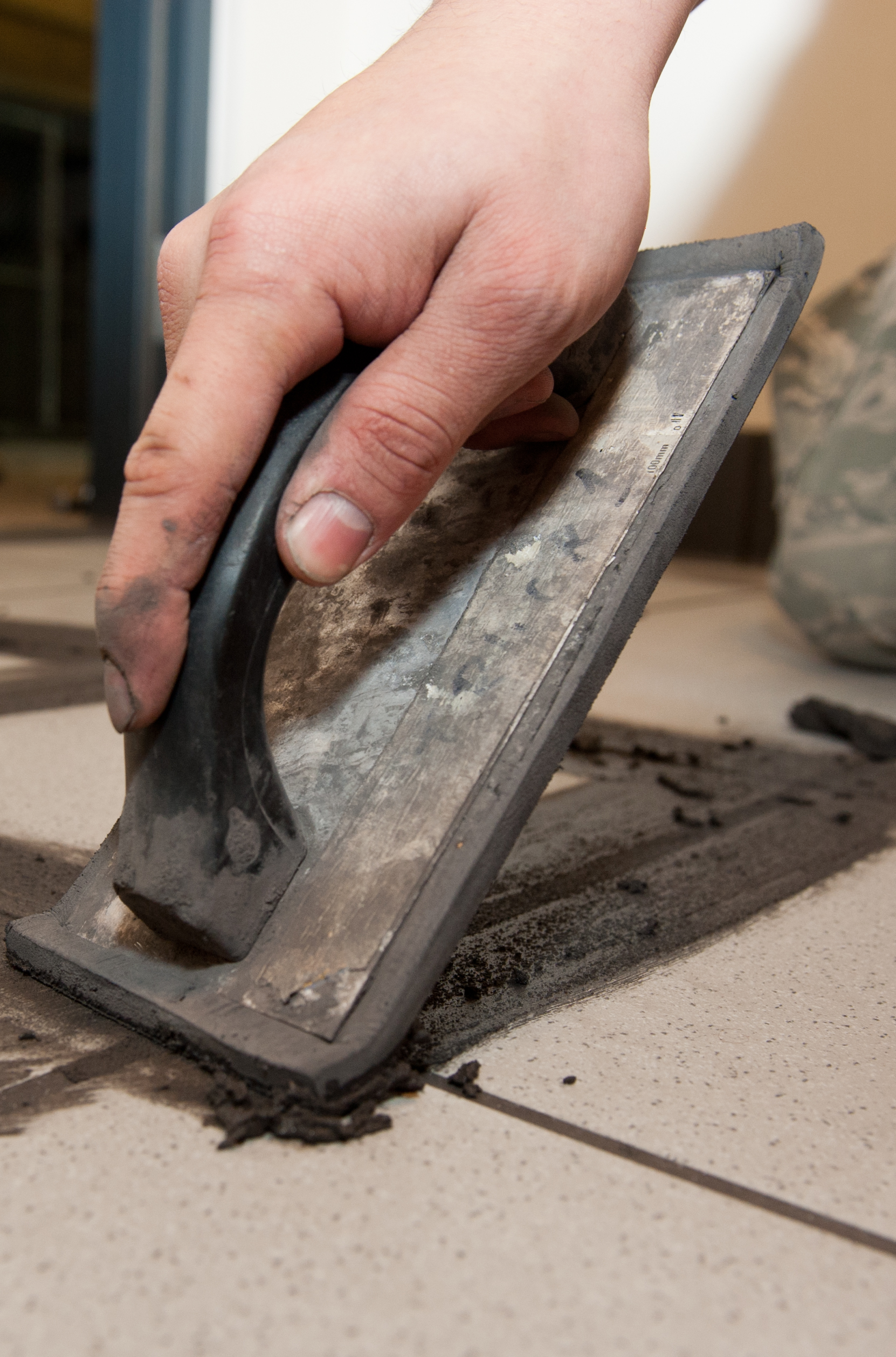
Non-shrink grout is a hydraulic cement grout that, when hardened under stipulated test conditions, does not shrink, so its final volume is greater than or equal to the original installed volume. It is often used as a transfer medium between load-bearing members.
Testing
Test standards used to designate a grout as non-shrink include, but are not limited to:
Typical characteristics
- Often sets rapidly
- Usually a pre-mix product that needs only to be mixed with [water]
- Includes ingredients to compensate against cement stone shrinkage
- Use of shrinkage-compensating ingredients can result in volume increase over time.
- Has a high strength of over 10,000 psi or near 100 MPa per ASTM C109.
Typical cementitious materials caveats
Despite the use of expanding or shrinkage-compensating ingredients, users are ordinarily cautioned to avoid environments detrimental to the forming of cement stone. These include but are not limited to the following:
- Avoid high wind across the curing surface.
- Avoid high temperatures during the cure.
- Avoid common cement poisons, such as sulphates, acids, etc. Failure to follow these precautions can adversely affect the quality of all cementitious products.
This article was imported from Wikipedia and is available under the Creative Commons Attribution-ShareAlike 4.0 License. Content has been adapted to SurfDoc format. Original contributors can be found on the article history page.
Ask Mako anything about Non-shrink grout — get instant answers, deeper analysis, and related topics.
Research with MakoFree with your Surf account
Create a free account to save articles, ask Mako questions, and organize your research.
Sign up freeThis content may have been generated or modified by AI. CloudSurf Software LLC is not responsible for the accuracy, completeness, or reliability of AI-generated content. Always verify important information from primary sources.
Report