From Surf Wiki (app.surf) — the open knowledge base
Newton Court

| Field | Value |
|---|---|
| name | Newton Court |
| map_type | Wales Monmouthshire |
| image | Newton Court 4.jpg |
| image_alt | A red-brick, three-storey, historic house with a red-brick wall and gates in front |
| coordinates | |
| altitude | 80 m |
| start_date | 1799 |
| completion_date | 1802 |
| location | Monmouth, Wales |
| architect | Anthony Keck |
| architectural_style | Neo-classical |
| floor_count | 3 |
Newton Court is a neoclassical house, completed in 1802, situated on the hillside above Dixton, 1 mi north-east of the town on Monmouth, in Monmouthshire, Wales. It is a Grade II* listed building. The stable block is listed as a Site of Special Scientific Interest (SSSI), noted for as a breeding site for lesser horseshoe bats.
History
Early land use
The first major activity on the land, other than evidence of a few prehistoric flints, was in the medieval period, with pottery finds and indications of iron smelting. Domesday Book mentions that a mill might have been present in the area. Industry continued through to the post-medieval period, with kiln waste being found.
A 14th-century manor house was present in the area, possibly on the site of the present-day Newton Court.
Construction
The land for Newton Court, on a south-east facing hillside, was purchased by Admiral Thomas Griffin in the 18th century at the same time as the land at Hadnock and was left to his third son, George Griffin, after his death.
The three-storey house was built in the neoclassical style, using coursed red sandstone with Forest of Dean stone dressings and a slate roof.
Usage to present day
The house remained in the Griffin family at least until 1901, when according to Kelly's Directory of Monmouthshire it was "the seat of George Griffin Griffin esq., M.A., D.L., J.P."
The house, stables, and screen wall were listed as Grade II* listed buildings in 2005,
Newton Court Farm is situated at the end of Newton Court Lane and in between this and the house is the older 17th-century Newton Hall, which is a Grade II listed building.
Stable Block
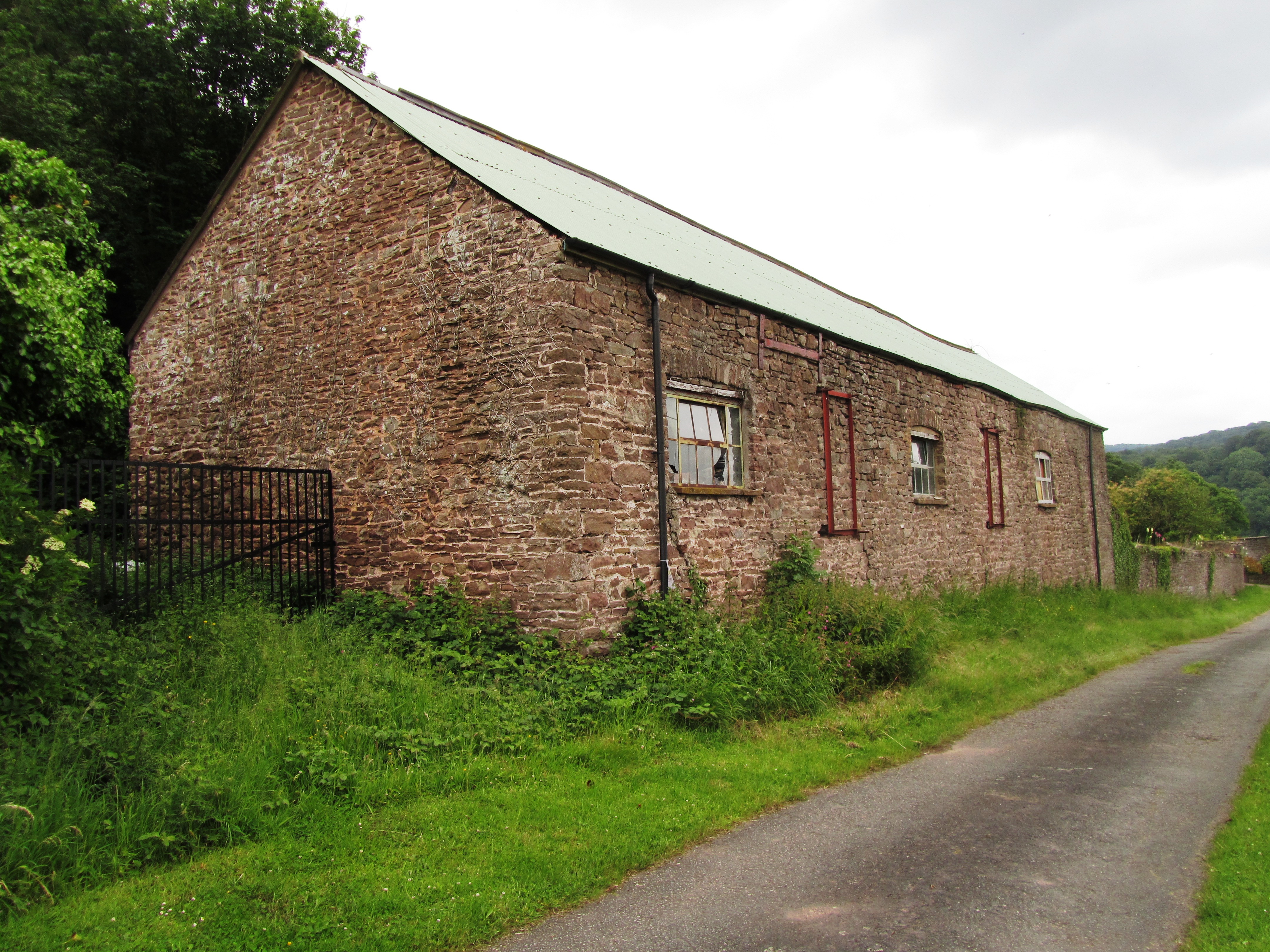
Newton Court Stable Block is noted as a small SSSI, totalling 2.3 ha in area; it comprises the stable block, which is also a Grade II* listed building, It is of importance because it is the only breeding colony in Monmouthshire for the nationally rare and endangered greater horseshoe bat (Rhinolophus ferrumequinum) and one of only three known sites in Wales. Between 50 and 100 adult and flying young have been recorded on the site, using the stable roof space for nesting. The stable block is also used by a few lesser horseshoe bats (Rhinolophus hipposideros). The SSSI forms part of the Wye Valley and Forest of Dean Bat Sites Special Area of Conservation.
The stable block building has previously undergone a number of temporary maintenance improvements, but is in a state of disrepair.
References
References
- {{NHAW
- "Lower Wye Valley: Newton". [[Glamorgan-Gwent Archaeological Trust]].
- Newman, John. (2000). "The Buildings of Wales: Gwent/Monmouthshire". [[Penguin Books]].
- "Kelly's Directory of Monmouthshire 1901". Kelly's Directories Ltd.
- whilst the gate piers, gates, and [[wing wall]]s were Grade II listed in the same year.{{NHAW
- Ordnance Survey: Explorer map sheet OL14 ''Wye Valley & Forest of Dean'' {{ISBN. 9780319240953
- {{NHAW
- (February 2018). "Newton Court Stable Block". [[Countryside Council for Wales]].
- "Wye Valley and Forest of Dean Bat Sites". [[Countryside Council for Wales]].
- (February 2018). "Newton Court Stable Block Site Management Statement". [[Countryside Council for Wales]].
This article was imported from Wikipedia and is available under the Creative Commons Attribution-ShareAlike 4.0 License. Content has been adapted to SurfDoc format. Original contributors can be found on the article history page.
Ask Mako anything about Newton Court — get instant answers, deeper analysis, and related topics.
Research with MakoFree with your Surf account
Create a free account to save articles, ask Mako questions, and organize your research.
Sign up freeThis content may have been generated or modified by AI. CloudSurf Software LLC is not responsible for the accuracy, completeness, or reliability of AI-generated content. Always verify important information from primary sources.
Report