From Surf Wiki (app.surf) — the open knowledge base
Nazi-Maruttash
| Field | Value |
|---|---|
| name | Nazi-Maruttaš |
| title | King of Babylon |
| image | Votive inscription Louvre AO7704.jpg |
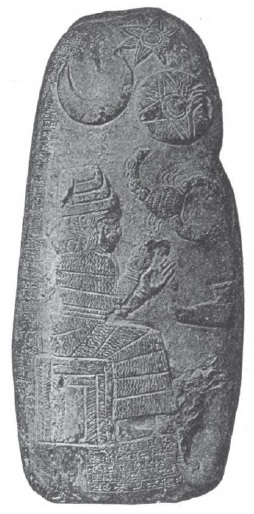
| caption | Irregular block of chalcedony with votive inscriptionAO 7704, an irregular block of chalcedony with a nine-line Sumerian inscription, now held in the Louvre, transcribed: *na-zi-ma-ru-ut-ta-aš*, *šàr kiššati* (šár), *mār ku-ri-gal-zu*, *šàr bābili* (ká.dingir.ra)ki, *ša šumi*, *ša-aṭ-ra*, *ip-pa-aš-ši-ṭú*, dŠamaš u dAdad, *šum-šu lip-ši-ṭú*. of Nazi-Maruttaš in the Louvre |
| reign | 26 regnal yrs |
| c. 1307–1282 BC | |
| predecessor | Kurigalzu II |
| successor | Kadašman-Turgu |
| royal house | Kassite |
c. 1307–1282 BC
Nazi-Maruttaš, typically inscribed Na-zi-Ma-ru-ut-ta-aš or mNa-zi-Múru-taš, Maruttaš (a Kassite god synonymous with Ninurta) protects him, was a Kassite king of Babylon c. 1307–1282 BC and self-proclaimed šar kiššati, or "King of the World", according to the votive inscription pictured. He was the 23rd of the dynasty, the son and successor of Kurigalzu II, and reigned for twenty six years.According to the Kinglist A tablet, BM 33332, column 2, line 2, in the British Museum.
Reign
His reign can be seen as the peak of the Kassite Dynasty, exemplified by his successful military campaigns against Assyria and Elam, the glyptic style of cylinder seals, the literature inspired by him (Hemerology for Nazi-Maruttaš), and his appearance in the period piece Ludlul bēl nēmeqi, which was set during his reign.
Military campaigns
Conflict with Assyria
Nazi-Maruttaš faced a growing threat from the ascendancy of Assyria under Arik-den-ili and his successor Adad-Nīrāri I. The containment of Assyria was conducted through a strategy of flank attacks supported by his agents, eastern hillmen such as the Gutians, in a protracted war, avoiding a full frontal assault. Under Arik-den-ili, he seems to have had the upper hand, because Adad-Nīrāri, who styles himself "King of the Universe", later recountsIn the Epic of Adad-Nārāri, tablet VAT 9820 line 12: hi-ib-lat um-ma-ni MAN KUR ka.-.i-i a-bi ul ul-te-.èr. that "my father could not rectify the calamities inflicted by the army of the king of the Kassite land" in a contemporary Assyrian epic.
He is mentioned in the Synchronistic Chronicle**Synchronistic Chronicle (ABC 21) tablet C, column 1, lines 24 to 31. as having fought a battle with Adad-Nīrāri's forces at "Kār-Ištar of Ugarsallu". The Assyrians claimed a complete victory over the Babylonians in this battle, plundering their camp and seizing the royal standards, thereby acquiring territory from them and causing the Assyro-Babylonian boundary to be adjusted southward. in its recounting of past Assyro-Babylonian conflicts, where he says, "And like Adad – I will send a devastating flood upon your camp!"
Other conflicts
There is evidence of a successful attack on Elam, because textsRation lists Ni 6932 Šagarakti-Šuriaš year 9 and Ni 7050 Kaštiliašu IV accession year. of this period concerning ration lists and foreign prisoners of war mention Nazi-Maruttaš in sections concerning the Elamites. A historical letterTablet CBS 11014. details his campaign in Mat Namri, a Hurrian region, and possibly his conquest of its twelve cities.
A fragment of a tabletK 11536 published in MSKH I as U.2.26, p. 282. relates that "Marduk ca[used] all the lands [to bow down] at his feet". catalogues more than 125 precious artifacts and their move from Dūr-Kurigalzu and Nippur to Ardi-Bêlit during his 5th year, possibly for safe keeping.
Building works
He is known to have made at least three Kudurru boundary stones, although the one picturedKudurru Sb. 21, a later stone copy of clay original. is a later stone copy made during the reign of Marduk-apla-iddina I to replace the clay original (narū ša haṣbi) which was crushed by a falling temple wall.
A shrine to Gula was uncovered in 1946 in an eroded building with a pavement of much damaged kiln-baked bricks, some inscribed for Nazi-Maruttaš. This was located in the palace area at the Kassite capital, Dūr-Kurigalzu. Work was also undertaken at Nippur, and excavations have yielded various tablets. He was also active in building as far south as Uruk, the cella of the Eḫiliana of Nanâ, as attested to by a later inscription by Esarhaddon.Esarhaddon inscription YBC 2146. Other cities formerly abandoned such as Larsa, Ur, Adab, and Isin show evidence of revival in his reign.
There are nearly 400 economic texts dated to years up to the twenty fourth of his reign, detailing things as mundane as the receipt of barley and malt, the issuing of grain, goats, hides, sheep and oil. A tablet found in Tell Kirbasi, on the south side of the central Hor al-Hammar 30 km west of Basra, lists 47 head of cattle in the sixteenth year of Nazi-Maruttaš, showing the extent of trade.
The Hemerology for Nazi-Maruttaš
A single standard hemerology, or uttuku, was collated during his time. A 'hemerology' was a sort of almanac stating which days of each month were favorable, unfavorable, or dangerous for activities of interest to the king, such as those propitious for begetting children, or setting taxes. It was typically used by scribes, temple administrators, priests, cultic singers and exorcists and provided detailed instructions for "auspicious days".
The colophon of the work reads, "Auspicious days according to the seven a[pkallī?] originals from Sippar, Nippur, Babylon, Ur, Larsa, Uruk and Eridu. The scholars excerpted, selected, and gave to Nazi-Maruttaš, king of the world." Five extant examplesKAR 147, KAR 177 (=VAT 9663), etc. have been found, including a bilingual copy in Dur-Kurigalzu, another found in the house of LÚ.NAR.GAL "cultic singers" in Aššur and a third in the house of Kiṣir-Aššur, exorcist of the temple of Aššur during the reign of Aššurbanipal.
Lambert has argued that Ludlul bēl nēmeqi was composed during his reign based upon the identification of the protagonist Šubši-mašrâ-Šakkan with that of a character in a fragment of an epic of the Kassite times,K 9952 W G Lambert BWL pl. 12 pp 296f., BM 35322, Sp. II,893. and to the governor, or lúgar kur, of Ur during his 16th regnal year. Nazi-Maruttaš’ name appears on the reverse of a literary text fragment known as KAR 116KAR 116, tablet VAT 11245 r. 10. which Lambert identified as belonging to this work.
The prominent physician, or asû, from Nippur, Rabâ-ša-Marduk, began his lengthy, well-attested career during Nazi-Maruttaš’ reign.
Inscriptions
References
References
- Wilfred G. Lambert. (2007). "Babylonian Oracle Questions". Eisenbrauns.
- Donald M. Matthews. (1992). "The Kassite Glyptic of Nippur". Vandenhoeck and Ruprecht.
- Devecchi, Elena. "4. Of Kings, Princesses, and Messengers: Babylonia’s International Relations during the 13th Century BC". Volume 1 Karduniaš. Babylonia under the Kassites 1, edited by Alexa Bartelmus and Katja Sternitzke, Berlin, Boston: De Gruyter, 2017, pp. 112-122
- (1975). "Cambridge Ancient History, Volume 2, Part 2, History of the Middle East and the Aegean Region, c. 1380-1000 BC". Cambridge University Press.
- The conflict is fondly remembered in the [[Tukulti-Ninurta Epic]],''Tukulti-Ninurta Epic'', extant in fragments BM 98496, BM 98730, BM 98731, BM 121033.
- J. A. Brinkman. (1976). "Materials for the Study of Kassite History, Vol. I". Oriental Institute of the University of Chicago.
- Christopher Morgan. (2006). "The ancient Near East: historical sources in translation". Blackwell Publishing.
- H. W. F. Saggs. (2000). "Babylonians". British Museum.
- Leon Legrain. (1922). "Historical Fragments". University Museum.
- A treasury listCBS 14180.
- Dominique Charpin. (2011). "Reading and Writing in Babylon". Harvard University Press.
- Clayden, Tim. "16. Dūr-Kurigalzu: New Perspectives". Volume 2 Karduniaš. Babylonia under the Kassites 2, edited by Alexa Bartelmus and Katja Sternitzke, Berlin, Boston: De Gruyter, 2017, pp. 437-478
- "VI. The Kassite and Neo-Babylonian Periods in Southern Iraq (c.1600–550 B.C.)". Ashmolean Museum.
- R. L. Zettler. (1993). "Nippur, Volume 3: Kassite Building in Area WC-3". Oriental Institute Publications.
- M. Sigrist, H. H. Figulla and C. B. F. Walker. (1996). "Catalogue of Babylonian Tablets in the British Museum, Volume II". British Museum Press.
- H. H. Figulla. (1961). "Catalogue of Babylonian Tablets in the British Museum, Volume I". British Museum Press.
- Daniel T. Potts. (1997). "Mesopotamian civilization: the material foundations". Cornell University Press.
- Ralph Mark Rosen. (2004). "Time and Temporality in the Ancient World". University of Pennsylvania Museum of Archaeology and Anthropology.
- Alasdair Livingstone. (2007). "Die Welt der Götterbilder".
- Simo Parpola. (Jan 1983). "Assyrian Library Records". Journal of Near Eastern Studies.
- Enrique Jiménez. “Loose Threads of Tradition: Two Late Hemerological Compilations.” Journal of Cuneiform Studies, vol. 68, 2016, pp. 197–227
- William W. Hallo. (2009). "The World's Oldest Literature: Studies in Sumerian Belles Lettres". Brill.
- W. G. Lambert. (1998). "Wisdom in Ancient Israel". Cambridge University Press.
- Nils P. Heeßel. (2009). "Advances in Mesopotamian Medicine from Hammurabi to Hippocrates". Brill.
This article was imported from Wikipedia and is available under the Creative Commons Attribution-ShareAlike 4.0 License. Content has been adapted to SurfDoc format. Original contributors can be found on the article history page.
Ask Mako anything about Nazi-Maruttash — get instant answers, deeper analysis, and related topics.
Research with MakoFree with your Surf account
Create a free account to save articles, ask Mako questions, and organize your research.
Sign up freeThis content may have been generated or modified by AI. CloudSurf Software LLC is not responsible for the accuracy, completeness, or reliability of AI-generated content. Always verify important information from primary sources.
Report