From Surf Wiki (app.surf) — the open knowledge base
Naurzum Nature Reserve
Nature reserve in Kazakhstan

Nature reserve in Kazakhstan
| Field | Value |
|---|---|
| name | Naurzum Nature Reserve |
| other_name | Наурызым мемлекеттік табиғи қорығы |
| image | Naurzum nature reserve.JPG |
| map | Kazakhstan |
| map_caption | Location in Kazakhstan |
| type | Inland wetlands |
| location | Kostanay Region, Kazakhstan |
| nearest_city | Karamendy |
| coordinates | |
| area | 3081 sqkm |
| created | 1931 |
| operator | Main Department of Zapovedniks and Game Management - Republic of Kazakhstan |
| status | Nature reserve |
| embedded | {{Designation list |
| embed | yes |
| designation1 | Ramsar |
| designation1_offname | Naurzum Lake System |
| designation1_date | 12 July 2009 |
| designation1_number | 1872}} |
Naurzum State Nature Reserve (, Nauryzym memlekettık tabiği qoryğy) is a nature reserve in Kostanay Region, Kazakhstan. It is part of the UNESCO heritage site Saryarka – Steppe and Lakes of Northern Kazakhstan. It protects about 3081 km2 of steppes, semi desert and forests. The administrative office of the protected area is located in Karamendy village.
Size
The protected area is located in the central part of the Turgay Plateau within the steppe zone of Kazakhstan. Aksuat lake is located in the reserve. It consists of three clusters of core areas, which are surrounded by buffer zones and connected via a protected eco-corridor. The core area is about 1.910 km2; the buffer zone is about 1.167 km2 in size.
Main Area Naurzum-Kargay Cluster is the largest of the three component areas. It is located about 320 km west of the capital city of Nur Sultan. This area consists of 1,397.14 km2 and includes several large lakes including Zharman Lake.
Sypsyn-Aebu Cluster is located about 8 km west of Naurzum-Kargay. It contains 387.20 km2.
Tersek-Karagay Cluster is located about 8 km north of Sypsyn-Aebu. It contains 129.47 km2.
An Eco-Corridor of 311.59 km2 borders all three clusters merging them into a unified area, that along with additional buffer areas of 855.675 km2 surrounding the three core areas, provides a total protected area of 3081 km2.
Flora
The vegetation is diverse and consists of steppes, shrub lands, semi deserts and as a unique feature within the southern steppe zone, also forests. These forests are composed mainly of pine (Pinus sylvestris), birch (Betula pendula, B. pubescens) and aspen (Populus tremula). Along the seashores there is also typical aquatic vegetation of sedges and reeds. In the shrub dominated parts, typical steppe shrubs are Russian almond (Amygdalus nana), cherry (Cerasus fruticosa), greenweed (Cytisus ruthenicus) (western distribution boundary), species of wild roses (Rosa) and juniper (Juniperus sabinea). At moister places there also willow bushes (Salix) and along lake shores, tamarisk (Tamarix ramosissima).
Fauna
There are 47 species of mammals, 279 species of birds, 10 species of reptile and amphibious animals and 10 species of fish reported in the reserve. In addition more than 1000 species of invertebrates are found. Typical mammals of the steppe zone are steppe polecat (Mustela eversmanni), corsac fox (Vulpes corsac), common fox (Vulpes vulpes), Eurasian wolf (Canis lupus lupus), long-eared hedgehog (Erinaceus auritus), European hare (Lepus europaeus) and several rodent species like bobak marmot (Marmota bobac), large-toothed souslik (Spermophylus fulvus), red-cheeked souslik (Spermophylus major), little souslik (Spermophylus pygmeus), common hamster (Cricetus cricetus), jerboas (Allactaga major, Stylodipus telum) as well as several species of voles and lemmings. The forests are inhabited by elk (Alces alces), Tartarian roe deer (Capreolus pygargus), Eurasian lynx (Lynx lynx), badger (Meles meles), ermine (Mustela erminea), weasel (Mustela nivalis), pine marten (Martes martes) and raccoon dog (Nyctereutes procyonoides), red squirrel (Sciurus vulgaris), European hedgehog (Erinaceus europaeus), Blue Hare (Lepus timidus). Mainly along rivers one can also find wild boar (Sus scrofa). Among the species, which can be found occasionally in the deserts and semi deserts of the reserve is the rare saiga antelope (Saiga tatarica).
References
References
- "Naurzum Lake System".
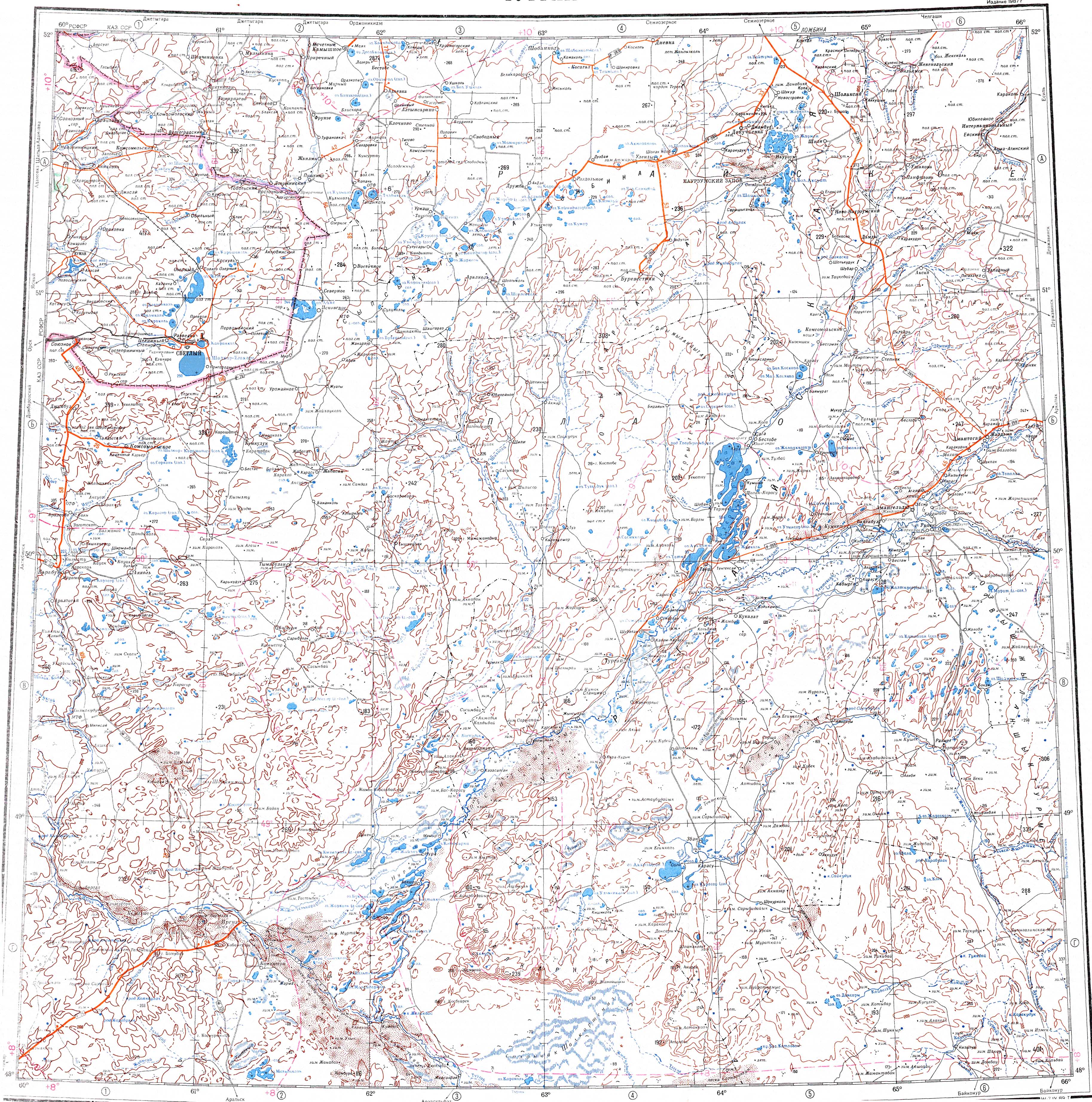
- "M-41 Topographic Chart (in Russian)".
- [[Google Earth]]
- Nomination Dossier SARYARKA - Steppe and Lakes of Northern Kazakhstan - For inscription on THE LIST OF CULTURAL AND NATURAL WORLD HERITAGE OF UNESCO. Provided by the Government of the Republic of Kazakhstan. [https://whc.unesco.org/en/list/1102/documents/ online link to nomination file]
This article was imported from Wikipedia and is available under the Creative Commons Attribution-ShareAlike 4.0 License. Content has been adapted to SurfDoc format. Original contributors can be found on the article history page.
Ask Mako anything about Naurzum Nature Reserve — get instant answers, deeper analysis, and related topics.
Research with MakoFree with your Surf account
Create a free account to save articles, ask Mako questions, and organize your research.
Sign up freeThis content may have been generated or modified by AI. CloudSurf Software LLC is not responsible for the accuracy, completeness, or reliability of AI-generated content. Always verify important information from primary sources.
Report