From Surf Wiki (app.surf) — the open knowledge base
Narimantas
Prince of Polotsk and Pinsk
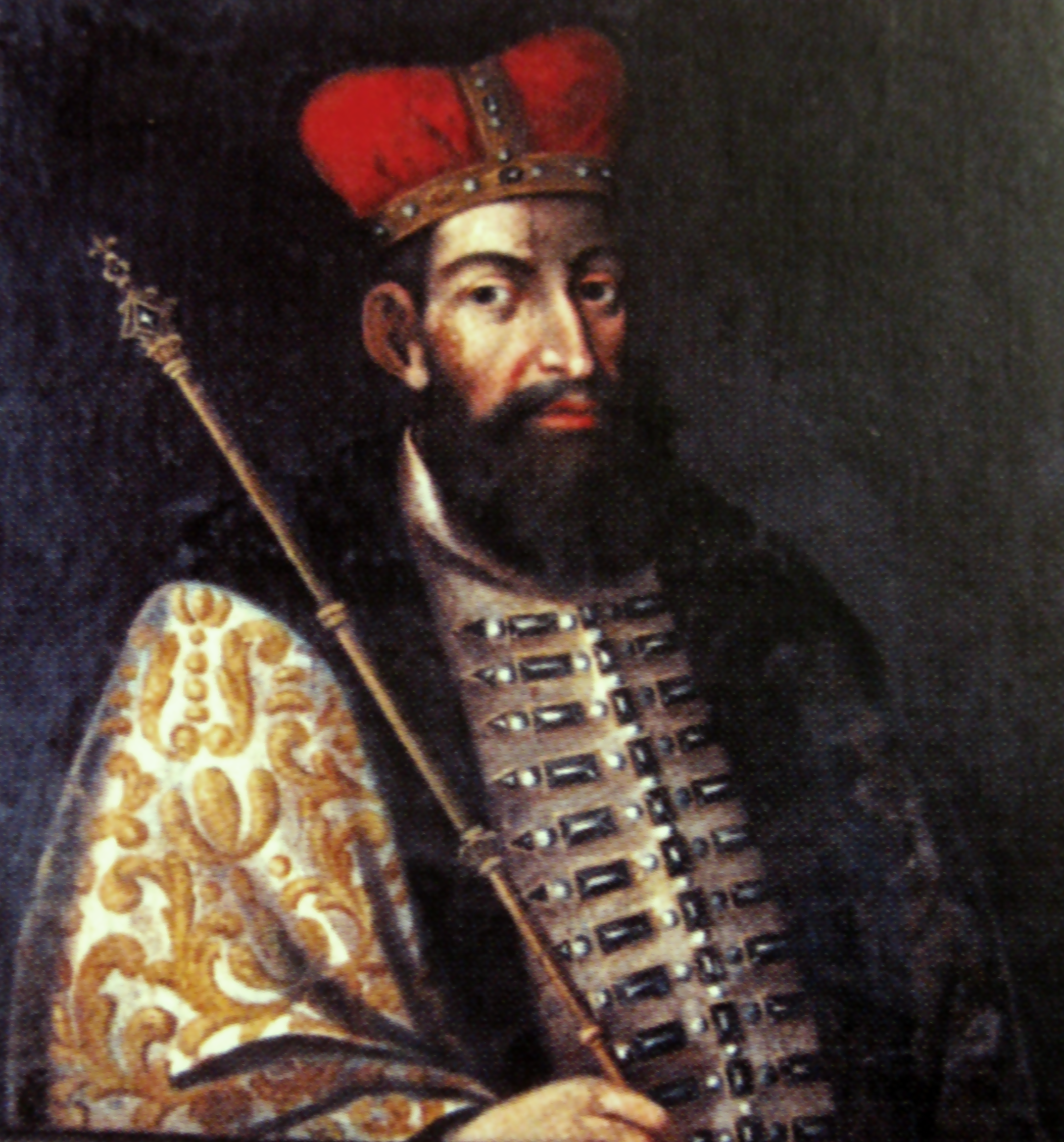
Prince of Polotsk and Pinsk

Narimantas or Narymunt (baptized Gleb; 1277 or just before 1300 (according to Wasilewski 1992) – 2 February 1348) was a Lithuanian duke and the second eldest son of Gediminas, Grand Duke of Lithuania. During various periods of his life, he ruled Pinsk and Polotsk. In 1333 he was invited by Novgorod's nobles to rule and protect territories in the north, Ladoga, Oreshek and Korela.
About 1338, the Golden Horde took him as a prisoner. The Muscovite ruler, Ivan Kalita, ransomed him from Tatars, keeping him as hostage in Moscow for a few years.
Narimantas supported his brother Jaunutis when he was deposed by Algirdas and Kęstutis in 1345. In order to avoid getting killed by his younger brothers, he escaped Vilnius in autumn 1344. Narimantas travelled to Jani Beg, Khan of the Golden Horde, asking for support against Algirdas. Though he failed to solicit support, he is rumoured to have married a Tatar princess (possibly as second wife). After returning, Narimantas reconciled with Algirdas but was killed leading the Battle of Strėva against the Teutonic Knights on 2 February 1348. His descendants include Princes Kurakin, Galitzine, Khovansky, Korecki.
He took baptism in 1333 in or before Veliki Novgorod. This made him ineligible to succeed his father as ruler of Lithuanians, despite his primogeniture right.
Sons
It is believed that Narimantas had five sons:
- Aleksander (died after 1386), Prince of Podolia
- Yury (died in 1392), Prince of Belz
- Nikolai, Prince of Pinsk
- Patrikas (died ca. 1387), Prince of Starodub-Seversky
- Simeon (died after 1386)
The Polish genealogist and historian (see Dr. Jozef ks. Puzyna, article series on Narimantas, in: , 1930–31) refutes strongly the claim that Narimantas' progeny would have been born of a Tatar wife. He advances a hypothesis that the names of Narimantas' sons indicate that their mother was an Orthodox Ruthenian lady.
Other genealogists give as his wife Marija, daughter of Toqta (died c. 1312), khan of the Golden Horde, and wife Maria Palaiologina (born 1297), bastard daughter of Andronikos II Palaiologos, Emperor of Byzantium.
References
- Sjöström (2011), Liettuan gediminidien suomensukuiset geneettiset juuret. ISSN 1239-3487, Donelaitis - Donelaitis-seuran - Liettuan Ystävät ryn lehti 1/2011, ss 16..18
References
- Rowell, C. S.. (1994). "Lithuania Ascending: A Pagan Empire Within East-Central Europe, 1295-1345". Cambridge University Press.
- Rowell, C. S. ''Lithuania Ascending'', 114
- Kiaupa, Zigmantas. (2004). "Narimantas". Mokslo ir enciklopedijų leidybos institutas.
- sources: T.Wasilewski, 1992
- Rowell, C. S. ''Lithuania Ascending'', xxxii
This article was imported from Wikipedia and is available under the Creative Commons Attribution-ShareAlike 4.0 License. Content has been adapted to SurfDoc format. Original contributors can be found on the article history page.
Ask Mako anything about Narimantas — get instant answers, deeper analysis, and related topics.
Research with MakoFree with your Surf account
Create a free account to save articles, ask Mako questions, and organize your research.
Sign up freeThis content may have been generated or modified by AI. CloudSurf Software LLC is not responsible for the accuracy, completeness, or reliability of AI-generated content. Always verify important information from primary sources.
Report