From Surf Wiki (app.surf) — the open knowledge base
Nanyang Technological University
Autonomous university in Singapore
Autonomous university in Singapore
| Field | Value |
|---|---|
| name | Nanyang Technological University |
| native_name | |
| image | Nanyang Technological University coat of arms vector.svg |
| image_upright | .55 |
| caption | Coat of arms |
| former_name | Nanyang Technological Institute (1981–1991) |
| established | (as Nanyang Technological Institute) |
| (as Nanyang Technological University) | |
| endowment | S$2.9 billion |
| type | Public research university |
| chancellor | President of Singapore |
| president | Ho Teck Hua |
| provost | Christian Wolfrum |
| address | 50 Nanyang Ave, Singapore 639798 |
| coor | |
| colours | Red |
| Blue | |
| academic_staff | 1,590 |
| administrative_staff | 6,407 |
| students | 37,458 |
| undergrad | 24,800 |
| postgrad | 12,658 |
| campus | 50 Nanyang Ave, Singapore 639798 (Main campus) |
| 11 Mandalay Road, Singapore 308232 (Novena campus) | |
| affiliations | ACU, APRU, ASAIHL, ASPIRE, AUN, DAAD, SATU, STINT, UAiTED, UCMSR, WA, Global Alliance of Technological Universities |
| website | |
| logo | Nanyang Technological University.svg |
| logo_upright | 0.95 |
(as Nanyang Technological University) Blue 11 Mandalay Road, Singapore 308232 (Novena campus)
Nanyang Technological University (NTU) is a national public research university in Singapore. Founded in 1981, it is also the second oldest autonomous university in the country.
In response to Singapore’s economic restructuring in the 1970s amid a shortage of engineers, the government established the Nanyang Technological Institute (NTI) in 1981 on the former campus of Nanyang University, with engineering and applied science-focused programmes that emphasised laboratory training and industrial attachments.
NTI was elevated to full university status and officially inaugurated as NTU on 1 July 1991 through parliamentary legislation, incorporating the National Institute of Education to support national goals of industrial upgrading and research-intensive higher education in science and technology.
NTU's main campus, located in the western part of Singapore, covers 200 hectare of land, making it the largest university campus in the country.
The university also operates a medical campus in Novena, Singapore's healthcare district. As of 2024, NTU enrolled 37,458 students, and employed 7,997 faculty and staff.
The university is organised into a number of colleges and schools, including the College of Engineering, College of Science, Nanyang Business School, Lee Kong Chian School of Medicine, College of Humanities, Arts and Social Sciences, College of Computing and Data Science, Graduate College, National Institute of Education, and S. Rajaratnam School of International Studies.
History
Nanyang University (1955–1980)
Main article: Nanyang University
Nanyang University (abbreviated Nan-tah, 南大) was founded in 1955 on land donated by the Hokkien Huay Kuan, prior to Singapore's independence from British rule. Conceived as a Chinese-medium university, it was largely supported by the local Chinese community and became the first Chinese-language university in Southeast Asia.
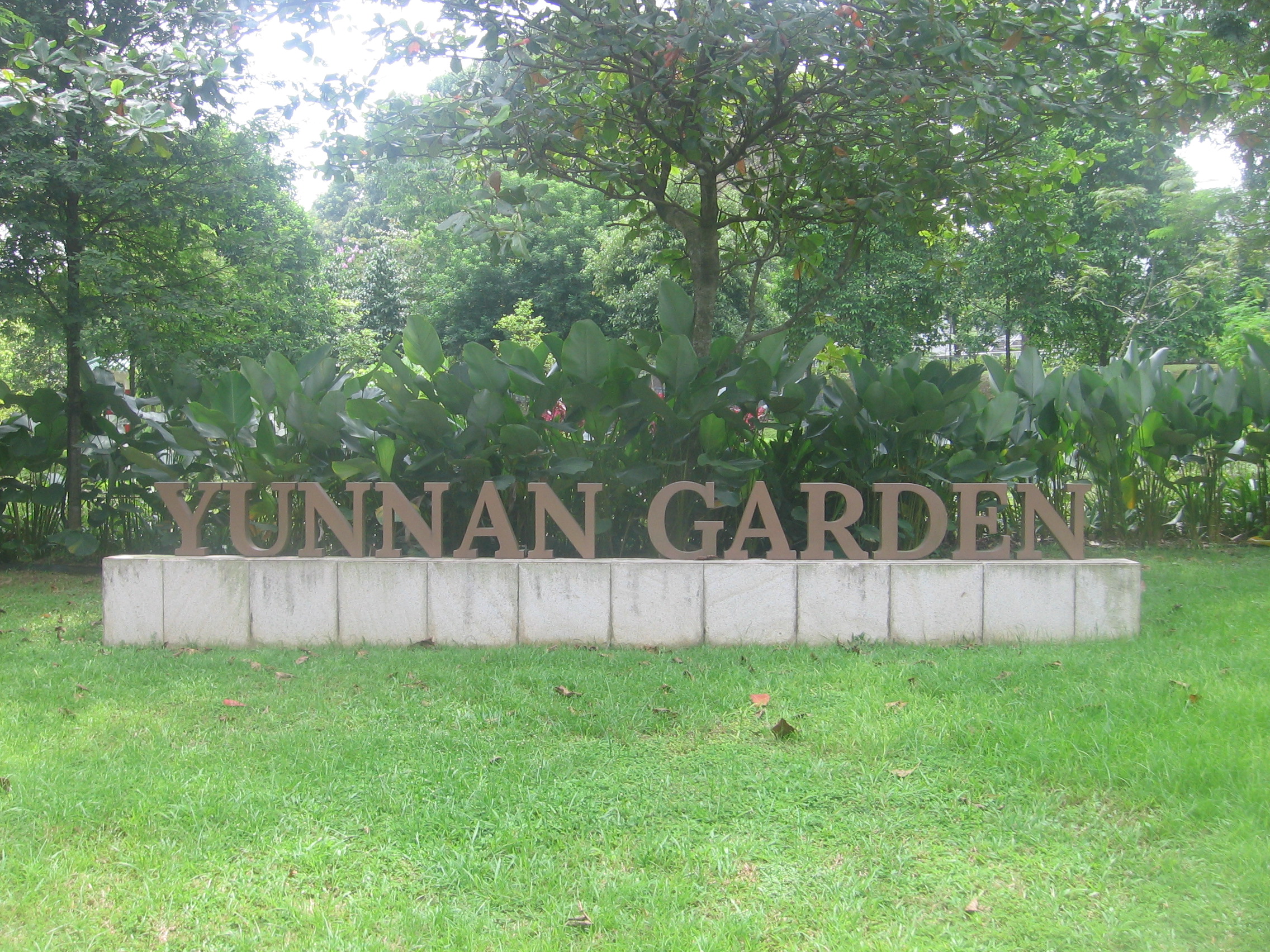
Nanyang University was located south of the present Nanyang Technological University grounds, centered on what is now Yunan Garden. The former administration building of Nanyang University now houses the Chinese Heritage Centre, which has been designated as a national monument.
Nanyang Technological Institute (1981–1991)
In 1980, Nanyang University merged with the University of Singapore to form the current National University of Singapore. Nanyang Technological Institute (NTI), a tertiary institution affiliated to the National University of Singapore, was formed to take over Nanyang University's campus in 1981.
NTI operated as an engineering institute for a decade and formed the academic and infrastructural foundation for the establishment of Nanyang Technological University.
Legacy of Nanyang University (1991)
As NTU subsequently grew into a full university, various efforts were made to have it claim the Nanyang University mantle. In 1996, the alumni rolls of Nanyang University were transferred from NUS to NTU. In 1998, the prominent local calligrapher and poet Pan Shou (), who had been the first vice-chancellor of Nanyang University |access-date=25 January 2026 , called for NTU to be renamed Nanyang University, as a way to "quieten the hearts of many" NU alumni.
Present form
Establishment of Nanyang Technological University (1991)
In March 1991, the Singapore Parliament approved the formation of Nanyang Technological University. It was officially established on 1 July 1991, with the National Institute of Education (NIE) incorporated into it. The alumni rolls of the former Nanyang University were transferred to NTU in 1996. Historically, Nanyang Technological University admitted students jointly with the affiliated National University of Singapore and charged the same fees. Students made only one application, and they would be accepted by either university. This arrangement ended in 2004 as both universities began to distinguish themselves with an end of its official affiliation. Currently, students apply separately to both universities. NTU became autonomous in 2006 and stands as one of the two largest public universities in Singapore today.
Developments in the 21st century
Since the early 2000s, NTU has expanded its international engagement, graduate education, and academic profile.
Approximately 65% of NTU's faculty and staff are foreign nationals, placing it among the world’s top 100 universities with the highest proportion of international faculty, according to QS. (NTU was ranked joint 3rd in the world on this metric, alongside NUS.)
The university is also highly international in its student body: 31% (8,089) of students are foreign nationals, with 58% of them pursuing postgraduate degrees. It remains one of the few top 100 universities with more than 60% of foreign faculty.
Controversies in the 21st century
In 2013, a public debate over academic freedom in Singapore arose after Cherian George, an outspoken academic at the Wee Kim Wee School of Communications known for his criticism of the government, was denied tenure. Although George had been recommended for tenure by the Wee Kim Wee School, his application was rejected by a university-level committee that included representatives from the Government of Singapore. The decision prompted a petition by students at the Wee Kim Wee School, but George's subsequent appeal was rejected by the university.
In 2021, some applications for on-campus hostel accommodations in NTU were rejected due to COVID-19 isolation protocols. The university claimed that the rejections were due to a shortage of housing facilities, which at full capacity was still unable to house every applicant, as rooms were oversubscribed. These rejections raised concerns, especially among international students, as returning students from Academic Year 2020–2021 were not granted on-campus accommodation despite the university's much-publicised policy of guaranteeing all incoming students a minimum of two years of campus housing. NTU eventually reversed their decision on 2nd July 2021, prioritising on-campus accommodations for international students that resided on campus at the time, students under scholarship programmes with guaranteed housing, and all Year 1 and 2 students under the guaranteed hall stay policy.
Coat of arms
On its foundation in July 1991, NTU adopted the Coat of Arms granted to NTI (by the College of Arms of the United Kingdom in November 1982) as its coat of arms.
The Coat of Arms consists of a heraldic shield divided into two sections: the lower portion shows a stalking lion facing the spectator on a white background and the upper portion two atomic symbols, one on either side of a cog-wheel above a battlement on a red background.
It is blazoned:
The lion represents close links between NTI and NUS, the battlement represents School of Civil and Structural Engineering, the atoms represents School of Electrical and Electronic Engineering and the cogwheel represents School of Mechanical and Production Engineering.
Campuses
Landscape and Architecture
|marker-size1=small |marker-color1=#0054A6
|marker-size2=small |marker-color2=#0054A6
|marker-size3=small |marker-color3=#D71440
|marker-size4=small |marker-color4=#66A61E
|marker-size5=small |marker-color5=#0054A6
|marker-size6=small |marker-color6=#FFDD00
|marker-size7=small |marker-color7=#D95F02
|marker-size8=small |marker-color8=#D71440
|marker-size9=small |marker-color9=#A5247F
|marker-size10=small |marker-color10=#D71440
|marker-size11=small |marker-color11=#0054A6
|marker-size12=small |marker-color12=#A5247F
|marker-size13=small |marker-color13=#87CEEB
|marker-size14=small |marker-color14=#D71440
|marker-size15=small |marker-color15=#D71440
|marker-size16=small |marker-color16=#A5247F
|marker-size17=small |marker-color17=#D71440
|marker-size18=small |marker-color18=#D71440
|marker-size19=small |marker-color19=#D95F02
|marker-size20=small |marker-color20=#D95F02
|marker-size21=small |marker-color21=#D95F02
|marker-size22=small |marker-color22=#D95F02
|marker-size23=small |marker-color23=#D95F02
|marker-size24=small |marker-color24=#D95F02
|marker-size25=small |marker-color25=#D95F02
|marker-size26=small |marker-color26=#D95F02
|marker-size27=small |marker-color27=#D95F02
|marker-size28=small |marker-color28=#D95F02
|frame-align=center |frame-lat=1.3465 |frame-long=103.6835 |frame-width=640 |frame-height=480
NTU has been listed among the World's Most Beautiful Universities, with the Art, Design and Media (ADM) building featured in a 2012 report by Travel + Leisure.{{cite web |access-date=2020-08-06 |archive-date=7 September 2024 |archive-url=https://web.archive.org/web/20240907220753/https://www.travelandleisure.com/attractions/colleges-universities/americas-most-beautiful-college-campuses#2087644 |url-status=live
Much of NTU’s campus layout dates back to the Nanyang Technological Institute (NTI) period between 1981 and 1982, when the master plan—centred on the central academic spine known as the North Spine—was designed by Japanese architect Kenzō Tange |access-date=2020-08-04 |url-status=live |archive-url=https://web.archive.org/web/20200119163902/https://eresources.nlb.gov.sg/history/events/5b196e5e-3204-4dd5-91d2-103474eaf0fb |archive-date=2020-01-19 the recipient of the 1987 Pritzker Architecture Prize. The North Spine was officially opened in 1986.{{cite web |access-date=2020-08-10 |url-status=live |archive-url=https://web.archive.org/web/20200526192201/https://eresources.nlb.gov.sg/infopedia/articles/SIP_2016-03-09_132926.html |archive-date=2020-05-26}}
Several landmark buildings on campus have since gained international recognition. The ADM building, featured in the Travel + Leisure report, was designed by Singaporean architect Lee Cheng Wee. |access-date=2020-08-04 |url-status=live |archive-url=https://web.archive.org/web/20200108055230/https://mothership.sg/2019/09/timothy-seow-ntu-adm-building/ |archive-date=2020-01-08
The Hive, another prominent campus landmark, was featured by Times Higher Education, |access-date=2020-08-06 |url-status=live |archive-url=https://web.archive.org/web/20190718072316/https://www.timeshighereducation.com/student/best-universities-east-asia |archive-date=2019-07-18}} and was designed by British designer Thomas Heatherwick. |archive-url=https://web.archive.org/web/20190719033906/https://www.architectsjournal.co.uk/news/heatherwicks-singapore-uni-learning-hub-opens/8679749.article |archive-date=2019-07-19}}
File:666 02 Learning Hub Surrounding context of the Learning Hub CREDIT Hufton and Crow.jpg|The Hive File:2016-08-18 Nanyang Technological University Library Outpost SG WMN0001.jpg|alt=|Interior of The Hive
Yunnan Garden Campus
The former Nanyang University administration building was restored into the Chinese Heritage Centre and was gazetted as a national monument in 1998 – now overlooking the Yunnan Garden. The Yunnan Garden precinct has undergone restoration and redevelopment works that completed in 2021. This encompassed heritage conservation, landscaped public spaces, and upgraded facilities surrounding the Chinese Heritage Centre. The Nanyang University Memorial and original Nanyang University Arch were also declared national monuments of Singapore in 1998.
The NTU Art & Heritage Museum is an approved public museum under the National Heritage Board's Approved Museum Scheme; benefactors who donate artworks and artefacts to NTU enjoy double tax deductions. There is a small lake between the Chinese Heritage Centre and Hall of Residence 4 called Nanyang Lake. Only members of NTU Anglers' Club permit holder, the fishing club at NTU, are allowed to fish in this lake.
The campus also served as the Youth Olympic Village for the inaugural Youth Olympic Games in 2010.
File:NTU Administration Building.JPG|Administration Building of Nanyang Technological University File:NTU former administrative building front.jpg|Chinese Heritage Centre, formerly the Administration Building of Nanyang University File:Nanyang Lake, Singapore, 2015-02-07.jpg|Nanyang Lake File:NTU North Spine.jpg|North Spine File:NTU South Spine.jpg|South Spine File:NBS1.jpg|Nanyang Business School
Colleges and schools
| College of Computing and Data Science | 2024 |
|---|
NTU is organised into several colleges and schools covering engineering, business, science, computing, humanities, education, and medicine.
Lee Kong Chian School of Medicine
Main article: Lee Kong Chian School of Medicine
In 2010, NTU announced the formation of a pro-tem governing board to guide the establishment of the Lee Kong Chian School of Medicine, a collaboration with Imperial College London. The medical college was established in 2013. Prior to its opening in 2013, the school received record donations of S$400 million, including S$150 million from the Lee Foundation. The School's primary clinical partner is the National Healthcare Group.
S. Rajaratnam School of International Studies

Main article: S. Rajaratnam School of International Studies
The S. Rajaratnam School of International Studies (RSIS), named after Singapore's former Deputy Prime Minister and Minister for Foreign Affairs, offers graduate programmes in international relations and is an autonomous graduate institution of NTU. The school has the Institute of Defence and Strategic Studies.
Nanyang Business School

Nanyang Business School (NBS) is the largest business school in Singapore.
NBS houses the 165-square meter Centre for Applied Financial Education, the largest finance lab in Singapore. The lab is equipped with 60 dedicated Thomson Reuters Eikon terminals with Datastream, along with 24 Bloomberg terminals that will allow business students with access to real-time financial, economic and business information.
In May 2023, NTU opened Gaia, a six-storey mass timber building. It is NTU’s eighth zero-energy building and at its opening, the largest wooden building in Asia.
College of Humanities, Arts, and Social Sciences
HASS consists of four schools:
- The Wee Kim Wee School of Communication and Information is a school of communication studies and offers courses in Journalism, Broadcast, Advertising, Communication Policy and Information Studies. It originally established in 1992, and it was named after Singapore's former president Wee Kim Wee in 2006.

- The School of Art, Design and Media is Singapore's first professional art school and offers an undergraduate programmes in Art, Design, and Media, as well as graduate degrees in arts research. Its building, which features a sloping grassy roof surrounding a central courtyard, is frequently featured in NTU's promotional materials.
- In 2016, the School of Humanities and Social Sciences split into 2 separate schools: the School of Humanities (SOH) and School of Social Sciences (SSS) – to accommodate with the rising intake of students.
- The School of Humanities which offers programmes in a wide variety of fields including Chinese, English Literature, History, Linguistics & Multilingual Studies and Philosophy.
- The School of Social Sciences which offers Economics, Psychology, Public Policy and Sociology. The School of Social Sciences also houses the Nanyang Centre for Public Administration (NCPA), which focuses on executive education and public-sector leadership.
College of Engineering
The College of Engineering is NTU's largest subdivision. It has been ranked among the world's top 15 schools of engineering and technology by QS World University Rankings, and claimed to be the world's largest engineering college, with a student population of more than 10,500 undergraduates and 3,500 graduates.
It consists of five schools:
- School of Chemistry, Chemical Engineering and Biotechnology (CCEB),
- School of Civil and Environmental Engineering (CEE),
- School of Electrical and Electronic Engineering (EEE),
- School of Mechanical and Aerospace Engineering (MAE), and
- School of Materials Science and Engineering (MSE).
In addition to the 12 single degree programmes, the college also offers double degrees, double majors and integrated programmes as well as the only aerospace engineering programme in Singapore. File:School of Civil and Environmental Engineering (CEE).jpg|School of Civil and Environmental Engineering (CEE) File:School of Mechanical and Aerospace Engineering (MAE).jpg|School of Mechanical and Aerospace Engineering (MAE) File:School of Electrical and Electronic Engineering (EEE).jpg|School of Electrical and Electronic Engineering (EEE) File:Behind_eee.jpg|School of Electrical and Electronic Engineering complex
College of Computing and Data Science

The College of Computing and Data Science (CCDS) was established in February 2024 following a restructuring of the university’s academic framework. It was formed through the reorganisation of the School of Computer Science and Engineering and the consolidation of computing-related disciplines previously housed under the College of Engineering. |url-status=live |archive-url=https://web.archive.org/web/20240423075543/https://www.straitstimes.com/singapore/students-can-enrol-in-ntu-s-new-college-in-ai-computing-and-data-science-from-aug-2024 |archive-date=23 April 2024 |access-date=14 May 2024 |work=The Straits Times |publisher=SPH Media |location=Singapore |language=en-SG |issn=0585-3923}}
CCDS supports active research activities across a broad spectrum of computing and data science domains. It hosts research laboratories and centres such as the Generative AI Lab, Health Informatics Lab, Cyber Security Lab, Data Management and Analytics Lab, and the Centre for Brain-Computing Research, among others.
College of Science

As of 2024, the college consists of four schools and is home to 257 faculty members, 578 research staff, 134 administrative and technical staff, 4,227 undergraduate and 1,078 graduate students.
- The School of Biological Sciences was established in 2002 and offers a variety of programmes in the Biological Sciences and double degree programme in Biomedical Sciences and Traditional Chinese Medicine with the Beijing University of Chinese Medicine in China.
- The School of Physical and Mathematical Sciences was established in 2005 and offers various disciplines in physics, applied physics and mathematical sciences. The school offers data science programmes together with the College of Computing and Data Science.
- The Asian School of the Environment is a new interdisciplinary School established in 2015 to focus on Asian environmental challenges, integrating Earth systems, environmental life sciences, ecology, and the social sciences to address key issues of the environment and sustainability.
- The School of Chemistry, Chemical Engineering and Biotechnology is a school run in conjunction with the College of Engineering established in 2022 with programmes in organic and inorganic chemistry, physical chemistry, chemical engineering, and bioengineering.
Graduate College
NTU's Graduate College was formed on 1 August 2018 and is in charge of graduate programmes in NTU. One such graduate programme is the Interdisciplinary Graduate Programme (IGP), which leverages on professors from multiple schools or colleges in NTU to undertake interdisciplinary research and to act as advisors for IGP PhD students. Another graduate programme is the Industrial Postgraduate Programme (IPP), which leverages on partnering industry companies to undertake industrial research and to act as advisors for IPP PhD students.
National Institute of Education

Main article: National Institute of Education
The National Institute of Education (NIE), occupying 16 hectare in the western part of NTU's Yunnan Garden campus, is Singapore's main teaching college and is run in close collaboration with Singapore's Ministry of Education. Full-time teachers in Singapore's public schools are required to complete a post-graduate diploma course at NIE, sponsored by Singapore's Ministry of Education.
Academics
NTU is a comprehensive national public research university with most students enrolled in full-time undergraduate and graduate degree programmes.
It operates on a two-semester academic calendar, with the academic year typically running from August to May and an optional special term in between semesters.
Undergraduate program
| Academic Year | Undergraduates | Graduate | Total Enrollment | 2023–2024 | 2024–2025 | 2025–2026 |
|---|---|---|---|---|---|---|
| 24,757 | 10,608 | 35,365 | ||||
| 24,800 | 12,658 | 37,458 | ||||
| 25,010 | 15,729 | 40,739 |
As of 2026, NTU enrolls over 25,000 undergraduate students across its colleges and schools. The College of Engineering constitutes the largest academic division, followed by the College of Humanities, Arts and Social Sciences, College of Computing & Data Science, Nanyang Business School, College of Science, Lee Kong Chian School of Medicine and the National institute of Education.
Undergraduate students are required to complete a set of Interdisciplinary Collaborative Core (ICC) courses, introduced as part of a university-wide curriculum reform.
Most undergraduate courses combine lectures, tutorials, laboratory sessions and project-based assessments. Final-year students typically complete a capstone project or final-year project particularly in engineering and science programs, involving independent research or applied design under faculty supervision, industry partners or research institutes.
Undergraduate Research
NTU places emphasis on undergraduate research, with students participating in faculty led projects through programmes such as the Undergraduate Research Experience on Campus (URECA) and overseas research attachments. Many undergraduates also engage in internships, industry-linked projects and/or overseas exchange programmes as part of their degree requirements.
Graduate program
NTU offers a broad range of graduate programmes, including coursework-based and research-based master's degrees, as well as Doctor of Philosophy (PhD) programmes across science, engineering, computing, medicine, education, business and the humanities.
Doctoral education at NTU is research-intensive, with PhD candidates typically supported through scholarships, research assistantships or teaching assistantships. Graduate students are closely integrated into NTU's research ecosystem, which allows them to contribute to national and international research initiatives.
NTU also offers professional graduate degrees, including the Master of Business Administration (MBA), specialized master's programmes in engineering and computing and joint or dual-degree programmes with international partner universities. The university also maintains over 50 joint, dual, and double-degree programmes with international partner institutions, particularly in Europe, North America, and Asia.
Honours education
The NTU Honours College was established to provide an interdisciplinary, cohort-based honours education for high-performing undergraduates across the university. The programme admits students from multiple colleges and schools, with its first intake of approximately 500 students in August 2025.
Scholarships
NTU is a participating institution in the Singapore International Graduate Award (SINGA), a national doctoral scholarship programme administered by the Agency for Science, Technology & Research (ASTAR). This programme supports PhD candidates worldwide and is jointly offered by ASTAR, Nanyang Technological University, the National University of Singapore, and the Singapore University of Technology and Design.
Collaborations
NTU maintains extensive global academic and industry partnerships to advance research, education, and innovation. Key collaborations include the CREATE campus with research centres alongside MIT, ETH Zurich, Technical University of Munich, Cambridge University, and others in areas like electromobility, sustainability, and AI.
Notable joint initiatives feature the Centre for Lifelong Learning and Individualised Cognition (CLIC) with University of Cambridge, seed funds with Imperial College London for blue-sky research in health, AI, and urban resilience, and the Fraunhofer-NTU Research Centre.
Industry ties span over 700 companies via corporate labs and NTUitive spin-offs (e.g., Nanofilm, Eureka Robotics), plus partnerships with P&G, Schaeffler, and the Millennium Technology Prize as Asia's first academic partner.
Research institutes and centres
NTU hosts several national-level research entities, including Research Centres of Excellence (RCEs) and University-level Research Institutes.
Research Centres of Excellence
As of 2026, NTU hosts 2 Research Centres of Excellence.
-
The Institute for Digital Molecular Analytics and Science (IDMxS) is an interdisciplinary RCE supported by the Ministry of Education, Nanyang Technological University, and the National University of Singapore, with research spanning molecular analytics, data science, and engineering.
-
The Singapore Centre on Environmental Life Sciences Engineering (SCELSE) is a unique interdisciplinary RCE, funded by National Research Foundation, Singapore Ministry of Education, Nanyang Technological University and National University of Singapore. Hosted by the NTU in partnership with NUS, SCELSE is linking new insights from the Life Sciences with expertise from the emerging technologies in Engineering and Natural Sciences to understand, harness and control microbial biofilm communities. The union of these fields has established a new discipline of Environmental Life Sciences Engineering.
University-level Research Institutes
NTU hosts several University-level Research Institutes that support interdisciplinary and applied research aligned with national priorities:
- The Nanyang Environment & Water Research Institute (NEWRI) focuses on sustainability-related research, including water technologies, environmental engineering, and urban solutions.
- The Energy Research Institute @ NTU (ERI@N) conducts research on sustainable energy systems, clean energy technologies, and energy policy, serving as a platform for collaboration between academia, industry, and government.
The Earth Observatory of Singapore (EOS), which was previously established as a Research Centre of Excellence, transitioned to a University-level Research Institute in July 2023. EOS specializes in Earth Sciences and conducts fundamental research on earthquakes, volcanoes, tsunamis & climate change in and around Southeast Asia, towards safer and more sustainable societies.
Libraries
Main article: Nanyang Technological University Libraries

NTU operates a network of 8 libraries:
- Business Library
- Chinese Library
- Humanities & Social Sciences Library
- Lee Wee Nam Library
- Library Outpost
- Art, Design & Media Library
- Communication & Information Library
- Library and Information Services Centre (NIE)
They collectively house over two million print, digital, and audiovisual resources accessible 24/7 online for staff and students.
The Lee Wee Nam Library supports engineering and science collections with study spaces including wellness areas like the 'Hygge'. Other key branches include the Business Library (finance and marketing), Chinese Library (Chinese literature and history), Humanities & Social Sciences Library (Singapore studies and research), Communication & Information Library (media and communication studies), and Art, Design & Media Library (visual and audiovisual materials).
Additional facilities include the Wang Gungwu Library at the Chinese Heritage Centre, which focuses on the history of overseas Chinese, and the Medical Library at Novena.
Student Life
Student governance and organizations
Student life at NTU is largely self-directed. The Nanyang Technological University Students’ Union (NTUSU) is the main representative body for undergraduates. Membership in NTUSU is compulsory for all full-time undergrads (and certain postgraduates in NIE).
The Union consists of 16 academic constituent clubs (one for each school or college) and 3 non-academic constituent clubs – namely the Cultural Activities Club, Sports Club, and Welfare Services Club.
Through its elected Council and Executive Committee, NTUSU organizes student activities and serves as the liaison between the student body and the university administration. In addition, a Graduate Students’ Association represents postgraduate students.
Clubs and societies
Beyond the Union’s constituent clubs, NTU has numerous special interest groups and societies. Students can join over 100 clubs spanning arts, culture, sports, entrepreneurship and community service and more. Competitive teams (like cheer, sports and recreational games) also represent NTU in inter-varsity competitions.
Residential Life
NTU has 23 Halls of Residence for undergraduates, each accommodating between 500 and 659 residents. All halls are co-educational by floor or wing and offer both single and double occupancy rooms, with double rooms shared by residents of the same gender. Communal facilities are available in every hall and typically include lounges, air-conditioned reading rooms, pantries, and laundry rooms equipped with washing machines and dryers.
Each hall is managed by a student-run Hall Council. About 12,000 students live on campus, and every incoming freshman is guaranteed two years of hall accommodation. Hall councils organise inter-hall competitions, orientation activities and student welfare initiatives.
Senior students typically accrue “hall points” by participating in hall activities and committees to qualify for continued residency. Hall Councils also organize social events, welfare initiatives, and orientation activities for residents, contributing to a lively campus living experience.
File:Hall of Residence 5.jpg|Hall of Residence 5 File:Nanyang Business School Campus Building - 3.jpg|Student accommodation File:Hall 9.jpg|Hall of Residence 9
Transportation
_ComfortDelgro_PD524U_Campus_Weekend_Rider_2024-08-09.jpg)
Transportation to and around NTU is provided by means of campus shuttle buses. The Campus Loop Red and Blue services circle the campus, while the Campus Rider service connects the campus to the Pioneer MRT station.
NTU is planned to be served directly by 3 new MRT stations on the Jurong Region Line, which is expected to open around 2029: JW3 (Nanyang Gateway), JW4 (Nanyang Crescent) and JW5 (Peng Kang Hill). Construction is ongoing on campus, with worksites along Nanyang Avenue and Nanyang Drive.
Entrepreneurship
NTU's entrepreneurship ecosystem is anchored by NTUitive, the university's innovation and enterprise company and wholly-owned subsidiary, which manages intellectual property, promotes innovation, supports entrepreneurship, and facilitates the commercialization of research through technology licensing, start-up incubation, and industry partnerships.
The Overseas Entrepreneurship Programme (OEP) offers selected undergraduates with funded overseas internships of 6-12 months at technology start-ups in established innovation hubs such as Silicon Valley, Shenzhen, and Tel Aviv. The programme includes entrepreneurship-related coursework and requires participants to complete prescribed modules prior to departure. OEP operates under Singapore’s Global Innovation Alliance framework.
Entrepreneurship initiatives at NTU are further coordinated through the NTU Entrepreneurship Academy (NTUpreneur), which supports student-led ventures via incubator spaces, seed funding schemes, innovation challenges, and mentorship programmes. As of the mid-2020s, NTU spin-off companies have collectively licensed over 1,000 technologies, with reported combined valuations exceeding S$800 million.
Reputation and rankings
| access-date = 2 January 2026
| access-date = 19 June 2025 | archive-date = 28 October 2014 | archive-url = https://web.archive.org/web/20141028092904/http://www.usnews.com/education/best-global-universities/rankings | url-status = live
| access-date = 2 January 2026
| access-date = 19 June 2025 | archive-date = 7 July 2023 | archive-url = https://web.archive.org/web/20230707162222/https://www.topuniversities.com/universities/nanyang-technological-university-singapore-ntu-singapore | url-status = live
| access-date = 2 January 2026
| access-date = 7 October 2023 | archive-date = 27 August 2018 | archive-url = https://web.archive.org/web/20180827210029/https://www.timeshighereducation.com/world-university-rankings/nanyang-technological-university-singapore | url-status = live
| access-date = 2 January 2026
Overall rankings
NTU was #40 worldwide in 2024 in terms of aggregate performance across THE, QS, and ARWU.
Young university rankings
NTU is #1 in both the Times Higher Education Young University Rankings 2023 and the QS "Top 50 Under 50" 2021. NTU has been ranked as the world's #1 young university by QS since 2015.
Subject/area rankings
In the 2025 QS World University Rankings by Subject, NTU ranked among the global top 10 in several engineering and science-related subjects, and held the top national position in multiple disciplines.{{cite web | access-date = 19 June 2025
| Subject | Global | National | 48 | 2 | 11 | 1 | 109 | 2 | 24 | 2 | 21 | 2 |
|---|---|---|---|---|---|---|---|---|---|---|---|---|
| Archaeology | ||||||||||||
| Architecture – Built Environment | ||||||||||||
| Art and Design | ||||||||||||
| English Language and Literature | ||||||||||||
| History of Art | ||||||||||||
| History | ||||||||||||
| Linguistics | ||||||||||||
| Modern Languages | ||||||||||||
| Performing Arts | ||||||||||||
| Philosophy | ||||||||||||
| Computer Science and Information Systems | ||||||||||||
| Data Science and Artificial Intelligence | ||||||||||||
| Engineering – Chemical | ||||||||||||
| Engineering – Civil and Structural | ||||||||||||
| Engineering – Electrical and Electronic | ||||||||||||
| Engineering – Mechanical, Aeronautical and Manufacturing | ||||||||||||
| Biological Sciences | ||||||||||||
| Medicine | ||||||||||||
| Psychology | ||||||||||||
| Chemistry | ||||||||||||
| Earth and Marine Sciences | ||||||||||||
| Environmental Sciences | ||||||||||||
| Geography | ||||||||||||
| Geology | ||||||||||||
| Geophysics | ||||||||||||
| Materials Science | ||||||||||||
| Mathematics | ||||||||||||
| Physics and Astronomy | ||||||||||||
| Accounting and Finance | ||||||||||||
| Business and Management Studies | ||||||||||||
| Communication and Media Studies | ||||||||||||
| Development Studies | ||||||||||||
| Economics and Econometrics | ||||||||||||
| Education | ||||||||||||
| Hospitality and Leisure Management | ||||||||||||
| Law | ||||||||||||
| Library and Information Management | ||||||||||||
| Marketing | ||||||||||||
| Politics and International Studies | ||||||||||||
| Social Policy and Administration | ||||||||||||
| Sociology | ||||||||||||
| Sports-Related Subjects | ||||||||||||
| Statistics and Operational Research |
Notable alumni
Nanyang Technological University (NTU) has produced alumni who have held high office in government across Southeast Asia, led multinational corporations, and achieved distinction in academia, arts, sports and media.
Politics, government and public service
International
- HE Pehin Dato Abu Bakar Apong – Former Minister of Home Affairs of Brunei
- Major Agus Harimurti Yudhoyono – Coordinating Minister for Infrastructure and Regional Development, Indonesia
- Edhie Baskoro Yudhoyono – Member of House of Representatives, Indonesia
- Lan Tianli – Chairman and deputy party chief of the Guangxi Zhuang Autonomous Region, China and chairman of the Guangxi Zhuang Autonomous Region Committee of the Chinese People's Political Consultative Conference
- Dato' Seri Mohd Zuki Bin Ali – Board Chairman, Employees Provident Fund, Malaysia
- Gen. Tito Karnavian – Minister of Home Affairs, Indonesia; former chief of the Indonesian National Police
- Nie Chenxi – Standing Committee Member, Deputy Director, 14th National Committee of the Chinese People's Political Consultative Conference, People's Republic of China
- Y.B. Datuk Seri Ir Wee Ka Siong – President of Malaysian Chinese Association; Member, House of Representative of Malaysia
Singapore
Current Ministers and Members of Parliament (MP)
- Ang Wei Neng – Member of Parliament for West Coast GRC
- Baey Yam Keng – Senior Parliamentary Secretary, Ministry of Sustainability and the Environment & Ministry of Transport
- Cheryl Chan – Member of Parliament for East Coast GRC
- Chong Kee Hiong – Member of Parliament for Bishan-Toa Payoh GRC
- Eric Chua – Senior Parliamentary Secretary, Ministry of Culture, Community and Youth & Ministry of Social and Family Development
- Darryl David – Member of Parliament for Ang Mo Kio GRC
- Gerald Giam Yean Song – Member of Parliament for Aljunied GRC
- Derrick Goh – Member of Parliament for Nee Soon GRC
- Low Yen Ling – Senior Minister of State, Ministry of Culture, Community and Youth & Ministry of Trade and Industry; Chairperson of Mayors' Committee & Mayor, South West District; Member of Parliament for Chua Chu Kang GRC
- Masagos Zulkifli – Minister for Social and Family Development & Second Minister for Health; Minister-in-charge of Muslim Affairs; Member of Parliament for Tampines GRC
- Ng Ling Ling – Member of Parliament for Ang Mo Kio GRC, 2018 Her World Woman of the Year
- Sim Ann – Senior Minister of State, Ministry of Foreign Affairs & Ministry of National Development; Member of Parliament for Holland-Bukit Timah GRC
- Desmond Tan Kok Ming – Senior Minister of State, Singapore Prime Minister's Office; Member of Parliament for Pasir Ris-Punggol GRC
- Wan Rizal Wan Zakariah – Member of Parliament for Jalan Besar GRC
- Don Wee – Member of Parliament for Chua Chu Kang GRC
- Yip Hon Weng – Member of Parliament for Yio Chu Kang SMC
- Melvin Yong – Member of Parliament for Radin Mas SMC, and Assistant Secretary General National Trades Union Congress
- Zaqy Mohamad – Senior Minister of State, Ministry of Defence & Ministry of Manpower; Member of Parliament for Marsiling-Yew Tee GRC
- Patrick Tay – Member of Parliament for Pioneer SMC and Assistant Secretary General of National Trades Union Congress
Retired politicians
- Ang Mong Seng – former Member of Parliament for Bukit Gombak SMC
- Cheo Chai Chen – former Member of Parliament for Nee Soon Central SMC
- Inderjit Singh – former Member of Parliament for Ang Mo Kio GRC
- Intan Azura Mokhtar – former Member of Parliament for Ang Mo Kio GRC
- Lee Bee Wah – former Member of Parliament for Nee Soon GRC
- Sinnakaruppan s/o C Ramasamy – former Member of Parliament, and first Students' Union President
- Low Thia Khiang – Former Secretary-General of Workers' Party; Former Member of Parliament (Singapore)
- Sebastian Teo Kway Huang – former President of the National Solidarity Party
- Teo Ser Luck – former Member of Parliament for Pasir Ris-Punggol GRC, Mayor, and Minister of State ; President, Institute of Singapore Chartered Accountants
- Yee Jenn Jong – former Non-Constituency Member of Parliament
- Yu-Foo Yee Shoon – former Member of Parliament for Yuhua SMC, and former Minister of State for Community Development, Youth & Sports
Business
- Ajit Mohan – Chief Business Officer, Snap Inc.
- Dato’ Sri Tahir – Founder, Mayapada Group; billionaire
- Danny Yong – Chief Investment Officer & Founding Partner, Dymon Asia Capital
- Tan Chin Hwee – Chairman, SGTraDex Services; Asia-Pacific CEO, Trafigura
- Tan Lip-Bu – CEO of Intel; Chairman, Walden International; former CEO, Cadence Design Systems
- Merry Riana – Founder, Merry Riana Group
Science
- Shirley Meng – Professor, Pritzker School of Molecular Engineering, University of Chicago
- Ming Joo Koh – Associate Professor, NUS Singapore; Young Scientist Award 2022
Educators, artists and literary figures
- Choo Jing Sarah – Gold Award in the 2016 PX3 Prix de la Photographie, Fine Art Category; First Place in the 2015 Moscow International Foto Awards
- Liang Wern Fook – writer and musician; Cultural Medallion for Music 2010
- Ng Yew Kwang – economist
- Nuraliah Bte Norasid – Epigram Books Fiction Prize 2016 for her first novel, The Gatekeeper
- Tan Swie Hian – local artist & sculptor; Cultural Medallion for Art 1987
- Wong Meng Voon – writer and co-founder, Singapore Association of Writers; Cultural Medallion for Literature 1981
- You Jin – author; Cultural Medallion for Literary Arts 2009
Media professionals and celebrities
- Vincy Chan – Singer
- Annette Lee – Filmmaker, actress, musician
- Lee Teng – Television presenter
- Lin Youyi – Newscaster and corporate trainer
- Michelle Alicia Saram – Actress
- Joanne Peh – Actress, filmmaker and compere
- Rui En – Actress, singer and compere
- Diana Ser – Presenter and TV journalist
- Stefanie Sun – Singer and Songwriter
- Zhang Haijie – Television presenter and producer
Sports Medallists
- Dipna Lim Prasad – Silver and bronze medallist in sprinting at the SEA Games (2013 to 2017)
- Leslie Kwok – Bronze medallist in swimming at the SEA Games (1997 - 2005)
- Lee Wung Yew – Multiple medallist in trap shooting at SEA Games (1985 - 2009)
- Tan Cheng Yin Esther – First female naval diver and endurance sports specialist; Singapore Women's Hall of Fame
- Wong Wei Long – Bronze medallist in basketball at the SEA Games (2013-2015); Gold medallist at SEABA Cup, 2014
- Yu Mengyu – Gold medallist in table-tennis at the World Championship, Commonwealth Games, SEA Games (2007 - 2022)
Community builders
- John Chew – Former 8th Bishop of Singapore
Notable faculty
Medicine, science and engineering
- Chen Xiaodong – Materials Science and Engineering
- Ernst Kuipers – Gastroenterology
- Joseph Sung – Gastroenterology and Hepatology
- Simon Redfern – Mineralogy and Geosciences
- Warren Chan – Nanotechnology and Biomedical Engineering
Business and technology
- Teck-Hua Ho – Behavioral Science, Marketing and Operations Management
- Vijay Sethi – First Economist Intelligence Unit Business Professor of the Year
Humanities and social sciences
- Duncan McCargo – Political Science
References
References
- "Nanyang Technological Institute Act".
- "NTI to be developed in three phases;The Straits Times, 20 February 1982, Page 7".
- "Nanyang Technological University Act 1991".
- (September 2024). "NTU Annual Report 2024 – Advancing Our Impact". Nanyang Technological University.
- "Post-secondary education".
- [https://www3.ntu.edu.sg/CorpComms2/NTU%20Quick%20Brand%20Guide%202018.pdf Quick Brand Guide] {{Webarchive. link. (20 September 2022 – website NTU)
- "Facts & Figures".
- "Facts & Figures".
- "Networks & Alliances: Achieving meaningful impact through cross-border collaboration - ASPIRE".
- "Networks & Alliances: Achieving meaningful impact through cross-border collaboration - SATU".
- "Networks & Alliances: Achieving meaningful impact through cross-border collaboration - STINT".
- "Networks & Alliances: Achieving meaningful impact through cross-border collaboration - UCMSR".
- "Nanyang Technological University is established".
- "Our History".
- "Check in to Check Out".
- "Enrolment by College".
- "Faculty and Staff Population".
- "NTU At A Glance 2024".
- "Nanyang University - Singapore".
- Mavis Toh. "NUS versus NTU: Looking beyond the rankings".
- (2000). "李光耀回忆录 1965 2000". 新加坡联合早报.
- (Apr 2009). "Nantah's spectre haunts NTU's name". The Enquirer (Singapore).
- "Thirty Years of Momentum, 30 Perspectives (Reprint)".
- "Our History".
- "Our History".
- "National University of Singapore vs Nanyang Technological University".
- "NTU clarifies tenure process after outcry".
- (30 April 2013). "NTU rejects outspoken professor's tenure appeal".
- "Many NTU students fail to secure accommodation as hall rooms reserved for 'Covid-19 isolation & other related purposes'".
- "NTU says it is 'still working' to resolve hall allocation issue, cannot have a place for every applicant".
- "NTU freshmen guaranteed 2-year stay on campus".
- "NTU opens more spots for on-campus housing after 'careful review'; guarantees placement for Year 1 and 2 students". CNA.
- "Coat of Arms".
- "Nanyang Lake".
- "The Singapore 2010 Youth Olympic Village".
- "Colleges & Schools in NTU".
- "Imperial and NTU's new medical school aspires to be global healthcare role model in meeting Singapore's future healthcare needs".
- (17 February 2016). "Stop-work order issued after fatal worksite accident at Lee Kong Chian School of Medicine". AsiaOne.
- "Joint Medical School".
- "Lee Foundation chairman Lee Seng Gee dies".
- Tan, Amelia. (5 January 2011). "Record $400m for NTU's medical school". The Straits Times.
- "About Us".
- NanyangBizSchool. (4 July 2016). "Relevant programmes, outstanding #faculty, hands-on business experience! #NBS boasts the largest cohort in Singapore".
- "Nanyang Business School".
- (15 September 2014). "Nanyang Business School unveils Singapore's largest finance lab".
- (17 May 2023). "Gaia, the largest wooden building in Asia, launched".
- Nanyang Technological University. "The ADM Building".
- hermes. (2016-11-01). "NTU to split social sciences, humanities".
- "About Us".
- Nanyang Technological University. "NTU at a glance".
- "Undergraduate".
- "About Us".
- "History {{!}} College of Computing and Data Science". Nanyang Technological University.
- "New College of Computing and Data Science (CCDS)". Nanyang Technological University.
- "Research Labs & Centres {{!}} College of Computing and Data Science {{!}} NTU Singapore". Nanyang Technological University.
- "College of Computing and Data Science {{!}} NTU Singapore". Nanyang Technological University.
- "College of Science Annual Report 2024".
- "School of Biological Sciences".
- "School of Physical and Mathematical Sciences".
- "The Asian School of the Environment".
- "School of Chemistry, Chemical Engineering and Biotechnology (CCEB)".
- "Interdisciplinary Graduate Programme".
- "Industrial Postgraduate Programme".
- Ministry of Education, Singapore. "Applying to be a teacher".
- "Student Enrolment Statistics AY2023-24". Nanyang Technological University.
- "Joint & Double Degree Programmes". Nanyang Technological University.
- (2024-05-24). "Singapore International Graduate Award (SINGA)".
- "Global Partnerships".
- (6 October 2020). "Cambridge University and Nanyang Technological University Collaboration".
- "NTU-Imperial Collaboration Fund".
- "Industry Research Collaborations".
- "Research Centres of Excellence".
- "Research Institutes and Centres".
- "Research Centres of Excellence".
- "NTU Library Singapore".
- "A Student's Guide to NTU Libraries".
- Raynold Toh YK. (16 March 2017). "Freshmen at NTU assured of 2-year stay in hostels". The Straits Times.
- "Accommodation".
- Office of Housing & Auxiliary Services. "Getting Around NTU".
- "Jurong Region Line".
- "MRT Construction on Campus".
- "About NTUitive". NTUitive Pte Ltd.
- "NTU I&E Ecosystem". Nanyang Technological University.
- "Overseas Entrepreneurship Programme". Nanyang Technological University.
- "Overseas Entrepreneurship Programme (OEP)". Nanyang Technological University.
- "Overseas Entrepreneurship Programme". Nanyang Technological University.
- "NTU Innovation and Entrepreneurship". Nanyang Technological University.
- "NTU Innovation Port". Nanyang Technological University.
- "NTU Innovation and Entrepreneurship". Nanyang Technological University.
- "University Results {{!}} Rankings".
- (2021-04-18). "QS Top 50 Under 50 2021".
- "Notable NTU Alumni". Nanyang Technological University.
- "Nanyang Alumni Awards Recipients". Nanyang Technological University.
- (2016-08-06). "为什么不少领导干部都有新加坡南洋理工大学学历?". The Paper.
- "藍天立簡歷". Government of the People's Republic of China.
- "Board of Directors – Singapore Education Academy (Asia Pacific)".
- "Close-up of Mr. R. Sinnakaruppan, former Member of Parliament for Kampong Glam GRC". National Library Board, Singapore.
- "Snap Inc. - Governance - Leadership Team - Person Details".
- "Trafigura announces appointment of Chin Hwee Tan as Chief Executive Officer Asia-Pacific".
- (12 March 2025). "Intel Appoints Lip-Bu Tan as Chief Executive Officer".
- "About Koh Ming Joo".
This article was imported from Wikipedia and is available under the Creative Commons Attribution-ShareAlike 4.0 License. Content has been adapted to SurfDoc format. Original contributors can be found on the article history page.
Ask Mako anything about Nanyang Technological University — get instant answers, deeper analysis, and related topics.
Research with MakoFree with your Surf account
Create a free account to save articles, ask Mako questions, and organize your research.
Sign up freeThis content may have been generated or modified by AI. CloudSurf Software LLC is not responsible for the accuracy, completeness, or reliability of AI-generated content. Always verify important information from primary sources.
Report