From Surf Wiki (app.surf) — the open knowledge base
Mount Harriet National Park
National park in the Andaman Islands, India
National park in the Andaman Islands, India
| Field | Value |
|---|---|
| name | Mount Harriet National Park |
| (Mount Manipur National Park) | |
| iucn_category | II |
| photo | Centaur Oakblue andamans at Mt Harriet National Park.jpg |
| photo_caption | Centaur oakblue at Mt. Harriet National Park |
| mapframe-zoom | 9 |
| location | Ferrargunj tehsil |
| map | India Andaman and Nicobar Islands#India |
| map_caption | Location in Andaman and Nicobar Islands |
| relief | 1 |
| mapframe | Yes |
| nearest_city | Port Blair |
| coords | |
| area | 46.62 sqkm |
| established | 1979 |
| governing_body | Government of India |
the national park
(Mount Manipur National Park) | mapframe-zoom = 9 Mount Harriet National Park, officially renamed as Mount Manipur National Park, is a national park located in the Andaman and Nicobar Islands union territory of India. The park, established in 1969, covers about 4.62 km2 (18.00 mi2). Mount Manipur (Mount Harriet) (383 m), which is a part of the park, is the third-highest peak in the Andaman and Nicobar archipelago next to Saddle Peak (732 m) in North Andaman and Mount Thullier (568 m) in Great Nicobar.
The park is named in commemoration of Harriet C. Tytler, the second wife of Robert Christopher Tytler, a British army officer, an administrator, naturalist and photographer, who was appointed Superintendent of the Convict Settlement at Port Blair in the Andamans from April 1862 to February 1864. Harriet is remembered for her work in documenting the monuments of Delhi and for her notes at the time of the Revolt of 1857 in India.
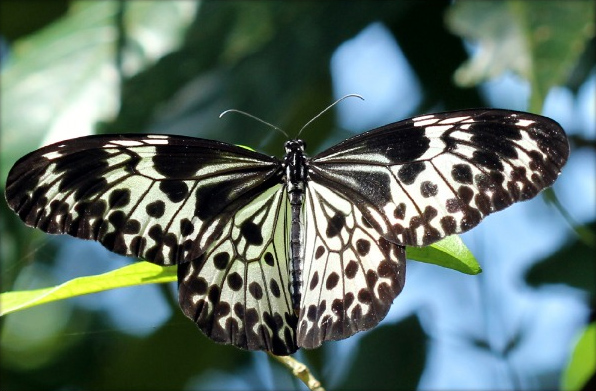
The park's well-known faunal species are Andaman wild pigs (an endangered species), saltwater crocodiles, turtles and robber crabs. The park is also a butterfly hotspot. The picture on the back side of ₹ 20 banknote has been taken at the park.
Geography
Mount Harriet National Park was originally a reserve forest which was converted into a national park in 1979. It encompasses an area of 4662 ha, which is likely to be extended to cover an additional area of 1700 ha The park experiences marine climatic conditions, and hot and humid conditions in view of its proximity to the equator.
A notable feature 2 km away from the park is Kalapathar, where prisoners used to be pushed down the ravine to their death.
The park is at a distance of 20 km from Port Blair, the capital of the union territory, which also has an airport.
Trekking through the park is popular as it passes through an attractive beach; one can watch endemic avifauna, animals, and butterflies that fly around, and also see elephants carrying lumber.
The tribal community living in the tropical forest of the park are the Negrito people, who are hunter-gatherers.
Flora
The park has evergreen primary forests, and at Chiriyatapu the forest type is mixed deciduous, a combination of primary and secondary forests. The three types of forests are categorized as tropical evergreen, hilltop tropical evergreen and littoral. Overall 134 plant and tree species are reported, including 74 native and 51 introduced species. Some of the plant species of the tropical variety are:Dipterocarpus gracilis, Dipterocarpus grandiflorus, Dipterocarpus kerrii, Endospermum chinensis, and Hopea odorata including Araucaria columnaris which is a conifer native to New Caledonia. Plant species of the hilltop tropical variety are Canarium denticulatum, Cratoxylum formosum, and Dipterocarpus costatus. The littoral forest species are mainly Manilkara littoralis and Moringa citrifolia.
Trekking along the 7 km path from Bambooflat to the mountain top at 365 m, trees are seen with hanging vines.
Fauna
Avifauna identified by Bird Life International include seven 'near threatened' species which are: the Andaman wood pigeon (Columba palumboides), Andaman cuckoo-dove (Macropygia rufipennis), Andaman scops-owl (Otus balli), Andaman boobook (Ninox affinis), Andaman woodpecker (Dryocopus hodgei), Andaman drongo (Dicrurus andamanensis), and Andaman treepie (Dendrocitta bayleyi); there are also two species of 'least concern', which are the Andaman coucal (Centropus andamanensis) and white-headed starling (Sturnus erythropygius).
Introduced species include the Asian elephant (Elephas maximus) and chital (Axis axis) apart from ferals. There are 28 reptile species recorded (including 14 species endemic to the Andamans) which are mostly lizards and snakes. The amphibian fauna reported are 6 species; 2 species of Andaman bull frog (Kaloula baleata goshi) and Andaman paddy field frog (Limnonectes andamanensis) are endemic.
The aquatic fauna reported from the streams consist of 16 species; some of these species are eel, catfish, gobies, sleepers and snakeheads.
The land molluscs consist of six species. The invertebrate species reported are 355 which include insects to the extent of 70%. The well-known insect silkmoth, Samia cynthia, has been recorded in the park in lowland forest areas up to 365 m. In addition, larvae of Samia fulva were noted eating the leaves of Zanthoxylum rhetsa (Rutaceae) and Heteropanax fragrans (Araliaceae).
References
Bibliography
References
- "Celebrations in Manipur for renaming Andman's Mount Harriet Park".
- "Robert Christopher Tytler". britishempire.co.uk.
- "Mount Harriet National Park". Bird Life International.
This article was imported from Wikipedia and is available under the Creative Commons Attribution-ShareAlike 4.0 License. Content has been adapted to SurfDoc format. Original contributors can be found on the article history page.
Ask Mako anything about Mount Harriet National Park — get instant answers, deeper analysis, and related topics.
Research with MakoFree with your Surf account
Create a free account to save articles, ask Mako questions, and organize your research.
Sign up freeThis content may have been generated or modified by AI. CloudSurf Software LLC is not responsible for the accuracy, completeness, or reliability of AI-generated content. Always verify important information from primary sources.
Report