From Surf Wiki (app.surf) — the open knowledge base
Mongols in China
Ethnic minority in China

Ethnic minority in China
| Field | Value |
|---|---|
| image | Morin Khuur, South Mongolian Style.jpg |
| caption | A Mongol musician playing an Inner Mongolian–style *morin khuur* (horse fiddle) |
| population | 6,290,204 |
| popplace | |
| langs | |
| rels | |
| related |
Mongols in China,{{cite journal|title=Mongolian Ethnicity and Linguistic Anxiety in China|last=Bulag|first=Uradyn E.|journal=American Anthropologist|volume=105|issue=4|date=2003|pages=753–763|doi=10.1525/aa.2003.105.4.753|url=https://www.smhric.org/SMW_12.htm|archive-url=https://web.archive.org/web/20040603020724/https://www.smhric.org/SMW_12.htm|archive-date=2004-06-03|quote=The quest for the standardization of Mongolian [language] in Inner Mongolia was a product as much of a domestication of the Mongols in China as a protest against the imposition of Chinese [Standard Beijing Mandarin] as the national standard language to which all minority languages were forced to conform. |url-access=subscription}} also known as Mongolian Chinese or Chinese Mongols, are ethnic Mongols who live in China. They are one of the 56 ethnic groups recognized by the Chinese government.
As of 2020, there are 6,290,204 Mongols in China, a 0.45% increase from the 2010 national census. Most of them live in Inner Mongolia, Northeast China, Xinjiang and Qinghai. The Mongol population in China is nearly twice as much as that of the sovereign state of Mongolia.
Distribution
The Mongols in China are divided between autonomous regions and provinces as follows:
- 68.72%: Inner Mongolia Autonomous Region
- 11.52%: Liaoning Province
- 2.96%: Jilin Province
- 2.92%: Hebei Province
- 2.58%: Xinjiang Uyghur Autonomous Region
- 2.43%: Heilongjiang Province
- 1.48%: Qinghai Province
- 1.41%: Henan Province
- 5.98%: Rest of PRC
Besides the Inner Mongolia autonomous region, there are other Mongol autonomous administrative subdivisions in China.
Prefecture level:
- Haixi Mongol and Tibetan Autonomous Prefecture (in Qinghai)
- Bayingolin Mongol Autonomous Prefecture (in Xinjiang)
- Bortala Mongol Autonomous Prefecture (in Xinjiang)
County level:
- Weichang Manchu and Mongol Autonomous County (in Hebei)
- Harqin Left Mongol Autonomous County (in Liaoning)
- Fuxin Mongol Autonomous County (in Liaoning)
- Qian Gorlos Mongol Autonomous County (in Jilin)
- Dorbod Mongol Autonomous County (in Heilongjiang)
- Subei Mongol Autonomous County (in Gansu)
- Henan Mongol Autonomous County (in Qinghai)
- Hoboksar Mongol Autonomous County (in Xinjiang)
Classification
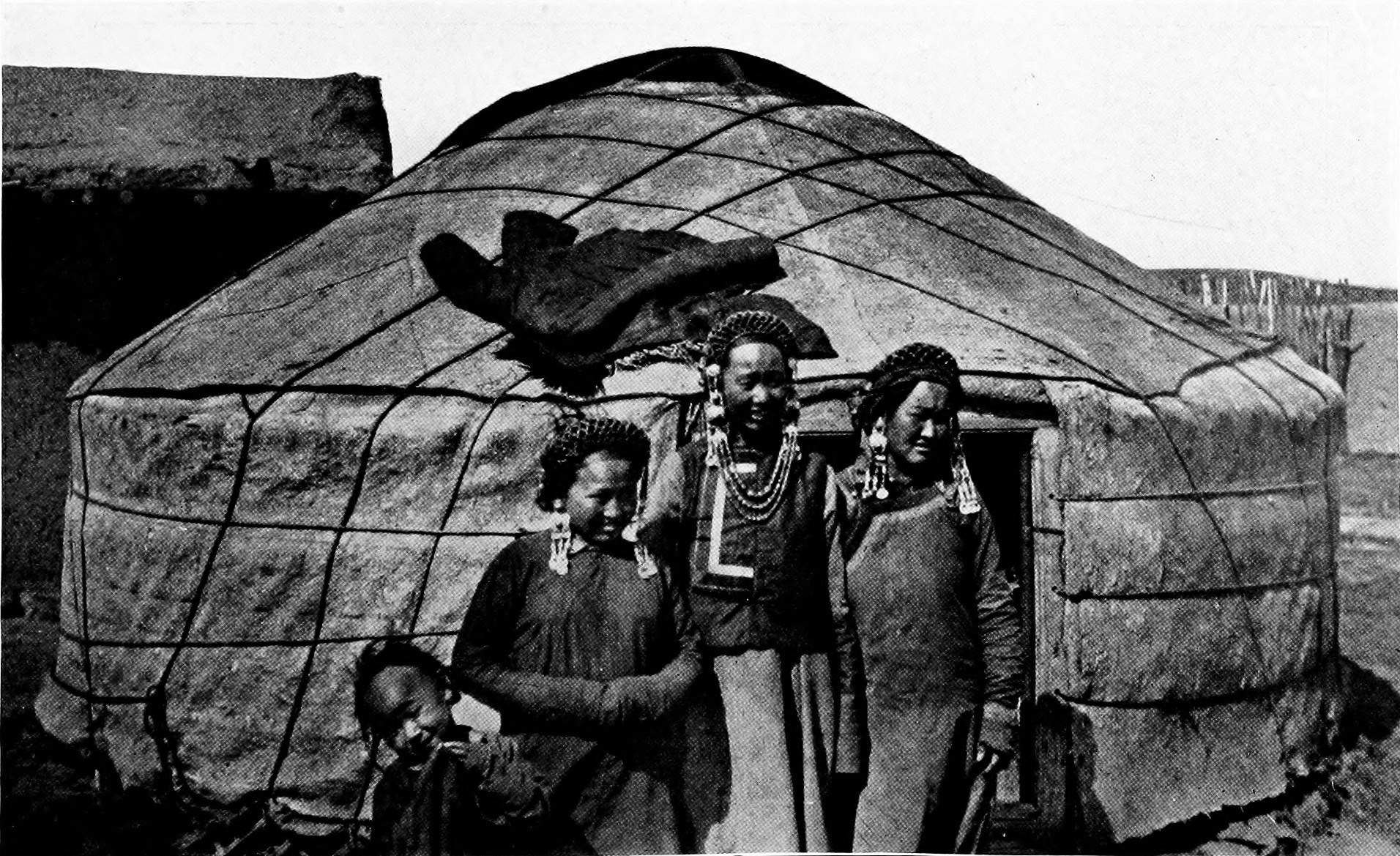
China classifies various Mongolic groups, such as the Buryats and Oirats, together with the Inner Mongols under a single category of "Mongol." The Chinese government also classifies the Tuvans as Mongols, despite Tuvans being a Turkic, non-Mongolic ethnic group. The official language used for all of these Mongols in China is a literary standard based on the Chahar dialect of Mongol.
The ethnic classification might be inaccurate due to lack of information regarding the registering policy.
Some populations officially classified as Mongols by the government of the People's Republic of China do not currently speak any form of Mongolic language. Such populations include the Sichuan Mongols (most of whom speak a form of Naic language), the Yunnan Mongols (most of whom speak a form of Loloish language), and the Mongols of Henan Mongol Autonomous County in Qinghai (most of whom speak Amdo Tibetan and/or Chinese).
, official publications have avoided references to Mongolians in China and instead used the term "northern frontier culture" (bei jiang wenhua).
Genetics
Among the Mongols of China, mitochondrial haplogroup D was in first place (27.07%), followed by mitochondrial haplogroups B (11.60%), F (10.77%), Z (8.01%), G (7, 73%), C (6.91%), A (6.08%), N (5.25%) and M7 (5.25%). Other mitochondrial haplogroups (HV, H, I, M8, M9, M10, M11, R, T, U, W and Y) were sporadically distributed among the studied Mongols of China with frequencies of no more than 1.66%.
Guang-Lin He et al. (2022) examined a sample of current Mongols of China (n=175, including n=97 from Inner Mongolia, n=27 from Liaoning, n=10 from Heilongjiang, n=10 from Jilin, n=3 from Qinghai, n=3 from Xinjiang, and n=25 from elsewhere in China) and found different haplogroup O subclades (107/175 = 61.1% in total) to be the most frequently observed Y-DNA haplogroup:
- O1-F265/M1354 12.0% (21/175)
- O1a1a-M307.1/P203.1 3.4% (6/175)
- O1b-M268 8.6% (15/175)
- O1b1a-M1470 5.7% (10/175)
- O1b1a1-PK4 2.3% (4/175)
- O1b1a2-Page59 3.4% (6/175)
- O1b2a1a-F1204 2.9% (5/175)
- O1b2a1a1-CTS713 2.3% (4/175)
- O1b2a1a3a-CTS1215 0.6% (1/175)
- O1b1a-M1470 5.7% (10/175)
- O2a-M324 49.1% (86/175)
- O2a1-L127.1 21.7% (38/175)
- O2a1a1a1b-F854 0.6% (1/175)
- O2a1c-IMS-JST002611 21.1% (37/175)
- O2a1c1a1a1a1-F325 16.6% (29/175)
- O2a1c1a2-F449 4.6% (8/175)
- O2a2-P201 27.4% (48/175)
- O2a2a1a-CTS445 4.6% (8/175)
- O2a2a1a1a-M159 0.6% (1/175)
- O2a2a1a2a-F1276 2.9% (5/175)
- O2a2a1a2a1a2-N5 1.7% (3/175)
- O2a2b-P164 22.9% (40/175)
- O2a2b1-M134 21.1% (37/175)
- O2a2b1a1-M117 12.0% (21/175)
- O2a2b1a2-F114 9.1% (16/175)
- O2a2b2a2-AM01845/F706 1.7% (3/175)
- O2a2b1-M134 21.1% (37/175)
- O2a2a1a-CTS445 4.6% (8/175)
- O2a1-L127.1 21.7% (38/175)
The second most frequently observed Y-DNA haplogroup among the sampled Mongols from China was C2 (22.9%, including 16.6% "Northern" i.e. Mongolian/Siberian C2b1a, 1.7% typically Mongolic C2c1a1a1-M407, and 4.6% "Southern" i.e. East Asian C2c1(xC2c1a1a1)), followed by N1-CTS3750 (6.3%, including 2.9% N1a2a1a~, 1.1% N1a2b2a1c~, 1.1% N1b2a2~, 0.6% N1a1a1a1a3a, and 0.6% N1b1), Q (4.6%, including 4.0% Q1a1a1 and 0.6% Q2a1a1), R1a1a1b2a-Z94 (2.3%), and D-M533 (1.1%). Y-chromosomal haplogroup E1b1b1a1b2 (V22) was observed in one Mongol individual from Hohhot, G2a2b2a1a1a2a1a (L654.2) was observed in one Mongol individual from Alxa League, and I2a1b2a1a1a1 (BY128/Y5596) was observed in one Mongol individual from Hinggan League.
Subgroups
-
Abaga
-
Abaganar
-
Aohans
-
Baarins
-
Buryats
-
Chahars
-
Gorlos
-
Jalaids
-
Jaruud
-
Khalkha
-
Kharchin
-
Khishigten
-
Khorchin
-
Khuuchid
-
Muumyangan
-
Naimans
-
Oirats
- Dzungar
- Khoid
- Khoshut
- Olot
- Torghut
- Upper Mongols
-
Onnigud
-
Ordos
-
Sichuan Mongols
-
Sunud
-
Urad
Discrimination
Mongols in China face discrimination by the current Chinese government on the goal of assimilating the Mongolian population into the Han population.
Schooling
The NPC declared "minority language-medium education is unconstitutional (People's Daily)," enforcing this within Inner Mongolian schools, banning the teaching of the Mongolian language, along with riding of different kinds of Mongolian material that are deemed to de-emphasize Chinese nationality and common identity.In 2023, a book on the history of the Mongols was banned for "historical nihilism."
Climate change and poverty relief

The Chinese government alleges that Mongol herders/nomads are responsible for inciting climate change due to pastoralist practices. However, this was due to the Household Responsibility System that encouraged industrialized agriculture as opposed to shared grasslands. Under the ecological migration policy, the Chinese government has moved thousands of Mongols into urban areas on the basis that the Mongolian nomadic lifestyle has resulted in desertification and sandstorms. In support of the "Go West" campaign, the Chinese government relocated Mongolian people in masses in favor of ecosystem recovery. This movement has resulted in disparities in language, and thus income. Consequently, this process has resulted in Mongolian impoverishment. However, this gap has recently been closing as a result of Mongolian language assimilation.
Notable people
- Buren Bayaer, singer, composer and a disc jockey
- Ulanhu, politician, former chairman of Inner Mongolia, former vice president of the People's Republic
- Bayanqolu, Communist Party secretary of Jilin, former party secretary of Ningbo city
- Demchugdongrub, Qing dynasty prince and puppet ruler of Mengjiang.
- Uyunqimg, former vice-chair of the Standing Committee of the National People's Congress
- Fu Ying, deputy foreign minister, former ambassador to the United Kingdom, Australia and the Philippines
- Li Siguang, geologist, founder of China's geomechanics
- Yang Shixian, chemist, chancellor of Nankai University
- Mengke Bateer, CBA and NBA basketball player
- Buyunchaokete, tennis player
- Bao Xishun, one of the tallest people in the world
- Tengger, a pop/rock musician
- Uudam, child singer
- Huugjilt, man wrongfully executed in 1996
- Zhang Xiaoping
- Chinggeltei (1924–2013), linguist, one of the world's few experts on the Khitan language
- Jalsan, linguist and Buddhist leader
- Batdorj-in Baasanjab, actor
- Xiao Qian, academic
- Bai Xue, lawyer and legal academic
- Bai Yansong, TV anchor
- Yangwei Linghua, singer and female vocal of Phoenix Legend
- Han Lei, pop singer
- Wang Lijun, disgraced police chief and political figure
- Bai Wenqi, lieutenant general of the PLA Air Force
- Ulan, deputy party chief of Hunan Province
- Yu Shi, actor
References
Citations
Sources
- Sečenbaγatur, Qasgerel, Tuyaγ-a [Туяa], Bu. Jirannige, Wu Yingzhe, Činggeltei. 2005. Mongγul kelen-ü nutuγ-un ayalγun-u sinǰilel-ün uduridqal [A guide to the regional dialects of Mongolian]. Kökeqota: ÖMAKQ. .
References
- (2015-11-12). "Muslims in Amdo Tibetan Society: Multidisciplinary Approaches". Bloomsbury Publishing PLC.
- Jirimutu, Jerry. (1998). "A socio-demographic profile of the Mongols in China, 1990". Central Asian Survey.
- (2016). "Teachers' beliefs of behaviors, learning, and teaching related to minority students: a comparison of Han and Mongolian Chinese teachers". Teaching Education.
- (2016). "Feeling Happy and Sad at the Same Time? Subcultural Differences in Experiencing Mixed Emotions between Han Chinese and Mongolian Chinese". Frontiers in Psychology.
- "Main Data of the Seventh National Population Census".
- "China Statistical Yearbook 2021".
- Mongush, M. V. "Tuvans of Mongolia and China." ''International Journal of Central Asian Studies'', 1 (1996), 225–243. Talat Tekin, ed. Seoul: Inst. of Asian Culture & Development.
- "Öbür mongγul ayalγu bol dumdadu ulus-un mongγul kelen-ü saγuri ayalγu bolqu büged dumdadu ulus-un mongγul kelen-ü barimǰiy-a abiy-a ni čaqar aman ayalγun-du saγurilaγsan bayidaγ." (Sečenbaγatur ''et al.'' 2005: 85).
- [http://www.lupm.org/mn/pages/101026mn.htm {{Webarchive. link. (2018-12-01 y (Mongolian): Millions of [[Han Chinese]] of Inner Mongolia Autonomous Region registered as "Mongol" and "[[Manchu people). Manchu]]" according to Chinese policy since the 1980s. There is not enough information about [[Ethnic minorities in China. Chinese ethnic minorities]] due to the government policy.
- [http://sodonmedeelel.blog.gogo.mn/read/entry464126 Өвөр Монголын хүн ам] {{Webarchive. link. (2013-12-03 (Mongolian))
- Allen, Bethany. (2024-08-29). "'Northern frontier culture': How China is erasing 'Mongolia' from Mongolian culture". [[Australian Strategic Policy Institute]].
- Guang-Lin He, Meng-Ge Wang, Xing Zou, Hui-Yuan Yeh, Chang-Hui Liu, Chao Liu, Gang Chen, and Chuan-Chao Wang, "Extensive ethnolinguistic diversity at the crossroads of North China and South Siberia reflects multiple sources of genetic diversity." ''Journal of Systematics and Evolution'' 00 (0): 1–21, 2022. doi: 10.1111/jse.12827
- "China's push to create a single national identity". [[The Economist]].
- Bagshaw, Eryk. (2023-07-21). "'I might die or be murdered': The province fearing it will be wiped out by Beijing".
- Togochog, Enghebatu. (2006). "Ecological Migration and Human Rights". China Rights Forum.
- "Mongolians in China Face 'Cultural Genocide' as Language, Culture Swept Aside: Group".
- Bulag, Uradyn E.. (2003). "Mongolian Ethnicity and Linguistic Anxiety in China". American Anthropologist.
- (3 September 2023). "China bans book about the early history of the Mongolian people".
- Liu, Lumeng. (2023-08-01). "How does the temporal relationship between ecosystem services and human wellbeing change in space and time? Evidence from Inner Mongolian drylands". Journal of Environmental Management.
- "Southern Mongolian Human Rights Information Center".
- Liu, Lumeng. (2023-08-01). "How does the temporal relationship between ecosystem services and human wellbeing change in space and time? Evidence from Inner Mongolian drylands". Journal of Environmental Management.
This article was imported from Wikipedia and is available under the Creative Commons Attribution-ShareAlike 4.0 License. Content has been adapted to SurfDoc format. Original contributors can be found on the article history page.
Ask Mako anything about Mongols in China — get instant answers, deeper analysis, and related topics.
Research with MakoFree with your Surf account
Create a free account to save articles, ask Mako questions, and organize your research.
Sign up freeThis content may have been generated or modified by AI. CloudSurf Software LLC is not responsible for the accuracy, completeness, or reliability of AI-generated content. Always verify important information from primary sources.
Report