From Surf Wiki (app.surf) — the open knowledge base
Moderne architecture
Architectural style
Architectural style
Moderne architecture, also sometimes referred to as Style Moderne, Art Moderne, or simply Moderne, Jazz Age Moderne, jazz modern or Jazz Style, describes certain styles of architecture popular from 1925 through the 1940s. It is closely related to Art Deco.
Art Deco and Moderne architecture: terms and evolution
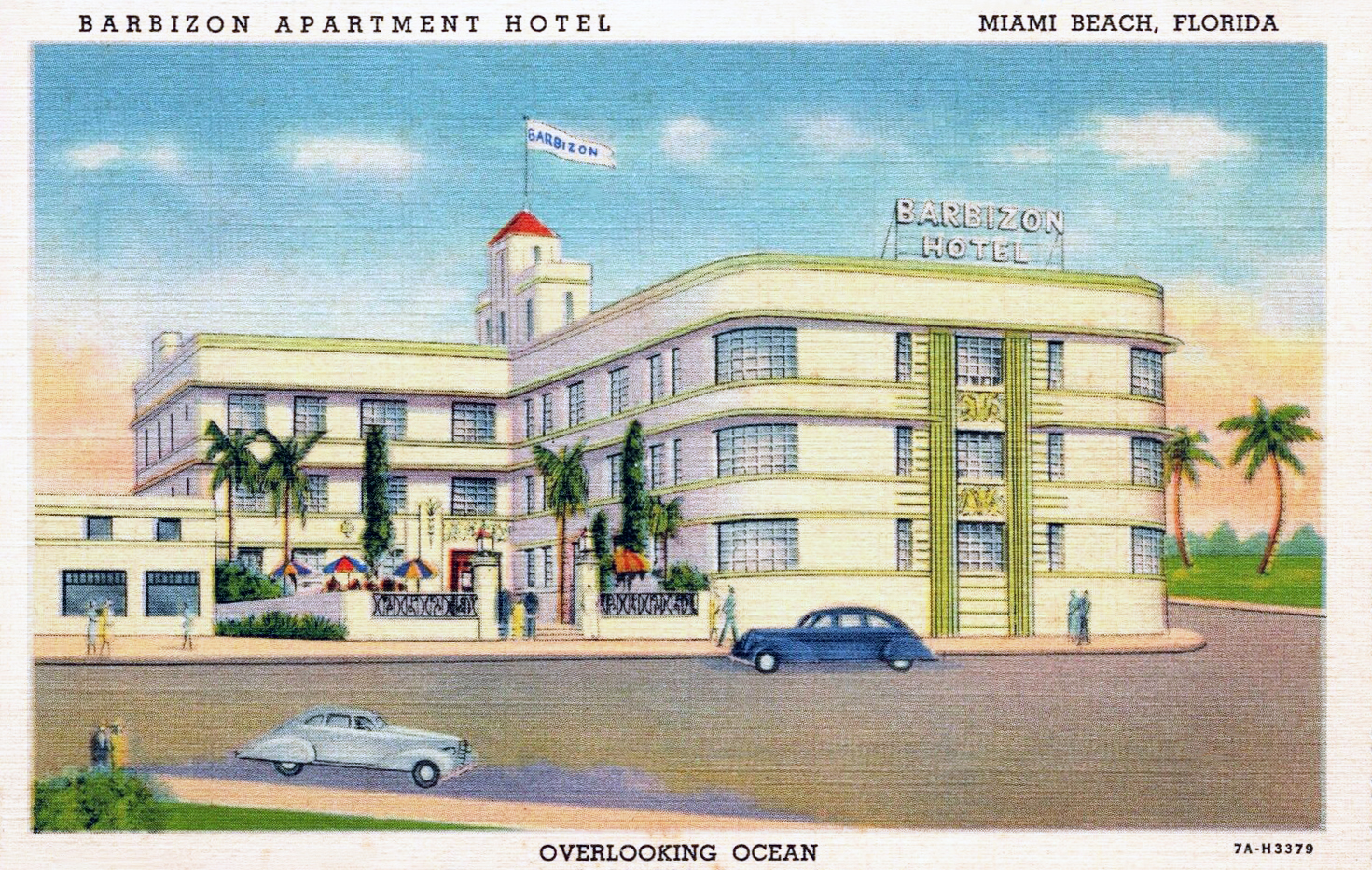
The terminology is not very firm; during the time when the styles were used, they were simply known as Moderne. A distinction between subtypes was later introduced by David Gebhard: Zigzag, Streamline, and PWA (Public Works Administration) Moderne. The term Art Deco was only popularized by Bevis Hillier in 1968 and then used quite indiscriminately, and therefore some researchers prefer to use it only for the decorative forms and, when referring to architecture, only for the highly ornamented buildings of the late 1920s.
Originating in the International Exhibition of Modern Decorative and Industrial Arts held in Paris in 1925,
Art Moderne, with its novel streamline character, also manifested itself in the design of cars, planes and ships. It does sometimes overlap with Art Deco in the design of certain buildings, but it has a horizontal emphasis, as opposed to the vertical emphasis of Art Deco.
Characteristics
In a nutshell:
- Emphasis is on the horizontal, as opposed to Art Deco's vertical emphasis
- Wall surfaces: smooth, often made of stucco, rounded
- Roof: flat, roofline has small ledge
- Wall decoration: horizontal grooves or lines; can be fluted or made of pressed metal
- Façade: asymmetrical
- Windows:
- Horizontal arrangement
- Casement, corner, or ribbon windows
- Glass block (aka glass brick) windows; can be curved, as part of curved wall
- Metal balustrades
Both Art Deco, which slightly predates it, and Moderne style belong to the Modern Movement and may be referred to as "Modernistic". They both renounced the aesthetic repertoire of the past, share a number of design elements, but are distinctly different in their appearance.
Art Moderne houses are easily identifiable due to their distinctive streamlined and simple outlines, which may however hide a considerable amount of thought. The Moderne style of the 1930s did away with Art Deco's specific geometrical ornamentation including chevrons and zigzags, and adopted a less ornamented style. An important influence was the development of aerodynamics in the design of land, water and air vehicles, translated by the Moderne style in the use of more streamlined volumes and rounded corners. Both styles employ smooth wall surfaces, but Art Moderne houses make do with little surface ornamentation, mostly using simple, smoothly finished white stucco. Moderne structures' horizontal emphasis is reflected in their bands of windows and flat roofs, while Art Deco buildings include strong vertical elements. Houses of both styles may share asymmetrically grouped volumes, flat roofs with parapets, and porthole windows, but the Moderne outline will stay grounded and suggest a horizontal flowing movement, while Art Deco will always employ some vertical elements, be it windows, fins or other details at the entrance or at the apex of proeminent volumes etc. Art Moderne, on the other hand, bears a slight resemblance to the International Style.
Art Moderne buildings are usually monochromatic.
Common building types include public, commercial, office and apartment buildings, theaters, gas stations, and residential houses
Streamline Moderne
Main article: Streamline Moderne
Some later Moderne architecture from the 1930s and 40s may be classified as Streamline Moderne, characterized by a then-modern "Machine Age" aerodynamic design, displaying rounded corners, stucco surfaces, horizontal banding, window groupings, and elements projecting outwards beyond the portion below (overhangs). It is an evolution of Art Deco architecture, which peaked in popularity . This can refer to land-based architecture, such as the Normandie Hotel in San Juan, Puerto Rico, which show curved, shiplike forms and styling. This follows the water-based adaptation of Art Deco decorative style and architecture to passenger ships, such as the SS Normandie. Other Streamline Moderne architecture does not reflect any maritime-oriented themes.
Canada
The architectural firm of Kaplan & Sprachman introduced the Moderne style of architecture to Canada, designing many movie theatres in that style. The Eglinton Theatre in Toronto and the Vogue Theatre in Vancouver, both designed by Kaplan & Sprachman, as well as the Odeon Theatre in Victoria, designed by Henry Simmonds, are still standing and have been designated historical landmarks.
United States
The Moderne style of architecture appears as a descriptor in documentation of many buildings listed by the United States of America's National Register of Historic Places.
The Moderne style was popular for a comparatively short time, and in regard to large commercial buildings was soon replaced by the International Style. Examples are rather rare in the United States, with commercial or public Moderne buildings surviving in larger numbers than single residential houses.
Extant Art Deco and Art Moderne residential houses, often unaltered, date to the 1920s, 30s and 40s, since there has been no significant revival of the two styles.
References
References
- (2002). "Twentieth Century Architecture: A Visual History". Images Publishing.
- Randel, Steven Corley. "Roots of Style: Art Deco and Art Moderne: Get to know the similarities and differences between these architectural styles of the 1920s and 1930s".
- Shaw, Peter. (22 March 2003). "All that jazz".
- (18 June 1956). "O'Connell Street".
- Schenker, Marc. (2 September 2021). "Design Trend Report: Jazz Style".
- Bohan, Peter. (September 1991). "''Book review. Judith Singer Cohen,'' Cowtown Moderne: Art Deco Architecture of Fort Worth, Texas". Journal of the Society of Architectural Historians.
- Wilson, Richard Guy. (April 2025}}{{cite book). "Buildings of Virginia: Tidewater and Piedmont". Oxford University Press.
- Paradis, Tom. (17 October 2011). "Architectural Styles of America and Europe: Art Deco and Moderne".
- "Pennsylvania Architectural Field Guide: Moderne Style 1930 – 1950". Bureau for Historic Preservation of the Pennsylvania Historical & Museum Commission (PHMC).
- "Art Moderne Architectural Style, Interior & Moulding". Mouldings One, a division of Hardwood Lumber Company.
- (2016-11-15). "Parks Canada – Kaplan & Sprachman, Architects".
- Moore, Shannon. (2016-11-24). "Eglinton Theatre and Kaplan & Sprachman Architects recognized for National Historic Significance in Canada".
- "Canada's Historic Places – Eglinton Theatre".
- "Canada's Historic Places – Vogue Theatre".
- "Canada's Historic Places – Odeon Theatre".
- {{NRISref. 2009a
This article was imported from Wikipedia and is available under the Creative Commons Attribution-ShareAlike 4.0 License. Content has been adapted to SurfDoc format. Original contributors can be found on the article history page.
Ask Mako anything about Moderne architecture — get instant answers, deeper analysis, and related topics.
Research with MakoFree with your Surf account
Create a free account to save articles, ask Mako questions, and organize your research.
Sign up freeThis content may have been generated or modified by AI. CloudSurf Software LLC is not responsible for the accuracy, completeness, or reliability of AI-generated content. Always verify important information from primary sources.
Report