From Surf Wiki (app.surf) — the open knowledge base
Milk tea
Beverage mainly composed of tea and milk
_2.jpg)
Beverage mainly composed of tea and milk
Milk tea refers to several forms of beverage found in many cultures, consisting of some combination of tea and milk. The term milk tea is used for both hot and cold drinks that can be combined with various kinds of milks and a variety of spices. This is a popular way to serve tea in many countries, and is the default type of tea in many South Asian countries. Beverages vary based on the amount of each of these key ingredients, the method of preparation, and the inclusion of other ingredients (varying from sugar or honey to salt or cardamom) Milk tea is the default type of tea in India and Pakistan and referred to as chai.
Milk tea is well-known in many countries such as the United States, United Kingdom, Malaysia, India, Pakistan, China, and other Asian countries. The recipes for milk tea mainly consist of a tea base, milk, added sugar, and other added ingredients such as fruits, and creamer. The drink is popular for its rich tea flavor, affordability, pretty aesthetics, sweetness, and diversity that appeals to many people, which is similar to coffee in the drink market.
The drink is especially popular among teenagers and young adults for its visuals and large variety. The milk tea industry is likely to continue to grow due to its rising popularity in the global market. The sugar that balances the milk and tea from the cultural beverage is leading to a larger consumption among people daily. This has caused an increase in milk tea shops all around the world in recent years. The popularity of milk tea pushes the industry to pursue more supply chains and new products.
Variations
Chinese milk tea
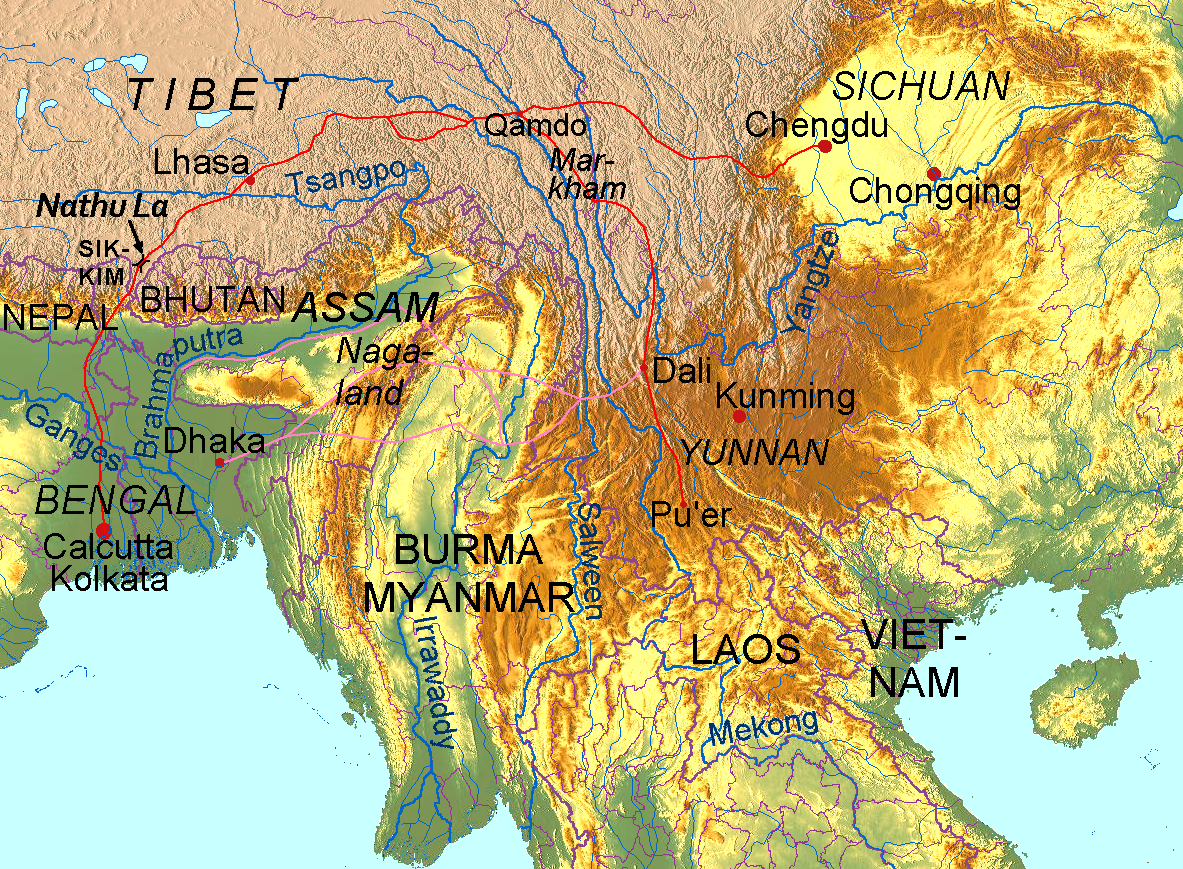

In ancient China, tea was primarily consumed for its caffeine content. Milk has been historically regarded as a prominent beverage among nomadic communities, symbolizing their cultural identity. As nomadic populations migrated southward, the consumption of milk gradually permeated the Central Plains region, and history records that when Emperor Dezong of Tang made tea, he added "crispy", which is processed and fermented milk, and found it to be delicious. Since then, milk tea became more and more popular in the mainland market because of the opening of tea-horse trading: the emperor moves tea from farms to pastures or good horses and cows that he needs for war and production. In this case, milk tea has started to spread in different places other than mainland China. In 2019, the milk tea market sold over approximately 140.5 billion renminbi. Some of the most popular milk tea brands include Coco, Alittle, and Heytea.
Grassland milk tea
Grassland milk tea is often referred to as salty milk tea because of its preparation. In the pastoral regions of China, such as the Inner Mongolia, Xinjiang, and Tibet, nomadic communities follow the process of initially crushing the tea leaves and subsequently infusing them in boiling water. The tea is then boiled, followed by the addition of milk, which is stirred into the mixture. Finally, an appropriate quantity of salt is incorporated, resulting in the completion of the milk tea preparation. Salt is also used for long term storage as the horde face long-distance travel and extreme weather conditions.
Hong Kong–style milk tea
Main article: Hong Kong–style milk tea
Hong Kong milk tea comes from its ties to British milk tea during the colonial era. Since the taste of British milk tea was not very strong, people in Hong Kong changed this drink by adding crushed Ceylon black tea, which is usually called Sri Lanka black tea. Because of its similar pronunciation, Sri Lanka milk tea is then translated to Silang milk tea in Hong Kong. The process of making Silang milk tea has six steps: scraping the tea, boiling the tea, baking the tea, infusing the tea, and adding milk. The tea was put through a sieve as part of the way it was made, which also led to the name "silk hose milk tea". On top of that, evaporated milk was added to the tea to finish the drink.
Taiwan milk tea
Taiwan milk tea is well-known as bubble milk tea. It was originated in the 17th century, when the Dutch brought it there. The Boba is a round starch powder that looks like a pearl. Before being added to the milk tea, this powder circle is usually dipped in syrup. This is done to make sure that when the powder circle is mixed with the sugary milk tea, it keeps its natural sweetness. Bubble tea has acquired such a significant role in representing Taiwanese culture that the people of Taiwan commemorate April 30 annually as the National Day of Bubble Tea.
Other variations
- British tea, served with milk
- Bubble tea, also known as pearl milk tea or boba milk tea, is a Taiwanese tea-based drink invented in Taichung in the 1980s. While the terms "bubble tea" and "boba" are often used interchangeably, bubble tea refers to the drink made by combining tea, milk, and sugar, and then adding toppings like boba, fruit jelly, or other toppings. Boba, on the other hand, is a type of topping that is commonly added to bubble tea. It is made from tapioca pearls and adds a unique flavor and texture to the drink.
- Burmese milk tea, called laphet yay (လက်ဖက်ရည်), made with strongly brewed black tea leaves, and sweetened with a customized ratio of condensed milk and evaporated milk, is popular in Myanmar. It is commonly served in tea shops, which first emerged during British rule in Burma.
- Cambric tea, a sweetened hot-milk beverage, often made with a small amount of tea
- Doodh pati chai, literally 'milk and tea leaves', a tea beverage drunk in India, Pakistan, Nepal, and Bangladesh
- Teh tarik, a kind of milk tea popular in Malaysia, Indonesia, and Singapore
- Suutei tsai, a salty Mongolian milk tea
- Shahi Adani, a Yemeni milk tea
- Masala chai, also known as masala tea, is a spiced milk tea drunk in the Indian subcontinent
- Irani chai, a type of milk tea made with pure milk mixed with mawa, prepared in Iranian-style cafes in Hyderabad, India
- Thai tea, a sweet tea-based drink popular in Southeast Asia
- Dalgona milk tea, milk tea sweetened with traditional Korean dalgona, a honeycomb-like toffee
In Britain, when hot tea and cold milk are drunk together, the drink is simply known as tea due to the vast majority of tea being consumed in such a way. The term milk tea is unused, although one may specify tea with milk if context requires it. This may cause confusion for people from cultures that traditionally drink tea without milk.
|File:Hong Kong-style Milk Tea.jpg |Hong Kong-style milk tea |File:Cups full of milk tea, in West Bengal, India.jpg |Milk tea served in India |File:A cup of milk tea.jpg |A glass of milk tea in Nepal |File:50 Lan Bubble Tea 20061226.jpg |Taiwan bubble milk tea |File:Tea with fresh milk.jpg |Zimbabwean milk tea
Pharmacology
Milk teas are generally high in sugar, fats and carbohydrates, increasing the risk of obesity when consumed regularly. Some milk teas also contain high concentrations of caffeine. Tests have found milk teas containing generally around 150 mg of caffeine per 470 mL serving. In the EU, beverages containing more than 150 mg/L of caffeine are to be labeled 'high caffeine content' as a warning. A study has found that regular milk tea consumption may cause symptoms of addiction in adolescents.
References
References
- "Franchise battle stirring up Vietnamese milk tea market - News VietNamNet".
- (2010-05-10). "Advances in Neural Network Research and Applications". Springer Science & Business Media.
- (2023-04-01). "College Students' Preferences for Milk Tea: Results from a Choice Experiment". Foods.
- (2024-02-01). "Spilling the tea about milk tea addiction - A reply to Qu et al. (2023)". Journal of Affective Disorders.
- Shi, Wingnam. (2021-12-15). "Proceedings of the 2021 3rd International Conference on Economic Management and Cultural Industry (ICEMCI 2021)". Atlantis Press.
- He, Yanrong. (2013). "新疆游牧民族的奶茶文化--哈萨克族与蒙古族奶茶文化比较研究. 兰州教育学院学报.". 兰州教育学院学报.
- Lin, Jiaying. "From Localization to Globalization: A Study of Pearl Milk Tea".
- "北宋茶马互市走私问题研究 - 中国优秀硕士学位论文全文数据库".
- Ouyang, Jun. (2021). "古典名著里的茶文化". 中国食品.
- ABoxTik. (2023-09-27). "Top 20 Bubble Tea Recommendations & History Of Boba".
- "Bubble tea vs Boba : The Ultimate comparison of our favourite drink".
- (2018-01-30). "Coffee and tea connect daily life of the locals".
- Driem, George L. van. (2019-01-14). "The Tale of Tea: A Comprehensive History of Tea from Prehistoric Times to the Present Day". BRILL.
- "The Travelling Gourmet". [[Myanmar Times]] no.37.
- (2015-10-05). "The Rich Culture and Tradition of Tea in Myanmar".
- "Definition of CAMBRIC TEA".
- "The real Dalgona coffee, in Korea {{!}} Eat Your World".
- (29 April 2024). "National Bubble Tea Day 2024: Is bubble tea good for your health? Benefits and side effects, how to make it".
- (January 2017). "Calories and sugars in boba milk tea: implications for obesity risk in Asian Pacific Islanders". Food Science & Nutrition.
- Bolton, Dan. (2021-06-30). "Taiwan Considers Caffeine Warning for Tea".
- "多人称喝霸王茶姬致心悸进医院 专家呼吁标示咖啡因警示信息_中国经济网——国家经济门户".
- (2023-11-15). "New form of addiction: An emerging hazardous addiction problem of milk tea among youths". Journal of Affective Disorders.
This article was imported from Wikipedia and is available under the Creative Commons Attribution-ShareAlike 4.0 License. Content has been adapted to SurfDoc format. Original contributors can be found on the article history page.
Ask Mako anything about Milk tea — get instant answers, deeper analysis, and related topics.
Research with MakoFree with your Surf account
Create a free account to save articles, ask Mako questions, and organize your research.
Sign up freeThis content may have been generated or modified by AI. CloudSurf Software LLC is not responsible for the accuracy, completeness, or reliability of AI-generated content. Always verify important information from primary sources.
Report