From Surf Wiki (app.surf) — the open knowledge base
Meze
Small dish in Middle Eastern and Balkan cuisines
Small dish in Middle Eastern and Balkan cuisines
| Field | Value | |||
|---|---|---|---|---|
| name | *Meze* | |||
| image | [[File:Petra metzes.jpg | 250px | A large plate of Jordanian *[[mezze]]* in [[Petra]], [[Jordanian cuisine | Jordan]].]] |
| caption | A large *meze* platter in Petra, Jordan | |||
| alternate_name | *Mezze* | |||
| variations | Numerous |
Meze ( ; also spelled mezze or mezé) is a selection of small dishes served as appetizers in Eastern Mediterranean cuisines. It is similar to Spanish tapas and Italian stuzzichini. A meze may be served as a part of a multi-course meal or form a meal in itself. Meze are often served with spirits such as arak, rakia, raki, oghi, ouzo, or grappa at meyhane and ouzeri, or at regular restaurants.
Etymology
The word meze, used in all the cuisines of the former Ottoman Empire, is borrowed from the Turkish meze (), which was in turn borrowed from the Persian مَزه fa ( or ).
History
The custom of serving small dishes with alcohol dates back to medieval times. ar (نقل), a concept mentioned in medieval Arabic texts, referred to small dishes like salted toasted almonds. Food historian Nawal Nasrallah considers them to be comparable to mezze.
Common dishes
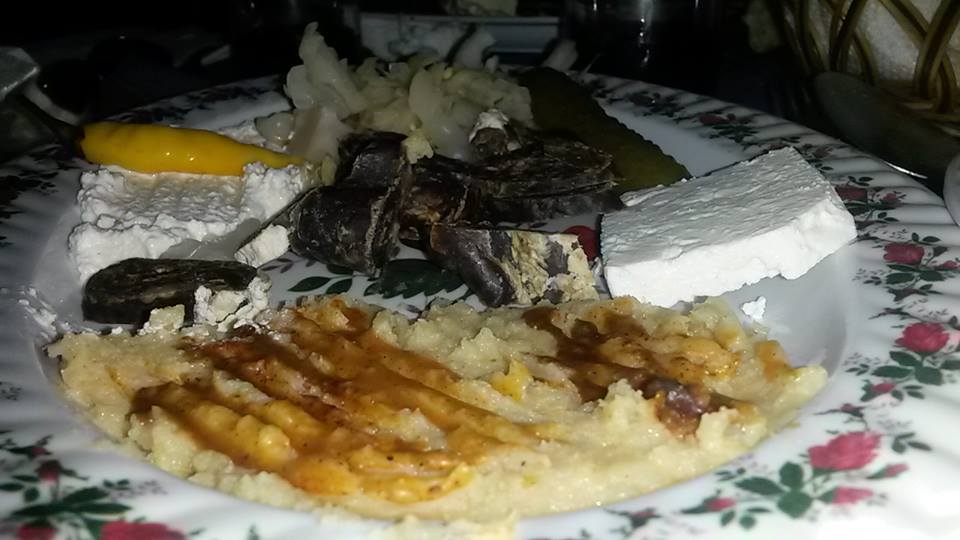

In Greece, Cyprus, Bulgaria, mezé, mezés or mezédhes (plural) are small dishes, hot or cold, spicy or savory. Seafood dishes such as grilled octopus may be included, along with salads, sliced hard-boiled eggs, garlic bread, kalamata olives, fava spread, fried vegetables, melitzanosalata (eggplant salad), taramosalata, fried or grilled cheeses called saganaki, and sheep, goat, or cow cheeses.
Popular meze dishes include the following:
| Levantine | Greek | Turkish | Armenian | Image | Description | ||
|---|---|---|---|---|---|---|---|
| Arayes | Lahmacun | Lahmajoun, misahats | Barbecued flatbread filled with lamb meat, onions, tomatoes and spices | ||||
| Asbe sawda | Sykotákia | Arnavut ciğeri | [[File:Albanian_liver.jpg | 124px | center]] | A liver dish | |
| Baba ghanoush (Moutabal) | Melitzanosaláta | Patlıcan ezmesi (Babagannuş) | Mutabal | [[File:Baba_Ghanoush.jpg | 124px | center]] | Mashed eggplant (aubergine) |
| Burek | Bouréki | Börek | Boureg | [[File:Su_Böreği.JPG | 124px | center]] | Phyllo/yufka-based filled pastries |
| Wara Enab | Dolmathákia | Sarma (Yaprak sarma) | Sarma | [[File:Yarpaq_dolması.jpg | 124px | center]] | Leaves (mostly grape leaves) rolled around rice-based filling |
| Falafel | Revithokeftédes | Falafel/Felafel | Baklayov kyufta | [[File:Falafel.JPG | 124px | center]] | A deep-fried ball or patty made from ground chickpeas, fava beans, or both |
| Fasuliya | Gigantes plaki | Fasulye pilaki | Fasoulia | [[File:Pilaki.jpg | 124px | center]] | |
| Fattoush | Fettuş | [[File:Fattoush_mixed-salad.jpg | 124px | center]] | Salad of vegetables and toasted or fried pieces of pita bread | ||
| Fáva Santorínis | [[File:Greek_fava.jpg | 124px | center]] | Lathyrus clymenum seeds boiled and mashed into paste, with olive oil and chopped onion | |||
| Ful (Mdammas) | Koukiá | Fava | Fava beans mixed with seasonings | ||||
| Hummus | Hoúmous | Humus | Homus | [[File:Hummuswithpinenuts.jpg | 124px | center]] | A dip or spread made from cooked, mashed chickpeas |
| Kalamarákia tiganitá | Kalamar tava | Fried squid (calamari) | |||||
| Khyar Bi Laban | Tzatziki | Cacık (read:jah-juck; soupy or dry variations), Haydari(dry; no cucumber and strained yoghurt) | Jajik | Cucumber, yogurt, herbs (mostly mint), seasonings(garlic optional), served thick as a dip in Greece and thin like a cold soup in Turkey and Arabic countries | |||
| Kibbeh | Koúpes | İçli köfte | Ishli Kyufta | [[File:Kibbeh3.jpg | 124px | center]] | Meatballs made of bulghur, chopped meat, filled with meat, pine nuts and spices |
| Kafta / Kufta (Kofta) | Keftédes | Köfte | Kufteh | Meatballs made of chopped meat, onion, parsley, and spices | |||
| Şiş köfte | Kebab-style köfte | ||||||
| Kibbeh nayyeh | Çiğ köfte | Chi Kufte, Hoom Kufteh | [[File:Kibbeh_Nayyeh.jpg | 124px | center]] | Raw meat dish | |
| Tabboule | Kısır | Eech | [[File:Kisir.jpg | 124px | center]] | Bulgur salad with finely ground parsley, and tomato paste | |
| Kolokythoanthoí gemistoí | Kabak çiçeği dolması | [[File:Kolokythoanthoi_gemistoi_me_giaourti.jpg | 124px | center]] | Stuffed squash blossom | ||
| Labaneh | Labne | Lebni | [[File:Labneh01.jpg | 124px | center]] | Yoghurt that has been strained to remove most of its whey, resulting in a thicker consistency than unstrained yoghurt | |
| Ijjit kousa | Kolokythokeftédes | Mücver | [[File:Zucchini_Fritters_-_Lunch_at_Yanyali_Fehmi_Lokantasi_(6421047753).jpg | 124px | center]] | Zucchini fritters | |
| Maintanosaláta | Dip made from finely chopped parsley mixed with olive oil, vinegar, lemon juice, garlic and a base of either bread or potatoes | ||||||
| Muhammara | Cevizli Acılı Ezme (Acuka) | [[File:Tanoreen_muhammara.jpg | 124px | center]] | A hot pepper dip with ground walnuts, breadcrumbs, garlic, salt, lemon juice, and olive oil | ||
| Piyaz | [[File:Piyaz 01.jpg | 124px | center]] | Salad made from any kind of dry beans with onion, parsley and sumac | |||
| Salatit Jarjīr | Róka Saláta | Roka | Rocket salad | ||||
| Şakşuka | [[File:Eggplant_and_green_pepper_şakşuka_(shakshuka).jpg | 124px | center]] | Vegetables cooked in olive oil | |||
| Sikh lahme (for lamb or beef), Shish taouk (for chicken) | Souvlaki | Şiş tavuk Çöp şiş | Shish kebab, Khorovats | [[File:Shish_taouk.jpg | 124px | center]] | Bite sized meat cubes (lamb is very common), grilled on a skewer over charcoal |
| Sujuk | Soutzoúki | Sucuk | Sojoukh | [[File:Sucuk_(1).jpg | 124px | center]] | Dry, spicy sausage |
| Tabbouleh | Tabbule or Arap salatası | Tabuleh | [[File:Flickr_-_cyclonebill_-_Tabbouleh.jpg | 124px | center]] | Bulgur, finely chopped parsley, mint, tomato, spring onion, with lemon juice, olive oil and seasonings | |
| Taramosalata | Tarama | [[File:Taramosalata01.jpg | 124px | center]] | Dip made from *tarama*, the salted and cured roe of the cod, carp, or grey mullet (*bottarga*) mixed with olive oil, lemon juice and a starchy base of bread or potatoes or sometimes almonds | ||
| Tajin | Dip made of fish and Tarator (Tahini and lemon) | ||||||
| Gemistá | Dolma | Dolma | [[File:Gemista.jpg | 124px | center]] | Peppers, eggplants, or courgettes stuffed with rice and meat |
Other meze dishes include cheeses (such as halloumi, labneh, tulum, or shanklish) or meat dishes (like afelia, lountza, or pastirma), fish (like fried whitebait, calamari).
In [[regional cuisine]]s
The Levant
In Palestine, Jordan, Syria, Lebanon, Cyprus, and Israel, meze is often a meal in its own right. There are vegetarian, meat or fish mezes. Groups of dishes arrive at the table about four or five at a time (usually between five and ten groups). There is a set pattern to the dishes: typically olives, tahini, salad, and yogurt will be followed by dishes with vegetables and eggs, then small meat or fish dishes alongside special accompaniments, and finally more substantial dishes such as whole fish or meat stews and grills. Establishments will offer their own specialties, but the pattern remains the same. Naturally the dishes served will reflect the seasons. For example, in late autumn, snails will be prominent. As so much food is offered, it is not expected that every dish be finished, but rather shared at will and served at ease. Arak and Beer are often drunk with mezze, especially if meats are ordered.
Turkey
In Turkey, meze often consist of beyaz peynir ('white cheese'), kavun (sliced ripe melon), acılı ezme (hot pepper paste, often with walnuts), haydari (thick strained yogurt with herbs), patlıcan salatası (cold eggplant salad), beyin salatası (brain salad), kalamar tava (fried calamari), midye dolma and midye tava (stuffed or fried mussels), enginar (artichokes), cacık (yogurt with cucumber and garlic), pilaki (foods cooked in a special sauce), dolma or sarma (rice-stuffed vine leaves or other stuffed vegetables, such as bell peppers), Arnavut ciğeri (a liver dish, served cold), octopus salad, and çiğ köfte (raw meatballs with bulgur). A selection of mezes can be served as appetizers in a multi-course dinner, or as snacks accompanying drinks such as rakı.
The Balkans
In Southeast Europe, meze is very similar to an Italian antipasto in that cured cold-cuts, cheese and salads are dominant and cooked foods are not included. In Greece, Albania, Serbia, Croatia, Bosnia, and Montenegro it includes hard or creamy cheeses, kajmak (clotted cream) or smetana cream, salami, ham and other forms of suho/suvo meso (cured pork or beef), kulen (paprika flavoured, cured sausage), cured bacon, ajvar, and various savory pastries. For Muslims, meze replaces pork products with sudžuk (dry, spicy sausage) and the pastirma-like cured beef suho meso.
In southern Croatia, Herzegovina, and Montenegro, cured meat such as pršut and panceta and regional products like olives are common. Albanian-style meze platters typically include prosciutto ham, salami, and brined cheese, accompanied with roasted bell peppers (capsicum) or green olives marinated in olive oil with garlic. In Bulgaria, popular mezes are lukanka (a spicy sausage), soujouk (a dry and spicy sausage) and sirene (a white brine cheese). The Bulgarian-made shopska salad is also a very popular meze. It is made with tomatoes, cucumbers, onion, peppers, and sirene. Ajvar and pindjur are popular mezes in North Macedonia. In Romania, mezelic means a quick appetizer and includes zacuscă, cheeses, and salamis, often accompanied by tuică.
In Greece, meze is commonly served as a plate of snacks to accompany drinks such as ouzo and tsipouro.
References
Bibliography
References
- Weir, Joanne. ''From Tapas to Meze: Small Plates from the Mediterranean''. United States, Ten Speed Press, 2004.
- Arditi, Talya. (29 December 2015). "How to drink raki: A crash course in Türkiye's signature drink". CNN Travel.
- Albala, Ken. (2011-05-25). "Food Cultures of the World Encyclopedia". Bloomsbury Publishing USA.
- (1999). "The Oxford Essential Dictionary of Foreign Terms in English". Oxford University Press.
This article was imported from Wikipedia and is available under the Creative Commons Attribution-ShareAlike 4.0 License. Content has been adapted to SurfDoc format. Original contributors can be found on the article history page.
Ask Mako anything about Meze — get instant answers, deeper analysis, and related topics.
Research with MakoFree with your Surf account
Create a free account to save articles, ask Mako questions, and organize your research.
Sign up freeThis content may have been generated or modified by AI. CloudSurf Software LLC is not responsible for the accuracy, completeness, or reliability of AI-generated content. Always verify important information from primary sources.
Report