From Surf Wiki (app.surf) — the open knowledge base
Merrick Garland
American lawyer and jurist (born 1952)
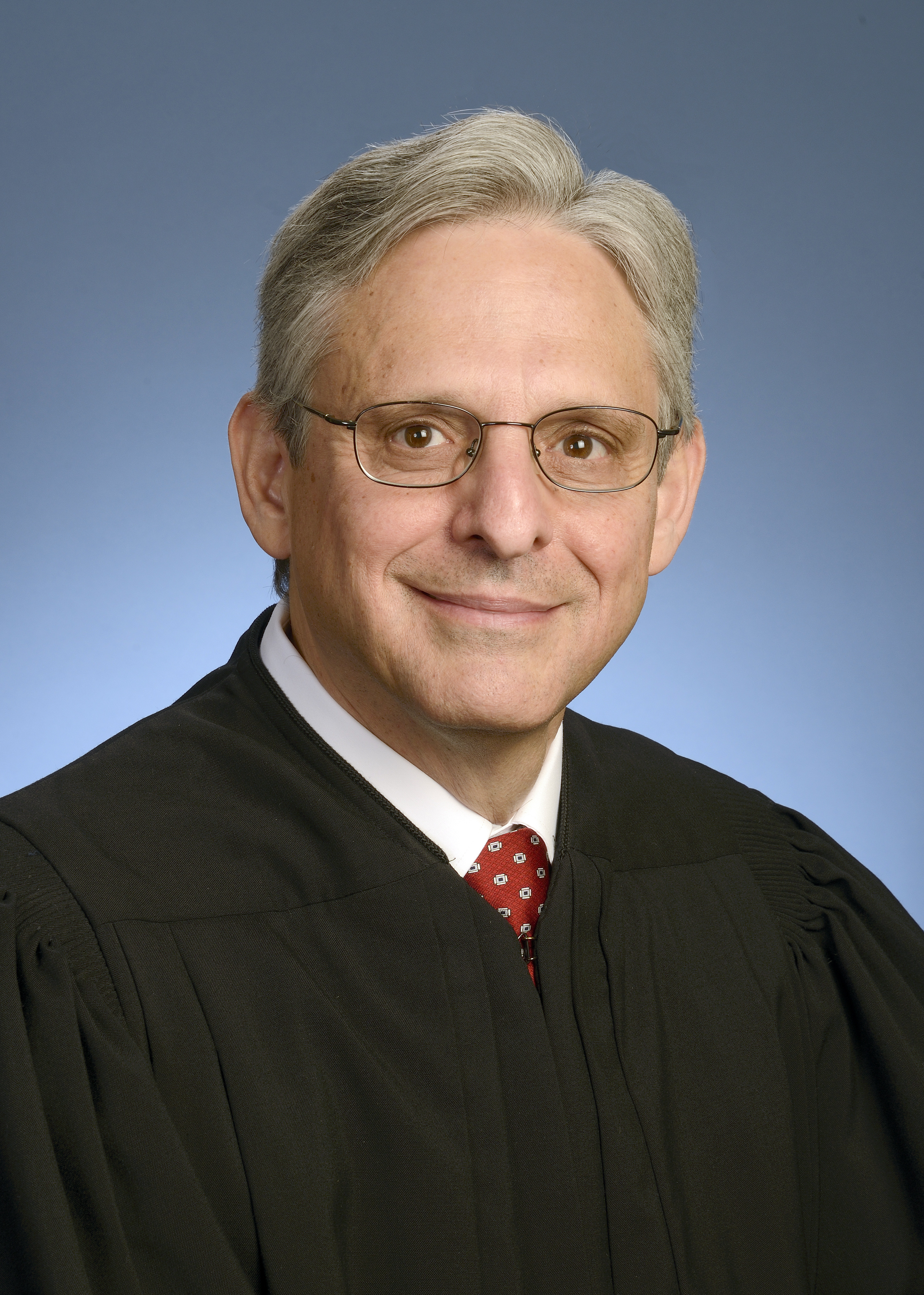
American lawyer and jurist (born 1952)
| Field | Value |
|---|---|
| name | Merrick Garland |
| image | Attorney General Merrick Garland.jpg |
| alt | Official portrait of United States Attorney General Merrick Garland |
| caption | Official portrait, 2021 |
| office | 86th United States Attorney General |
| president | Joe Biden |
| deputy | John P. Carlin (acting) |
| Lisa Monaco | |
| term_start | March 11, 2021 |
| term_end | January 20, 2025 |
| predecessor | William Barr |
| successor | Pam Bondi |
| office1 | Chief Judge of the United States Court of Appeals for the District of Columbia Circuit |
| term_start1 | February 12, 2013 |
| term_end1 | February 11, 2020 |
| predecessor1 | David B. Sentelle |
| successor1 | Sri Srinivasan |
| office2 | Judge of the United States Court of Appeals for the District of Columbia Circuit |
| term_start2 | March 20, 1997 |
| term_end2 | March 11, 2021 |
| appointer2 | Bill Clinton |
| predecessor2 | Abner Mikva |
| successor2 | Ketanji Brown Jackson |
| birth_name | Merrick Brian Garland |
| birth_date | |
| birth_place | Chicago, Illinois, U.S. |
| party | Democratic |
| spouse | |
| children | 2 |
| education | Harvard University (BA, JD) |
| awards | Henry J. Friendly Medal (2022) |
| signature | Merrick Garland signature.svg |
| signature_alt | Cursive signature in ink |
| module | {{Listen |
| pos | center |
| embed | yes |
| filename | Merrick Garland gives remarks on the anniversary of the 9 11 attacks.ogg |
| title | Garland's voice |
| type | speech |
| description | Garland's remarks on the twentieth anniversary of the September 11 attacks. |
| Recorded September 10, 2021}} |
Lisa Monaco Recorded September 10, 2021}} Merrick Brian Garland (born November 13, 1952) is an American lawyer and jurist who served as the 86th United States attorney general from 2021 to 2025. He previously served as a circuit judge of the United States Court of Appeals for the District of Columbia Circuit from 1997 to 2021. In 2016, President Barack Obama nominated Garland to the U.S. Supreme Court; however, the U.S. Senate refused to hold a confirmation hearing.
A native of the Chicago area, Garland attended Harvard University and Harvard Law School, where he was editor of the Harvard Law Review. He served as a law clerk to Judge Henry Friendly of the United States Court of Appeals for the Second Circuit and to U.S. Supreme Court Justice William J. Brennan Jr., and then practiced corporate litigation at Arnold & Porter, after which he worked as a federal prosecutor in the United States Department of Justice, where he supervised the investigation and prosecution of the Oklahoma City bombers. President Bill Clinton appointed Garland to the United States Court of Appeals for the District of Columbia Circuit in 1997, and he served as its chief judge from 2013 to 2020.
President Barack Obama, a Democrat, nominated Garland to serve as an associate justice of the Supreme Court in March 2016 to fill the vacancy created by the death of Antonin Scalia. However, the Republican Senate majority refused to hold a hearing or vote on his nomination. The unprecedented refusal of a Senate majority to consider a Supreme Court nomination was highly controversial. Garland's nomination lasted 293 days (the longest to date), and it expired on January 3, 2017, at the end of the 114th Congress. Eventually, subsequent President Donald Trump, a Republican, nominated Neil Gorsuch to the vacant seat, and the Republican Senate majority confirmed him.
President Joe Biden nominated Garland as U.S. attorney general in January 2021. He was confirmed by the Senate in a 70–30 vote, and took office in March of that same year. During his tenure, Garland was criticized for the pace of the prosecution of President Donald Trump. Some observers, including President Joe Biden, assigned Garland some responsibility for the fact that none of the indictments obtained by special counsel Jack Smith were likely to go to trial before the November 2024 election in which Trump prevailed and won re-election to a second non-consecutive term.
Early life and education
Garland was born on November 13, 1952, in Chicago. His mother Shirley (; 19252016) was a director of volunteer services at Chicago's Council for Jewish Elderly (now called CJE SeniorLife). His father, Cyril Garland (1915–2000), headed Garland Advertising, a small business run out of the family home. Garland was raised in Conservative Judaism; the family name had been changed from Garfinkel several generations earlier. His grandparents left the Pale of Settlement in the western Russian Empire in the early 20th century, fleeing antisemitic pogroms in what is now Ukraine and Poland. Two of his grandmother's siblings were later murdered in the Holocaust. He is a second cousin of Republican six-term Iowa Governor and former US Ambassador to China Terry Branstad.
Garland grew up in the north Chicago border suburb of Lincolnwood. He attended Niles West High School in Skokie, Illinois, where he was president of the student council, acted in theatrical productions, and was a member of the debate team. He graduated in 1970 as the class valedictorian. Garland was also a Presidential Scholar and National Merit Scholar. He then studied social studies at Harvard University. He initially wanted to become a physician, but soon decided to become a lawyer instead. He allied himself with his future boss, Jamie Gorelick, when he was elected the only freshman member of a campus-wide committee on which Gorelick also served. During his college summers Garland volunteered as a speechwriter to Congressman Abner J. Mikva. After President Jimmy Carter appointed Mikva to the D.C. Circuit, Mikva would rely on Garland when hiring law clerks. At Harvard, Garland wrote news articles and theater reviews for the Harvard Crimson, and was a resident of Quincy House. Garland wrote his 235-page honors thesis on industrial mergers in Britain in the 1960s. Garland graduated from Harvard in 1974 with a Bachelor of Arts, summa cum laude, and was elected to Phi Beta Kappa.
Garland then attended Harvard Law School, where he was a member of the Harvard Law Review. Garland ran for the presidency of the Law Review but lost to Susan Estrich, so he served as an articles editor instead. As an articles editor, Garland assigned himself to edit a submission by U.S. Supreme Court justice William Brennan on the topic of the role of state constitutions in safeguarding individual rights. This correspondence with Brennan later contributed to his winning a clerkship with the justice. Garland graduated from Harvard Law School in 1977 with a Juris Doctor, magna cum laude.
Early career
After graduating from law school, Garland spent two years as a judicial law clerk, first for Judge Henry Friendly of the U.S. Court of Appeals for the Second Circuit (New York City) from 1977 to 1978 and then for Justice William J. Brennan Jr. of the U.S. Supreme Court from 1978 to 1979. After his clerkships, Garland spent two years as a special assistant to U.S. attorney general Benjamin Civiletti.
After the Carter administration ended in 1981, Garland entered private practice at the law firm Arnold & Porter. Garland practiced mostly corporate litigation, and was made a partner in 1985. In Motor Vehicles Manufacturers Ass'n v. State Farm Mutual Automobile Insurance Co. (1983) Garland acted as counsel to an insurance company suing to reinstate an unpopular automatic seat belt mandate. After winning the case in both the District of Columbia Circuit Court and the Supreme Court, Garland wrote an 87-page Harvard Law Review article describing the way courts use a heightened "hard look" standard of review and scope of review when an agency chooses deregulation, with increasing focus on the fidelity of the agencies' actions to congressional intent. In 1985–86, while at Arnold & Porter, Garland was a lecturer at Harvard Law School, where he taught antitrust law. He also published an article in the Yale Law Journal urging a broader application of antitrust immunity to state and local governments.
Desiring to return to public service and do more trial work, in 1989 Garland became an assistant United States attorney in the U.S. Attorney's Office for the District of Columbia. As a line prosecutor, Garland represented the government in criminal cases ranging from drug trafficking to complex public corruption matters. Garland was one of the three principal prosecutors who handled the investigation into Washington, D.C. Mayor Marion Barry's possession of cocaine.
Garland then briefly returned to Arnold & Porter, working there from 1992 to 1993. In 1993, Garland joined the new Clinton administration as deputy assistant attorney general in the Criminal Division of the United States Department of Justice. The following year, Deputy Attorney General Jamie Gorelicka key mentor of Garland'sasked Garland to be her principal associate deputy attorney general.
In that role, Garland's responsibilities included the supervision of high-profile domestic-terrorism cases, including the Oklahoma City bombing, Ted Kaczynski (also known as the "Unabomber"), and the Atlanta Olympics bombings. Garland insisted on being sent to Oklahoma City in the aftermath of the attack, in order to examine the crime scene and oversee the investigation in preparation for the prosecution. He represented the government at the preliminary hearings of the two main defendants, Timothy McVeigh and Terry Nichols. Garland offered to lead the trial team, but could not because he was needed at the Justice Department headquarters. Instead, he helped pick the team and supervised it from Washington, D.C., where he was involved in major decisions, including the choice to seek the death penalty for McVeigh and Nichols. Garland won praise for his work on the case from the Republican governor of Oklahoma, Frank Keating.
Garland served as co-chair of the administrative law section of the District of Columbia Bar from 1991 to 1994. He is also a member of the American Law Institute.
In 2003, Garland was elected to the Harvard Board of Overseers, completing the unexpired term of Deval Patrick, who had stepped down from the board. Garland served as president of the overseers for 2009–10.
Federal judicial service (1997–2021)
Appointment
On September 6, 1995, President Bill Clinton nominated Garland to the U.S. Court of Appeals for the District of Columbia seat vacated by his longtime mentor Abner J. Mikva. Justice Brennan, for whom Garland had clerked, recommended Garland for the position in a letter to Clinton. The American Bar Association (ABA) Standing Committee on the Federal Judiciary unanimously gave Garland a "well-qualified" committee rating, its highest.
On December 1, 1995, Garland received a hearing regarding the nomination before the Senate Judiciary Committee. In Senate confirmation hearings Garland said that the Supreme Court justices whom he most admired were Justice Brennan, for whom he clerked, and Chief Justice John Marshall. Garland also expressed admiration for the writing style of Justice Oliver Wendell Holmes Jr. However, Senate Republicans did not schedule a vote on Garland's confirmation, not because of concerns over Garland's qualifications, but because of a dispute over whether to fill the seat.
After winning the November 1996 presidential election, Clinton renominated Garland on January 7, 1997. He was confirmed on March 19, 1997, by a 76–23 vote. The majority of Republican senators voted to confirm Garland, including senators John McCain, Orrin Hatch, Susan Collins, and Jim Inhofe. Senators Mitch McConnell, Chuck Grassley, and Jeff Sessions were among those who voted against Garland. He received his judicial commission on March 20, 1997.
Service as chief judge of the D.C. Circuit
Garland became chief judge of the D.C. Circuit on February 12, 2013. In May 2013 he announced that the D.C. Circuit had unanimously decided to provide the public with same-day audio recordings of oral arguments in the court. During his term, he was an active member of the Judicial Conference of the United States, and was involved in the formulation of new rules to protect federal judicial branch employees from workplace harassment, which were adopted in the wake of multiple sexual misconduct allegations against Judge Alex Kozinski. Garland's seven-year term as chief judge ended on February 11, 2020, with Judge Sri Srinivasan succeeding him.
Notable cases
Garland is considered a judicial moderate and a centrist. Garland has been described by Nina Totenberg and Carrie Johnson of NPR as "a moderate liberal, with a definite pro-prosecution bent in criminal cases". Tom Goldstein, the publisher of SCOTUSblog, wrote in 2010 that "Judge Garland's record demonstrates that he is essentially the model, neutral judge. His opinions avoid unnecessary, sweeping pronouncements." Garland has a reputation for collegiality and his opinions rarely draw a dissent. As of 2016, Garland had written just fifteen dissents in his two decades on the court, fewer than his colleague Brett Kavanaugh, who wrote some 17 dissents over the previous decade.
Administrative and environmental law
Garland has tended to favor deference to regulatory agencies. For example, in In re Aiken County (2013), Garland dissented when the court issued mandamus ordering the Nuclear Regulatory Commission to process the Yucca Mountain nuclear waste repository license. In Americans for Safe Access v. Drug Enforcement Administration (2013), Garland joined a divided court upholding the DEA's classification of marijuana as a Schedule I drug. Circuit Judge John Roberts dissented from the denial of rehearing en banc, writing that Congress's interstate commerce power cannot reach "a hapless toad that, for reasons of its own, lives its entire life in California."
Criminal law and whistleblower protection
While on the bench, Garland has shown a tendency to be deferential to the government in criminal cases, siding with prosecutors in ten of the fourteen criminal cases in which he disagreed with a colleague. For example, in United States v. Watson (1999), Garland dissented when the court concluded a prosecutor's closing argument was unduly prejudicial, objecting that a conviction should be reversed for only "the most egregious of these kind of errors."
Garland has taken a broad view of whistleblower protection laws, such as the False Claims Act (FCA), which creates a private cause of action against those defrauding the federal government. For example, in United States ex rel. Yesudian v. Howard University (1998), Garland wrote for the court in holding that a plaintiff alleging he had been fired by Howard University for whistleblowing could sue under the FCA for retaliation. In dissent, Garland (who like Roberts had clerked for Friendly), cited Friendly's book as supporting the use of legislative intent, writing that Roberts was relying on "'canons' of statutory construction, which serve there as 'cannons' of statutory destruction." Garland's dissent, expressing concerns that the court's ruling would impede the government's ability to pursue false claims cases against federal grantees, is credited with sparking the Fraud Enforcement and Recovery Act of 2009, which eliminated the loophole. During confirmation hearings in 2005, Senator Chuck Grassley sharply questioned Roberts on why he had not adopted Garland's reading. Roberts replied, "Any time Judge Garland disagrees, you know you're in a difficult area."
National security
During Garland's tenure, the D.C. Circuit reviewed cases arising from the Guantanamo Bay detention camp. In al Odah v. United States (2003), a panel that included Garland unanimously held that federal courts could not hear challenges from Guantanamo detainees. In July 2011, Garland wrote for the unanimous panel when it rejected Guantanamo detainee Moath Hamza Ahmed al Alawi's petition for habeas corpus. In Parhat v. Gates (2008), Garland wrote for a panel that unanimously overturned the Combatant Status Review Tribunal's determination that a captured Uyghur was an enemy combatant. In Saleh v. Titan Corp. (2009), Garland dissented from the court's holding that former Iraqi detainees at Abu Ghraib prison could not sue private military contractors who participated in torture and prisoner abuse. Garland wrote that the suit should be allowed to proceed because "no act of Congress and no judicial precedent" immunized the contractors from tort liability, the Federal Tort Claims Act specifically excludes contractors, and tort liability would not interfere with government operations.
First Amendment
According to Goldstein, Garland has "tended to take a broader view" of First Amendment rights. In cases involving the Freedom of Information Act and similar provisions related to government transparency, "Judge Garland's rulings reflect a preference for open government." In ACLU v. CIA (2013), Garland wrote for a panel unanimously rejecting the agency's Glomar response and ordering it to process the ACLU's FOIA request regarding targeted killings by CIA drones. In Cause of Action v. FTC (2015), Garland wrote for a panel unanimously overturning the agency's limitation on FOIA fee waivers to large news outlets.
In Lee v. Department of Justice (2005), Garland dissented from the denial of rehearing en banc after the D.C. Circuit affirmed the district court's order holding reporters in contempt of court for refusing to testify about their anonymous sources during the Wen Ho Lee investigation. Garland wrote that the panel had erred in failing to "weigh the public interest in protecting the reporter's sources against the private interest in compelling disclosure" and that the decision "undermined the Founders' intention to protect the press 'so that it could bare the secrets of government and inform the people.'" In Initiative & Referendum Institute v. U.S. Postal Service (2005), Garland wrote for the court, holding that a U.S. Postal Service regulation banning signature-gathering for petitions at post offices violated the First Amendment. Garland found the regulation to be facially overbroad and not narrowly tailored.
In cases involving campaign finance reform laws, Garland has applied Citizens United v. Federal Election Commission when he believed that he was compelled to do so, but he has not sought to extend its holding. In Wagner v. Federal Election Commission (2015), Garland wrote for the unanimous en banc D.C. Circuit in upholding a prohibition on campaign contributions from federal contractors because of the governmental interest in preventing corruption. In National Association of Manufacturers v. Taylor (2009), Garland wrote for the court in a decision upholding the constitutionality of lobbyist disclosure requirements under the Honest Leadership and Open Government Act. Professor Rick Hasen, an election-law expert, writes that Garland's opinions on election law are characterized by careful application of precedent and indicate that Garland believes in reasonable regulation.
Garland has addressed a number of religious freedom cases while on the D.C. Circuit, although several of these have been decided on procedural grounds. In 2002, Garland joined a unanimous court in ruling for two federal prisoners who were denied the right to consume communion wine. In 2010, Garland wrote the decision for a unanimous court in favor of an Interior Department employee who brought a religious-discrimination claim after the Interior Department refused to allow her to work weekdays rather than Sunday, when she wished to attend church and Bible study.
Second Amendment
In 2007, Garland voted in favor of en banc review of the D.C. Circuit's panel decision in Parker v. District of Columbia invalidating the D.C. handgun ban. The Supreme Court subsequently affirmed this invalidation 5–4 in an opinion by Justice Scalia.
Other cases
In Alexander v. Daley (2003), Garland joined a decision (authored by Judge Colleen Kollar-Kotelly), rejecting a challenge brought by District of Columbia residents seeking D.C. congressional voting rights.
In Hutchins v. District of Columbia (1999), Garland concurred with four other D.C. Circuit judges (en banc) that D.C.'s Juvenile Curfew Act of 1995 implicated at least some significant right of minors. He joined parts of a plurality opinion written by Judge Laurence Silberman that upheld the juvenile curfew under intermediate scrutiny and a vagueness challenge. Garland also joined the part of Judge Judith W. Rogers's opinion (concurring in part and dissenting in part) holding that a fundamental right to intrastate travel exists.
Retirement
Garland retired from federal judicial service on March 11, 2021, to accept appointment as the Attorney General of the United States.
Supreme Court nomination
Garland was considered twice to fill vacated seats on the United States Supreme Court in 2009 and 2010, before finally being nominated in 2016 by President Barack Obama for the seat left vacant by the death of conservative Associate Justice Antonin Scalia.
2009 and 2010 considerations
In 2009, following the announcement by Justice David Souter that he would retire, Garland was considered as one of nine finalists for the post, which ultimately went to Sonia Sotomayor, then a judge of the Second Circuit.
After the April 2010 announcement by Justice John Paul Stevens that he would retire, Garland was again widely seen as a leading contender for a nomination to the Supreme Court of the United States. President Obama interviewed Garland, among others, for the vacancy. In May 2010, Senator Orrin Hatch, Republican of Utah, said he would help Obama if Garland was nominated, calling Garland "a consensus nominee" and predicting that Garland would win Senate confirmation with bipartisan support. Obama nominated Solicitor General of the United States Elena Kagan, who was confirmed in August 2010.
Scalia vacancy and 2016 nomination
Main article: Merrick Garland Supreme Court nomination
On February 13, 2016, Supreme Court Justice Antonin Scalia died. Later that day, Senate Republicans led by Majority Leader Mitch McConnell issued a statement that they would not consider any nominee put forth by Obama, and that a Supreme Court nomination should be left to the next president of the United States. President Obama responded that he intended to "fulfill my constitutional duty to appoint a judge to our highest court," and that there was no "well established tradition" that a president could not fill a Supreme Court vacancy during their last year in office.
In early March 2016, The New York Times reported that Garland was being vetted by the Obama administration as a potential nominee. A week later, Garland was named as one of three judges on the President's "short list" (along with Judge Sri Srinivasan, also of the D.C. Circuit, and Judge Paul J. Watford of the Ninth Circuit). Obama interviewed all three leading contenders, as well as two others who were being considered: Judge Jane L. Kelly of the U.S. Court of Appeals for the Eighth Circuit and Judge Ketanji Brown Jackson of the U.S. District Court for the District of Columbia. Soon afterward, Senator Orrin Hatch, President pro tempore of the United States Senate and the most senior Republican Senator, predicted that President Obama would "name someone the liberal Democratic base wants" even though he "could easily name Merrick Garland, who is a fine man." Five days later, on March 16, Obama formally nominated Garland to the vacant post of Associate Justice of the Supreme Court of the United States.
Garland had more federal judicial experience than any other Supreme Court nominee in history, The American Bar Association (ABA) Standing Committee on the Federal Judiciary unanimously rated Garland "well-qualified" (its highest rating) to sit on the Supreme Court.
Under Senate Majority Leader Mitch McConnell, the Senate's Republican majority refused to consider Garland's nomination, holding "no hearings, no votes, no action whatsoever" on the nomination. McConnell's categorical refusal to hold hearings on Garland's nomination was described by political scientists and legal scholars as unprecedented, McConnell's choice to lead a Republican blockade of the nomination was described as a "culmination of [his] confrontational style," and an example of constitutional hardball. Yascha Mounk called it a "blatant abuse of constitutional norms."
After a period of 293 days, Garland's nomination expired on January 3, 2017, at the end of the 114th Congress, the 15th nomination to the Supreme Court to lapse at the end of a session of Congress. It was the longest pending period of a Supreme Court nominee in history, far exceeding the 125-day delay faced by the ultimately confirmed Justice Louis Brandeis in 1916. On January 31, 2017, President Donald Trump nominated Neil Gorsuch to fill the Court vacancy. On April 7, 2017, the Senate confirmed Gorsuch's nomination to the Supreme Court.
McConnell went on to boast about stopping Garland's nomination, saying in August 2016, "one of my proudest moments was when I looked Barack Obama in the eye and I said, 'Mr. President, you will not fill the Supreme Court vacancy.'" In April 2018, McConnell said the decision not to act upon the Garland nomination was "the most consequential decision I've made in my entire public career".
United States attorney general (2021–2025)

Nomination and confirmation
President-elect Joe Biden selected Garland for the position of United States attorney general, with news of the selection coming on January 6, 2021. He was formally nominated by Biden on January 20, after Biden took office. In Senate Judiciary Committee confirmation hearings, Garland vowed to oversee vigorous prosecution of those who stormed the United States Capitol, and other domestic extremists, drawing on his experience prosecuting the perpetrators of the Oklahoma City bombing. Garland said it was likely the Biden administration would place a moratorium on use of the federal death penalty and expressed reservations about the death penalty in light of the "almost randomness or arbitrariness of its application." Garland affirmed that the Justice Department would remain independent under his leadership. and on March 10, the Senate confirmed Garland's nomination by a vote of 70–30. He was sworn in on March 11, 2021, by Assistant Attorney General for Administration Lee J. Lofthus.
Tenure
In April 2021, Russia imposed sanctions against Garland, including prohibiting him from entering Russia. This was in retaliation for U.S. expulsion of 10 Russian diplomats, a sanction imposed by the United States against Russia for its SolarWinds hack, aggression against Ukraine, and interference in the 2020 U.S. election.
In May 2021, the DOJ appealed in part a ruling by Judge Amy Berman Jackson of the District Court for the District of Columbia to make public most of a DOJ memo detailing former attorney general Bill Barr's legal rationale for clearing President Trump of obstruction of justice in the Special Counsel investigation.
On June 7, 2021, the Justice Department continued its defense of a defamation lawsuit by E. Jean Carroll, arguing that Trump could not be sued because he had denied her rape allegation in offending statements in his presidential capacity. Garland had been deeply involved in the decision. The White House quickly distanced itself from the decision. Garland in a House Judiciary Committee hearing on October 21 stated that the DOJ's briefing was solely on the question of the application of the Federal Tort Claims Act.
On July 1, 2021, Garland imposed a moratorium on all federal executions pending a review of relevant policies and procedures. The review will examine "the risk of pain and suffering associated with the use of pentobarbital," "regulations made in November 2020 that expanded the permissible methods of execution beyond lethal injection, and authorized the use of state facilities and personnel in federal executions", and "December 2020 and January 2021 changes to expedite execution of capital sentences." This was consistent with Biden's pledge to push for legislation to end the federal death penalty. In spite of this, Garland has continued to pursue the death penalty in cases in which a previous administration had sought the death penalty against a suspected terrorist. The Trump administration resumed federal executions in 2019, and executed 13 inmates in total, the first in 17 years and including the first woman in 70 years.
Voting rights
In June 2021, Garland pledged to double the department's enforcement staff for protecting the right to vote, in response to Republican Party efforts to restrict voting following the 2020 presidential election, The same month, Garland announced a DOJ lawsuit against the state of Georgia over its newly passed restrictions on voting; the DOJ complaint said that the state targeted Black Americans in violation of the Voting Rights Act of 1965.
In July 2021, the Justice Department released two guidance documents regarding election law changes and post-election audits, reminding states that the DOJ was closely observing states' compliance with federal election and civil rights laws.
In November 2021, the DOJ sued Texas over Senate Bill 1 which required rejection of mail ballots "for immaterial errors and omissions," alleging it would restrict voting for those with limited English proficiency, soldiers deployed and voters overseas.
In a separate suit filed by DOJ against Texas the following month, the federal government alleged that Texas' redistricting plans discriminated against Latino and Black voters in violation of the Section 2 of the Voting Rights Act.
Civil rights
During Garland's tenure as AG, the Justice Department emphasized protection of civil rights. Garland rescinded a Trump administration policy (imposed by Jeff Sessions) that curtailed DOJ investigations into police department misconduct ("pattern-and-practice" investigations) and restricted the use of consent decrees to reform police departments.
On April 21, 2021, Garland subsequently announced that the DOJ was opening a pattern-and-practice investigation into the Minneapolis Police Department after former officer Derek Chauvin was convicted for the murder of George Floyd, examining the use of force by officers and discriminatory conduct, its treatment of people with behavioral health issues, and the department's current accountability systems. On April 26, Garland announced another investigation into the Louisville Metro Police Department in the aftermath of the killing of Breonna Taylor, examining the execution of search warrants. On August 5, Garland opened another investigation into the Phoenix Police Department over its policies on dealing with the homeless. On December 3, the DOJ opened another investigation into the Mount Vernon Police Department to assess if it engaged in discriminatory policing, involving its use of force, strip and body cavity searches, how it handles evidence, and its systems of accountability.
In June 2021, the DOJ, through a memo issued by Deputy Attorney General Lisa Monaco, reversed a Trump-era policy that banned federal officers and agents from using body-worn cameras; the memo also mandated the use of body-worn cameras for federal law enforcement in certain circumstances (including when carrying out planned arrests or executing search warrants).
On September 14, 2021, the DOJ announced a civil investigation into prisons in Georgia, focusing on prison violence and sexual abuse of LGBTQ prisoners by prisoners and staff, continuing with an initial investigation launched in 2016.
In September, 2021, the DOJ in a memo limited the use of chokeholds and carotid restraints by federal officers during arrests, prohibiting such tactics unless deadly force is authorized (i.e., unless the officer reasonably believes "that the subject of such force poses an imminent danger of death or serious physical injury to the officer or to another person"). The memo also limited the use of unannounced ("no-knock") entries when executing warrants, directing officers to knock-and-announce except "where an agent has reasonable grounds to believe that knocking and announcing the agent’s presence would create an imminent threat of physical violence to the agent and/or another person."
On October 13, 2021, the DOJ launched another investigation into five juvenile detention facilities in Texas for systemic physical or sexual abuse of children.
January 6 U.S. Capitol attack
On July 26, 2021, the DOJ sent letters to former DOJ officials of the Trump administration, including acting attorney general Jeffrey A. Rosen, acting deputy attorney general Richard Donoghue, Associate Deputy Attorney General Patrick Hovakimian, U.S. attorney for the Northern District of Georgia Byung J. "BJay" Pak, acting U.S. attorney for the Northern District of Georgia Bobby L. Christine, and United States assistant attorney general for the Environment and Natural Resources Division and Civil Division Jeffrey Clark. The letters relayed that the DOJ would not exert executive privilege over their testimony as witnesses to Trump's attempts to overturn the 2020 United States presidential election or the 2021 United States Capitol attack, and that they were free to provide "unrestricted testimony" and "irrespective of potential privilege" to the House Oversight Committee and Senate Judiciary Committee.
On July 28, 2021, the DOJ further rejected Rep. Mo Brooks's request to protect him in Eric Swalwell's civil lawsuit against him and Trump concerning his comments and actions in the attack. The DOJ in a court filing determined that Brooks' relevant comments and actions were outside the scope of his official responsibilities as a member of Congress.
On October 21, 2021, the U.S. House of Representatives voted to refer Steve Bannon, the adviser to former president Donald Trump, to the DOJ for criminal contempt of Congress due to defying a subpoena from the House's January 6 select committee over claims of executive privilege. After Speaker Nancy Pelosi certified the contempt referral, it was sent to the U.S. Attorney for DC, who will then decide whether to send the referral to a grand jury for indictment, with Garland having the final say. Garland told lawmakers that the Justice Department "will apply the facts and the law and make a decision" when considering a criminal contempt referral for Bannon. He stated that "the Department of Justice will do what it always does in such circumstances, we'll apply the facts and the law and make a decision, consistent with the principles of prosecution."
In November 2022, days after Trump announced his 2024 presidential campaign, Garland appointed Jack Smith to serve as special counsel for the investigations of Trump.
Robert Hur report
Main article: Joe Biden classified documents incident
On February 8, 2024, the Department of Justice released a report authored by special counsel Robert Hur into President Biden's handling of classified documents, concluding that charges were not necessary in the incident. As part of its reasoning not to charge Biden, the report mentioned perceived problems with Biden's memory and mental acuity. Biden was interviewed by Hur during the investigation, helping form the report's conclusions.
Garland has been criticized by supporters of Biden and some former prosecutors for his decision to release Hur's report referring to Biden as an "elderly man with a poor memory." They alleged that Hur's report included gratuitous language about Biden that could be used to reinforce perceptions that Biden is fading mentally and physically.
Associate deputy attorney general Bradley Weinsheimer, the DOJ's senior nonpolitical career official, rejected criticisms of the report, stating that the report's comments "fall well within the department's standards for public release". Garland stated that Hur had never proposed an investigative step which he found to be inappropriate.
School board memo
In October 2021, amid a surge of threats against school board members across the country, Garland issued a memorandum addressing an "increase in harassment, intimidation, and threats of violence against school administrators, board members, teachers, and staff"; the memo directed the FBI and US attorneys' offices to set up meetings with federal, state and local law enforcement leaders for establishing tiplines for threat reporting and discussing strategies to address such threats. He issued the memo soon after the National School Boards Association wrote to Biden to request a federal response to the protests and threats against school officials and investigations into whether they constituted as forms of domestic terrorism and hate crimes.
The memo prompted criticism from Republicans in the House and Senate, who accused Garland of treating parents like domestic terrorists, although the memo did not mention either of them. McConnell wrote to Garland that parents "absolutely should be telling" local schools what to teach regarding contentious public issues. In House and Senate Judiciary Committee hearings, Garland pushed back on Republicans' claims that the DOJ were treating parents like "domestic terrorists" and investigating political speech, testifying that the DOJ "[were] not investigating peaceful protest or parent involvement at school board meetings." Numerous Senate Republicans called on Garland to resign over the memo. Seventeen Republican state attorneys general led by Todd Rokita, and numerous House Republicans, separately wrote to Biden and Garland requesting the memorandum be immediately withdrawn.
Contempt of Congress charges
The House Judiciary Committee and the House Oversight Committee issued subpoenas for Garland to turn over materials related to Hur's investigation, particularly audio of Hur's interview with Biden. Biden subsequently invoked executive privilege to block the release of the materials, preventing Garland from turning them over. Department of Justice officials also argued that the audio of Biden's interview could be fraudulently edited or deepfaked and that the disclosure could hamper cooperation in future investigations. On June 12, 2024, Garland was held in contempt by the House of Representatives for defying the subpoenas and refusing to disclose audio of Hur's interview with Biden. The Department of Justice stated that Garland cannot be prosecuted for contempt due to Biden's invocation of executive privilege.
House speaker Mike Johnson said he will move in federal court to enforce a subpoena against Garland to obtain audio recordings of Biden, after the Justice Department declined to act on the House's contempt referral.
Three lawsuits have been filed by organizations seeking access to the audio recordings of the Biden interview. Judicial Watch, the Heritage Foundation and CNN are the plaintiffs in these lawsuits, which are based on the failure of the Department of Justice to provide the audio in response to Freedom of Information Act requests. CNN's lawsuit has been joined by eleven other news organizations. The three lawsuits have been consolidated and are pending before Judge Timothy Kelly.
On July 11, 2024, an attempt by the House of Representatives to find United States attorney general Garland in "inherent contempt" of Congress fell short in a 204 to 210 vote, with four Republicans voting with all Democrats to oppose the measure. The resolution would have imposed a fine of $10,000 per day on Garland for defying a congressional subpoena until he handed over audio of former special counsel Robert Hur's interview with President Joe Biden.
Arctic Frost investigation
Main article: Arctic Frost investigation
In April 2022, Garland approved the opening of "Arctic Frost," a sensitive investigative matter examining alleged efforts to submit false electoral certificates following the 2020 presidential election. Garland appointed Jack Smith as Special Counsel in November 2022 to oversee the investigation.
Pace of Trump prosecution
Garland has been criticized for the pace of the prosecution of then-former president Donald Trump. Some observers, reportedly including President Joe Biden, assign him some responsibility for the fact that none of the indictments obtained by special counsel Jack Smith went to trial before the November 2024 election. California's then-representative Adam Schiff was quoted as saying "I think that delay has contributed to a situation where none of these trials may go forward. The department bears some of that responsibility."
Some commentators have defended Garland, pointing to substantial delays in the prosecution stemming from John Roberts and the Supreme Court's immunity decision in Trump v. United States.
After Trump's re-election for a second non-consecutive term, further criticism was directed against Garland.
Personal life
Garland and his wife, Lynn, were married at the Harvard Club in Midtown Manhattan in September 1987. Lynn Rosenman Garland's grandfather, Samuel Irving Rosenman, was a justice of the New York Supreme Court (a trial-level court) and a special counsel to presidents Franklin D. Roosevelt and Harry S. Truman. She graduated from the Brearley School in Manhattan and cum laude from Harvard University, and received a Master of Science degree in operations management from the MIT Sloan School of Management. Her father, Robert Rosenman, was a partner in the New York law firm of Cravath, Swaine & Moore. As of June 2018, she advised government and nonprofit groups on voting systems security and accuracy issues. The couple lives together in Bethesda, Maryland.
Garland and his wife have two daughters: Rebecca and Jessica, both of whom are graduates of Yale University. Justice Elena Kagan hired Jessica Garland, a 2019 graduate of Yale Law School, as one of her law clerks in early July 2020, before Biden's election and Garland's appointment, to serve as a law clerk in 2022–2023. The Supreme Court said that "in light of the potential for actual or apparent conflicts of interest," Jessica Garland will not serve as Kagan's law clerk while her father remains as attorney general. Garland took part in the ceremony when his daughter Rebecca married Xan Tanner in June 2018.
Financial disclosure forms in 2016 indicated that Garland's net worth at the time was between $6million and $23M. As of 2021, his net worth was estimated by Forbes at $8.6-33M.
Garland is red-green colorblind, so he uses a list to match his suits and ties. He is a Reform Jew.
In May 2025, Garland returned to Arnold & Porter after leaving government service.
Selected publications
References
References
- "Merrick Garland".
- (2024-02-09). "White House frustration with Garland grows".
- Khardori, Ankush. (2024-11-07). "Trump Got Away With It — Because of the Biden Administration's Massive Missteps".
- (2001). "Biographical Directory of the Federal Judiciary". Bernan Press.
- (November 27, 2000). "Garland (obituary)". Chicago Tribune.
- (November 27, 2000). "Garland".
- (September 20, 1987). "Lynn Rosenman is Married". The New York Times.
- Nathan-Kazis, Josh. (March 16, 2016). "Merrick Garland Offers Poignant Story About Anti-Semitism as Supreme Court Battle Looms". [[The Forward]].
- Margolick, David. (March 18, 2016). "What's in Merrick Garland's Name?". [[Tablet (magazine).
- Garland, Merrick. (September 17, 2022). "Attorney General Merrick B. Garland Administers the Oath of Allegiance and Delivers Congratulatory Remarks at Ellis Island Ceremony in Celebration of Constitution Week and Citizenship Day". Justice.gov.
- (March 16, 2016). "Branstad Has Unique Connection to SCOTUS Nominee Merrick Garland". WHO-HD Channel 13.
- Sweet, Lynn. (March 16, 2016). "Obama Supreme Court pick: Chicago native Merrick Garland". Chicago Sun-Times.
- (March 16, 2016). "Merrick Garland Has A Reputation of Collegiality, Record of Republican Support". [[NPR]].
- (March 16, 2016). "Merrick Garland's Path to Nomination Marked by Deference, With Limits". The New York Times.
- (April 30, 1970). "145 in Chicago, Suburbs Awarded Merit Scholarships". Chicago Tribune.
- (June 5, 1970). "Nixon Urges Scholars to Take Active Role in Communities". Chicago Tribune.
- Elving, Ron. (April 9, 2010). "A Short List: Who Will Succeed Justice Stevens?". [[NPR]].
- (2020). "Official Congressional Directory: 116th Congress (2019–2020)". U. S. Government Printing Office.
- (March 27, 2016). "For Merrick Garland, a methodical life of ambition". The Washington Post.
- (March 27, 2016). "Merrick Garland Is a Deft Navigator of Washington's Legal Circles". The New York Times.
- Parker, Claire E.. (March 17, 2016). "Supreme Court Nominee Maintains Close Harvard Ties". Harvard Crimson.
- (March 16, 2016). "Obama Supreme Court nominee Merrick Garland has strong ties to Harvard University". Boston Globe.
- (1974). "Industrial reorganization in Britain; an interpretation of government/industry relations in the 1960's.".
- Mauro, Tony. (March 26, 2018). "How Merrick Garland Landed a Supreme Court Clerkship With Brennan". National Law Journal.
- Garland, Merrick B.. (1985). "Deregulation and Judicial Review". Harvard Law Review.
- Goldstein, Tom. (April 26, 2010). "The Potential Nomination of Merrick Garland". SCOTUSBlog.
- Perry, Stein. (March 17, 2016). "Merrick Garland and D.C. politics: His role in voting rights and Marion Barry's imprisonment". [[The Washington Post]].
- (July 6, 1995). "Washington Insight". Los Angeles Times.
- (March 17, 2016). "Merrick B. Garland: Selected Primary Material".
- (March 16, 2016). "Obama Picks Merrick Garland to Fill Supreme Court Seat". The Wall Street Journal.
- Savage, Charles. (April 27, 2010). "How Bombing Case Helped Shape Career of a Potential Justice". The New York Times.
- (November 19, 2012). "Hon. Merrick B. Garland". [[Federalist Society]].
- (June 12, 2003). "Harvard Board of Overseers announces election results". [[Harvard Gazette]].
- (April 23, 2009). "Board of Overseers elects senior officers". [[Harvard Gazette]].
- (1997). "Ratings of Article III Judicial Nominees (105th Congress) (1997–1998)". [[American Bar Association]].
- (January 4, 1995). "104th Congress (1995–1996): January 4, 1995 – January 3, 1996: Senate Committee Meetings by Date".
- Palazzolo, Joe. (March 16, 2016). "Judge Merrick Garland, In His Own Words". The Wall Street Journal.
- Lewis, Neil A.. (November 30, 1995). "Partisan Gridlock Blocks Senate Confirmations of Federal Judges". The New York Times.
- (January 7, 1997). "President Nominates Twenty Two to the Federal Bench". The White House.
- (January 27, 2015). "U.S. Senate: Roll Call Vote: PN6". U.S. Senate.
- (March 16, 2016). "Obama picks Merrick Garland for Supreme Court". Politico.
- Steigerwalt, Amy. (2010). "Battle over the Bench: Senators, Interest Groups, and Lower Court Confirmations". [[University of Virginia Press]].
- "Merrick B. Garland". United States Court of Appeals for the District of Columbia Circuit.
- Cheung, Kelly. (May 30, 2013). "More Public Access to Court: D.C. to Release Oral Argument Audio". [[FindLaw]].
- Ann E. Marimow. (February 13, 2020). "Merrick Garland passes gavel to Sri Srinivasan to lead influential appeals court". Washington Post.
- Ann E. Marimow. (March 12, 2019). "Federal judiciary leaders approve new rules to protect court employees from workplace harassment". Washington Post.
- (January 24, 2020). "Merrick Garland's Time as Chief Judge of the DC Circuit Is Ending. Sri Srinivasan Is Up Next.".
- (March 8, 2016). "Garland Brings Centrist Flair to D.C. Circuit With Laissez-Faire Approach to Agency Action". Bloomberg BNA United States Law Week.
- Savage, David G.. (March 18, 2016). "Analysis: Supreme Court nominee Merrick Garland has a record of restraint, not activism". [[Los Angeles Times]].
- Cicero, Rita Ann. (September 4, 2013). "D.C. Circuit orders completion of Yucca Mountain nuclear facility review". Westlaw Journal Environmental.
- (March 17, 2016). "The Nomination of Merrick Garland is a Victory for Judicial Restraint". The Atlantic.
- (March 17, 2016). "Garland and the case of the 'hapless toad'". Greenwire.
- (March 23, 2016). "In Criminal Rulings, Garland Has Usually Sided With Law Enforcement". The New York Times.
- (March 18, 2015). "The respectful disagreements of Judge Merrick Garland". The Washington Post.
- (March 18, 2016). "Judge Garland Would Be Good for HHS, CMS, Attorneys Say". Bloomberg BNA.
- link. (2004 (citing Henry J. Friendly, ''Benchmarks'' (1967)).)
- (March 17, 2016). "Judge Garland's Career in Dissent". [[The Wall Street Journal]].
- Note. (2019). "Recent Case: D.C. Circuit Holds the Government’s Authority Has Not Unraveled". [[Harvard Law Review.
- {{cite court. (2011). link
- Glaberson, William. (June 24, 2008). "Court Voids Finding on Guantánamo Detainee". [[The New York Times]].
- Richey, Warren. (June 27, 2011). "Supreme Court declines to take up Abu Ghraib detainee lawsuit". Christian Science Monitor.
- Gibney, Mark. (2015). "Challenging Territoriality in Human Rights Law: Building Blocks for a Plural and Diverse Duty-Bearer Regime". Routledge.
- (March 18, 2016). "Judge Merrick Garland's media law cases". [[Reporters Committee for Freedom of the Press]].
- (March 18, 2016). "Where Merrick Garland Stands: A Close Look at His Judicial Record". The New York Times.
- (2011). "Almanac of the Federal Judiciary". [[Aspen Publishers]].
- Hasen, Rick. (March 17, 2016). "Judge Merrick Garland: A Moderate Liberal on Election Law Issues, With Questions About Boldness". Election Law Blog.
- (March 18, 2016). "Judge Merrick Garland's media law cases: A summary of First Amendment and Freedom of Information Act cases decided by U.S. Supreme Court nominee Merrick Garland". Reporters Committee for Freedom of the Press.
- Zauzmer, Julie. (March 16, 2016). "Merrick Garland's record on religious freedom cases, including the contraception case now before the Supreme Court". [[The Washington Post]].
- {{cite court. link. D.C. Cir.]]. (2002)
- {{cite court. link. (2010)
- Cavendish, Steve. (March 16, 2016). "Obama to Nominate Merrick Garland, Who Wrote Decision Opposing D.C. Voting Rights". [[The Washington City Paper]].
- Gabrielle M. Duvall, ''Recent Decisions: From Dusk Till Dawn: The D.C. Circuit's Examination of Juvenile Nocturnal Rights'', 68 ''[[George Washington Law Review]]'' 710 (2000).
- Chudy, Patryk J.. (2000). "Doctrinal Reconstruction: Reconciling Conflicting Standards in Adjudicating Juvenile Curfew Challenges". [[Cornell Law Review]].
- {{FJC Bio
- Harris, Gardiner. (March 16, 2016). "For Garland, Third Time Was Charm". The New York Times.
- (May 27, 2009). "Sotomayor Pick a Product of Lessons From Past Battles". The New York Times.
- (April 10, 2010). "Profiles of three possible successors to Justice John Paul Stevens". [[Los Angeles Times]].
- de Vogue, Ariane. (February 4, 2010). "White House Prepares for Possibility of 2 Supreme Court Vacancies". ABC News.
- Bravin, Jess. (February 8, 2010). "Democrats Divide on Voice of Possible Top-Court Pick". [[The Wall Street Journal]].
- (March 16, 2016). "Obama to Nominate Merrick Garland to Supreme Court". The New York Times.
- Ferraro, Thomas. (May 6, 2010). "Republican would back Garland for Supreme Court". Reuters.
- Burr, Thomas. (March 16, 2016). "White House notes Hatch called Supreme Court nominee a 'consensus' pick in 2010". Salt Lake Tribune.
- Hirschfeld Davis, Julie. (March 4, 2016). "Three More Judges Said to be Vetted for Supreme Court". [[The New York Times]].
- Everett, Burgess. (February 13, 2016). "McConnell throws down the gauntlet: No Scalia replacement under Obama". Politico.
- Chait, Jonathan. (February 23, 2016). "No, the Senate's Supreme Court Blockade Has Never Happened in American History". New York.
- (March 10, 2016). "Republican Admits Supreme Court Blockade Is Unprecedented". The Huffington Post.
- Obama, Barack. (February 24, 2016). "A Responsibility I Take Seriously". SCOTUSBlog.
- Liptak, Adam. (February 24, 2016). "Obama's Scotusblog Post: Reading Between the Lines". [[The New York Times]].
- Ramsey, David. (February 24, 2016). "President Obama responds to Mitch McConnell on Supreme Court vacancy". [[Arkansas Times]].
- Totenberg, Nina. (March 8, 2016). "President Obama Meets With Supreme Court Candidates". NPR.
- Shepherd, Alex. (March 16, 2016). "Orrin Hatch once said there was "no question" Merrick Garland could be confirmed to the Supreme Court.".
- (March 16, 2016). "Obama Chooses Merrick Garland for Supreme Court". The New York Times.
- (March 16, 2016). "President Obama nominates Merrick Garland to the Supreme Court". The Washington Post.
- (2016). "Ratings of Article III and Article IV Judicial Nominees (114th Congress)". [[American Bar Association]] Standing Committee on the Federal Judiciary.
- Totenberg, Nina. (September 6, 2016). "170-Plus Days And Counting: GOP Unlikely To End Supreme Court Blockade Soon". [[NPR]].
- Liptak, Adam. (June 14, 2016). "Study Calls Snub of Obama's Supreme Court Pick Unprecedented". [[The New York Times]].
- McConnell, Mitch. (March 16, 2016). "McConnell On Supreme Court Nomination". republicanleader.senate.gov.
- (2017). "The Trump Presidency: Outsider in the Oval Office". Rowman & Littlefield.
- Handelsman Shugerman, Jed. (2019). "Constitutional Hardball vs. Beanball: Identifying Fundamentally Antidemocratic Tactics".
- (2017). "The Obama Presidency and the Politics of Change". Palgrave Macmillan.
- (2018). "Asymmetric Constitutional Hardball". Columbia Law Review.
- Mounk, Yascha. (2018). "The People vs. Democracy". Harvard University Press.
- Bravin, Jess. (January 3, 2017). "President Obama's Supreme Court Nomination of Merrick Garland Expires". The Wall Street Journal.
- "Supreme Court Nominations, 1789 to 2020: Actions by the Senate, the Judiciary Committee, and the President".
- Martin, Phillip. (July 18, 2016). "Obama's SCOTUS Nominee Suffers Longest Confirmation Delay in History". Progress Texas.
- Barnes, Robert. (January 31, 2017). "Trump picks Colo. appeals court judge Neil Gorsuch for Supreme Court". [[The Washington Post]].
- (August 9, 2016). "Mitch McConnell: Proud Moment When I Told Obama 'You Will Not Fill This Supreme Court Vacancy'". Crooks and Liars.
- (August 8, 2016). "Tea Party-Aligned Kentucky Gov May End 95-Year Democratic Reign". rollcall.com.
- Alford, Roger. (April 3, 2018). "McConnell on midterm elections: 'The wind is going to be in our face'". Kentucky Today.
- "Judge Merrick Garland, Attorney General".
- (January 6, 2021). "Biden to Name Merrick Garland as Attorney General". The Wall Street Journal.
- (March 10, 2021). "PN78-7{{snd}}Merrick Brian Garland{{snd}}Department of Justice". 117th Congress.
- Benner, Katie. (March 10, 2021). "Merrick Garland Is Confirmed as Attorney General". The New York Times.
- Pengelly, Martin. (February 21, 2021). "Merrick Garland vows to target white supremacists as attorney general". The Guardian.
- (February 23, 2021). "Garland vows sharp focus on Capitol riot as attorney general". [[Associated Press]].
- (February 20, 2021). "Biden's attorney general nominee Garland vows to prioritize civil rights". [[Reuters]].
- Higgins, Tucker. (March 1, 2021). "Merrick Garland's nomination to be attorney general advances to full Senate".
- . (March 10, 2021). ["On the Nomination (Confirmation: Merrick Brian Garland, of Maryland, to be Attorney General)"](https://www.senate.gov/legislative/LIS/roll_call_lists/roll_call_vote_cfm.cfm?congress=117&session=1&vote=00114).
- Rogers, Alex. (March 10, 2021). "Senate confirms Merrick Garland as attorney general". [[CNN]].
- (March 11, 2021). "Judge Merrick Garland takes his oath of office as the 86th Attorney General of the United States as he is sworn in by Assistant Attorney General for Administration Lee Lofthus.".
- (April 16, 2021). "Russia retaliates for US diplomatic expulsions". BBC News.
- Perez, Evan. (July 28, 2021). "Liberals may end up liking much of Garland's Justice Department after all".
- Benner, Katie. (July 9, 2021). "Garland Settles In but Trump Era Still Shadows the Justice Dept.". The New York Times.
- Savage, Charlie. (May 25, 2021). "The Justice Dept. will fight to keep secret most of a Barr-era memo on whether Trump obstructed the Russia inquiry.". The New York Times.
- Schmidt, Michael S.. (May 4, 2021). "Judge Says Barr Misled on How His Justice Dept. Viewed Trump's Actions". The New York Times.
- (June 8, 2021). "Biden Justice Department Seeks to Defend Trump in Suit Over Rape Denial". [[The New York Times]].
- Sneed, Tierney. (October 31, 2021). "Takeaways from Merrick Garland's hearing with the House Judiciary Committee".
- Sneed, Tierney. (October 21, 2021). "Garland: DOJ 'will apply the facts and the law' when considering Bannon referral".
- (July 1, 2021). "Attorney General Merrick B. Garland Imposes a Moratorium on Federal Executions; Orders Review of Policies and Procedures".
- Swanson, Ian. (July 1, 2021). "Garland imposes moratorium on federal executions".
- (July 1, 2021). "U.S. attorney general imposes moratorium on federal executions".
- Weiser, Benjamin. (January 7, 2023). "Suspect in Bike Path Killing Faces First Death Penalty Trial Under Biden". [[The New York Times]].
- (June 11, 2021). "Attorney General Merrick B. Garland Delivered a Policy Address Regarding Voting Rights".
- Phillips, Kristine. (June 11, 2021). "AG Merrick Garland vows to protect voting rights, beef up DOJ civil rights division".
- (June 25, 2021). "Justice Department suing Georgia over voting restrictions".
- (July 28, 2021). "Justice Department Issues Guidance on Federal Statutes Regarding Voting Methods and Post-Election "Audits"".
- Sneed, Tierney. (July 28, 2021). "Justice Department puts states on notice about post-election audits and election law changes".
- (2021-11-04). "Justice Department Files Lawsuit Against the State of Texas to Protect Voting Rights".
- Perez, Evan. (November 4, 2021). "Justice Department sues Texas over new voting restrictions".
- (2021-12-06). "Justice Department Files Lawsuit Against the State of Texas to Challenge Statewide Redistricting Plans".
- (2021-12-06). "Attorney General Merrick B. Garland Delivers Remarks Announcing Lawsuit Against the State of Texas to Challenge Statewide Redistricting Plan".
- Timm, Jane C.. (December 6, 2021). "In lawsuit, DOJ says Texas voting maps discriminate against Black and Latino voters".
- (6 December 2021). "DOJ sues Texas over Republican-approved redistricting maps".
- Balsamo, Michael. (April 17, 2021). "Garland rescinds Trump-era memo curtailing consent decrees". [[Associated Press]].
- Benner, Katie. (April 16, 2021). "Justice Dept. Restores Use of Consent Decrees for Police Abuses". [[The New York Times]].
- (August 5, 2021). "DOJ opens investigation into how Phoenix Police Department treats city's homeless residents".
- (April 21, 2021). "Garland announces sweeping police probe after Floyd verdict". [[Associated Press News]].
- Farivar, Masood. (April 26, 2021). "2nd Police Department Under Investigation Following Chauvin Conviction".
- (April 26, 2021). "AG Garland announces investigation of Louisville PD's policing practices".
- Nakamura, David. (August 5, 2021). "Justice Dept. opens civil rights investigation into Phoenix police department". [[The Washington Post]].
- (2021-08-05). "Justice Department Announces Investigation of the City of Phoenix and the Phoenix Police Department".
- (2021-12-03). "Justice Department Launches Investigation of the Mount Vernon Police Department".
- Reimann, Nicholas. (December 3, 2021). "Feds Launch Sweeping Probe Of Suburban N.Y. Police Department Over Discrimination Claims".
- (June 7, 2021). "DOJ ends policy that prohibited federal officers from using body-worn cameras".
- Zapotosky, Matt. (June 7, 2021). "Justice Dept. will require its law enforcement officers to use body cameras in certain circumstances". [[The Washington Post]].
- (2021-09-01). "Justice Department Announces First Federal Agents to Use Body-Worn Cameras".
- Carrega, Christina. (September 14, 2021). "Justice Department announces investigation into Georgia prisons".
- Sneed, Tierney. (October 20, 2021). "'Big, big shifts': How Biden's civil rights pros have reoriented the Justice Department".
- (2021-09-14). "Justice Department Announces Investigation into Conditions in Georgia Prisons".
- (2021-09-14). "Department of Justice Announces Department-Wide Policy on Chokeholds and 'No-Knock' Entries".
- (September 14, 2021). "Justice Department limits use of chokeholds and 'no-knock' warrants".
- Tucker, Emma. (September 15, 2021). "Bans on chokeholds for federal officers latest in nationwide push to hold police to a 'higher standard'".
- (2021-10-13). "Justice Department Announces Investigation into Conditions at Five Juvenile Facilities in Texas".
- {{cite letter. Bradley. Weinsheimer. (July 26, 2021). link
- Perez, Evan. (July 27, 2021). "Trump officials can testify on former President's actions leading up to insurrection, Justice Department decides".
- Benner, Katie. (July 27, 2021). "Trump officials can testify in inquiries into efforts to subvert election outcome and Jan 6 riot, Justice Dept. says.". [[The New York Times]].
- (July 27, 2021). "DOJ: Former Trump officials can testify about Jan 6 Capitol attack".
- (July 28, 2021). "DOJ won't protect GOP Rep. Mo Brooks in insurrection lawsuit".
- (October 21, 2021). "House votes to hold Steve Bannon in contempt for defying subpoena".
- (October 20, 2021). "Bannon contempt vote puts Attorney General Merrick Garland in center of legal and political storm".
- (November 18, 2022). "Garland names Jack Smith special counsel for Trump criminal probes".
- (November 18, 2022). "Garland Names Special Counsel for Trump Inquiries".
- Swan, Betsy Woodruff. (February 8, 2024). "Special counsel passes on charging Biden but paints damning portrait of him".
- (March 21, 2024). "Garland: 'Absurd' to think he should've censored special counsel report on Biden".
- Savage, Charlie. (February 15, 2024). "White House Clashed With Justice Dept. Over Special Counsel Report".
- (February 10, 2024). "Special Counsel Expected Heat for Biden Inquiry. His Report Sparked a Political Inferno.".
- (October 4, 2021). "Justice Department Addresses Violent Threats Against School Officials and Teachers".
- LeBlanc, Paul. (October 9, 2021). "McConnell challenges Garland on DOJ effort to address threats against public school board members and teachers".
- Feuer, Alan. (November 5, 2021). "'I Don't Want to Die for It': School Board Members Face Rising Threats". New York Times.
- (September 22, 2021). "NSBA, AASA Issue Joint Statement Calling for End to Threats and Violence Around Safe School Opening Decisions".
- (September 30, 2021). "National School Boards Association Asks for Federal Assistance to Stop Threats and Acts of Violence Against Public Education Leaders".
- (October 4, 2021). "National School Boards Association Statement in Response to Justice Department Action to Address Threats Against School Personnel".
- Quilantan, Bianca. (October 25, 2021). "School board group backtracks on letter for security help from DOJ".
- Kennedy, Brigid. (October 21, 2021). "9 House Republicans vote with Democrats to hold Steve Bannon in contempt for defying Jan. 6 subpoena".
- (October 26, 2021). "Garland faces relentless GOP pressure after issuing memo on school board threats".
- Sneed, Tierney. (October 27, 2021). "Attorney General Merrick Garland defends memo responding to threats of violence against school board members".
- (October 28, 2021). "GOP senators erupt at Garland in heated hearing. Cooper says they misrepresent the facts". [[CNN]].
- (April 8, 2024). "Justice Department rejects House GOP bid to obtain audio of Biden interview with special counsel".
- (May 17, 2024). "GOP advances Garland contempt charges after White House exerts executive privilege over Biden audio".
- (May 16, 2024). "As Congress threatens contempt for Garland, White House says Hur tapes are privileged". Washington Post.
- (June 12, 2024). "House GOP holds Garland in contempt of Congress, escalating Justice Department feud".
- (June 12, 2024). "DOJ memo says Garland cannot be prosecuted for contempt over Biden-Hur audio".
- (June 14, 2024). "Johnson says House will go to court for Biden recordings after DOJ says it won't prosecute AG Garland'". CNN.
- (May 17, 2024). "Conservative group tries to accelerate court fight over Biden-Hur audio". Politico.
- (11 July 2024). "Republican effort to hold Attorney General Merrick Garland in inherent contempt of Congress falls short". CBS News.
- (11 July 2024). "House GOP fails to pass effort to fine Garland $10,000 per day". Politico.
- (October 25, 2025). "Trump calls for prosecution of more Biden-era Justice officials including Jack Smith and Merrick Garland". CBS News.
- (February 12, 2023). "Jack Smith, Special Counsel for Trump Inquiries, Steps Up the Pace". [[The New York Times]].
- (9 February 2024). "White House frustration with Garland grows".
- (22 March 2024). "Inside Garland's Effort to Prosecute Trump". [[The New York Times]].
- (15 September 2024). "How Roberts Shaped Trump's Supreme Court Winning Streak". [[The New York Times]].
- (28 February 2024). "The Supreme Court Just Gave Trump Exactly What He Wanted".
- (9 August 2024). "Supreme court immunity ruling to cause new delay in Trump 2020 election case". [[The Guardian]].
- Wheeler, Marcy. (11 November 2024). "How Garland-Whinger Ankush Khardori's Willful Impotence Helps Trump Evade Accountability". emptywheel.net.
- Khardori, Ankush. (April 24, 2024). "How to Know If the Supreme Court Is in the Tank for Trump". Politico.
- Khardori, Ankush. (November 7, 2024). "Trump Got Away With It — Because of the Biden Administration's Massive Missteps".
- Palmer, Ewan. (November 26, 2024). "Did Merrick Garland Blow It? Left-wingers Blame AG as Trump Charges Dropped".
- (2018-06-17). "Rebecca Garland, Xan Tanner". The New York Times.
- Metcalf, Andrew. (March 16, 2016). "Obama Nominates Bethesda Resident Merrick Garland to Serve on U.S. Supreme Court". Bethesda Magazine.
- (March 16, 2016). "Who is Merrick Garland?". CBS News.
- Scarcella, Mike. (2021-07-20). "AG Garland's daughter won't clerk at SCOTUS while dad's in office". Reuters.
- (6 August 2021). "How Attorney General Merrick Garland Amassed A $20 Million Fortune".
- Heilman, Uriel. (2016-03-18). "Inside the Jewish life of Supreme Court nominee Merrick Garland".
- "Former Attorney General and Chief Judge of the U.S. Court of Appeals Merrick B. Garland Returns to Arnold & Porter".
This article was imported from Wikipedia and is available under the Creative Commons Attribution-ShareAlike 4.0 License. Content has been adapted to SurfDoc format. Original contributors can be found on the article history page.
Ask Mako anything about Merrick Garland — get instant answers, deeper analysis, and related topics.
Research with MakoFree with your Surf account
Create a free account to save articles, ask Mako questions, and organize your research.
Sign up freeThis content may have been generated or modified by AI. CloudSurf Software LLC is not responsible for the accuracy, completeness, or reliability of AI-generated content. Always verify important information from primary sources.
Report