From Surf Wiki (app.surf) — the open knowledge base
Melchiorre Cesarotti
Italian poet, translator and theorist
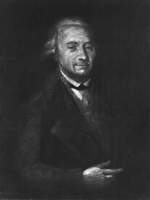
Italian poet, translator and theorist
Melchiorre Cesarotti (; May 15, 1730 – November 4, 1808) was an Italian poet, translator and theorist.
Biography

He was born in Padua, to a noble but impoverished family. He studied in the Seminary of Padua, where he obtained, immediately after the end of his studies, the chair of Rhetoric. At the University of Padua his literary progress gained him the professorship of Greek and Hebrew in 1768, and then of Rhetorics and Literature in 1797. As a supporter of the Enlightenment ideas, he wrote in favor of the French on their invasion of Italy in 1797; he received a pension, and was made knight of the iron crown by Napoleon I, to whom he addressed a bombastic and flattering poem called Pronea (1807).
Cesarotti is best known as a translator and a theorist. His translation of Ossian (Padua 1763 and 1772) attracted much attention in Italy and France, and raised many imitators of the Ossianic style. Napoleon particularly admired the work. As a professor of Greek at the University of Padua, Cesarotti also published a full translation of Demosthenes, and two different versions of Homer's Iliad: one faithful and literal, the other (called The Death of Hector) was supposed to improve the text in order to adapt it to modern taste.
As a theorist and a critic, Cesarotti produced several prose works, including a Course of Greek Literature, and essays On the Origin and Progress of the Poetic Art (1762), On the Sources of the Pleasure derived from Tragedy (1762), On the Philosophy of Taste (1784). His Essay on the Philosophy of Language (1785) is one of the most remarkable works in the field of linguistics written in Italy during the age of Enlightenment.
A complete edition of his works, in 42 vols. 8vo, began to appear at Pisa in 1800, and was completed in 1813, after his death.
Notes
References
- Gennaro Barbarisi e Giulio Carnazzi (a cura di), Aspetti dell'opera e della fortuna di Melchiorre Cesarotti, 2 volumi, Milano, Cisalpino, 2002.
- Antonio Daniele (a cura di), Melchiorre Cesarotti, Atti del convegno Padova 2008, Padova, Esedra, 2011.
- Claudio Chiancone, La scuola di Cesarotti e gli esordi del giovane Foscolo, Pisa, Edizioni ETS, 2012.
This article was imported from Wikipedia and is available under the Creative Commons Attribution-ShareAlike 4.0 License. Content has been adapted to SurfDoc format. Original contributors can be found on the article history page.
Ask Mako anything about Melchiorre Cesarotti — get instant answers, deeper analysis, and related topics.
Research with MakoFree with your Surf account
Create a free account to save articles, ask Mako questions, and organize your research.
Sign up freeThis content may have been generated or modified by AI. CloudSurf Software LLC is not responsible for the accuracy, completeness, or reliability of AI-generated content. Always verify important information from primary sources.
Report