From Surf Wiki (app.surf) — the open knowledge base
Marshall J. Kinney Cannery
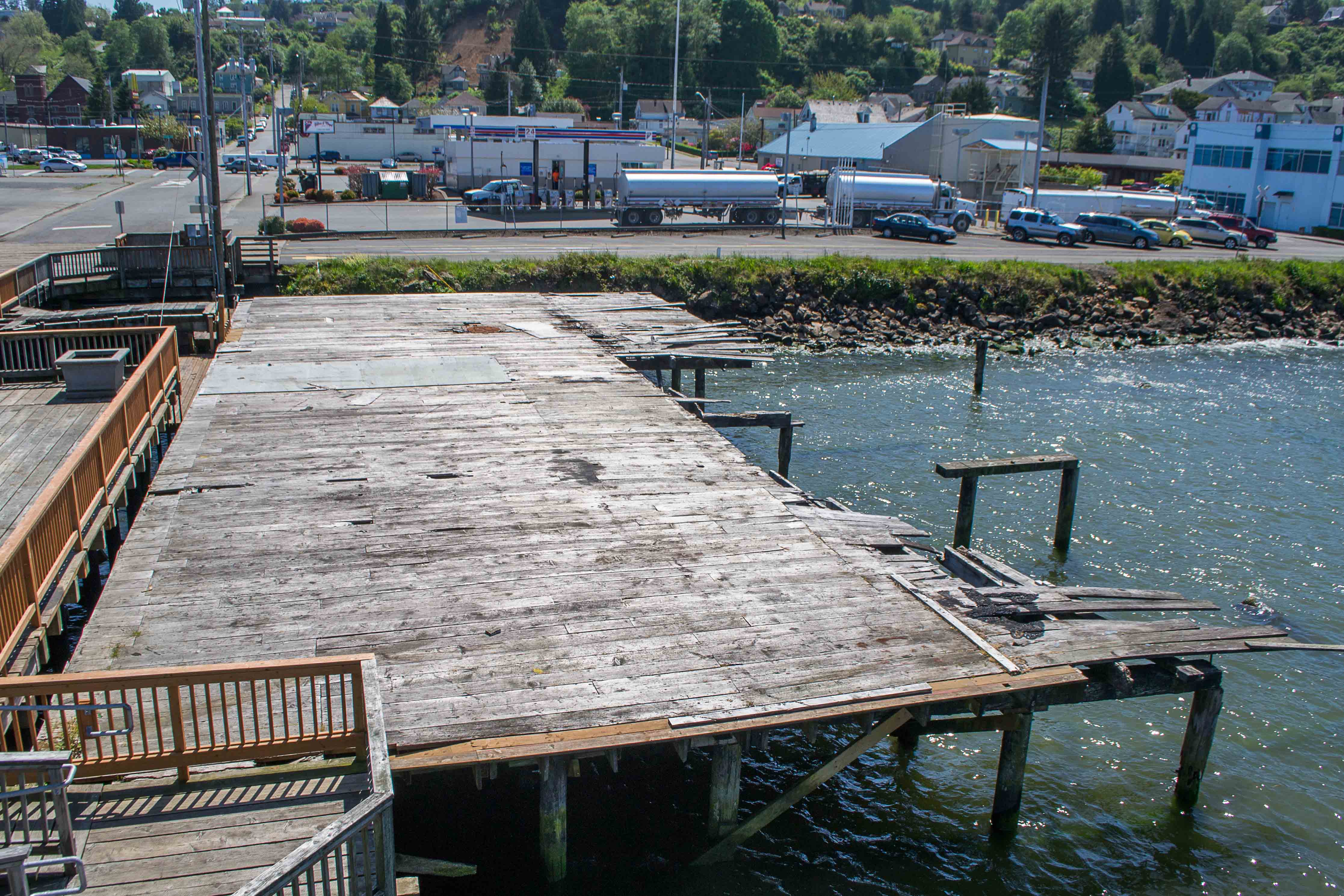
| Field | Value |
|---|---|
| name | Marshall J. Kinney Cannery |
| location | 1 Sixth Street |
| Astoria, Oregon | |
| locmapin | USA Oregon Astoria |
| built | 1879 |
| architecture | Post and truss industrial |
| added | June 30, 1989 |
| delisted | September 8, 1997 |
| area | 1.1 acre |
| refnum | 89000515 |
Astoria, Oregon The Marshall J. Kinney Cannery, located in Uniontown, Astoria, Oregon, United States, between Fifth and Seventh streets, was constructed in 1879 and became one of the city's longest-running salmon canneries. Run by the Astoria Packing Company, of which Marshall J. Kinney was president, the complex quickly became the "largest and most extensive salmon-packing establishment on the Pacific Coast". In 1894, the cannery was completely rebuilt after being burned to the ground. Five years later Kinney became part of the Columbia River Packers Association, joining several other canneries and packing companies. By 1904, the complex supported three production lines; Kinney continued cannery operations until the 1920s when it was primarily used as a central machine shop and warehouse for the Columbia River Packers Association. In 1954, a cargo ship ran into the complex, part of which was lost. Intact portions were used for storage until 1980 and today house shops and small businesses. The cannery was added to the National Register of Historic Places on June 30, 1989, but was delisted on September 8, 1997.
History
Kinney Cannery, located in Uniontown between Fifth and Seventh streets, was constructed in 1879. The cannery was run by the Astoria Packing Company, of which Marshall J. Kinney, son of Robert C. Kinney, was president. During 1881 the complex, then referred to as the "largest and most extensive salmon-packing establishment on the Pacific Coast", reportedly packed 26,000 cases of salmon. In 1894, the complex burned to the ground and was completely rebuilt. In 1899, the cannery became part of the Columbia River Packers Association, joining the Samuel Elmore Cannery, Fisherman's Packing Co., J.O. Hanthorn & Co., J.W. Seaborg and Scandinavian Packing Co., among others. Kinney buildings at the river end were used for warehouse space; the older ones along the shore continued cannery operations.
By 1904, the Kinney complex supported three production lines. It was divided into two sections separated by a "planked extension" of Sixth Street. On the west side stood a 200' x 170' wood frame warehouse which, after 1910, housed the machine shop and stored cannery equipment, cans and labels, and marine engines. This section later housed offices for Alaskan production. On the east side of Sixth Street stood an 80' x 150' "two-story, semi-mill constructed" can factory building. The complex continued cannery operations until the 1920s when it was primarily used as a central machine shop and warehouse for the Columbia River Packers Association.

By the 1940s, the Kinney complex had expanded "significantly". however, other parts of the Kinney complex remained in ruins. However, the complex was delisted from the Register on September 8, 1997. It housed Gunderson's Cannery Café and other small businesses until a fire destroyed the buildings in December 2010. Discussions of condominium development have taken place, including Riverpark Suites for the "ruined half" of the complex.
References
References
- {{NRISref
- (October 27, 2009). "Astoria III: Pack It in at a Former Cannery!". MEDIAmerica Inc..
- Hittell, John Shertzer. (1882). "The Commerce and Industries of the Pacific Coast of North America: Comprising the Rise, Progress, Products, Present Condition, and Prospects of the Useful Arts on the Western Side of Our Continent, and Some Account of Its Resources, with Elaborate Treatment of Manufactures; Briefer Consideration of Commerce, Transportation, Agriculture, and Mining; and Mention of Leading Establishments and Prominent Men in Various Departments of Business". A. L. Bancroft & Company.
- United States Department of War. (1890). "Annual report of the Secretary of War". [[United States Government Printing Office]].
- Smith, Jeffrey H.. (July 25, 2011). "Astoria". Arcadia Publishing.
- Steen, Sarah L.. (December 2009). "Expanding Context: A Look at the Industrial Landscapes of Astoria, Oregon, 1880–1933".
- Martin, Irene. "Columbia River Packers Association". [[Portland State University]].
- Newell, Dianne. (December 1, 1989). "The Development of the Pacific Salmon-Canning Industry: A Grown Man's Game". [[McGill-Queen's University Press]].
- Simmons, Bob. (May 3, 1992). "Real Waterfront -- Skamokawa & Astoria Are Trying To Make It Work". [[The Seattle Times Company]].
- (September 19, 1997). "Weekly list of actions taken on properties: 9/08/97 through 9/12/97". National Park Service.
This article was imported from Wikipedia and is available under the Creative Commons Attribution-ShareAlike 4.0 License. Content has been adapted to SurfDoc format. Original contributors can be found on the article history page.
Ask Mako anything about Marshall J. Kinney Cannery — get instant answers, deeper analysis, and related topics.
Research with MakoFree with your Surf account
Create a free account to save articles, ask Mako questions, and organize your research.
Sign up freeThis content may have been generated or modified by AI. CloudSurf Software LLC is not responsible for the accuracy, completeness, or reliability of AI-generated content. Always verify important information from primary sources.
Report