From Surf Wiki (app.surf) — the open knowledge base
Marlik
Archaeological site in Iran
Archaeological site in Iran
Marlik is an ancient site near Roudbar in Gilan, in northern Iran. Marlik, also known as Cheragh-Ali Tepe is located in the valley of Gohar Rud (gem river), a tributary of Sepid Rud in Gilan Province in Northern Iran, Marlik. Marlik is the site of a royal cemetery, and artifacts found at this site date back to 3,000 years ago. Some of the artifacts contain amazing workmanship with gold. Marlik is named after the Amard people.
Marlik Cup
Marlik Cup is a cup of pure gold and is 18 cm high. The height of the prominent designs of the cup reaches 2 cm.
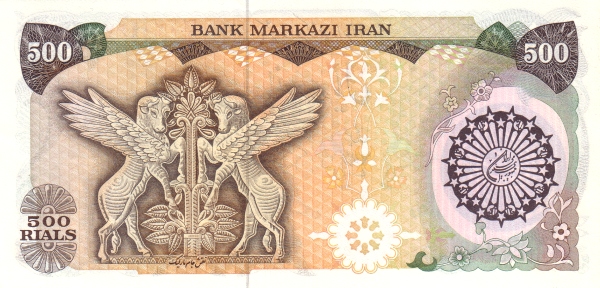
Archaeology
The mound at Mārlik is a rocky outcrop capped by several meters of sediment. It is surrounded by olive groves and fruit gardens owned and maintained by local villagers, overlooking rice paddies on the lower slopes of the valley. The site was already partly looted by treasure hunters and the archaeology teams were hindered by local corruption
A number of tombs were found. The initial Archaeology report concluded: "In total, fifty-three tombs were discovered at Mārlik. The tombs were dug into the overlaying sediments of the mound, sometimes hitting and penetrating into the underlying bedrock. The tomb constructions vary from roughly dug pits lined with stone to fairly well-constructed examples with walls made from stone slabs bound together with mud mortar. The stone used in the tombs is mostly local, but in some tombs one could see yellowish slabs brought from the headwaters of the Gowharrud, some 15 km to the south. A few, evidently more important, tombs are entirely made of this imported stone, a potential indication of the social significance of the occupant. The tombs range in size from fairly small (1.5x1x1 m [Tomb 4]) to relatively large (7x4.5x2.5 m [Tomb 52]). Most tombs yielded very little or no large skeletal remains, perhaps a result of natural deterioration of organic material and rodent activity. In the handful of tombs, where partial skeletal remains were preserved, the body seemed to have been laid on its side on a large, flattened slab, surrounded by grave goods."
The archaeology is generally assumed to have belonged to a people group who spoke an Iranian language and who migrated into Iran from Central Asia in the early to mid-2nd millennium BCE. The abundance of arms, horse-trappings (as well as horse burials), and spouted vessels among the grave goods has been cited as distinct Iranian signatures (Kurochkin). The exact attribution of these people, however, remains largely a conjecture.
Gallery
File:Cup with a frieze of gazelles MET.jpg|Gold cup with a frieze of gazelles, ca. early 1st millennium BCE, Metropolitan Museum of Art File:Jame hayoolaye do sar va ghazal.jpg|Double-headed eagle cup, Louvre File:Goblet mouflons Louvre AO22125.jpg|Silver cup with a decorative edge of a sheep, 14th to 11th century BC. Place of discovery of Marlik Hill Cemetery, Louvre File:Marlik clay bowl REM.JPG|A clay bowl discovered on Marlik Hill, Egyptian Rosicrucian Museum, San Jose, California. This type of bowl could contain the ration of a day laborer who was forced to work. File:Marlik.jpg|Cow-shaped earthenware File:Iran sett.le, gilan, vaso teriomorfo, cultura di marlik tepe, periodo del ferro I, 1200-1000 ac. 03.JPG|Animal vase, National Museum of Oriental Art, Rome File:Persian bronze bracelet from Marlik REM.JPG|Bronze Bracelet, File:Iran sett.le, gilan, pendenti discoidali, VI sec. ac. 01.JPG|Disc-like necklace, National Museum of Oriental Art, Rome
References
- G.N. Kurochkin, "Archeological search for the Near Eastern Aryans and the royal cemetery of Marlik in northern Iran", nnales Academiae Scientiarum Fennicae. Series B ISSN 0066-2011, 1993, vol. 271 (1), pp. 389–395 (10 ref.)http://www.azargoshnasp.net/history/Aryan/kruchkin.pdf
References
- D. Josiya Negahban, [http://i-cias.com/e.o/marlik.htm Marlik] {{Webarchive. link. (2020-07-06 .)
- (1972). "An Encyclopedia of World History". Houghton Mifflin Company.
- Marlik : the complete excavation report: Archaeological report(University Museum, University of Pennsylvania, 1994) p15-24.
- ʿE.-A. Negahbān, “The Wonderful Gold Treasure of Marlik,” Illustrated London News, 28 April 1962, pp. 663-64.
This article was imported from Wikipedia and is available under the Creative Commons Attribution-ShareAlike 4.0 License. Content has been adapted to SurfDoc format. Original contributors can be found on the article history page.
Ask Mako anything about Marlik — get instant answers, deeper analysis, and related topics.
Research with MakoFree with your Surf account
Create a free account to save articles, ask Mako questions, and organize your research.
Sign up freeThis content may have been generated or modified by AI. CloudSurf Software LLC is not responsible for the accuracy, completeness, or reliability of AI-generated content. Always verify important information from primary sources.
Report