From Surf Wiki (app.surf) — the open knowledge base
Maria Branwell
Mother of the Brontë sisters (1783–1821)
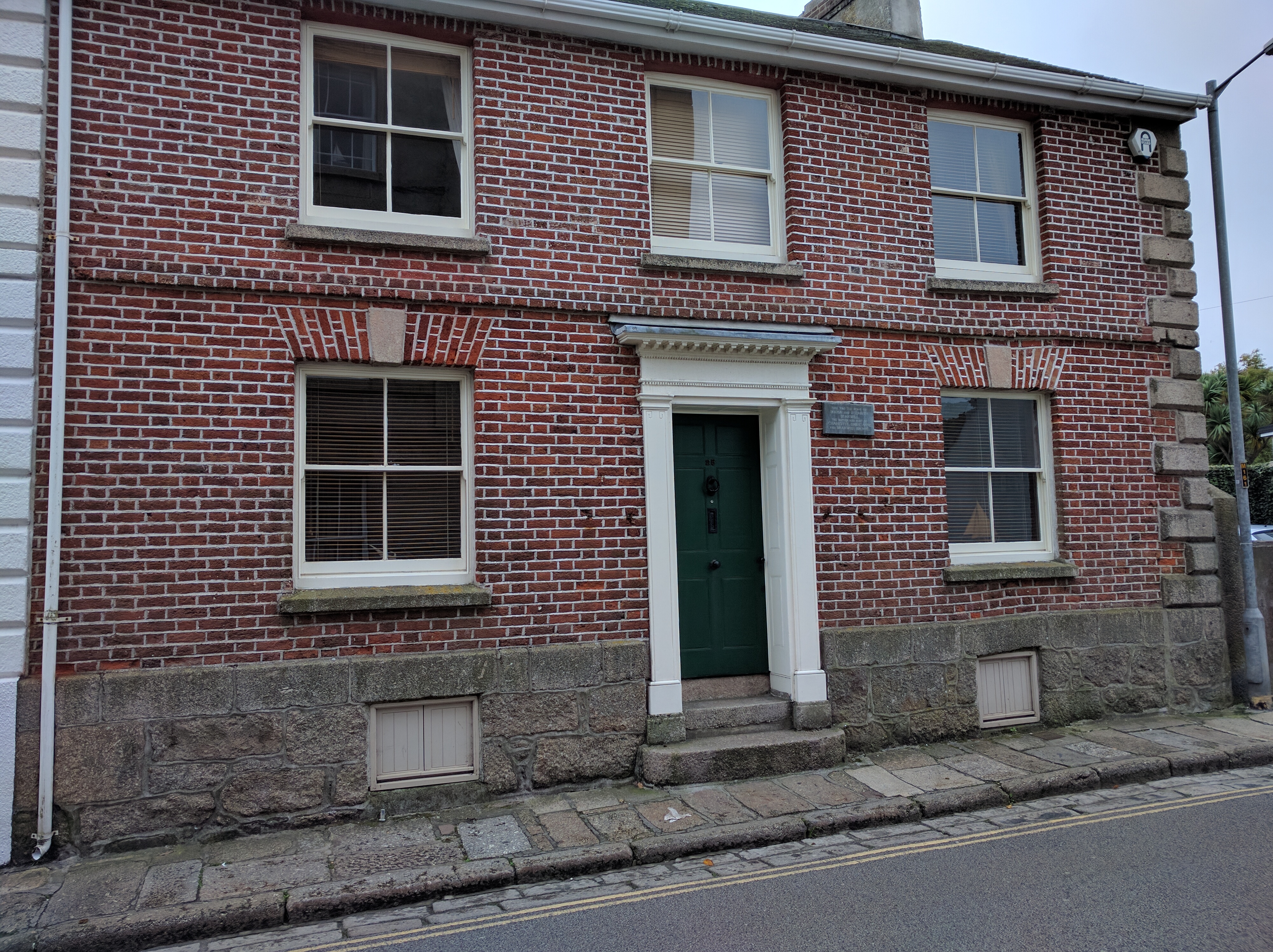
Mother of the Brontë sisters (1783–1821)
| Field | Value |
|---|---|
| name | Maria Branwell |
| image | Maria Branwell.JPG |
| birth_name | Maria Branwell |
| birth_date | |
| death_date | |
| spouse | |
| children | |
| relatives | Elizabeth Branwell (sister) |
Maria Brontë ( Branwell; 15 April 1783 – 15 September 1821) was an English woman and the mother of the English writers Emily Brontë, Anne Brontë, Charlotte Brontë and of their brother Branwell Brontë, who was a poet and painter.
Born in Penzance, Maria Branwell was the daughter of a successful Methodist merchant and civic leader. After the deaths of her parents, at age 29, Branwell moved to Yorkshire to help her aunt with the domestic needs of Woodhouse Grove School. There she met Patrick Brontë, who also worked for the school as a classics examiner; they married after a brief courtship. Much of her married life was spent in Thornton. Maria Branwell gave birth to Maria (deceased in childhood), Elizabeth, Charlotte, Patrick (known as Branwell), Emily, and Anne. Shortly after Anne's birth, the family moved to Haworth. Within a year, Maria Branwell fell critically ill for eight months and died, aged thirty-eight. Maria's sister Elizabeth Branwell became ward for Maria's children.
Early life
Maria Branwell was born on 15 April 1783 to Anne Carne (1743–1809) and Thomas Branwell (1746–1808) in Penzance, Cornwall. Thomas Branwell was a successful merchant in groceries and luxuries, owning properties and farmland nearby. Anne Carne was the daughter of a Penzance silversmith and watchmaker. Maria was the eleventh of twelve children: six died by the time of her birth: seven survived to adulthood.
The family was close to civic affairs: Thomas Branwell held public office as one of 12 "Assistants to the Corporation" (of the city). Maria's brother Benjamin also became a member of the corporation, and was elected mayor in 1809.
The family were prominent Methodists. Multiple women in the family married clergymen of Wesleyan leanings: Maria's aunt (Thomas's sister) Jane married John Fennell in 1790; Maria's sister Jane Branwell married John Kingston in 1800; and Maria married Patrick Brontë in 1812. The first Wesleyan Methodist chapel was built in Penzance in 1814, and the Branwells were instrumental in having this built.
Courtship and marriage
Maria met Patrick Brontë in 1812 when visiting her aunt Jane (her father's sister) and uncle John Fennell in Yorkshire after four family deaths between 1808 and 1812, including both of her parents. Maria moved to Yorkshire to help her aunt with the household management of a new Methodist training school. John Fennell, a former schoolmaster and Methodist class leader in Penzance and Wellington, Shropshire, was appointed headmaster of the newly opened Woodhouse Grove School at Rawdon, for the sons of Methodist ministers in 1812. Patrick, during his curacy in Wellington, had known John Fennell in Shropshire's Wesleyan circles.
When Fennell was invited to the Yorkshire headship, he needed external examiners for his students and invited Patrick to serve in that capacity at Woodhouse Grove. Maria and Patrick 'loved at first sight' and married within the year. They were married on 29 December 1812 at Guiseley Parish Church by mutual friend Reverend William Morgan, who, on the same day, married Jane and John Fennell's daughter, Jane Branwell Fennell.
Befitting the close family that the Branwells were, also married on that day at the same hour were Maria's youngest sister, Charlotte, to her cousin Joseph Branwell at the parish church of Madron in Cornwall.
Later life
Maria and Patrick's first home was Clough House in Hightown. Their first two children, Maria and Elizabeth, were born there in 1813/1814 and 1815. Their second home was in Thornton, where their remaining children were born:
- Charlotte (1816)
- Patrick Branwell (1817)
- Emily Jane (1818)
- Anne (1820)
In 1820 the Brontës moved to Haworth.
Maria died on 15 September 1821, after seven months of severe poor health. The cause of death was understood to be uterine cancer at the time, but contemporary scholars suggest either cervical cancer or a chronic pelvic sepsis and anaemia brought on by the birth of her youngest daughter Anne.
Maria was buried on 22 September 1821 at Haworth. William Morgan performed the burial ceremony.
Works
The only work besides letters that Maria wrote was the essay "The Advantages of Poverty, In Religious Concerns." The essay can be found in the book Life and Letters by Clement Shorter. The essay can also be found with surviving letters in the appendix of Wright 2021.
Notes
References
References
- "Chapter 8. People called Branwell." ''BRONTË TERRITORIES: CORNWALL AND THE UNEXPLORED MATERNAL LEGACY, 1760–1860'', Melissa Hardie, 2019. Edward Everett Root; Illustrated edition (30 November 2019), p.134. Retrieved 25 November 2020.
- "Mrs Brontë {{!}} Bronte Parsonage Museum".
- Duckett, Bob. (2012). "The Bröntes in Context". Cambridge University Press.
- Wright 2021, Chapter 1, Page 6
- Wright 2021, Chapter 2, Page 1
- Wright 2021, Chapter 6, Page 1
- [https://www.ancestry.co.uk/imageviewer/collections/2256/images/32355_249477-00065?pId=18684441 "West Yorkshire, England, Church of England Baptisms, Marriages and Burials, 1512–1812 for Maria Branwell."] Guiseley, St Oswald: Marriages 1812, p.122. West Yorkshire Archive Service; Wakefield, Yorkshire, England; Yorkshire Parish Records; New Reference Number: WDP29/3/3. Ancestry.com, 2011. Retrieved 25 November 2020.
- Gardiner, Juliet. (1993). "The Brontës at Haworth: The World Within". Clarkson Potter Publishers.
- Ingham, Patricia. (2006). "The Brontës". Oxford University Press.
- Glen, Heather. The Cambridge Companion to the Brontës. Cambridge companions to literature. Cambridge: Cambridge University Press, 2002.
- Alexander, Christine. (1995). "The art of the Brontës". Cambridge University Press.
- Fierro, Elsa. (2024). "A Daughter of Cornwall: The Overlooked Literary Relevance of Maria Branwell, Mother of the Brontës". Proceedings of the 49th Annual European Studies Conference.
- [https://www.ancestry.co.uk/imageviewer/collections/2254/images/33069_256553-00094?pId=10702460 "Maria, the wife of Patrick Bronte A.B, Minister of this Church."] Haworth, St Michael and All Angels: Burials 1821, No.740, p.93.''West Yorkshire, England, Church of England Deaths and Burials, 1813–1985,'' West Yorkshire Archive Service; Wakefield, Yorkshire, England. Ancestry.com, 2011. Retrieved 25 November 2020.
- Barker, Juliet. (1994). "The Brontës". Pegasus Books.
This article was imported from Wikipedia and is available under the Creative Commons Attribution-ShareAlike 4.0 License. Content has been adapted to SurfDoc format. Original contributors can be found on the article history page.
Ask Mako anything about Maria Branwell — get instant answers, deeper analysis, and related topics.
Research with MakoFree with your Surf account
Create a free account to save articles, ask Mako questions, and organize your research.
Sign up freeThis content may have been generated or modified by AI. CloudSurf Software LLC is not responsible for the accuracy, completeness, or reliability of AI-generated content. Always verify important information from primary sources.
Report